资本市场

Search documents
吴清明确任务清单,六方面提高资本市场制度包容性、适应性
天天基金网· 2025-10-31 05:31
Core Viewpoint - The article emphasizes the importance of enhancing the inclusiveness and adaptability of the capital market during the "14th Five-Year Plan" period, outlining key tasks to achieve high-quality development and better serve the economy and society [3][8]. Group 1: Key Tasks for Capital Market Development - Actively develop direct financing through equity and bonds, focusing on reforms in the Sci-Tech Innovation Board and Growth Enterprise Market to support quality enterprises in issuing and listing [4][14]. - Foster more high-quality listed companies by deepening mergers and acquisitions reform, enhancing refinancing mechanisms, and encouraging cash dividends and share buybacks [4][14]. - Create a more attractive environment for long-term investments by establishing mechanisms for long-term capital assessment and promoting the development of public funds and index investments [4][15]. - Improve the scientific and effective regulation of the capital market, enhancing risk monitoring and response mechanisms, and combating financial fraud and market manipulation [4][15]. - Gradually expand the high-level institutional opening of the capital market, facilitating the participation of foreign investors and enhancing the international competitiveness of China's capital market [5][16]. - Build a standardized, inclusive, and vibrant capital market ecosystem by strengthening legal frameworks and investor protection mechanisms [6][17]. Group 2: Importance of Capital Market - The capital market plays a crucial role in allowing over 200 million stock investors and 700 million fund investors to share in the economic development, highlighting the need for diverse and high-quality financial products [8][9]. - The stable and healthy operation of the capital market is supported by strong economic fundamentals, with a projected cash dividend of 2.4 trillion yuan for investors in 2024 [8][9]. - Continuous improvement in the quality of capital market development is necessary to align investment and financing functions, promoting a balanced and efficient market structure [11][12].


吴清明确任务清单,六方面提高资本市场制度包容性、适应性
Zheng Quan Shi Bao· 2025-10-31 05:19
Core Viewpoint - The article emphasizes the importance of enhancing the inclusiveness and adaptability of the capital market during the "15th Five-Year Plan" period, outlining key tasks to achieve this goal [1][4]. Group 1: Key Tasks for Capital Market Development - Actively develop direct financing through equity and bonds, focusing on reforms in the Sci-Tech Innovation Board and the Growth Enterprise Market to support quality enterprises in issuing and listing [2][8]. - Foster more high-quality listed companies by deepening mergers and acquisitions market reforms and enhancing the flexibility of refinancing mechanisms [2][8]. - Create a more attractive environment for long-term investments by establishing mechanisms for long-term capital assessment and promoting the development of public funds and equity funds [3][9]. - Improve the scientific and effective regulation of the capital market, enhancing monitoring and risk response mechanisms to ensure market stability [3][10]. - Gradually expand the high-level institutional opening of the capital market, facilitating the use of both domestic and international markets and resources [3][10]. - Build a standardized, inclusive, and vibrant capital market ecosystem, strengthening legal frameworks and investor protection mechanisms [3][11]. Group 2: Importance of Capital Market - The capital market plays a crucial role in allowing over 200 million stock investors and 700 million fund investors to share in the development of the real economy [4]. - The implementation of new policies has led to a stable and positive trend in the capital market, with expectations for investor cash dividends reaching 2.4 trillion yuan in 2024 [4]. - The capital market must provide a wider range of high-quality financial products and services to meet the growing demand for wealth management among residents [4]. Group 3: Focus on Innovation and Risk Management - Greater support for technological innovation is necessary, adapting to the characteristics of tech companies with high R&D investments and long profit cycles [5][6]. - The regulatory framework must be responsive to both domestic and international market trends, enhancing risk monitoring and prevention capabilities [5][7].
年内A股并购重组超200起 “产业导向”特征显著
Zheng Quan Shi Bao Wang· 2025-10-30 23:18
Core Insights - Since 2025, China's capital market has seen active mergers and acquisitions (M&A), driven by favorable policies that enhance capital's role in industrial transformation [1] - As of October 30, 2025, there have been 222 disclosed M&A transactions in the A-share market, involving 244 listed companies, with over 100 transactions reported in October alone [1] - The majority of M&A activities are characterized by "industry orientation," with horizontal and vertical integrations reflecting companies' needs to enhance competitiveness and expand growth opportunities [1] Summary by Category M&A Activity - A total of 222 M&A transactions have been disclosed in the A-share market in 2025, with 130 being first-time disclosures and nearly 40% revealing transaction amounts exceeding 300 billion yuan [1] - In October 2025, over 100 M&A events were reported, indicating a significant uptick in activity [1] Strategic Focus - The M&A activities are primarily focused on resource synergy and industry chain integration, with 128 transactions aimed at horizontal and vertical integration and strategic cooperation [1] - There are 47 transactions aimed at asset and strategic optimization, highlighting companies' proactive efforts to optimize asset structures and explore new growth avenues [1]
今日视点:动能积聚 资本市场高质量发展启新程
Zheng Quan Ri Bao· 2025-10-30 22:31
Group 1 - The core viewpoint of the article emphasizes the importance of building a well-functioning capital market and enhancing its inclusiveness and adaptability to achieve high-quality development [1][2] - Recent policy signals from financial management authorities indicate a clear path for the reform and development of the capital market, aiming for a new stage of higher quality and sustainable growth [1][3] Group 2 - Monetary policy plays a foundational role in supporting the long-term healthy development of the capital market by regulating liquidity and maintaining financial stability [2] - The People's Bank of China has committed to a supportive monetary policy stance, indicating a continuation of moderately loose monetary policies to provide ongoing support for high-quality capital market development [2] Group 3 - Capital market reforms are accelerating, enhancing internal stability through systematic and institutional changes to address structural contradictions and solidify market operations [3] - The China Securities Regulatory Commission plans to enhance the inclusiveness and coverage of the multi-level market system, expand high-level institutional openness, and improve investor rights protection during the 14th Five-Year Plan period [3] Group 4 - Strengthening risk prevention is essential for the long-term stability of the capital market, with a focus on establishing a comprehensive macro-prudential management system to mitigate systemic risks [4] - Future policies will enhance coordination between macro-prudential management and micro-regulatory behaviors to ensure stable market operations amid complex external environments [4] Group 5 - The capital market is supported by strong fundamentals, including macroeconomic resilience and corporate profitability, which are crucial for effective resource allocation [5] - The 14th Five-Year Plan period is expected to provide broader development space and stronger support for the capital market, leveraging China's institutional advantages and large-scale market potential [5]
动能积聚 资本市场高质量发展启新程
Zheng Quan Ri Bao· 2025-10-30 16:19
Core Viewpoint - The recent release of the "Suggestions on Formulating the 15th Five-Year Plan for National Economic and Social Development" emphasizes the need to build a "functionally complete capital market" and improve its inclusiveness and adaptability, aiming for a high-quality development of the capital market [1] Group 1: Monetary Policy - Monetary policy plays a foundational role in supporting the long-term healthy development of the capital market by regulating liquidity, guiding fund allocation, and maintaining financial stability [2] - The People's Bank of China will continue to implement a moderately loose monetary policy to support the capital market's high-quality development [2] Group 2: Capital Market Reform - Capital market reforms are accelerating, enhancing internal stability [3] - The China Securities Regulatory Commission plans to promote high-quality development during the 15th Five-Year period by enhancing the inclusiveness and coverage of the multi-level market system and improving investor protection [3] Group 3: Risk Prevention - Strengthening risk prevention is essential for the long-term stability of the capital market [4] - A comprehensive macro-prudential management system will be established to mitigate cyclical fluctuations and prevent risk accumulation [4] Group 4: Fundamental Support - The fundamental support for the capital market's healthy development includes macroeconomic resilience and corporate profitability [5] - The 15th Five-Year Plan indicates that China's economic foundation remains strong, with significant advantages and potential, which will provide broader development space for the capital market [5]
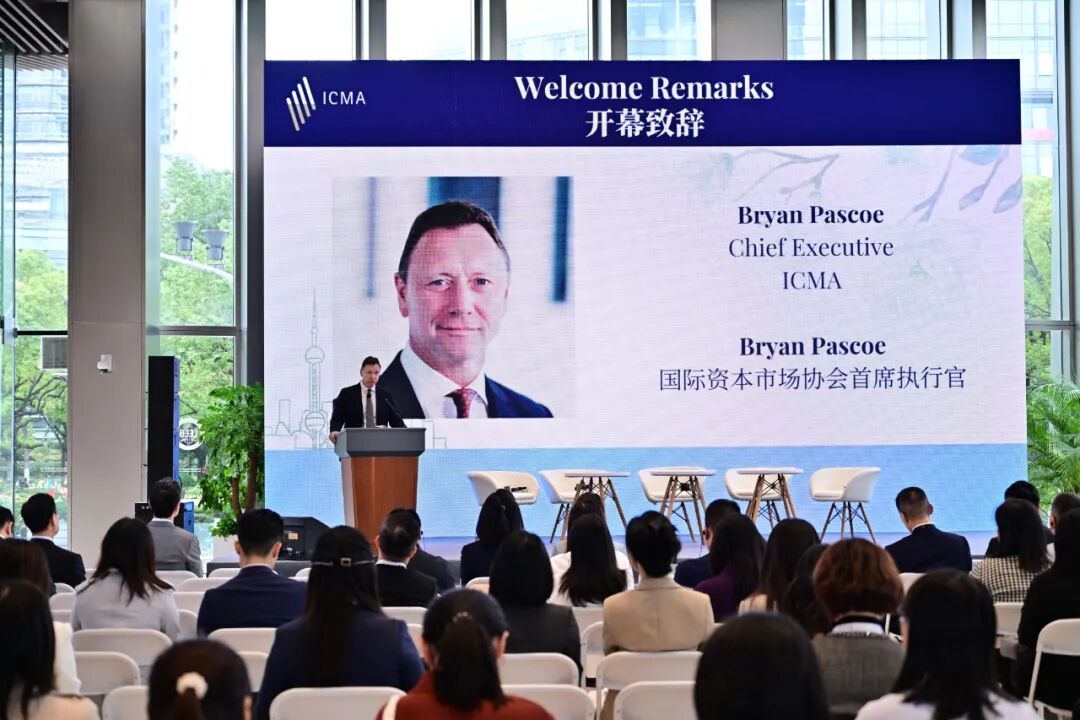
布莱恩·佩斯科:以协同与透明推动全球转型金融发展 | 聚焦ICMA中国可持续金融发展论坛
Guo Ji Jin Rong Bao· 2025-10-30 14:45
Group 1 - In 2025, China demonstrates a strong commitment to green transformation and climate resilience in the sustainable finance sector, with an expanding regulatory framework and a national carbon market that now includes high-emission industries like steel and cement [1] - China is deepening international cooperation in sustainable finance standards with ASEAN and the EU, promoting interoperability of the "Common Ground Taxonomy" to provide a "Chinese solution" for global green finance standard coordination [1] - The International Capital Market Association (ICMA) hosted a Sustainable Finance Development Forum in Shanghai, gathering leaders and experts to discuss themes such as green transition, sustainable bonds, and alignment with international standards [3] Group 2 - ICMA CEO Bryan Pascoe highlighted that global sustainable finance is entering a new phase driven by cooperation, coordination, and transparency, with China playing an increasingly important leading role [5] - Transition finance is still in a growth phase, facing significant challenges, with notable differences in path selection across regions; Asia's reliance on fossil fuels necessitates a focus on "just transition" to ensure social equity during the shift [7] - The "Common Ground Taxonomy" exemplifies effective collaboration among China, the EU, and Singapore, providing a common language for defining "green activities" [7] Group 3 - ICMA plans to release new guidance at its annual principles meeting in Tokyo to help issuers align sustainable bonds with corporate transition strategies, citing Japan's experience with sovereign green bonds as a model for other countries [8] - Pascoe praised China's issuance of offshore green bonds based on ICMA's Green Bond Principles, noting that this approach enhances international market attention and provides a pricing benchmark [10] - The issuance of sovereign green bonds signifies China's commitment to its green finance framework, boosting market confidence and pricing mechanisms [10] Group 4 - ICMA aims to maintain close communication with China's Ministry of Finance and key regulatory bodies to promote alignment of green and sustainable finance standards, facilitating cross-border financing and market connectivity [10] - China's bond market is the second largest globally, and its innovations in green financial products are having a profound impact on international capital markets [10] - Asia, particularly China, is playing an increasingly critical role in shaping the global sustainable finance landscape, with hopes for further unification in classification standards, disclosure, and transition financing [10] Group 5 - ICMA's goal is to reduce discrepancies in frameworks, classifications, and disclosure standards to enhance market depth and resilience, ultimately establishing a more robust, inclusive, and sustainable global financial system [11]
“十五五”政策信号一文看懂
Guo Ji Jin Rong Bao· 2025-10-30 11:36
Core Viewpoint - The "15th Five-Year Plan" emphasizes high-quality development as the primary goal, shifting focus from rapid economic growth to enhancing the quality of economic development [2][3]. Economic Development Goals - The plan does not set specific GDP growth targets but aims for an average annual GDP growth rate of 4.5% to 5.0% during the "15th Five-Year Plan" period, ensuring a balance between growth, structural adjustment, and risk prevention [3]. - The plan highlights a significant increase in the resident consumption rate, indicating a shift from investment-driven growth to consumption-led growth [3][4]. Capital Market Development - The plan calls for a well-functioning capital market that supports innovation-driven development, emphasizing reforms in the Sci-Tech Innovation Board and the Growth Enterprise Market to provide better financing for "hard tech" companies [5][6]. - It aims to balance direct and indirect financing, enhancing the financing structure to better serve small and innovative enterprises [6][7]. Fiscal and Monetary Policy - The plan stresses the importance of active fiscal policy to enhance sustainability and support long-term investments while balancing efficiency and equity [9][10]. - Monetary policy will maintain a moderately loose stance, focusing on effective transmission mechanisms and structural tools to support key sectors [11][12]. Digital Economy and Innovation - The plan promotes the construction of a digital economy, emphasizing the development of data markets and the integration of artificial intelligence into various sectors [13][14]. - It aims to address challenges in data resource sharing, algorithm development, and privacy protection to enhance the value of data and accelerate AI development [14][15]. Social Security and Insurance - The plan proposes a multi-tiered pension system and emphasizes the role of commercial insurance in providing supplementary coverage [16][17]. - It introduces long-term care insurance to address the needs of the aging population, aiming to build a comprehensive care system [17].
时报观察|锚定“十五五”创新坐标 创业板深改再启程
Zheng Quan Shi Bao· 2025-10-30 04:25
Core Insights - The ChiNext board has evolved from an "innovation testing ground" to a "source of innovation power" supporting China's modernization efforts over its 16 years of operation [1] - The China Securities Regulatory Commission (CSRC) has announced the launch of reforms aimed at deepening the ChiNext board, which is crucial for fostering new productive forces and establishing a self-reliant industrial system amid global competition [1][2] Summary by Sections Development and Significance - The ChiNext board currently has about 90% of its companies in high-tech sectors, with nearly 70% belonging to strategic emerging industries, serving as a vital financing platform and a key hub connecting innovation, industry, and capital [1] - The reforms are seen as a strategic choice to enhance the capital market's ability to serve national strategies and high-quality development needs, especially in the context of the "14th Five-Year Plan" [1][2] Reform Details - The reforms propose to establish listing standards that better align with the characteristics of emerging fields and future industries, potentially broadening the growth pathways for new industries and technologies [2] - Historical milestones in China's capital market, such as the introduction of the registration system on the Sci-Tech Innovation Board, highlight the unique advantages and vitality of the market, responding to the needs of development and modernization [2]

时报观察 | 锚定“十五五”创新坐标 创业板深改再启程
Zheng Quan Shi Bao· 2025-10-30 00:45
Core Insights - The ChiNext board has evolved from an "innovation testing ground" to a "source of innovation power" supporting China's modernization efforts over its 16 years of operation [1] - The China Securities Regulatory Commission (CSRC) has announced the launch of reforms aimed at deepening the ChiNext board, which is crucial for fostering new productive forces and establishing a self-reliant industrial system amid global competition [1][2] Group 1 - The ChiNext board currently has approximately 90% of its companies in high-tech sectors, with nearly 70% belonging to strategic emerging industries, serving as a vital financing platform and a key hub connecting innovation, industry, and capital chains [1] - The reform aims to establish listing standards that better align with the characteristics of emerging fields and future industries, potentially broadening the growth pathways for new industries, business models, and technologies [2] - The historical context of capital market development in China shows that each institutional breakthrough, from the Sci-Tech Innovation Board to the ChiNext reforms, is closely tied to national development priorities, highlighting the unique advantages and vitality of China's capital markets [2] Group 2 - The reforms are expected to create a more inclusive institutional environment that nurtures innovation and entrepreneurship, while efficient capital allocation will drive the industrial chain towards higher-end development [2] - The ChiNext reform is a profound response to the questions of "who development is for and who it relies on," and a firm answer to "how to serve Chinese-style modernization" [2] - The capital market is positioned to become a "core engine" for promoting technological self-reliance and leading high-quality development, providing sustained momentum for the stability and long-term growth of the Chinese economy [2]
时报观察|锚定“十五五”创新坐标 创业板深改再启程
证券时报· 2025-10-30 00:08
Group 1 - The core viewpoint of the article emphasizes the significance of the ChiNext board in supporting China's modernization and innovation, highlighting its evolution from an experimental platform to a key driver of innovation in the economy [1][2] - The ChiNext board currently has about 90% of its companies in high-tech sectors, with nearly 70% belonging to strategic emerging industries, indicating its critical role in financing and connecting innovation, industry, and capital [1] - The China Securities Regulatory Commission (CSRC) has announced the launch of reforms aimed at deepening the ChiNext board, which is seen as a strategic choice to enhance the country's technological self-reliance and support high-quality development [1][2] Group 2 - The reforms propose to establish listing standards that better align with the characteristics of emerging fields and future industries, potentially broadening the growth pathways for new industries and technologies [2] - Historical context shows that each reform in the capital market, from the Sci-Tech Innovation Board to the ChiNext board, has closely followed the pulse of national development, showcasing the unique advantages and vitality of China's capital market [2] - The article asserts that a more inclusive regulatory environment will foster innovation and entrepreneurship, while efficient capital allocation will elevate the industry chain, positioning the ChiNext board as a core engine for driving technological independence and high-quality economic growth [2]