商用车

Search documents
近60款展车齐亮相,东风商用车2026主打产品是哪款?| 头条
第一商用车网· 2025-12-11 02:46
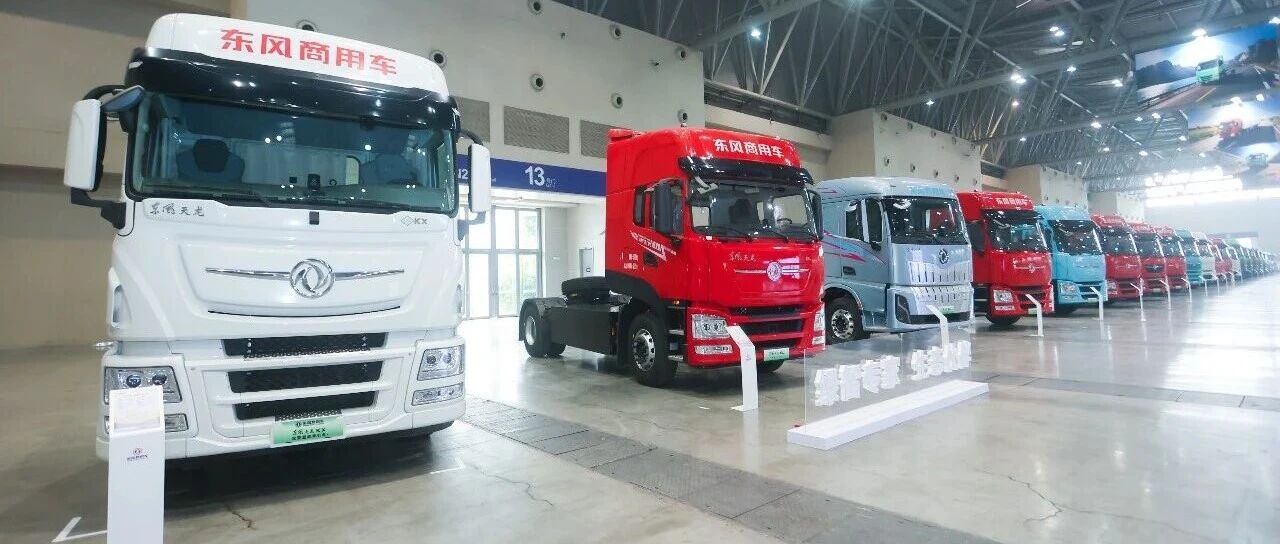
Core Viewpoint - Dongfeng Commercial Vehicle showcased a diverse range of nearly 60 models at the 2026 Partner Conference, emphasizing its strategic direction and commitment to both traditional and new energy products [1][44]. Product Range - The exhibition included various categories such as tractors, cargo trucks, dump trucks, engineering vehicles, and specialized vehicles, highlighting Dongfeng's comprehensive product lineup [1]. - Notable models included the Dongfeng Tianlong series, featuring electric, hybrid, and fuel vehicles, showcasing advanced technologies like electric drive bridges and high-capacity batteries [4][5][6][7][8][9][10][11][12][13][14][15][20][22][26][27][28][29][30][32][34][39]. Technological Collaboration - Dongfeng emphasized partnerships with key industry players, including Cummins engines, Dongfeng Dana axles, and battery suppliers like CATL and Fudi, indicating a robust supply chain and technological integration [37]. Strategic Direction - The company is actively responding to rapid industry changes by developing a quick-response system tailored to user needs, which is crucial for maintaining its leadership in the market [37]. - Dongfeng's strategy includes a dual focus on traditional energy and new energy products, with ongoing innovations in diesel hybrid, natural gas hybrid, and even ammonia and alcohol engines, reflecting its strong technical capabilities and market insight [44].

与行业发展同频共振 2025年商用车极限纪录公布
Zhong Guo Qi Che Bao Wang· 2025-12-11 02:41
Core Insights - The ninth "Finding Vehicle Limits" event was held in Beijing, showcasing 30 annual commercial vehicle records, attended by industry experts, scholars, and media representatives [1] - The event aims to deepen user understanding of China's commercial vehicle manufacturing and operational standards, supporting high-quality development in the industry [3] - The commercial vehicle sector in China is in a growth phase, with the event highlighting records in long mileage without major repairs and low fuel consumption innovations, aligning with industry advancements [5] Industry Developments - In the heavy-duty truck sector, fuel models remain dominant, while gas heavy trucks are seeing increased sales and improved performance; electric heavy trucks are achieving new records in range and charging efficiency [7] - The light truck market is primarily driven by fuel models, but electric light trucks are rapidly emerging, with significant advancements in battery capacity and range, such as a 132kWh electric light truck achieving over 360 km of range [7] - The penetration rate of new energy in light passenger vehicles has reached 70%, with electric vans achieving ranges of up to 470 km and low energy consumption [7] Future Outlook - The unveiling of the ninth "Finding Vehicle Limits" records represents a new benchmark for the commercial vehicle industry and signifies a starting point for future breakthroughs, enhancing competitiveness on a global scale [8]

一汽解放李胜:筑牢“长期主义”航标 向百年品牌笃定前行
Shang Hai Zheng Quan Bao· 2025-12-10 17:57
Core Insights - The article discusses the strategic direction and operational philosophy of FAW Jiefang, emphasizing the balance between maintaining historical values and adapting to modern market demands [3][4][5]. Group 1: Company Strategy - FAW Jiefang is focusing on value competition rather than just sales volume, aiming to enhance long-term user benefits and industry health [4][5]. - The company has reported a significant increase in net profit, with a year-on-year growth of 525.14% in the third quarter, and it holds the top market share in the medium and heavy truck segment [5][6]. - FAW Jiefang is committed to quality improvement, with a goal to reduce vehicle claim frequency and amounts by 30% by the end of the year [6][7]. Group 2: Technological and Market Positioning - The company has a long-term commitment to technological investment, having initiated its "15333" new energy strategy in 2021, with early developments dating back to 2009 [6][7]. - New energy vehicles have become the fastest-growing segment for FAW Jiefang, with sales doubling for three consecutive years, showcasing the effectiveness of prior investments [6][7]. Group 3: Ecosystem Development - FAW Jiefang is shifting from merely manufacturing vehicles to building an integrated ecosystem, collaborating with companies like CATL and Telda to enhance its new energy initiatives [7][8]. - The company has upgraded its service model to include a comprehensive lifecycle management platform, expanding into used vehicles, remanufacturing, and data services [7][8]. Group 4: Future Vision - The company aims to become China's first centennial automotive brand, with a clear three-step plan focusing on technology, green initiatives, and internationalization [10][11]. - FAW Jiefang's leadership emphasizes the importance of intergenerational responsibility in maintaining the brand's legacy and innovation [10][11].


商用车板块12月10日涨0.3%,汉马科技领涨,主力资金净流入309万元
Zheng Xing Xing Ye Ri Bao· 2025-12-10 09:04
Group 1 - The commercial vehicle sector increased by 0.3% compared to the previous trading day, with Hanma Technology leading the gains [1] - The Shanghai Composite Index closed at 3900.5, down 0.23%, while the Shenzhen Component Index closed at 13316.42, up 0.29% [1] - A detailed table of individual stock performance in the commercial vehicle sector is provided [1] Group 2 - The net inflow of main funds into the commercial vehicle sector was 3.09 million yuan, while the net inflow of speculative funds was 69.89 million yuan [2] - Retail investors experienced a net outflow of 72.98 million yuan from the commercial vehicle sector [2] - A detailed table of fund flows for individual stocks in the commercial vehicle sector is provided [2]


首批500辆氢能重卡交车!打造全球最大氢燃料商用车示范项目
第一商用车网· 2025-12-10 07:04
Core Viewpoint - The article highlights the successful delivery of 500 hydrogen fuel cell commercial vehicles by Qingling, marking a significant step in the commercialization and large-scale development of hydrogen fuel cell vehicles in China [1][8]. Group 1: Project Overview - Qingling launched the world's largest hydrogen fuel cell commercial vehicle demonstration project in Hami, Xinjiang, delivering the first batch of 500 vehicles equipped with Bosch's latest 300Kw hydrogen fuel cell engine [1]. - The project aligns with China's "14th Five-Year Plan" to promote the large-scale application of new technologies and products, integrating Qingling's innovations with Xinjiang's resources [5]. Group 2: Technological Advancements - Qingling's R&D team has overcome 12 core technologies and secured 108 patents, resulting in commercial vehicles that exhibit significant advantages such as high power, low hydrogen consumption, long lifespan, and enhanced safety [7]. - The vehicles are customized for Xinjiang's climate and operational scenarios, making them the only hydrogen fuel cell heavy trucks capable of meeting the demands of coal transportation across the Tianshan Mountains [7]. Group 3: Market and Resource Advantages - Xinjiang boasts significant energy advantages with over 100 billion kilowatt-hours of annual electricity generation from wind and solar resources, providing a low-cost foundation for green hydrogen production [8]. - The region's extensive road transport network and the high volume of coal transportation (over 70% of total freight) create a robust market demand for clean and efficient hydrogen fuel cell vehicles [8]. - Supportive government policies in Xinjiang, including measures to promote the hydrogen energy industry, are fostering a favorable environment for the development of the hydrogen supply chain and industry [8]. Group 4: Future Implications - The mass delivery of hydrogen fuel cell commercial vehicles by Qingling is seen as a new starting point for the commercialization and large-scale development of hydrogen fuel cell vehicles in China, aiming to establish a replicable national model for hydrogen energy transportation [8].

商用车板块12月9日涨0.27%,江淮汽车领涨,主力资金净流入8606万元
Zheng Xing Xing Ye Ri Bao· 2025-12-09 09:05
Group 1 - The commercial vehicle sector increased by 0.27% compared to the previous trading day, with Jianghuai Automobile leading the gains [1] - The Shanghai Composite Index closed at 3909.52, down 0.37%, while the Shenzhen Component Index closed at 13277.36, down 0.39% [1] - A table detailing the individual stock performance within the commercial vehicle sector was provided [1] Group 2 - The net inflow of main funds into the commercial vehicle sector was 86.06 million yuan, while retail funds saw a net inflow of 54.22 million yuan [2] - Conversely, there was a net outflow of 140 million yuan from speculative funds [2] - A table showing the fund flow for individual stocks in the commercial vehicle sector was included [2]

海外表现亮眼,新能源翻倍——“双轮”并进,赋能解放高质量发展 | 头条
第一商用车网· 2025-12-09 02:26
Core Viewpoint - FAW Jiefang has successfully achieved a growth curve against the trend by selling 20,000 new energy products annually, which signifies a strong position in China's medium and heavy truck industry [1]. Group 1: Sales Performance - From January to October 2025, FAW Jiefang sold over 210,000 medium and heavy trucks, marking a year-on-year increase of 19.5%, ensuring steady growth for three consecutive years [3]. - In 2023 and 2024, FAW Jiefang's medium and heavy truck sales reached 205,200 and 214,000 units respectively, maintaining the top position in the domestic market for nine consecutive years [3]. - The market share for FAW Jiefang in the tractor market has consistently remained above 23%, while the market share in the natural gas segment has stabilized above 27% [4]. Group 2: New Energy and Export Growth - FAW Jiefang's new energy heavy truck sales have doubled over the past three years, with growth rates for 2024 and 2025 significantly surpassing the overall industry growth rates of 140% and 178% respectively [5]. - Since 2022, FAW Jiefang's export volume has shown a clear upward trend, with the first half of 2025 exceeding the total export volume of 2022 [9]. Group 3: New Energy Strategy - FAW Jiefang's new energy transition is characterized by a shift from product competition to ecosystem competition, with its market share in the new energy heavy truck segment rising from 24.3% in 2021 to 52.91% in 2025 [10][12]. - The company has developed a comprehensive "15333" new energy strategy, focusing on electric, hybrid, and fuel cell technologies, and has achieved full autonomy over its core components [12]. - Collaborations with industry leaders like CATL and other partners have enabled FAW Jiefang to build a comprehensive charging network, addressing user concerns about initial costs and operational convenience [13]. Group 4: International Expansion - FAW Jiefang has positioned the overseas market as its "second growth curve," transitioning from simple product exports to deep localization and systematic operations [17]. - The establishment of FAW Jiefang International in August 2024 marks a significant step towards localized operations, with plans to set up wholly-owned subsidiaries in eight countries by July 2025 [20]. - The company emphasizes a "born global" product development approach, creating region-specific products to meet international standards while maintaining a focus on value and quality rather than price competition [20][22]. Conclusion - FAW Jiefang's consistent growth in new energy products and overseas sales reflects its strategic planning and execution, transitioning from a traditional energy vehicle giant to a leader in new energy vehicles and a strong competitor in the global market [24].

2026商用车年会第一枪!潍柴连发新品!明年什么动向?丨头条
Xin Lang Cai Jing· 2025-12-08 12:27
Core Insights - Shandong Heavy Industry Weichai Group aims for significant growth in commercial vehicle sales, targeting 450,000 engines and 61,000 new energy vehicles in 2026, up from 420,000 engines and approximately 20,000 new energy vehicles in 2025 [1][21] Group 1: 2025 Performance - In 2025, Weichai's heavy-duty engine market share reached 34%, maintaining its industry leadership [3][23] - The light-duty engine sales surpassed 110,000 units, reflecting a 10% year-on-year growth [3][23] - The company entered the pickup/VAN market, with the WP2H model expected to sell 13,000 units, marking a 134% increase [5][25] Group 2: 2026 Market Outlook - The heavy-duty truck market is projected to reach 1.13 million units in 2026, a 2% increase, with domestic sales expected at 790,000 units [9][29] - The light-duty truck market is anticipated to reach 750,000 units, also a 2% increase, with new energy light-duty trucks expected to grow by 11% [9][29] Group 3: Product Launches and Innovations - Weichai introduced three new commercial vehicle engines: WP14NG, WP5H, and WP2.5T, along with new battery and electric drive systems [1][21] - The WP14NG-4.0 engine features a displacement of 14 liters, a maximum power of 610 horsepower, and a torque of 2800 N·m, showcasing significant performance improvements [13][33] - The WP5H engine has been upgraded to 4.9 liters and 300 horsepower, designed for heavy-duty applications [15][35] Group 4: Strategic Goals and Initiatives - Weichai plans to enhance its overseas market presence, targeting sales of 130,000 units internationally [9][29] - The company aims to leverage new product launches and optimize existing products to improve competitiveness and meet customer needs [11][31] - The focus on new energy solutions is expected to drive growth, with a comprehensive product lineup in batteries, motors, and control systems [5][25]
商用车板块12月8日跌1.18%,宇通客车领跌,主力资金净流出2.54亿元
Zheng Xing Xing Ye Ri Bao· 2025-12-08 09:05
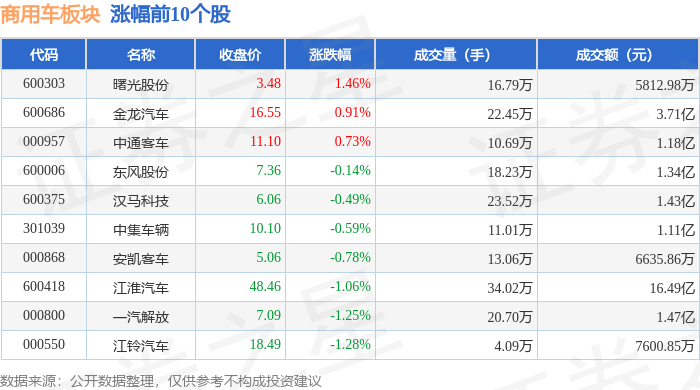
Group 1 - The commercial vehicle sector experienced a decline of 1.18% on December 8, with Yutong Bus leading the drop [1] - The Shanghai Composite Index closed at 3924.08, up 0.54%, while the Shenzhen Component Index closed at 13329.99, up 1.39% [1] - Key stocks in the commercial vehicle sector showed varied performance, with Shuguang Co. increasing by 1.46% and Yutong Bus decreasing by 2.06% [3] Group 2 - The net outflow of main funds in the commercial vehicle sector was 254 million yuan, while retail investors saw a net inflow of 136 million yuan [3][4] - Individual stock fund flows indicated that major stocks like FAW Jiefang and Jiangling Motors experienced significant net outflows from main funds [4] - The trading volume and turnover for various stocks in the sector varied, with Jianghuai Automobile having a turnover of 1.649 billion yuan [1][3]


3480万元招标60辆纯电动公交车
第一商用车网· 2025-12-08 08:00
Core Viewpoint - Yuxi Public Bus Service Company is planning to procure 60 units of first-level step pure electric buses with a total budget of 34.8 million yuan [1][2]. Group 1: Project Details - The procurement project is for 60 first-level step pure electric buses, with a unit price of 580,000 yuan [2][4]. - The total estimated contract value for this tender is 34.8 million yuan [4]. - The funding source for the project is entirely self-raised by the company [2]. Group 2: Tender Process - The tender will be conducted through an open bidding process, with qualification review conducted post-bid submission [2][4]. - The deadline for obtaining tender documents is December 12, 2025, and the deadline for submitting bids is December 29, 2025 [4]. - The opening of bids will take place online at a designated location [4]. Group 3: Bidder Requirements - Bidders must be registered within China and hold a valid business license [4]. - Vehicles must be listed in the relevant announcements for production enterprises and products, and must meet specific technical standards [4]. - Financial requirements include providing audited financial reports for the last three years [4]. Group 4: Additional Information - A bid security of 100,000 yuan is required, with payment methods including bank transfer, guarantee letter, or insurance [4]. - The project does not accept joint bids [4].