
消费金融

Search documents
以AI赋能消保 招联为金融风险防控开出“科技良方”
Jing Ji Guan Cha Wang· 2025-11-10 03:16
Core Insights - The second summit on non-performing asset disposal and risk prevention was held in Beijing, focusing on compliance and mission, highlighting the importance of technology and regulatory frameworks in the financial sector [1][2] - The summit featured over a hundred representatives from various sectors, emphasizing the critical role of non-performing asset management in maintaining financial stability and the need for technological innovation [1][2] Group 1: Financial Consumer Protection Strategies - The financial consumer protection work is evolving due to changes in the economic environment and financial landscape, necessitating new thinking and technology to address complex challenges [2] - The core management philosophy shared by the company includes three key points: self-discipline within institutions, streamlined customer service channels, and collaborative industry governance to combat illicit activities [2][3] Group 2: Technological Innovations in Consumer Protection - The company has developed a three-tier consumer protection framework based on traditional Chinese medicine principles, focusing on prevention, early intervention, and comprehensive treatment [2][3] - Specific initiatives include the "Tian Gang Customer Insight System" for real-time risk monitoring and fraud prevention, which successfully blocked over 20,000 telecom fraud cases in 2024 [3] - The company has implemented proactive customer support measures, resulting in a 39% increase in interest waivers for struggling clients and a significant reduction in complaint pressures [3][4] Group 3: Enhancing Financial Literacy and Consumer Engagement - The company prioritizes improving consumer financial literacy through engaging educational materials disseminated via various channels, achieving over 400 outreach events and reaching over 32 million individuals in 2024 [3][4] - The use of AI technology has significantly enhanced the efficiency of consumer protection communications, transforming the content generation process [3][4] Group 4: Impact on Customer Experience and Brand Trust - The company's consumer protection efforts have shifted from being a cost center to a core value driver, enhancing customer experience and brand trust [4] - Key performance metrics include a 99.04% first response rate to complaints within 48 hours and a 98.73% resolution rate within five working days, alongside a 25% decrease in regulatory complaint transfers [4] Group 5: Commitment to Sustainable Financial Practices - The company aims to align with national financial stability goals and contribute to high-quality industry development through continued technological empowerment in consumer protection and risk management [4]
Affirm Shares Surge 9% After Strong Q1 Beat and Upgraded Full-Year Outlook
Financial Modeling Prep· 2025-11-07 21:11
Core Insights - Affirm Holdings Inc. shares increased over 9% following the release of first-quarter fiscal 2026 results that exceeded analyst expectations and raised full-year guidance [1] Financial Performance - The company reported adjusted earnings per share of $0.23, surpassing the consensus forecast of $0.11 by 109% [2] - Revenue grew 34% year over year to $933 million, exceeding expectations of $881.84 million [2] - Gross merchandise volume (GMV) increased by 42% to $10.8 billion, driven by strong performance in the direct-to-consumer segment [2] Segment Performance - Affirm's Card segment showed remarkable growth, with card GMV rising 135% year over year [3] - Active cardholders increased by 500,000 from the previous quarter to reach 2.8 million, while total active consumers grew 24% to 24.1 million, marking the seventh consecutive quarter of accelerating user growth [3] Future Guidance - For the fiscal second quarter, Affirm projected revenue between $1.03 billion and $1.06 billion, with the midpoint slightly below the consensus estimate of $1.06 billion [4] - The company raised its full-year GMV forecast to over $47.5 billion, up from previous guidance of above $46 billion [5] - Affirm maintained its revenue-to-GMV ratio at approximately 8.4%, indicating revenue above $3.99 billion, and reiterated Revenue Less Transaction Costs (RLTC) guidance of $1.9 billion, about 4% of revenue [5] - The adjusted operating margin target was increased to above 27.1% from more than 26.1% [5]



邵航升任中原消金总经理,此前担任副总
Sou Hu Cai Jing· 2025-11-07 13:37
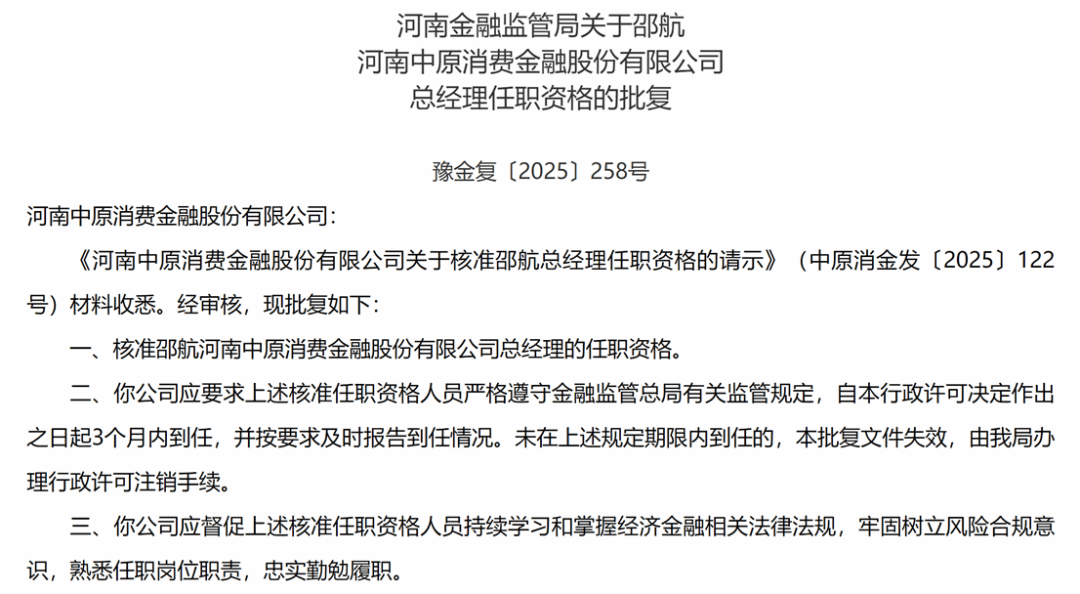
近日,国家金融监管总局河南金融监管局发布任职资格批复,核准了邵航中原消费金融总经理的任职资格,邵航成为该公司新任总经理。 图片来源:国家金融监管总局河南金融监管局官网 据多家媒体报道,邵航参与了中原消费金融的筹建,先后担任中原消费金融董事、总经理助理,2020年8月至今任中原消费金融副总经理。 在此之前,邵航曾供职海尔集团,曾担任海尔集团财务有限责任公司消费金融事业部总经理、海尔消费金融公司市场部总经理。 中原消费金融前任总经理为周文龙,今年10月份,周文龙已获批担任海尔消费金融总经理职位。 今年上半年,中原消费金融业绩增长迅速。中原消费金融实现营收21.5亿元,同比增长了29.52%;实现净利润3.26亿元,较年初增长了30.4%。 大鱼财经金融组 ...
中原消费金融第二任总经理落定 邵航升任总经理
2 1 Shi Ji Jing Ji Bao Dao· 2025-11-07 10:46
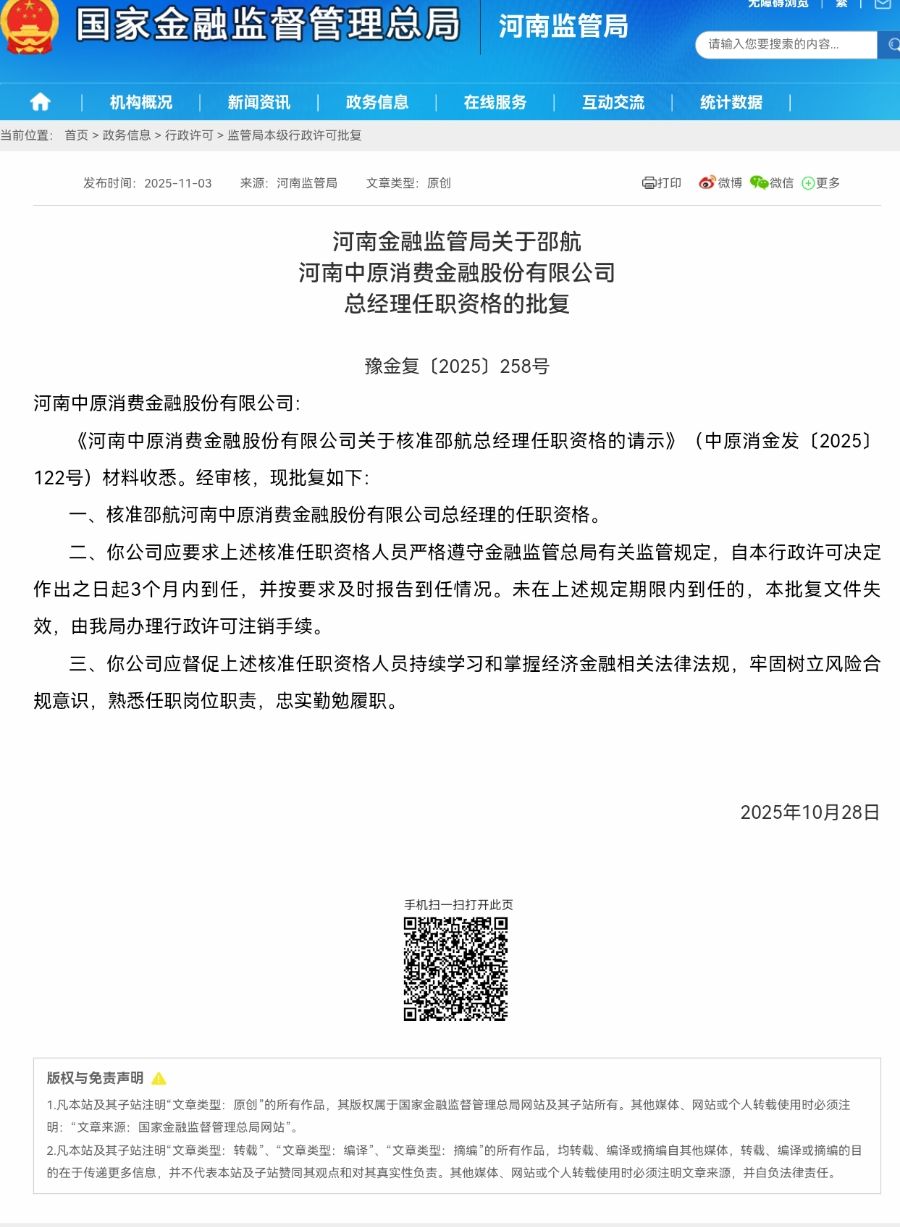
11月7日,国家金融监管总局河南监管局发布任职资格批复,核准邵航河南中原消费金融股份有限公司(下文简称"中原消费金 融")总经理的任职资格,邵航正式成为该公司第二任总经理。 21世纪经济报道记者李览青 中原消费金融迎来一位兼具产业系与银行系消金从业经历的总经理。 国家金融监督管理总局 河南设置局 在线服务 互动交流 《河南中原消费金融股份有限公司关于核准邵航总经理任职资格的请示》(中原消金发〔2025〕 122号) 材料收悉。经审核,现批复如下: 一、核准邵航河南中原消费金融股份有限公司总经理的任职资格。 二、你公司应要求上述核准任职资格人员严格遵守金融监管总局有关监管规定,自本行政许可决定 作出之日起3个月内到任,并按要求及时报告到任情况。未在上述规定期限内到任的,本批复文件失 效,由我局办理行政许可注销手续。 三、你公司应督促上述核准任职资格人员持续学习和掌握经济金融相关法律法规,牢固树立风险合 规意识,熟悉任职岗位职责,忠实勤勉履职。 2025年10月28日 版社 三十三日 日 文章类型:原创"的所有作品,其版权属于国家金融监督管理总局网站及其子站所有。其他媒体、网站或个人转载使用时必须注 国家金融监督 ...
中原消费金融第二任总经理落定,邵航升任总经理
2 1 Shi Ji Jing Ji Bao Dao· 2025-11-07 10:33
21世纪经济报道记者李览青 在加入中原消金之前,邵航曾供职海尔集团,曾担任海尔集团财务有限责任公司消费金融事业部总经 理、海尔消费金融公司市场部总经理,具备产业系与银行系消费金融机构的双重从业经历。 邵航曾多次在公开发言中表示,消费金融机构实现"普"与"惠"的平衡,应当提高风险定价能力、成本控 制水平等综合能力。 近期,多家消费金融公司开启高管轮转变动,董事长、总经理及高管频繁出现人事变动,包括京东消费 金融、建信消费金融、锦程消费金融、晋商消费金融等,此前中原消金首任总经理周文龙赴海尔消金出 任总经理一职,任职资格已获批。 中原消费金融迎来一位兼具产业系与银行系消金从业经历的总经理。 11月7日,国家金融监管总局河南监管局发布任职资格批复,核准邵航河南中原消费金融股份有限公司 (下文简称"中原消费金融")总经理的任职资格,邵航正式成为该公司第二任总经理。 据了解,邵航是消费金融行业的"老人",在中原消费金融筹建之初就加入了该公司,与该公司首任总经 理周文龙一样,已在公司供职达10年,先后担任中原消金董事、总经理助理,2020年8月至今任中原消 费金融副总经理。 ...
中原消费金融迎来新任总经理,由邵航接棒
Bei Jing Shang Bao· 2025-11-07 08:50
Core Viewpoint - The appointment of Shao Hang as the new general manager of Zhongyuan Consumer Finance Co., Ltd. has been approved by the Henan Regulatory Bureau of the National Financial Regulatory Administration, indicating a strategic leadership change within the company [1] Company Summary - Shao Hang has been involved in the establishment of Zhongyuan Consumer Finance and has held various positions including director and assistant general manager, demonstrating a strong internal knowledge of the company [1] - Prior to joining Zhongyuan Consumer Finance, Shao Hang worked at Haier Group, where he served as the general manager of the Consumer Finance Division and the marketing department general manager, showcasing his dual experience in both industrial and banking sectors of consumer finance [1] - His extensive background provides him with a deep understanding and unique insights into the consumer finance industry, which may benefit the company's strategic direction [1]
中银消费金融有限工司人工咨询号码
Sou Hu Cai Jing· 2025-11-07 07:38
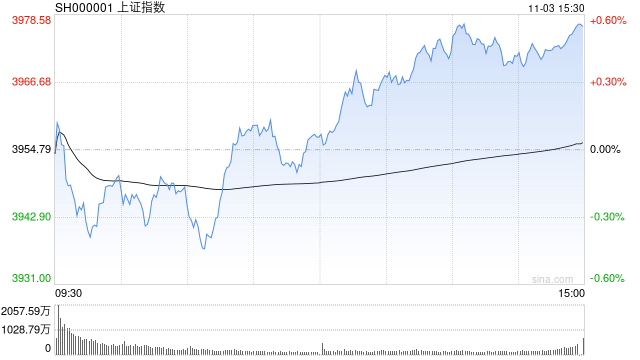
Market Overview - The market showed mixed performance with the Shanghai Composite Index slightly up by 0.05% while the Shenzhen Component and ChiNext Index both fell over 1% [2] - The number of rising stocks exceeded 2600, indicating a generally positive sentiment despite some declines in specific sectors [2] Key Sectors - **Hainan Free Trade Zone**: Stocks such as Intercontinental Oil and Gas and Haima Automobile reached their daily limit up, driven by positive sentiment regarding the alignment of the China-ASEAN Free Trade Area 3.0 with Hainan's development [4] - **Coal Sector**: Antai Group hit the daily limit up, with other coal stocks also performing well. The price of coking coal increased by 10.29% over the last 60 days, reaching 1581.25 RMB per ton [5] Policy and Corporate Developments - **AI and Manufacturing**: The Ministry of Industry and Information Technology emphasized the importance of integrating AI into manufacturing, aiming to enhance productivity and innovation across key industries [7] - **Leadership Change at Kweichow Moutai**: A change in leadership occurred with Chen Hua taking over as the new chairman, which may influence the company's strategic direction [8] Financial Insights - **OpenAI's Revenue**: OpenAI's CEO expressed optimism about the company's revenue, claiming it exceeds the previously reported $13 billion, despite ongoing losses [9] - **Shishi Pharmaceutical's Approval**: Shishi Pharmaceutical's Vitamin B6 injection received approval for consistency evaluation, which could enhance its market position [10] Investment Outlook - **Solid-State Battery Technology**: The solid-state battery sector is expected to see accelerated capital expenditure and a potential reversal in supply-demand dynamics, with significant growth anticipated from 2025 onwards [11] - **Energy Storage Market**: The energy storage market is poised for growth driven by economic factors and increasing demand from data centers, with lithium battery demand expected to grow over 30% by 2026 [11]
AI大模型如何赋能消费金融?多家消金公司透露应用细节
Mei Ri Jing Ji Xin Wen· 2025-11-06 09:35
Core Insights - The deployment of AI large models in consumer finance companies has shown significant results by 2025, enhancing various business operations [1] - Different companies focus on distinct aspects of AI large models based on their resources and strategic goals [1] Group 1: AI Applications in Consumer Finance - Ant Group's consumer finance emphasizes the role of digital technology in addressing inclusive finance challenges, creating a three-in-one ecosystem for inclusive credit services [2] - The company has developed a financial recognition model that can identify over 20 types of self-certification materials, improving customer profiling for precise credit granting [2] - Hangzhou Consumer Finance has established a "credit brain" risk control system to balance business growth and risk management, focusing on intelligent, digital, and systematic credit risk management [2][3] Group 2: Challenges and Governance in AI - The industry faces challenges in ensuring safety and compliance in AI applications, as current models often provide probabilistic outputs that may pose risks [4] - There is a need for a comprehensive AI governance framework that covers the entire chain from algorithms to data to enhance precision and reliability in financial applications [4] - The integration of large and small models is suggested to meet the rigorous demands of financial scenarios [4] Group 3: Post-loan Management Strategies - The consumer finance sector is shifting its focus from traditional debt collection to relationship management, emphasizing sustainable customer engagement [5] - The use of AI models like "Zhi Lu" enables real-time decision-making and enhances post-loan service efficiency by allowing AI to handle standard tasks while human experts focus on complex interactions [6] - The company has developed a comprehensive consumer protection management system that utilizes AI for fraud prevention and precise targeting of illicit activities [6]
119家金融机构已披露助贷合作方名单 中互金:存在四大问题
Xin Jing Bao· 2025-11-06 04:50
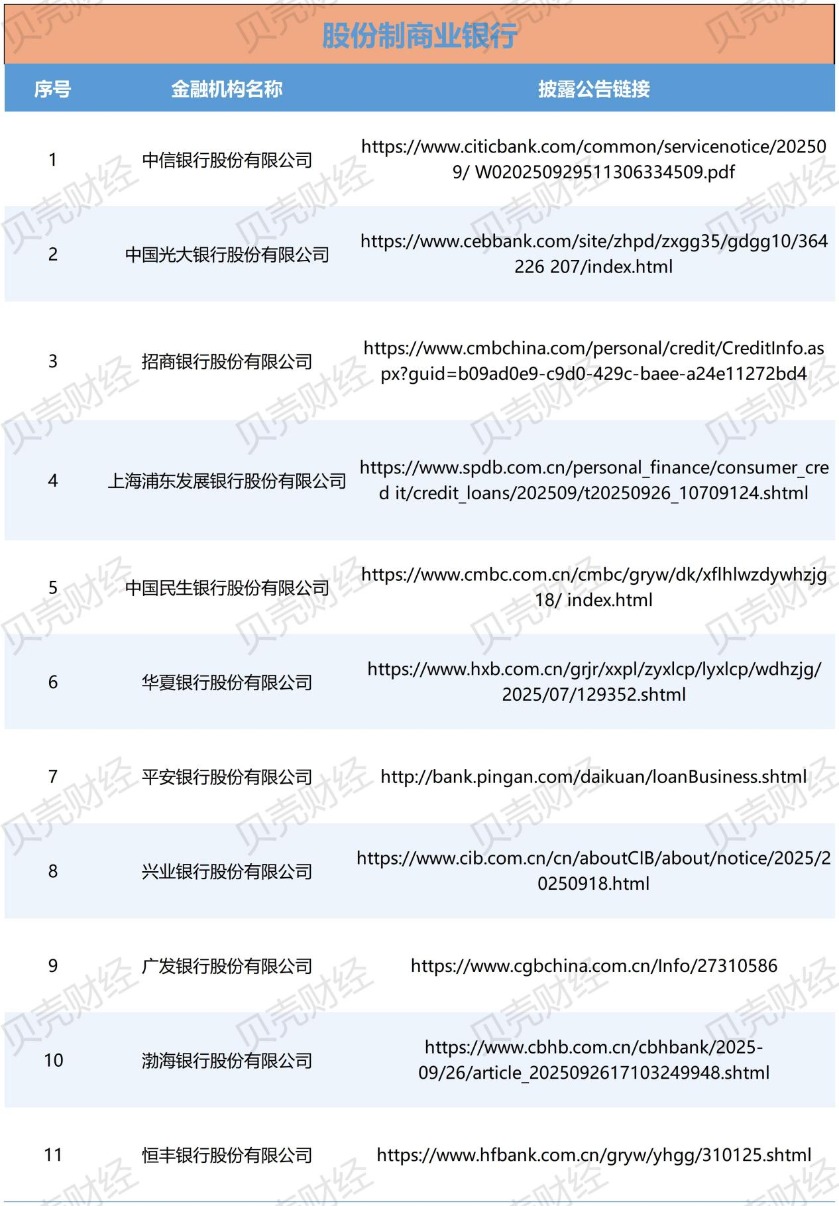
Core Points - The China Internet Finance Association (CIFA) released an announcement summarizing the disclosure status of 119 domestic financial institutions' internet lending business cooperation partners as of October 31 [1] - CIFA identified four major issues regarding the non-compliance and inaccuracies in the disclosure of lending partners by financial institutions [1] Group 1: Overview of Financial Institutions - The 119 financial institutions include 11 national joint-stock banks, 39 city commercial banks, 5 rural commercial banks, 16 private banks, 10 foreign banks, 30 consumer finance companies, 7 trust companies, and 1 direct bank [1] Group 2: Issues Identified by CIFA - The first issue is that the disclosure locations for lending partner lists are often obscure and lack search functionality, making them difficult to find [22] - The second issue is that the disclosure titles are merely "Announcement" and do not follow a chronological order or indicate the update time [22] - The third issue involves financial institutions updating the disclosure lists by directly overwriting the original announcement content [23] - The fourth issue is that the names of disclosed cooperation partners are not standardized, often only showing the group name or indicating that the partner has been renamed or deregistered [23] Group 3: Recommendations by CIFA - CIFA proposed three recommendations to improve the disclosure of lending business cooperation partners, emphasizing that financial institutions should disclose information in a manner that is easy for consumers to access [23]
消费金融公司应加快迈向高质量发展 访招联首席研究员、上海金融与发展实验室副主任董希淼
Jin Rong Shi Bao· 2025-11-06 04:09
Core Viewpoint - The implementation of new regulations for consumer finance companies aims to enhance compliance and risk management, promoting high-quality development in the industry [1][2][3]. Regulatory Changes - The new regulations, including the "Consumer Finance Company Management Measures" and the "Loan Assistance New Regulations," are designed to strengthen the professional role of consumer finance companies and protect consumer rights [1][2]. - The recent push to lower the comprehensive financing costs for borrowers indicates a shift towards a more regulated and sustainable growth model for consumer finance companies [2][3]. Industry Challenges - Smaller consumer finance companies that overly rely on loan assistance services face significant pressure due to the new regulatory environment [2][3]. - Many consumer finance companies currently lack independent customer acquisition and risk management capabilities, relying heavily on external platforms [3][6]. Development Opportunities - Consumer finance companies are expected to have good growth potential, as they play a crucial role in enhancing consumer spending [3][4]. - The focus on "responsible consumer finance" encourages companies to transform regulatory pressures into opportunities for improving customer acquisition and risk management capabilities [3][4]. Strategic Recommendations - Companies should seek differentiation in their offerings by focusing on specific consumer segments or scenarios, leveraging technology to enhance their core competencies [4][5]. - There is a need to improve risk pricing and operational efficiency, utilizing data analytics and AI for precise customer profiling and differentiated pricing strategies [4][5]. - Companies should optimize their business models by reducing reliance on guarantee and credit enhancement mechanisms, transitioning to a model that emphasizes independent risk control [5][6]. Compliance and Consumer Protection - Strengthening compliance management is essential for survival, requiring the integration of compliance into all business processes and enhancing consumer rights protection mechanisms [6][7]. - Companies must actively manage their partnerships with loan assistance platforms to ensure compliance and minimize consumer complaints [6][7].