农产品种植

Search documents
爱莓庄:推动中国农产品品牌走向世界
Zheng Quan Ri Bao Wang· 2025-09-26 13:49
Core Insights - The article highlights the recognition of Aimeizhuang as the leading producer of blueberries in China for the 2024/2025 season, awarded by Frost & Sullivan at the Asia International Fruit and Vegetable Expo in Hong Kong [1] - Shenzhen Noposion Crop Science Co., Ltd. is leveraging its expertise in the blueberry industry to establish a complete supply chain from cultivation to brand sales, focusing on a single specialty crop model [1][2] Company Developments - Aimeizhuang has developed over 50,000 acres of substrate blueberry bases in Yunnan since establishing its first farm in 2020, positioning itself among the top producers globally [1] - For the 2024/2025 production season, Aimeizhuang plans to utilize nearly 30,000 acres of greenhouse space, expecting a yield exceeding 40,000 tons, with exports to over 10 countries and regions including Japan and Southeast Asia [1] Research and Technology - Noposion's R&D center is actively engaged in various agricultural research areas, including water-based pesticide formulations and biological pest control, with a team of over 100 PhD and master's degree holders conducting field research [1][2] - The company employs digital technology to create a comprehensive management system that monitors plant health and optimizes supply chain processes, ensuring high-quality and high-yield blueberry production [2] Strategic Vision - Noposion aims to redefine Chinese agriculture by adopting an industrialized and standardized approach, aspiring to align with world-class agricultural standards and envisioning the future of agriculture over the next 30 to 50 years [2]


连续2天下单,上百万吨阿根廷大豆运往中国,美国农民再遭重创
Sou Hu Cai Jing· 2025-09-26 13:36
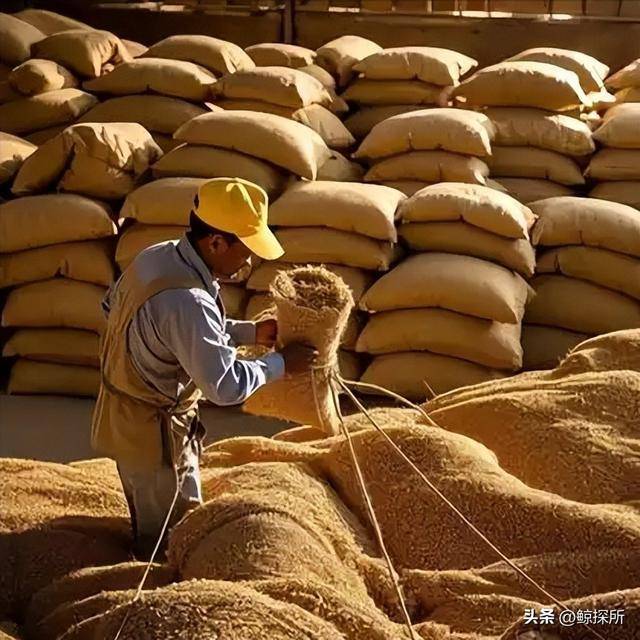
9月23、24日,有消息传出:中国买家连着两天出手,直接敲定了上百万吨阿根廷大豆的订单。 这批豆子正等着从阿根廷港口装船,浩浩荡荡运往中国。 可这边中国忙着下单收货,另一边美国中西部的农民却愁得睡不着觉,本来盼着丰收季能靠中国订单赚 笔钱,这下好了,订单飞到了别人的手里,自己的日子又要不好过了。 中国下订单 9月22号,阿根廷发了个公告:宣布暂时取消谷物、牛肉、家禽肉等农产品的出口预扣税。 这事儿搁以前想都不敢想,之前阿根廷收的出口税高达30%,就算它是全球第三大大豆出口国,这么高 的税让它根本没法跟美国、巴西抢生意。 而阿根廷的这一操作,其实也是有原因的。 他们家货币比索贬得厉害,物价涨得没边儿,手里能换外汇的钱也少得可怜,所以才想着靠取消出口 税,让自家农产品在国际上卖得更便宜、更有竞争力,多赚点美元回来,好稳住货币汇率。 不过虽说阿根廷的"零税出口"政策不是长期的,但当地农民是真真切切尝到了甜头。 环球网的报道 对农民来说,这政策最直接的好处就是:成本降了,手里的钱变多了! 美国 StoneX 集团算过一笔账,之前阿根廷大豆每蒲式耳得交差不多3美元的税,现在税一取消,相当于 每吨大豆和玉米的成本全部都省 ...

中国0购买,美国豆农坐不住了!
Jin Tou Wang· 2025-09-26 10:26
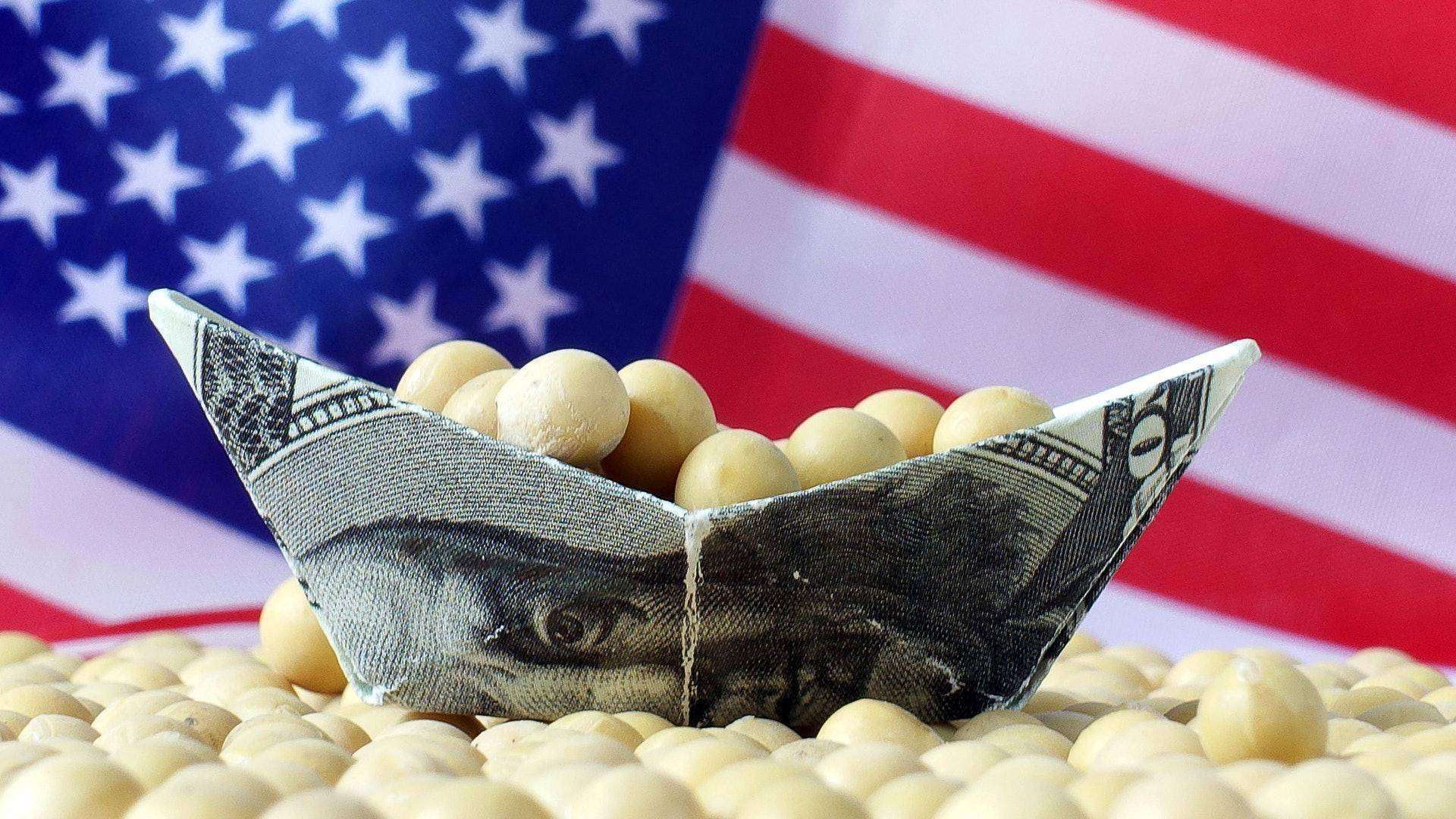
Core Insights - The article discusses the significant decline in U.S. soybean exports to China, highlighting a complete halt in imports for the first time in over 20 years, despite a record high soybean production in the U.S. [2][3] - The U.S. soybean market is facing a crisis, with prices dropping by 40% and farmers struggling to sell their crops, leading to dire economic consequences for the agricultural sector [3][4] - The trade dynamics have shifted, with China turning to South American suppliers, resulting in a projected loss of $20 billion for the U.S. market if China does not resume purchases [4][5] Group 1: Trade Dynamics - The U.S. soybean production has reached a historical high, but the absence of Chinese orders has led to widespread unsold inventory and financial distress among farmers [3] - In August, China imported 12.27 million tons of soybeans, all from Brazil and Argentina, completely avoiding U.S. soybeans [3] - The U.S. agricultural sector is experiencing a severe crisis, with the number of farm bankruptcies rising by 55% last year, and projections indicate this trend may continue [4] Group 2: Economic Impact - The Chicago Agricultural Resources Company estimates that if China does not purchase soybeans by mid-November, the U.S. could lose 14 to 16 million tons of orders, equating to a market evaporation of $20 billion [4] - The agricultural crisis is affecting not only soybean farmers but also related industries, with a potential impact on over $2.8 trillion of the U.S. economy [3][4] - The article emphasizes that the agricultural crisis is unprecedented, with some industry leaders referring to it as a "farm apocalypse" [4] Group 3: Lessons from the Trade War - The trade conflict serves as a lesson that tariffs can backfire, harming domestic producers more than intended, as evidenced by the highest bankruptcy rates among U.S. agricultural small businesses in five years [5] - The article highlights the importance of trade diversification, noting that U.S. agricultural exports to China are expected to drop from 20% to 12% by 2024, while Brazil's share is projected to rise to 22% [5] - The overarching message is that attempts to use trade dominance as a weapon can lead to market exclusion, reinforcing the need for cooperation and openness in trade [5][6]
特色产业绘就农文旅融合发展“龙山样板”
Qi Lu Wan Bao· 2025-09-25 22:16
Core Viewpoint - The article highlights the successful implementation of a "cultural and agricultural tourism integration" development model in Longshan Street, focusing on the goal of "strong villages and common prosperity" through cultural empowerment, collaborative development, brand leadership, and coordinated services [1] Cultural Empowerment - Longshan Street has established a "cultural + agriculture + tourism" integration system, creating a demonstration area named "Cultural Longshan. Memory of the Countryside" by connecting 19 villages' cultural, industrial, and land resources [1] - Seasonal cultural tourism IPs have been developed, including various festivals and activities that attracted over 1 million visitors and generated sales of over 50 million yuan in agricultural products [1] - Immersive experience nodes have been created, receiving over 80 study groups and involving more than 5,000 participants, leading to the creation of over 300 jobs [1] Collaborative Development - The focus is on the synergistic development of local specialty industries, with significant investments in projects like "Berry Fragrance Longshan," which has increased strawberry planting area to over 5,000 acres, generating additional income of over 160,000 yuan for 11 villages [2] - The cultivation of dragon mountain raspberries has expanded to 13,200 acres nationwide, benefiting 1,072 farmers, while dragon mountain millet has reached over 3,000 acres and won multiple awards [2] - Technological empowerment is emphasized through collaborations with agricultural research institutions to enhance cultivation techniques and establish resource banks [2] Brand Leadership - The establishment of the "Longshan Flavor" regional public brand has led to the creation of an integrated online and offline sales system, including the launch of the Longshan Flavor Dream Factory [3] - Over 700 fresh tofu workshops and more than 100 nationwide partnerships for Longshan tofu have been developed, creating over 1,600 job opportunities [3] - The brand value of "Longshan Flavor" has surpassed 100 million yuan, positively impacting over 15 villages and benefiting more than 3,000 people [3] Coordinated Services - A comprehensive interest connection mechanism has been established to support the development of specialty industries, with over 50 meetings held to address investment, sales, and conflict resolution challenges [4] - The industrial development environment has been optimized through infrastructure improvements and community management initiatives, including over 2,500 clean-up events [4][5] - Collaborative efforts with local governance and mediation centers have effectively resolved 12 industrial disputes and addressed 88 farmer requests, fostering a conducive development environment [5]
产值超9600亿元!地理标志让“土特产”变致富“金名片”(新华社)
Xin Hua She· 2025-09-25 08:04
Core Insights - The article highlights the significance of geographical indications (GIs) in enhancing agricultural income and promoting regional specialties in China, with over 4,000 recognized GI products and an annual output value exceeding 960 billion yuan [1][2]. Group 1: Economic Impact of Geographical Indications - China has recognized over 4,000 geographical indication products, with more than 7,000 registrations for collective and certification trademarks, and over 46,000 approved entities using GI special marks [1]. - The direct annual output value of GI products in China has surpassed 960 billion yuan [1]. - In Zhejiang Province, 350 GI industrial clusters have been cultivated, generating an annual output value exceeding 100 billion yuan and benefiting 130,000 farmers [1]. Group 2: Case Studies of Successful Geographical Indications - The "Yongyou" hybrid rice has been planted across 17 provinces, yielding an additional 6.4 billion kilograms of rice and generating over 16.8 billion yuan in economic benefits [1]. - The "Juyuan Strawberry" in Jiangsu Province has been registered as a GI, with over 5,000 acres of cultivation and an average output value of 40,000 yuan per acre, benefiting over 300 local farmers and promoting tourism and leisure agriculture [2]. - "Baoshan Small Coffee" has been exported to over 10 countries, with a total of 2,400 tons and revenue of 57.44 million yuan since its GI registration in 2011, establishing itself as a recognized brand in the international market [3]. Group 3: Policy and International Cooperation - The National Intellectual Property Administration has facilitated the mutual recognition and protection of GIs with countries like the EU and Thailand, resulting in 110 Chinese GI products receiving protection abroad [3].
特朗普最想要的,中国转身给了阿根廷,一口气签下15笔大单!美国农民再遭重创
Sou Hu Cai Jing· 2025-09-25 06:57
Core Insights - The U.S. farmers are facing a significant downturn in soybean sales to China, which has historically been a major market for U.S. soybeans, leading to a trade freeze this season [2][4] - The Trump administration's efforts to increase soybean purchases from China have not yielded results, prompting China to pivot towards South American suppliers, particularly Argentina [2][4] - Argentina's recent policy change to suspend export taxes on agricultural products has allowed Chinese companies to quickly secure soybean deals, totaling approximately 650,000 tons [2] - The shift in China's sourcing strategy indicates a reduced reliance on U.S. soybeans, with projections showing that only 20% of China's soybean imports will come from the U.S. in 2024 [2][4] U.S. Farmers' Challenges - Despite a record high soybean production in the U.S., prices have plummeted by 40% due to the loss of the Chinese market, severely impacting profit margins for farmers [4] - The U.S. Department of Agriculture estimates that if China does not resume purchases by mid-November, U.S. soybean exports to China could decrease by 14 to 16 million tons, posing a significant threat to the U.S. agricultural sector [4] - The trade war initiated by the Trump administration has backfired, causing substantial economic losses for American farmers and raising questions about the effectiveness of U.S. trade policies [4] Global Supply Chain Dynamics - The current situation highlights a broader shift in global agricultural supply chains, with South American countries emerging as key players in the market due to favorable conditions and policy support [4] - China's adjustment in market strategy is accelerating the trend of sourcing soybeans from South America, further solidifying its supply chain in the region [2][4] Future Trade Relations - The potential for U.S.-China trade relations to return to normalcy remains uncertain, with calls for a reassessment of trade policies to avoid further losses for American farmers [5] - The Chinese ambassador to the U.S. has emphasized that agriculture should not be politicized, advocating for a mutually beneficial approach to trade [5] - The ongoing reshaping of global supply chains suggests that adaptability will be crucial for future competitiveness in the agricultural sector [5]
山东泗水:生态活水滋养幸福之源
Jing Ji Ri Bao· 2025-09-24 22:55
Core Viewpoint - The article emphasizes the importance of ecological protection and sustainable development in Sishui County, highlighting how ecological advantages are being transformed into economic benefits through various initiatives and industries [1][3][4]. Group 1: Water Resource Management - Sishui County has 91 reservoirs with a total water resource volume of 286 million cubic meters, and it has achieved a 100% compliance rate for drinking water quality standards in 2024 [1]. - The Yincheng Reservoir has significantly improved irrigation capabilities and water quality, enhancing agricultural stability and productivity [2]. Group 2: Agricultural Development - The local agricultural sector, particularly sweet potato farming, benefits from reliable water sources, leading to high yields and quality, with over 800 acres planted this year [2]. - The sweet potatoes produced are marketed in regions such as Hebei, Jiangsu, and Shanghai, contributing to local economic growth and employment [2]. Group 3: Industrial Growth - Sishui County is focusing on the food industry as a key pillar for economic development, leveraging its ecological resources to enhance business opportunities [3]. - The county has 28 large-scale food enterprises projected to generate revenues of 2.947 billion yuan and profits of 96.012 million yuan by mid-2025 [3]. Group 4: Future Development Plans - Future initiatives will include increased investment in ecological protection, mining restoration, and river management, alongside the development of eco-tourism and cultural experiences [4].
【兴平】辣椒获全国名特优新农产品产销对接活动“最受欢迎产品”
Shan Xi Ri Bao· 2025-09-24 22:50
9月15日到17日,由农业农村部主办的全国名特优新农产品产销对接活动在厦门国际会展中心举 办。兴平市金鹏农业专业合作社参展的兴平辣椒荣获2025全国名特优新农产品产销对接活动"最受欢迎 产品"。 本次对接活动以"品牌赋能、渠道拓展"为核心,通过"展示展销+洽谈签约"的模式,推荐全国名特 优新农产品。作为国家地理标志产品,兴平辣椒以椒身细长、深红光亮、肉厚籽多、香味浓郁、油分充 足的独特品质成为活动现场的焦点之一。活动期间,兴平市金鹏农业专业合作社同10余家采购商达成合 作,签约金额突破500万元。 近年来,兴平市立足资源禀赋,大力发展辣椒种植这一传统优势产业。依托西北农林科技大学等科 研力量,建立辣椒种质资源库,提纯复壮"兴平线椒""8819"等传统品种。同时,搭建数字化管理平台, 为5个标准化生产基地和千亩核心生产基地配备农残速测设备和病虫害防控及物联网设施,实现质量安 全"一码溯源",全市辣椒抽检合格率连续5年保持100%。 据悉,兴平从明朝中叶开始种植辣椒,距今已有几百年历史。目前,辣椒核心种植区1万余亩,年 产干辣椒300多万公斤。2010年,兴平市辣椒被授予国家地理标志保护产品,2021年入选农业农 ...
农产品日报:苹果好货不足,红枣供需乏力-20250924
Hua Tai Qi Huo· 2025-09-24 05:44
Group 1: Report Industry Investment Rating - The investment rating for both the apple and红枣 industries is neutral [4][8] Group 2: Report's Core View - For the apple industry, the current inventory level is low, providing bottom - price support. New - season high - quality apples have high prices, affecting the sales of inventory apples. The price is expected to remain stable in the short term [4] - For the红枣 industry, the 2024 production season had large output and high inventory but poor quality. The market is transitioning from the off - season to the peak season, with inventory pressure still present. If the subsequent assessment of yield and quality is lower than expected, the upward trend of红枣 prices may continue, and the demand for Mid - Autumn and National Day holiday stocking also needs attention [7][8] Group 3: Summary by Related Catalogs Apple Market News and Important Data - Futures: The closing price of the apple 2601 contract yesterday was 8288 yuan/ton, a change of - 3 yuan/ton or - 0.04% from the previous day. - Spot: The price of Shandong Qixia 80 first - and second - grade late Fuji was 3.80 yuan/jin, unchanged from the previous day, with a spot basis of AP01 - 688, a change of + 3 from the previous day. The price of Shaanxi Luochuan 70 and above semi - commercial late Fuji was 4.80 yuan/jin, unchanged from the previous day, with a spot basis of AP01 + 1312, a change of + 3 from the previous day [1] Recent Market Information - In the Shandong production area, some Red Generals are in the later stage, with small - truck customers preferring low - priced Red Generals. The sales of old stored Fuji in Shandong Qixia and Penglai have slowed down. In Shaanxi Yan'an Luochuan, different varieties of apples have different price ranges. In Liaoning Wafangdian, the prices of different varieties of early - maturing apples are also given. The late - maturing Fuji is gradually being de - bagged, and attention should be paid to its quality and the price trend of pre - harvested Fuji [2] Market Analysis - The apple futures price closed slightly lower yesterday. The spot - end prices in production areas are differentiated, with high - quality goods having a premium. The double - festival stocking in sales areas is progressing as needed. The current basis shows short - term support. Attention should be paid to the situation after the late - maturing Fuji is de - bagged and the inventory reduction progress of stored apples. The picking and bag - removing work of late Fuji is sporadic, and rainfall in the west may delay the large - scale bag - removing time. New - season apples in Shandong have a large price range for Red Generals, and the prices of pre - harvested Fuji are higher than last year. The sales of stored apples in Shandong have slowed down significantly [3] Strategy - The strategy is neutral. The current inventory level is low, and the price has bottom support. The high price of high - quality new - season apples affects the sales of stored apples, and the price is expected to remain stable in the short term [4] Red Dates Market News and Important Data - Futures: The closing price of the red date 2601 contract yesterday was 10780 yuan/ton, a change of + 45 yuan/ton or + 0.42% from the previous day. - Spot: The price of first - grade grey dates in Hebei was 9.50 yuan/kg, unchanged from the previous day, with a spot basis of CJ01 - 1280, a change of - 45 from the previous day [5] Recent Market Information - In the Aksu area, the mainstream mu - yield is 700 - 800 kg, and the jujubes are in the sugar - increasing period. In the Kashgar area, a small number of jujubes have started to wrinkle. In the Hebei Cuierzhuang market, 3 trucks of red dates have arrived, and the prices are stable. Different grades of red dates have different price ranges [6] Market Analysis - The red date futures price closed higher yesterday. The price of first - grade grey dates in Hebei in the spot market remained the same as before. The replenishment of merchants in sales areas is carried out as needed, and the double - festival stocking has not started significantly. The current basis has further narrowed. Attention should be paid to the impact of production - area weather on supply, the release of consumption - end stocking momentum, and the realization of futures long - term expectations. The 2024 production season of red dates had large output and high inventory but poor quality. The market is transitioning from the off - season to the peak season, with inventory pressure still present. The new - season jujube trees may have over - exhaustion problems, and the expected output reduction is strong [7] Strategy - The strategy is neutral. The jujubes in the Xinjiang main production area are in the sugar - increasing stage. Attention should be paid to the impact of rainfall in the main production area on the quality of new - season jujubes. If the subsequent dynamic assessment of yield and quality is lower than expected, the upward trend of red date prices may continue. The demand for Mid - Autumn and National Day holiday stocking also needs attention [8]
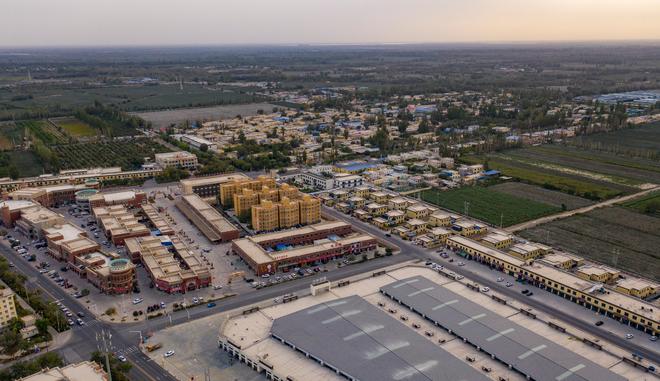
潮涌新疆70年 小村新变:达西村里的幸福日子
Xin Hua She· 2025-09-24 02:13
Core Viewpoint - The transformation of Daxi Village in Xinjiang's Bayingolin Mongol Autonomous Prefecture from a poverty-stricken area to a thriving community through various development initiatives and economic activities [4][10][13]. Group 1: Economic Development - Daxi Village has developed a full industrial chain model comprising "farmer production + enterprise processing and packaging + e-commerce sales + logistics distribution," which has fostered local e-commerce talent and upgraded traditional industries [10]. - In 2024, the collective income of Daxi Village is projected to reach 2.3055 million yuan, with per capita net income for farmers and herdsmen at 39,200 yuan [10]. - The village has expanded its specialty fruit planting area by utilizing idle and abandoned land, guiding villagers to increase their income [15]. Group 2: Community and Infrastructure - The village has established a cultural and tourism commercial street, attracting residents and increasing their income [13]. - Strong grassroots organizations have contributed to the improved quality of life for residents, leading to a "beautiful transformation" of the village [13]. - The local government has been actively involved in assisting villagers, including providing medical services and promoting welfare policies [19][20]. Group 3: Technological Integration - The introduction of smart agricultural technologies, such as drones and automated machinery, has enabled efficient farm management, allowing farmers to operate multiple tasks with a smartphone [11].