
农产品贸易

Search documents
阿根廷豪赌大豆产业,开启“零税卖粮”,只为讨美国主子欢心?
Sou Hu Cai Jing· 2025-09-30 06:25
Core Viewpoint - Argentina is facing an economic crisis triggered by its soybean industry, leading the Milei government to implement a zero-tariff policy to raise $7 billion by the end of October, which has resulted in unforeseen consequences [1]. Domestic Chaos - Following the policy announcement, Argentina experienced immediate turmoil, with large traders hoarding supplies while ordinary farmers suffered from falling grain prices, leading to protests and pressure on the government [3]. - The previous tax reduction policy had increased export volumes but reduced farmers' incomes, highlighting the ineffectiveness of short-term measures [3]. Diplomatic Setbacks - The Milei government's diplomatic strategy has backfired, particularly with a controversial attempt to exchange 300,000 tons of U.S. genetically modified soybeans for entry into the Chinese market, which angered both China and U.S. farmers [5]. - The price of Argentine soybeans, being 10% cheaper than U.S. soybeans, caused U.S. soybean futures to drop to a six-week low [5]. China's Strong Response - China swiftly suspended all soybean orders from Argentina, resulting in 28 million tons of soybeans being stranded at ports, showcasing its robust regulatory capabilities [6]. - New trade rules now require detailed documentation, including GPS coordinates of planting locations and complete transport records, fundamentally changing the trade landscape [6]. Global Impact - The crisis is reshaping the global agricultural trade landscape, with competitors like Brazil and Uruguay increasing supply chain transparency [10]. - Argentina is compelled to upgrade its traceability systems, adopting blockchain technology to meet new standards [10]. - The balance of trade power is shifting from producing countries to consuming countries [12]. Lessons Learned - The crisis serves as a warning to developing countries about the dangers of short-term speculative policies and the risks of geopolitical maneuvering [14]. - Argentina's experience illustrates that when economic foundations are weak, any hasty policy can backfire, and rebuilding trust is more complex than accumulating foreign exchange [16]. - In the era of technological regulation, national credibility is deemed more valuable than gold [17].

海南京粮控股收海南证监局责令改正决定 涉2.99亿元无商业实质贸易
Sou Hu Cai Jing· 2025-09-29 13:12
Group 1 - The core issue involves Hainan Jingliang Holdings Co., Ltd. receiving a corrective administrative measure from the Hainan Securities Regulatory Bureau due to violations related to revenue recognition in its subsidiary's trading activities [1][2] - The company was found to have engaged in trading of palm oil, peanut oil, peanuts, and soybeans without commercial substance or in violation of accounting standards, affecting revenue by approximately 298.63 million yuan, which is 2.51% of the company's audited revenue for 2023 [2] - The company is required to submit a written rectification report to the Hainan Securities Regulatory Bureau within 30 days of receiving the decision [2] Group 2 - Hainan Jingliang Holdings has expressed its commitment to addressing the issue and will undertake necessary corrective actions, stating that the administrative measures will not impact its normal production and operational activities [3] - Zhongde Securities, as the bond trustee, has issued a temporary report to remind investors to pay attention to related risks and to make independent judgments regarding the situation [3]

印度对美出口遇重创!50%关税压得喘不过气,转头抱俄 “粮大腿”
Sou Hu Cai Jing· 2025-09-28 09:34
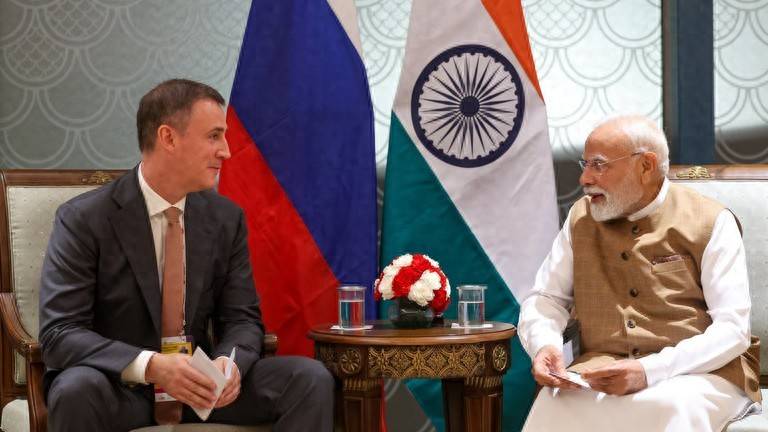
Group 1 - Indian Prime Minister Modi and Russian Deputy Prime Minister Patrushev discussed enhancing "win-win" cooperation in agriculture and related industries during the World Food Expo 2025 in New Delhi [1][3] - The meeting highlighted the establishment of a BRICS food exchange to promote mutual agricultural trade, indicating a strategic partnership between India and Russia [3] - Bilateral trade between India and Russia is projected to reach a record high of $68.7 billion in the fiscal year 2024-25, showcasing significant economic cooperation [3] Group 2 - India relies heavily on Russia for fertilizer supplies, with Russia being the largest supplier since 2022; India imported $1.3 billion worth of Russian fertilizers in the first seven months of 2025 [3] - Key agricultural exports from India to Russia include fish, shrimp, rice, tobacco, and tea, with potential for increased agricultural exports from Russia to India [3] - Beyond traditional exports like pulses and oilseeds, there is significant potential for Indian exports of chocolate, baby food, pasta, meat, dairy products, mineral water, juices, alcoholic beverages, and pet food to Russia [4]
西双版纳勐泐米莱莱商贸有限公司成立 注册资本50万人民币
Sou Hu Cai Jing· 2025-09-27 09:32
Core Insights - A new company named Xishuangbanna Mengle Meilai Commerce Co., Ltd. has been established with a registered capital of 500,000 RMB [1] - The legal representative of the company is Yu Nanbian [1] Business Scope - The company is engaged in the sale of pre-packaged food and agricultural products, including wholesale and retail of edible agricultural products [1] - It also provides various services such as supply chain management, technical services, and information consulting [1] - The company is involved in the production, sale, processing, transportation, and storage of agricultural products [1] - Additionally, it includes activities related to the planting and purchasing of traditional Chinese medicine [1] Licensing - The company is required to obtain approval for certain projects, specifically food sales and production [1] - Operations can only commence after receiving the necessary approvals from relevant authorities [1]
海南京粮控股股份有限公司 关于收到海南证监局行政监管措施决定书的公告
Zhong Guo Zheng Quan Bao - Zhong Zheng Wang· 2025-09-27 00:42
Core Viewpoint - The company, Hainan Jing Grain Holdings Co., Ltd., has been ordered by the Hainan Securities Regulatory Bureau to rectify issues related to improper revenue recognition and lack of commercial substance in certain trading activities, which affected 2.51% of its audited revenue for 2023 [1][2]. Group 1 - The company received a decision from the Hainan Securities Regulatory Bureau regarding issues found in its subsidiary's trading activities involving palm oil, peanut oil, peanut kernels, and soybean, with a total revenue amount of 298,629,084.17 yuan [1][2]. - The identified issues violate the "Management Measures for Information Disclosure of Listed Companies" [2]. - The company is required to submit a written rectification report within 30 days and is subject to administrative supervision measures that will be recorded in the capital market integrity database [2][3]. Group 2 - The company emphasizes its commitment to addressing the issues highlighted in the decision and will undertake comprehensive rectification while ensuring that normal production and operational activities are not affected [3]. - The company will enhance trade business management and improve the quality of information disclosure as part of its corrective measures [2][3].
痛失54万吨订单后,加拿大总理放话很快访华,中方已读未回复
Sou Hu Cai Jing· 2025-09-26 11:45
Group 1 - Canadian Prime Minister Carney expressed a desire to meet with Chinese leaders, signaling a potential thaw in relations amid a significant trade dispute [1][3] - The trade conflict began when Canada imposed a 100% tariff on Chinese electric vehicles, leading to swift retaliatory measures from China [5][6] - China has targeted Canadian agricultural products, imposing a 100% tariff on canola oil and meal, and a 25% tariff on seafood and pork, severely impacting Canadian exports [6][8] Group 2 - Canola is a crucial crop for Canada, generating approximately $13 billion in farm cash income annually, with exports to China valued at $4.9 billion in 2024, representing one-third of total canola exports [8][12] - Following the tariffs, canola prices dropped by $30 to $50 per ton, putting many farmers at risk of losses [12] - The Canadian government announced $370 million in support for affected producers, but this is seen as insufficient compared to the need for stable market access [14] Group 3 - China has quickly found alternative suppliers, purchasing 540,000 tons of canola from Australia, which is about 8% of its total canola imports last year [9][11] - The trade dispute highlights the need for Canada to reassess its policies towards China, particularly in sectors like 5G networks and mineral resources [14][16] - The situation poses a challenge for the Carney government, which must balance relations with both the U.S. and China, especially with increasing pressure from the U.S. [16][18]

京粮控股收到海南证监局行政监管措施决定书
Zhi Tong Cai Jing· 2025-09-26 08:05
Core Viewpoint - The company, Jingliang Holdings, has received a corrective measure from the Hainan Securities Regulatory Bureau due to violations in revenue recognition and lack of commercial substance in certain trades [1] Summary by Relevant Sections Regulatory Action - On September 26, 2025, the company received a decision from the Hainan Securities Regulatory Bureau regarding corrective measures [1] - The decision is based on findings that some trades in palm oil, peanut oil, peanut kernels, and soybean conducted by the company's subsidiaries lacked commercial substance and did not comply with accounting standards [1] Financial Impact - The involved revenue amounts to 299 million yuan, which represents 2.51% of the company's audited revenue for 2023 [1] Compliance and Remediation - The company is required to undertake comprehensive rectification, hold accountable relevant personnel, and improve trade business management and information disclosure quality [1] - A written rectification report must be submitted to the Hainan Securities Regulatory Bureau within 30 days of receiving the decision [1]
京粮控股(000505.SZ)收到海南证监局行政监管措施决定书
智通财经网· 2025-09-26 08:03
Core Points - The company received a corrective measure decision from the Hainan Securities Regulatory Bureau regarding certain trading activities [1] - The investigation revealed that some trading activities related to palm oil, peanut oil, peanut kernels, and soybean were lacking commercial substance and did not comply with accounting standards, involving an income amount of 299 million yuan, which accounts for 2.51% of the company's audited revenue for 2023 [1] - The company is required to conduct a comprehensive rectification, hold relevant personnel accountable, and improve the quality of information disclosure within 30 days of receiving the decision [1] Regulatory Actions - The Hainan Securities Regulatory Bureau issued a decision (〔2025〕32号) mandating the company to correct its practices [1] - The company’s actions were found to violate the Information Disclosure Management Measures for Listed Companies [1] - The corrective measures will be recorded in the capital market integrity database [1] Financial Impact - The income amount involved in the violations is 299 million yuan, which is significant as it represents 2.51% of the company's total audited revenue for the year 2023 [1] Compliance Requirements - The company must submit a written rectification report to the Hainan Securities Regulatory Bureau within 30 days of receiving the decision [1] - The company is expected to enhance its trade business management and ensure compliance with disclosure standards [1]
京粮控股:收到海南证监局行政监管措施决定书
Zheng Quan Shi Bao Wang· 2025-09-26 07:57
Core Viewpoint - The company, Jingliang Holdings, has received a corrective order from the Hainan Securities Regulatory Bureau due to violations related to revenue recognition in its trading activities, which could impact its financial integrity and market reputation [1] Summary by Relevant Sections Regulatory Action - The Hainan Securities Regulatory Bureau has decided to impose corrective administrative measures on Jingliang Holdings due to certain trading activities conducted by its subsidiaries [1] - The violations include trading of palm oil, peanut oil, peanuts, and soybeans, with some transactions lacking commercial substance and improper revenue recognition [1] Financial Impact - The involved revenue amounts to 299 million yuan, which represents 2.51% of the company's total operating revenue for 2023 [1] - This situation may affect the company's financial statements and overall market perception [1] Compliance and Integrity - The actions taken by the regulatory body will be recorded in the capital market integrity database, potentially affecting the company's future operations and investor confidence [1]
海南京粮控股因贸易问题收海南证监局责令改正决定
Xin Lang Cai Jing· 2025-09-26 07:50
Core Points - Hainan Jingliang Holdings Co., Ltd. received a corrective measure order from Hainan Securities Regulatory Bureau due to non-compliance in revenue recognition related to palm oil trading [1] - The amount involved in the non-compliance is 298,629,084.17 yuan, which accounts for 2.51% of the company's audited revenue for 2023 [1] - The company is required to submit a written rectification report within 30 days and has stated that it will take the matter seriously [1] Company Response - The company emphasizes that the corrective measures will not affect its normal operations and urges investors to be aware of the risks [1]