农产品种植

Search documents
聚焦科技创新、品牌塑造与城乡融合 走出一条小而精专而强的新路 上海农业丰收背后的密码
Jie Fang Ri Bao· 2025-09-24 02:04
Core Insights - The celebration of the eighth Chinese Farmers' Harvest Festival in Shanghai highlights the city's focus on technological innovation, brand development, and urban-rural integration in modern agriculture [1] Group 1: Technological Empowerment - Shanghai's agricultural success is attributed to technological advancements, with projects like "unmanned farms" achieving full automation in rice planting and blockchain combined with AI creating a trust system for agricultural products [2] - The establishment of the "Agricultural and Rural Data Innovation Laboratory" aims to explore innovative applications of public agricultural data and promote market-oriented data supply mechanisms [2] - Companies like Jiqing Technology are injecting "digital genes" into traditional agriculture, emphasizing that Shanghai's agricultural model does not prioritize large-scale planting but leverages technology for innovation [2] Group 2: Brand Leadership - The focus of Shanghai agriculture is on the added value of agricultural products rather than mere yield, with e-commerce platforms and brand operations driving a new economy [3] - The Shanghai E-commerce Association has initiated a campaign to expand e-commerce development for urban agricultural products, facilitating rapid distribution from farms to tables [3] - Continuous efforts in brand cultivation are evident, with the Shanghai E-commerce Association releasing the "Top 50 New Consumption Brands in Shanghai" list for four consecutive years [3] Group 3: Talent Gathering - The agricultural sector in Shanghai is witnessing a return of skilled individuals, including overseas-educated professionals and urban white-collar workers, contributing to rural vitality [4] - The "whole village operation" model for rural revitalization has gained attention, with agreements signed between rural representatives and operational enterprises to connect urban capital, professional talent, and rural resources [4]
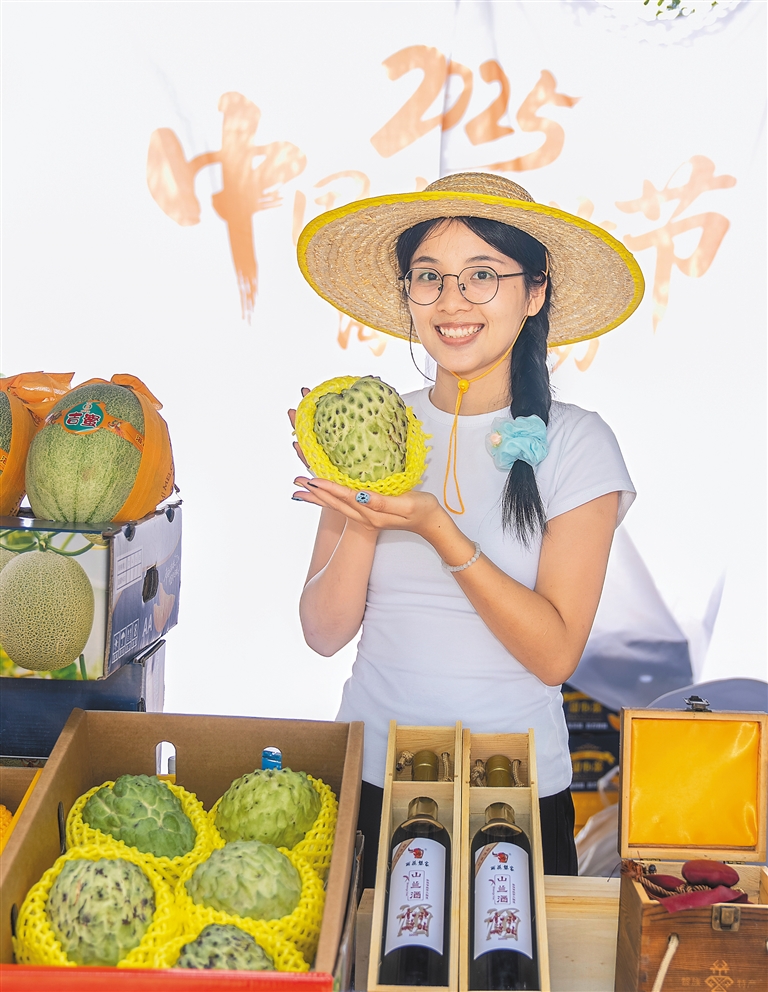
庆农业丰收 享美好生活——2025年中国农民丰收节海南庆祝活动主会场观察
Hai Nan Ri Bao· 2025-09-24 01:16
Core Points - The 8th China Farmers' Harvest Festival was celebrated in Hainan, showcasing local agricultural products and cultural heritage [6][10] - The event highlighted the integration of agriculture with tourism and culture, demonstrating Hainan's achievements in product quality and brand development [6][11] - Hainan has established a strong foundation for agricultural branding, with 119 green food enterprises and 171 products certified as green [9] Agricultural Development - Hainan's agricultural output value reached 129.185 billion yuan in the first half of the year, marking a 5.1% year-on-year increase [12] - The province is experiencing increased production of tropical fruits such as mangoes, lychees, and pineapples, alongside stable growth in livestock and aquaculture [12] Cultural Heritage - The festival featured a non-material cultural heritage exhibition, showcasing traditional crafts and culinary skills, which are integral to Hainan's cultural identity [10] - Hainan has 32 national-level and 103 provincial-level intangible cultural heritage projects, promoting traditional culture and contributing to rural revitalization [10] Regional Branding - The "Danzhou Flavor" brand was launched to promote local agricultural products, enhancing their market competitiveness [11] - Hainan has developed 56 regional public brands and 55 enterprise brands, creating a significant market impact through brand aggregation [11]

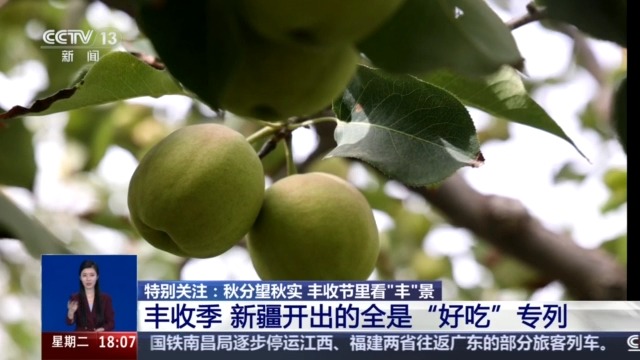
秋分望秋实 丰收季新疆开出的全是“好吃”专列
Yang Shi Xin Wen· 2025-09-23 22:28
Group 1 - The harvest season in Xinjiang is marked by a variety of crops, including fragrant pears, peppers, corn, and cotton, showcasing a vibrant agricultural landscape [1][3][5][7] - In Aral City, 130,000 acres of fragrant pears are being harvested to meet the purchasing demands from various regions [1] - In Tiemenguan City, a large-scale harvest of peppers is taking place, with the peppers being sun-dried in the desert, creating a high demand for dried peppers in the market [3] Group 2 - Yining County has 713,000 acres of corn that are now being harvested, with the corn being collected efficiently by machines [5] - In Manas County, 885,000 acres of cotton are entering the harvest period, with an expected average yield of around 500 kilograms per acre, contributing significantly to the national cotton supply [7] - Xinjiang's cotton production accounts for 90% of the national output, indicating its critical role in the agricultural sector [7]
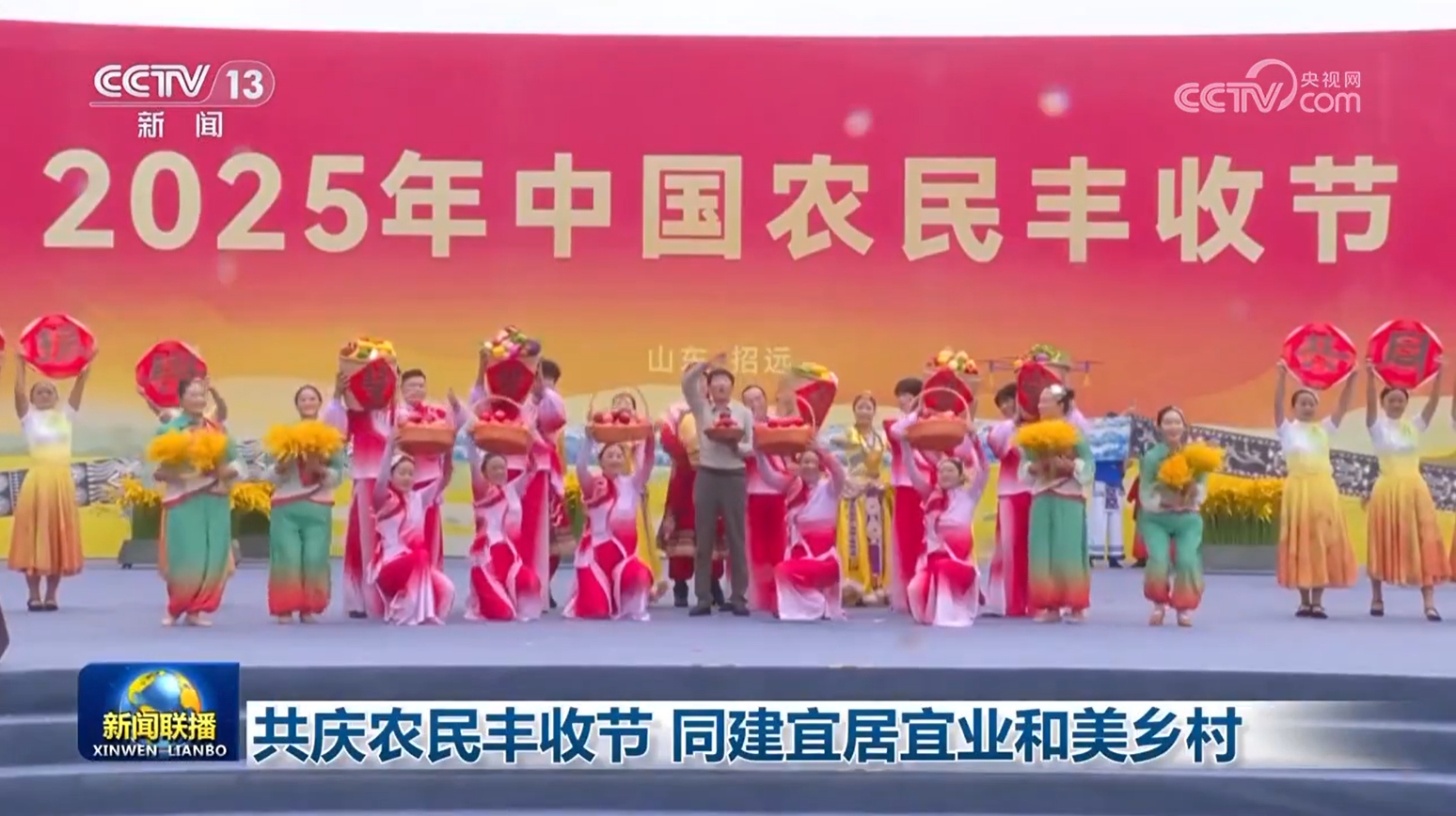
共庆农民丰收节 同建宜居宜业和美乡村
Yang Shi Wang· 2025-09-23 12:42
江苏无锡锡山区严家桥村的千亩稻田边,"苏农优品"丰收季大市集汇聚了来自江苏各地的优质品牌农产品;内蒙古兴安盟、重庆忠县马灌镇、云南芒市 遮放镇等地,农耕文化展示、农民趣味运动会等活动,展现着新时代农民风采和劳动乐趣。陕西榆林致富能手代表向大家介绍致富经验,现场举办的"消费 帮扶农产品认购"活动,销售农产品600多万元。在甘肃兰州皋兰县,特色美食品鉴以及非遗技艺展示等活动,让参与者感受到丰收带来的喜悦之情。安徽铜 陵举办了绿色食品展、农业科技创新成果展等9项特色主题活动,搭建多渠道交流推介平台,展现和美乡村新风貌。宁夏贺兰县、黑龙江北大荒农场、河北 石家庄、四川德阳等地的活动现场,集中展示了先进的农业新品种、农业新技术和农业新装备。 2025年中国农民丰收节主场活动今天在山东烟台招远大户陈家村举办,庆祝丰收联欢、成果展示等活动展示了巩固拓展脱贫攻坚成果同乡村振兴有效衔 接成就,推广种业振兴、现代农机、智慧农业等现代农业发展成果,营销推介全国精品品牌和地方特色农产品。 央视网消息(新闻联播):稻穗金黄、瓜果飘香。9月23日是我国第八个"中国农民丰收节",各地举行丰富多彩的活动,共庆丰收,共享喜悦。 丰收的喜悦洋溢 ...
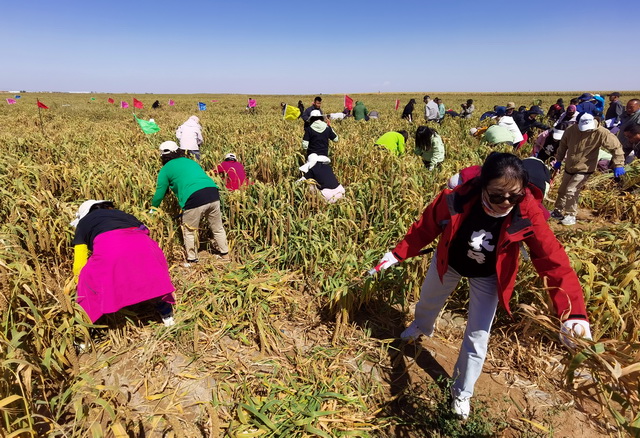
从田野到餐桌,“沙漠节水小米”长成记|一线调研
Di Yi Cai Jing· 2025-09-23 06:18
《"三北"工程总体规划》提出,以防沙治沙为主攻方向,推动森林水库、钱库、粮库、碳库"四库"联动 从小米原粮,到无麸质小米主食、快食小米粥、小米方便面、糙小米脆片,再到原酿小米醋、小米精酿 啤酒…… 产自内蒙古阿拉善的"沙漠节水小米",从田野到餐桌,走进消费者的日常生活;5万多公益支持者加入 了"消费即保护"的行动,让每一次购买成为对土地的守护。 2004年6月5日的世界环境日,近百名企业家以保护生态为目标,在内蒙古阿拉善腾格里沙漠发起成立阿 拉善SEE生态协会。如今,企业家们的梦想逐渐变为现实。 今天(9月23日)是第八个"中国农民丰收节"。在内蒙古自治区阿拉善左旗锡林高勒镇2025年节水小米 秋收现场,第一财经记者看到,沉甸甸的谷穗铺满田野,忙碌的人们脸上洋溢着丰收的喜悦。 打造沙漠节水小米产业生态模式 阿拉善是我国北方沙尘暴策源地之一。早些年,当地农业绿洲地区普遍通过大水漫灌种植高耗水农作物 玉米,对地下水资源的索取远大于自然补给,土地荒漠化日益严重。 如果能选用节水型农作物,促使当地从粗放式的农业生产向节水高效的方式转变,将推动农灌区的可持 续发展和地下水资源的保护。 2014年,阿拉善SEE基金会启动 ...
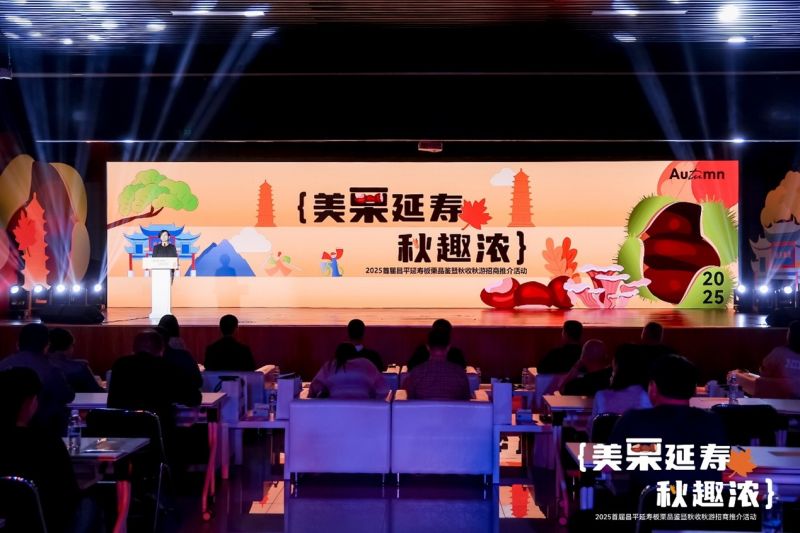
北京昌平延寿镇举办板栗品鉴推介活动 以特色产业助推乡村振兴
Zhong Guo Fa Zhan Wang· 2025-09-23 05:11
Core Viewpoint - The event held in Yan Shou Town aims to promote the local chestnut industry and support rural revitalization through various activities, including chestnut tasting and industry promotion [1][3]. Group 1: Industry Development - Yan Shou Town has embraced the concept of "green mountains and clear waters are invaluable assets," focusing on ecological priority and green development [3]. - The chestnut industry in Yan Shou Town has a planting area of 50,000 acres, with an annual production exceeding 500 tons, forming a product system known as the "Three Treasures of Yan Shou" [5]. - The town has developed deep processing products such as chestnut kernels, chestnut mushroom sauce, and chestnut beer, significantly enhancing the added value of agricultural products [5]. Group 2: Economic Impact - In the first half of 2025, tourism revenue in Yan Shou Town increased by 204.66% year-on-year, while local revenue grew by 78.34%, highlighting the economic impact of the chestnut industry [5]. - The integration of agriculture, culture, tourism, and commerce has led to the development of multiple themed tourism routes, promoting the interconnected growth of scenic spots, homestays, and characteristic villages [5]. Group 3: Business Environment - Yan Shou Town has implemented innovative measures to support industry development, including a trial method for processing business licenses and establishing a technology incubator platform to attract quality social capital [7]. - Collaborations with 13 universities, including Tsinghua University and Peking University, have been established to provide intellectual and talent support for industry development [7]. - The town has successfully created a multi-industry development model, including well-known commercial brands like "Heishan Barbecue" and "Yan Shou Coffee," opening new pathways for farmers to increase income [7]. Group 4: Future Plans - Yan Shou Town plans to deepen the integration of agriculture, culture, tourism, and commerce, accelerate the construction of a 60-kilometer "Yan Shou Trail," and develop a new tourism pattern [7]. - The town is preparing for the 2026 Yan Shou Cross-Country Challenge to create a "Sports+" industry ecosystem and enhance public service facilities to improve living conditions [7].
美国农民明知贸易战会砸饭碗,仍死挺特朗普,真相其实很简单!
Sou Hu Cai Jing· 2025-09-23 04:22
Core Insights - The article highlights the paradox of American farmers supporting Trump despite the negative impact of the trade war on agricultural exports, which saw a 37% drop in U.S. agricultural product exports [3] - It discusses the illusion of government subsidies as a safety net for farmers, which has led them to view their votes as insurance against losses [4][6] - The article emphasizes the financial benefits farmers have gained from tax reforms and relaxed labor policies, which have allowed them to reduce costs significantly [8][10] Group 1: Government Subsidies - During the 2018 trade war, the U.S. Department of Agriculture provided $52 billion in subsidies, which allowed many farmers to cover up to 80% of their losses [4] - Farmers are currently facing uncertainty as promised subsidies for 2024 have not materialized, leading to skepticism about government support [6] Group 2: Labor Policies - The relaxation of H-2A visa policies has enabled farmers to save 30% on labor costs, as workers are paid less than the legal minimum wage and are discouraged from complaining due to visa risks [8] Group 3: Tax Reforms - The reduction of corporate tax rates from 35% to 21% has resulted in significant savings for large agricultural businesses, with some farmers reporting annual tax savings of hundreds of thousands of dollars [10] - The article notes that the shift in Chinese import patterns towards Brazil and Argentina has led to a 28% drop in U.S. soybean export prices, highlighting the risks associated with these financial strategies [10]

中经评论:以节为媒促丰收助增收
Jing Ji Ri Bao· 2025-09-23 00:04
Group 1 - The core idea emphasizes the importance of transforming agricultural harvests into increased income for farmers, highlighting the need for a "harvest economy" that connects production with market demand [1] - The article discusses the challenges farmers face in selling their products at good prices, especially during periods of high supply, which can lead to a situation where "high yield does not equal high income" [1] - It stresses the necessity of a modern agricultural system that balances supply and demand while enhancing the economic benefits for farmers, moving beyond merely increasing production [2] Group 2 - The article suggests that effective market mechanisms are crucial for promoting agricultural consumption, advocating for a dual approach that facilitates both the movement of products from rural to urban areas and encourages urban residents to visit rural areas [3] - It highlights the role of government in supporting rural development, emphasizing the need for targeted assistance measures and the promotion of practical agricultural technologies to improve farmers' livelihoods [3] - The integration of culture and tourism with agriculture is proposed as a way to enhance consumer engagement and stimulate rural economies, suggesting that consumption should extend beyond mere purchasing to include experiences [3]
努力建设宜居宜业和美乡村
Shan Xi Ri Bao· 2025-09-22 22:48
Core Viewpoint - The celebration of the "Chinese Farmers' Harvest Festival" and the greetings from General Secretary Xi Jinping have inspired local agricultural officials and farmers to actively engage in modernizing agriculture and rural areas, aiming for a beautiful future of Chinese-style modernization [1][2]. Group 1: Agricultural Modernization Initiatives - Local agricultural departments are organizing diverse harvest celebration activities to promote urban-rural consumption and enhance community collaboration, focusing on connecting production and sales [1]. - There is a commitment to improving agricultural production capacity through the promotion of advanced technologies and equipment, as well as enhancing the employment stability of farmers [1][2]. - The emphasis on agricultural modernization is seen as crucial for overall national development, with frontline agricultural technicians pledging to improve production capabilities and farmer incomes [1][2]. Group 2: Specific Agricultural Practices and Innovations - A cooperative in Weinan has managed 28,900 acres of land, expecting an average yield of over 1,050 kilograms per acre, marking a significant achievement in grain production [2][3]. - The tea industry in Hanzhong is focusing on standardizing tea production and integrating it with tourism and cultural experiences to enhance product value and attract visitors [3].
收获季,中国订单至今为零,美国豆农感受痛苦
Huan Qiu Shi Bao· 2025-09-22 22:43
Group 1 - The core issue facing U.S. farmers is the lack of orders from China for soybeans during the harvest season, leading to severe economic distress [3][6] - U.S. soybean exports to China are projected to be zero this year, despite an expected export value of $12.8 billion for 2024 [3][6] - The agricultural crisis is exacerbated by high production costs and record yields, resulting in a significant drop in commodity prices, with soybean prices down approximately 40% from 2022 [5][6] Group 2 - The economic crisis is affecting not only farmers but also the entire supply chain, including transportation and logistics sectors, which are facing a sharp decline in demand [7][8] - The potential rise in farm bankruptcies is alarming, with a reported 55% increase in bankruptcies last year, and farmers are experiencing heightened stress levels [6][9] - Calls for the U.S. government to end the trade war with China are growing, as farmers believe that resolving trade issues is crucial for their survival [8][9] Group 3 - The U.S. government has promised over $60 billion in subsidies to farmers, but these funds may not be available until 2026, raising concerns about immediate relief [9] - The long-term impact of the trade war could lead to a decline in land values and reduced production if markets are not restored quickly [9] - The agricultural community is urging the government to prioritize soybean trade negotiations with China to prevent further economic damage [8][9]