乡村文旅

Search documents
艺术乡建添彩乡村全面振兴
Jing Ji Ri Bao· 2025-11-20 00:40
Core Viewpoint - The integration of art into rural development is essential for sustainable growth, but challenges such as lack of local cultural engagement and sustainability issues must be addressed [1][2][3] Group 1: Art in Rural Development - Increasing numbers of artists are revitalizing rural areas, enhancing the aesthetic and cultural landscape through unique perspectives [1] - Art-based rural construction can activate idle resources and promote cultural industry development by redesigning traditional buildings and public spaces [1] Group 2: Challenges in Art-Based Rural Construction - Some projects apply commercial templates, neglecting local culture and resulting in low community participation and recognition [1] - There is a tendency to conform to urban aesthetics, leading to a loss of locality and diversity, with concerns about the sustainability of artistic interventions [1] Group 3: Best Practices and Recommendations - Art-based rural construction should prioritize human-centered approaches, enhancing livability through community-focused public spaces and infrastructure improvements [2] - Collaboration among local governments, village collectives, and art institutions is crucial for systematic funding, project planning, and management [2] - Emphasizing the integration of local resources and creating distinctive regional identities can foster economic development and job creation [2] Group 4: Sustainable Development and Talent Cultivation - Successful art-based rural development requires a focus on preserving natural environments and traditional structures while promoting cultural quality [3] - Establishing a sustainable "internal blood-making" system through local talent cultivation and resource sharing is vital for long-term success [3] - A systematic approach to planning and talent support is necessary to ensure that art genuinely contributes to comprehensive rural revitalization [3]
“苏北第一强区”徐州铜山,“文武双全”谱写发展新篇
Xin Lang Cai Jing· 2025-11-19 02:31
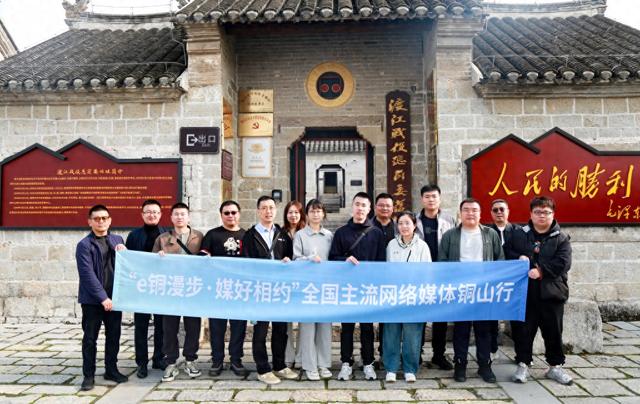
Core Viewpoint - The "e Copper Walk · Media Good Appointment" national mainstream online media copper mountain study tour successfully took place, showcasing the region's high-quality development through its rural cultural tourism and safety industries [1][3]. Economic Performance - The region's GDP reached 148.57 billion, with a year-on-year growth of 7.8%, accounting for one-sixth of Xuzhou's total [3]. - Industrial output and invoicing sales have both surpassed 100 billion, solidifying its role as an economic "ballast" [3]. Rural Cultural Tourism Development - The study tour highlighted the integration of cultural tourism and rural revitalization, with Hanwang Town receiving over 800,000 visitors annually, driven by innovative tourism resources [5][6]. - The "Frog · Two Seasons" theme park has welcomed over 20,000 visitors and generated approximately 3.7 million in revenue since its trial operation began in May [6][8]. - Liang Tang Village has transformed from a struggling economy to a vibrant tourist destination, receiving 164,000 visitors during the recent holiday and achieving a tourism revenue of 1.85 million [8][10]. Safety Industry Growth - The Xuzhou National Safety Technology Industrial Park is a core area for the safety emergency industry, housing 910 safety emergency enterprises and forming a complete industrial chain [10][12]. - The park's development is supported by local industrial needs and the presence of top talent from China University of Mining and Technology [10][12]. - Innovative technologies, such as remote-controlled rescue robots and intelligent monitoring systems, are being developed to enhance public safety [11][12]. Strategic Development Framework - Copper Mountain has established a clear "312" industrial system, focusing on three leading industries moving towards high, intelligent, and green development, alongside a distinctive safety emergency equipment industry [12][13]. - The region's dual focus on cultural tourism and safety technology exemplifies its comprehensive development strategy and commitment to being a leading area in Northern Jiangsu [12][13].

徐州铜山的文旅思考:让创意在乡村流动,成为新式发展动能
Xin Lang Cai Jing· 2025-11-16 08:39
Core Insights - The article highlights the cultural and historical significance of Tongshan District in Xuzhou, showcasing its rich heritage and the integration of traditional and modern elements in its development [1][17] - The revival of rural areas, particularly Liang Tang Village, is driven by young people returning to their hometowns, bringing new business ideas and revitalizing local economies [7][10] Summary by Sections Cultural and Historical Context - Tongshan has a history of over 5,000 years, with diverse cultural influences including Confucianism and Red culture, and boasts over 80 historical sites [1] - The district is positioned strategically, connecting various regions and leveraging its historical richness for modern development [1] Rural Revitalization - Liang Tang Village has transformed from a struggling community with an annual collective income of about 300,000 yuan to a vibrant tourist destination, attracting young entrepreneurs [8][10] - The village's collective income is projected to exceed 1 million yuan this year, with per capita income reaching 39,000 yuan [10] Tourism and Economic Development - During the recent holiday season, Liang Tang Village received 164,000 visitors, generating a total tourism revenue of 1.85 million yuan [10] - The village has implemented a model of "demolition and reconstruction," creating a functional stone house settlement that includes various tourism-related businesses [10] Innovative Agricultural Practices - The "Frog·Two Seasons" theme park in Hanwang Town combines agricultural practices with modern aesthetics, attracting urban visitors and promoting sustainable tourism [11][14] - Since its opening, the park has hosted over 20,000 visitors and generated approximately 3.7 million yuan in revenue, indicating strong growth potential [14] Future Prospects - The ongoing development in Tongshan District aims to create a sustainable model for rural revitalization, blending ancient cultural heritage with contemporary creativity [17] - The district's tourism strategy focuses on providing a warm and intelligent solution for the coordinated development of urban and rural areas in China [17]
“村字号”热潮助力乡村更美好(深阅读·“村字号”文体活动观察)
Ren Min Ri Bao· 2025-10-30 22:37
Core Insights - The "village brand" cultural and sports activities are flourishing in rural China, serving as a significant window to observe Chinese modernization [1][2] - These activities not only deliver culture but also cultivate an intrinsic motivation among rural communities, enhancing their spirit and contributing to rural development [1][2] Group 1: Overview of "Village Brand" Activities - The "village brand" cultural and sports activities have become common in rural areas, with over 2.2 million events planned for 2024, engaging more than 70% of rural residents [2] - There are currently 5 categories and 24 types of recognized "village brand" activities, including educational, sports, artistic, leisure, and promotional events [2] - The activities are characterized by farmer participation, local cultural integration, and a multi-faceted approach that combines agriculture, culture, tourism, and commerce [2][3] Group 2: Economic and Social Impact - "Village brand" activities are driving rural economic development by integrating cultural, tourism, and commercial sectors, leading to optimized industrial structures [3][4] - Events like "village basketball" and "village running" have significantly boosted local economies, with hotel occupancy rates reaching 80% during events and sales of local products increasing by 23.5% [3] - The activities also enhance community cohesion and reduce conflicts, as seen in places like Zhejiang, where participation in events has led to a decrease in disputes by 20-30% [4][5] Group 3: Challenges and Recommendations - Despite the growth, challenges such as imitation of activities and inadequate infrastructure hinder sustainability [6] - Recommendations include maintaining local characteristics, building a skilled workforce, and enhancing the integration of "village brand" activities with other sectors to maximize benefits [6][7][8] - Emphasizing the importance of farmer participation and community engagement is crucial for the long-term success of these initiatives [8]
陕西加快推进数字乡村建设
Shan Xi Ri Bao· 2025-10-20 23:15
Core Insights - The digital rural innovation competition and construction promotion meeting in Shaanxi province highlighted the acceleration of digital rural development during the 14th Five-Year Plan period, with the establishment of 7 national and 20 provincial digital rural pilot counties [1][2] - The province achieved 99.3% 5G coverage in administrative villages, with all administrative villages connected to 4G and fiber networks, and 5G coverage in towns and above [1] - The meeting emphasized the importance of leveraging information technology to enhance modern agricultural development and improve rural infrastructure [2] Group 1: Digital Infrastructure Development - Shaanxi province has established 11 national modern agricultural industrial clusters and 13 national modern agricultural parks, with 80 provincial modern agricultural parks, achieving full coverage of key industrial chain counties [1] - The activation rate of the provincial medical insurance code reached 94.2%, with 34.79 million codes activated [1] - The coverage rate of county-level emergency broadcasting reached 860 towns and 12,883 administrative villages, with over 59,800 terminal points established [1] Group 2: Digital Rural Innovation Competition - The digital rural innovation competition was themed "Multiplying Villages, Smartly Painting the Future," featuring five tracks: rural digital wealth creation, governance, public services, cultural initiatives, and smart beautiful villages [1] - The competition awarded 2 first prizes, 5 second prizes, and 16 third prizes [1] Group 3: Strategic Initiatives - The provincial government outlined tasks for digital rural construction, focusing on smart agriculture, rural cultural tourism, and e-commerce [2] - There is a push for digital and intelligent upgrades of rural infrastructure, including roads, water resources, power grids, and cold chain logistics [2] - The meeting called for the enhancement of rural industry development through initiatives like "Digital Commerce Promoting Agriculture" and "Internet+ Agricultural Products" [2]
“乡村CEO”归乡手记——用“一条线两头牛”推动乡村文旅出圈
21世纪经济报道· 2025-10-20 10:10
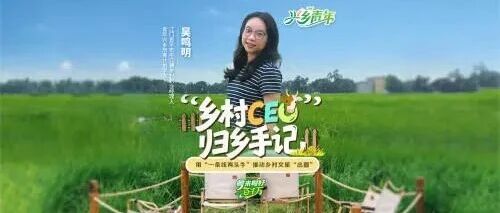
Core Viewpoint - The article highlights the stories of individuals who are revitalizing rural areas, embodying local sentiments, and addressing contemporary challenges, focusing on Wu Mingming, a "rural CEO" operating "Niulan Coffee" in Niujiang Town, Enping City, promoting rural cultural tourism [1]. Group 1 - The initiative "Xingxiang Youth" is a collaborative project between Southern Finance Media Group and the Communist Youth League of Guangdong Province, showcasing stories of choice, courage, passion, and responsibility [1]. - Wu Mingming's approach involves using the concept of "one line, two cows" to drive rural cultural tourism, indicating a strategic model for rural development [1].
“文旅+”点亮乡村经济
Jing Ji Ri Bao· 2025-10-17 21:43
Core Insights - The integration of cultural tourism and agriculture in Taiyuan has led to significant economic development and improved living standards for local residents [1][2] Group 1: Cultural Tourism Development - Taiyuan has adopted a "cultural tourism integration" strategy, leveraging top-level design and precise policy support to create new development paths [1] - The establishment of the first "On Protracted War" exhibition hall in Xipu Village highlights the focus on red tourism and non-material cultural heritage [1] - The village has received over 20,000 visitors from more than 200 organizations, showcasing the success of the "on-site teaching + situational experience" educational model [1] Group 2: Agricultural and Tourism Synergy - Jinyuan District serves as a model for deep integration of agriculture and cultural tourism, creating a development loop of "industry foundation - cultural tourism empowerment - shared benefits" [2] - The "Rice Dream Light" Ferris wheel and "Rice Front Small Forest" camping site have become popular tourist attractions, significantly boosting local tourism [2] - The "Rice Field Music Festival" attracted 42,000 attendees in 2024, generating over 18 million yuan in revenue, transforming rice fields into cultural tourism consumption spaces [2]
西湖假日经济涌“新”潮
Hang Zhou Ri Bao· 2025-10-10 02:28
Group 1 - The tourism sector in Xihu District experienced a significant increase in visitor numbers, with a total of 4.6996 million visitors from October 1 to 8, representing a year-on-year increase of 25.95% in daily average visitors [1] - The introduction of a 5 million yuan "Xihu Cultural Tourism Consumption Voucher" prior to the holiday has stimulated nearly 20 million yuan in cultural tourism consumption, focusing on accommodation, scenic spots, performances, and new cultural tourism formats [1] - The integration of themed festivals and unique experiences has revitalized traditional scenic spots, as seen in the Xixi Wetland's "I Have a Persimmon Tree in Xixi" event and the Songcheng Scenic Area's "Fireman Carnival" [1] Group 2 - Cultural IP deep monetization has led to a surge in rural cultural tourism, with the "Zhongdi Xingqiu" event attracting 150,000 visitors through puppet parades, agricultural research, and cultural creative consumption [2] - The Ling Shan Scenic Area received 200,000 visitors during the National Day holiday, marking a 138% year-on-year increase, with the newly enhanced Xianqiao Cave being praised as "Green Wild Wonderland" by netizens [2] - A themed event combining Song-style aesthetics, folk customs, and contemporary art was held at the 1129 Community Center, enhancing citizen engagement through various interactive formats [2]
丰收节里看广东“百千万工程”:产业兴、乡村美、农民富
2 1 Shi Ji Jing Ji Bao Dao· 2025-09-29 11:19
Core Viewpoint - The celebration of the 2025 Chinese Farmers' Harvest Festival in Guangdong highlights the province's agricultural achievements and the positive changes in rural life, showcasing the successful implementation of the "Hundred Counties, Thousand Towns, and Ten Thousand Villages High-Quality Development Project" [1] Agricultural Achievements - Guangdong has made significant progress in rice production, achieving an early rice yield of 410.8 kg per mu, an increase of 6.3 kg from the previous year, marking a historical high [1] - The total rice production reached 5.332 million tons, up by 55,000 tons year-on-year [1] - The total output value of agriculture, forestry, animal husbandry, and fishery in the first half of the year was 424.157 billion yuan, with rural residents' per capita disposable income at 14,624 yuan, a year-on-year increase of 5.7%, surpassing urban residents by 1.7 percentage points [1] Rural Development Initiatives - The modern rural industrial system is rapidly developing, with a strong trend of integration between agriculture, culture, and tourism [1] - The construction of modern marine ranches is accelerating, with breakthroughs in marine fishery seed industry and successful production of advanced deep-sea aquaculture equipment [1] - The "Hundred Counties, Thousand Towns, and Ten Thousand Villages Project" is fostering typical villages, promoting livable and workable beautiful rural areas [1] Community Engagement and Innovation - The main event attracted farmers and tourists, showcasing innovative rural construction models like rooftop cafes, which create new income paths for village collectives [2] - New farmers are emerging, such as "Hua Ju Hong Brother" and "Gong Gan Sister," who are successfully marketing local products to larger markets [2] - The event featured a variety of cultural activities, emphasizing the importance of sustainable rural development through community engagement [2] Local Economic Development - Zhaoqing, the event's host city, is known for its specialty products like "High Gui Shrimp," and has developed a full industrial chain for modern agriculture [4] - The event included a "Harvest Market" showcasing agricultural products from 21 cities in Guangdong, promoting local specialties and expanding sales channels through live broadcasts [4] Media and Technology Integration - Guangdong is implementing a "Media+" initiative to enhance agricultural and rural development, integrating media into the agricultural product market system [5] - The program "Brushing Our Harvest Season" features live broadcasts promoting local specialties, demonstrating how new farmers are leveraging technology to boost sales [5] - A conference on rural operation and media collaboration was held to share experiences and explore new paths for rural revitalization [5]
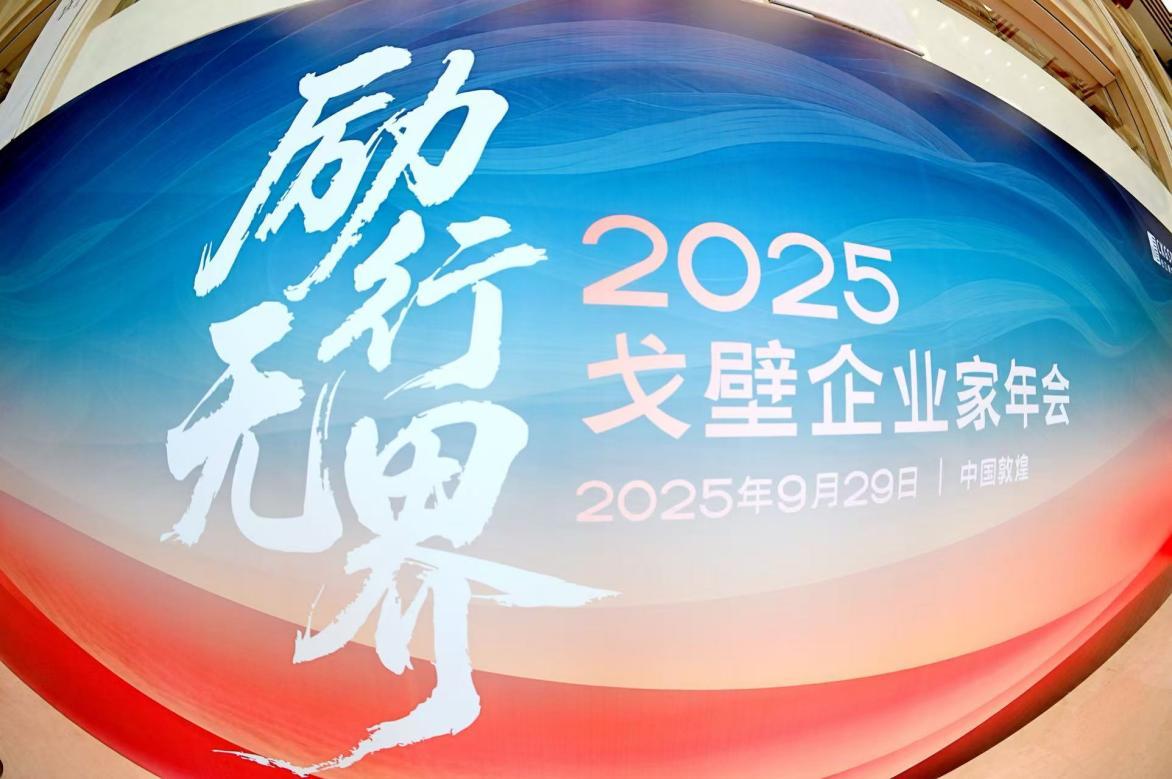
励行无界 2025戈壁企业家年会在敦煌圆满举行
Feng Huang Wang Cai Jing· 2025-09-29 10:09
Core Insights - The "Gobi Entrepreneurs Annual Conference" held in Dunhuang focused on themes such as globalization, industrial intelligence, green transformation, and cultural tourism integration, attracting over 200 entrepreneurs and notable speakers from various sectors [2][4]. Group 1: Economic and Industrial Insights - Dunhuang is positioned as a key hub for civilization dialogue and commercial exchange, with ongoing efforts to optimize the business environment through initiatives like "Entrepreneur Day" and credit system enhancements [4]. - The conference highlighted the historical opportunities for Chinese enterprises amid the transition to a new global order, emphasizing the importance of AI and emerging industries such as aerospace, health, and circular economy [7]. - The potential of Central Asia as a strategic location for Chinese enterprises was underscored, given its industrialization benefits and resource endowments [7]. Group 2: Green Transformation and Innovation - The discussion on green transformation revealed that China is experiencing systemic changes in energy, technology, and market management, driven by the dual carbon goals [11]. - The need for traditional manufacturing to adopt a dual-track approach of "intelligent + green" was emphasized, aiming for a shift from scale efficiency to quality effectiveness [13]. - The establishment of a green economy ecosystem encompassing carbon markets and trade is anticipated to create a trillion-dollar market by 2035 [11]. Group 3: Cultural Tourism and Rural Revitalization - The role of cultural tourism in driving rural revitalization was discussed, with a focus on creating sustainable development mechanisms through talent cultivation and digital infrastructure [15]. - The transformation of China's cultural tourism industry from resource-oriented to experience and content-driven was highlighted, emphasizing the importance of cultural IP and emotional value [17]. Group 4: Strategic Thinking in a Changing Environment - The need for enterprises to develop dynamic capabilities to respond to global uncertainties was articulated, with a focus on five paradigms of thinking for digital transformation [19]. - The conference concluded with a call for businesses to discover and meet high-quality demands as a core capability in the new era [19].