
保健食品

Search documents
金石亚药:今幸胶囊是公司保健食品领域重点产品之一
Zheng Quan Ri Bao Wang· 2025-12-18 11:43
证券日报网讯12月18日,金石亚药(300434)在互动平台回答投资者提问时表示,今幸胶囊是公司保健 食品领域重点产品之一,是CFDA审批的第一个人参皂苷Rh2单方产品,人参皂苷Rh2含量达到16.2%。 目前,该产品在天猫、京东等电商平台均有销售。今幸胶囊在今年的天猫双十一期间销售额排名人参热 销榜第一名。 ...

惠州市九蒸九晒保健食品有限公司成立 注册资本10万人民币
Sou Hu Cai Jing· 2025-12-16 07:48
天眼查App显示,近日,惠州市九蒸九晒保健食品有限公司成立,注册资本10万人民币,经营范围为许 可项目:保健食品生产;食品销售。(依法须经批准的项目,经相关部门批准后方可开展经营活动,具 体经营项目以相关部门批准文件或许可证件为准)一般项目:保健食品(预包装)销售;食品销售(仅 销售预包装食品);养生保健服务(非医疗);中医养生保健服务(非医疗)。(除依法须经批准的项 目外,凭营业执照依法自主开展经营活动)。 ...
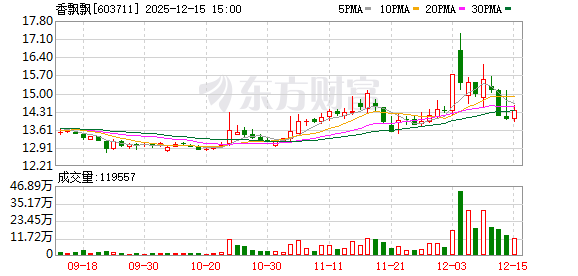
拟跨界涉足保健食品 香飘飘这次能“飘”起来吗?
Nan Fang Du Shi Bao· 2025-12-15 11:20
Core Viewpoint - Xiangpiaopiao is undergoing a transformation by expanding its business scope to include health food production and sales, aiming to adapt to the changing market dynamics and address declining performance in its core milk tea business [2][6]. Business Adjustment - The company has approved amendments to its articles of association to include "health food production" and "health food (pre-packaged) sales" in its business scope, indicating a strategic shift towards the health food sector [2][4]. Financial Performance - Xiangpiaopiao's revenue peaked at 39.78 billion yuan in 2019 but has seen a continuous decline over the past four years, dropping to 31.28 billion yuan in 2022. Although there was a brief recovery to 36.25 billion yuan in 2023, projections for 2024 indicate a further decline of approximately 9% in both revenue and net profit [6][12]. - In the first three quarters of 2025, the company reported a 13.12% year-on-year revenue decline and a net loss of nearly 90 million yuan, marking a 603.07% drop compared to the previous year [6]. Market Context - The health food market is experiencing rapid growth, with online sales reaching 129.89 billion yuan in the previous year, a 15.2% increase, and sales volume exceeding 733 million units, up nearly 20% [8]. - Analysts suggest that entering the health food sector is a logical move for Xiangpiaopiao, as it seeks new growth engines amid stagnation in its core business [7]. Challenges Ahead - Xiangpiaopiao faces significant challenges in entering the health food market, including high industry barriers, regulatory complexities, and the need for substantial research and development investment [9][10]. - The competitive landscape is dominated by established brands with strong market presence, making it difficult for new entrants to gain consumer trust and market share [9]. - There is a potential conflict in brand perception, as Xiangpiaopiao is known for its "delicious" and "convenient" image, while health food emphasizes "health" and "efficacy," posing a challenge for effective brand transition [10]. Strategic Initiatives - The company is also exploring new business avenues, such as opening offline tea shops focused on "original leaf brewing" to enhance brand visibility and consumer engagement [12]. - Recent leadership changes and attempts to modernize management practices indicate ongoing efforts to navigate the company's challenges and improve operational efficiency [12][13].


2025华夏大健康——赋能美好生活案例展示
Hua Xia Shi Bao· 2025-12-12 09:02
Core Insights - The "2025 Fifth China Health Industry Development and Rehabilitation Service Conference" was successfully held in Beijing, focusing on integrating resources and exploring development paths in the health industry [1] - The conference featured high-level discussions on cutting-edge topics such as innovative drugs, brain-machine interfaces, AI in healthcare, and the transformation of traditional Chinese medicine [1] - A series of innovative case studies were presented, showcasing advancements in various categories including ESG, biotechnology, and AI healthcare, reflecting the vitality and innovation in the health sector [1] Company Highlights - **Amway**: Empowered 200,000 marketing personnel to create health and wellness communities, promoting healthy lifestyles through shared knowledge and support [2] - **USANA**: Aims to be the healthiest family globally, emphasizing quality in product design and social responsibility initiatives, including nutrition support for underprivileged students [3] - **Aier Eye Hospital**: Focuses on building a global healthcare network in ophthalmology, utilizing innovative models to address healthcare accessibility and patient needs [4] - **Angelalign**: Achieved steady growth by enhancing R&D and clinical support for invisible orthodontic solutions, expanding its global presence [5] - **Yingkang Yisheng**: Established a health ecosystem with multiple subsidiaries, focusing on life sciences and clinical medicine, and providing services to 160 countries [6] - **Cofe Medical**: Specializes in home medical devices, leveraging technology to enhance health monitoring and early disease intervention [7] - **Pharmacist Help**: Aims to digitize the outpatient pharmaceutical market, covering over 490,000 pharmacies and 353,000 grassroots medical institutions [8] - **Perfect (China) Co., Ltd.**: Focuses on health products and social responsibility, donating over 1 billion yuan to various causes [9] - **Yonghe Medical**: Utilizes AI for personalized treatment in hair health, enhancing service transparency and patient satisfaction [10] - **Anran Nano**: Integrates nanotechnology and plant stem cell technology in health products, emphasizing social responsibility through various charitable initiatives [11]
富生人参皂苷再上架,宣传仍打“医药”牌?|消费质量年终回访⑤
Bei Ke Cai Jing· 2025-12-12 04:30
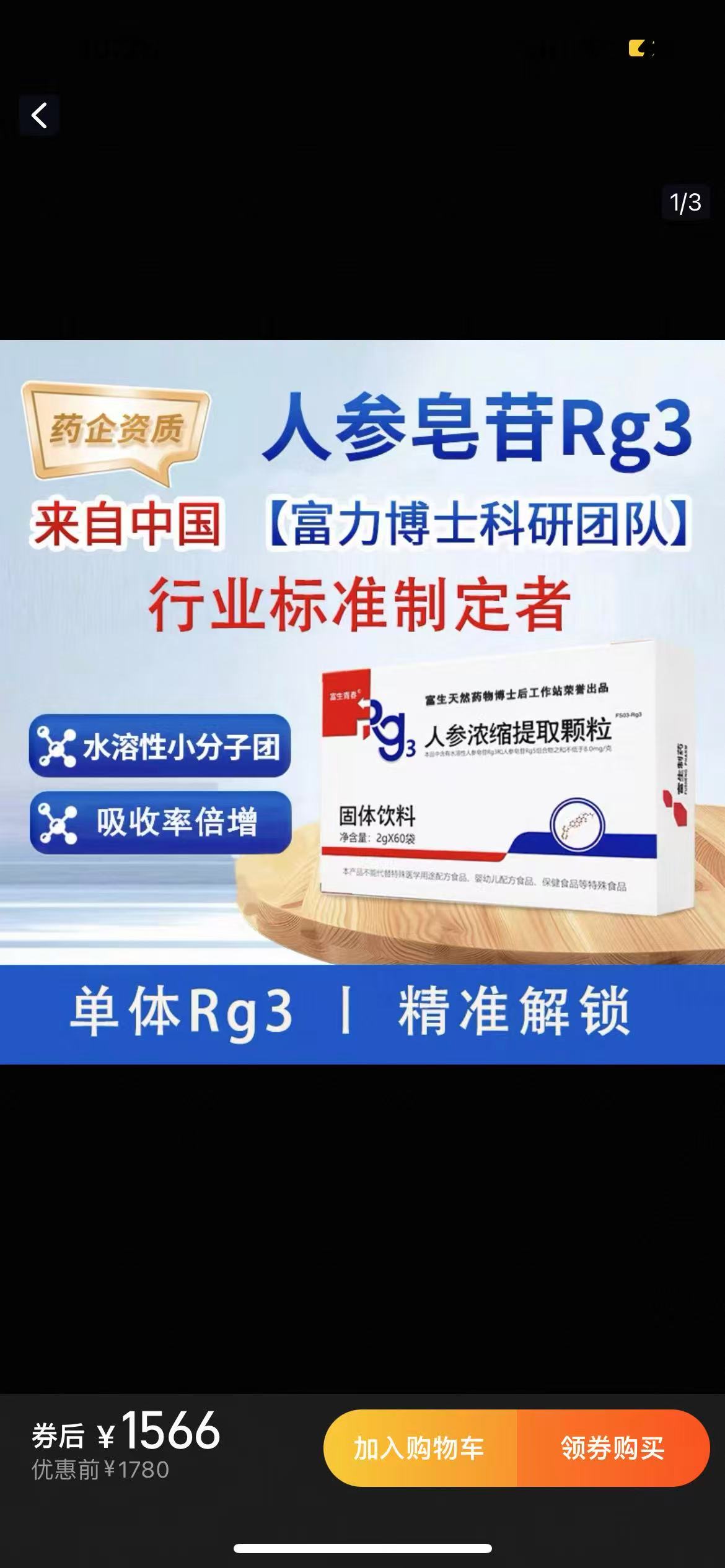
今年8月,新京报曾刊发调查报道,大连富生制药有限公司推出的"富力博士人参皂苷Rg3"刻意暗示具备抗肿瘤功效,实为固体饮料类普通食品。律师表 示,这种行为可能构成《中华人民共和国反不正当竞争法》中的"混淆行为"。据《中华人民共和国反不正当竞争法》第六条规定,经营者不得实施引人误认 为是他人商品或者与他人存在特定联系的混淆行为。若被认定违法,可根据情节处以罚款,违法所得将被没收。报道刊发后,商家将涉事产品下架。 时隔数月,记者回访发现,相关产品已重新上架销售。销售页面未再明示功效,但宣传图文中的部分介绍、奖项等素材,仍与抗癌药物"参一胶囊"关联。 修改部分宣传后再次上架 今年8月19日,新京报刊发《高价人参皂苷食品暗示抗癌功效,富生制药被指虚假宣传》一文,报道了富生网健保健食品专营店售价达1780元/盒的"富力博 士人参皂苷Rg3"产品通过官网、电商页面的"科研成果展示""AI智能解答"等多种方式,暗示具有抗肿瘤功效,甚至与已获批的抗癌药物"参一胶囊"捆绑,而 产品实为固体饮料,属于普通食品。报道中,面对记者"产品能否抗肿瘤"的咨询,店铺客服未直接回应,而是发送了一张"DeepSeek智能AI"的对话截图。截 图 ...
石药创新递表港交所 中信证券为独家保荐人
Zheng Quan Shi Bao Wang· 2025-12-11 00:36
Group 1 - The company, Shiyao Innovation, has submitted a listing application to the Hong Kong Stock Exchange, with CITIC Securities as its sole sponsor [1] - The company focuses on innovative therapies targeting unmet clinical needs in significant disease areas such as oncology, autoimmune diseases, and infectious diseases [1] - The company plans to commercialize two antibody drugs in the second half of 2024, including a first-class innovative drug and a biosimilar [1] Group 2 - Since its establishment in 2006, the company has specialized in the research and production of high-quality caffeine, becoming the largest producer of chemically synthesized caffeine globally [1] - The company expanded its main business into the health food sector in 2016, launching a comprehensive range of health food products, with its trademark recognized as a famous Chinese brand [2] - The global and Chinese pharmaceutical markets are experiencing significant growth, with the ADC market in China expected to expand from RMB 3.9 billion in 2024 to RMB 158.6 billion by 2035 [2]

石药创新递表港交所 为全球最大化学合成咖啡因生产商
Zhi Tong Cai Jing· 2025-12-10 14:20
Company Overview - The company, Shiyao Innovation Pharmaceutical Co., Ltd. (石药创新), has submitted a listing application to the Hong Kong Stock Exchange, with CITIC Securities as the sole sponsor [1] - The company focuses on the research, production, and commercialization of biopharmaceuticals, functional raw materials, and health foods [4] Business Development - In 2024, the company acquired control of Giant Bio, expanding its main business into the biopharmaceutical sector, marking a key step in its strategic transformation [5] - The company is developing innovative therapies targeting unmet clinical needs in significant disease areas such as tumors, autoimmune diseases, and infectious diseases [5] - The company has a strong pipeline with 15 drugs in clinical or late-stage development, including 9 ADC drugs and 1 mRNA vaccine [5] Financial Performance - The company's revenue for the fiscal years 2022, 2023, 2024, and the seven months ending July 31, 2025, were approximately RMB 2.838 billion, RMB 2.539 billion, RMB 1.980 billion, and RMB 1.241 billion respectively [9] - The company's profit for the same periods was approximately RMB 294 million, RMB 126 million, a loss of RMB 304 million, and a loss of RMB 226 million respectively [10] - The gross profit margin for the fiscal years 2022, 2023, 2024, and the seven months ending July 31, 2025, were approximately 46.8%, 45.6%, 41.8%, and 38.3% respectively [11] Industry Outlook - The global pharmaceutical market is expected to grow from USD 1,324.5 billion in 2019 to USD 1,542 billion in 2024, with a compound annual growth rate (CAGR) of 5.0% from 2024 to 2030 [13] - The global oncology drug market is projected to grow from USD 143.5 billion in 2019 to USD 253.3 billion in 2024, with a CAGR of 12.0% [14] - The global antibody drug market is expected to expand from USD 163.8 billion in 2019 to USD 254.3 billion in 2024, with a CAGR of 9.2% [15]
新股消息 | 石药创新递表港交所 为全球最大化学合成咖啡因生产商
智通财经网· 2025-12-10 14:07
Company Overview - The company, Shiyao Innovation Pharmaceutical Co., Ltd. (stock code: 300765.SZ), has submitted a listing application to the Hong Kong Stock Exchange, with CITIC Securities as the sole sponsor [1] - The company focuses on the research, production, and commercialization of biopharmaceuticals, functional raw materials, and health foods [4] Business Development - In 2024, the company acquired control of Giant Bio, expanding its main business into the biopharmaceutical sector, marking a key step in its strategic transformation [5] - The company is engaged in the development of innovative therapies targeting unmet clinical needs in significant disease areas such as tumors, autoimmune diseases, and infectious diseases [5] - The company has a strong technical foundation in antibody drugs, antibody-drug conjugates (ADC), and mRNA vaccines, with plans to commercialize two antibody drugs in the second half of 2024 [5] Product Pipeline - As of December 1, 2025, the company has 15 drugs in clinical or late-stage development, including 9 ADCs and 1 mRNA vaccine [5] - The company’s mRNA vaccine products, including the first domestically developed COVID-19 mRNA vaccine, have been included for emergency use in China [5] Financial Performance - The company's revenue for the fiscal years ending July 31 for 2022, 2023, 2024, and the first seven months of 2025 were approximately RMB 2.838 billion, RMB 2.539 billion, RMB 1.980 billion, and RMB 1.241 billion respectively [8] - The company's profit for the same periods was approximately RMB 294 million, RMB 126 million, a loss of RMB 304 million, and a loss of RMB 226 million respectively [8] - The gross profit margin for these years was approximately 46.8%, 45.6%, 41.8%, and 38.3% [9] Industry Outlook - The global pharmaceutical market is expected to grow from USD 1,324.5 billion in 2019 to USD 1,542 billion in 2024, with a compound annual growth rate (CAGR) of 5.0% from 2024 to 2030 [11] - The Chinese pharmaceutical market is projected to grow from RMB 1,629.7 billion in 2024 to RMB 2,129.7 billion in 2030, with a CAGR of 4.6% from 2024 to 2030 [11] - The global oncology drug market is expected to expand from USD 143.5 billion in 2019 to USD 253.3 billion in 2024, with a CAGR of 12.0% [12] Market Position - The company is positioned as a significant player in the biopharmaceutical sector, focusing on innovative therapies and addressing unmet clinical needs [5][11] - The company has established a solid partnership with leading beverage companies, leveraging its expertise in caffeine production and health food products [6]
新股消息 | 石药创新递表港交所
智通财经网· 2025-12-10 12:54
Group 1 - The company, Shiyao Innovation Pharmaceutical Co., Ltd., has submitted a listing application to the Hong Kong Stock Exchange, with CITIC Securities as its sole sponsor [1] - The company focuses on the research, production, and commercialization of biopharmaceuticals, functional raw materials, and health foods [1] - According to Frost & Sullivan, the company has maintained its position as the world's largest producer of synthetic caffeine by revenue and volume from 2020 to 2024 [1][5] Group 2 - Since its establishment in 2006, the company has specialized in the research and production of high-quality caffeine, primarily used as a food additive in functional beverages [5] - As of the last feasible date (December 1, 2025), the company's products have been sold in 65 countries and regions globally, with North America and Europe being its main markets [5] - The company has established solid partnerships with leading international beverage companies, including Coca-Cola (since 2006), PepsiCo (since 2007), and Red Bull GmbH (since 2008), serving as their global caffeine supplier [5]
新疆乌苏市市场监管局开展保健食品专项行动
Zhong Guo Shi Pin Wang· 2025-12-10 11:37
Core Viewpoint - The Urumqi Municipal Market Supervision Administration in Xinjiang is enhancing its regulatory efforts on health food products, particularly targeting misleading practices that affect elderly consumers [1] Group 1: Regulatory Actions - The administration is conducting a special action focused on health food products, emphasizing the need for compliance with advertising laws and regulations [1] - Inspections are being carried out in key areas where elderly consumers frequently shop, such as health product stores and therapy centers [1] - As of now, 23 market entities have been inspected, and 3 cases have been filed for violations [1] Group 2: Consumer Protection - The initiative aims to address misleading claims about health products, including exaggerated benefits and deceptive marketing practices targeting elderly consumers [1] - Enforcement personnel are educating business operators on relevant laws, such as the Advertising Law of the People's Republic of China, to ensure compliance and prevent false claims [1] - The administration is also working to enhance the ability of elderly consumers to recognize and avoid fraudulent health products [1] Group 3: Future Plans - The Urumqi Municipal Market Supervision Administration plans to continue strengthening oversight and encouraging businesses to fulfill their responsibilities [1] - There is a focus on guiding elderly consumers to have a correct understanding of health food functions, aiming to create a safe and trustworthy consumption environment [1]