
医疗装备

Search documents
“微”观行业之变|从三个关键词看健康经济新进展
Xin Hua Cai Jing· 2025-12-24 08:12
Core Insights - The health economy is entering a phase of digital transformation driven by upgraded health demands, supportive policies, and breakthroughs in cutting-edge technologies [1] Group 1: AI in Health Management - AI large models are penetrating health management, transitioning from passive response to proactive intervention, with significant applications in chronic disease management and elderly care [2] - The introduction of AI-driven systems, such as the intelligent respiratory algorithm by Ruimait, enhances user comfort and enables early warning for chronic obstructive pulmonary disease patients [2] - The "AI Silver Advisor" system provides elderly individuals with easy access to health information and policy queries, showcasing the importance of AI in catering to aging populations [2] Group 2: AI in Medical Equipment - AI technology is revolutionizing medical equipment, enabling early disease detection and improving operational efficiency, with the medical device industry projected to reach approximately 1.42 trillion yuan by 2025, reflecting a year-on-year growth of 5%-6% [4] - The approval of 54 innovative medical devices in the first three quarters of 2025 indicates a significant acceleration in industry growth and innovation, with a compound annual growth rate exceeding 50% over the past decade [4] Group 3: AI in Pharmaceutical Research - The integration of AI in drug development is transitioning from isolated applications to a comprehensive platform ecosystem, significantly reducing research cycles and enhancing efficiency [6] - AI-driven platforms, such as Pharma.AI and NanoForge, are expected to create a market for pipeline licensing worth nearly $6 billion, fostering collaboration between AI platform companies and pharmaceutical firms [7] - The implementation plan for the digital transformation of the pharmaceutical industry aims to establish over 100 application scenarios and more than 10 innovation platforms by 2027, with a goal of achieving comprehensive digital transformation by 2030 [7]
斯瑞新材:商业航天领域客户覆盖蓝箭航天、九州云箭等
Zhong Guo Zheng Quan Bao· 2025-12-20 02:56
Group 1 - The company reported a revenue of 7.72 billion yuan in the first half of 2025, with the liquid rocket engine thrust chamber business generating 23.29 million yuan [1] - Revenue from the liquid rocket engine thrust chamber products is projected to grow from 20.97 million yuan in 2022 to 30.16 million yuan in 2024, maintaining rapid growth into 2025 [1] - The company has initiated a project for the industrialization of materials, parts, and components for liquid rocket engine thrust chambers, with an initial investment of 230 million yuan aimed at achieving an annual production capacity of approximately 200 tons of forgings and various rocket engine components [1] Group 2 - In the high-end medical equipment core components sector, the company holds a significant position in the CT and DR tube components market in China [2] - The company primarily provides products and technical services to domestic CT tube manufacturers while also expanding into international markets [2] - Major clients include Siemens Healthineers, United Imaging, Kunshan Medical Source, and others, with the company becoming a strategic supplier for some of these clients [2]

从“看清微米”到“遥控千里”:中国医疗装备产业以“新”破局前行
Zhong Guo Jin Rong Xin Xi Wang· 2025-12-15 09:52
Core Insights - The Chinese medical equipment industry is advancing rapidly during the 14th Five-Year Plan period, integrating cutting-edge technologies like AI and 5G to create an innovative industrial ecosystem, contributing significantly to the "Healthy China" initiative and enhancing global competitiveness in medical equipment manufacturing [1][4]. Group 1: Technological Breakthroughs - Domestic high-end ultrasound systems are achieving unprecedented image resolution, enabling the detection of micro-level structures for more accurate early disease diagnosis [2]. - The introduction of ultra-weak magnetic imaging devices allows for efficient medical examinations without noise or the need for contrast agents, providing patients with comprehensive reports in under three minutes [2]. - Major advancements include ECMO machines, laparoscopic surgical robots, photon counting spectral CT, and high-performance PET/CT systems, showcasing significant technological achievements in the medical equipment sector [2]. Group 2: Innovation and R&D Investment - Companies are transitioning from being "followers" of international technology to "leaders" with independent innovation capabilities, supported by substantial R&D investments, with firms like Mindray allocating approximately 10% of their revenue to R&D annually [3]. - The number of medical equipment enterprises in China reached 33,400 during the 14th Five-Year Plan, with over 4,000 large-scale companies and around 160 listed firms, indicating a robust growth in the sector [3]. Group 3: New Dynamics in Medical Equipment - The integration of AI with medical imaging devices enhances efficiency by automating patient positioning and reducing unnecessary radiation exposure [4]. - The use of 5G technology in surgical robots enables remote surgeries, allowing doctors to collaborate across vast distances, thus improving access to high-quality medical services [4]. - The market size of China's medical equipment industry surpassed 1 trillion yuan during the 14th Five-Year Plan, fostering the development of six national advanced manufacturing industry clusters [4]. Group 4: Ecosystem Development - Innovative models for medical equipment development are emerging, such as Beijing's innovation center for surgical robots and Chongqing's collaborative approach between enterprises and research institutions [5]. - Shenzhen has established a 4 billion yuan fund for high-end medical equipment, facilitating rapid growth and global expansion for domestic companies [5]. - A comprehensive innovation ecosystem is being developed, supported by national and local initiatives, to enhance the medical equipment sector's growth potential [6].

工信部发布14个行业数字化转型“场景导航图”
Xin Hua Cai Jing· 2025-12-11 09:37
Core Insights - The Ministry of Industry and Information Technology released the "Guidelines for Promoting Digital Transformation in Key Industries (2025 Edition)" at the 2025 Integration of Informatization and Industrialization Conference, focusing on 14 industries including steel and petrochemicals [1][2] - The guidelines aim to assist enterprises in overcoming challenges related to unclear demands and paths in their digital transformation efforts, transitioning from fragmented exploration to systematic advancement [1][2] Group 1: Digital Transformation Framework - The "Scenario Navigation Map" covers 14 industries and includes various digital transformation scenarios and cross-business collaboration scenarios, structured around five business activities: R&D design, production manufacturing, operation services, business management, and supply chain management [1][2] - The structured design of the map helps bridge the language barrier between industrialization and digitalization, enabling enterprises to identify transformation entry points accurately [1][2] Group 2: Implementation Strategy - The guidelines emphasize using scenarios as the core approach for transformation, with clear boundaries for each scenario that focus on specific business pain points [2] - Enterprises are encouraged to follow a step-by-step implementation process: conducting scenario diagnosis and analysis, developing a transformation plan, resource allocation based on the element list, and ultimately achieving cross-scenario collaboration and overall optimization [2] Group 3: Future Directions - The Ministry plans to guide localities in implementing pilot applications of the "One Map and Four Lists" approach, continuously updating the industry scenario maps and fostering excellent solutions and service providers [2] - The goal is to make the "Scenario Navigation Map" a practical blueprint for high-quality development in manufacturing, injecting momentum into the deep integration of the real economy and the digital economy [2]
工业和信息化部发布14个行业数字化转型“场景导航图”
Xin Hua Wang· 2025-12-08 08:27
Core Insights - The Ministry of Industry and Information Technology released the "Guidelines for Scenario-Based and Graphical Promotion of Digital Transformation in Key Industries (2025 Edition)" at the 2025 Integration of Informatization and Industrialization Conference, focusing on 14 industries including steel and petrochemicals [1][2] - The guidelines aim to assist enterprises in overcoming challenges related to unclear demands and paths in digital transformation, transitioning from fragmented exploration to systematic advancement [1][2] Group 1: Digital Transformation Framework - The "Scenario Navigation Map" covers 14 industries and includes various digital transformation scenarios and cross-business collaboration scenarios, structured around five business activities: R&D design, production manufacturing, operation services, business management, and supply chain management [1][2] - The guidelines provide a clear boundary for each scenario, focusing on specific business pain points and integrating professional industrial knowledge to convert complex transformation tasks into actionable projects [2] Group 2: Implementation and Future Directions - Enterprises can implement the transformation in steps by first conducting scenario diagnostic analysis and formulating renovation plans, followed by resource allocation based on the provided element lists, ultimately achieving cross-scenario collaboration and overall optimization [2] - The Ministry plans to guide localities in applying the "One Map and Four Lists" pilot program, continuously updating the industry scenario maps and fostering excellent solutions and service providers to drive the deep integration of the real economy and digital economy [2]
世界首台轻离子治疗装置即将启动束流调试
Ke Ji Ri Bao· 2025-12-03 12:56
Core Viewpoint - The successful development of the HiTS 200 light ion therapy device marks a significant breakthrough in China's advanced cancer treatment equipment sector, offering more precise and efficient treatment options for cancer patients [1][2]. Group 1: Product Development - The HiTS 200 light ion therapy device, developed by Guoke Ion (Hangzhou) Medical Technology Co., Ltd., has completed production and initial adjustments in Lanzhou, with installation and debugging at the Hangzhou research center, and is set to begin beam debugging [1]. - This device integrates multiple ion beam treatment capabilities, including proton, helium, and carbon ion beams, and has the potential for proton CT imaging, enabling more accurate localization and treatment [1][2]. Group 2: Cost and Accessibility - Compared to traditional heavy ion therapy equipment, the HiTS 200 occupies only 1,500 square meters, significantly reducing equipment and construction costs, making it more suitable for implementation in municipal medical institutions [2]. - The device's design allows for flexible treatment plans based on the tumor's location and nature, enhancing accessibility to advanced cancer treatment [2]. Group 3: Technological Advancements - The HiTS 200 features advanced technologies such as rapid ion switching, single-cycle energy variation, rapid repeated scanning, and Flash dose delivery, which contribute to its core advantages [2]. - By integrating the self-developed Phoenix treatment planning system, the HiTS 200 can achieve multi-ion combined therapy, allowing for personalized radiotherapy plans tailored to different lesions [2]. Group 4: Industry Impact - The successful development of the first light ion therapy device fills a gap in China's multi-ion integrated treatment equipment sector, potentially advancing the country's radiation therapy technology from conventional to precision and personalized treatment [2]. - The industrialization of this device is expected to significantly lower the costs of high-end ion therapy for cancer patients in China, promoting equitable access and enhancing the international competitiveness of China's medical equipment [2].
促进规范人工智能深度融入健康服务(政策速递)
Ren Min Ri Bao· 2025-11-29 22:11
Core Viewpoint - The integration of artificial intelligence (AI) in healthcare is being promoted to enhance service capabilities, optimize resource allocation, and meet the growing health service demands of the population by 2030 [1][2][3] Group 1: AI Applications in Healthcare - AI is being widely applied in various medical fields, including medical imaging diagnosis, clinical decision support, and chronic disease management [1] - The implementation plan emphasizes the need for AI applications to be driven by real business scenarios and to address actual needs, focusing on grassroots applications, clinical diagnosis, patient services, and public health [2] Group 2: Development Goals and Timeline - By 2030, the goal is to achieve full coverage of intelligent assistance applications in grassroots diagnosis and treatment, with secondary hospitals widely adopting AI technologies for medical imaging and clinical decision support [1][2] - A comprehensive standard and regulatory framework for "AI + healthcare" applications is expected to be established, along with the creation of leading technology innovation and talent training bases [1] Group 3: Focus Areas for Implementation - The plan highlights the importance of strengthening intelligent applications in tightly-knit county medical communities and enhancing chronic disease management services [2] - It encourages the development of new service models such as intelligent health check-ups, health consultations, and health management, while supporting collaboration between medical equipment manufacturers and healthcare institutions [2] Group 4: Regulatory and Safety Measures - The initiative aims to ensure that AI empowers rather than replaces healthcare professionals, optimizing industry management and regulatory systems while enhancing data security and personal privacy protection [3] - The establishment of clinical specialty data sets and AI corpus, along with a public support service platform for vertical AI models, is being explored to facilitate the effective implementation of AI in healthcare [3]
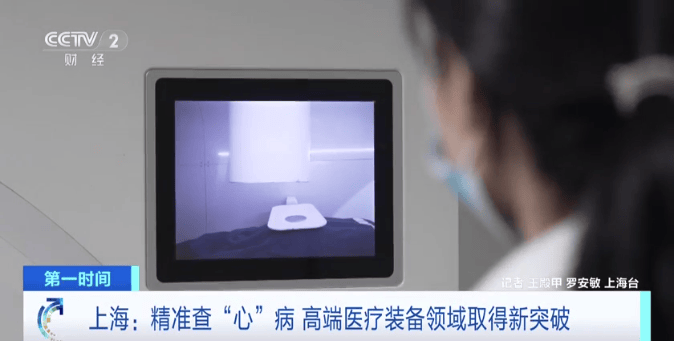
精准查“心”病!我国高端医疗装备领域取得新突破
Sou Hu Cai Jing· 2025-11-29 08:18
Group 1 - The core viewpoint of the article highlights the upcoming clinical use of a domestically developed fetal magnetocardiography device in Shanghai, which provides new evidence for early screening of complex congenital heart diseases, filling a technological gap in the domestic market [1] - The fetal magnetocardiography device is capable of non-invasive and contactless precise capture of fetal heart signals that traditional devices struggle to identify, representing a significant breakthrough in fetal heart health assessment [3] Group 2 - This innovative achievement has realized a complete innovation chain from technology research and development to industrial transformation, benefiting from the interdisciplinary medical-engineering collaboration established over the past twenty years between Shanghai Jiao Tong University and Shanghai Second Medical University [4] - The universities have implemented an "医+X" innovation model that breaks down traditional disciplinary barriers and supports the cultivation of interdisciplinary talents, alongside establishing a medical-engineering cross-research fund with a cumulative investment of approximately 674 million yuan, providing project funding to multiple medical fields [4]

天智航:拟与关联人共同投资设立公司
Xin Lang Cai Jing· 2025-11-28 11:44
Core Viewpoint - The company plans to invest in a joint venture to establish a new medical equipment development company with a total investment of 10 million yuan, where the company will contribute 2 million yuan, representing a 20% stake [1] Group 1: Investment Details - The total investment for the new company, Southeast Medical Equipment Industry Development Co., Ltd., is set at 10 million yuan [1] - The company will contribute 2 million yuan in cash, accounting for 20% of the total investment [1] Group 2: Corporate Governance - The transaction has been approved by the company's sixth board of directors' independent directors' special meeting, the fifth supervisory board's twelfth meeting, and the sixth board of directors' twenty-fifth meeting [1] - Related directors have abstained from voting, and there is no need for shareholder meeting approval [1]

联影医疗(688271):国内市场复苏强劲,全球化战略成效显著
CMS· 2025-11-17 14:32
Investment Rating - The report maintains a "Strong Buy" rating for the company [3]. Core Insights - The company reported a strong recovery in the domestic market and significant achievements in its globalization strategy, with a revenue of 8.859 billion yuan for the first three quarters of 2025, representing a year-on-year growth of 27.39% [1]. - The net profit attributable to shareholders reached 1.12 billion yuan, up 66.91% year-on-year, while the net profit excluding non-recurring items was 1.053 billion yuan, reflecting a remarkable growth of 126.94% [1]. - The third quarter alone saw revenues of 2.843 billion yuan, a substantial increase of 75.41% year-on-year [1]. Financial Performance Summary - For the fiscal years 2023 to 2027, total revenue is projected to grow from 11.411 billion yuan in 2023 to 17.934 billion yuan in 2027, with year-on-year growth rates of 24%, -10%, 21%, 20%, and 20% respectively [2][9]. - The net profit attributable to shareholders is expected to increase from 1.974 billion yuan in 2023 to 2.739 billion yuan in 2027, with growth rates of 19%, -36%, 49%, 21%, and 21% respectively [2][9]. - The company’s earnings per share (EPS) is forecasted to rise from 2.40 yuan in 2023 to 3.32 yuan in 2027 [2][9]. Market Performance - The company achieved a revenue of 6.866 billion yuan in the domestic market for the first three quarters of 2025, marking a year-on-year increase of 23.70% [6]. - The overseas market revenue reached 1.993 billion yuan, with a year-on-year growth of 41.97%, indicating a growing contribution to overall revenue [6]. - The service business also showed strong growth, with a revenue increase of 28.44% year-on-year, reaching 1.243 billion yuan [6]. Profitability Metrics - The comprehensive gross margin for the third quarter of 2025 was reported at 45.09%, with a slight decline of 1.16 percentage points [6]. - The overall net profit margin improved significantly, reaching 4.02%, an increase of 21.68 percentage points [6]. - The report indicates that the company’s operational efficiency is continuously improving, supported by a robust supply chain and digital management system [6].
