
基因测序

Search documents
3.66亿,华大智造公布收购华大序风和华大时空
仪器信息网· 2026-02-02 09:02
Core Viewpoint - BGI Genomics plans to acquire two companies for 366 million yuan, integrating spatiotemporal omics and nanopore sequencing assets to establish a comprehensive technology chain of "short-read long + long-read long + spatial omics," becoming the only life science enterprise globally to cover these three major technologies, while also strengthening its layout in "AI + life sciences + brain-computer interfaces" [1][6]. Transaction Details - BGI Genomics intends to acquire 100% equity of Shenzhen BGI Sanjian Qifa Technology Co., Ltd. and Hangzhou BGI Xufeng Technology Co., Ltd. through cash, with a total transaction price of 365.7 million yuan, where the equity of Sanjian Qifa is priced at 158 million yuan and that of BGI Xufeng at 207.7 million yuan [2][4]. Capital Increase Plans - After the acquisition of Sanjian Qifa, BGI Genomics plans to increase its capital by 70 million yuan, with 22.15 million yuan allocated to registered capital and 47.84 million yuan to capital reserves, ensuring that the funds are used for daily operations, business expansion, and payment for intellectual property rights [4][5]. - Following the acquisition of BGI Xufeng, BGI Genomics plans to increase its capital by 60 million yuan, with 14.44 million yuan allocated to registered capital and 45.56 million yuan to capital reserves, also ensuring that the funds are used for similar purposes [5]. Strategic Implications - The acquisition allows BGI Genomics to consolidate second-generation sequencing, nanopore long-read sequencing, and spatiotemporal omics technologies, completing a full technology chain from short-read to long-read and from sequence analysis to spatial dimensions, positioning the company among the few globally that cover this complete matrix in life science tools [6]. - This integration enhances the company's ability to provide autonomous and controllable upstream tools and one-stop solutions, broadening research and clinical application scenarios, and reshaping industry competition logic, facilitating a transition from single-point technology leadership to platform-based ecological dominance [6].



因美纳宣布完成3.5亿美元收购
仪器信息网· 2026-02-02 09:02
此次整合标志着多组学研究新时代的开启,生物医学研究有望迎来新的发展机遇。 摘要 : 基因测序巨头斥资3.5亿美元将蛋白质组学技术领导者纳入麾下,旨在为客户提供更全面的多 组学解决方案。 特别提示 微信机制调整,点击顶部"仪器信息网" → 右上方"…" → 设为 ★ 星标,否则很可能无法看到我 们的推送。 美国加利福尼亚州圣迭戈——2026年1月30日,因美纳公司宣布已完成对蛋白质组学技术领 域领先企业SomaLogic的收购。此次交易总价值达3.5亿美元,另加高达7500万美元的绩效 里程碑款项。 这 一 收 购 标 志 着 因 美 纳 在 实 施 2024 年 提 出 的 多 组 学 战 略 过 程 中 取 得 重 要 进 展 。 通 过 整 合 SomaLogic高度差异化的蛋白质组学技术,因美纳将增强在基因组学与蛋白质组学领域提供 可扩展洞察的能力。 因美纳首席执行官Jacob Thay sen表示:"欢迎SomaLogic团队加入因美纳,这是我们落实 2024年制定的多组学战略 的重要里程碑。" 此前,在2025年6月宣布收购协议时,因美纳曾表示预计该业务将在2027年实现非GAAP的 经营收入盈利。 ...


华大智造杨梦:AI落地关键是“人如何与智能体协作”
2 1 Shi Ji Jing Ji Bao Dao· 2026-02-02 05:05
Core Insights - The article emphasizes that artificial intelligence (AI) has reached a critical turning point, particularly in the life sciences sector, where it is driving significant innovations in gene sequencing, laboratory automation, and biomanufacturing [2][3] - The integration of AI into life sciences is transforming traditional laboratory processes, enabling faster and more efficient workflows, and enhancing the potential of "AI + life sciences" [2][3] Group 1: AI Advancements in Life Sciences - AI has enabled a reduction in sequencing cycle time from 2-2.5 minutes to 75 seconds, achieving a time reduction of approximately 40%-50% [3] - The development cycle for targeted primer design has been shortened from 2-3 weeks to 4-5 days, with costs decreasing by 60%-70% and efficiency increasing by 2-3 times [3] - AI's application in life sciences is seen as a means to overcome the bottleneck between data and algorithms, facilitating the faster implementation of laboratory hardware and software [2][3] Group 2: Technological Innovations - The company has developed a self-luminous semiconductor rapid sequencing instrument that replaces traditional laser systems with smartphone camera sensors, enhancing portability and cost-effectiveness [7][8] - This new sequencing instrument is designed to be an entry-level tool, making it suitable for small laboratories, community hospitals, and educational institutions [7][8] - AI technology is deeply integrated into the product's core modules, enhancing performance and user experience through intelligent software upgrades [11][12] Group 3: Future Trends and Challenges - The future of sequencing technology is expected to evolve towards a model where samples lead directly to insights, with clinical applications achieving "sample in, diagnosis out" and research achieving "sample in, results out" [9][10] - The integration of AI in clinical settings will focus on full-process quality control and intelligent reporting, which are critical for ensuring reliability and compliance [9][10] - Challenges include the need for a paradigm shift in human-machine collaboration and addressing ethical concerns related to AI applications in clinical settings [13][14]

华大智造拟收购三箭齐发及华大序风100%股权 构建“短读长+长读长+空间组学”全覆盖技术生态
Zheng Quan Ri Bao Wang· 2026-02-02 02:07
Core Viewpoint - Shenzhen BGI Genomics Co., Ltd. plans to acquire 100% equity of Shenzhen Hualong Sanjian Qifa Technology Co., Ltd. and Hangzhou Hualong Xufeng Technology Co., Ltd. for a total price of 366 million yuan, aiming to enhance its technological ecosystem in gene sequencing and life science tools [1][2]. Group 1: Acquisition Details - The acquisition will allow the company to gain control over the two target companies and integrate their core technologies, including spatial genomics and nanopore sequencing, into its existing short-read sequencing platform [1]. - The transaction has been approved by the company's board and will be submitted for shareholder approval [1]. Group 2: Technological Integration - The integration of short-read, long-read, and spatial genomics technologies will enhance the company's product matrix and support its transformation from a leading gene sequencing instrument provider to a comprehensive life science tool creator [1][2]. - The spatial genomics technology from Sanjian Qifa is at the international leading level in resolution and field of view, applicable in fields like brain science and regenerative medicine, and is highly compatible with the existing DNBSEQ sequencing platform [2]. Group 3: Financial Impact and Future Growth - Both target companies are currently in the R&D phase and have not yet achieved profitability, which may impact the company's operating profit in the short term; however, they possess strong innovation and commercialization potential, likely becoming new growth engines for the company [2]. - The companies are expected to achieve profitability by 2026 and 2028, respectively, contributing to the company's overall competitiveness and profitability in the long term [2]. Group 4: Strategic Positioning - The acquisition aligns with the company's strategic layout and enhances its independent innovation capabilities, reinforcing its leading position in the gene sequencing field [2]. - The company is also focusing on the "AI + gene sequencing" sector and advancing its laboratory automation and AI-driven software tools, establishing a robust foundation for its intelligent ecosystem [3].
深圳华大智造科技股份有限公司 关于公司收购资产及增资暨关联交易的公告
Zhong Guo Zheng Quan Bao - Zhong Zheng Wang· 2026-02-01 23:05
Core Viewpoint - Shenzhen BGI Intelligent Manufacturing Technology Co., Ltd. plans to acquire 100% equity of Shenzhen BGI Sanjian Qifa Technology Co., Ltd. and Hangzhou BGI Xifeng Technology Co., Ltd. for a total price of 365.7 million yuan, aiming to enhance its capabilities in spatial omics and nanopore sequencing technologies [2][5][12]. Transaction Overview - The acquisition involves cash payment for the equity of the two companies, with the total transaction price set at 365.7 million yuan, comprising 158 million yuan for Sanjian Qifa and 207.7 million yuan for Xifeng [2][5]. - Following the acquisition, BGI Intelligent Manufacturing will inject 70 million yuan into Sanjian Qifa and 60 million yuan into Xifeng to support their operations and business expansion [3][6]. Technology and Intellectual Property - Sanjian Qifa will acquire intellectual property rights related to spatial omics technology, with a transaction price of 65.34 million yuan [4][12]. - Xifeng will acquire intellectual property rights related to nanopore sequencing technology, with a transaction price of 56.17 million yuan [4][12]. Performance Commitment - BGI Technology, the counterparty, has made performance commitments regarding the profitability of the acquired companies. If the companies fail to meet the promised net profit during the commitment period, BGI Technology will provide cash compensation [4][12]. Financial Impact - The transaction is expected to have a short-term impact on the company's operating profits due to the acquired companies being in the R&D phase and not yet profitable. However, the long-term potential for innovation and commercialization is significant [8][12]. - The acquisition will not adversely affect the company's cash flow, as it has sufficient cash reserves and a strong cash-generating ability [8][12]. Strategic Importance - This acquisition is a strategic move to integrate cutting-edge technologies in spatial omics and nanopore sequencing, enhancing the company's competitive edge in the gene sequencing market [8][19]. - The combined capabilities will allow the company to offer comprehensive solutions from library construction to sequencing and data analysis, significantly improving service capabilities [18][21]. Market Positioning - BGI Intelligent Manufacturing aims to secure a leading position in the global sequencing market by integrating both short-read and long-read sequencing technologies, thus enhancing its strategic initiative and market competitiveness [19][20]. Approval Process - The transaction has been approved by the company's board of directors and will require further approval from the shareholders' meeting, with related parties abstaining from voting [7][23].
交易对价约3.66亿元 华大智造拟收购两大前沿业务
Nan Fang Du Shi Bao· 2026-02-01 14:23
Core Viewpoint - The acquisition of 100% equity in Shenzhen Huada Sanjian Qifa Technology Co., Ltd. and Hangzhou Huada Xufeng Technology Co., Ltd. by BGI Genomics is aimed at enhancing its technological capabilities in spatial omics and nanopore sequencing, positioning the company as a leader in the global life sciences sector with a comprehensive product matrix covering "long-read sequencing + spatial omics" [2][3]. Group 1: Acquisition Details - The total transaction price for the acquisition is approximately 366 million yuan [2]. - The acquisition allows BGI Genomics to integrate cutting-edge technologies, creating a unique competitive advantage by combining short-read (DNBSEQ), long-read (CycloneSEQ), and spatial omics technologies [2][3]. - The integration will enable BGI Genomics to offer a one-stop service from library construction, sequencing to data analysis, enhancing customer service capabilities and stickiness [2]. Group 2: Strategic Implications - The acquisition is strategically beneficial for BGI Genomics in emerging fields such as brain-computer interfaces, where spatial omics technology can provide precise navigation for implantable devices [3]. - The pricing strategy of acquiring companies at the incubation stage allows BGI Genomics to avoid potential valuation premiums associated with mature business commercialization [3]. - The assessed value of the acquired companies is 158 million yuan for Sanjian Qifa and 207.7 million yuan for Xufeng, with a favorable dynamic price-to-sales ratio around 3, compared to industry peers [3]. Group 3: Performance Commitments - The acquired companies have performance commitments, with Sanjian Qifa promising a cumulative net profit of no less than 50.1 million yuan from 2026 to 2028, and Xufeng committing to 82.8 million yuan from 2028 to 2030 [4]. - If performance targets are not met, BGI Genomics will receive cash compensation, with maximum amounts covering 223 million yuan and 264 million yuan respectively [4]. Group 4: Revenue and Cost Synergies - The acquisition is expected to add new revenue streams from spatial omics and nanopore sequencing, enhancing the overall revenue scale of BGI Genomics [4][5]. - The integration of supply chain procurement and shared R&D resources is anticipated to reduce operational costs and improve overall profitability [5]. - Market analysts believe this strategic move will significantly enhance BGI Genomics' long-term profitability and industry influence, opening up further growth opportunities in the global sequencing and life sciences market [5].
交易对价约3.66亿元,华大智造拟收购两大前沿业务
Nan Fang Du Shi Bao· 2026-02-01 14:20
Core Viewpoint - The acquisition of 100% equity in Shenzhen Huada Sanjian Qifa Technology Co., Ltd. and Hangzhou Huada Xufeng Technology Co., Ltd. by the company for approximately 366 million yuan aims to integrate cutting-edge technologies into its operations, establishing a unique competitive advantage in the global life sciences sector [1][3]. Group 1: Acquisition Details - The total transaction price for the acquisition is approximately 366 million yuan [1]. - The acquisition will allow the company to incorporate spatial omics and nanopore sequencing technologies into its product offerings, making it the only global enterprise to cover the entire product matrix of "long-read sequencing + spatial omics" [3]. - The integration will enable the company to provide a one-stop service from library construction, sequencing to data analysis, enhancing customer service capabilities and stickiness [3][5]. Group 2: Strategic Value - The acquisition is strategically significant as it connects short-read (DNBSEQ), long-read (CycloneSEQ), and spatial omics technologies, creating a comprehensive technical chain that is difficult for competitors to replicate [3]. - The spatial omics technology can provide precise navigation for brain-machine interface technologies, laying a core foundation for breakthroughs in this field [3]. Group 3: Pricing and Valuation - The acquisition was made at a stage when the target companies are still in the business incubation phase, allowing for a valuation that reflects the actual asset value and avoids potential overvaluation during commercial maturity [4]. - The assessed value of the target companies is 158 million yuan for Sanjian Qifa and 207.7 million yuan for Xufeng, with a dynamic price-to-sales ratio around 3, significantly lower than industry peers [4]. - Performance commitments from the sellers include a cumulative net profit of no less than 50.1 million yuan for Sanjian Qifa from 2026 to 2028 and 82.8 million yuan for Xufeng from 2028 to 2030, with cash compensation mechanisms in place for unmet targets [4][5]. Group 4: Market Impact - The acquisition is expected to enhance the company's long-term profitability and industry influence, with potential for revenue synergies and commercial realization in cutting-edge sectors [7]. - The deal aligns with industry trends towards deep mergers and acquisitions, positioning the company competitively within the global life sciences and gene sequencing markets [7].
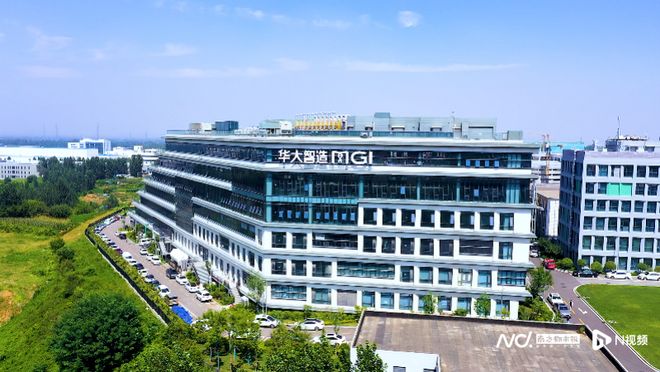
强链补链落子!华大智造高性价比并购,夯实生命科学基座全球唯一技术链
Hua Xia Shi Bao· 2026-02-01 12:28
Core Viewpoint - The acquisition of Shenzhen Huada Sanjian Qifa Technology Co., Ltd. and Hangzhou Huada Xifeng Technology Co., Ltd. by BGI Genomics is a strategic move to enhance its product offerings in the field of genomics, making it the only company globally to cover the entire chain of "long-read sequencing + spatial omics" technologies [1][2][3] Group 1: Acquisition Details - BGI Genomics announced a cash acquisition of 100% equity in both companies for approximately 366 million yuan [1] - The acquisition aims to integrate cutting-edge technologies, including Stereo-seq and CycloneSEQ, into BGI Genomics' existing product matrix [2][3] Group 2: Technological Integration - The integration of Stereo-seq and CycloneSEQ technologies will create a comprehensive technical chain that enhances BGI Genomics' competitive edge [2] - Stereo-seq technology is recognized for its international leadership in resolution and field of view, while CycloneSEQ offers unique advantages in long-read sequencing and real-time capabilities [3] Group 3: Strategic Positioning - This acquisition strengthens BGI Genomics' first-mover advantage in the AI medical field and brain-computer interface technology [4] - The company is positioned to lead in multiple cutting-edge sectors by leveraging its advanced technologies [4] Group 4: Financial Aspects - The acquisition is strategically timed to capitalize on the valuation window, allowing BGI Genomics to acquire assets at a more favorable price before they become commercially mature [5] - The estimated valuations for the acquired companies are significantly lower than comparable industry players, reducing financial pressure on BGI Genomics [5][6] Group 5: Risk Mitigation and Growth Potential - The acquisition includes performance guarantees from the sellers, providing a safety net for BGI Genomics and protecting shareholder interests [6] - The integration of new revenue streams from the acquired technologies is expected to enhance the company's overall revenue and profitability [6][7] Group 6: Industry Context - The acquisition aligns with the trend of deep mergers and acquisitions in the industry, reflecting a focus on strategic integration and value creation [7] - BGI Genomics' move serves as a model for similar industry consolidations, emphasizing the importance of building competitive barriers through comprehensive technology offerings [7]
强链补链落子!华大智造高性价比收购,夯实生命科学基座全球唯一技术链
Jin Rong Jie· 2026-02-01 11:22
Core Viewpoint - The acquisition of Shenzhen Huada Sanjian Qifa Technology Co., Ltd. and Hangzhou Huada Xufeng Technology Co., Ltd. by BGI Genomics is a strategic move to enhance its capabilities in the fields of spatial omics and nanopore sequencing, positioning the company as a leader in the global life sciences sector with a comprehensive product matrix covering "full-length sequencing + spatial omics" [1][2][3]. Group 1: Acquisition Details - BGI Genomics plans to acquire 100% equity of both companies for a total consideration of approximately 366 million yuan [1]. - The acquisition will allow BGI Genomics to integrate cutting-edge technologies into its operations, enhancing its product offerings and market position [2][3]. Group 2: Technological Integration - The acquisition will create a seamless technology chain combining short-read (DNBSEQ), long-read (CycloneSEQ), and spatial omics (Stereo-seq) technologies, making BGI Genomics the only company globally to cover these three advanced technologies [2][3]. - Stereo-seq technology is recognized for its international leadership in resolution and field of view, with applications in neuroscience, regenerative medicine, and tumor microenvironment analysis [2][3]. - CycloneSEQ technology offers unique advantages such as long-read, real-time sequencing, and portability, effectively addressing challenges in large genome assembly and clinical testing [2][3]. Group 3: Strategic Advantages - The acquisition strengthens BGI Genomics' first-mover advantage in the AI medical field, enhancing its "AI + gene sequencing" strategy and supporting the development of intelligent laboratory automation [4]. - The integration of these technologies will enable BGI Genomics to provide comprehensive services from library construction to sequencing and data analysis, significantly improving customer service capabilities and retention [3]. Group 4: Financial Considerations - The acquisition is strategically timed to capitalize on the valuation window during the target companies' incubation phase, allowing BGI Genomics to acquire assets at a more realistic value [5]. - The estimated equity value of Huada Sanjian is 158 million yuan, while Huada Xufeng is valued at 207.7 million yuan, both assessed using the income method [5]. - Performance guarantees from the sellers include commitments for cumulative net profits of at least 50.1 million yuan for Huada Sanjian and 82.8 million yuan for Huada Xufeng over specified periods, with cash compensation provisions in case of unmet targets [6]. Group 5: Market Impact - The acquisition is expected to significantly enhance BGI Genomics' revenue scale and profitability, leveraging its global sales network to promote the new technologies [6]. - The integration of new revenue streams from spatial omics and nanopore sequencing will contribute to the company's long-term growth and industry influence [6]. - The transaction aligns with the broader trend of deep mergers and acquisitions in the industry, reflecting a focus on strategic integration and value creation [6].
收购纳米孔测序与时空组学,华大智造(688114.SH)集齐“AI +生命科学+脑机接口”基座
智通财经网· 2026-02-01 10:44
Core Insights - The company BGI Genomics (688114.SH) announced plans to acquire 100% equity of Shenzhen Huada Sanjian Qifa Technology Co., Ltd. and Hangzhou Huada Xufeng Technology Co., Ltd. for a total of 366 million yuan, integrating key assets in spatial omics and nanopore sequencing [1] - This acquisition strengthens BGI Genomics' position in the global gene sequencing market by consolidating its strategic bases in "AI + life sciences + brain-computer interfaces," enhancing its competitive edge in multiple cutting-edge sectors [1][3] Technology Advancements - The long-read sequencing technology (CycloneSEQ) has achieved industry-leading levels in single-chip throughput and methylation direct measurement, comparable to international leader ONT, while the spatial omics technology (Stereo-seq) significantly outperforms similar products from 10X Genomics in capture area, resolution, and multi-level analysis capabilities [2] - Post-acquisition, BGI Genomics will become the only life sciences company globally to cover the entire product matrix of "full-length sequencing + spatial omics," positioning itself as a Chinese version of "Illumina + ONT + 10X Genomics" [2] Strategic Positioning - The acquisition enhances BGI Genomics' first-mover advantage in the cutting-edge sector, particularly in AI healthcare, where its "AI + gene sequencing" strategy is already industry-leading [3] - The integration of Stereo-seq technology provides precise navigation for implantable brain-computer interface technologies, establishing a core foundation for breakthroughs in this field [3] - Market analysts view this acquisition as a cost-effective expansion strategy, allowing the company to secure core assets while building a robust technological moat through unique and leading-edge technology chains [3]