海关监管

Search documents
“十四五”以来,海关年均监管进出口货物52亿吨、货值41.5万亿元
Zhong Guo Chan Ye Jing Ji Xin Xi Wang· 2025-08-26 23:42
Core Insights - The customs authority has made significant progress in modernization since the start of the 14th Five-Year Plan, providing strong support for high-quality development and high-level openness [1][2] Group 1: Trade Volume and Value - Since the beginning of the 14th Five-Year Plan, customs has averaged supervision of 5.2 billion tons of import and export goods annually, with a total value of 41.5 trillion yuan, making it the largest globally [2][3] - The average annual growth rate of imports and exports is 7.9%, with a notable increase in the diversity of import sources and products [3] Group 2: Customs Facilitation and Innovation - Customs has achieved breakthroughs in facilitation, implementing a national integrated customs clearance system and enhancing the "single window" for international trade, covering 964 items across 25 categories [2][4] - New regulatory models for cross-border e-commerce and bonded warehouses have been introduced, promoting regional coordinated development and enhancing the safety and stability of supply chains [3][4] Group 3: Port Environment and Efficiency - The port business environment has improved significantly, with 108 reform measures implemented across 25 cities in 17 provinces, simplifying customs processes and enhancing market competitiveness [4][5] - Innovations such as the "one port pass" model in the Guangdong-Hong Kong-Macao Greater Bay Area have reduced cargo transfer times from 5-7 days to 2-3 days [4] Group 4: International Cooperation and Expansion - Customs has established 85 new cooperation mechanisms with countries involved in the Belt and Road Initiative, totaling 138, enhancing international collaboration [6][7] - The customs authority has contributed to global initiatives, including the establishment of a global "smart customs" online cooperation platform and participation in the revision of international health regulations [7]
建设现代化海关,支撑高水平开放
Ren Min Ri Bao· 2025-08-26 00:04
Core Insights - The article highlights the achievements of China's customs in enhancing regulatory efficiency and service levels during the "14th Five-Year Plan" period, supporting high-quality development and high-level openness [2] Group 1: Regulatory Efficiency and Security - Customs has managed an average of 5.2 billion tons of import and export goods annually, with a total value of 41.5 trillion yuan, marking the largest volume globally [3] - A total of 515 million pieces of prohibited items were seized, and over 180,000 cases of infectious diseases were detected [3] - Customs has established a comprehensive epidemic monitoring network covering over 220 countries and regions, enhancing quarantine measures at ports [3] Group 2: Quality and Safety of Imports and Exports - A risk monitoring system for import and export product quality has been established, with over 9 million batches of goods inspected [4] - More than 10,000 batches of non-compliant mineral products and recycled metals were returned, and over 4,000 batches of solid waste were repatriated [4] - A total of 12,000 batches of non-compliant goods were detected, including 68,000 non-compliant vehicles [4] Group 3: Trade Facilitation and Innovation - The "Single Window" for international trade has become a digital portal, covering 25 categories and 964 items related to cross-border trade [5] - Customs has implemented a big data intelligent risk control model, improving the interception rate of high-risk declarations by 16 percentage points [5] - The customs special supervision zones contributed to 1/5 of the total import and export value, with 43 billion tons of cargo handled at water transport ports in 2024, a 10% increase from the end of the "13th Five-Year Plan" [8] Group 4: International Cooperation and Market Expansion - Customs has signed 519 cooperation documents and established 138 customs cooperation mechanisms with countries involved in the Belt and Road Initiative [9] - In 2024, trade with Belt and Road partner countries is expected to reach 22 trillion yuan, accounting for over half of total trade [9] - The average annual growth rate of trade with emerging markets such as ASEAN, Latin America, Africa, and Central Asia exceeds 10% [9]
体量全球最大!52亿吨、41.5万亿元……海关总署最新发布
券商中国· 2025-08-25 15:48
Core Viewpoint - The article highlights the achievements of China's customs during the "14th Five-Year Plan" period, emphasizing the enhancement of trade security, facilitation of international trade, and the promotion of high-quality development through various initiatives and regulatory measures [1][4]. Group 1: Trade Volume and Port Development - Since the beginning of the "14th Five-Year Plan," customs have regulated an average of 5.2 billion tons of import and export goods annually, with a total value of 41.5 trillion yuan, making it the largest in the world [2]. - A total of 40 new and expanded open ports have been established, bringing the total to 311, creating a comprehensive open port layout across land, sea, and air [2][6]. - The import and export volume with Belt and Road Initiative partners reached 22 trillion yuan in 2024, accounting for over half of total trade, with annual growth rates exceeding 10% for emerging markets [4][8]. Group 2: Innovation and New Business Models - Customs have innovated regulatory models for cross-border e-commerce, overseas warehouses, and bonded services, enhancing regional coordinated development and improving the safety and stability of supply chains [2][5]. - The customs authority has implemented 108 reform and innovation measures to facilitate cross-border trade, including simplifying customs processes and optimizing regulatory models [5]. Group 3: Anti-Smuggling and Crime Prevention - Customs have cracked down on smuggling, with 3,032 cases of drug smuggling reported, seizing 15.7 tons of various drugs [2][8]. - The weight of solid waste smuggling has decreased by 96% compared to 2020, demonstrating effective measures against illegal waste imports [3]. - The value of cases related to "tax-free purchase" smuggling reached 5.9 billion yuan, showcasing strong deterrence against illegal activities [3][8]. Group 4: Intellectual Property Protection - Customs have conducted various actions to protect intellectual property, seizing nearly 4 billion suspected infringing items [9]. - The number of registered rights holders has increased by nearly 20,000 during the "14th Five-Year Plan," indicating enhanced protection for both domestic and foreign intellectual property rights [9].

【“十四五”高质量发展答卷】“十四五”期间海关监管进出口货物体量全球最大
Yang Shi Wang· 2025-08-25 11:50
Core Viewpoint - The State Council's press conference highlighted the achievements of the Customs General Administration during the "14th Five-Year Plan" period, emphasizing the importance of safeguarding national security and promoting high-quality development in trade [1] Group 1: Trade Volume and Security - During the "14th Five-Year Plan" period, the Customs Administration managed an average of 5.2 billion tons of import and export goods annually, with a total value of 41.5 trillion yuan, making it the largest in the world [1] - The Customs Administration has ensured security and stability in trade operations, maintaining controllable oversight [1] Group 2: Customs Integration and Efficiency - Nationwide customs integration has been fully realized, with "one network for all services" covering 25 categories and 964 items, effectively encompassing the entire cross-border trade chain [1] - The multi-modal transport regulatory model for rail, sea, and air has enabled "one declaration" and "one order" for the entire logistics process [1] - "Smart travel inspection" has been implemented at 80% of air ports, allowing for faster customs clearance for travelers [1] Group 3: International Cooperation and Trade Partnerships - Since the beginning of the "14th Five-Year Plan," the Customs Administration has signed 519 cooperation documents, positioning China as one of the top three trading partners for 157 countries and regions globally [1] - In 2024, trade with Belt and Road Initiative partners is expected to reach 22 trillion yuan, accounting for over half of total trade; trade with emerging markets such as ASEAN, Latin America, Africa, and Central Asia has been growing at an average rate of over 10% annually [1] - The new advantages of international cooperation and win-win strategies have become more prominent, showcasing China's role as a responsible major power [1]
海关答疑:进出境邮件“一站式”办理平台使用指南
Ren Min Ri Bao Hai Wai Ban· 2025-08-23 08:59
Core Viewpoint - The Ningbo Customs has launched a "one-stop" platform for handling inbound and outbound mail, effective from July 1, 2025, aimed at streamlining customs processes for users engaging in cross-border e-commerce [1]. Group 1: Platform Features - The "one-stop" platform allows users to check the customs status of inbound mail, handle supplementary declarations, tax payments, tax reviews, refunds, and returns, as well as access tax rates and common queries related to inbound mail [1]. - Users can access the platform through six different clients, including mobile apps and web portals, with a unified registration system across all platforms [2][4]. Group 2: User Registration and Access - Users must register with their real identity on any client, and this registration will be valid across all platforms without the need for repeated registration [4]. - The platform currently does not allow users to handle supplementary declarations on behalf of others, ensuring that only the registered user can manage their own mail [4]. Group 3: Operational Guidance - To perform a supplementary declaration, users must log in with the phone number associated with the mail item, as discrepancies in phone numbers can lead to issues in accessing mail information [5][6]. - After tax payment, users can query and download payment receipts through the platform, which includes data on all payment statuses [7].
海口海关技术中心实验室项目全面建成启用
Hai Nan Ri Bao· 2025-08-19 01:44
Core Viewpoint - The Haikou Customs Technical Center Laboratory project has been fully completed and operational, significantly enhancing the detection capabilities for import and export goods, thereby providing crucial technical support for food safety and product quality in the Hainan Free Trade Port [1][2][3] Group 1: Project Overview - The project is located in Haikou Jiangdong New District, covering an area of approximately 10,000 square meters, and includes various specialized laboratories such as industrial products, microbiology, and food safety [1] - The laboratory is equipped with 128 sets of advanced instruments and facilities to improve detection capabilities and efficiency [2] Group 2: Operational Enhancements - The project aims to optimize detection processes and establish a rapid response mechanism to prepare for increased cargo volume post-closure, ensuring efficient customs clearance [2] - A collaborative system combining business and technology has been implemented to enhance detection capabilities in line with the evolving needs of the Hainan Free Trade Port [2][3] Group 3: Regulatory and Compliance - The laboratory covers inspection and testing across 27 major categories, including food, cosmetics, and textiles, ensuring comprehensive regulatory compliance [3] - The project has achieved certifications such as CMA and CNAS, which enhance its credibility and operational standards [1][2]
离境退税激发消费新动能!上半年广州口岸离境退税申请金额超2亿元
Sou Hu Cai Jing· 2025-07-29 10:29
Core Insights - The relaxation of China's visa-free transit policy and the optimization of the departure tax refund policy have significantly boosted the consumption market, leading to a surge in inbound spending by foreign travelers [3] - In the first half of the year, Guangzhou Customs reported over 8,000 tax refund applications from foreign travelers, with a total refund amount exceeding 200 million yuan, marking year-on-year increases of 192.6% and 149% respectively, setting a historical record [3] Policy Enhancements - The Ministry of Commerce, along with the Ministry of Finance and the General Administration of Customs, introduced measures to further optimize the departure tax refund policy, lowering the minimum refund threshold from 500 yuan to 200 yuan and increasing the cash refund limit from 10,000 yuan to 20,000 yuan [3] Traveler Experience - Foreign travelers have expressed satisfaction with the tax refund process, highlighting the convenience and financial benefits, such as significant discounts on purchases after tax refunds [5] - Guangzhou Customs has improved the tax refund experience by providing multilingual services and enhancing data exchange with tax and banking departments, resulting in a 163% year-on-year increase in tax refund applications processed [5][6] Service Innovations - The introduction of an integrated service model at the Nansha Port has streamlined the tax refund process, allowing travelers to complete their refunds in under 10 minutes [6] - Guangzhou Customs is piloting a "one order, one package" service, which allows travelers to have their tax refund items packaged and verified quickly at customs, significantly improving efficiency [6] Future Developments - Plans are underway to develop self-service verification equipment and to promote a paperless process for tax refunds, aiming to enhance the overall consumer experience for foreign travelers [6]
境外旅客上半年在沪提交离境退税申请单6.4万票同比大幅增长1.4倍
Xin Hua Cai Jing· 2025-07-22 06:23
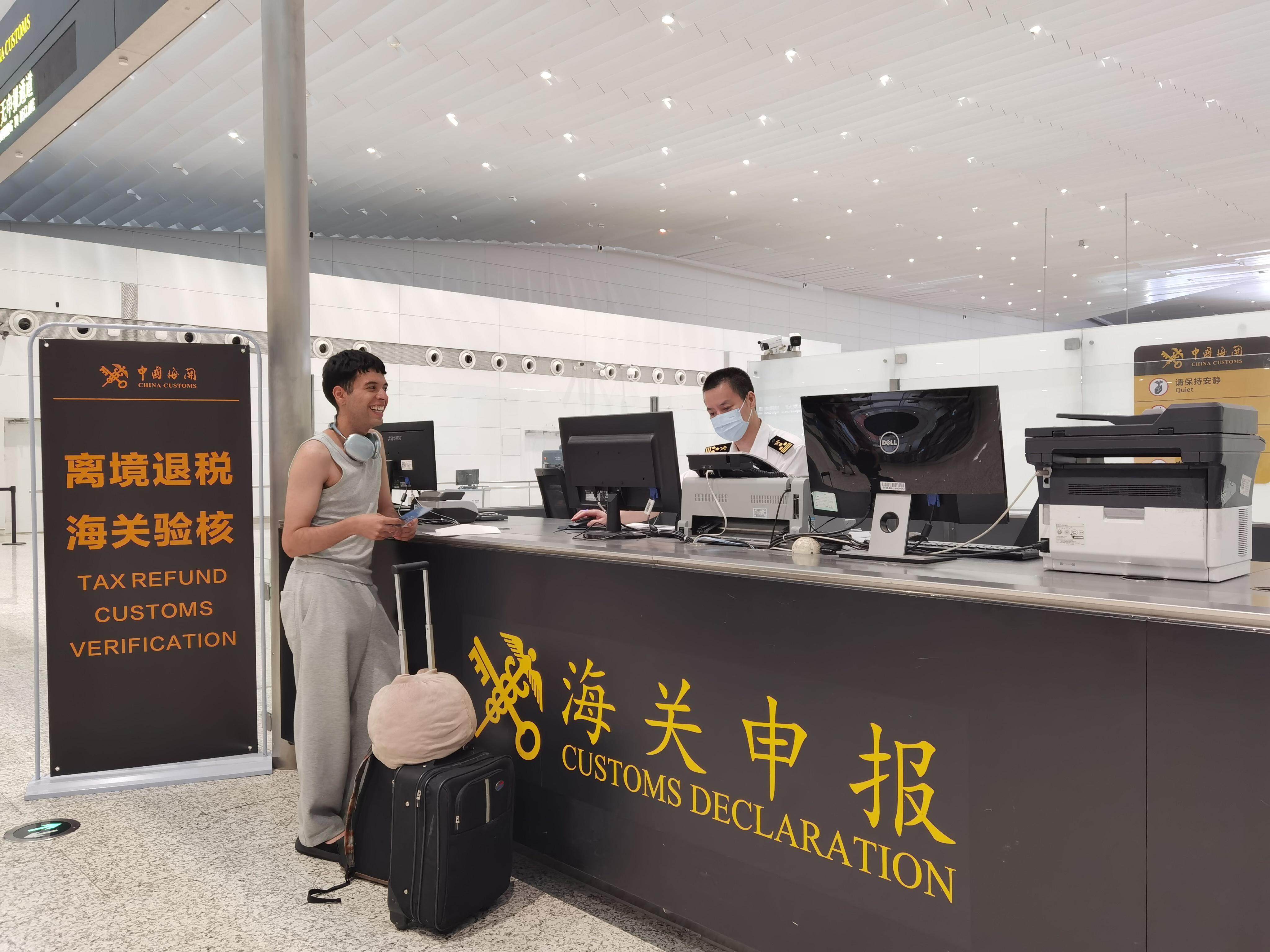
在"封装扫码"模式之下,上海市内相关退税商店启动退税商品封装作业,海关采用扫描退税申请单二维 码的方式快速验核。这一模式可以把海关验核速度提升至"秒级",大大便利境外旅客出境通关。 上海是全国首批离境退税试点城市,离境退税商店基本覆盖中心城区。上海海关自2015年7月1日起开展 退税商品在出境口岸的验核工作,验核量多年居全国各城市第一,约占全国验核量的一半。 (文章来源:新华财经) 在"自助验核"模式之下,境外旅客可使用自助验核机向海关上传单证,海关采用"远程验核+现场巡 视"方式完成相关商品验核手续。这一模式充分发挥了海关智能化监管手段的优势,可满足多人同时办 理验核的需求,特别是在境外旅行团集中办理时,验核效率可显著提高。 在"即买即验"模式之下,境外旅客在出境隔离区内的退税商店购物后,可在海关"即买即验"设备上完成 验核手续。这一模式让境外旅客无需在商店、海关和银行间折返跑,可在就近的银行退税点直接取得退 税款。 新华财经上海7月22日电 最新统计数据显示,今年上半年,上海海关共验核离境退税申请单6.4万票,比 去年同期大幅增长1.4倍,数量已与去年全年总单数基本持平。这意味着境外旅客平均每天在沪提交约 ...
五名海关系统代表与中外记者交流——筑牢国门安全屏障 提高监管效能和服务水平(权威发布)
Ren Min Ri Bao· 2025-07-03 21:59
Core Insights - China's foreign trade has achieved scale growth and quality improvement, solidifying its position as the world's largest goods trading nation [1] - The customs system plays a crucial role in facilitating trade and ensuring efficient customs clearance processes [1][2] Group 1: Customs Efficiency and Innovations - Ningbo Zhoushan Port is projected to handle over 1.35 billion tons of cargo in 2024, ranking first globally [1] - The Beilun Customs in Ningbo has pioneered a "pre-inspection before loading" model for export consolidation, enhancing customs efficiency for small and medium-sized enterprises [1] - The Gongbei Customs has optimized the first "one-stop" system for passenger and cargo vehicles, reducing clearance time to under 10 seconds for vehicles without anomalies [1] Group 2: Strategic Developments in Border Areas - The Hongqilafu Customs has transformed from a remote town to a key hub in the China-Pakistan Economic Corridor since its establishment in 2013, with year-round operations starting in December [2] - The customs service expedited the import of cherries from Pakistan, saving over 6 hours in clearance time and approximately 1500 yuan in costs per shipment [2] - The Yangpu Economic Development Zone is the first national-level development zone to enjoy bonded area policies, serving as a pilot for Hainan Free Trade Port [2][3] Group 3: Trade Facilitation and Agricultural Exports - The Yangpu Customs is implementing innovative regulatory measures to enhance logistics and customs efficiency in preparation for the Hainan Free Trade Port's closure [3] - Chongqing's first export of fresh lemons to Vietnam via the Western Land-Sea New Corridor was completed in just 48 hours, significantly reducing transportation time and costs [3] - The Chongqing Customs has launched initiatives to support the export of agricultural products, including a "green channel" for faster customs clearance [3]
海关总署:即日起恢复部分原产地为日本的水产品进口,福岛县、群马县、栃木县、茨城县、宫城县、新潟县、长野县、埼玉县、东京都、千叶县等10个都县除外。
news flash· 2025-06-29 14:18
Core Viewpoint - The General Administration of Customs of China has announced the conditional resumption of seafood imports from certain regions of Japan, excluding specific prefectures affected by the Fukushima nuclear water discharge, based on safety assurances from the Japanese government and ongoing monitoring results [1][2]. Group 1: Import Resumption Details - The resumption of imports applies to seafood products from Japan, excluding ten prefectures: Fukushima, Gunma, Tochigi, Ibaraki, Miyagi, Niigata, Nagano, Saitama, Tokyo, and Chiba [1]. - Japanese seafood exporters must comply with China's regulations for overseas food production enterprises and must reapply for registration if their products were previously suspended [1]. - Import declarations for Japanese seafood must include a health certificate, proof of radioactive substance testing, and proof of the production area issued by Japanese authorities [1][2]. Group 2: Regulatory Oversight - The customs authority will implement strict supervision over Japanese seafood imports, and any non-compliance with Chinese laws or food safety standards will lead to immediate control measures to protect public health [2]. Group 3: Announcement Cancellation - The announcement also includes the cancellation of the previous customs announcement No. 103 of 2023 [3].