
设施农业

Search documents
“新农人”玩转智慧农业 “小”菜园闯出“大”市场 | 我与国家一起前行
Yang Shi Wang· 2026-01-06 02:18
Core Viewpoint - The recent Central Rural Work Conference emphasizes the need to enhance the quality and efficiency of the "vegetable basket" industry, aiming to improve the diversified food supply capacity, with Shouguang, Shandong, recognized as a leading facility vegetable production base in China [1] Group 1: Industry Development - Shouguang has a stable vegetable planting area of over 600,000 acres, with yields more than three times the national average [1] - The local government has implemented supportive policies for vegetable seed industry development and talent recruitment, establishing modern intelligent parks to attract skilled young individuals to facility agriculture [31] - Over 8,000 technical personnel from Shouguang are currently guiding vegetable production across the country [31] Group 2: Technological Innovation - New farmer Luan Hongyun has developed various innovative greenhouse models and planting techniques, significantly enhancing agricultural efficiency [3][4] - The introduction of smart greenhouses allows for integrated water and fertilizer management, enabling precise irrigation and fertilization through remote control [19] - The use of advanced heating systems in greenhouses, such as double-layer heat-collecting greenhouses, maintains temperatures above 10°C even in extreme cold [11] Group 3: Market Expansion - Luan Hongyun's use of short videos for marketing has led to significant business growth, with over 60% of his contracts now sourced through online platforms [27] - Shouguang's agricultural products and technologies are being exported globally, with over 270 vegetable parks established in more than 40 countries [33] - The local agricultural model has gained international recognition, with clients from countries like Romania seeking to adopt Shouguang's greenhouse technology [29] Group 4: Youth Engagement - More than 30% of Shouguang's vegetable farmers are young individuals from the "80s," "90s," and "00s" generations, indicating a shift towards a new generation of farmers driving rural economic development [36] - The success of young farmers like Luan Hongyun inspires others to return to their hometowns and engage in agriculture, contributing to rural revitalization [36][39] Group 5: Future Outlook - The integration of technology and professional knowledge in agriculture is expected to empower more young farmers, aligning their aspirations with the broader goals of rural revitalization [44] - The ongoing development of Shouguang's agricultural model reflects a promising future for facility agriculture, with potential for further global expansion [39]


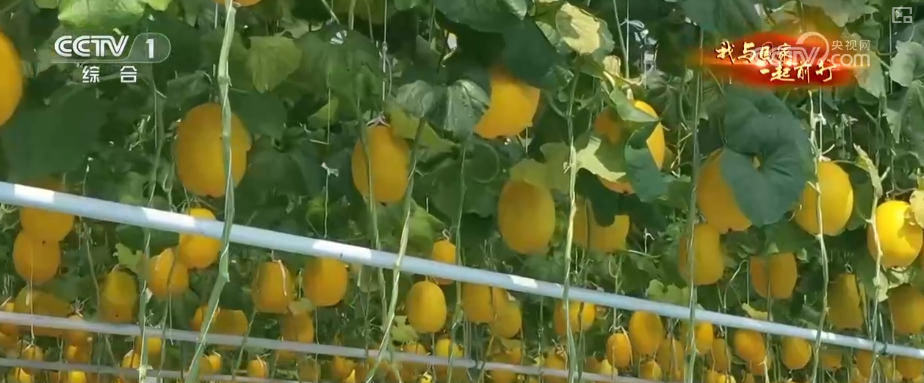
科技“点绿”冬季 设施农业成为农民增收“新引擎”
Xin Lang Cai Jing· 2026-01-04 21:06
Core Viewpoint - The development of facility agriculture in Heilongjiang Province is significantly enhancing farmers' income and providing fresh produce during winter months, supported by advanced technology and innovative farming practices [1][2][3] Group 1: Facility Agriculture Development - Heilongjiang Province is strengthening facility agriculture construction, with high-standard greenhouses becoming a crucial source of income for farmers, allowing them to achieve "year-round income" [1] - As of the end of Q3 2025, the area of facility agriculture in Heilongjiang reached 427,000 acres, marking an 11% year-on-year increase, establishing it as a vital pillar for off-season agricultural product supply and farmer income growth [3] Group 2: Technological Innovations - The use of advanced technologies such as intelligent control systems in greenhouses allows for precise monitoring and adjustment of temperature, humidity, and light, leading to improved crop yield and quality [2] - Modern greenhouses in Heilongjiang utilize techniques like membrane drip irrigation and dual-layer temperature control, saving water by 40% compared to traditional methods [2] Group 3: Economic Impact - The implementation of facility agriculture is projected to enhance farmers' earnings, with some modern greenhouses generating over 30,000 yuan in additional income annually [2] - The continuous supply of fresh fruits and vegetables from greenhouses is expected to enrich the local market while boosting farmers' financial returns [2]
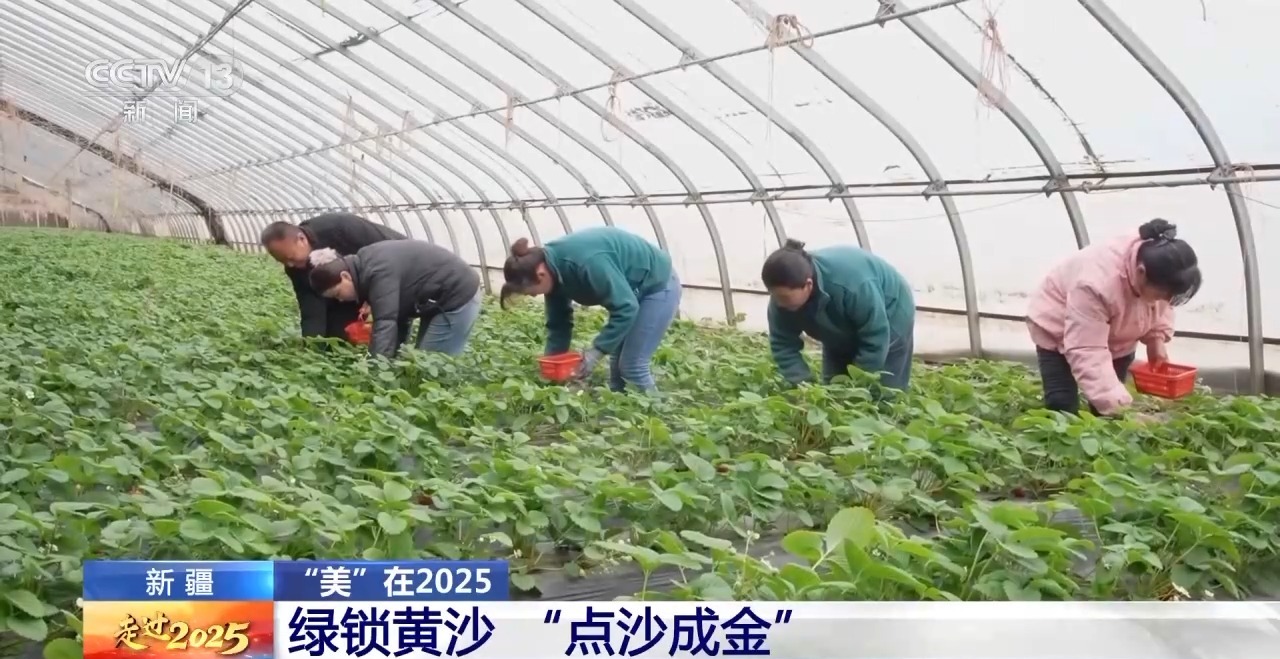
视频|“两山”理念下 新疆沙生经济“点沙成金”
Yang Shi Xin Wen Ke Hu Duan· 2026-01-02 02:08
Core Viewpoint - The article highlights the successful implementation of the "Two Mountains" concept in China, showcasing the completion of the Taklamakan Desert's edge-locking project, which has created the world's longest ecological barrier around a desert, promoting green economic development in the region [1]. Group 1: Environmental Initiatives - The Taklamakan Desert edge-locking project, spanning 3,046 kilometers, has achieved full completion, establishing a significant ecological barrier [1]. - The project has led to the development of a green economy, with local communities actively engaging in sand prevention and exploring sand-based economic opportunities [1]. Group 2: Agricultural Development - The Hetian County facility agricultural base has transformed previously barren land into productive green spaces, utilizing modern agricultural management techniques [3]. - The base features 1,000 modern greenhouses that produce over 10,000 tons of high-quality fruits and vegetables annually, demonstrating effective use of sand for agricultural purposes [5]. - The use of organic fertilizers and advanced technology, including mobile app controls, has resulted in a 70% reduction in labor costs for agricultural operations [7]. Group 3: Economic Impact - The total area of sand economic crops in Xinjiang has reached 10.83 million acres, generating a total output value of 28.9 billion yuan [9]. - Following the edge-locking project's completion, an additional 938,220 acres of green space have been added, expanding the protective barrier width from 110 meters to 7,500 meters [9].
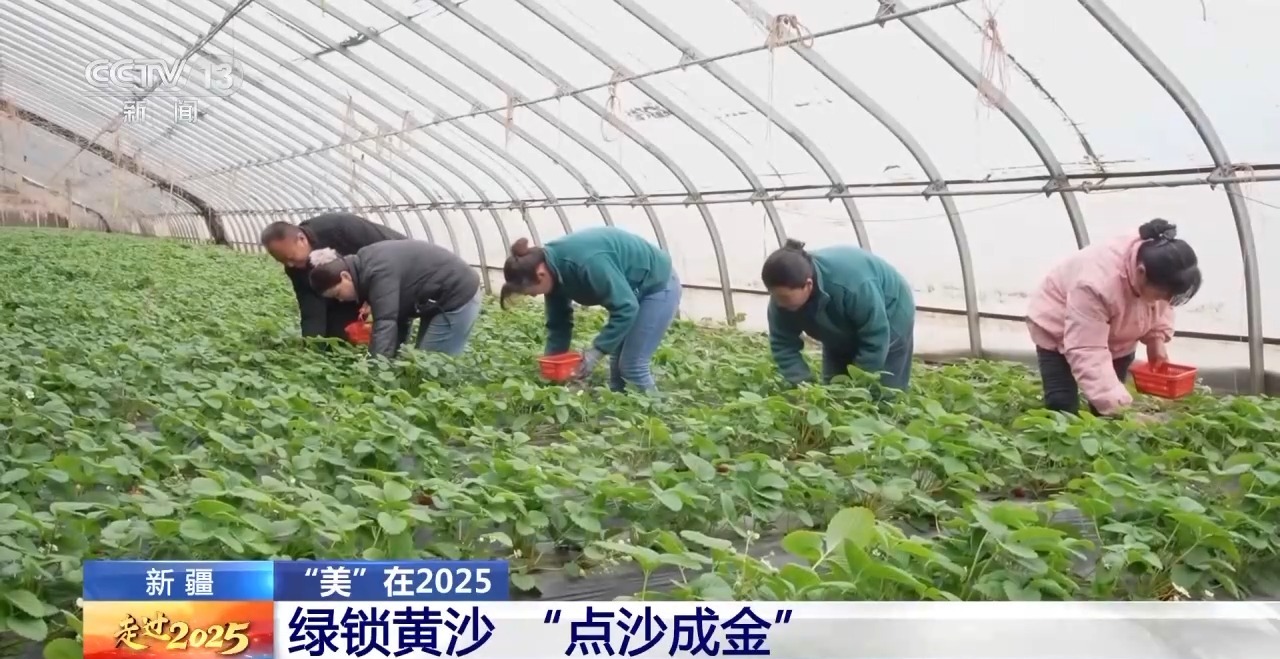
视频丨“两山”理念下 新疆沙生经济“点沙成金”
Xin Lang Cai Jing· 2026-01-01 02:18
Core Viewpoint - The article highlights the successful implementation of the "Two Mountains" concept in China, showcasing the transformation of the Taklamakan Desert through the completion of a green ecological barrier and the development of a sand economy in the region [1]. Group 1: Environmental Initiatives - The Taklamakan Desert's locking project, spanning 3,046 kilometers, has created the world's longest ecological barrier around the desert, marking a significant environmental achievement [1]. - The project has led to the establishment of a green protective belt, enhancing the ecological stability of the desert's edge [1]. Group 2: Agricultural Development - The Hetian County facility agriculture base has transformed previously barren land into productive agricultural areas, featuring 1,000 modern greenhouses that utilize advanced agricultural technologies [3]. - The base employs techniques such as sand-free cultivation, integrated water and fertilizer management, and automated temperature control, resulting in the annual production of over 10,000 tons of high-quality fruits and vegetables [3]. - The use of organic fertilizers and mobile app-controlled operations has allowed for a 70% reduction in labor costs, demonstrating the efficiency of modern agricultural practices in desert regions [5]. Group 3: Economic Impact - The total area of desert economic crops in Xinjiang has reached 10.83 million acres, generating a total output value of 28.9 billion yuan [7]. - Following the completion of the locking project, an additional 9.38 million acres of green space have been added, expanding the protective belt's width from 110 meters to 7,500 meters [7].
“两山”理念下 新疆沙生经济“点沙成金”
Yang Shi Xin Wen Ke Hu Duan· 2026-01-01 02:04
Core Insights - The article highlights the successful completion of the Taklamakan Desert's edge-locking project, creating the world's longest green ecological barrier around the desert, which spans 3,046 kilometers [1] - The development of modern agricultural practices in the region has transformed previously barren land into productive agricultural bases, contributing to local economic growth [3][5] Group 1: Agricultural Development - The Hetian County facility agriculture base has established 1,000 modern greenhouses, producing over 10,000 tons of high-quality fruits and vegetables annually, turning the desert into a modern agricultural hub [3] - The use of advanced agricultural techniques such as sand-free cultivation, integrated water and fertilizer management, and automated temperature control has significantly improved productivity and efficiency [3][5] - The facility's management system allows for a 70% reduction in labor through mobile app controls for irrigation and fertilization [5] Group 2: Economic Impact - The total area of desert economic crops in Xinjiang has reached 10.83 million acres, generating a total output value of 28.9 billion yuan [7] - Following the edge-locking project's completion, an additional 938,220 acres of green planting have been added, expanding the protective barrier's width from 110 meters to 7,500 meters [7]
陕西发布设施农业雪灾及低温灾害黄色预警 元旦期间需防范棚体垮塌与作物受冻
Xin Lang Cai Jing· 2025-12-29 06:52
转自:群众新闻 陕西省气象局与陕西省农业农村厅12月29日13时35分联合发布设施农业雪灾、低温灾害风险预警:预计 2025年12月30日至2026年1月1日,陕西省有一次大范围雨雪、降温天气过程,主要降雪出现在12月31日 至1月1日。预计最低气温出现在1月2日清晨。此次寒潮雨雪天气过程易导致部分温室大棚遭受雪压垮 塌,棚内蔬菜受冻。其中12月31日—1月1日咸阳东北部、铜川西部、渭南南部局地、汉中南部局地、安 康西南局地及东南部局地、商洛东北部及南部局地设施农业出现雪灾的风险较高(黄色预警);1月1— 3日榆林北部局地、咸阳北部、铜川大部、渭南北部及南部局地、宝鸡东南部、西安西部局地、商洛东 北部设施农业低温灾害风险较高(黄色预警),建议上述设施农业种植区提前加固棚体,加盖防寒物, 及时清除棚体积雪,防止设施垮塌受损、棚内蔬菜受冻;科学调控棚内温湿度,并做好增温补光、肥水 管理,同时加强作物病虫害防控。 ...
看,这里是肃北 | 戈壁农业靠“智慧大棚”闯出新天地
Zhong Guo Xin Wen Wang· 2025-12-24 05:42
Group 1 - The core viewpoint of the articles highlights the development of Gobi facility agriculture in Su Bei County as a key strategy for industrial upgrading and rural revitalization, focusing on improving agricultural production and efficiency through modern greenhouse technology [1][3] - Su Bei County has invested 6.46 million yuan to build 9 new arched greenhouses, enhancing the existing 16 greenhouses, which contributes to the overall quality and scale of agricultural production [1][2] - The introduction of high-value crops such as strawberry tomatoes and smart agricultural systems has led to significant improvements in water conservation and fertilizer reduction, with annual production value per unit area reaching six times that of traditional methods [2][3] Group 2 - The innovative "enterprise + village collective" model in Party Cheng Wan Town effectively integrates market and technical advantages of enterprises with the resources of village collectives, resulting in mutual benefits and increased collective income [2] - The project has generated over 270,000 yuan in dividends for six village collectives, strengthening the local economy and supporting rural development [2] - The ongoing efforts in Gobi facility agriculture are transforming barren land into productive farmland, filling the gap in high-standard modern cold and drought-resistant facility agriculture in Su Bei County [3]
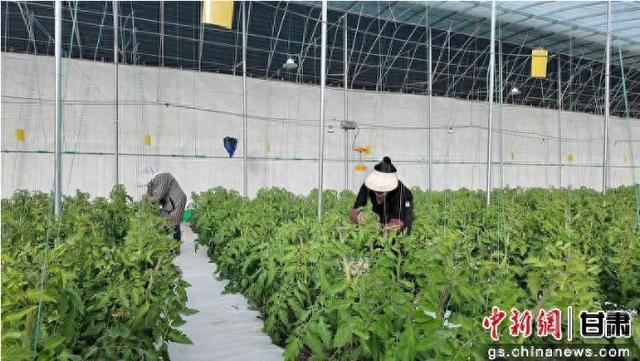
设施农业“棚”勃发展
Xin Lang Cai Jing· 2025-12-19 18:23
Core Viewpoint - The development of facility agriculture in the Xinjiang Production and Construction Corps (XPCC) has significantly enhanced agricultural productivity and improved the livelihoods of local farmers, particularly during the winter season when traditional crops are less available [7]. Group 1: Facility Agriculture Development - The XPCC has increased investments in facility agriculture, implementing policies to support local adaptation, crop structure adjustments, and the introduction of new technologies [7]. - Modern agricultural technologies such as integrated water and fertilizer systems and pest control measures are being utilized to ensure high-quality and safe agricultural products [7][8]. - The use of temperature, humidity, and light monitoring systems allows for precise environmental control, enabling crops to thrive even in low-temperature conditions [7][8]. Group 2: Economic Impact and Employment - The growth of facility agriculture has created numerous flexible employment opportunities, effectively increasing income for surplus labor in surrounding areas [8]. - Farmers are experiencing significant financial benefits, with reports of high yields, such as over 8 tons of ice cream watermelon from a single greenhouse, which is in high demand in local markets [8]. - The initiative is contributing to the overall modernization of agriculture and promoting rural revitalization by overcoming natural resource limitations [8].
从“猫冬”到“忙冬”:沙漠腹地民勤孕育寒旱农业新景
Zhong Guo Xin Wen Wang· 2025-12-17 08:56
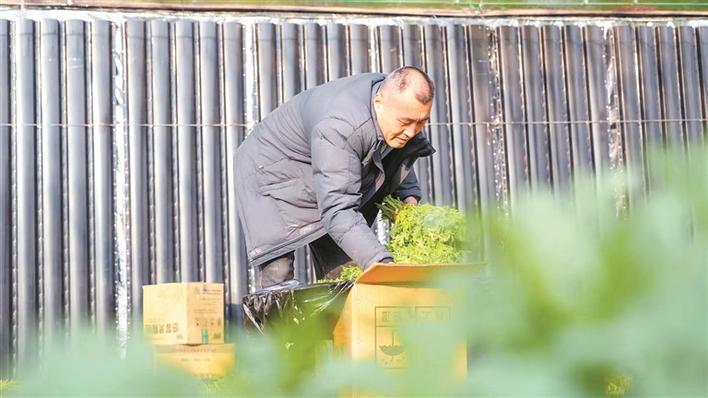
Core Viewpoint - The agricultural transformation in Minqin County, Gansu Province, is shifting from a "winter idle" to a "busy winter" model, showcasing the vitality of greenhouse agriculture during the winter season [2][5]. Group 1: Agricultural Practices - Farmers in the village of Guanguo are increasingly abandoning the "winter idle" approach and engaging in active agricultural practices, particularly in the cultivation of zucchini during its peak season [2]. - The village has implemented an intelligent water and fertilizer integration system, leading to an average annual income exceeding 30,000 yuan per greenhouse, thus becoming a reliable engine for continuous income growth for villagers [2][5]. - The county has developed 56,000 acres of solar greenhouses, with a total output of 380,700 tons of greenhouse products, indicating significant progress in facility agriculture [7]. Group 2: Technological Integration - Minqin County has focused on promoting facility agriculture, integrating technologies for water conservation and temperature control, effectively overcoming seasonal limitations in high-cold and arid regions [5]. - The county has adopted a scientific crop rotation strategy, optimizing the planting structure to transition from a traditional single-season model to a year-round high-efficiency model, thereby stabilizing agricultural production and expanding income channels for farmers [5][6]. Group 3: Market and Branding - The county is enhancing brand agriculture by promoting large-scale operations and standardized production, leveraging the "Minqing Source" regional public brand to support various new agricultural entities [6]. - A range of vegetable brands, including small melons, zucchinis, and peppers, are gaining recognition, reflecting the county's commitment to agricultural branding and market integration [6].
移动开启保温被日光温室研发成功
Huan Qiu Wang Zi Xun· 2025-12-16 09:25
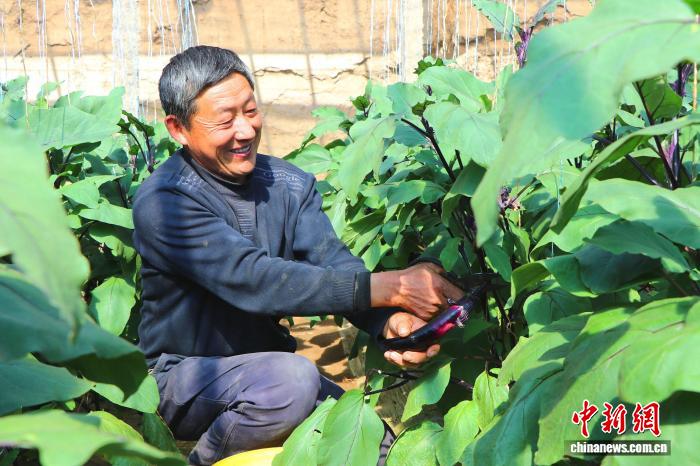
Core Viewpoint - The introduction of the mobile opening thermal blanket greenhouse represents a significant technological breakthrough in China's daylight greenhouse sector, addressing long-standing issues such as insufficient intelligence, weak disaster resistance, and low land and light utilization efficiency [1][7]. Group 1: Traditional Challenges - The traditional rolling blanket system in daylight greenhouses faces limitations that hinder development, including structural safety risks and weak disaster resistance due to snow accumulation [2]. - The rolling blanket occupies vertical space of 0.6 to 1.0 meters, forcing increased spacing between greenhouses, which leads to a significant reduction in land utilization [3]. - The inability to achieve precise control in the rolling blanket system obstructs the advancement of fully automated and intelligent environmental control systems, limiting the modernization of facility agriculture [3]. Group 2: Technological Innovations - The new mobile opening thermal blanket system utilizes a rigid or semi-rigid composite unit that slides on a dedicated track, fundamentally solving the inherent defects of the traditional model [4]. - The system features a high-precision servo mechanism that eliminates errors from material deformation, allowing for centimeter-level control of opening positions and speeds, thus enhancing overall greenhouse intelligence [4][5]. - The design prevents snow accumulation and water pooling, significantly reducing the risk of greenhouse collapse and material failure [4]. Group 3: Performance Improvements - The new system ensures 100% light utilization by completely removing the thermal blanket from the lighting area, resulting in a 10% to 15% increase in effective light exposure [5]. - Land utilization improves by over 20% due to reduced greenhouse spacing, as the height of the greenhouse ridge can be lowered by 0.5 to 1.0 meters [5]. - The introduction of new materials enhances thermal performance, with a 50% increase in thermal resistance compared to traditional materials, ensuring temperature stability under extreme weather conditions [5][6]. Group 4: Broader Implications - The mobile opening thermal blanket greenhouse technology is expected to be particularly beneficial in high-latitude, snowy regions, addressing production risks and high energy consumption associated with traditional greenhouses [7]. - This technology facilitates the transition from traditional agricultural practices to modernized plant factories, integrating IoT and AI technologies for automated operations [7][8]. - The advancements contribute to national food security and promote sustainable agricultural practices by increasing production efficiency and reducing carbon emissions [8].