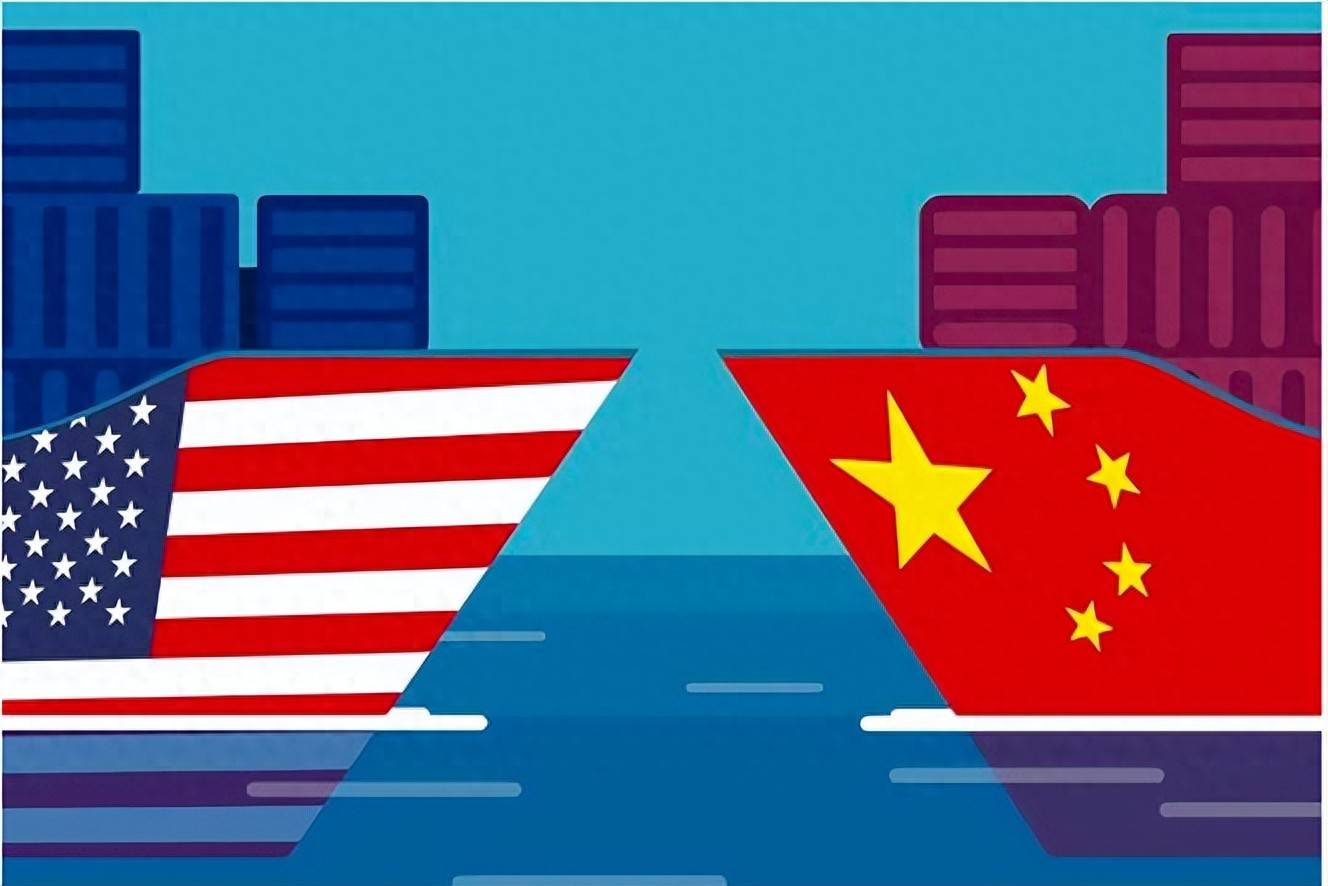
进出口贸易

Search documents
外贸“新春第一展”华交会:展位及境外展商数均超去年
Di Yi Cai Jing· 2026-02-26 09:01
Core Insights - The 34th China East Import and Export Commodity Fair (HuaJiaoHui) will be held from March 1 to March 4 in Shanghai, serving as a significant indicator of China's foreign trade amidst increasing uncertainties in the international trade environment [1] Group 1: Event Overview - The total exhibition area for this year's fair is 115,000 square meters, covering 10 exhibition halls at the New International Expo Center [1] - The number of total exhibition booths is 5,291, with 3,325 domestic and international enterprises participating, including 375 foreign exhibitors from 14 countries and regions [1] Group 2: Participation and Growth - Compared to the previous edition, the total number of booths, exhibitors, and foreign exhibitors has increased by 2.88%, 2.31%, and 3.02% respectively [1] - Over 46,000 domestic and international professional buyers are expected to attend this year's fair, continuing a trend of rapid growth in buyer attendance [1] Group 3: Quality of Exhibitors - This year's exhibitors include a number of national high-tech enterprises, specialized "little giant" companies, and leading firms in niche markets, showcasing innovations in new technologies and materials [2] - Among the participating companies, 20% are brand enterprises, 19.5% hold patents, 8.6% apply new materials and processes, and there are 59 specialized and innovative enterprises [2] Group 4: Business Matching and Integration - The fair will feature on-site procurement matching areas and seven specialized matching sessions, including an expanded Japan-Korea session and increased participation from Southeast Asian buyers, with a 57.14% increase in their numbers [2] - A total of 577 enterprises will be marked for their willingness to expand domestic sales channels, representing a 4.53% increase from the previous year, facilitating effective connections between domestic buyers and relevant enterprises [2]
京津冀协同发展12年 外贸进出口值增长25.7%
Yang Shi Xin Wen· 2026-02-26 03:08
央视新闻消息,2月26日京津冀协同发展12周年。12年来,三地优势互补、携手共进,外贸进出口实现 快速发展。据海关统计,京津冀地区进出口值从2014年的3.74万亿元人民币增至2025年的4.7万亿元,增 长25.7%。主要呈现以下特点: 一是"十四五"期间,京津冀进出口规模始终保持在4万亿元以上。 2021年—2025年"十四五"期间,京津冀进出口规模始终保持在4万亿元以上。 四是主要贸易伙伴进出口增长。欧盟、东盟是京津冀主要贸易伙伴,12年来,京津冀对欧盟进出口值从 4254.4亿元增至5955.4亿元,对东盟从2435.4亿元增至3953.5亿元。共建"一带一路"倡议提出以来,京津 冀积极扩大贸易伙伴圈,对共建"一带一路"国家进出口值从2014年的2.14万亿元增至2025年的2.76万亿 元,增长29%。 原标题:京津冀协同发展12年外贸进出口值增长25.7% 编辑:饶治美 责编:秦雨 审核:廖异 出口方面,12年来,京津冀持续调整产品结构,优化产业发展,其中汽车出口增长迅速,2025年出口 909.7亿元,增长6倍。2025年京津冀地区出口值达1.45万亿元,创历史新高,比2014年出口规模增长 5 ...
百色外向型经济何以逆势突围?
Xin Lang Cai Jing· 2026-02-25 12:52
Core Insights - Baise's foreign trade showed resilience and growth in 2025, with total import and export volume reaching 48.25 billion yuan, a year-on-year increase of 9.8%, ranking fifth in the region and exceeding the autonomous region's target by 104.4% [1] - The city has achieved a cumulative import and export total of 196.15 billion yuan during the 14th Five-Year Plan period, with an average annual growth rate of 9.1% [1] Policy Support - Baise has implemented a comprehensive policy support system to stabilize foreign trade and promote growth, including the introduction of the "2025 Baise City Foreign Trade Development Promotion Fund Support Policy" [2] - The city has guided 23 foreign trade enterprises to apply for central foreign economic and trade development special funds, securing 7.8108 million yuan to support market expansion and innovative development [2] - Additional funding of 38.1 million yuan for border transfer payments and 30 million yuan for business growth has been secured to enhance port cargo capacity and support border trade enterprises [2] Structural Optimization - The city is transitioning from a "channel economy" to a "port economy," focusing on structural adjustments and energy conversion rather than simple scale expansion [3] - The proportion of border small-scale trade, which previously dominated Baise's foreign trade, has been reduced, with a focus on enhancing value-added and stability through policy guidance and market cultivation [3] - The city has achieved a 99% processing rate for mutual market trade in 2024 and 2025, leading the Guangxi region [3] Trade Growth - General trade in Baise has shown strong resilience, with a trade volume of 7.6 billion yuan in 2025, a significant increase of 91% from 2024 [4] - Cross-border e-commerce has also seen remarkable growth, reaching 8.75 billion yuan in 2025, up 90.21% year-on-year [4] Regional Cooperation - Baise is actively integrating into the China-ASEAN Free Trade Area 3.0, enhancing regional cooperation to expand international market access [6] - The city hosted the 2025 China-Baise-Vietnam High-Quality Economic and Trade Activity Week, attracting significant participation and promoting bilateral trade cooperation [6] Logistics and Infrastructure - Baise is enhancing its cross-border logistics system and improving port customs and service capabilities, leveraging its geographical advantages [7] - Major transportation infrastructure projects are underway, including highways and railways, significantly improving connectivity [7] Future Outlook - Baise aims to continue promoting high-level opening-up, focusing on stabilizing scale, optimizing structure, improving quality, and increasing efficiency in its foreign trade [9] - The city is set to become a key logistics hub connecting the southwest region with ASEAN markets, supported by ongoing infrastructure projects [8][9]
2026年内蒙古力争外贸进出口总值增长5%左右
Zhong Guo Xin Wen Wang· 2026-02-25 09:11
Core Viewpoint - Inner Mongolia aims for a foreign trade import and export value growth of approximately 5% by 2026, reflecting its commitment to deeper participation in the China-Mongolia-Russia Economic Corridor and the Belt and Road Initiative [1] Group 1: Economic Goals - The 2026 plan includes a target to increase the volume of major imported products processed locally by over 3 million tons [1] - The region plans to enhance export business in the Erenhot mutual trade zone and establish operational mutual trade zones at Mandula and Ganqimaodu ports [1] - The goal is to achieve a port cargo volume of 140 million tons by improving the cargo distribution capacity and return load rates of the China-Europe Railway Express nodes in Hohhot and Ulanqab [1] Group 2: Structural Transition - The economic strategy indicates a shift from a "channel economy" to "on-site processing," which is expected to inject new momentum into the sustainable development of Inner Mongolia's economy [1] - The region's foreign trade value reached 220.67 billion yuan in 2025, with a growth rate surpassing the national average [2]
硬扛了3天后,美国终于认命,这场全球大战,结局真被中国说准了
Sou Hu Cai Jing· 2026-02-25 07:54
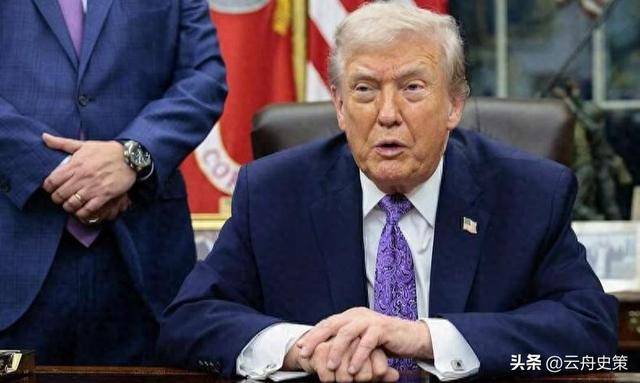
Core Viewpoint - The U.S. Supreme Court's ruling against the president's unilateral imposition of tariffs under the International Emergency Economic Powers Act has led to a significant shift in trade policy, moving from emergency tariffs to temporary measures with limitations [3][5][25]. Group 1: Legal and Policy Changes - The Supreme Court ruled 6-3 that the president cannot impose tariffs without Congressional approval, emphasizing that tax authority belongs to Congress [3][5]. - The previous approach of using emergency powers to impose tariffs has been halted, leading to confusion within the White House and the Customs system [7][19]. - The administration has shifted to using the Trade Act of 1974, which allows temporary trade measures but imposes strict limitations on duration and rates [9][19]. Group 2: Impact on Tariff Rates - The new tariffs introduced under the Trade Act are capped at 15%, significantly lower than previous rates that could exceed 30% for certain countries [11][13]. - The average tariff rate on imports from China has decreased from approximately 32% to a lower range due to the new legal framework [13][15]. - The uniform 15% tariff has resulted in some countries, previously enjoying lower rates, facing increased tariffs, thus altering competitive dynamics [15][19]. Group 3: Market and Political Implications - The temporary nature of the new tariffs, limited to 150 days without Congressional support for extension, creates uncertainty in trade negotiations [19][21]. - The shift from a permanent to a temporary tariff framework reduces the leverage of the U.S. in trade discussions, as negotiating partners can now factor in the limited duration of tariffs [21][28]. - The ruling highlights the boundaries of executive power, indicating that unilateral trade measures without legislative backing may face legal challenges [25][28].

萧山区企服中心海关服务专区助企“出海”
Hang Zhou Ri Bao· 2026-02-25 02:54
"咨询最多的就是电子口岸卡。"萧山区企业综合服务中心负责人告诉记者。电子口岸卡(证书)是 进出口企业的数字身份证和业务密钥,用于身份认证、电子签名、办理通关、退税等线上业务,根据卡 介质权限分为法人卡和操作员卡两种。从申报报关单、舱单,到查询货物状态、报关进度,再到缴纳关 税、增值税等税费,通关全流程都离不开这张卡。过去,全市的电子口岸卡(证书)只能前往杭州市民 中心窗口办理。如今,萧山的"出海"企业在"家门口"就能办妥,不必再跑市里。 2月24日一早,萧山区企业综合服务中心刚开门不久,已有企业工作人员陆续来到新设的"海关服务 专区"窗口前咨询业务。当天,该专区正式投入运行,这也是全省首个可以办理电子口岸卡(证书)的 区县窗口。 萧山外贸出口已连续多年位居全市首位,萧山制造正从依托第三方平台的"卖货",向掌控渠道与品 牌的"出海"不断跃迁。萧山区企业综合服务中心负责人介绍,目前,萧山共有4000多家涉及"出海"业务 的企业。"海关服务专区"的落地,为这些企业提供了更便捷的通关服务支撑和更完善的政策对接通 道,"出海"航道正在不断拓宽。 下一步,萧山区企业综合服务中心还计划将企业出海拓市涉及的各类事项进行整合, ...
美国关税退款关键问题悬而未决 退税追索权市场交易价格已飙升
Xin Lang Cai Jing· 2026-02-25 01:54
在美国最高法院推翻总统唐纳德·特朗普征收的多项关税之后,华尔街交易员对进口商或其他受影响企 业将实际获得部分关税退款的前景愈发乐观。 知情人士称,与关税退款挂钩的追索权价格已大幅上涨,当前一美元面值的交易价已超过的40美分,明 显高于法院2月20日裁决前约10至20美分的区间。尽管如此,价格仍显著低于面值,反映出市场对退款 是否最终兑现以及流程所需时间仍存疑虑。 一位不愿具名讨论私人交易的知情人士称,更多希望尽快回笼部分关税资金的企业开始出售其退税追索 权。这在一定程度上也抑制了潜在买家的出价。 知情人士透露,尽管交易活跃度上升,但单笔追索权规模仍偏小,多数在5000万美元或以下。当前参与 交易的许多机构已布局数月,押注针对白宫关税政策的法律挑战不断累积,最终将让退款支付到账。 一位不愿具名讨论私人交易的知情人士称,更多希望尽快回笼部分关税资金的企业开始出售其退税追索 权。这在一定程度上也抑制了潜在买家的出价。 美国最高法院裁定,特朗普依据《国际紧急经济权力法》(IEEPA)对几乎所有国家征关税超越了其权 限。这为企业追索已缴关税奠定了基础。然而,退还最高或达1700亿美元的关税的操作流程势必复杂, 可能须耗 ...
不降反增,英澳反对美新关税措施
Xin Hua Cai Jing· 2026-02-25 00:04
Core Viewpoint - The U.S. Supreme Court ruled that the International Emergency Economic Powers Act does not authorize the President to impose large-scale tariffs, leading President Trump to invoke other legal provisions to impose a 15% tariff on imports, raising concerns from the UK and Australia about increased export costs and weakened competitiveness [1][2]. Group 1: Impact on Trade Relations - The new tariffs will increase the tariff rate on UK goods exported to the U.S. from 10% to 15%, excluding items covered by the trade agreement reached last year [1]. - Australian products, which previously benefited from a free trade agreement eliminating most tariffs, may now face higher tariffs due to the new U.S. measures [1][2]. Group 2: Reactions from Officials - UK Chamber of Commerce's trade policy director expressed disappointment, estimating that the increased tariffs will raise the cost of UK exports to the U.S. by £2 to £3 billion (approximately $2.7 to $4.1 billion) [1]. - Australian officials, including the Trade and Tourism Minister, expressed disappointment and urged the U.S. to abandon the new tariffs, emphasizing the need for a rules-based trading order [2]. Group 3: Economic Implications - Analysts suggest that the uncertainty surrounding U.S. tariff policies could have lasting impacts on international trade and add downward pressure to global economic recovery amid ongoing supply chain disruptions and geopolitical tensions [2].
突发快讯!难以为继!美媒向全球播报:白宫宣布暂停部分关税政策,引发全球高度关注
Sou Hu Cai Jing· 2026-02-24 21:33
Group 1 - The U.S. government has made a significant adjustment regarding tax increases, with the White House announcing a suspension of certain measures due to a Supreme Court ruling that limited presidential powers [1][3] - The suspension of tax measures has provided some relief to U.S. companies, particularly in the export and manufacturing sectors, although it is understood that this is not a complete cancellation of all tax policies [3][5] - The legal ruling has imposed boundaries on presidential authority, prompting the government to respect these limits while still retaining options for future policy adjustments [3][5][7] Group 2 - The economic impact of the tax measures has been significant, affecting international shipping, import costs, and employment, with the suspension offering short-term relief but uncertain long-term effects [5][7] - Chinese companies have developed mechanisms to cope with U.S. tax changes, focusing on product upgrades and supply chain optimization as primary strategies [5][9] - The global trade environment is becoming increasingly dynamic, with all parties seeking a balance amid U.S. policy adjustments, which are often seen as temporary and subject to change [5][7][9] Group 3 - The adjustment of tax measures has triggered a global response, with companies and markets adapting to the changes, particularly in the context of U.S. policy contraction [9][10] - U.S. companies are adjusting production plans and export strategies in light of the partial suspension of tax measures, indicating a proactive approach to the evolving landscape [5][9] - The ongoing changes in U.S. tax policy reflect a broader trend of legal and economic interactions, with companies, markets, and governments continuously adapting to new realities [7][9]
美国去年对华贸易逆差降至20年最低,一个时代结束了
Sou Hu Cai Jing· 2026-02-24 11:57
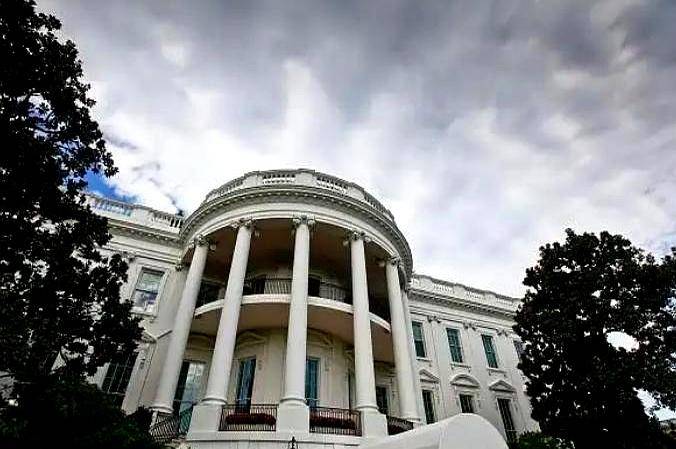
Group 1 - The core point of the article highlights the significant changes in the trade relationship between China and the United States, marking a shift from a previously strong trade bond to a new low in trade ties [2][3] - The trade deficit between the U.S. and China decreased by nearly 32% to $202.1 billion in the previous year, the lowest level since 2005, with U.S. imports from China dropping nearly 30% to $308.4 billion, and exports to China decreasing by nearly 26% to $10.36 billion [5] - The reduction in the U.S.-China trade deficit is indicative of a broader trend of supply chain diversification, as the U.S. increases trade deficits with countries like Mexico and Vietnam, suggesting a reallocation of trade routes rather than a decrease in overall supply chain dependency [8][11] Group 2 - The article discusses the implications of the U.S. reducing its trade deficit with China, which is seen as a result of the U.S. strategy to lessen reliance on Chinese supply chains while simultaneously increasing trade with other countries [10][11] - The shift in trade dynamics has led to a situation where Chinese manufacturers are increasingly exporting through third countries, resulting in lower profit margins due to the involvement of intermediaries [13] - The article notes that despite the decrease in direct trade with the U.S., China has seen significant growth in exports to ASEAN and Africa, although these markets typically offer lower profit margins compared to developed countries [12][16] Group 3 - The article emphasizes the structural challenges faced by Chinese exporters, who are experiencing a "quantity over price" scenario, leading to reduced profitability amid intense price competition [17][19] - The historical context of globalization is discussed, highlighting the previous "China-U.S. model" where China produced low-cost goods for the U.S. market, which is now being disrupted by changing trade policies and supply chain strategies [18] - The article concludes that the era of high trade volumes and profits from the U.S. market for Chinese manufacturers is coming to an end, necessitating a strategic pivot towards emerging markets [22][24]