钻石

Search documents
2025年10月中国钻石进口数量和进口金额分别为173千克和3.76亿美元
Chan Ye Xin Xi Wang· 2025-11-26 03:58
上市企业:力量钻石(301071),惠丰钻石(839725) 相关报告:智研咨询发布的《2025-2031年中国钻石行业市场竞争现状及发展趋向研判报告》 近一年中国钻石进口情况统计图 数据来源:中国海关,智研咨询整理 知前沿,问智研。智研咨询是中国一流产业咨询机构,十数年持续深耕产业研究领域,提供深度产业研 究报告、商业计划书、可行性研究报告及定制服务等一站式产业咨询服务。专业的角度、品质化的服 务、敏锐的市场洞察力,专注于提供完善的产业解决方案,为您的投资决策赋能。 根据中国海关数据显示:2025年10月中国钻石进口数量为173千克,同比增长10.9%,进口金额为3.76亿 美元,同比增长18.3%。 ...


天然钻石协会宣布任命 Amber Pepper 出任首席执行官引领 NDC 增强消费者需求、强化天然钻石吸引力,并树立行业权威声音
Sou Hu Wang· 2025-11-22 02:24
Core Insights - The Natural Diamond Council (NDC) has appointed Amber Pepper as the new CEO, effective February 1, 2026, following the retirement of David Kellie [1][3] - Amber Pepper brings extensive experience in luxury brand transformation and digital innovation, having held senior positions at Tapestry, Farfetch, Harrods, and Mytheresa [1][3] - The focus of Pepper's leadership will be on creating compelling brand narratives, enhancing the unique appeal of natural diamonds, and driving tangible business results [3] Group 1 - Amber Pepper is recognized for her ability to connect emotionally with consumers and engage with Gen Z and high-end consumers [3] - Her experience in omnichannel strategy management and team building is expected to support the future development of the NDC [3] - The NDC aims to strengthen consumer demand and expand industry collaboration under Pepper's leadership, emphasizing the uniqueness and long-term value of natural diamonds [3] Group 2 - The NDC's chairman, Sandrine Conseiller, expressed confidence in Pepper's international perspective and deep understanding of luxury consumers as ideal for leading the organization [3] - The appointment follows David Kellie's announcement of retirement, during which he successfully led the rebranding of the organization and navigated multiple challenges, including the pandemic [3][4] - The NDC expresses gratitude for Kellie's outstanding leadership and contributions during his tenure [4]

太突然!股市突然大跳水,发生了什么?
天天基金网· 2025-11-11 08:29
Core Viewpoint - The article discusses the recent fluctuations in the stock market, highlighting the impact of external factors such as U.S. government funding issues and concerns over the AI sector bubble, which have influenced market performance and investor sentiment [10][11][18]. Market Performance - On November 11, the market experienced a day of volatility, with the Shanghai Composite Index falling by 0.39%, the Shenzhen Component down by 1.03%, and the ChiNext Index decreasing by 1.4% [3]. - The trading volume in the Shanghai and Shenzhen markets was below 2 trillion yuan, a decrease of 180.9 billion yuan compared to the previous trading day [3]. External Influences - The article notes that the Asian markets opened higher due to a significant rise in U.S. stocks but subsequently experienced declines, attributed to concerns over the U.S. government "shutdown" and its potential economic implications [7][10]. - The U.S. Senate passed a temporary funding bill, but uncertainties remain as it awaits approval from the House of Representatives and the President [10]. Economic Data Concerns - Investors are wary of upcoming economic data releases following the government reopening, with concerns that missing data could mask structural slowdowns in hiring [11]. - The article mentions that the U.S. dollar has performed well during the government shutdown, which may attract funds away from other markets [11]. AI Hardware Sector - The AI hardware sector showed a notable decline, mirroring the overall market trend, with concerns about the potential bubble in the U.S. AI sector affecting A-shares [12][13][18]. - Michael Burry's comments on the overvaluation of tech companies due to depreciation accounting practices have raised alarms about the sustainability of profits in the AI sector [18][19]. Investment Style Adjustments - There is a potential shift in institutional investment styles, with funds possibly reallocating from popular sectors, leading to market volatility [19]. - The China Securities Investment Fund Industry Association is drafting guidelines to regulate theme-based investment styles, which may impact fund management practices [20]. Emerging Opportunities - The cultivated diamond sector has emerged as a surprising leader in market gains, with a rise of over 6% [22]. - Recent advancements in the use of cultivated diamonds in semiconductor cooling solutions have sparked renewed interest in their industrial applications [25].

比稀土更致命?中方亮出“王牌”,网友:美芯片要被卡脖子了
Xin Lang Cai Jing· 2025-11-07 14:23
Core Viewpoint - The Chinese government has announced export controls on industrial diamonds starting from November 8, 2025, which may create challenges for U.S. chip manufacturers due to potential raw material shortages and increased production costs [1][2]. Industry Overview - Diamonds are crucial in modern technology, particularly in supporting industries like 5G communication and artificial intelligence, due to their superior thermal conductivity, making them ideal for chip cooling [2]. - China is currently the largest diamond producer globally, with an annual output exceeding 22 million carats, providing a significant competitive advantage in the diamond industry [2]. Company Insights - The city of Zhecheng in Henan province has rapidly developed a complete diamond industry chain since overcoming technical bottlenecks in 2019, significantly enhancing both the quantity and quality of diamond production [4]. - The local high-end diamond brand "Zhe·Guang" has gained popularity, offering top-quality diamonds priced around 8,000 yuan per carat, attracting high-net-worth individuals and securing various orders [4][6]. Market Trends - Consumers are increasingly turning to Zhecheng diamonds for their affordability and quality, with reports of significant sales growth for the Zhe·Guang brand, which has surpassed seven-digit sales figures in the first half of the year [8]. - The rise of Zhecheng's diamond industry is seen as a challenge to the traditional dominance of Western diamond markets, providing consumers with more options and competitive pricing [6][10]. Future Outlook - The Chinese diamond industry is poised for robust growth, with both industrial and high-end jewelry diamonds gaining prominence in the global market, potentially disrupting the long-standing Western market dynamics [10]. - There is optimism that domestic brands like Zhe·Guang will continue to innovate and build their brand presence, establishing a strong foothold in the international diamond market [10].
多个行业增值税优惠政策即将取消
Di Yi Cai Jing· 2025-10-19 14:13
Core Points - The recent tax reform focuses on standardizing tax incentives, accelerating the adjustment of VAT policies for various industries [1] - The Ministry of Finance, the General Administration of Customs, and the State Taxation Administration have announced the cancellation or adjustment of several VAT incentives [1] Wind Power Industry - The VAT exemption policy for onshore wind power, which allowed a 50% immediate refund since July 2015, will be abolished starting November 1, 2023 [2] - From November 1, 2025, to December 31, 2027, a 50% immediate refund policy will be retained for offshore wind power [2] - The change indicates that onshore wind technology is mature and competitive, while offshore wind still requires support due to higher costs and challenges [2] Nuclear Power Industry - The VAT policy for nuclear power, which provided a phased refund over 15 years, will no longer apply to new projects approved after November 1, 2025 [3][4] - Existing projects will continue to benefit from the previous VAT policies until their respective deadlines [4] - This shift reflects a recognition that the nuclear power sector can now compete on a more equal footing with other energy sources [4] Financing Leasing Industry - The VAT refund policy for financing leasing businesses, which allowed refunds for tax burdens exceeding 3%, will be abolished on November 1, 2023 [5][6] Aircraft Maintenance and Other Industries - The VAT exemption for aircraft maintenance services, which allowed refunds for tax burdens exceeding 6%, will be canceled starting November 1, 2023 [7] - Other industries affected include diamond trading, new wall materials, and coalbed methane extraction, with various VAT incentives being removed [7][8] Overall Tax Policy Context - The cancellation of these tax incentives aligns with the broader goal of standardizing tax policies and increasing fiscal revenue amid economic challenges [8] - The recent adjustments are part of the implementation of the tax law principle and aim to enhance market fairness and reduce tax evasion [8] - Fiscal data shows a slight increase in public budget revenue but a decline in government fund budget revenue, highlighting the need for improved tax policy [9]
财政部官宣 多个行业增值税优惠政策即将取消
天天基金网· 2025-10-19 06:47
Core Viewpoint - The article discusses the recent adjustments in tax policies affecting various industries, particularly focusing on the cancellation and modification of VAT incentives for wind power, nuclear power, and other sectors, as part of a broader fiscal reform initiative aimed at standardizing tax benefits and increasing government revenue [3][11]. Group 1: Wind Power - The VAT exemption policy for onshore wind power, which allowed a 50% immediate refund since 2015, will be abolished starting November 1, 2023, while a similar policy for offshore wind power will remain in place until December 31, 2027 [4][5]. - The decision to remove the tax incentive for onshore wind power indicates that the technology has matured and is now competitive without special support [4][5]. Group 2: Nuclear Power - The VAT refund policy for nuclear power, which provided phased reductions over 15 years, will no longer apply to new nuclear projects approved after November 1, 2025 [6][7]. - Existing projects will continue to benefit from the previous tax incentives until their respective deadlines, ensuring a smooth transition for investors [7]. Group 3: Other Industries - The VAT refund policy for financing leasing services, which allowed refunds for tax burdens exceeding 3%, will be terminated on November 1, 2023 [8][9]. - The VAT exemption for aircraft maintenance services and other related sectors will also be abolished, impacting the cost structure for these industries [10]. - The cancellation of various tax incentives is part of a broader effort to streamline tax policies and enhance fiscal revenue, as indicated by recent fiscal data showing a slight increase in public budget revenue but a decline in government fund income [11][12].

财政部官宣,多个行业增值税优惠政策即将取消
第一财经· 2025-10-18 12:21
Core Viewpoint - The article discusses the recent adjustments to value-added tax (VAT) policies in China, particularly the cancellation and modification of tax incentives for various industries, including wind power, nuclear power, and financing leasing, as part of a broader fiscal reform initiative aimed at standardizing tax incentives and increasing government revenue [3][16]. Summary by Sections Wind Power - The VAT exemption policy for onshore wind power, which allowed a 50% VAT refund on self-produced electricity sales since July 1, 2015, will be abolished starting November 1, 2025 [4][5]. - In contrast, a 50% VAT refund policy for offshore wind power will be maintained from November 1, 2025, to December 31, 2027, indicating government support for the still-developing offshore wind sector [4][5]. Nuclear Power - The VAT policy that allowed a phased refund for nuclear power plants will be discontinued for new projects approved after November 1, 2025. Existing projects will continue to benefit from the previous tax incentives until a specified transition period [7][8]. - This change reflects the maturity of the nuclear power industry, suggesting it no longer requires special tax support to compete fairly with other energy sources [8]. Financing Leasing - The VAT refund policy for financing leasing businesses, which allowed refunds for VAT burdens exceeding 3%, will be abolished on November 1, 2025 [9][12]. - This policy change is part of a broader effort to streamline tax regulations and reduce the complexity of the VAT system [12]. Aircraft Maintenance and Other Industries - The VAT exemption for aircraft maintenance services, which allowed refunds for VAT burdens exceeding 6%, will also be eliminated starting November 1, 2025 [13][14]. - Additional tax incentives for diamond trading, new wall materials, and coalbed methane extraction will be canceled, indicating a comprehensive approach to tax reform across various sectors [14][15]. Fiscal Reform Context - The adjustments to tax incentives align with the directives from the 20th National Congress of the Communist Party of China, emphasizing the need for standardized tax policies and improved fiscal health [16]. - The article notes that the cancellation of these tax incentives could help increase government revenue, which has been under pressure due to economic challenges [16].

财政部官宣 多个行业增值税优惠政策即将取消
Di Yi Cai Jing· 2025-10-18 11:30
Group 1: Tax Policy Changes - The Ministry of Finance has accelerated the adjustment of tax incentives, specifically abolishing or modifying several VAT policies across various industries, including wind power, nuclear power, and financing leasing [1][8]. - Effective November 1, 2023, the VAT exemption policy for onshore wind power, which allowed a 50% immediate refund on VAT for electricity generated from wind, will be abolished. However, a similar policy for offshore wind power will be implemented from November 1, 2025, to December 31, 2027 [2][4]. - The VAT policy for nuclear power, which provided a phased refund system for 15 years, will also be discontinued for new projects approved after November 1, 2025. Existing projects will continue to benefit from the previous policy until their respective transition periods end [3][4]. Group 2: Specific Industry Impacts - The financing leasing sector will see the cancellation of the VAT refund policy for tax burdens exceeding 3%, effective November 1, 2023, impacting the cost structure for businesses in this area [5][6]. - The aircraft maintenance industry will lose its VAT refund policy for tax burdens exceeding 6%, effective November 1, 2023, which may increase operational costs for service providers [7]. - Other industries affected include diamond trading, new wall materials, and coalbed methane extraction, all of which will see the cancellation of their respective VAT incentives, further tightening the tax landscape for these sectors [7][8]. Group 3: Broader Economic Context - The cancellation of these tax incentives aligns with the government's broader fiscal reform agenda aimed at standardizing tax policies and increasing fiscal revenue amid economic challenges [8][9]. - In the first three quarters of the year, China's general public budget revenue increased by 0.5% year-on-year, while government fund budget revenue decreased by 0.5%, indicating a need for improved fiscal health [9].
财政部官宣,多个行业增值税优惠政策即将取消
Di Yi Cai Jing· 2025-10-18 11:25
Core Points - The recent tax reform focuses on standardizing tax incentives, accelerating the adjustment of VAT policies across various industries [1] - The Ministry of Finance, the General Administration of Customs, and the State Taxation Administration have announced the cancellation or adjustment of several VAT incentives [1] Wind Power Industry - The VAT exemption policy for onshore wind power, which allowed a 50% immediate refund since July 1, 2015, will be abolished starting November 1, 2023 [2] - From November 1, 2025, to December 31, 2027, a similar 50% immediate refund policy will be retained for offshore wind power [2] - The decision reflects the maturity and competitiveness of onshore wind technology, while offshore wind still requires support due to higher costs and challenges [2] Nuclear Power Industry - The VAT policy that allowed a phased refund for nuclear power plants will be phased out for new projects approved after November 1, 2025 [3][4] - Existing nuclear power plants will continue to benefit from the previous VAT refund policies until their respective deadlines [4] - This change indicates that nuclear power is now expected to compete on equal tax terms with other energy sources [4] Financing Leasing Industry - The VAT refund policy for financing leasing businesses, which applied to tax burdens exceeding 3%, will be abolished on November 1, 2023 [5][6] Aircraft Maintenance and Other Industries - The VAT exemption for aircraft maintenance services, which allowed refunds for tax burdens exceeding 6%, will be canceled [7] - Other industries affected include diamond trading, new wall materials, and coalbed methane extraction, with various VAT incentives being removed [7][8] Overall Tax Policy Context - The cancellation of these tax incentives aligns with the broader goal of standardizing tax policies and increasing fiscal revenue amid economic challenges [8] - In the first three quarters of the year, the general public budget revenue was 163.876 billion yuan, a 0.5% increase year-on-year, while expenditures grew by 3.1% [9]
民用工业衰退严重!炼油厂不断被炸,俄罗斯石油出口已接近最大值
Sou Hu Cai Jing· 2025-10-12 09:22
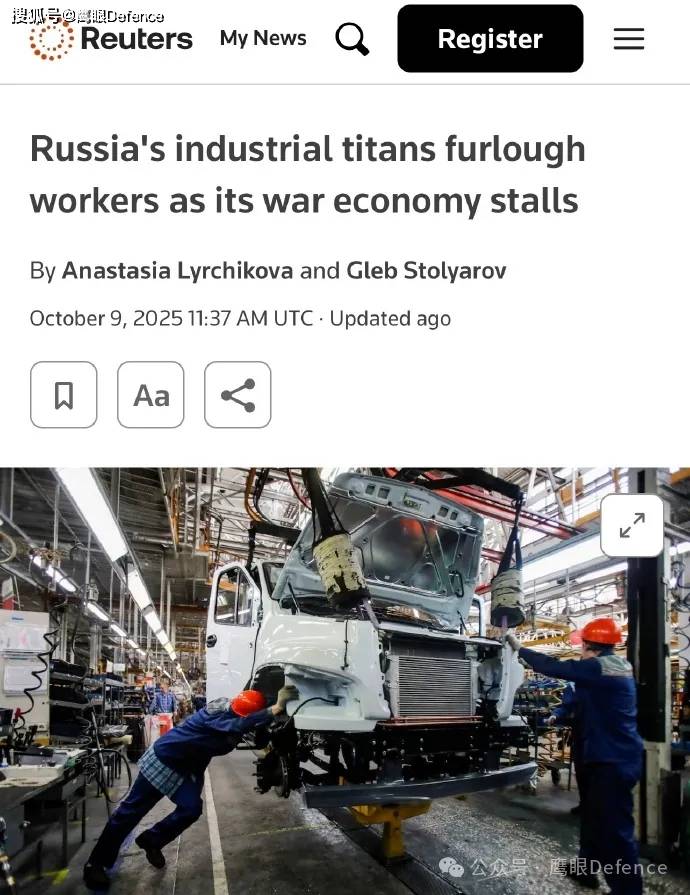
Group 1 - The ongoing overheating of the military industry is exacerbating the decline of Russia's civilian industries, particularly in bank loans and labor attraction [1] - Major industrial companies in Russia are placing employees on leave or laying them off due to a slowdown in the war economy, stagnant domestic demand, and depleted exports, affecting sectors from railways and automobiles to metals, coal, diamonds, and cement [1] - The largest cement manufacturer in Russia, Cemros, has extended its four-day workweek policy until the end of the year to preserve all employees amid declining cement demand, which is expected to be less than 60 million tons this year, similar to the pandemic period [4] Group 2 - The Russian economy's non-military sectors have shrunk by 5.4% since the beginning of the year, with GDP growth forecasted to slow significantly to between 0.7% and 1.0% for the year [4] - Labor issues are emerging even in state-owned enterprises, with reports of over 60 workers at a power plant staging a strike due to months of unpaid wages, highlighting legal protections for workers in Russia [4] - The energy sector, a pillar of the Russian economy, is facing increased sanctions from the West and ongoing direct sanctions from Ukraine, impacting its operational capacity [5] Group 3 - Continuous attacks from Ukraine are causing a decline in Russian refining capacity, forcing the country to sell more oil at lower prices, with major oil export ports nearing historical maximum levels [7] - In August, profits from energy sales in Russia dropped to the lowest level since 2022, averaging €546 million per day [10] - Goldman Sachs predicts a 10% decline in Russian oil production by next year, from 9.3 million barrels per day to 8.4 million barrels per day, due to ongoing pressures on refining capacity and high benchmark interest rates [11]