
专用设备制造

Search documents
山东:前8月规上工业增加值增长7.8% 进出口增长5.8%
Zheng Quan Shi Bao Wang· 2025-09-22 11:28
Economic Overview - Shandong Province has effectively responded to internal and external uncertainties, focusing on releasing domestic demand potential, strengthening industrial support, promoting service industry development, and stabilizing foreign trade, leading to a steady economic recovery [1] Industrial Performance - From January to August, the industrial added value of above-scale industries grew by 7.8% year-on-year, with 36 out of 41 industries experiencing growth, resulting in a growth rate of 87.8% [1] - Key industries such as railway, shipbuilding, electronics, and automotive saw significant increases in added value, with growth rates of 18.0%, 17.6%, and 16.2% respectively [1] Service Sector Growth - The revenue of above-scale service industries increased by 5.1% year-on-year from January to July, with 9 out of 10 major industry categories achieving growth [1] - Notably, the leasing and business services sector and the resident services and repair sector experienced double-digit growth rates of 15.9% and 10.1% respectively [1] Consumer Market Trends - The total retail sales of consumer goods grew by 5.7% year-on-year from January to August, maintaining the same growth rate as the previous month [2] - Fixed asset investment faced pressure, declining by 2.0% year-on-year, while manufacturing investment grew by 5.1% [2] - The province's total import and export volume reached 23,222.4 billion yuan, a year-on-year increase of 5.8%, with exports growing by 5.4% and imports by 6.4% [2] Industrial Upgrading - The added value of equipment manufacturing and high-tech manufacturing industries grew by 12.2% and 10.0% respectively, surpassing the overall industrial growth rate [3] - Production of high-end equipment such as lithium-ion batteries, industrial robots, and train sets saw substantial increases, with growth rates of 48.4%, 41.0%, and 38.3% respectively [3] Financial and Fiscal Health - The province's general public budget revenue reached 5,579.5 billion yuan, a year-on-year increase of 1.0%, while expenditures grew by 2.9% [4] - The balance of deposits in both domestic and foreign currencies increased by 9.1%, and the loan balance grew by 8.6% [4] Private Sector Dynamics - The added value of private industrial enterprises increased by 9.8% year-on-year, outpacing the overall industrial growth rate by 2.0 percentage points [4] - Retail sales of private commercial units grew by 8.4%, exceeding the overall retail sales growth rate by 1.6 percentage points [4] Employment and Price Stability - The province added 912,000 urban jobs from January to August, while the consumer price index saw a slight year-on-year decline of 0.2% [4] - Investment in the service and entertainment sectors increased significantly, with growth rates of 18.6% and 12.6% respectively [4]
万业企业股价涨5.43%,华夏基金旗下1只基金位居十大流通股东,持有354.7万股浮盈赚取326.32万元
Xin Lang Cai Jing· 2025-09-22 02:39
Group 1 - The stock price of Wanye Enterprise increased by 5.43% on September 22, reaching 17.86 CNY per share, with a trading volume of 350 million CNY and a turnover rate of 2.16%, resulting in a total market capitalization of 16.621 billion CNY [1] - Wanye Enterprise's stock has risen for three consecutive days, with a cumulative increase of 5.74% during this period [1] - The company, established on October 28, 1991, and listed on April 7, 1993, operates in core equipment for integrated circuits and photovoltaics, as well as real estate [1] Group 2 - The main revenue composition of Wanye Enterprise includes 48.34% from real estate sales, 41.44% from specialized equipment manufacturing, 6.14% from property services, 2.58% from property leasing, and 1.49% from other sources [1] - Among the top ten circulating shareholders of Wanye Enterprise, Huaxia Fund's Huaxia CSI 1000 ETF (159845) entered the list in the second quarter, holding 3.547 million shares, which is 0.38% of the circulating shares [2] - The Huaxia CSI 1000 ETF has achieved a year-to-date return of 26.11% and a one-year return of 67.6%, ranking 1914 out of 4222 and 1288 out of 3813 in its category, respectively [2]

创远信科拟收购微宇天导
Zhong Guo Zheng Quan Bao· 2025-09-21 20:17
Group 1: Mergers and Acquisitions Activity - The Beijing Stock Exchange (BSE) merger and acquisition market remains active, with companies like Chuangyuan Xinke planning significant acquisitions to enhance competitiveness and market liquidity [1][4] - Chuangyuan Xinke announced plans to acquire 100% of Weiyu Tiandao's equity through a combination of stock issuance and cash payment, with trading suspended to prevent stock price volatility [1][2] - Wuxin Tunnel's recent adjustments to its acquisition plan demonstrate a flexible approach to mergers, emphasizing strategic value over strict ownership percentages [3] Group 2: Company Performance - Chuangyuan Xinke reported a revenue of approximately 111 million yuan, a year-on-year increase of 18.44%, and a net profit of about 6.32 million yuan, reflecting a significant growth of 354.24% [2] - The company's growth is attributed to high R&D investment, product iteration, and market expansion efforts [2] Group 3: Market Mechanisms and Trends - The introduction of new mechanisms such as "small and fast" review processes has enhanced the efficiency of mergers and acquisitions on the BSE, leading to increased market activity [4] - Over 30 companies on the BSE have disclosed acquisition or restructuring announcements, indicating a robust trend in the market [4] - Analysts suggest that mergers and acquisitions are crucial for small companies on the BSE to achieve rapid growth and improve their competitive edge [4][5]
山河智能破碎筛分设备首进澳洲市场
Chang Sha Wan Bao· 2025-09-19 14:51
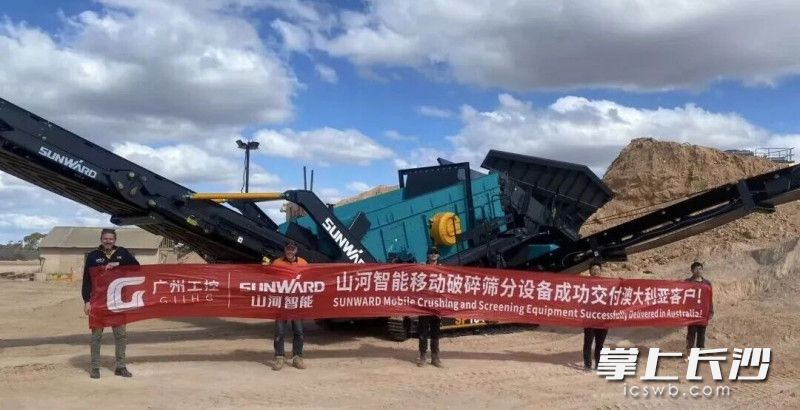
Core Insights - The successful delivery of the SP1845SHHD heavy-duty screening station to Australia marks the entry of the company's crushing and screening equipment into the high-end Australian market, showcasing the competitiveness of Changsha manufacturing on the international stage [1][3]. Company Overview - The order for the SP1845SHHD was secured in August 2023, representing the company's first crushing and screening equipment order in the Australian market [3]. - The equipment has demonstrated stable operation with a processing capacity of 400 to 450 tons per hour, exceeding customer expectations in terms of production efficiency and reliability [3]. Product Features - The SP1845SHHD is designed specifically for the high-end market, featuring strong power, large processing volume, and intelligent control capabilities [3]. - The equipment incorporates advanced technologies such as 5G remote operation and integrated variable frequency control, significantly reducing overall operating costs and aligning with local market demands for intelligent and environmentally friendly production [3][5]. Market Potential - Australia is a critical market for global mining and infrastructure construction, with stringent requirements for crushing and screening equipment, particularly regarding reliability, processing capacity, automation level, and total lifecycle costs [3]. - The device supports both wireless remote control and local operation modes, connecting to the company's intelligent construction cloud platform for machine interconnectivity and remote intelligent management [5]. Strategic Partnerships - The successful delivery not only reflects the technical strength and brand competitiveness of the company's crushing and screening equipment but also deepens trust and collaboration with Australian partners [5]. - The company aims to continue working with local partners to expand its presence in the Australian market and provide smarter, more efficient, and greener comprehensive solutions for global customers [5].


楚环科技:股东计划减持公司股份合计不超过约240万股
Mei Ri Jing Ji Xin Wen· 2025-09-19 13:44
每经头条(nbdtoutiao)——5万亿ETF的370名基金经理薪酬大揭秘!他们的日常工作,就是跟着指数 买股票吗? (记者 曾健辉) 每经AI快讯,楚环科技(SZ 001336,收盘价:22.74元)9月19日晚间发布公告称,持有杭州楚环科技 股份有限公司股份约402万股(占剔除公司回购专用证券账户股份后的总股本的5.0324%)的股东安吉 浙楚股权投资合伙企业(有限合伙)计划自本公告披露日起15个交易日后的3个月内(即2025年10月21 日至2026年1月20日),以集中竞价交易方式、大宗交易方式合计减持公司股份不超过约240万股(占剔 除公司回购专用证券账户股份后的总股本的3%)。其中,以集中竞价交易方式减持股份数量不超过约 80万股,以大宗交易方式减持股份数量不超过约160万股。 截至发稿,楚环科技市值为18亿元。 2025年1至6月份,楚环科技的营业收入构成为:专用设备制造占比83.0%,其他占比17.0%。 ...

浙江鼎力9月18日获融资买入8748.13万元,融资余额4.56亿元
Xin Lang Zheng Quan· 2025-09-19 01:22
Core Viewpoint - Zhejiang Dingli's stock performance shows a slight increase of 0.95% on September 18, with a trading volume of 1.092 billion yuan, indicating active market interest [1] Financing Summary - On September 18, Zhejiang Dingli had a financing buy-in amount of 87.4813 million yuan and a financing repayment of 109 million yuan, resulting in a net financing outflow of 21.4422 million yuan [1] - The total financing and securities balance for Zhejiang Dingli reached 462 million yuan as of September 18, with the current financing balance of 456 million yuan accounting for 1.66% of the circulating market value, which is above the 90th percentile of the past year [1] - The company also had a securities lending activity on the same day, with 2,100 shares repaid and 20,300 shares sold short, amounting to 1.0994 million yuan in sales [1] Business Performance - For the first half of 2025, Zhejiang Dingli reported a revenue of 4.336 billion yuan, reflecting a year-on-year growth of 12.35%, and a net profit attributable to shareholders of 1.052 billion yuan, which is a 27.63% increase compared to the previous year [2] - The company's main business segments include scissor lift platforms (44.16%), boom lift platforms (37.90%), and mast lift platforms (9.90%), with other supplementary products accounting for 8.04% of total revenue [1] Shareholder Information - As of September 10, the number of shareholders for Zhejiang Dingli increased to 33,000, a rise of 3.12%, while the average circulating shares per person decreased by 3.03% to 15,343 shares [2] - The company has distributed a total of 1.886 billion yuan in dividends since its A-share listing, with 1.266 billion yuan distributed in the last three years [3] - Notable institutional shareholders include Hong Kong Central Clearing Limited, which increased its holdings by 12.927 million shares, and Southern CSI 500 ETF, which added 515,500 shares [3]

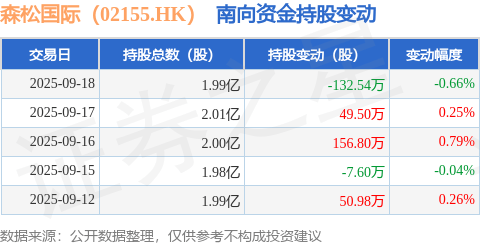
森松国际(02155.HK):9月18日南向资金减持132.54万股
Sou Hu Cai Jing· 2025-09-18 19:34
Group 1 - The core point of the news is that Southbound funds reduced their holdings in Sensong International (02155.HK) by 1.3254 million shares on September 18, 2025, while there were net increases in holdings on 3 out of the last 5 trading days, totaling a net increase of 1.1714 million shares [1] - Over the last 20 trading days, Southbound funds increased their holdings in Sensong International on 16 days, resulting in a cumulative net increase of 25.1975 million shares [1] - As of now, Southbound funds hold 199 million shares of Sensong International, accounting for 15.99% of the company's total issued ordinary shares [1] Group 2 - Sensong International Holdings Limited primarily engages in the manufacturing of pressure equipment and provides comprehensive pressure equipment solutions [2] - The company's main products include traditional pressure equipment such as heat exchangers, vessels, reactors, and towers, as well as modular pressure equipment including process modules and modular plants [2] - The company also offers value-added services such as design, validation, and maintenance of pressure equipment, operating in both domestic and overseas markets [2]
交易对象减少2人 五新隧装并购方案调整
Zhong Guo Jing Ying Bao· 2025-09-18 10:28
Core Viewpoint - Wuxin Tunnel Equipment (835174.BJ) has made adjustments to its acquisition plan, reducing its stake in Xingzhong Technology from 100% to 99.9057%, while still planning to acquire 100% of Wuxin Heavy Industry [1][2][4] Group 1: Transaction Adjustments - The adjustment in the acquisition plan involves the exit of two shareholders from Xingzhong Technology, reducing the number of shareholders from 158 to 156 [2] - The total transaction price has decreased from approximately 2.65 billion to 2.649 billion yuan, reflecting a 0.07% reduction [3][4] - The adjustments do not constitute a significant change to the restructuring plan, as the price change is below the 20% threshold [4] Group 2: Strategic Objectives - The transaction aims to leverage synergies between the listed company and the target companies, enhancing product variety and profitability while supporting international expansion [5] - Post-transaction, the company will enhance its capabilities in manufacturing specialized equipment for railway and highway construction, as well as enter the bridge construction and port logistics sectors [5][6] Group 3: Management and Integration - The company plans to strengthen the management systems of the acquired companies, ensuring effective internal controls and risk management during the integration process [7] - Xingzhong Technology and Wuxin Heavy Industry will maintain their independent operational status while being incorporated into the listed company's management framework [6][7]
伊之密:注塑机可以利用聚醚醚酮材料生产相关产品
Zheng Quan Ri Bao· 2025-09-17 13:36
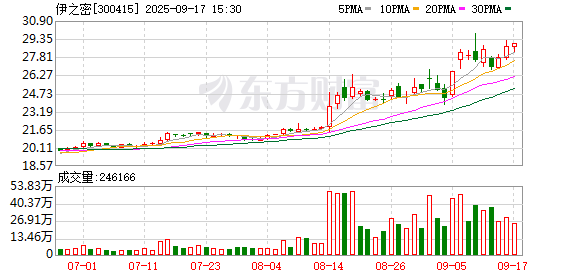
Group 1 - The company, Yizhim, stated on September 17 that its injection molding machines can utilize polyether ether ketone (PEEK) materials for production [2] - The company will continue to monitor the development direction of materials represented by PEEK and seize related industry development opportunities [2]

万业企业涨2.50%,成交额2.41亿元,主力资金净流入481.32万元
Xin Lang Zheng Quan· 2025-09-17 05:20
Core Viewpoint - Wan Ye Enterprise's stock has shown significant growth in 2023, with a year-to-date increase of 12.64% and a notable rise in revenue and net profit for the first half of 2025 [1][2]. Financial Performance - For the first half of 2025, Wan Ye Enterprise achieved a revenue of 699 million yuan, representing a year-on-year growth of 247.76% [2]. - The net profit attributable to shareholders for the same period was approximately 40.81 million yuan, reflecting a year-on-year increase of 157.63% [2]. Stock Market Activity - As of September 17, Wan Ye Enterprise's stock price was 16.42 yuan per share, with a market capitalization of 15.281 billion yuan [1]. - The stock experienced a trading volume of 2.41 billion yuan and a turnover rate of 1.61% on the same day [1]. - The stock has seen a 20.75% increase over the past 60 days, indicating strong market performance [1]. Shareholder Structure - As of June 30, the number of shareholders decreased by 5.44% to 50,600, while the average number of circulating shares per person increased by 5.76% to 18,394 shares [2]. - Notable institutional shareholders include Southern Information Innovation Mixed A and Hong Kong Central Clearing Limited, both of which increased their holdings [3]. Business Segments - Wan Ye Enterprise's main business segments include real estate sales (48.34%), specialized equipment manufacturing (41.44%), property services (6.14%), property leasing (2.58%), and other supplementary services (1.49%) [1].