
生物医药

Search documents
新型肽类化合物或可干预癫痫反复发作
Xin Lang Cai Jing· 2026-02-15 12:40
Core Insights - Researchers at Hebrew University of Jerusalem have developed an experimental peptide compound, TXM-CB3, which may reduce epilepsy seizures by targeting oxidative stress and inflammation associated with the condition [1][2] - Approximately 50 million people globally suffer from epilepsy, a common neurological disorder that can significantly affect patients' emotions and memory [1] - Current treatments are limited, with about 40% of patients experiencing inadequate control of seizures despite medication [1] Group 1 - TXM-CB3 belongs to the family of thioredoxin-mimetic peptides and mimics the function of natural protective proteins in the body, playing a role in regulating oxidative stress and inflammation [1] - In experiments simulating epileptic activity, TXM-CB3 reduced indicators of oxidative damage related to epilepsy and shifted immune signals from a pro-inflammatory state to a relatively protective state [1] Group 2 - Early treatment with TXM-CB3 in experimental mice delayed seizure onset and reduced seizure frequency, resulting in less damage to memory-related brain areas and improved performance in anxiety and short-term memory tests [2] - Delayed treatment after repeated seizures still provided some suppression of seizures, but improvements in cognitive and memory impairments were not significant, highlighting the importance of early intervention [2] - Further research is needed to explore the safety and efficacy of TXM-CB3 and to develop new treatment strategies aimed at enhancing the long-term quality of life for patients [2]
港股IPO市场延续活跃,一周18家公司递表,海致科技上市首日暴涨242%成年内最强新股
Sou Hu Cai Jing· 2026-02-15 12:07
Group 1: IPO Market Activity - The Hong Kong IPO market remained active from February 9 to 15, with 18 companies submitting listing applications, 1 company passing the hearing, and 2 companies completing their public offerings [1] - Six new stocks were listed during this period, with several A-share listed companies initiating "A+H" dual listing processes [1] Group 2: Notable Listings - Haizhi Technology Group (02706.HK) was listed on February 13, with an initial price of HKD 27.06 per share, closing at HKD 92.60 on its first day, marking a 242.20% increase and a market capitalization exceeding HKD 37 billion [4] - The company received a subscription rate of 5065.06 times during the public offering phase and raised approximately HKD 655.4 million [4] Group 3: Company Submissions - Siyuan Electric (002028.SZ) submitted its listing application to the Hong Kong Stock Exchange on February 11, with CITIC Securities as the sole sponsor. The company ranks third among private enterprises in China's power distribution and control equipment market, holding a market share of 3.5% [3] - Other companies that submitted applications include Jingxin Pharmaceutical (002020.SZ) and Xinlitai (002294.SZ), both focusing on central nervous and cardiovascular diseases [3] Group 4: Market Trends - The IPO submissions included companies from various sectors, such as VDL Technology in consumer electronics, Helian Group in bulk commodity services, and Hai Rou Innovation in warehouse robotics [3] - In the biopharmaceutical sector, multiple companies, including Vimo Bio, Yimufeng Bio, Plai Medical, and Noling Bio, also submitted applications [3]


习近平:当前经济工作的重点任务
国家能源局· 2026-02-15 09:49
Core Viewpoint - The article emphasizes the importance of focusing on key tasks for economic work in 2026, highlighting the need for a strong domestic market, innovation-driven growth, and coordinated development across regions and sectors [4][10]. Group 1: Domestic Market and Consumption - The strategy aims to enhance domestic demand by promoting consumption and investment, leveraging China's vast market advantages [4]. - Initiatives include implementing consumption stimulus actions, increasing urban and rural residents' income, and optimizing the supply of quality goods and services [5]. - The government plans to increase central budget investments and improve the management of local government special bonds to boost project construction [5]. Group 2: Innovation and Technology - The focus is on driving innovation to foster new growth engines, with an emphasis on technology-led industrial upgrades [6]. - Plans include increasing support for basic research, enhancing the role of enterprises in innovation, and developing international technology innovation centers in key regions [6]. - The government aims to promote the application of new technologies and products, particularly in emerging industries like integrated circuits and biotechnology [6]. Group 3: Reform and Market Dynamics - The article outlines the need for reforms to enhance high-quality development, including establishing a unified national market and improving the business environment [9]. - Measures will be taken to revitalize idle resources and deepen state-owned enterprise reforms, while also supporting the growth of small and medium-sized enterprises [9]. - The government will promote market-oriented reforms in various sectors, including finance and energy, to foster sustainable growth [9]. Group 4: International Cooperation and Trade - The strategy emphasizes the importance of opening up to enhance cooperation and facilitate domestic and international dual circulation [10]. - Plans include expanding service sector openness, promoting digital and green trade, and enhancing the investment environment for foreign businesses [10]. - The government aims to sign more trade agreements and support the development of the Belt and Road Initiative [10]. Group 5: Regional Development and Urbanization - The article highlights the need for coordinated development between urban and rural areas, focusing on county-level urbanization and rural revitalization [11]. - It emphasizes improving infrastructure and public resource allocation in rural areas to support economic growth [11]. - The government will support the development of major city clusters and enhance regional cooperation to boost overall competitiveness [11]. Group 6: Green Development and Sustainability - The strategy includes promoting a comprehensive green transition, focusing on carbon reduction, pollution control, and environmental sustainability [12]. - Initiatives will involve advancing energy efficiency in key industries and expanding the use of renewable energy sources [12]. - The government plans to strengthen environmental protection measures and enhance disaster response capabilities [12]. Group 7: Social Welfare and Employment - The article stresses the importance of prioritizing people's livelihoods, with a focus on stabilizing employment for key groups [14]. - Plans include enhancing vocational training, supporting flexible employment, and improving healthcare access [14]. - The government aims to implement policies to encourage childbirth and support families, while also ensuring food and drug safety [14]. Group 8: Risk Management and Financial Stability - The strategy outlines measures to manage risks in key areas, particularly in the real estate market and local government debt [15]. - The government will implement policies to stabilize the housing market and support reasonable financing for real estate companies [15]. - Efforts will be made to address local government debt risks and enhance financial support mechanisms [15].
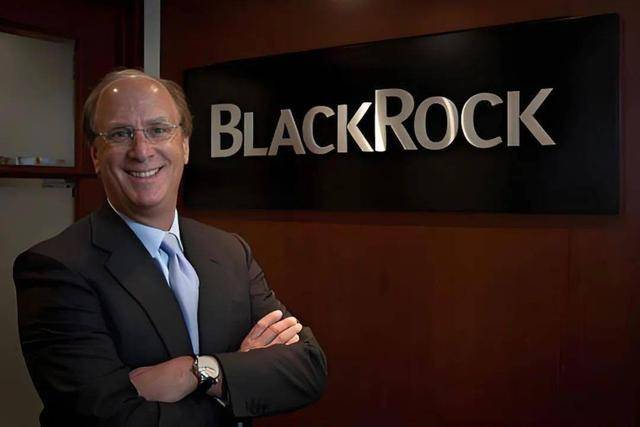
美国犹太人资本巨头贝莱德,已经全方位渗透了中国市场?
Sou Hu Cai Jing· 2026-02-15 05:55
Core Viewpoint - BlackRock is aggressively increasing its holdings in Chinese stocks, such as Haier Smart Home and WuXi Biologics, indicating a strategic move to capitalize on undervalued assets in China's technology and industrial digitalization sectors [1][3][5]. Group 1: Investment Strategy - BlackRock's recent actions include reducing its stakes in companies like Midea and BYD while simultaneously increasing its holdings in firms like WuXi Biologics and Bank of China, reflecting a focus on "low valuation" opportunities [3][5]. - The performance of BlackRock's funds, such as the Advanced Manufacturing Mixed A fund, which achieved a 63.34% annual increase in 2025, suggests a successful investment strategy despite some fourth-quarter pullbacks [3][5]. Group 2: Market Influence - BlackRock manages assets exceeding $14 trillion, making it one of the largest financial entities globally, comparable to the economies of major countries [5][12]. - The firm has strategically invested in key sectors, including renewable energy and biotechnology, and has stakes in major Chinese companies like CATL, BYD, Tencent, and state-owned enterprises [19][21]. Group 3: Regulatory Environment - China is adopting a balanced approach to foreign investment, welcoming capital while ensuring regulatory oversight to prevent potential disruptions to its market [23][25]. - Recent regulatory changes, such as the reduction of the foreign investment negative list and the establishment of the National Financial Supervision Administration, aim to manage foreign capital while maintaining national security [25][27]. Group 4: Long-term Perspective - BlackRock's entry into the Chinese market is viewed as a strategic move for both parties, with China benefiting from foreign capital and technology while BlackRock seeks to leverage China's growth potential [27][29]. - The relationship between BlackRock and the Chinese market is characterized as a fair exchange of interests, emphasizing the importance of maintaining regulatory frameworks to ensure mutual benefits [27][29].

科学界神雕侠侣,“吵”出一款世界级新药
经济观察报· 2026-02-15 05:27
Core Viewpoint - The article highlights the collaborative journey of two prominent scientists, Li Wenhui and Sui Jianhua, who have made significant contributions to the field of virology and antibody engineering, culminating in the development of the first monoclonal antibody drug for viral hepatitis, Libeweita [3][4][12]. Group 1: Scientific Contributions - Li Wenhui was the first to discover the receptor for the SARS virus and the hepatitis B virus, while Sui Jianhua was the first to design human antibodies against these viruses [3][4]. - During the COVID-19 pandemic, they collaborated on a broad-spectrum anti-COVID drug, although it was not developed further due to the pandemic's resolution [3][4]. - The monoclonal antibody drug Libeweita is set to be approved in January 2026, marking a significant milestone in the treatment of viral hepatitis [3][4]. Group 2: Personal and Professional Journey - Li and Sui met at Lanzhou University over 30 years ago and have since maintained a close professional relationship, often engaging in scientific debates that drive their research forward [11][15]. - They both pursued postdoctoral research at Harvard University, where their paths converged in the study of viral infections and antibody development [6][10]. - Their partnership is characterized by a seamless integration of their respective expertise, with Li focusing on the mechanisms of viral infections and Sui on antibody engineering [12][17]. Group 3: Company Formation and Vision - In 2015, they co-founded Huahui Anjian, a company aimed at developing innovative drugs for liver diseases, reflecting their shared scientific aspirations [16]. - Li primarily handles basic scientific discoveries while Sui manages the company's operations and clinical trials, showcasing their complementary roles [16][17]. - Their discussions often revolve around company matters, with a dynamic of questioning and critical thinking that fosters innovation [16][17].

奥浦迈将召开临时股东大会,审议增选董事及使用超募资金等议案
Jing Ji Guan Cha Wang· 2026-02-15 03:28
Recent Events - The company plans to hold the second extraordinary general meeting of shareholders on February 27, 2026, to review several important proposals, including adjusting the board structure by increasing the number of board members from 7 to 9 and revising the Articles of Association and Board Meeting Rules [1] - The company intends to elect Jifeng Duan as a non-independent director candidate for the second board [1] - The company plans to use 300 million yuan of over-raised funds to permanently supplement working capital, which has been approved by the board and requires shareholder meeting approval [1] Restructuring Progress - The company completed the registration work for the issuance of shares and cash payment for the acquisition of 100% equity of Pengli Bio on February 5, 2026, issuing 16.215872 million shares at a price of 31.57 yuan per share, marking an important step in expanding its business layout [2] Performance and Operations - The company recently released its 2025 annual performance forecast, expecting a net profit attributable to the parent company of approximately 42 million yuan, representing a year-on-year increase of about 99.50%, with investors advised to pay attention to the upcoming audited formal annual report disclosure [3] - The company has revised its Articles of Association and Board Meeting Rules and disclosed an asset impairment loss of approximately 19.1281 million yuan for 2025, primarily related to the low capacity utilization rate of its CDMO biopharmaceutical commercialization production platform [4]

10亿产业链基金落地厦门:地方国资如何破解"政策使命"与"市场逻辑"难题
Sou Hu Cai Jing· 2026-02-15 03:01
不同于传统的财政补贴模式,这只基金构建了"资本端+投资端+产业端"的三端联动架构。作为执行事务合伙人的厦门市创业投 资有限公司,将依托金圆集团的综合金融服务能力和市产投的产业资源优势,重点投向厦门"4+4+6"现代产业体系中的半导体、 新能源、生物医药等关键领域。这种"母基金+直投"的联动模式,既解决了传统产业政策"输血式"支持的低效问题,又通过市场 化的股权投资实现"造血式"赋能,形成"投资-退出-再投资"的良性循环。 然而,如何平衡"政策使命"与"市场逻辑"仍是这类基金面临的核心挑战。一方面,基金需要服务地方战略,扶持本地中小微科创 企业;另一方面,作为市场化运作的私募基金,又必须追求合理回报。厦门已有多只产业基金,如何避免同质化竞争、实现资 源互补,是这只新基金需要破解的难题。据厦门市金融监管局数据显示,目前厦门科创板和北交所后备企业储备数量有限,若 投资项目过度集中于本地未上市企业,未来退出渠道可能面临较大压力。 从民生视角看,这只基金的布局最终将通过产业链传导至普通民众。以半导体产业为例,基金投资的链主企业每新增1亿元产 值,就能带动上下游配套企业新增约300个就业岗位。同时,基金投向的医疗健康、智 ...
黑龙江发文支持生物制造发展 单个项目最高补助5000万元
Xin Jing Bao· 2026-02-15 02:26
Core Viewpoint - The Heilongjiang Provincial Government has issued policies to support the high-quality development of the biomanufacturing industry, encouraging increased R&D investment and project construction in key sectors such as biomedicine, biochemistry, and bio-agriculture [1]. Group 1: R&D Investment Support - Biomanufacturing companies are encouraged to increase R&D investment, with subsidies provided for those investing over 500,000 yuan, based on both existing and incremental annual R&D expenditures [1]. - The funding for these subsidies will be shared equally between provincial and municipal governments [1]. Group 2: Project Construction Support - The policies support the construction of innovative and impactful biomanufacturing projects, particularly in high-priority areas [1]. - New high-tech industrialization projects in the biomanufacturing sector with fixed asset investments of 20 million yuan or more will receive a subsidy of 20% of the approved investment, with a maximum subsidy of 50 million yuan per project [1]. - Eligible projects will also be recommended for additional funding from central budget investments and special long-term bonds [1].
黑龙江发文支持生物制造发展,单个项目最高补助5000万元
Bei Ke Cai Jing· 2026-02-15 02:20
Group 1 - The core viewpoint of the article is the introduction of policies by the Heilongjiang Provincial Government to support the high-quality development of the biomanufacturing industry [1][2] Group 2 - The measures encourage biomanufacturing companies to increase R&D investment, providing subsidies for R&D expenditures exceeding 500,000 yuan, with funding shared equally between provincial and municipal levels [1] - The policies support the construction of biomanufacturing projects in key areas such as biomedicine, biochemical, and bio-agriculture, focusing on high innovation and strong industry-driving projects [2] - For new high-tech industrialization projects in the biomanufacturing sector with fixed asset investments of 20 million yuan or more, a subsidy of 20% of the verified fixed asset investment is available, with a maximum subsidy of 50 million yuan per project [2]
黑龙江:支持生物制造项目建设,单个项目最高补助5000万元
Xin Lang Cai Jing· 2026-02-15 01:08
Core Viewpoint - The Heilongjiang Provincial Government has issued policies to support the high-quality development of the biomanufacturing industry, focusing on key areas such as biomedicine, biochemical engineering, and bio-agriculture [1] Group 1: Policy Support - The policies aim to support the construction of biomanufacturing projects that demonstrate high innovation levels and strong industrial driving force [1] - New fixed asset investments of 20 million yuan (approximately 2.8 million USD) or more in high-tech industrialization projects will receive a subsidy of 20% of the approved fixed asset investment, with a maximum subsidy of 50 million yuan (approximately 7 million USD) per project [1] - Projects that meet the criteria will be recommended for additional funding support from central budget investments and ultra-long-term special bonds [1]