科技行业

Search documents
美股三大股指收涨 苹果涨超4%
Xin Lang Cai Jing· 2025-09-22 20:29
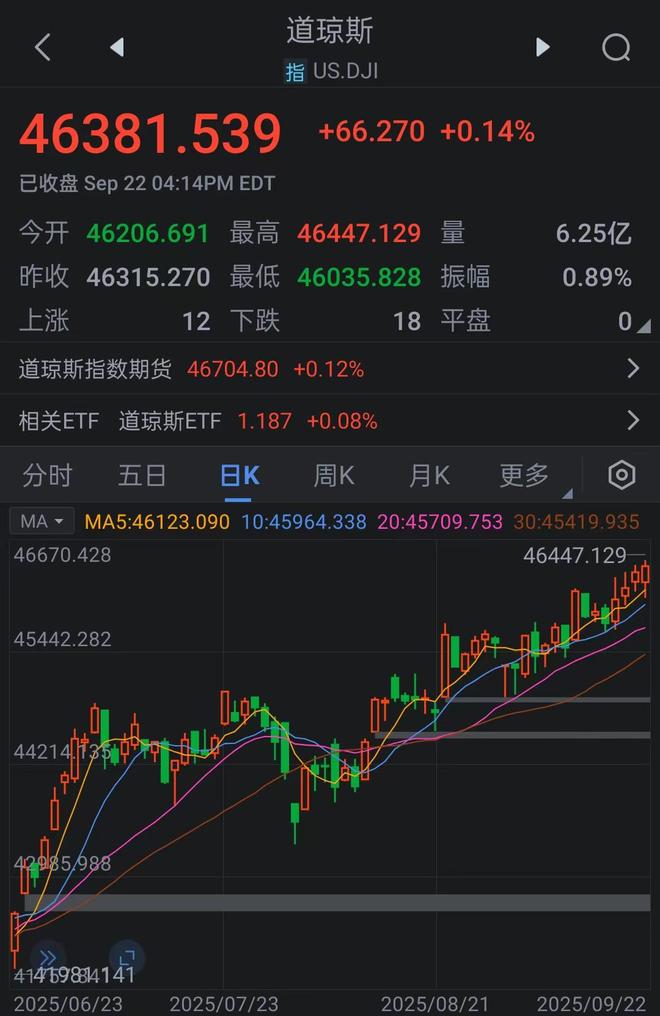
道琼斯 < < ▲ 指 US.DJJ 46381.539 +66.270 +0.14% 已收盘 Sep 22 04:14PM EDT 今开 46206.691 最高 46447.129 量 6.25亿 昨收 46315.270 最低 46035.828 振幅 0.89% 上涨 0 1 道琼斯指数期货 46704.80 +0.12% 相关ETF 道琼斯ETF 1.187 +0.08% 分时 五日 日K 周K 月K 更多 MA - | MA5:46123.090 10:45964.338 20:45709.753 30:45419.935 46670.428 46447.129 45442.282 4471 14 69 8814 1 4 1 2025/06/23 2025/07/23 2025/08/21 2025/09/22 来源:滚动播报 周一美股三大股指收盘普涨,道指涨0.14%,纳指涨0.7%,标普涨0.44%。苹果股价上涨4.3%,收于去 年12月以来的最高水平。英伟达涨超3%,甲骨文涨超6%,亚马逊、Meta、博通跌超1%,特斯拉涨超 1%,谷歌跌近1%。 ...


中国资产大爆发,背后藏着这三个城市
盐财经· 2025-09-22 09:23
Group 1 - The year 2025 is expected to be filled with both turmoil and anticipation in the global financial markets, with the Shanghai Composite Index rising while US stock indices reach new highs [2] - The recent decline in the US dollar exchange rate contrasts with the rising US stock market, indicating underlying tensions in global financial dynamics [3][6] - The Euro has been recovering against the dollar, with the exchange rate approaching 1.2 since September, reflecting geopolitical influences on financial markets [4][6] Group 2 - The Guangdong-Hong Kong-Macao Greater Bay Area is positioned as a crucial player in the global financial landscape, benefiting from Hong Kong's status as an international financial center [7][8] - In the first half of 2025, Hong Kong's IPO market saw a significant recovery, with new stock financing reaching $14.1 billion, a 695% increase compared to the same period in 2024 [10] - The rise in Hong Kong's market activity is attributed to global investors seeking Chinese assets amid expectations of US dollar interest rate cuts [10][12] Group 3 - The introduction of the "Science and Technology Enterprise Special Line" in Hong Kong has made it easier for innovative companies to go public, enhancing the market's appeal for tech investments [14][16] - Recent regulatory changes have reduced the initial public offering (IPO) public shareholding requirement from 15% to 10%, facilitating easier access to capital for companies [16] Group 4 - The emergence of stablecoins is seen as a significant opportunity, bridging the gap between on-chain crypto assets and off-chain real-world assets, thus enhancing the usability of crypto in payments and settlements [20][23] - Hong Kong's proactive approach to stablecoin regulation, with the introduction of the "Stablecoin Regulation" in August 2025, positions it as a leader in the crypto asset space [20][23] Group 5 - The distinction between digital currencies is highlighted, with three categories: cryptocurrencies, central bank digital currencies (CBDCs), and stablecoins, each serving different purposes in the financial ecosystem [25][28] - CBDCs, such as the digital yuan, offer advantages like instant settlement and direct access without the need for a commercial bank account, promoting financial inclusion [30][32] Group 6 - The Guangdong-Hong Kong-Macao Greater Bay Area is recognized as a financial hub, with Hong Kong as an international center, Shenzhen as a model of financial and technological integration, and Guangzhou focusing on green finance [34][36] - Shenzhen's financial innovation and market-oriented approach are expected to continue driving growth, particularly in creating a multi-layered capital system [37] - Guangzhou's role in financial resource aggregation and its potential in green finance highlight the ongoing opportunities for innovation in the region [39]

Stock Market Today: Dow Futures Fall; Gold Prices Jump
WSJ· 2025-09-22 08:09
Core Viewpoint - Indian tech stocks experienced a decline following the announcement of a $100,000 fee for H-1B visas by Trump, raising concerns about the impact on the industry’s ability to attract skilled foreign workers [1] Group 1: Impact on Indian Tech Industry - The increase in H-1B visa fees is expected to significantly affect the cost structure for Indian tech companies that rely on foreign talent [1] - Analysts predict that the new fee could lead to a reduction in hiring of skilled workers from abroad, potentially hampering growth in the tech sector [1] - Major Indian IT firms saw their stock prices drop, indicating investor concerns over future profitability and operational challenges due to the visa fee hike [1] Group 2: Market Reactions - The announcement led to a notable sell-off in Indian tech stocks, with some companies experiencing declines of over 5% in their share prices [1] - Investors are closely monitoring the situation, as the tech sector is a significant contributor to India's economy and employment [1] - The overall market sentiment has turned cautious, reflecting fears of increased operational costs and reduced competitiveness in the global market [1]

金融教育宣传周 |国泰基金: “股市小作文”骗局
Xin Lang Ji Jin· 2025-09-22 03:11
案例: 为深入贯彻落实党的二十届三中全会和中央经济工作会议精神,坚持以投资者为本的理念,加大防范非 法证券期货基金活动宣传力度,国泰基金于2025年金融教育宣传周之际特别策划防非宣传专栏,通过防 非知识科普和故事分享,提高广大民众的金融风险防范意识和个人权益保护能力。 然而,就在股价达到高点的第二天,XX科技公司发布了一则澄清公告,称公司并没有获得任何巨额订 单,也没有与任何国际知名科技企业合作开发新技术。公司股价随即大幅下跌,许多投资者遭受了重大 损失。 经过调查,证券监管部门和公安机关发现这篇所谓的"小作文"其实是一个没有任何依据的虚假信息,编 写的目的是为了诱导投资者跟风买入,从而推高股价,让幕后团伙在高位抛售股票获利。 教训与启示 小赵对这篇"股市小作文"产生了浓厚的兴趣,认为这是一个难得的投资机会。于是,他决定在论坛上进 一步了解情况,并与其他投资者交流。小赵发现很多投资者都在讨论这篇"股市小作文",并且都表示相 信文章中的内容,计划买入XX科技的股票。小赵也被这种氛围所感染,决定买入一些XX科技的股票。 然而,他并不知道,这篇帖子其实是由专门的幕后团队一条编写的虚假信息,并在多个财经论坛和社交 媒 ...
实质性做空大盘?美股市场出现“逆市”押注:做多指数波动率
Zhi Tong Cai Jing· 2025-09-21 23:53
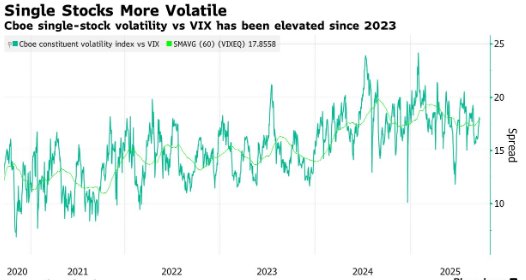
分散度投资策略(dispersion trade)已成为华尔街对冲基金中最受欢迎的策略之一——押注整个美股会保 持平稳,而单个股票则会出现大幅波动。而一些投资者目前则选择了与其相反的策略。反向分散度交易 是指做多大盘指数波动率,同时做空单个股票的波动率,但这种交易也有其弊端,比如当单个股票出现 大幅上涨时,会面临"特有损失风险"。 自8月初以来,美国股市一直显得异常平静,其60天实际波动率达到了疫情前的最低水平。衡量市场波 动的常用指标——芝加哥期权交易所波动率指数,自6月中旬以来一直低于其长期平均值20。然而,从 表面看,个股价格却在剧烈波动——比如甲骨文(ORCL.US)过去一个月股价飙升了32%,这只是其中的 一个例子。 这种态势促使对冲基金加大了对整个股市平稳走势以及个股大幅波动的押注力度。只要标普500指数在 每日波动幅度较小的区间内持续攀升,且各类股票走势各异,这种押注就能获利,但利润空间正在逐渐 缩小。 对冲基金QVR顾问公司的管理合伙人兼首席投资官Benn Eifert表示,该行业已变得"异常拥挤,大型机 构投资者正在进行大规模的分散度投资交易"。 大约六周前,他的基金决定与市场主流观点背道而 ...
美联储降息真相揭晓,三大信号显露风险,经济危机或将来袭
Sou Hu Cai Jing· 2025-09-21 21:42
Group 1 - The Federal Reserve's recent interest rate cut from a target range of 4.5% to 4% to 4.25% is seen as a response to political pressure and economic concerns, indicating a shift towards a "risk management" approach [2][6][9] - Labor market indicators show signs of weakness, with a nearly 6% year-over-year decrease in job postings, declining weekly hours, and rising unemployment rates among specific demographics, suggesting a shift from a previously stable labor market [4][8] - The political pressure from the White House is more direct and persistent, potentially leading to erratic policy decisions and diminishing market confidence in future interest rate trajectories [6][8][9] Group 2 - The market's reaction to the interest rate cut has been mixed, with short-term optimism in stock prices and bond yields, but underlying concerns about the sustainability of this optimism due to potential inflation rebounds [11][13] - There are emerging worries about the overheating of investments in artificial intelligence, which could exacerbate economic growth disparities and impact macroeconomic stability [11][13] - The structural issues in economic growth, particularly the reliance on high-income groups and AI investments, raise concerns about the quality of growth and its vulnerability to consumer spending declines [8][9][13]
降息了!鲍威尔口风突变市场为何先喜后忧,他的话里藏着啥信号?
Sou Hu Cai Jing· 2025-09-21 06:50
Group 1 - The Federal Reserve announced its first interest rate cut of the year, lowering the federal funds rate target range by 25 basis points to between 4.00% and 4.25% [1] - The market had anticipated this decision, but the reaction was mixed, with initial excitement in the stock market followed by a decline, and the dollar index showing volatility [1] - The Fed's decision reflects concerns over a weakening labor market, as the language in their statement shifted from "robust labor market" to "slowing job growth and a slight increase in unemployment" [3] Group 2 - Fed Chair Jerome Powell expressed worries about the labor market, noting that both supply and demand are cooling, with significant downside risks [5] - The U.S. GDP growth rate has dropped to around 1.5% in the first half of the year, down from 2.5% the previous year, indicating a potential economic slowdown [5] - Inflation remains a concern, with recent data showing an uptick, and the Fed has raised its inflation expectations for the next two years, predicting a return to the 2% target only by 2028 [5] Group 3 - Tariffs are contributing approximately 0.3 to 0.4 percentage points to core inflation, complicating the Fed's decision-making process regarding further rate cuts [7] - Powell characterized the rate cut as a "risk management" move, prioritizing fears of job market decline over concerns about inflation [7] - There is internal division within the Fed regarding future rate cuts, with some officials advocating for more aggressive cuts while others caution against further reductions [16] Group 4 - Powell's cautious demeanor during the press conference reflects significant political pressure, as he emphasized the Fed's commitment to maintaining its independence [9][11] - The Fed's approach to future policy is described as "data-dependent," indicating that decisions will be based on economic indicators rather than external pressures [12][14] - The current economic environment suggests a gradual approach to monetary easing, rather than a rapid influx of liquidity, which could lead to different implications for various asset classes [18][22] Group 5 - The impact of the Fed's actions on different markets varies, with potential benefits for Hong Kong stocks, particularly in the tech sector, due to improved dollar liquidity [18] - In contrast, the A-share market may see selective foreign investment, favoring companies with global competitiveness in sectors like renewable energy and AI [20] - The Chinese central bank is unlikely to follow suit with immediate rate cuts, focusing instead on targeted measures to support the economy [20]
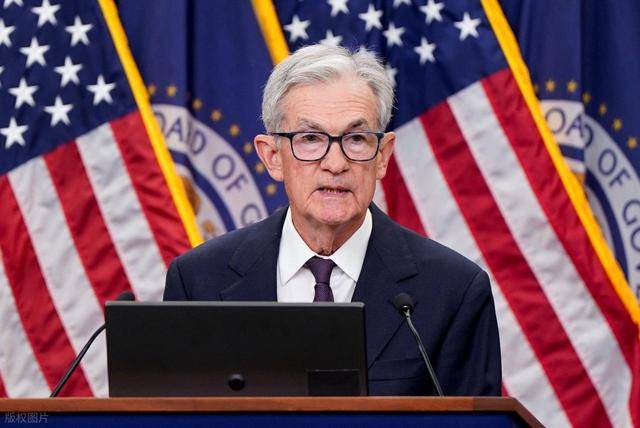
'OVERHEAT': Fed 'spiked the punch bowl' with latest rate move, expert says
Youtube· 2025-09-21 00:00
Group 1 - The Federal Reserve has lowered interest rates by a quarter point, with expectations for another quarter point cut later this year and possibly next year, which is seen as beneficial for the markets [1][2] - Strong employment numbers and accelerating GDP growth indicate a robust economy, but there are concerns about overheating due to loose monetary policy [2][3] - The UK market has seen a 25% increase this year, highlighting a positive sentiment in international markets [3] Group 2 - Current market valuations are not cheap, and there is a significant amount of cash on the sidelines that may now enter the stock market due to lower interest rates [4] - There is a risk of price instability as the Federal Reserve aims to maintain price stability, raising questions about the appropriateness of the recent rate cuts [5][6] - Economic conditions are stronger than expected for a rate cut, suggesting that the Fed may have acted too quickly in its decision [6]
“美股七姐妹”估值泡沫远未见顶
Hu Xiu· 2025-09-20 00:30
Core Viewpoint - The valuation bubble in the "Seven Sisters" of U.S. stocks has not yet peaked, and there is still room for further growth in their prices [1][2]. Group 1: Historical Bubble Comparison - The average price increase from the bottom to the peak in ten major stock market bubbles since the early 20th century is 244% [6]. - The "Seven Sisters"—Tesla, Google, Apple, Meta, Amazon, Microsoft, and Nvidia—have seen a cumulative increase of 223% since their low in March 2023, indicating potential for further gains [7]. - Historically, during market bubbles, the trailing P/E ratio typically reaches 58 times, and prices exceed their 200-day moving average by 29%. Currently, the trailing P/E ratio for the "Seven Sisters" is 39 times, with prices only 20% above the 200-day moving average [8]. Group 2: Market Sentiment and Macro Environment - Strong market sentiment and macroeconomic conditions are key factors supporting the continued rise of tech stocks, driven by positive economic indicators, ongoing enthusiasm for artificial intelligence, and expectations of further interest rate cuts by the Federal Reserve [9]. - The S&P 500 Information Technology Index has surged 56% since its low in April, with investors consistently buying during pullbacks [10]. Group 3: Investor Behavior and Strategy - A recent Bank of America survey indicates that "going long on the 'Seven Sisters'" is viewed as the most crowded trade for the second consecutive month, with 42% of respondents agreeing [12]. - The concentration of this trade aligns with historical bubble characteristics, as seen during the peak of the internet bubble in 2000 when tech stocks surged 61% in six months while other sectors declined [13]. - Despite the positive outlook for the tech bubble, the Bank of America team recommends a balanced strategy for investors, suggesting a "barbell strategy" that includes holding large tech stocks while also investing in some "bad value stocks" [15].




美股创新高,降息提振市场信心
Wind万得· 2025-09-19 22:33
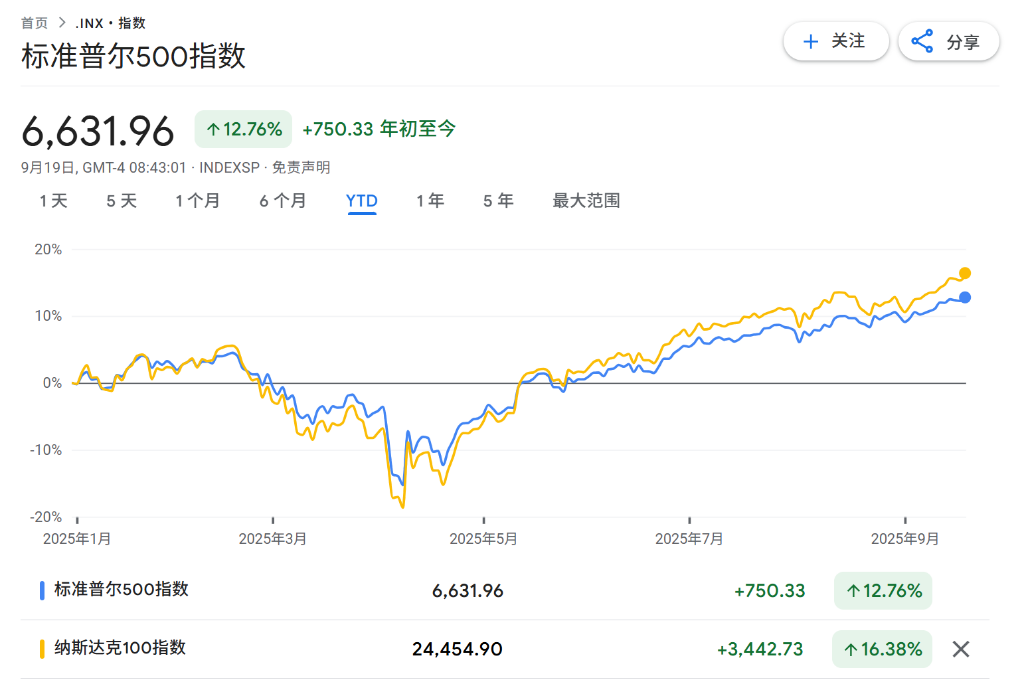
周五(9月20日),美国股市上涨,三大股指全线收高,并录得周线涨幅,显示投资者对美联储最新的降息举措反应积极。尽管小盘股有所回落,但整体 市场保持乐观基调。 从全周表现看,标普500和道指分别上涨1.2%和1%,纳指则上涨2.2%,展现出强劲动能。小盘股方面,罗素2000指数周五下跌0.7%,但本周仍累计上涨 2.2%,并连续第七周实现周线收涨,反映市场对美国经济前景的持续信心。 本周市场焦点集中在美联储最新的利率决策。美联储宣布将基准联邦基金利率下调25个基点,为去年12月以来的首次降息。此举基本符合市场预期。 尽管政策动作受到欢迎,但美联储主席鲍威尔在会后新闻发布会中表示,此次降息是一种"风险管理"措施,而非启动长期宽松周期的信号。此番表态一度 令市场震荡,部分投资者解读为联储仍保持谨慎。 不过,随着市场情绪逐步稳定,再加上科技龙头股带动大盘回升,主要股指很快恢复涨势,并在周末前再创新高。 道琼斯工业平均指数上涨172.85点,涨幅0.37%,收于46,315.27点,刷新历史高点。标普500指数上涨0.49%,报6,664.36点;以科技股为主的纳斯达克综合 指数上涨0.72%,收于22,631.48点 ...