资本市场

Search documents
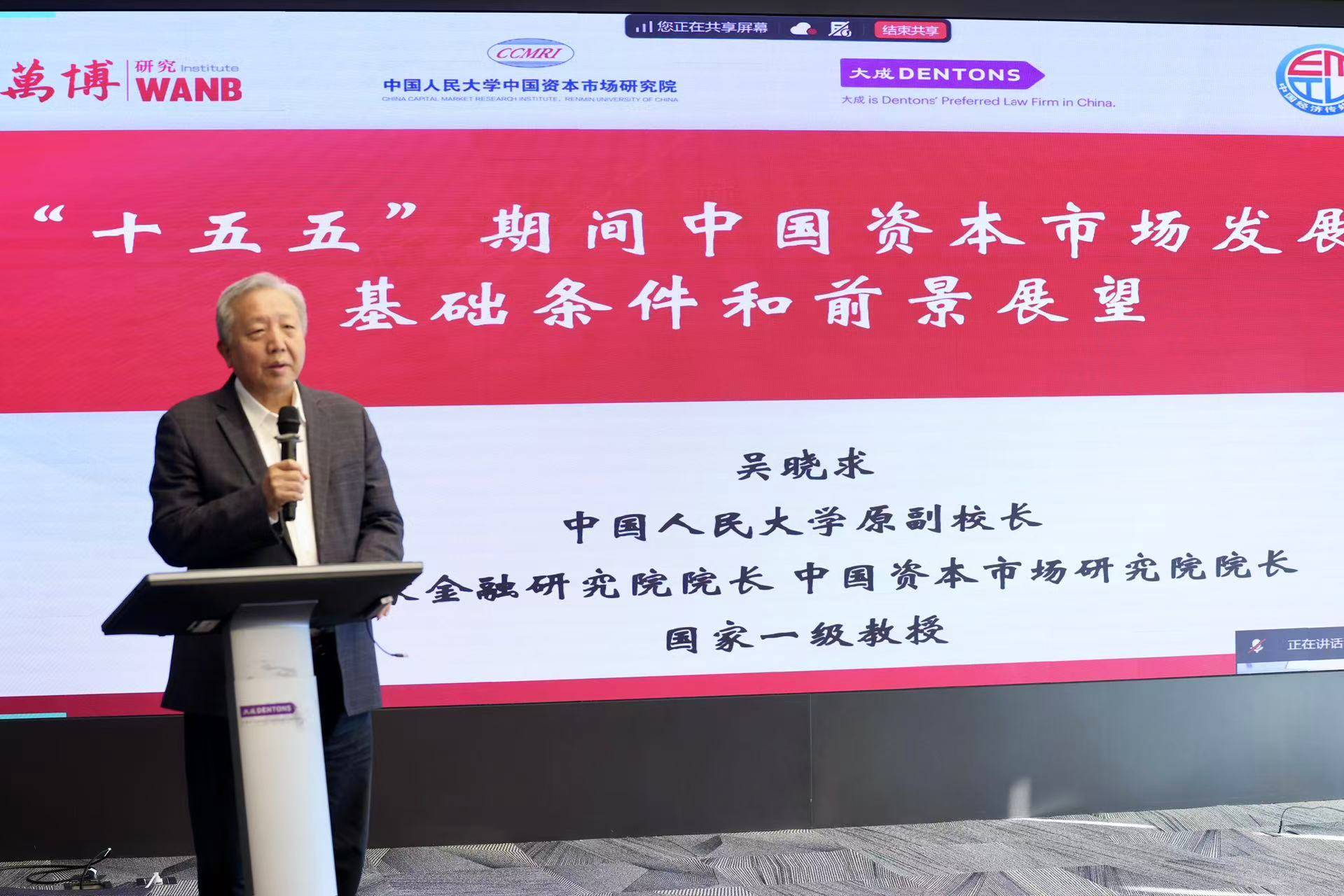
吴晓求:“十五五”时期资本市场应着力构建“激励创新”与“财富管理”新生态
Sou Hu Cai Jing· 2025-10-26 13:49
Core Viewpoint - The "14th Five-Year Plan" period is crucial for China's modernization goals, with the capital market assigned a more significant strategic mission to support high-quality economic development and technological innovation [1][3]. Group 1: Capital Market's Role - The capital market should not be viewed merely as a financing channel but as an incentive mechanism for social innovators and wealth creators, allowing residents to share in economic development through securities investment [3]. - A healthy market must achieve a balance between risk and return; if it only meets the needs of financing parties without addressing investors' reasonable risk-return expectations, it will struggle to sustain itself [3]. Group 2: Reform Pathways - The primary task for capital market reform during the "14th Five-Year Plan" is to "reconstruct the market ecosystem," shifting focus from financing to "incentivizing innovation" and "wealth management" [3]. - Enhancing the legal framework is essential, with a significant increase in penalties for illegal activities, transitioning from primarily administrative penalties to a dual system of civil compensation and criminal punishment [3]. Group 3: Structural Reforms - Efforts should be made to optimize market structure by improving the quality of listed companies and promoting the listing of more technology-driven enterprises, which are vital for generating wealth effects and long-term investment value [4]. - The current reform aims to remove restrictions on large capital entering the market, particularly focusing on releasing the market potential of long-term capital such as insurance funds [4]. Group 4: Internationalization and Institutional Environment - The capital market should transition from a pipeline-style opening to a comprehensive opening, attracting global capital and high-quality foreign enterprises to list in China, thereby establishing an internationally influential financial center [4]. - Building an institutional environment that fosters original ideas and scientific technology is crucial for China to advance towards developed nation status, with deep reforms in the capital market providing necessary incentives for innovation [4].

证监会最新表态:深化投融资综合改革,持续增强资本市场包容性和竞争力|快讯
Hua Xia Shi Bao· 2025-10-24 13:36
同时,着力提高资本市场制度的包容性、适应性。深化科创板、创业板改革,充分发挥新三板、私募股 权和创业投资等多层次股权市场培育功能,强化债券和期货市场功能发挥。 此外,着力提升监管执法的有效性和震慑力;推动资本市场开放迈向更深层次、更高水平。加快建设世 界一流交易所,支持香港巩固提升国际金融中心地位。深化国际监管合作,切实提升开放环境下的风险 防控水平和监管能力。 文/王兆寰 编辑:麻晓超 10月24日晚间,证监会发布消息称,要进一步深化投融资综合改革,持续增强我国资本市场的包容性、 适应性和吸引力、竞争力,更好服务"十五五"发展目标和金融强国建设。 当天,中国证监会党委书记、主席吴清主持召开党委(扩大)会议,认真传达学习党的二十届四中全会 精神,研究部署贯彻落实举措。 会议强调,要着力增强资本市场的韧性和抗风险能力。培育和发展高质量的上市公司群体,完善"长钱 长投"的市场生态,加强长效化稳市机制建设,持续夯实市场稳定的内在基础。 ...

健全投资和融资相协调的资本市场功能
Sou Hu Cai Jing· 2025-10-24 02:29
Core Insights - The Chinese capital market, comprising the stock and bond markets, has become one of the largest globally, providing significant support to the real economy, yet it faces challenges of being "large but not strong" due to misalignment in financing and investment functions [1][4] Group 1: Capital Market Functionality - The capital market's investment and financing functions are closely linked, with changes in one affecting the other, necessitating comprehensive reforms to enhance their coordination [5] - The A-share market has seen nearly 3,000 new stock issuances from 2015 to 2024, raising a total of 3 trillion yuan, with average investor subscriptions reaching 7,000 times the actual issuance [3][4] Group 2: Reform Initiatives - The key tasks for comprehensive reform in the capital market include enhancing long-term and rational investment guidance, improving information disclosure systems, and strengthening the credit intermediary mechanism [6][11] - Specific reforms in the stock market focus on promoting long-term investment, improving investor education, and ensuring market stability to prevent systemic risks [7][8] Group 3: Bond Market Enhancements - The bond market reforms aim to improve the service level of credit bond issuance, enhance information disclosure, and strengthen credit services related to bonds [11][12] - Establishing a unified regulatory framework for the bond market is essential to ensure high-quality development and effective risk management [15]

清华大学田轩:构建长效激励制度,培育耐心资本生态
2 1 Shi Ji Jing Ji Bao Dao· 2025-10-23 05:55
Group 1 - The core viewpoint of the articles emphasizes the transition of China's capital market from "channel-based" to "institutional" opening, focusing on deepening reforms and optimizing the investment ecosystem to foster "patient capital" and enhance financial stability for high-quality economic development [1][2][6][13]. Group 2 - During the "14th Five-Year Plan" period, significant progress was made in the foundational institutional construction of the capital market, particularly with the comprehensive implementation of the registration system, which fundamentally reshaped the market ecology and improved the service for technological innovation and industrial upgrading [6][9]. - The registration system reform transitioned from a pilot on the Sci-Tech Innovation Board to full market coverage, establishing a stock issuance system centered on information disclosure [6]. - The merger and acquisition mechanism saw systematic innovation, with the introduction of the "Six Guidelines for Mergers and Acquisitions," leading to increased activity in M&A transactions, especially in strategic emerging industries [6][9]. - The rigid enforcement of the delisting system has significantly improved market clearing efficiency, with a notable increase in cases of delisting due to face value and financial issues [6][9]. Group 3 - Key challenges in achieving a high-quality dynamic balance between investment and financing include insufficient adaptability of institutional supply, structural barriers in long-term capital market entry, and a lack of maturity in market ecology [7][9]. - The investment structure is characterized by a high proportion of individual investors and short-term trading funds dominating institutional investors, leading to difficulties in realizing value investment principles [7][9]. - Recommendations for reform include optimizing policies for long-term capital market entry, encouraging the development of equity ETFs and pension target funds, and enhancing the quality of information disclosure and corporate governance [7][9]. Group 4 - The implementation of the new "National Nine Articles" has led to significant positive changes in corporate governance structures and investor return mechanisms, including the establishment of a dynamic stock repurchase mechanism and improved decision-making transparency [9][10]. - However, deep-seated contradictions remain, such as formalized governance mechanisms and increasing disparities in shareholder returns [9][10]. - Proposed solutions include establishing a market value management assessment system and promoting long-term capital entry to enhance market stability [9][10]. Group 5 - The capital market has made notable achievements in interconnectivity and product openness during the "14th Five-Year Plan," with China's large market size and economic growth potential being key advantages in attracting foreign long-term capital [13]. - To further enhance attractiveness, it is suggested to deepen capital market reforms, improve market transparency, and strengthen intellectual property protection [13][14]. - The transition from "channel-based" to "institutional" opening requires aligning specific rules with international standards, particularly in information disclosure and accounting standards [13][14].

清华大学田轩:构建长效激励制度,培育耐心资本生态
21世纪经济报道· 2025-10-23 05:50
Group 1 - The core viewpoint of the article emphasizes the transition of China's capital market from "channel-based" to "institutional" opening, focusing on optimizing the investment ecosystem and enhancing financial momentum for high-quality economic development [2][12] - During the "14th Five-Year Plan" period, significant progress was made in the foundational institutional construction of the capital market, particularly with the comprehensive implementation of the registration system, which fundamentally reshaped the market ecology [6][5] - The article identifies three major breakthroughs in the capital market during the "14th Five-Year Plan": the establishment of a stock issuance system centered on information disclosure, systematic innovation in the merger and acquisition mechanism, and the rigid enforcement of the delisting system [6][5] Group 2 - The article discusses the need to address core bottlenecks in achieving a high-quality dynamic balance between investment and financing, including insufficient adaptability of institutional supply and structural barriers for long-term capital entering the market [6][7] - Recommendations for reform include optimizing policies for long-term capital market entry, relaxing investment ratio restrictions for social security and insurance funds, and enhancing the quality of information disclosure and corporate governance [7][10] Group 3 - The implementation of the new "National Nine Articles" has led to significant positive changes in corporate governance structures and investor return mechanisms, such as the establishment of a dynamic stock repurchase mechanism [10][11] - However, deep-seated contradictions remain, including formalized governance mechanisms and uneven shareholder returns, necessitating the construction of a market value management assessment system [10][11] Group 4 - To cultivate "patient capital," the article suggests exploring tax incentives for institutional investors holding stocks for over five years and extending assessment periods for pension and insurance funds to five years or more [11][12] - The article emphasizes the importance of enhancing the transparency and fairness of the market to attract foreign long-term capital, leveraging China's large market size and growth potential [13][14]

管好上市公司“关键少数”
Jing Ji Ri Bao· 2025-10-22 22:09
Core Viewpoint - The recent revision of the "Corporate Governance Guidelines for Listed Companies" by the China Securities Regulatory Commission aims to enhance the governance of listed companies by regulating the behavior of key individuals such as directors, senior management, and controlling shareholders, thereby promoting a healthier capital market [1][2][3] Group 1: Governance Enhancements - The new regulations provide clearer boundaries and standards for the roles and responsibilities of key individuals throughout their tenure, from appointment to resignation [1][2] - The guidelines aim to prevent misconduct such as insider trading and financial fraud, which have previously harmed the interests of minority shareholders and the integrity of the capital market [1][3] Group 2: Accountability and Performance - The new rules link the compensation of directors and senior executives directly to the company's performance, ensuring that their remuneration reflects the company's operational success [2] - This shift is expected to encourage management to focus on long-term strategic development and improve overall company performance [2] Group 3: Protection of Company Interests - The regulations strengthen the independence of listed companies by imposing stricter controls on the actions of controlling shareholders and actual controllers, including prohibiting interference in financial activities and asset misappropriation [3] - The aim is to create a fair trading environment and support the high-quality development of the economy by ensuring that the governance of listed companies is transparent and accountable [3]
提振投资者信心久久为功
Zheng Quan Ri Bao· 2025-10-22 16:47
Core Viewpoint - The active capital market is closely linked to investor confidence, with significant increases in trading volume in the Shanghai and Shenzhen stock markets during the first three quarters of the year, reflecting positive market outlook among investors [1][2]. Group 1: Capital Market Reforms - Continuous promotion of capital market reforms is essential, enhancing the inclusiveness of the system and accelerating support for technological innovation, with over 90% of new listed companies being tech-related [1][3]. - The market capitalization of the technology sector now exceeds 25% of the total A-share market, surpassing the combined market cap of banking, non-banking financial, and real estate sectors [1]. Group 2: Quality of Listed Companies - Improving the quality of listed companies is crucial for activating the capital market and boosting social confidence, with regulatory measures aimed at enhancing governance, return capabilities, and investment value [3]. - As of October 21, 843 A-share companies announced 850 interim dividend plans, totaling 662.03 billion yuan, showcasing a commitment to returning value to investors [3]. Group 3: Long-term Capital Inflow - The implementation of guidelines to encourage long-term capital inflow has shown significant progress, with various types of long-term funds holding approximately 21.4 trillion yuan in A-share market value, a 32% increase since the end of the 13th Five-Year Plan [4]. Group 4: Regulatory Measures - Strengthening regulatory measures to combat illegal activities is vital for maintaining market order and protecting investor interests, with increased enforcement actions and a commitment to enhancing the detection of violations [5]. - The active capital market and investor confidence require a collaborative effort from regulatory bodies and market participants to ensure stability [5].
专访田轩:构建长效激励制度 培育耐心资本生态
2 1 Shi Ji Jing Ji Bao Dao· 2025-10-22 14:56
Core Insights - The Chinese capital market is undergoing significant reforms as it transitions from the "14th Five-Year Plan" to the "15th Five-Year Plan," focusing on deepening institutional reforms and fostering "patient capital" for high-quality investment and financing [1][2] Group 1: Progress in Capital Market Reforms - The capital market has achieved notable progress in foundational institutional construction during the "14th Five-Year Plan," particularly with the comprehensive implementation of the registration system, which has fundamentally reshaped the market ecology [3][4] - Key breakthroughs include the transition to a registration-based issuance system, systematic innovation in merger and acquisition mechanisms, and the rigid enforcement of delisting regulations, which have collectively improved market efficiency [3][4] Group 2: Challenges in Balancing Investment and Financing - Despite advancements, the market faces challenges in achieving a high-quality dynamic balance between investment and financing, including structural barriers for long-term capital entry and a lack of maturity in market ecology [4][5] - The current investor structure is characterized by a high proportion of individual investors and short-term trading funds, which complicates the realization of value investment principles [4][5] Group 3: Recommendations for Reform - Recommendations for reform include optimizing policies for long-term capital entry, relaxing investment restrictions for social security and insurance funds, and enhancing the functionality of multi-tiered capital markets [5][6] - Emphasis is placed on improving information disclosure quality and corporate governance, as well as increasing delisting efficiency to encourage companies to focus on core competencies [5][6] Group 4: Enhancing Corporate Governance and Investor Returns - The implementation of the new "National Nine Articles" has led to significant improvements in corporate governance structures and investor return mechanisms, including enhanced cash dividend stability [7][8] - However, deep-seated contradictions remain, such as formalized governance mechanisms and uneven shareholder returns, necessitating the establishment of a market value management assessment system [7][8] Group 5: Attracting Long-term Foreign Capital - The Chinese capital market's significant advantages in attracting long-term foreign capital include its large market size and ongoing economic growth potential [10][11] - To further enhance attractiveness, continued reforms are needed to improve market transparency, strengthen intellectual property protection, and optimize the investment environment [10][11] Group 6: Cross-border Regulatory Cooperation - The establishment of a resilient risk monitoring and cross-border regulatory cooperation system is essential for effectively mitigating external shocks [12] - Recommendations include enhancing macro-prudential management frameworks for cross-border capital flows and improving collaboration with regulatory agencies in major economies [12]
专访田轩:构建长效激励制度,培育耐心资本生态
2 1 Shi Ji Jing Ji Bao Dao· 2025-10-22 13:03
Core Viewpoint - The Chinese capital market is undergoing significant reforms as it transitions from the "14th Five-Year Plan" to the "15th Five-Year Plan," focusing on deepening institutional reforms and enhancing the investment ecosystem to foster "patient capital" and achieve high-quality balance in investment and financing [1][2]. Group 1: Achievements in Capital Market Reforms - The capital market has made notable progress in foundational institutional construction during the "14th Five-Year Plan," particularly with the comprehensive implementation of the registration system, which has fundamentally reshaped the market ecology [5]. - Key breakthroughs include the transition to a registration-based issuance system, the innovation of the merger and acquisition mechanism, and the rigid enforcement of the delisting system, which has significantly improved market clearing efficiency [5][6]. - The registration system's full implementation has had the most profound impact on the market ecology, enhancing information disclosure responsibilities and rationalizing pricing mechanisms, thereby positioning the capital market as a driver of technological innovation and industrial upgrading [5]. Group 2: Challenges and Core Bottlenecks - Despite the progress, challenges remain in achieving a high-quality dynamic balance between investment and financing, including insufficient adaptability of institutional supply and structural barriers for long-term capital entering the market [6][7]. - The market ecology is still maturing, with a high proportion of individual investors and a dominance of short-term trading funds among institutional investors, leading to difficulties in realizing value investment concepts [6][7]. - There is a lack of clear functional differentiation among various market segments, which complicates the positioning of different boards and their services for small and medium-sized enterprises [6][7]. Group 3: Recommendations for Future Reforms - To deepen reforms, it is essential to optimize policies for long-term capital entering the market, relax investment ratio restrictions for social security and insurance funds, and establish assessment mechanisms aligned with long-term return goals [7][8]. - Enhancing the quality of information disclosure and corporate governance, as well as improving delisting efficiency, will compel companies to focus on their core businesses and strengthen their competitive advantages [7][8]. - The establishment of a market-oriented mechanism for entry and exit will help attract high-quality companies and improve the overall investment environment [7][8]. Group 4: Enhancing Investor Returns and Governance - The implementation of the new "National Nine Articles" has led to significant positive changes in corporate governance structures and investor return mechanisms, including the establishment of dynamic stock repurchase mechanisms [8][9]. - However, deep-seated contradictions remain, such as formalized governance mechanisms and increasing disparities in shareholder returns, necessitating the construction of a value management assessment system [8][9]. - Future efforts should focus on improving internal controls, enhancing board independence, and aligning stock incentives with long-term performance to avoid governance failures [9][10]. Group 5: Attracting Long-term Foreign Capital - The Chinese capital market has made significant strides in interconnectivity and product openness, with its large market size and sustained economic growth potential being key advantages in attracting long-term foreign capital [11][12]. - To further enhance attractiveness, continued reforms to improve market transparency, strengthen intellectual property protection, and optimize the investment environment are necessary [11][12]. - Establishing a dynamic adjustment mechanism for information disclosure standards and aligning with international financial reporting standards will also be crucial for attracting foreign investment [13].

重要表态,背后意味着什么?
大胡子说房· 2025-10-22 11:01
Core Viewpoint - The article emphasizes the importance of the "Three Transformations" of state-owned assets in China, which are assetization, securitization, and leveraging of state-owned resources to enhance economic growth and consumer spending [3][20]. Group 1: Three Transformations - The key tasks outlined in the recent meeting include making all state resources assetized, all state assets securitized, and all state funds leveraged [3][4]. - The essence of the "Three Transformations" is to convert state capital into financial assets that are more understandable and valued by the market [6][7]. Group 2: Economic Context - Over the past 40 years, China has been characterized as a country with strong industrial capital, but it faces development bottlenecks due to an imbalance between production and consumer spending [8][9]. - The previous economic model relied heavily on real estate to stimulate consumption, but this model has become unsustainable following the government's efforts to deleverage the real estate sector starting in 2021 [15][16]. Group 3: Future Directions - The proposed "Three Transformations" represent a new direction for economic growth, aiming to leverage state capital to stimulate the economy and improve wealth distribution [18][20]. - The article suggests that the capital market must rise for state assets to appreciate, which in turn will enhance economic growth and increase residents' income [21][24]. Group 4: Market Implications - The stability and growth of the stock market are crucial for boosting consumer confidence and spending, as the stock market is closely tied to residents' financial income [28][29]. - The article predicts that the future development of China's stock market will increasingly resemble that of the U.S. market, driven by state capital [31][38].