家具制造

Search documents
我乐家居股价涨5.47%,中欧基金旗下1只基金位居十大流通股东,持有136.07万股浮盈赚取61.23万元
Xin Lang Cai Jing· 2025-09-26 03:27
Group 1 - The core point of the news is the performance of Iole Home, which saw a stock price increase of 5.47% to 8.68 CNY per share, with a total market capitalization of 2.77 billion CNY [1] - Iole Home, established on June 19, 2006, and listed on June 16, 2017, specializes in the design, research and development, production, sales, and related services of custom furniture and overall kitchen cabinets, with revenue composition of 82.18% from custom furniture and 17.82% from kitchen cabinets [1] Group 2 - From the perspective of major circulating shareholders, the fund under China Europe Fund, specifically the China Europe Value Select Mixed A (166019), reduced its holdings by 1.3872 million shares in the second quarter, now holding 1.3607 million shares, which accounts for 0.43% of circulating shares [2] - The China Europe Value Select Mixed A fund, established on May 14, 2013, has a latest scale of 3.428 billion CNY, with a year-to-date return of 35.88% and a one-year return of 61.53% [2]

家具适老化让养老变“享老”
Xin Lang Cai Jing· 2025-09-25 22:44
Core Insights - The National Standard for "Aging-Friendly Furniture Design Guidelines" has been approved and will be implemented on February 1, 2026, aiming to enhance the compatibility of furniture products with the needs of the elderly and improve their quality of life [1] Industry Overview - The aging population in China is rapidly increasing, with projections indicating that by the end of 2024, there will be 310 million people aged 60 and above, accounting for 22% of the total population [1] - The demand for safe, convenient, and comfortable living environments is rising among the elderly, prompting furniture companies to seize market opportunities by launching products tailored to this demographic [1] - Approximately 45,000 companies in China are involved in the aging-friendly furniture sector, with over 7,200 new companies established this year, reflecting an 18.6% year-on-year growth [1] Market Characteristics - The majority of companies in the aging-friendly furniture industry are relatively new, indicating that the market is still in its early development stage [2] - The industry exhibits a diverse and rapidly evolving ecosystem, with companies transitioning from traditional furniture manufacturing, extending their services to home renovation, or integrating smart technologies into furniture design [2] Challenges and Growth Issues - There are significant growth challenges within the aging-friendly furniture sector, including a lack of proper understanding among consumers regarding what constitutes aging-friendly design [3] - Many consumers mistakenly equate aging-friendly furniture with basic modifications, failing to recognize the importance of addressing psychological and emotional needs [3] - The market is also plagued by low-quality products and "pseudo-aging-friendly" items due to the entry of inexperienced companies lacking professional design and construction teams [3] Importance of Standards - The introduction of the "Guidelines" is crucial as it provides comprehensive requirements for furniture design, covering aspects such as color, structure, safety, and smart features [4] - The guidelines aim to shift the industry focus from merely accommodating to precisely adapting to the needs of the elderly, offering clear directions for manufacturers and helping consumers identify quality products [4] Future Development - To fully realize the potential of the aging-friendly furniture industry, collaboration across policy, market, and social dimensions is essential [5] - Policies could include certification incentives for products that exceed basic standards, while market initiatives might involve creating experience zones for elderly consumers [5] - Socially, media campaigns are needed to reshape perceptions of aging-friendly furniture as a means to enhance quality of life rather than merely catering to health issues [5]
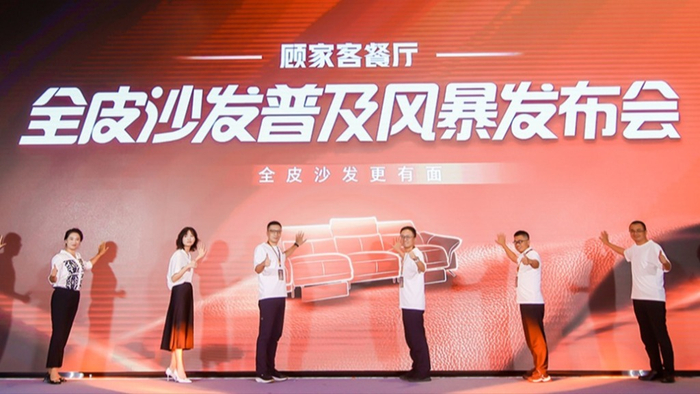
顾家家居发起“全皮沙发普及风暴”,引领行业价值升维
Xin Lang Cai Jing· 2025-09-25 05:04
Core Viewpoint - The company Kuka Home has launched a "Full Leather Sofa Popularization Storm," offering a significant benefit of upgrading to a full leather sofa for 899 yuan, aiming to break the price barrier and make high-quality full leather sofas accessible to ordinary consumers [1][3]. Group 1: Market Trends and Consumer Behavior - The trend in home furnishing consumption is shifting from "having" to "quality," with over 84.81 million users interested in leather furniture and a 30% increase in related search volume over the past year [1]. - Full leather sofas are gaining popularity due to their superior texture and durability, but consumers face challenges such as high costs and a lack of standardized quality assessment for leather [1][3]. Group 2: Company Strategy and Innovations - Kuka Home has updated over ten core processes required for upgrading from genuine leather to full leather sofas, demonstrating internal mechanism innovation to meet consumer demand for high-quality living [3]. - The company has optimized production costs through strong supply chain integration and lean production management, leveraging large-scale procurement of cowhide [3][4]. Group 3: Consumer Experience and Market Positioning - The "Full Leather Sofa Popularization Storm" enhances home aesthetics and significantly improves user experience, shifting the perception of full leather sofas from luxury items to practical household goods [4]. - Kuka Home's initiative represents a "value return" revolution, focusing on quality-to-price ratio and transparent consumption, thereby gaining market leadership and accelerating the popularization of full leather sofas [4]. Group 4: Industry Impact and Future Outlook - The full leather upgrade strategy positions Kuka Home as a leader in the transformation of the Chinese home furnishing industry towards higher quality and sustainability [4]. - This industry change, driven by "full leather quality," is reshaping product value standards and shifting competition from price to value, marking a new chapter in the quality upgrade of the home furnishing sector [4].


西部证券晨会纪要-20250925
Western Securities· 2025-09-25 02:55
Group 1: Mechanical Equipment Industry - The report highlights the strong demand for both aviation engines and gas turbines, driven by the recovery of the aviation market and new power demands from AIDC, leading to a supply-demand imbalance in the industry [2][8] - Major players in the aviation engine market include GE, PW, and R&R, while gas turbine leaders are Mitsubishi Heavy Industries, Siemens Energy, and GE Vernova, indicating a competitive landscape dominated by foreign companies [2][11] - The backlog of orders for commercial aircraft remains historically high, with Boeing and Airbus having a combined backlog of 15,241 aircraft as of July 2025, which is expected to sustain high demand for the aviation engine sector [9] Group 2: Non-Banking Financial Sector - CITIC Financial Assets has shifted its focus to non-performing asset management and has disposed of most of its financial subsidiaries, allowing it to concentrate on core operations [4][13] - The company is actively investing in high-quality listed companies, holding stakes in major banks like Bank of China and CITIC Limited, which are expected to provide stable returns [4][15] - The report projects that the long-term equity investment strategy will effectively smooth out economic cycle fluctuations for CITIC Financial Assets [4][13] Group 3: Communication Industry - Runze Technology is positioned as a leading IDC provider with strong resource endowments and financing advantages through REITs, which are expected to drive high growth [5][16] - The company is set to benefit from the upward trend in IDC demand, particularly in first-tier cities and surrounding areas, as the industry shifts from cloud computing to AI-driven needs [5][16] - EBITDA projections for Runze Technology are expected to grow significantly from 3.689 billion yuan in 2025 to 6.388 billion yuan by 2027 [5][16] Group 4: Pharmaceutical and Biological Sector - Tianshili, a leading traditional Chinese medicine company, is expected to see EPS growth from 0.79 yuan in 2025 to 0.98 yuan by 2027, supported by strong R&D capabilities and a robust marketing system [6][21] - The company has accelerated its R&D pipeline under the influence of China Resources, with a focus on cardiovascular, neurological, and digestive products [6][20] - The report indicates that Tianshili's revenue for the first half of 2025 was 4.288 billion yuan, with a net profit of 775 million yuan, reflecting a stable performance despite market challenges [19][20]
MLILY梦百合X曼联新赛季IP活动启幕,四大亮点引关注
Sou Hu Wang· 2025-09-24 09:36
Core Insights - MLILY Dream Lily has launched its annual Manchester United season event with enhanced activities and broader reach, aiming to promote scientific sleep concepts and quality products to a wider audience through the partnership with Manchester United [1] Group 1: Brand Promotion and Marketing Strategy - The new season brand film featuring Manchester United stars showcases how MLILY's zero-pressure mattress aids in athletic recovery, emphasizing the brand's commitment to high-quality sleep [2] - This year's event has expanded from single-location activities to a nationwide brand experience network across seven cities, allowing fans to engage with Manchester United culture locally [4] - The event will extend beyond traditional marketing by incorporating the "MLILY Zero Pressure Hotel," creating a multi-dimensional experience that merges sports, sleep, and lifestyle [6] Group 2: Cultural Exchange and Consumer Engagement - MLILY Dream Lily continues to offer the "Chinese Fans UK Tour" as part of the Manchester United season, providing consumers a chance to win a trip to experience Manchester United culture firsthand [8] - The ongoing "Chinese Fans UK Tour" initiative has built a cultural exchange bridge between China and the UK, fostering emotional connections with consumers [9] - Since establishing a global partnership with Manchester United in 2016, MLILY has significantly enhanced its brand recognition in China and abroad while promoting Manchester United's culture [11]


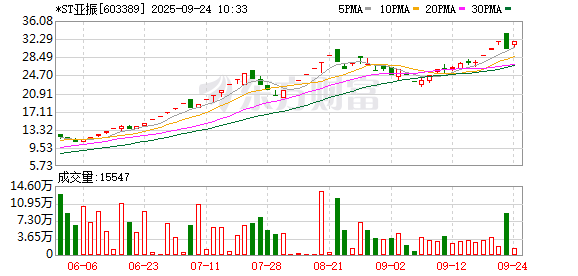
*ST亚振录得5天4板
Zheng Quan Shi Bao Wang· 2025-09-24 02:32
*ST亚振再度涨停,5个交易日内录得4个涨停,累计涨幅为15.59%,累计换手率为7.33%。截至9:32, 该股今日成交量123.45万股,成交金额3861.45万元,换手率0.47%。最新A股总市值达83.37亿元。 (文章来源:证券时报网) 据天眼查APP显示,亚振家居股份有限公司成立于2000年08月15日。注册资本26275.2万人民币。(数 据宝) 近日该股表现 | 日期 | 当日涨跌幅(%) | 换手率(%) | 主力资金净流入(万元) | | --- | --- | --- | --- | | 2025.09.23 | -4.88 | 3.39 | -2949.43 | | 2025.09.22 | 4.99 | 0.78 | -25.26 | | 2025.09.19 | 5.00 | 1.44 | -969.88 | | 2025.09.18 | 4.99 | 1.24 | 225.66 | | 2025.09.17 | 0.92 | 1.09 | -182.18 | | 2025.09.16 | 0.18 | 1.26 | -277.75 | | 2025.09.15 | 3.31 | ...
南京市市场监督管理局通报10批次床垫产品质量监督抽查情况
Zhong Guo Zhi Liang Xin Wen Wang· 2025-09-23 09:25
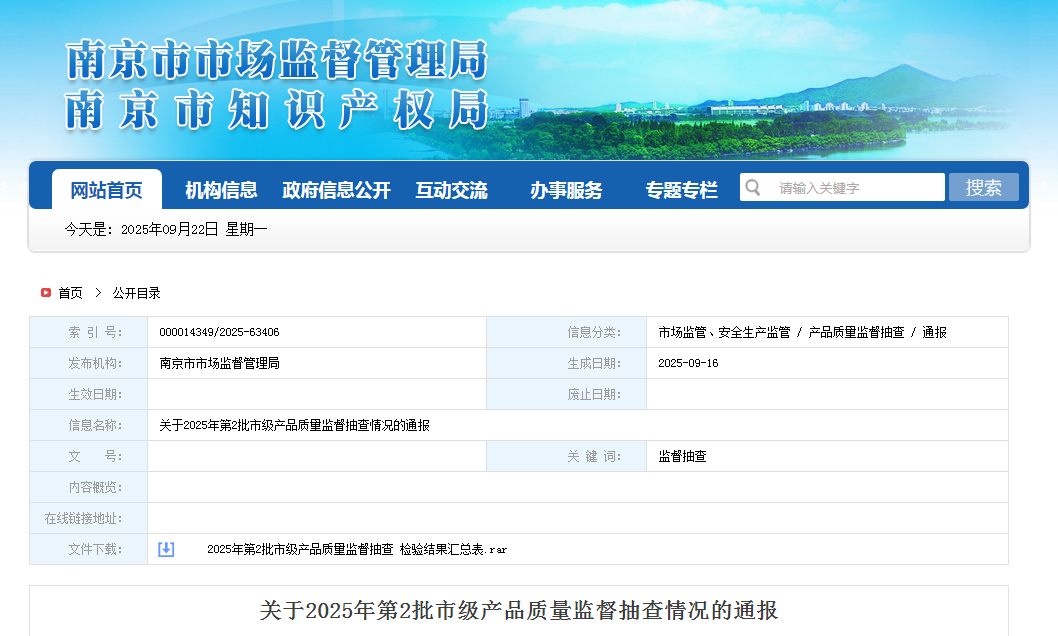
Core Insights - The Nanjing Municipal Market Supervision Administration reported that in the second batch of product quality supervision checks for 2025, all 10 batches of mattresses tested were found to be compliant with quality standards [1] Group 1: Product Quality Inspection Results - A total of 10 batches of mattresses were inspected, and no non-compliant products were identified [1] - The inspection covered various types of mattresses, including spring soft mattresses with different specifications [1] - The inspection results indicate a positive trend in mattress quality within the Nanjing market [1]
顾家家居股份有限公司 关于持股5%以上股东部分股份将被司法拍卖的提示性公告
Zhong Guo Zheng Quan Bao - Zhong Zheng Wang· 2025-09-23 08:48
登录新浪财经APP 搜索【信披】查看更多考评等级 本公司董事会及全体董事保证本公告内容不存在任何虚假记载、误导性陈述或者重大遗漏,并对其内容 的真实性、准确性和完整性承担法律责任。 注:关于本次司法拍卖详情请见杭州市中级人民法院淘宝网司法拍卖网络平台公示的相关信息。 二、其他说明及风险提示 ● 本次司法拍卖尚处于公示阶段,后续涉及竞拍、缴款、股权变更过户等环节,拍卖的结果具有不确定 性,公司将密切关注上述事项的进展情况,并根据相关法律法规的要求及时履行信息披露义务。敬请广 大投资者注意风险。 公司近日收到杭州德烨的通知,其收到浙江省杭州市中级人民法院的《拍卖公告》([2025]浙01执828 号)、《拍卖公告》([2025]浙01执829号)及《拍卖公告》([2025]浙01执920号):浙江省杭州市中 级人民法院将在杭州市中级人民法院淘宝网司法拍卖网络平台对其持有的本公司13,894,961股无限售流 通股票的价值进行公开拍卖。 公司近日收到TB Home的通知,其收到浙江省杭州市中级人民法院的《拍卖公告》([2025]浙01执920 号):浙江省杭州市中级人民法院将在杭州市中级人民法院淘宝网司法拍卖网络平 ...
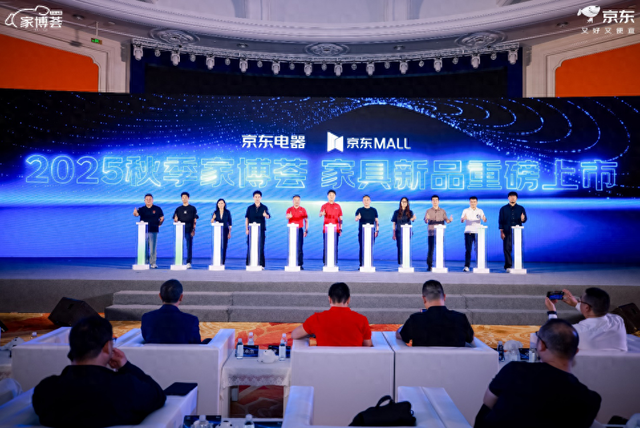
舒达x京东MALL家博荟,以智睡科技重新定义“未来家”
Zhong Guo Zhi Liang Xin Wen Wang· 2025-09-23 06:34
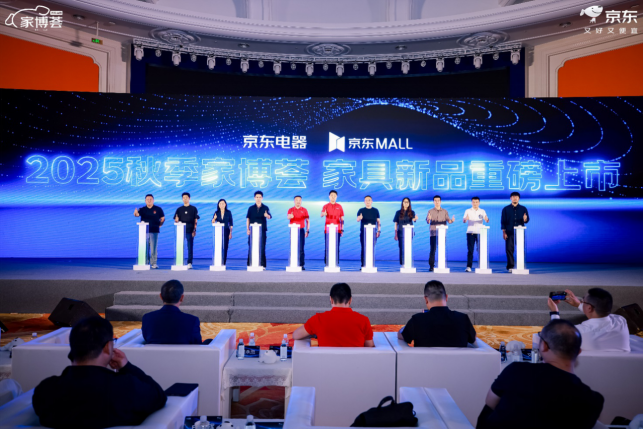
Core Insights - The future of home living is evolving with the integration of smart technology, transforming homes into intelligent spaces that understand and cater to individual needs [1][3] - Serta is redefining bedroom experiences with its iComfort smart bed, combining AI technology with sleep science to enhance sleep quality [4][10] Group 1: Event Overview - The 2025 Smart Home Launch and Autumn Home Expo took place on September 16 at JD MALL in Nanjing, showcasing the potential of smart home technology [3] - Serta participated in the event, presenting its innovative sleep technology and engaging consumers with immersive experiences [3][12] - The expo featured over 20 industry brands and included 50 smart product launches and community showcase activities [3] Group 2: Product Features - The Serta iComfort smart bed offers customizable smart scenarios for different user needs, including entertainment modes and relaxation features [6] - It includes a snore detection function that adjusts the bed position to alleviate snoring, enhancing sleep stability [6] - The bed generates personalized sleep reports through the AI Dream engine, providing tailored insights into sleep patterns [6][10] Group 3: Mattress Innovations - The Rams and Raymond mattress series are designed to complement the iComfort smart bed, offering dual-sided comfort and support for various sleep preferences [8] - The Rams series features a soft side for daily use and a firmer side for spinal support, addressing back pain concerns [8] - The Raymond series includes advanced pressure relief layers and independent coil support for enhanced comfort and responsiveness [8] Group 4: Future Directions - Serta aims to create a comprehensive sleep health management cycle in collaboration with JD, focusing on experience, purchase, service, and iteration [12] - The company is committed to making intelligent sleep solutions accessible to a broader range of families [12]
舒达×京东MALL家博荟 以智睡科技重新定义“未来家”
Huan Qiu Wang· 2025-09-23 06:04
Core Viewpoint - The integration of advanced AI technology with sleep science is redefining the bedroom experience, making it more personalized and responsive to individual needs [1][10]. Group 1: Event Overview - On September 16, the JD MALL and JD Electronics flagship store held the 2025 Smart Home Launch and Autumn Home Expo in Nanjing, showcasing the potential of smart home technology [3]. - The event featured over 20 leading brands, including Serta, and included 50 smart product launches and immersive experience activities to educate consumers on smart home trends [3]. Group 2: Product Innovation - Serta's iComfort smart bed combines AI algorithms with hardware innovation to provide tailored solutions for various sleep issues, catering to diverse consumer needs [4][6]. - The iComfort smart bed offers customizable smart scenarios, such as entertainment modes and sleep assistance features, enhancing the overall sleep experience [6][10]. Group 3: Mattress Technology - The Rams and Raymond mattress series are designed to complement the smart bed, offering dual-sided comfort and advanced support features to address different sleep preferences [8][10]. - The Rams mattress features a dual-sided design for varying comfort levels, while the Raymond mattress includes a four-layer pressure relief support system for enhanced body contouring [8][10]. Group 4: Future Plans - Serta plans to collaborate with JD to create a comprehensive sleep health management cycle that includes experience, purchase, service, and iteration, aiming to make smart sleep services accessible to more families [11].