支付

Search documents
Ripple联手万事达卡(MA.US)与Gemini(GEMI.US),在XRPL上试点稳定币结算
Zhi Tong Cai Jing· 2025-11-06 02:39
Group 1 - Ripple has announced a partnership with Mastercard, Gemini Space Station, and WebBank to pilot RLUSD stablecoin settlements on the XRP Ledger [1] - The collaboration will support blockchain processes between Mastercard and WebBank, marking a significant use case for regulated stablecoin settlements in traditional credit card transactions [1] - Since its launch, the RLUSD stablecoin, pegged to the US dollar, has surpassed a circulation of $1 billion, with applications in decentralized finance, Ripple's cross-border payment solutions, and institutional alliance networks [1]

山东神光投顾上海分公司:数字化转型,跨境支付新纪元
Sou Hu Cai Jing· 2025-11-05 10:52
通过减少中间环节,数字化支付平台能够显著降低交易成本。对于中小企业来说,这意味着他们可以以更低的成本 参与国际贸易,扩大业务范围。此外,数字化支付平台的低成本特性也使得跨境支付更加普及,为更多的个人和企 业提供了便利。交易安全是跨境支付中不可忽视的问题。数字化转型通过引入先进的加密技术和安全协议,提高了 交易的安全性。例如,多因素认证、生物识别技术等手段的应用,使得支付过程更加难以被非法入侵。同时,数字 化支付平台的实时监控和异常交易检测功能,也为交易安全提供了额外的保障。对于企业而言,把握数字化转型的 趋势,意味着需要不断更新技术,优化支付流程,提高服务质量。企业可以通过与金融科技公司合作,利用其先进 的技术平台,提升自身的支付能力。同时,企业也需要关注监管政策的变化,确保合规性,以避免潜在的法律风 险。 山东神光投顾上海分公司:数字化转型,跨境支付新纪元 传统的跨境支付方式往往涉及多个中介机构,导致交易时间长、成本高。而数字化转型通过区块链、人工智能等技 术的应用,实现了支付的即时性和低成本性。区块链技术以其去中心化、不可篡改的特性,为跨境支付提供了一个 透明、安全的交易环境,大大减少了欺诈和错误的可能性 ...


CoGoLinks结行国际闪耀ICBE2025深圳跨交会,以跨境支付新基建助推全球电商贸易
Cai Fu Zai Xian· 2025-11-05 09:28
近年来,随着跨境电商业态的多元化、本土化发展渐成风潮,新兴场景卖家收款渠道少、风险高、结汇 难等痛点日益凸显,CoGoLinks结行国际创新推出了涵盖东南亚TikTok Shop及巴西美客多、亚马逊、 Shopee、TikTok Shop等新兴市场本土店贸易场景的定制化支付解决方案,通过数字账户打通电商平台 货款的当地币种直收渠道,不仅为出海卖家实现资金结算效率的显著提升,还大幅降低其资金周转成 本,解决了巴西、东南亚多国的本土店卖家收款难题。 同时,CoGoLinks结行国际的全球支付网络布局也在"快车道"疾驰,就在今年9月,CoGoLinks结行国际 获得迪拜金融服务管理局(DFSA)批准,成为首家在阿联酋获得支付牌照的中国支付平台,同月其还正 式收获新加坡支付牌照原则性批复,海外合规体系不断扩大,将为赋能卖家拓展中东、东南亚等全球贸 易新市场提供强有力的支付基础设施支撑。 11月3日,第十六届深圳国际跨境电商交易博览会(以下简称"深圳跨交会")在深圳福田会展中心盛大开 幕。本届展会以"建中国智造柔性供应链,拓五洲电商市场新商机" 为核心方向,围绕跨境电商全产业 链需求,打造了跨境电商全产业链生态展区,涵 ...
拉卡拉冲击港股IPO,前三季度净利润下降33.9%联想等重要股东接连“逃离”
Sou Hu Cai Jing· 2025-11-05 08:44
Core Viewpoint - Lakala is seeking to list on the Hong Kong Stock Exchange to enhance its international development strategy and strengthen its global competitiveness, despite facing challenges such as declining performance and compliance issues [1][5]. Group 1: IPO and Strategic Goals - Lakala has submitted an application for a main board listing on the Hong Kong Stock Exchange, aiming to establish an "A+H" share listing structure [1]. - The funds raised from the IPO will primarily be used for license expansion, overseas market growth, technology enhancement, and strategic investments [1]. Group 2: Shareholder Actions - Founder Sun Haoran has completed a share reduction plan, selling a total of 1.927 million shares for approximately 500 million yuan [2]. - Lenovo Holdings, the largest shareholder, plans to reduce its stake by up to 23.64 million shares over three months, continuing a trend of share reductions since Lakala's listing [4]. Group 3: Market Position and Financial Performance - In 2024, China's digital payment market is projected to reach approximately 331.7 trillion yuan, with Lakala holding a 9.4% market share among independent digital payment service providers [3]. - Lakala's revenue has fluctuated significantly, with a decline in net profit from -1.438 billion yuan in 2022 to 351 million yuan in 2024, reflecting ongoing challenges in the digital payment sector [5][6]. Group 4: Operational Challenges - The company reported a 7.32% year-on-year decline in revenue for the third quarter, attributed to a decrease in digital payment income and overall pressure on card payments [5][6]. - The total transaction volume for Lakala's domestic and cross-border payment services reached 2.99 trillion yuan in the first three quarters, with a notable increase in cross-border payments [7]. Group 5: Compliance and Industry Outlook - Lakala has faced multiple compliance issues since its listing, with fines exceeding 16 million yuan due to inadequate customer due diligence and transaction management [8]. - The company is attempting to transition from traditional payment services to comprehensive fintech solutions, but the effectiveness of this strategy remains to be seen [9].


境外钱包入华 中国跨境支付体系加速开放包容
Zheng Quan Shi Bao Wang· 2025-11-05 07:13
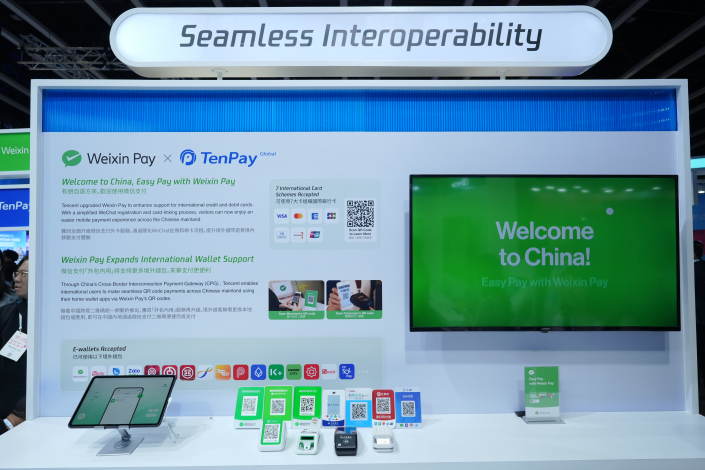
Core Insights - The article highlights the transformation of the cross-border payment system, driven by policy and market forces, showcasing China's advancements in financial technology and cross-border payment solutions [1][3]. Group 1: Cross-Border Payment Innovations - The People's Bank of China is actively promoting the interconnectivity of cross-border payments, focusing on expanding the Renminbi Cross-Border Payment System (CIPS) in Hong Kong and enhancing cross-border QR code payment interoperability [1][3]. - Tencent's WeChat Pay has upgraded its capabilities to support foreign cards, allowing overseas users to easily use WeChat Pay at domestic merchants, thus enhancing the shopping and travel experience in China [4]. - Tencent has partnered with over 60 international remittance institutions, supporting remittances from more than 100 countries to China, significantly improving transaction success rates and volumes [5]. Group 2: Financial Technology Development - The Hong Kong FinTech Week 2025 marks a milestone, with participation increasing to 15 times that of its inaugural event in 2016, underscoring Hong Kong's appeal as a financial technology hub [3]. - The Hong Kong Monetary Authority has announced the "FinTech 2030" vision, aiming to establish Hong Kong as a resilient and forward-looking international financial technology center, with a focus on enhancing cross-border payment connectivity [3]. Group 3: Future Outlook - Tencent's "1+1+1" model aims to create an inclusive and accessible digital cross-border payment network, leveraging its WeChat ecosystem, global payment partners, and local platforms [6][8]. - The company is exploring the application of new technologies like AI in cross-border payments to enhance risk management, transparency, and efficiency [8].

三项违规被罚377万元!宝付回应:已完成自查整改工作
Guo Ji Jin Rong Bao· 2025-11-05 06:23
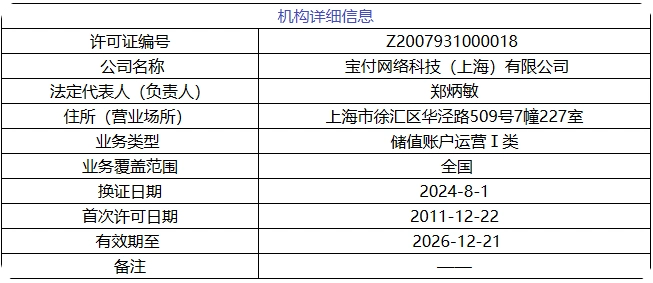
Core Viewpoint - Baofu Network Technology (Shanghai) Co., Ltd. has been fined for violating merchant management, clearing management, and account management regulations, indicating regulatory scrutiny in the payment industry [1] Group 1: Regulatory Actions - The People's Bank of China Shanghai Branch issued a warning to Baofu and imposed a fine of 3.77 million yuan, along with the confiscation of illegal gains amounting to 11,291.48 yuan [1] - An individual, Chen, was also penalized with a warning and a fine of 160,000 yuan for direct responsibility in the violations [1] Group 2: Company Response - Baofu has accepted the regulatory actions and established a special team to follow up on the guidance and opinions from the regulatory authority, indicating a commitment to compliance [1] - The company claims that its business remains stable and unaffected by the regulatory actions, emphasizing its focus on compliance and risk management for future operations [1] Group 3: Company Information - Baofu is a wholly-owned subsidiary of Shanghai Mandao Digital Information Technology Co., Ltd., established in 2011, and holds a payment business license issued by the People's Bank of China [2] - The company operates under the business type "Stored Value Account Operation I" and has a license valid until December 21, 2026, with a renewal date of August 1, 2024 [2]
拉卡拉冲刺港股二次上市 合规问题再受关注
Xin Lang Cai Jing· 2025-11-04 20:38
Core Viewpoint - Lakala Payment Co., Ltd. has submitted its application for a secondary listing on the Hong Kong Stock Exchange, marking its pursuit of an "A+H" listing amid ongoing compliance issues and declining profits [1][2]. Group 1: Compliance Issues - Lakala has faced multiple compliance problems since its IPO in 2019, including illegal data practices by its subsidiary, Koala Credit, which led to significant penalties and the eventual cancellation of its credit business license [3]. - In 2023, Lakala was involved in a "code jumping" scandal, resulting in a need to refund approximately 1.378 billion yuan and incurring fines for failing to meet customer identity verification obligations [3][4]. - The company has been penalized multiple times by the People's Bank of China for various violations, including a fine of 4.06 million yuan in September 2024 for not adhering to merchant real-name registration requirements [3][4]. Group 2: Financial Performance - Lakala's net profit has been under pressure, with figures showing a decline from 10.83 billion yuan in 2021 to a projected 3.51 billion yuan in 2024 [2]. - The company's revenue for Q3 2023 was 4.07 billion yuan, a year-on-year decrease of 7.33%, while the net profit for the same period fell by 33.9% to 339 million yuan [2]. - The revenue from digital business solutions has been declining, with figures of 2.85 billion yuan in 2022 dropping to 1.31 billion yuan in the first half of 2025, indicating a downward trend in this segment [5]. Group 3: Strategic Direction - Lakala is attempting to transition from traditional payment services to comprehensive fintech solutions, positioning itself as a leading provider of digital payment services and business solutions in Asia [5]. - The company’s revenue composition shows that digital payment services have consistently accounted for over 80% of total revenue, while other segments like terminal sales and factoring services have seen a decline [6].
欧洲央行宣布拟于2029年以前引入数字欧元
Shang Wu Bu Wang Zhan· 2025-11-04 16:40
Core Points - The European Central Bank (ECB) is advancing its plan to introduce a digital euro by 2029, providing an electronic alternative to cash and private payment systems in the eurozone [1] - If legislation is completed and effective by 2026, a pilot project for the digital euro could start in 2027, with the official launch planned for 2029 [1] - The ECB has been developing digital payment methods for years, aiming to compete with private payment systems like PayPal, Mastercard, and Visa [1] - The digital euro will be stored in digital wallets and allow for fee-free euro payments via smartphones or bank cards within seconds [1] - The estimated development cost for the project is projected to reach €1.3 billion by 2029, with skepticism from various banks and savings institutions regarding the digital euro initiative [1]
海科融通获母公司2亿元授信担保 业绩困境待解
Bei Jing Shang Bao· 2025-11-04 12:10
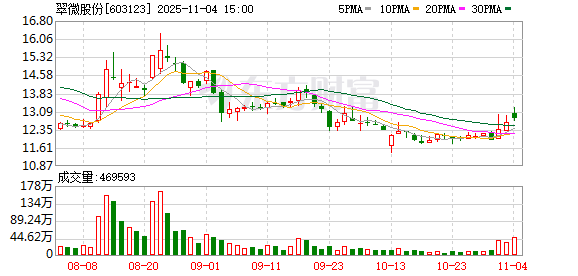
Core Viewpoint - The announcement highlights that the parent company, Cuiwei Co., Ltd., has provided a bank credit guarantee of 200 million yuan to its subsidiary, Haike Rongtong Payment Service Co., Ltd., to support its financing needs and daily operations amid ongoing financial losses [2][3]. Group 1: Financial Support and Guarantees - Cuiwei Co., Ltd. signed a guarantee contract with Tianjin Bank to provide a joint liability guarantee for Haike Rongtong's credit application, with a guarantee period of three years [3]. - This is not the first time Cuiwei has provided guarantees; since 2025, it has signed agreements with multiple banks, totaling 560 million yuan in credit guarantees, with an actual guarantee balance of 400 million yuan, accounting for 18.7% of Cuiwei's latest audited net assets [3][4]. - The guarantee is seen as necessary due to Haike Rongtong's smaller scale and lower credit rating, which makes direct financing challenging [3]. Group 2: Financial Performance of Haike Rongtong - As of the end of 2024, Haike Rongtong reported total assets of 1.284 billion yuan and total liabilities of 1.096 billion yuan, resulting in a net loss of 378 million yuan for the year [6]. - In the first half of 2025, total assets slightly increased to 1.377 billion yuan, with liabilities rising to 1.284 billion yuan, and a net loss of 95 million yuan, indicating a slight improvement in loss compared to the previous year [6]. - The company's revenue for the first half of 2025 was 725 million yuan, reflecting a year-on-year decline of 0.5% [6]. Group 3: Industry Challenges and Strategic Recommendations - Haike Rongtong's ongoing losses are attributed to its heavy reliance on traditional acquiring services and the competitive pressure from declining fee rates in the industry [7]. - The payment market is expected to see rising compliance costs and regulatory demands, further squeezing the survival space for mid-sized payment institutions like Haike Rongtong [7]. - Recommendations for Haike Rongtong include optimizing cost structures, focusing on high-value sectors such as cross-border payments and SaaS services, and potentially seeking strategic investors to enhance capital [8].

海科融通获母公司2亿元授信担保,业绩困境待解
Bei Jing Shang Bao· 2025-11-04 12:04
Core Viewpoint - The announcement reveals that Cuiwei Co., Ltd. has provided a bank credit guarantee of 200 million RMB to its subsidiary, Haike Rongtong, to support its financing needs and daily operations amid ongoing financial difficulties [1][3]. Group 1: Company Support and Financial Health - Cuiwei Co., Ltd. holds a 98.3% stake in Haike Rongtong, which has a registered capital of 255.8 million RMB and is a significant player in the payment processing industry [3]. - Since 2025, Cuiwei has provided a total of 560 million RMB in credit guarantees to Haike Rongtong, with the current guarantee of 400 million RMB representing 18.7% of Cuiwei's latest audited net assets [3][4]. - Haike Rongtong's total assets reached 1.284 billion RMB with total liabilities of 1.096 billion RMB, resulting in a net loss of 378 million RMB for the year [7]. Group 2: Operational Challenges and Market Conditions - Haike Rongtong has been experiencing continuous net losses, attributed to over-reliance on traditional acquiring services and the challenges faced by mid-sized payment institutions during industry transformation [1][8]. - The company's asset-liability ratio exceeded 90%, indicating high leverage and weak debt repayment capacity, which limits external financing options and increases financial risk [9]. - The payment market is expected to see rising compliance costs and intensified competition, further constraining the survival of smaller institutions like Haike Rongtong [8][9]. Group 3: Strategic Recommendations - Analysts suggest that Haike Rongtong should enhance its competitiveness in the digital payment sector while maintaining its traditional business [9]. - Recommendations include optimizing cost structures, focusing on high-value segments like cross-border payments and SaaS services, and potentially seeking strategic investors to improve capital [9].