
造船业

Search documents
关税大限临近,韩国提议投资数十亿美元帮助“美国造船业再次伟大”
Hua Er Jie Jian Wen· 2025-07-30 03:54
日前,据参考消息援引韩联社报道称,这一数十亿美元的提案项目旨在满足特朗普政府对造船领域 的"强烈兴趣"。韩国已准备全力以赴,通过这一重大提议达成最后时刻的贸易协议。 面对特朗普政府设定的8月1日贸易协议最后期限,首尔方面提出名为"让美国造船业再次伟大" (MASGA)的重大项目提案,试图在最后时刻达成协议。 分析人士认为,这一提议直击特朗普政府"美国优先"政策核心,可能成为避免关税的关键筹码。 这些投资反映出韩国企业对进入美国造船市场的积极态度,同时也为两国在该领域的深度合作奠定了基 础。 特朗普政府将造船业复兴列为"美国优先"政策的重点之一。据环球时报,美国总统特朗普4月9日签署一 项行政令,重振美国造船业。 分析指出,白宫可能对推进MASGA计划表现出浓厚兴趣,因为它提供了切实可行的解决方案,符合特 朗普"美国优先"理念以及将这一被遗忘的产业带回国内的愿望。 另外,值得注意的是,韩国副总理Koo Yun-cheol和外长Cho Hyun将于下周与美国财长贝森特和国务卿 卢比奥会面。 造船合作成谈判焦点 韩国总统办公室在上个周末的一份声明中表示:"我们确认了美方对造船业的强烈兴趣,两国同意合作 制定包括造船 ...
募资26亿增强竞争力!又一家船企逆袭上市
Sou Hu Cai Jing· 2025-07-29 13:39
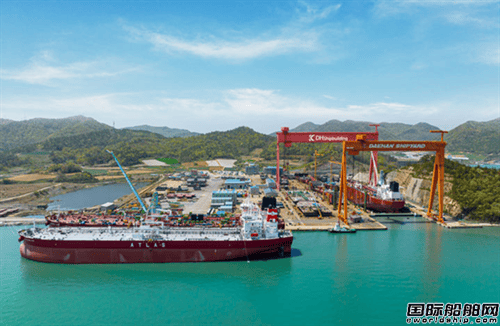
Core Viewpoint - DH Shipbuilding, once considered a "burden" for Korea Development Bank, is set to make a strong entry into the capital market, becoming a trillion-won giant due to the recovery of the shipbuilding industry [2] Group 1: Company Performance - DH Shipbuilding will be listed on the Korea Stock Exchange (KOSPI) on August 1, with an IPO subscription showing an oversubscription of 238.1 times, attracting approximately 178.608 billion KRW (about 93 billion RMB) in subscription deposits, indicating high market confidence in the company's prospects [2] - The IPO price is set at 50,000 KRW (approximately 260 RMB) per share, with a fundraising scale of about 500 billion KRW (approximately 2.6 billion RMB) and an expected post-listing valuation of 19.263 trillion KRW (approximately 10 billion RMB) [2] - In 2023, DH Shipbuilding achieved an operating revenue of 816.3 billion KRW (approximately 4.3 billion RMB) and an operating profit of 35.9 billion KRW (approximately 187 million RMB), with an operating profit margin of about 4.4% [3] - By 2024, the company expects to achieve an operating revenue of 1.0746 trillion KRW (approximately 565.6 million RMB), a year-on-year increase of 32%, and an operating profit of 158.2 billion KRW (approximately 830 million RMB), a staggering year-on-year increase of 340% [4][5] Group 2: Market Position and Strategy - DH Shipbuilding's operating profit in 2024 surged 48 times compared to 2022, with an operating profit margin reaching 14.7%, a significant increase of over 10 percentage points from 2023 [5] - The company has improved its debt ratio significantly, reducing it from 374% in 2023 to 198% in 2024 [4] - The increase in profits is attributed to the early completion of low-priced ship orders and the commencement of high-value eco-ship orders [7] - The company has a market share of approximately 14% in the global medium-sized oil tanker market, ranking first globally [7] - DH Shipbuilding plans to use the funds raised from the IPO to enhance shipbuilding competitiveness, focusing on R&D, green technology, and automation to improve profitability [9] Group 3: Future Outlook - Despite a recent decline in global new ship orders, DH Shipbuilding's order book extends to 2027, and the company expects to maintain order levels comparable to previous years [8] - The company has secured contracts for three high-value shuttle tankers with a total contract value of approximately 400 million USD, with delivery scheduled to start in November 2026 [11] - The company emphasizes a profit-centered management approach, focusing on improving fuel efficiency and convenience for shipowners while selectively accepting high-yield orders [11] - The IPO is seen as a significant milestone for DH Shipbuilding and the Korean medium-sized shipbuilding industry, which has undergone a brutal restructuring process [12]

特朗普关税施压没用?关键时刻,美逼迫韩国“协防台海”,李在明早已给出答案,美失望了
Sou Hu Cai Jing· 2025-07-29 02:38
Group 1 - The core argument of the article highlights the failure of U.S. pressure tactics on South Korea, as President Yoon Suk-yeol employs a diplomatic strategy to counteract the dual pressure from the Trump administration [1][3] - The U.S. has threatened to impose a 25% tariff on South Korean shipbuilding unless cooperation is achieved, but South Korea has proposed a multi-billion dollar investment plan to support U.S. shipbuilding, effectively turning the tariff threat into a job creation opportunity for the U.S. [3][10] - The U.S. has also requested South Korea to expand the scope of the U.S.-South Korea Mutual Defense Treaty to include the entire Indo-Pacific region, indicating a desire for South Korea to participate in conflicts in the Taiwan Strait or South China Sea [3][5] Group 2 - South Korea's defense budget is under pressure to increase from 2.3% of GDP to 5%, which would raise military spending from approximately $50 billion to over $100 billion [5] - The article describes the U.S. approach as "double extortion," with South Korea's media echoing this sentiment, indicating a growing frustration with U.S. demands [5] - President Yoon's statement that "the Taiwan issue has nothing to do with South Korea" marks a significant shift in South Korea's stance in the U.S.-China rivalry, reflecting a desire to avoid past mistakes that led to strained relations with China [5][12] Group 3 - The article outlines three failures of U.S. strategies in East Asia: economic pressure has backfired as South Korea finds ways to counteract tariffs, military alliances are showing cracks with South Korea's refusal to comply, and the U.S. is losing leverage over the Korean Peninsula as inter-Korean relations improve [10][11][12] - South Korea's economic ties with China are emphasized, particularly in the semiconductor industry, where over 60% of South Korea's exports are directed to China, providing a potential alternative market if U.S. restrictions are imposed [7][9] - The article suggests that South Korea's recent moves towards cooperation with China in sectors like renewable energy and electric vehicles are strategic efforts to mitigate risks associated with U.S. pressures [9][12]

韩国想以造船合作撬动关税谈判
Huan Qiu Shi Bao· 2025-07-28 22:47
Group 1 - The South Korean government is intensifying negotiations with the U.S. regarding tariffs, focusing on shipbuilding cooperation and agricultural concessions as bargaining chips [1][2] - The MASGA project, proposed by South Korea, aims to invest hundreds of billions of dollars in the U.S. shipbuilding industry, with financial support from public institutions [1][2] - The deadline for the U.S. to impose retaliatory tariffs on South Korea is August 1, creating urgency for negotiations to conclude before this date [2][3] Group 2 - South Korea is using a combination of shipbuilding cooperation and agricultural concessions to negotiate tariff reductions on exports such as automobiles and steel [2] - The South Korean government has set a benchmark of a 15% reciprocal tariff rate, similar to Japan's, to avoid economic setbacks [3]
美海军上将警告:除非美国加倍造舰,否则将无法向澳大利亚出售任何核潜艇
Huan Qiu Wang· 2025-07-28 09:37
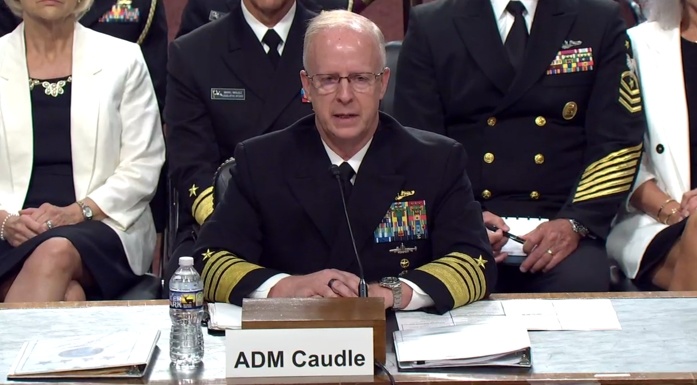
Core Points - The U.S. Navy's production of Virginia-class submarines is insufficient to meet both domestic defense needs and commitments under the AUKUS agreement with Australia, requiring a doubling of production speed to fulfill these obligations [1][3] - Current production rates are approximately 1.13 submarines per year, while a minimum of 2 submarines per year is needed for U.S. defense, and around 2.33 submarines per year would be necessary to supply Australia [3] - The former Australian Prime Minister Malcolm Turnbull indicated a very high likelihood that Australia may not receive any Virginia-class submarines due to U.S. production shortfalls, which could leave Australia without submarine capabilities for the next 10 to 20 years [4][5] Industry Insights - The U.S. Navy's shipbuilding capacity is described as "stagnant," with no simple solutions available to enhance production efficiency, necessitating a transformative increase in output rather than marginal improvements [3] - Australia has invested 16 billion AUD (approximately 10.4 billion USD) to support U.S. shipbuilding efforts, but results have been minimal [3] - The AUKUS agreement has faced criticism and scrutiny due to its implications for nuclear proliferation and regional security dynamics, with recent reports suggesting a reconsideration of the agreement by the U.S. Department of Defense [5][6]
为达成贸易协议,韩国“放大招”:让美国造船业再次伟大
Guan Cha Zhe Wang· 2025-07-28 08:56
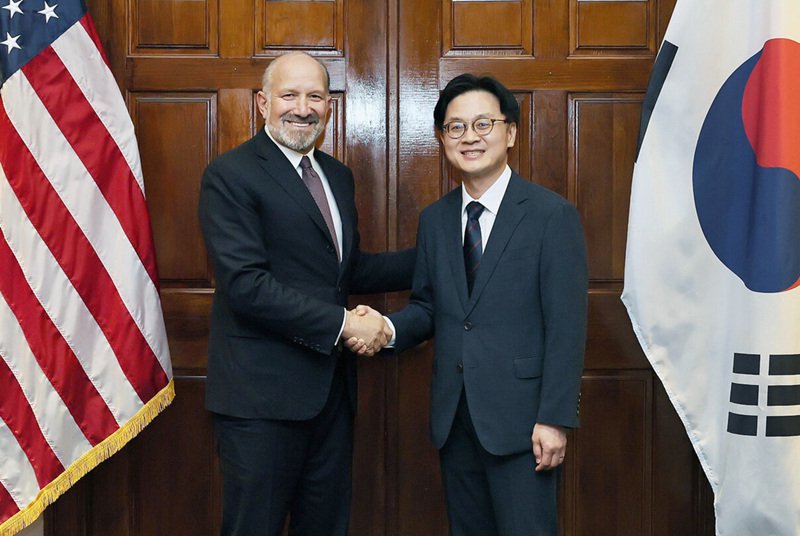
Group 1 - The U.S. and South Korea's planned "2+2" tariff negotiations were postponed due to U.S. Treasury Secretary Yellen's urgent schedule, with a looming deadline for new tariffs on August 1 [1][3] - South Korea proposed a shipbuilding cooperation project named "Make American Shipbuilding Great Again" (MASGA), potentially worth hundreds of billions of dollars, to the U.S. [1][3] - The project includes investments and financing guarantees from South Korean private shipbuilding companies, with financial support expected from institutions like the Korea Export-Import Bank [3] Group 2 - The U.S. is interested in revitalizing its shipbuilding industry, which has a significantly lower global market share compared to China, Japan, and South Korea [3][4] - In 2024, the completion rates for shipbuilding are projected to be 51.99% for China, 26.78% for South Korea, and 11.67% for Japan, highlighting the competitive landscape [3] - The U.S. is simultaneously attempting to suppress China's shipbuilding industry while seeking closer ties with South Korean and Japanese firms [3][4] Group 3 - The South Korean government aims to negotiate a trade agreement that includes shipbuilding, LNG, and trade balance improvements, reflecting a strategic partnership with the U.S. [4][5] - Recent reports indicate that major South Korean shipbuilders like Hyundai Heavy Industries and Hanwha Ocean are entering into cooperation agreements with U.S. companies [5] - The South Korean government is under pressure to reach a favorable trade agreement with the U.S. to avoid potential GDP declines, with estimates suggesting a 1.7% drop if negotiations fail [7][8]
韩国向美国提议“MASGA”造船合作项目
news flash· 2025-07-28 01:37
Core Viewpoint - South Korea has proposed a shipbuilding cooperation project named "MASGA" (Make American Shipbuilding Great Again) to the United States, which is expected to be worth hundreds of trillions of Korean won [1] Group 1: Project Overview - The "MASGA" project aims to enhance collaboration between South Korea and the United States in the shipbuilding industry [1] - The scale of the proposed project is significant, amounting to hundreds of trillions of Korean won [1]