
铁路建设

Search documents
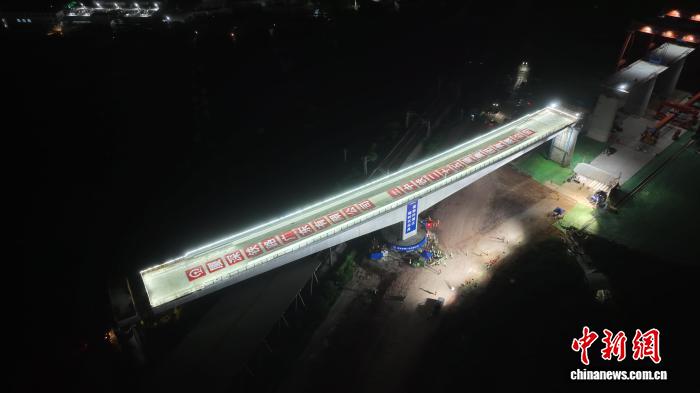
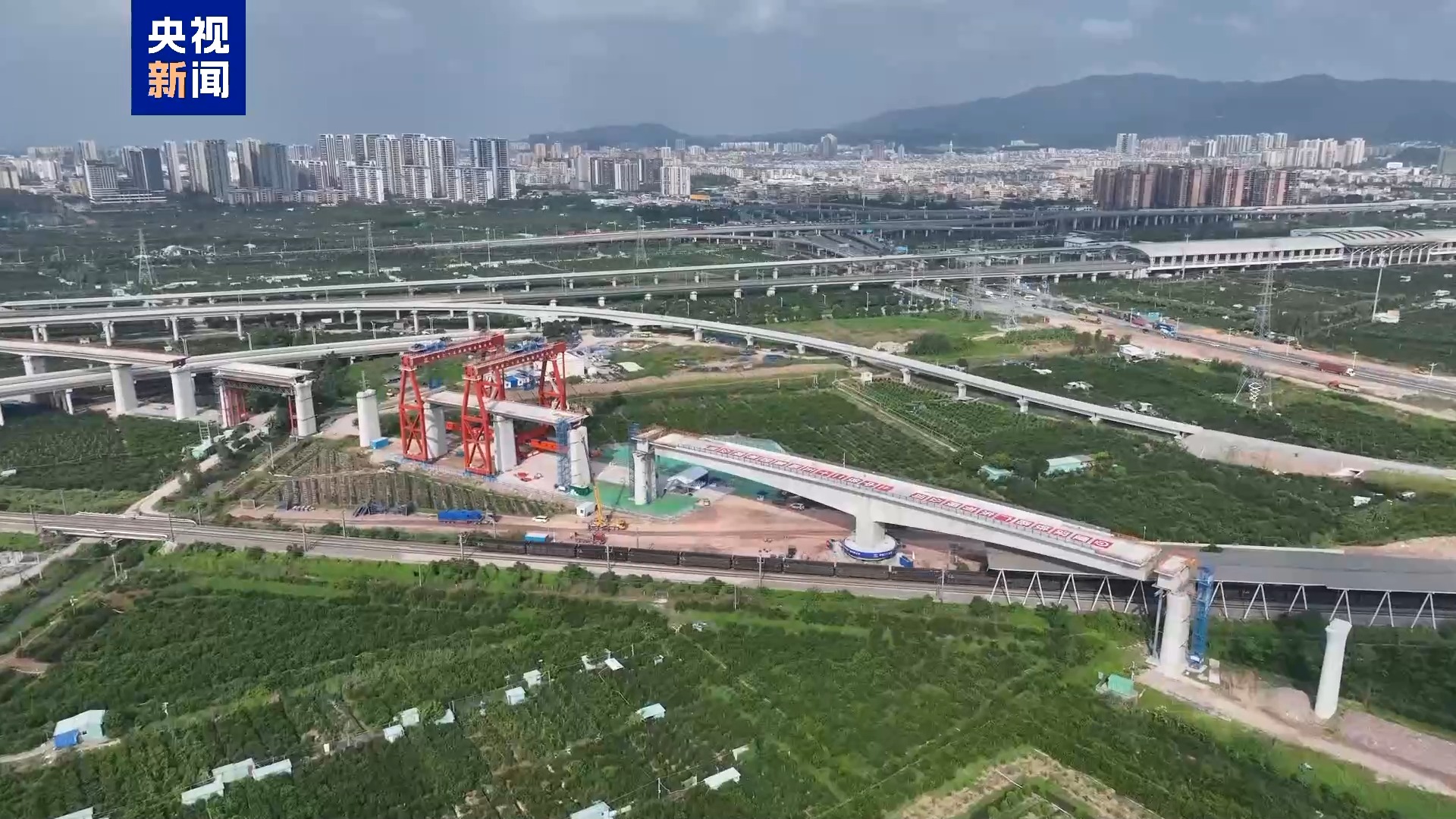
深江铁路首座转体桥完成转体
Zhong Guo Xin Wen Wang· 2025-10-10 11:55
Core Points - The successful rotation of the T-shaped structure of the Guangzhongjiang Bridge marks the completion of the first rotating bridge construction for the Shenzhen-Jiangmen Railway [1][3] - The Shenzhen-Jiangmen Railway, approximately 116 kilometers long, connects Shenzhen and Jiangmen, with design speeds of 200 km/h and 250 km/h for different segments [3][6] - The construction of the bridge involved significant engineering challenges, including the need to rotate a 11,216-ton structure over an existing freight railway [3][4] Construction Details - The Guangzhongjiang Bridge spans 13.41 kilometers and features a T-shaped structure that was rotated 30.2 degrees to align with the existing railway [3][4] - The project utilized advanced technology, including 5G and a dynamic intelligent monitoring platform based on BIM and digital twin technology, to ensure precision during the rotation process [4] - The rotation process was conducted under challenging conditions, with the main support structure only 9.78 meters from the center of the freight line, which carries an average of 30 freight trains and 51,000 tons of cargo daily [3][4] Strategic Importance - The Shenzhen-Jiangmen Railway is a crucial part of the Guangdong-Hong Kong-Macao Greater Bay Area's rail network, enhancing connectivity between key economic zones [6] - Once completed, the railway will facilitate high-speed connections between major trade areas, contributing to regional economic development and integration [6]

合武高铁安徽段首座隧道贯通
Xin Hua She· 2025-10-10 08:01
Core Viewpoint - The successful completion of the Dazhu Garden Tunnel marks a significant milestone in the construction of the Hefei-Wuhan High-Speed Railway, indicating important progress in the project [1] Company Summary - China Railway Construction Corporation (CRCC) is overseeing the construction of the Dazhu Garden Tunnel, which is the first tunnel to be completed in the Anhui section of the Hefei-Wuhan High-Speed Railway [1] - The project is being executed by China Railway 21st Bureau Group, highlighting the company's involvement in major infrastructure projects [1] Industry Summary - The Hefei-Wuhan High-Speed Railway spans approximately 360 kilometers and is designed for a speed of 350 kilometers per hour, forming a crucial part of China's "eight vertical and eight horizontal" high-speed rail network [1] - The Dazhu Garden Tunnel, measuring about 675 meters in length, is a single-hole double-track high-speed railway tunnel, showcasing advancements in high-speed rail infrastructure [1] - The construction faced challenges due to complex geological conditions and undulating terrain, necessitating the use of a tunnel geological forecasting system to ensure safety and efficiency [1]

30.2度精准转身!深江铁路万吨桥梁“空中转身”成功
Yang Shi Xin Wen· 2025-10-10 06:14
Core Viewpoint - The construction of the Shenjiang Railway, a key project in the Guangdong-Hong Kong-Macao Greater Bay Area, aims to enhance connectivity between major economic zones, facilitating a half-hour high-speed rail link between Shenzhen and Guangzhou [2] Group 1: Project Overview - The Shenjiang Railway spans approximately 116 kilometers, with a design speed of 200 km/h from Shenzhen Xili to Guangzhou Nansha and 250 km/h from Guangzhou Nansha to Jiangmen [2] - A significant construction feature is the Guangzhongjiang Grand Bridge, which is 13.41 kilometers long and includes a T-shaped rotating bridge weighing 11,216 tons with a span of 160 meters [2] Group 2: Construction Methodology - The project employs a rotation construction method, where the beam body is first cast parallel to the existing railway and then rotated 30.2 degrees clockwise to achieve the connection [2] Group 3: Economic Impact - Upon completion, the Shenjiang Railway will connect the Qianhai Free Trade Zone in Shenzhen with the Nansha Free Trade Zone in Guangzhou, serving as a "golden channel" for economic and social development in the western Pearl River Delta region [2] - The railway will also interconnect with other major lines such as the Guangzhou-Shenzhen-Hong Kong High-Speed Railway and the Shenmou Railway, further enhancing regional connectivity [2]
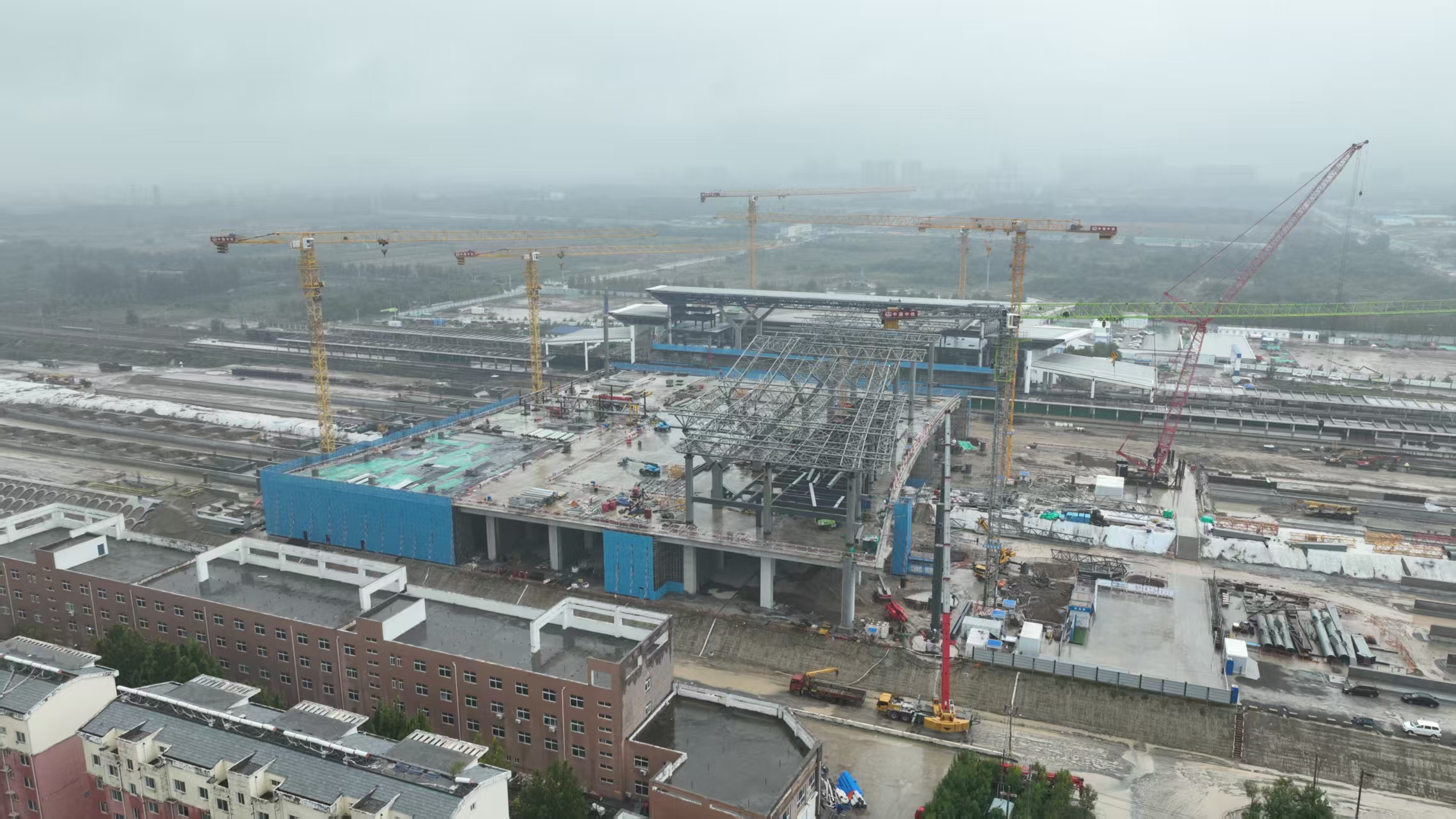
津潍高铁建设新进展!新建滨州站主体结构封顶
Qi Lu Wan Bao· 2025-10-10 02:29
Core Points - The main point of the article is the completion of the main structure of the Tianjin to Weifang high-speed railway Binhzhou Station expansion project, marking a significant milestone in the construction process [1][3]. Group 1: Project Overview - The Binhzhou Station is being rebuilt opposite the original station and serves as a crucial hub for the Tianjin-Weifang high-speed railway [3]. - The project faced challenges such as tight schedules, complex technology, and heavy rainfall, which were managed by a skilled team from China Railway 10th Bureau [3]. Group 2: Construction Management - The project team utilized a smart construction management system to control the construction process effectively [3]. - Strict oversight was maintained on special construction plans and key processes to ensure safety and quality during the construction [3]. Group 3: Regional Impact - Upon completion, the Binhzhou Station will connect four railway lines, enhancing the transportation network and promoting high-quality development in Binhzhou [4]. - The project is significant for optimizing transportation links between the Beijing-Tianjin-Hebei urban circle and the Shandong Peninsula, as well as the Yangtze River Delta region, facilitating resource sharing and collaborative development [4].
跨越白山黑水 树起全新标杆
Liao Ning Ri Bao· 2025-10-10 00:59
Core Viewpoint - The opening of the Shenyang to Jiamusi high-speed railway marks a significant milestone in the Northeast high-speed rail network, enhancing regional connectivity and economic revitalization [1] Construction Challenges - The Shenyang to Baicheng section of the high-speed railway faced extreme geological and climatic challenges, including traversing 11 fault zones and crossing three major river systems with a bridge-tunnel ratio of 78.4% [2][3] - Construction was complicated by harsh winter conditions, with temperatures dropping to -30°C to -40°C, limiting effective working days to less than 200 per year [2] Innovative Solutions - The project utilized advanced construction techniques, such as a comprehensive water management strategy to address significant groundwater issues, achieving successful water blockage and setting new standards in tunnel construction [4][5] - The use of smart construction technologies, including a fully automated production line for track slabs, significantly improved efficiency and precision in manufacturing [8] Environmental Considerations - The project prioritized ecological balance, opting for tunnel construction to protect mature trees rather than traditional road-building methods, demonstrating a commitment to environmental stewardship [10][11] - Measures were implemented to minimize the impact on local communities and ecosystems, including sound barriers and dust suppression techniques during construction [11][12] Overall Impact - The completion of the Shenyang to Jiamusi high-speed railway not only enhances transportation efficiency but also symbolizes the technological advancements and ecological responsibility of China's infrastructure development [1][13]

“钢铁丝路”带来中塞发展新机遇
Jing Ji Ri Bao· 2025-10-09 22:02
10月3日,匈塞铁路诺维萨德至苏博蒂察段(以下简称"诺苏段")顺利开通运营。至此,继2022年3月贝 尔格莱德至诺维萨德段(以下简称"贝诺段")率先投运之后,匈塞铁路塞尔维亚段正式全线贯通。这不 仅标志着巴尔干地区正式进入高速铁路时代,也意味着"一带一路"合作在中东欧地区结出又一丰硕成 果。 匈塞铁路是中匈塞三国高质量共建"一带一路"与欧洲发展战略深度对接的重大项目,是中国与中东欧国 家合作的旗舰项目,其北起匈牙利首都布达佩斯,南至塞尔维亚首都贝尔格莱德,为客货共线、双线电 气化铁路,线路全长341.7公里。其中,塞尔维亚境内长183.1公里,设计最高时速200公里;匈牙利境内 长158.6公里,设计最高时速160公里。项目由中国国家铁路集团有限公司所属的中国铁路国际有限公司 牵头,联合中国交通建设股份有限公司组建中方联营体,以设计—采购—施工(EPC)工程总承包模式 承建。 这条"钢铁丝路"不仅连接起两国重要城市,更连接起中国与中东欧合作的愿景与未来。 作为中国高铁进入欧洲的"第一单",匈塞铁路必须通过欧方多项技术考验。经过中方团队不懈努力,贝 诺段铁路率先获得德国铁路和塞尔维亚国家技术委员会的联合验收。2 ...
八年终圆梦——匈塞铁路塞段建设把中国方案和中国智慧带到欧洲
Xin Hua Wang· 2025-10-09 09:28
Core Viewpoint - The completion and operation of the Serbia section of the Hungary-Serbia railway marks a significant achievement in Sino-Serbian cooperation, showcasing the integration of Chinese technology and standards with European practices [1][4]. Group 1: Project Overview - The Serbia section of the Hungary-Serbia railway officially opened on October 3, with passenger services starting on October 8, fulfilling a long-held dream of the Serbian people [1]. - The project took eight years to complete, involving extensive collaboration between Chinese and Serbian teams, emphasizing the importance of effective communication and coordination [1][2]. Group 2: Technical Achievements - The project utilized European technical standards while incorporating Chinese construction wisdom, particularly in key engineering solutions, which were accepted by Serbian partners after thorough discussions [2][3]. - The construction of the Veljbaste Bridge exemplified the successful application of Chinese design optimizations, which reduced costs and construction time, ultimately gaining the trust of Serbian engineers [2]. Group 3: Technological Integration - The railway features a complete set of communication and signaling systems sourced from China, marking the first introduction of such technology in Serbia, which has excited local engineers [2][3]. - Chinese elements have been successfully integrated into various aspects of the railway, including contact network systems and steel structures, demonstrating a "soft connection" of technology and standards [3]. Group 4: Impact and Future Prospects - The already operational section between Belgrade and Novi Sad has transformed commuting patterns, with over 12 million passengers transported, indicating a significant impact on local transportation [3][4]. - The project is viewed as a "transportation revolution" for Serbia, with expectations of further positive changes in the coming years as a result of this collaboration [4].
广东省多个重大项目跑出建设“加速度”
Zhong Guo Fa Zhan Wang· 2025-10-09 08:30
Group 1 - Guangdong province has achieved significant breakthroughs in major projects ahead of the National Day, showcasing accelerated construction progress [1] - The main structure of the Guangzhou Baiyun Station TOD comprehensive transportation hub has been completed, which will integrate business, residential, hotel, commercial, and entertainment functions, serving as a key driver for regional economic development [1] - The Guangzhan High-speed Railway's main station and secondary structures have been completed, with the project entering the decoration and construction phase for the platform and waiting hall [1] Group 2 - The Shantou South to Shantou section of the Shantou-Shantou High-speed Railway has officially entered the track laying phase, aiming to be operational by the end of the year, increasing daily train capacity from 24 to over 50 pairs [2] - The Changshen Expressway expansion project has completed the main bridge structure, transitioning to the final construction phase, which will enhance connectivity between the Guangdong-Hong Kong-Macao Greater Bay Area and central regions [2] Group 3 - The first phase of the Greater Bay Area University (Binhaiwan Campus) has successfully topped out, marking significant progress in higher education infrastructure in the region, with a total construction area of approximately 67,000 square meters [3] - The campus aims to fill the gap in high-level engineering education resources in the area and promote deep collaboration between education, talent, and industry chains [3]
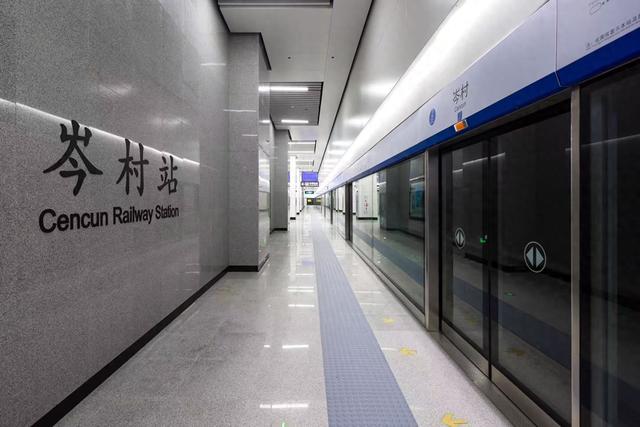
中国铁建攻克复杂地质难题 助力大湾区城际铁路“连线成网”
Zhong Guo Qing Nian Bao· 2025-10-09 00:25
Core Points - The opening of the Guangzhou East Ring Intercity Railway (Panyu - North Baiyun Airport) and the Pazhou Intercity Railway marks a significant advancement in the intercity rail network of Guangdong, connecting six cities and pushing the total intercity railway mileage in the Greater Bay Area to over 400 kilometers [2][5] - The construction of the Guangzhou East Ring Intercity Railway faced numerous challenges, including complex geological conditions and urban infrastructure, which required innovative construction techniques [2][3] Group 1: Project Overview - The Guangzhou East Ring Intercity Railway spans 57.8 kilometers with 13 stations, forming a key axis in the Greater Bay Area intercity railway network [2] - The Pazhou Intercity Railway is 18.2 kilometers long with 4 stations, enhancing the functionality of the Pazhou area as a comprehensive hub for exhibitions and tourism [2] Group 2: Construction Innovations - The project team developed a "side wall and middle slab integrated lining vehicle," reducing the concrete pouring cycle from 7 days to 2 days, increasing efficiency by 3.5 times [3] - Advanced construction methods such as "semi-cover excavation + jump warehouse method" were employed to minimize disruption to local traffic and residents [3] - The team achieved zero settlement and zero leakage in the tunnel construction, utilizing a self-propelled hydraulic arch bridge for simultaneous operations [3] Group 3: Technology and Management - The project implemented a digital management platform integrating 12 subsystems for comprehensive control over personnel, machinery, and materials [4] - AI algorithms were used to predict equipment failure risks, resulting in 17 early warnings and reducing downtime by over 300 hours [4] - BIM technology was applied to create 3D models for station construction, enhancing accuracy and efficiency [4] Group 4: Cultural Integration and Passenger Experience - Each station incorporates local cultural elements and urban development features, with designs that reflect regional characteristics [5] - The new lines support a variety of payment methods and a public transport model that enhances connectivity, enabling 30-minute travel between Guangzhou and neighboring cities [5] - The opening of these lines is expected to significantly improve transportation efficiency in the Greater Bay Area, facilitating regional development and supporting major events like the 15th National Games [5]
【环球财经】坦桑尼亚首个米轨铁路混凝土轨枕厂正式建成
Xin Hua Cai Jing· 2025-10-08 20:39
Core Viewpoint - The completion of Tanzania's first concrete sleeper factory, built by China Civil Engineering Construction Corporation, marks a significant step in localizing the production of railway sleepers, enhancing the modernization and self-sufficiency of Tanzania's railway infrastructure [1][2]. Group 1: Project Overview - The sleeper factory occupies 40,000 square meters and features a prestressed concrete sleeper production line with a designed daily output of 2,400 sleepers, along with a storage capacity of 100,000 sleepers [1]. - The factory aims to meet the continuous supply demands for large-scale railway construction, filling the gap in local production of concrete sleepers in Tanzania [1]. Group 2: Strategic Importance - The project represents a crucial initiative to transition Tanzania's railway from steel sleepers to prestressed concrete sleepers, addressing the long-standing reliance on imported steel sleepers, which are costly and subject to supply chain disruptions [2]. - By implementing a "Chinese solution," the project promotes local manufacturing and near-sourcing of essential materials, thereby enhancing the stability and autonomy of railway upgrades and maintenance [2]. Group 3: Economic and Social Impact - The factory is expected to create approximately 200 jobs, with over 90% of the positions filled by local employees, covering various roles such as production operations, equipment maintenance, and quality testing [2]. - A skills enhancement program is being implemented by the Chinese team, focusing on hands-on training and mentorship to develop local expertise in concrete product manufacturing and automated equipment operation [2].