
Securities

Search documents
招聘 | 国联民生汽车 诚邀加入!【新财富团队 分析师/实习生招聘】
汽车琰究· 2026-01-09 07:22
Core Viewpoint - The article emphasizes the importance of deep research and analysis in the automotive industry, particularly focusing on the trends of electrification, intelligence, globalization, and premiumization, which are seen as key investment opportunities during the ongoing transformation of the sector [9]. Recruitment Information - The company is seeking analysts for the automotive and embodied intelligence sectors, highlighting the need for candidates who are passionate about sell-side research and eager to witness the transformative decade in electric and intelligent vehicles [11]. - Requirements for the analyst positions include a master's degree or higher, 1-3 years of relevant research experience, and strong communication skills, with a preference for candidates with backgrounds in electric intelligence or embodied intelligence [11]. - Intern positions are also available, targeting candidates from top universities with a strong interest in sell-side research and the ability to handle high-intensity research work [11]. Growth Opportunities - Joining the company offers the chance to work alongside talented individuals in the automotive industry, providing opportunities for rapid personal and professional growth [12]. - The company promises a structured research investment framework and valuable work experience, along with opportunities for in-depth communication with industry experts [12].


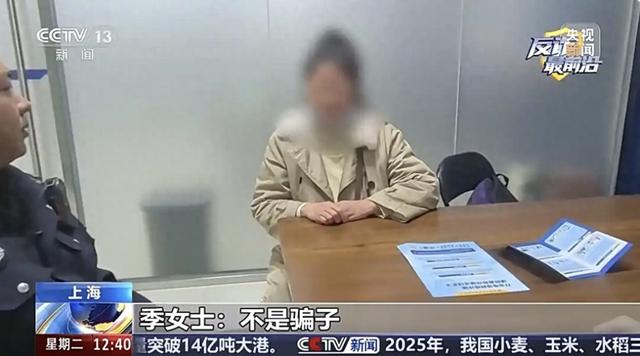
山寨东方财富证券新骗局:从“线上诈骗”到“线下送钱”
Guan Cha Zhe Wang· 2026-01-09 02:18
Core Viewpoint - A recent fraudulent stock trading platform case in Shanghai's Jiading District highlights the increasing sophistication of scams, where victims are misled into downloading counterfeit applications that mimic legitimate financial services, leading to significant financial losses [1][3]. Group 1: Fraud Techniques - The new scam model defined as "online fraud, offline cash delivery" allows criminals to evade electronic monitoring by converting funds into cash or gold for in-person delivery [3][5]. - Scammers use social channels to lure victims with promises of high returns, leading them to download a counterfeit app that closely resembles a legitimate trading platform [3][5]. - The counterfeit app features realistic design and functionality, including fake profit data, which creates a false sense of security for the victim [3][5]. Group 2: Psychological Manipulation - Victims often exhibit a strong "trust lock" mentality, making them resistant to evidence of fraud, as seen in the case of the victim who insisted on the legitimacy of the platform despite police intervention [1][6]. - Behavioral finance principles indicate that victims may fall prey to sunk cost fallacies and confirmation biases, leading them to ignore negative information [6][7]. - Scammers exploit the natural trust in authoritative brands, such as "Oriental Fortune," to mislead victims into believing in the legitimacy of the counterfeit platform [7]. Group 3: Investor Education Gaps - The incident underscores the shortcomings in investor education, particularly in risk recognition and fraud prevention, as many investors lack a deep understanding of the risks associated with high-return promises [8]. - There is a pressing need for enhanced security awareness regarding app download channels, emphasizing the risks of installing financial applications from unofficial sources [8].

天风证券:市场正步入新一轮交易脉冲的启动窗口
Xin Lang Cai Jing· 2026-01-09 00:47
Market Overview - In December, the market experienced a rebound, with the Shanghai Composite Index achieving 11 consecutive gains, reaching the 4000-point mark, indicating a sustained upward trend [1][7] - The Federal Reserve implemented an interest rate cut in December, and with the potential new chair taking office in 2026, the monetary policy path may become clearer, improving global market liquidity [1][7] - The Central Economic Work Conference held in late December successfully outlined new growth stabilization policies, which are gradually being implemented, further enhancing market risk appetite [1][7] Fund Flows - In December, new issuance of equity public funds decreased to 590.14 million shares, down 126.29 million from the previous month, marking an 86.11% percentile over the past three years [2][9] - The net subscription of stock ETFs in December was 937.89 billion, a significant increase of 760.89 billion from the previous month, with broad-based ETFs being the main direction of fund inflow [2][9] - Private equity securities funds continued to grow, with a total scale of 7.04 trillion in November, reflecting a recovery trend in new issuances [2][9] Northbound Capital - In December, the average daily trading volume of northbound capital decreased to 1894.04 billion, down 14.39% from the previous month, with its share of total A-share trading falling to 10.07% [3][10] - The margin financing balance increased to 2.54 trillion by the end of December, up 2.71% month-on-month, indicating a slight recovery in trading activity [3][10] Insurance and Banking - In Q3 2025, the net increase in equity assets held by property and life insurance companies was 8639.94 billion, with their stock and fund holdings accounting for 15.49% of total asset utilization, a continuous increase over three quarters [4][11] - In December, the number of newly issued wealth management products rose to 7514, up 12.98% from the previous month, indicating a recovery in the issuance of financial products [4][12] Capital Market Indicators - The three main capital flow indicators showed a slight increase in trading pulse, with a value of -0.03 as of December 31, indicating a stabilization in market trading sentiment [5][12] - The overall net reduction in industrial capital in December was 507.84 billion, with a daily average net reduction of 22.08 billion, maintaining a trend of net reduction [4][12]


西部证券股份有限公司 关于撤销渭南东风街第二证券营业部的公告
Zhong Guo Zheng Quan Bao - Zhong Zheng Wang· 2026-01-08 23:14
Core Viewpoint - The company has decided to close the Weinan Dongfeng Street Second Securities Business Department to enhance the efficiency of its branch operations and promote the rapid development of its wealth management business [1]. Group 1: Business Decision - The company will revoke the Weinan Dongfeng Street Second Securities Business Department as part of its strategy to transform and develop its wealth management business [1]. - The closure aims to improve operational efficiency across its branches [1]. Group 2: Compliance and Procedures - The company will handle customer assets, settle securities business, and terminate operations in accordance with the relevant laws and regulations, including the Securities Law of the People's Republic of China [1]. - The company will also file the necessary documentation with the local branch of the China Securities Regulatory Commission [1].

央行投放“精耕细作” 资金面料延续宽松态势
Zhong Guo Zheng Quan Bao· 2026-01-08 22:14
Core Viewpoint - The People's Bank of China (PBOC) is expected to maintain liquidity through various monetary policy tools, indicating a continued loose monetary stance in January 2026 [1][3][4] Group 1: Liquidity Operations - On January 8, the PBOC conducted a 99 billion yuan reverse repo operation with a fixed rate of 1.4%, resulting in a net injection of 99 billion yuan due to the maturity of other repos [1] - The PBOC is likely to continue using tools such as government bond transactions and Medium-term Lending Facility (MLF) to ensure ample liquidity in the market [1][3] Group 2: Factors Affecting Liquidity - Multiple factors are expected to disturb liquidity in January, including fiscal deposits and credit issuance, with a projected net increase in fiscal deposits of approximately 620 billion yuan [2] - The liquidity gap for January 2026 is estimated to be around 1.9 trillion yuan, influenced by cash withdrawals and bank reserve requirements [2] Group 3: Policy Tool Utilization - The market anticipates that the PBOC will intensify the use of policy tools to stabilize the funding environment, with expectations of a more proactive approach [3] - The PBOC is expected to employ a combination of reverse repos, MLF, and government bond transactions to inject medium-term liquidity, reflecting a continued "moderately loose" monetary policy [3][4] Group 4: Long-term Monetary Policy Signals - The PBOC's recent work meeting emphasized the importance of maintaining ample liquidity to support high-quality economic development and reasonable price recovery [4] - The overall monetary policy for 2026 is expected to exhibit characteristics of "quantity expansion and price stability," with a cautious approach towards tools like reserve requirement ratio (RRR) cuts and interest rate reductions [4][5]
资金面料延续宽松态势
Zhong Guo Zheng Quan Bao· 2026-01-08 20:50
Core Viewpoint - The People's Bank of China (PBOC) is expected to maintain liquidity through various monetary policy tools, including reverse repos and medium-term lending facilities (MLF), amid multiple factors affecting January's liquidity [1][2][3][4] Group 1: Liquidity Operations - On January 8, the PBOC conducted a 99 billion yuan 7-day reverse repo operation at a rate of 1.4%, resulting in a net injection of 99 billion yuan due to the maturity of other repos [1] - The PBOC is likely to continue using tools like government bond transactions and MLF to ensure ample liquidity, with expectations of a sustained loose monetary environment [1][3] Group 2: Factors Affecting Liquidity - January's liquidity is influenced by multiple factors, including fiscal deposits and credit issuance, with a projected net increase in fiscal deposits of approximately 620 billion yuan, potentially widening the liquidity gap [2] - Credit issuance is expected to have an above-seasonal performance in January, driven by banks' early lending strategies, which may further increase the liquidity gap [2] Group 3: Policy Tool Utilization - The market anticipates that the PBOC will intensify the use of policy tools to stabilize liquidity, with expectations of less volatility in funding rates compared to seasonal patterns [2][3] - The PBOC's monetary policy is expected to remain "moderately loose," utilizing a combination of reverse repos, MLF, and government bond transactions to inject medium-term liquidity [4] Group 4: Long-term Monetary Policy Outlook - The PBOC's 2026 monetary policy is characterized by "quantity expansion and price stability," with a focus on maintaining liquidity while being cautious with tools like reserve requirement ratio (RRR) cuts and interest rate reductions [4] - The overall liquidity environment is projected to remain ample, with low volatility in funding rates becoming the norm, supported by the PBOC's targeted operations [4]
光大证券股份有限公司 关于撤销山东分公司的公告
Zheng Quan Shi Bao· 2026-01-08 18:11
特此公告。 光大证券股份有限公司 为进一步优化网点布局,加强资源整合,推动分支机构高质量发展,光大证券股份有限公司(以下简 称"公司")决定撤销山东分公司。根据《中华人民共和国证券法》(2019年修订)和《关于取消或调整 证券公司部分行政审批项目等事项的公告》(证监会公告〔2020〕18号)相关要求,现就相关事宜公告 如下: 一、山东分公司无客户,原山东分公司辖区内各营业部的正常经营不受影响,客户原有证券账户、资金 账户及相关业务资格保持不变,各项交易委托、资金存取、业务办理等服务均正常开展。 二、公司将妥善做好山东分公司撤销的各项衔接工作,有序推进工商注销等相关手续,并向中国证监会 青岛监管局备案。 2026年1月9日 ...

光大证券股份有限公司关于撤销山东分公司的公告
Xin Lang Cai Jing· 2026-01-08 17:59
炒股就看金麒麟分析师研报,权威,专业,及时,全面,助您挖掘潜力主题机会! 光大证券股份有限公司 为进一步优化网点布局,加强资源整合,推动分支机构高质量发展,光大证券股份有限公司(以下简 称"公司")决定撤销山东分公司。根据《中华人民共和国证券法》(2019年修订)和《关于取消或调整 证券公司部分行政审批项目等事项的公告》(证监会公告〔2020〕18号)相关要求,现就相关事宜公告 如下: 一、山东分公司无客户,原山东分公司辖区内各营业部的正常经营不受影响,客户原有证券账户、资金 账户及相关业务资格保持不变,各项交易委托、资金存取、业务办理等服务均正常开展。 二、公司将妥善做好山东分公司撤销的各项衔接工作,有序推进工商注销等相关手续,并向中国证监会 青岛监管局备案。 特此公告。 2026年1月9日 ...
国泰海通证券股份有限公司关于撤销海南三亚月川中路证券营业部的公告
Shang Hai Zheng Quan Bao· 2026-01-08 17:52
为进一步优化网点布局,国泰海通证券股份有限公司(以下简称"公司")决定撤销三亚月川中路证券营 业部,根据新修订的《中华人民共和国证券法》和《关于取消或调整证券公司部分行政审批项目等事项 的公告》(证监会公告(2020)018)相关要求,公司将妥善处理三亚月川中路证券营业部客户资产, 结清三亚月川中路证券营业部证券业务并终止营业活动,办理工商注销等相关手续,并向上述营业部所 在地中国证监会派出机构备案。 炒股就看金麒麟分析师研报,权威,专业,及时,全面,助您挖掘潜力主题机会! 2026年1月8日 国泰海通证券股份有限公司 ...

央行等量续作3个月期买断式逆回购 机构:预计2026年利率环境延续相对稳定
Xin Hua Cai Jing· 2026-01-08 15:12
Group 1 - The central bank conducted a 3-month reverse repurchase operation of 1.1 trillion yuan on January 8, marking the third consecutive month of maintaining the same amount for this operation [2] - Analysts suggest that the stable interest rate environment is expected to continue into 2026, with a low volatility state likely becoming the norm [3] - The central bank's approach is characterized by "small steps and quick runs" in open market operations, indicating a shift from large-scale liquidity injections to more measured actions [2][3] Group 2 - The current monetary policy remains "moderately loose," with a combination of "broad money and broad credit" expected to support financial conditions [3] - Data shows that the standard deviation of the DR001 interest rate has decreased from over 4% in the first quarter to around 0.5% in the fourth quarter, indicating enhanced market stability [3] - The central bank is expected to continue ensuring ample liquidity, with a focus on short-term reverse repos as a flexible tool for managing market liquidity needs [2][3]