
化妆品

Search documents
半亩花田母公司递表港交所:线上收入占比超七成,研发短板凸显
Bei Ke Cai Jing· 2026-01-22 09:52
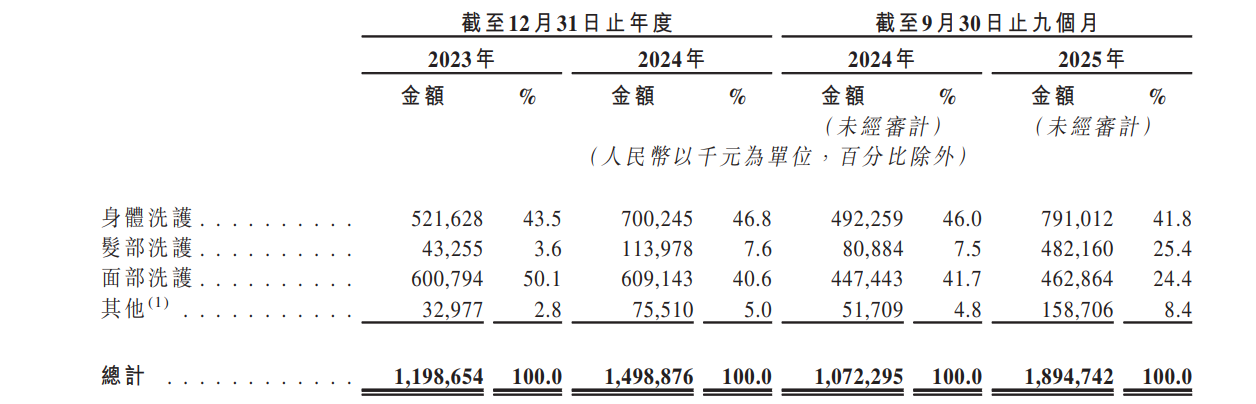
Core Viewpoint - The competition in the skin and personal care market has entered a new phase, with Huawutang's IPO application marking a significant step towards becoming the first domestic personal care stock in Hong Kong [1]. Group 1: Company Overview - Huawutang, formerly known as Shandong Huawutang Biotechnology Co., Ltd., completed its restructuring in December 2025 and has made significant management changes [1]. - The company reported a revenue of 1.895 billion RMB for the first nine months of 2025, representing a year-on-year growth of approximately 76.7% [1][3]. - The profit and total comprehensive income increased from 22.129 million RMB in the previous year to 125 million RMB [1]. Group 2: Product Performance - The body care category is the cornerstone of Huawutang's business, with revenues of 522 million RMB and 700 million RMB for 2023 and 2024, respectively [5]. - For the first three quarters of 2025, body care products generated approximately 791 million RMB, accounting for 41.8% of total revenue [5]. - The company has established a strong brand identity through the integration of floral ingredients and Eastern aesthetics, leading to significant sales of its body scrub products [2]. Group 3: Sales and Marketing Strategy - Online channels remain the primary revenue source for Huawutang, with online sales accounting for 76.3% of total revenue in the first three quarters of 2025 [6]. - The company has invested heavily in sales and marketing, with expenses rising from 500 million RMB to 896 million RMB, a 79.3% increase [7][10]. - Marketing and promotional expenses reached 833 million RMB, representing about 93% of total sales and marketing expenditures [10]. Group 4: Research and Development - Despite the growth in sales and marketing, Huawutang's R&D expenditure has decreased, with a rate of only 1.5% in the first three quarters of 2025 [11]. - The company has established three R&D centers but faces challenges in balancing marketing and R&D investments [11]. Group 5: Quality Concerns - Huawutang has faced quality control issues in the past, notably with a product that failed safety standards due to the presence of a harmful preservative [12]. - The company acknowledges the need to demonstrate its capability in both marketing and R&D as it approaches its IPO [12].

化妆品板块1月22日跌0.44%,贝泰妮领跌,主力资金净流出5488.34万元
Zheng Xing Xing Ye Ri Bao· 2026-01-22 09:02
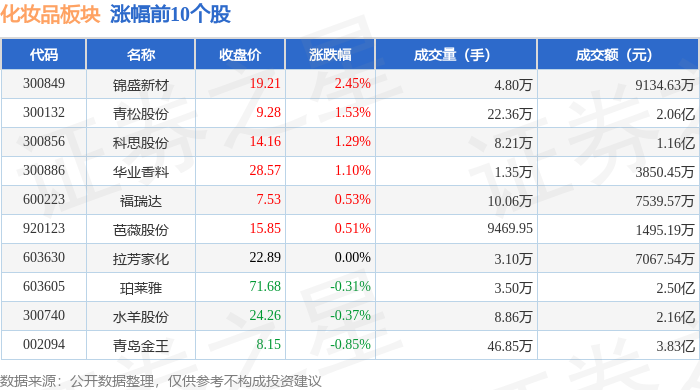
Market Overview - The cosmetics sector experienced a decline of 0.44% on January 22, with Betaini leading the drop [1] - The Shanghai Composite Index closed at 4122.58, up 0.14%, while the Shenzhen Component Index closed at 14327.05, up 0.5% [1] Individual Stock Performance - Notable gainers included: - Jingsheng New Materials (300849) with a closing price of 19.21, up 2.45% on a trading volume of 48,000 shares and a turnover of 91.35 million yuan [1] - Qingsong Co. (300132) closed at 9.28, up 1.53% with a trading volume of 223,600 shares and a turnover of 206 million yuan [1] - Kesheng Co. (300856) closed at 14.16, up 1.29% with a trading volume of 82,100 shares and a turnover of 116 million yuan [1] - Decliners included: - Betaini (300957) closed at 42.37, down 1.42% with a trading volume of 71,400 shares [2] - Jiahen Home (300955) closed at 37.20, down 1.30% with a trading volume of 19,000 shares and a turnover of 71.10 million yuan [2] - Shanghai Jahwa (600315) closed at 23.41, down 1.22% with a trading volume of 89,200 shares [2] Capital Flow Analysis - The cosmetics sector saw a net outflow of 54.88 million yuan from institutional investors, while retail investors experienced a net inflow of 82.39 million yuan [2] - Key stocks with significant capital flow include: - Kesheng Co. (300856) with a net inflow of 12.48 million yuan from institutional investors [3] - Qingsong Co. (300132) with a net inflow of 9.15 million yuan from institutional investors [3] - Shanghai Jahwa (600315) had a net inflow of 4.16 million yuan from institutional investors [3]
聚焦IPO进程:DR PLANT植物医生携生物多样性成果蓄势待发
Jiang Nan Shi Bao· 2026-01-22 08:47
Core Viewpoint - The company, Plant Doctor, emphasizes corporate social responsibility as a core strategy while pursuing its IPO, aligning with the vision of creating a sustainable value system rather than merely focusing on profits [1]. Group 1: Corporate Social Responsibility Initiatives - Plant Doctor has been actively involved in public welfare, launching the "Biodiversity - Alpine Plant Protection Action" in 2017 under the initiative of Professor Pei Shengji, the founder of Chinese Ethnobotany [2]. - The company became a pilot enterprise for the Global Environment Facility (GEF) and the Ministry of Ecology and Environment of China in 2018, and participated in the United Nations Biodiversity Conference (COP14) [2]. - As of now, Plant Doctor has restored 5,590 acres of alpine ecology in Yunnan and established the "Wu Zhengyi Botany Award," the first specialized award in botany globally [2]. Group 2: Engagement in Global Biodiversity Goals - The COP15 conference is crucial for setting new global biodiversity targets and planning protection pathways for the next decade, with Plant Doctor participating in discussions on biodiversity at the Ecological Civilization Forum [2]. - The company signed the "UNDP - Plant Doctor Biodiversity Protection and Sustainable Use Project" in October 2020, becoming the first cosmetics partner in biodiversity protection within the UN system [2]. Group 3: Future Outlook and Commitment - Plant Doctor aims to integrate scientific research and public welfare into its development strategy, reinforcing its commitment to sustainable practices during its IPO process [3]. - The company plans to continue collaborating with various stakeholders to promote harmony between humans and nature, ensuring stability in both capital markets and social responsibility [3].
减持潮下的“瘦身”自救 华熙生物何时能重拾荣光?
Xin Lang Cai Jing· 2026-01-22 08:34
Group 1 - The core issue facing Huaxi Biological is a dual challenge of capital and performance, with frequent shareholder sell-offs, declining performance, and significant market value reduction [1][6] - The second-largest shareholder, Guoshou Chengda, has reduced its stake from 7.15% to 4.01% since October 2024, cashing out approximately 769 million yuan through two large-scale sell-offs, signaling a strong capital exit and reflecting cautious sentiment from institutional investors [2][7][8] - The company's market value has shrunk to about 22.2 billion yuan, far from its peak of over 100 billion yuan, indicating a loss of market confidence [8] Group 2 - Huaxi Biological's revenue and net profit have entered a downward trend, with a reported revenue decline of 11.61% and a net profit drop of 70.59% in 2024, followed by an 18.36% revenue decline and a 30.29% net profit decrease in the first three quarters of 2025 [3][9] - The company has initiated a series of business contraction actions, including the closure of several sub-brands and focusing resources on core brands like "Runbaiyan" and "Kuaidi," which highlights the challenges faced in previous diversification efforts [3][9] - Despite some recovery in net profit in the second and third quarters of 2025 due to cost-cutting measures, the overall revenue scale continues to shrink, indicating ongoing struggles [3][9] Group 3 - The return of founder Zhao Yan has led to initial success in cost control, achieving a temporary halt in losses, but the company has yet to demonstrate sustainable revenue generation capabilities [4][10] - Huaxi Biological is advancing research projects in synthetic biology, including injectable recombinant collagen and VAHA, which are in trial production stages, potentially opening a new growth avenue if these products can achieve market competitiveness [4][10] - The transition from research and development to market success involves overcoming multiple technical, market, and cost barriers, which remains a significant challenge for the company [4][10] Conclusion - The difficulties faced by Huaxi Biological reflect typical challenges for high-growth companies entering an adjustment phase, including a retreat of capital enthusiasm, a shift in growth models, and a gap between old and new business lines [5][11] - While the company has taken critical steps towards focusing its operations, moving from cost-cutting to revenue generation and achieving breakthroughs in core brand competitiveness and commercialization of R&D results remains essential for future recovery [5][11]

DR PLANT植物医生IPO进度更新,蓄力冲刺A股上市
Jin Tou Wang· 2026-01-22 08:30
Core Viewpoint - The company, Plant Doctor, has officially initiated its IPO process for listing on the A-share main board, focusing on high-altitude plant skincare products and emphasizing its brand strategy of "high-altitude plants, pure beauty" [1] Group 1: R&D and Product Development - Plant Doctor has established a deep collaboration with the Kunming Institute of Botany, forming the "Plant Doctor R&D Center," which includes a unique research structure of "one center and five bases" [3] - The R&D framework covers raw material research, formula development, production processes, and quality assurance, with significant breakthroughs in the field of Dendrobium orchid active ingredients [3] - The company has developed a product matrix that includes various series such as "Dendrobium Orchid Firming and Smoothing" and "Snow Lotus Soothing Care," covering multiple product categories [5] Group 2: Business Model and Market Position - Plant Doctor employs an online and offline strategy, with over 4,200 offline chain stores by June 2025, providing unique product experiences and emotional value to consumers [7] - According to a report by the China Fragrance and Cosmetic Industry Association, Plant Doctor ranks first among single-brand cosmetic stores in China based on projected retail sales for 2024 [7] Group 3: International Expansion and Recognition - The company has made substantial progress in its international strategy, with store networks covering multiple countries, including Thailand, where it opened a flagship store in November 2025 [7] - Plant Doctor has been recognized as a "global leading single-brand skincare specialty store" by Euromonitor International for three consecutive years, reflecting its strong market position [9] Group 4: Brand Philosophy and Future Outlook - The brand philosophy is rooted in traditional Chinese culture, integrating the wisdom of Naxi herbal medicine with modern biotechnology, aiming to provide consumers with a pure skincare experience from high-altitude plants [9] - With the advancement of its IPO process, Plant Doctor is expected to leverage capital market resources to strengthen its leading position in high-altitude plant skincare and accelerate its international expansion [9]

存储NAND紧俏,卫浴大牌Toto大涨!
Hua Er Jie Jian Wen· 2026-01-22 06:23
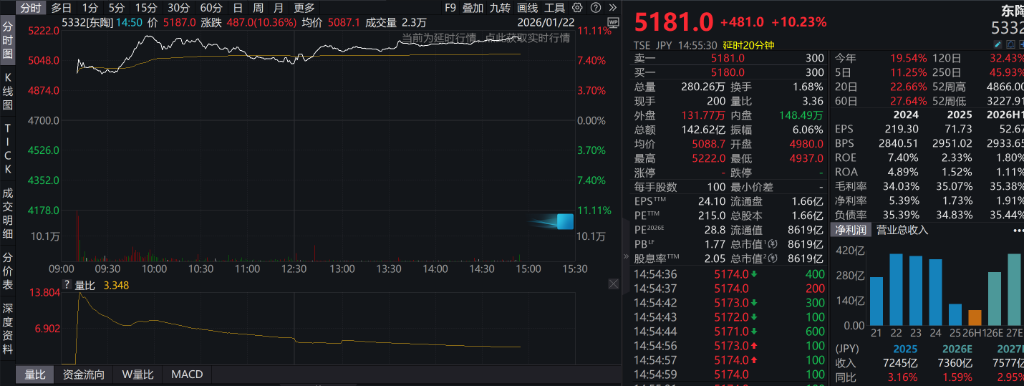
Core Insights - The AI boom is reshaping global supply chains, benefiting companies like Toto, known for its bathroom fixtures, due to its semiconductor materials business [1] - Goldman Sachs upgraded Toto's rating, citing increased demand for its electrostatic chucks used in NAND storage chip manufacturing as AI infrastructure expands [1][2] - Toto's stock surged by 11%, marking its largest increase since February 2021, reflecting the significant impact of AI data center expansion on upstream supply chains [1] Company Overview - Toto has been a key player in the semiconductor and display supply chains for decades, with new business areas accounting for 42% of its total revenue for the fiscal year ending March 2025 [2] - The electrostatic chuck, produced by Toto since 1988, is crucial for fixing silicon wafers during chip manufacturing, helping to control temperature and prevent contamination [2] Market Dynamics - Major tech companies like Meta Platforms and Amazon are investing billions in AI service data centers, leading to a widespread shortage of semiconductor products [3] - This surge in demand has prompted global storage chip manufacturers, including SK Hynix, Samsung, and Kioxia, to expand production, directly increasing demand for products from upstream suppliers like Toto [3] Industry Trends - Toto is not the only Japanese consumer goods giant benefiting from the chip boom; companies like Ajinomoto and Kao have also established semiconductor-related businesses [4] - The rise in Toto's stock coincided with a broader rebound in AI-related stocks, indicating investor interest in undervalued assets that can benefit from the global competition in computing power [4]
拓展离岸贸易新场景,农行上海市分行精准赋能企业“出海”
Zhong Guo Jin Rong Xin Xi Wang· 2026-01-22 03:53
Group 1 - The core viewpoint of the articles highlights the challenges and solutions faced by Shanghai Xafei Cosmetics Co., Ltd. as it shifts its production to Southeast Asia while ensuring the safety of its cross-border supply and capital chains [1][2] - Shanghai Xafei Cosmetics Co., Ltd. has been in operation since 1985, primarily engaged in the wholesale and sales of chemical products, with a market presence in the US, Europe, East Asia, and Southeast Asia [1] - The company is transitioning its production to Southeast Asia to optimize its industrial chain layout, which has led to a need for financial services that can ensure capital safety and align with its new business model [1] Group 2 - Agricultural Bank of China Shanghai Branch has established a "Service Trade Innovation Business Base" in the Lingang New Area in 2023, and a "Cross-Border Offshore Business Center" in September 2025 to explore advanced financial services and institutional innovations [2] - The bank focuses on institutional openness and aims to convert policy opportunities into practical development, particularly in promoting cross-border offshore business in the Lingang New Area [2] - The bank has successfully implemented the first digital RMB cross-border settlement business under capital items in Shanghai and participated in various pilot projects related to offshore trade and financial services [2]

2025年杭州经济成绩单“出炉”
Mei Ri Shang Bao· 2026-01-21 22:31
Economic Overview - In 2025, Hangzhou's GDP reached 23,011 billion yuan, growing by 5.2% year-on-year, surpassing the national average by 0.2% [1] Agriculture - The total output value of agriculture, forestry, animal husbandry, and fishery in Hangzhou was 569 billion yuan, with growth rates of 3.8% for planting, 5.3% for forestry, 0.2% for animal husbandry, and 4.2% for fishery [2] - Major agricultural products included a total grain output of 599,000 tons (up 3.9%), vegetable output of 3,860,000 tons (up 3.6%), and fruit output of 900,000 tons (up 3.9%) [2] Industrial Growth - The added value of industrial enterprises above designated size was 4,624 billion yuan, with significant growth in the computer, communication, and other electronic equipment manufacturing (up 13.4%) and automotive manufacturing (up 36.7%) [3] - New quality productivity showed remarkable results, with high-tech industries, strategic emerging industries, and high-end equipment manufacturing growing by 7.5%, 10.0%, and 9.5% respectively [3] - Production of new energy vehicles, industrial robots, and 3D printing equipment saw explosive growth rates of 383.0%, 38.6%, and 15.1% respectively [3] Service Sector - The added value of the service industry was 16,997 billion yuan, with the profit-making service sector growing by 7.0% and financial services by 6.4% [4] - From January to November, the revenue of the service industry above designated size reached 21,168 billion yuan, growing by 8.1%, with the information transmission, software, and IT services sector growing by 13.4% [4] Consumer Market - The total retail sales of consumer goods in Hangzhou reached 9,499 billion yuan, indicating a stable and upgrading consumption pattern [5] - The "8+4" economic policy led to significant growth in retail sales of household appliances (up 42.8%) and communication equipment (up 31.4%) [5] - Upgrading consumption demands were strong, with sports and entertainment goods growing by 45.3% and cosmetics by 12.3% [5] Foreign Trade - The total import and export value was 9,072 billion yuan, with exports at 6,469 billion yuan and imports at 2,603 billion yuan [6] - The export of electromechanical products reached 3,107 billion yuan (up 10.9%), and high-tech products reached 1,001 billion yuan (up 9.9%) [6] - The private economy accounted for 77.0% of total exports, with exports to Belt and Road countries growing by 14.1% [6] Living Standards - The per capita disposable income of residents was 80,017 yuan, with balanced growth across four income sources [7] - Urban residents had a per capita disposable income of 86,640 yuan (up 3.9%), while rural residents had 53,565 yuan (up 5.4%), narrowing the income gap to 1.62 [7] Price Stability - In 2025, the consumer price index remained stable compared to the previous year, with six categories of goods experiencing price increases and two categories seeing declines [8] - Hangzhou aims to achieve a GDP of 30 trillion yuan and a per capita GDP of over 30,000 USD by 2030, focusing on policy coordination and market demand stimulation [8]
化妆品交易额破1.1万亿元,线上销量占比接近2/3
Sou Hu Cai Jing· 2026-01-21 19:18
Core Insights - The Chinese cosmetics industry is projected to reach a total transaction value of 1.104245 trillion yuan by 2025, marking a year-on-year growth of 2.83%, and maintaining its position as the world's largest cosmetics consumer market [1][6]. Market Overview - The market is undergoing a significant transformation, with resources concentrating on leading brands and technology-driven companies, while weaker brands are being eliminated [3][9]. - The market share of domestic brands has increased for four consecutive years, reaching 57.37% by 2025, indicating a shift towards a "domestic brand-led" market [3][6]. Brand Dynamics - The number of brands with sales exceeding 100 million yuan is expected to rise from 746 in 2023 to 839 in 2025, reflecting an improvement in brand quality [6]. - The top 1000 online brands are increasingly dominated by domestic brands, which are now competing effectively against traditional powerhouses from France, the USA, Japan, and South Korea [3][6]. Market Structure Changes - The industry is experiencing a significant shakeout, with an estimated 27,000 brands expected to be eliminated by 2025, and only about 26% of lower-tier brands projected to achieve growth [9][12]. - The market is shifting from quantity-based competition to quality-based competition, focusing on brand value, technological innovation, and user experience [9][12]. Consumer Behavior - Consumer preferences are evolving towards high-cost performance products priced below 300 yuan and high-end products above 1000 yuan, while the mid-range market is being squeezed [13]. - The new consumer consensus emphasizes rational and refined purchasing decisions, focusing on ingredients, efficacy, cultural identity, and emotional value [13]. Regulatory Environment - New regulations are being introduced to create a fair competitive environment for both online and offline channels, with offline spaces being redefined as comprehensive areas for brand experience and social interaction [14]. - The regulatory framework is shifting from strict control to promoting development, with a focus on innovation incentives and reducing entry barriers for new products [14]. Technological Innovation - The integration of artificial intelligence is expected to reshape the industry significantly between 2026 and 2030, enhancing research and development, personalized content production, and supply chain efficiency [17]. - Companies are increasingly investing in R&D, with the average R&D expense ratio rising from 2.36% to 3.24% over five years, highlighting a trend towards innovation-driven growth [14][17]. Future Outlook - The industry aims to transition from being a "cosmetics manufacturing power" to a "cosmetics strong power," focusing on intelligent, green, and integrated development [16][18]. - The market is expected to expand towards the "silver economy" and international markets, with domestic brands enhancing their global presence [16][15].
欧舒丹探索最早今年在美IPO的可能性
Ge Long Hui A P P· 2026-01-21 15:36
Core Viewpoint - L'Occitane is exploring the possibility of an initial public offering (IPO) in the United States as early as this year, following its privatization by billionaire owner Reinold Geiger in 2024 [1] Group 1 - L'Occitane has engaged JPMorgan and Morgan Stanley to handle the potential listing [1] - Discussions regarding the IPO are ongoing, and specific details, including the timing of the listing, may change [1]