渔业

Search documents
韩俊发表署名文章
财联社· 2025-12-10 01:14
Core Viewpoint - The article emphasizes the importance of enhancing agricultural comprehensive production capacity and quality efficiency as a strategic task for building a strong agricultural nation, aligning with the spirit of the 20th Central Committee of the Communist Party of China [5][6][7]. Group 1: Enhancing Agricultural Production Capacity and Quality Efficiency - The "14th Five-Year Plan" period has seen significant achievements in agricultural modernization, with grain production capacity reaching 1.4 trillion jin in 2024 and per capita grain availability at 500 kg [6]. - Agricultural development quality has improved, with over 100 million acres of high-standard farmland built and a crop variety coverage rate exceeding 96% [6]. - The income growth of farmers has consistently outpaced GDP and urban residents' income growth, with the urban-rural income ratio narrowing to 2.34:1 [6]. Group 2: Key Measures for Improvement - Strengthening the supply guarantee for important agricultural products is crucial, with a focus on ensuring grain self-sufficiency and enhancing production capacity through various initiatives [10]. - A diversified food supply system is to be established, integrating agriculture, forestry, animal husbandry, and fishery to meet diverse consumer needs [11]. - Protecting and improving arable land quality is essential, with strict enforcement of land protection policies and initiatives to enhance soil quality and ecological conditions [12]. Group 3: Technological and Quality Enhancements - Advancing agricultural technology and equipment is fundamental, with a focus on innovation and collaboration among research institutions and enterprises to boost agricultural productivity [13]. - The quality and efficiency of agricultural development will be enhanced through the establishment of modern agricultural industrial systems and the promotion of green and high-quality agricultural products [14][15]. Group 4: Support and Policy Framework - The article outlines the need for a multi-faceted investment structure in agriculture, emphasizing fiscal support, financial incentives, and social participation [16]. - Comprehensive rural reforms are necessary to stabilize land contracts and support the development of modern agricultural operations while ensuring smallholder integration [17].


提升农业综合生产能力和质量效益(学习贯彻党的二十届四中全会精神)
Ren Min Ri Bao· 2025-12-09 22:32
Core Viewpoint - The construction of a strong agricultural nation is a strategic deployment by the central government, focusing on enhancing agricultural production capacity and quality efficiency as a long-term historical task [1] Group 1: Achievements and Current Status - During the 14th Five-Year Plan period, significant achievements in agricultural modernization were made, with grain production capacity reaching 1.4 trillion jin in 2024 and per capita grain availability at 500 kg [2] - The quality of agricultural development has improved, with over 1 billion mu of high-standard farmland built and a crop variety coverage rate exceeding 96% [2] - Farmers' income has grown faster than GDP and urban residents' income, with the urban-rural income ratio narrowing to 2.34:1 [2] Group 2: Challenges and Needs - Despite progress, challenges remain due to limited per capita resources, historical debts, and low production efficiency, necessitating efforts to strengthen weak areas and accelerate high-quality agricultural development [2][3] - The need to ensure food security is critical, especially as demand for food and important agricultural products continues to grow [3] Group 3: Key Measures for Improvement - The 15th Five-Year Plan emphasizes enhancing agricultural production capacity and quality efficiency, focusing on a comprehensive approach that includes production, ecology, and income growth [4] - Key tasks include ensuring food supply security, optimizing the structure of important agricultural products, and enhancing agricultural disaster prevention and mitigation capabilities [5][6] Group 4: Diversified Food Supply System - A multi-faceted food supply system is to be developed, integrating agriculture, forestry, animal husbandry, and fishery to meet diverse consumer needs [7] - Modern facility agriculture will be promoted, including the use of greenhouses and vertical farming [7] Group 5: Land Protection and Quality Enhancement - Strict land protection measures will be implemented to ensure the quantity, quality, and ecological health of farmland [8] - High-standard farmland construction will be prioritized, with a focus on improving soil quality and productivity [8] Group 6: Technological Support - Advancements in agricultural technology are essential for improving production capacity and quality efficiency, with a focus on innovation and collaboration among various research entities [9] - The development of smart agriculture and the integration of technology in farming practices will be emphasized [9] Group 7: Quality and Efficiency in Agricultural Development - The establishment of a modern agricultural industry system will be pursued, focusing on quality improvement, green development, and brand building [10] - Efforts will be made to enhance the value of agricultural ecological products and promote the integration of agriculture with other industries [11] Group 8: Support and Policy Framework - A comprehensive policy framework will be established to ensure food security and agricultural development, including financial support and rural reform [12][13] - The focus will be on stabilizing land contracts and promoting efficient agricultural operations while supporting small farmers [13]
“粤海粮仓”名不虚传
Shen Zhen Shang Bao· 2025-12-09 17:27
Group 1 - Guangdong is a leading province in marine seed production and innovation, with a projected marine fish seed output of 6.796 billion tails in 2024, accounting for approximately half of the national total [1] - The province has developed into a national center for marine aquaculture variety innovation, achieving breakthroughs in artificial breeding technologies for several species, including the yellow croaker and the red grouper [1] - Guangdong has implemented an open and shared "racehorse system" for scientific research, collaborating with 63 research teams from institutions like Sun Yat-sen University and China Ocean University on 41 suitable species [1] Group 2 - Guangdong has introduced a new development model for marine industrial parks, promoting comprehensive assessments for marine use in aquaculture projects, eliminating the need for individual marine use assessments for modern marine ranching projects [2] - Currently, 10 coastal cities in Guangdong have organized the construction of 34 marine industrial parks, covering a total marine area of 15,500 hectares [2]
广东晒“十四五”成绩单:“蓝色粮仓”多项指标领跑全国
Nan Fang Du Shi Bao· 2025-12-09 14:48
Core Insights - Guangdong is recognized as a major marine province with a coastline of 4,084.5 kilometers, leading the nation in various fishery metrics and aiming to develop a "blue granary" and a "new maritime Guangdong" [1] Innovation and Industry Scale - Guangdong's fishery industry has achieved significant milestones, with total aquatic product output, fishery output value, aquaculture output, and marine fish farming output ranking first in the country [2] - Marine aquaculture production reached 3.7683 million tons, marking a 13.76% increase from the end of the 13th Five-Year Plan; fishery output value was 209.781 billion yuan, up 30.4%; and per capita net income for fishing households was 27,381.84 yuan, an increase of 22.38% [2] - Guangdong is a leading province in marine seed production, with 6.796 billion marine fish fry produced in 2024, accounting for about half of the national total [2] Equipment and Deep-Sea Development - The construction of marine ranches in Guangdong is transitioning from nearshore to deep-sea environments, necessitating advanced marine equipment for high-quality economic development [4] - Guangdong has 41 large-scale shipbuilding and supporting industrial enterprises, with an industrial output value of 58.7 billion yuan expected in 2024 [4] - Deep-sea intelligent equipment platforms have been tested under extreme weather conditions, demonstrating reliability and safety [5] Development and Ecological Protection - Zhanjiang's fishery economy has shown strong growth, with a total fishery output of 1.31 million tons and an output value of 29.4 billion yuan in 2024, reflecting a 30% increase from the end of the 13th Five-Year Plan [6] - Zhanjiang has developed a sustainable path balancing development and ecological protection, implementing multi-level ecological aquaculture and optimizing farming spaces [7] - Strict enforcement of regulations has been established to support ecological aquaculture, with over 14,000 law enforcement personnel deployed and nearly 900 illegal fishing cases addressed [7]
毛里塔尼亚2025年前三季度渔业出口额达9.08亿美元
Shang Wu Bu Wang Zhan· 2025-12-09 12:00
2025年12月8日,毛里塔尼亚《消息报》报道,毛里塔尼亚渔业、海事与港口基础设施部长布瑟夫发布 声明,2025年1月至9月,毛渔业总捕捞量达75.4万吨,陆地卸货量42万吨,渔业出口额达9.08亿美元, 较去年同期的8.15亿美元实现稳步增长,累计提供超6.7万个直接就业机会及数万个间接就业机会。 布瑟夫表示,近年该部推行广泛改革,通过修订协议、完善管理计划、加强海上监管及购置科研与监视 船,海洋资源可持续性得到保障;通过增购卡车、在内陆建存储中心,提升了国家鱼类分销公司的服务 能力;近海渔业与水产养殖领域也有新进展,包括新建养殖场、激活内陆中心及启动卸货点改进研究; 海洋与港口基础设施建设成绩斐然,努瓦迪布港码头修复、塔尼特港现代化改造等工程的前期研究已完 成,即将动工;努瓦迪布港现代化改造、鱼市改造、努瓦迪布海岸警卫队码头等项目顺利完工;通过制 定新工资协议、规范海事劳动条件、启动社会团结基金和发布透明度报告等举措,显著改善行业治理。 此外,该部将为海岸警卫队招募工程师和士兵,并为毛海洋与渔业研究所建造总部等。 布瑟夫强调,未来将加强海上监控、完善船队法律框架、提升卫生检验检疫,并推进努瓦克肖特与努瓦 ...
天马科技:拟使用不超过2.00亿自有资金委托理财
2 1 Shi Ji Jing Ji Bao Dao· 2025-12-09 09:58
南财智讯12月9日电,天马科技公告,天马科技股票代码603668,公司及子公司拟使用不超过2.00亿元 的闲置自有资金进行委托理财,投资于金融机构发行的安全性高、流动性好、风险可控的理财产品。该 事项已经公司第五届董事会第十四次会议审议通过,无需提交股东会审议,授权管理层在额度和期限内 办理相关事宜。 ...

全产业链破千亿,生态产业双丰收!“十四五”期间湛江海洋渔业成效斐然
Nan Fang Nong Cun Bao· 2025-12-09 09:33
Core Insights - The article highlights the significant achievements of Zhanjiang's modern marine fishery during the 14th Five-Year Plan period, showcasing a robust growth in the fishery economy and the establishment of a comprehensive marine industry chain exceeding 100 billion yuan [9][11]. Group 1: Economic Performance - Zhanjiang's fishery economy has shown a strong development momentum, with a growth of 8.3% compared to the end of the 13th Five-Year Plan [9]. - By 2024, the total fishery output in Zhanjiang is expected to reach 1.31 million tons, with a fishery output value of 29.4 billion yuan, marking a 30% increase from the end of the 13th Five-Year Plan [10]. Group 2: Modernization and Innovation - The city has made significant strides in modern marine ranch construction, focusing on four key areas: seed industry innovation, aquaculture expansion, equipment upgrading, and industrial clustering [12][13]. - Zhanjiang has achieved breakthroughs in local artificial breeding technologies for various fish species and has successfully developed nine nationally approved new varieties, accounting for 50% of the province's total [14][15]. Group 3: Infrastructure and Technology - The establishment of four major marine ranch clusters and over 3,500 large-scale breeding platforms has positioned Zhanjiang as a leader in deep-sea aquaculture in the province [18]. - The city has developed intelligent equipment for aquaculture, including unmanned feeding boats and automatic feeders, and has set up a big data center for fisheries management [20][22]. Group 4: Industry Aggregation - Zhanjiang has successfully attracted several key provincial leading enterprises, resulting in a collaborative development model of "state-owned enterprises + private enterprises" [25]. - The city now hosts over 14,000 aquaculture enterprises and more than 200 processing companies, contributing to an annual output value of over 100 billion yuan and creating employment for over one million people [26][27]. Group 5: Sustainable Development and Ecological Protection - Zhanjiang has implemented various measures to balance marine farming and ecological protection, establishing a sustainable development path that includes ecological farming and systematic restoration [35][36]. - The city has completed the restoration of 41 kilometers of coastline and has successfully constructed ecological marine ranches, enhancing the stability and productivity of marine ecosystems [44][48].

一艘深远海养殖船的“深蓝逐梦”
Qi Lu Wan Bao· 2025-12-09 09:23
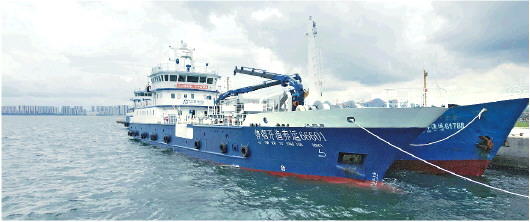
Core Insights - The article highlights the launch of "Jinghai No. 1," China's first live fish farming and transportation vessel, which significantly enhances the efficiency and survival rate of fish transport [1][3][4] - Yantai is transforming its marine economy through advanced deep-sea aquaculture, particularly focusing on salmon farming, which has previously relied on imports [6][10] Group 1: Vessel and Technology - "Jinghai No. 1" is 62 meters long, 10.5 meters wide, and can transport 60 tons of live fish with nearly 100% survival rate, operating with only 8 crew members [1][4] - The vessel features advanced technology for fish handling, including remote control for loading and unloading, and environmental monitoring systems for water quality and temperature [3][4] - The introduction of this vessel addresses the challenges of traditional fish transport, ensuring freshness and reducing labor costs by five times compared to conventional methods [4][5] Group 2: Aquaculture Development - Yantai has established itself as the largest deep-sea salmon farming base in China, with a focus on both Atlantic salmon and rainbow trout, the latter being more cost-effective and less reliant on imports [6][9] - The region's natural conditions, such as high water quality and stable temperatures, are ideal for fish farming, contributing to the superior quality of the fish produced [9][10] - The company aims to produce 1,500 tons of sea-raised rainbow trout in 2024, with plans to expand production to 2,000 tons by 2025 [9][10] Group 3: Economic Goals and Future Plans - Yantai's "Ten Thousand Tons Plan" aims to achieve over 10,000 tons of salmon production within three years, enhancing its competitive edge in the aquaculture market [10][11] - The city is focused on building a modern marine industry system, targeting a marine production value exceeding 300 billion yuan by 2025 [11]
渔业板块12月9日涨0.09%,中水渔业领涨,主力资金净流入2567.54万元
Zheng Xing Xing Ye Ri Bao· 2025-12-09 09:05
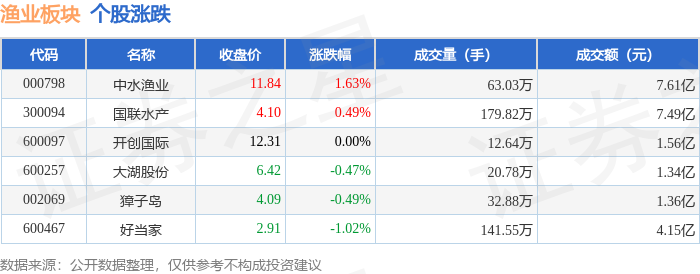
证券之星消息,12月9日渔业板块较上一交易日上涨0.09%,中水渔业领涨。当日上证指数报收于 3909.52,下跌0.37%。深证成指报收于13277.36,下跌0.39%。渔业板块个股涨跌见下表: | 代码 | 名称 | 主力净流入 (元) | 主力净占比 游资净流入 (元) | | 游资净占比 散户净流入 (元) | | 散户净占比 | | --- | --- | --- | --- | --- | --- | --- | --- | | 300094 | 国联水产 | 2330.85万 | 3.11% | 3284.18万 | 4.39% | -5615.03万 | -7.50% | | 600467 | 好当家 | 865.12万 | 2.08% | -1593.08万 | -3.84% | 727.96万 | 1.75% | | 002069 | 獐子岛 | 278.16万 | 2.05% | 210.74万 | 1.55% | - -488.90万 | -3.60% | | 600257 | 大湖股份 | -216.73万 | -1.62% | -247.00万 | -1.84% | 463.73 ...

武汉智慧农业激发“绿色动能”
Xin Hua Wang· 2025-12-09 08:37
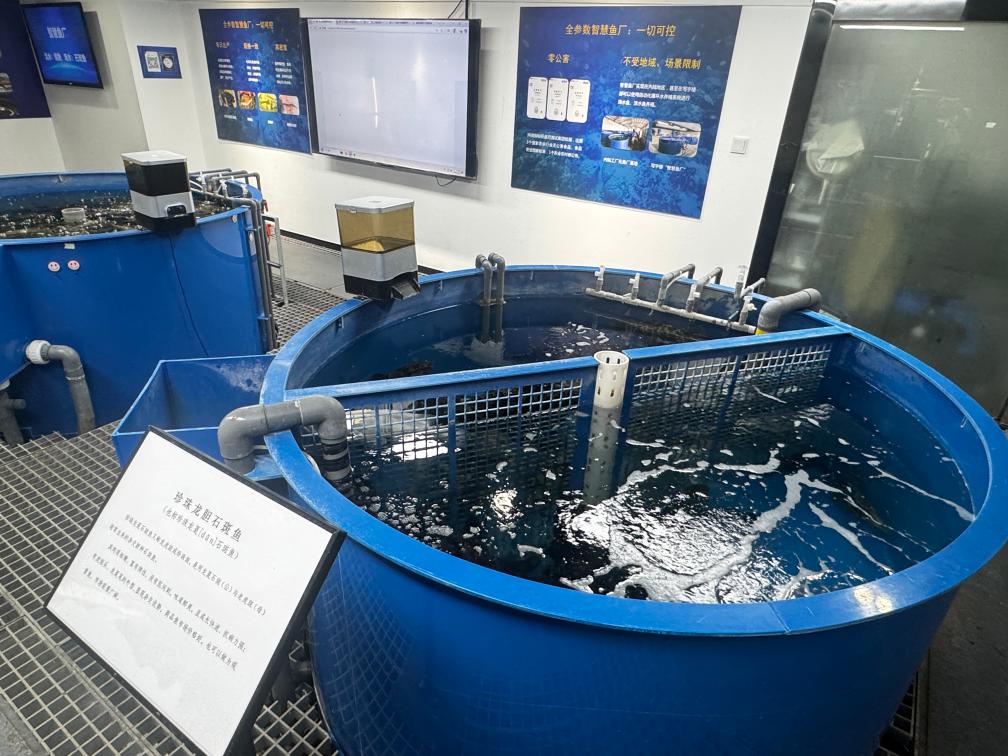
Group 1 - The article highlights the innovative "smart fish farm" concept in Wuhan, which allows for the cultivation of seafood like grouper in urban settings, significantly reducing transportation time and enhancing freshness [1] - The "seafood land farming" system utilizes a green aquaculture cycle, achieving standardized breeding and real-time monitoring of water quality and fish health, with a production capacity that exceeds traditional methods by over 20 times [1] - The market price for grouper is approximately 45 yuan per kilogram, and the fish can be harvested after 8 to 9 months of cultivation [1] Group 2 - The company behind the smart fish farm, Wuhan United Intelligent Fishery Equipment Co., is expanding its factory farming model to inland cities, providing a full-service chain including fry, equipment, and operational support [2] - The company is also developing simpler and more compact equipment to lower operational barriers and costs for small farmers and aquaculture operators [2] - In addition to aquaculture, technology is being applied in poultry farming, where chicken manure is repurposed to feed black soldier flies, creating a sustainable protein source for aquaculture and pet food [2] Group 3 - The article discusses the economic benefits of technological advancements in agriculture, with smart greenhouses in Wuhan achieving an average output value of over 20,000 yuan per acre, tripling production compared to traditional methods [3] - The integration of technology in agriculture is seen as a way to modernize the industry, with a focus on sustainable practices and resource recycling [3] - The Wuhan Agricultural and Rural Bureau emphasizes the importance of technology as a driving force for exploring new models of smart agriculture, aiming to benefit a broader population [3]