无人机

Search documents
无人机产业洞察:在战略机遇与供应链风险中重塑全球竞争力
Da Gong Guo Ji· 2025-12-30 12:45
Investment Rating - The report does not explicitly provide an investment rating for the drone industry Core Insights - The Chinese drone industry has become a strategic emerging industry driven by national strategy, with a leading global market size and a complete industrial chain, transitioning from "manufacturing-led" to "technology-driven and ecosystem construction" [1] - The industry faces multiple challenges, including reliance on imported core technologies, long commercial return cycles, and international compliance and geopolitical risks, with future development focusing on intelligence, greening, airspace digitization, and market diversification [1] Strategic Positioning and Policy Support - The drone industry has rapidly developed under coordinated policy design, airspace management reform, and infrastructure construction, establishing a solid foundation for the large-scale application of the low-altitude economy [2] - The industry is defined as unmanned aerial vehicles operating in low-altitude airspace, which is recognized as a core carrier of the low-altitude economy [2] - A comprehensive policy framework has been established, including mandatory national standards and regulations to support the industry's standardized development [3][4] Market Size and Import-Export Patterns - The global drone market is projected to grow from USD 35.28 billion in 2024 to USD 67.64 billion by 2029, with a compound annual growth rate (CAGR) of 13.90% [5] - The Chinese civil drone market is expected to reach approximately CNY 146.8 billion in 2024, with a forecasted market size exceeding CNY 400 billion by 2030, reflecting a CAGR of 18.3% from 2024 to 2030 [5] - China remains the world's largest drone manufacturer and exporter, with significant growth in both export volume and value [6][7] Industry Chain Structure and Layout - The Chinese drone industry has established a complete industrial chain from upstream core components to midstream manufacturing and downstream application services, showcasing global competitiveness [11] - The upstream sector includes critical components such as flight control systems and sensors, with a high reliance on imports for advanced technologies [13] - The midstream focuses on the research and production of consumer, industrial, and military drones, with leading companies dominating various segments [14] - The downstream application services cover logistics, agriculture, power inspection, and emergency rescue, with significant market shares held by key players [14] Core Challenges and Future Development Trends - The industry faces challenges such as reliance on imported high-end components, high commercialization costs in industrial applications, and complex certification processes [16] - Future trends indicate a shift towards intelligent, autonomous, and green technologies, with eVTOLs emerging as a new avenue for urban air mobility [17][18] - The integration of low-altitude economy and digital infrastructure is expected to enhance operational efficiency and regulatory compliance [18]


大疆新品视频播放失误?罗永浩现场喊话工作人员:这是替你们下台阶
Xin Lang Cai Jing· 2025-12-30 12:44
专题:"罗永浩的十字路口"之年度科技创新分享大会 新浪科技讯 12月30日晚间消息,"罗永浩的十字路口"之年度科技创新分享大会举行,罗永浩发表演 讲。 罗永浩在会上介绍大疆新品NEO 2无人机,不过在播放产品视频的时候,罗永浩在台上喊话工作人 员,"视频没错吗?还是多个选择中的一个?这是替你们下台阶,我一张老脸已经这样了。" 专题:"罗永浩的十字路口"之年度科技创新分享大会 新浪科技讯 12月30日晚间消息,"罗永浩的十字路口"之年度科技创新分享大会举行,罗永浩发表演 讲。 罗永浩在会上介绍大疆新品NEO 2无人机,不过在播放产品视频的时候,罗永浩在台上喊话工作人 员,"视频没错吗?还是多个选择中的一个?这是替你们下台阶,我一张老脸已经这样了。" 新浪声明:所有会议实录均为现场速记整理,未经演讲者审阅,新浪网登载此文出于传递更多信息之目 的,并不意味着赞同其观点或证实其描述。 责任编辑:李昂 新浪声明:所有会议实录均为现场速记整理,未经演讲者审阅,新浪网登载此文出于传递更多信息之目 的,并不意味着赞同其观点或证实其描述。 责任编辑:李昂 ...
纵横股份拟定增募资不超5.48亿元以提升无人机量产能力及AI技术
Zheng Quan Shi Bao Wang· 2025-12-30 12:39
Core Viewpoint - The company plans to raise up to 548 million yuan through a private placement of shares to enhance its capabilities in drone AI technology and other projects, while maintaining its control structure [1][2]. Group 1: Fundraising and Projects - The company intends to issue up to 26.474 million shares to no more than 35 specific investors, raising a maximum of 548 million yuan [1]. - The funds will be allocated to three main projects, including a drone system project with a total investment of 422 million yuan, of which 312 million yuan will come from the raised funds [1][2]. - The drone system project aims to expand the production capacity of the company's unmanned systems and large fixed-wing drones, while establishing a spatiotemporal big data center [1]. Group 2: Economic Benefits and Financial Structure - The drone system project is expected to achieve a post-tax internal rate of return of 17.26% and a static investment payback period of 6.13 years [2]. - An additional 100 million yuan will be used to supplement working capital and repay loans, optimizing the company's financial structure and reducing financial risks [3]. - The company emphasizes that the fundraising will be directed towards its main business, aligning with national strategies for low-altitude economy and innovation-driven development [3].
纵横股份:拟向特定对象增发募资不超过人民币5.48亿元
Mei Ri Jing Ji Xin Wen· 2025-12-30 11:53
每经AI快讯,纵横股份12月30日晚间发布公告称,本次向特定对象发行股票方案已经公司第三届董事 会第十二次会议和第三届董事会审计委员会2025年第五次会议审议通过,本次向特定对象发行的发行对 象为不超过35名(含35名)符合中国证监会规定条件的特定对象,本次向特定对象发行股票的发行价格 为不低于定价基准日前二十个交易日公司股票交易均价的80%。本次发行拟募集不超过人民币5.48亿 元,募集资金用于以下用途:无人值守与大型无人机系统产业化基地项目,总投资约4.22亿元,拟投入 募集资金3.12亿元;无人机系统研制与AI技术能力提升项目,总投资约1.44亿元,拟投入募集资金1.36 亿元;补充流动资金与偿还借款项目,总投资1亿元,拟投入募集资金1亿元。 (记者 曾健辉) 每经头条(nbdtoutiao)——2025十大财经新闻出炉!护航、酣战、变局、狂飙分别指向哪些大事件? ...
美国霸权围堵升级?中方亮出王牌,新《对外贸易法》划出红线!
Sou Hu Cai Jing· 2025-12-30 11:49
Core Viewpoint - The newly revised Foreign Trade Law of the People's Republic of China has been officially passed, representing a strategic tool for China in future economic and trade negotiations, moving from a passive to an active stance in international trade disputes [1][4]. Group 1: Key Changes in the Law - The law explicitly includes the maintenance of national sovereignty, security, and development interests, enriching the legal toolkit for external struggles [4][6]. - There is a strengthened control over the export of strategic materials, allowing for legal measures against countries that impose sanctions while seeking to purchase critical resources [6][9]. Group 2: Implications for Market Participants - The law establishes clear rules for all market entities, prioritizing national interests over commercial interests, and mandates that enterprises must comply with state measures during retaliatory actions [9][10]. - The implementation of a negative list management system for cross-border service trade will allow for greater operational freedom in all areas not explicitly restricted [13]. Group 3: Strategic Timing and International Engagement - The law will take effect on March 1, 2026, providing a buffer period for domestic companies to adapt and for the international community to observe [15][16]. - The law aims to align with high-standard international trade regulations, such as the CPTPP, incorporating areas like digital trade and intellectual property protection into its framework [10][11]. Group 4: Broader Economic Context - The law signifies a shift in China's approach to trade, emphasizing the importance of having the ability to respond to unfair practices and asserting its position in the global trade order [18].


张家界推出全景无人机观光体验 科技赋能低空文旅新业态
Zhong Guo Xin Wen Wang· 2025-12-30 11:49
Core Viewpoint - Zhangjiajie has launched a panoramic drone sightseeing experience, integrating advanced technology into the cultural tourism sector, enhancing visitor experiences and promoting industry transformation [1][4]. Group 1: Experience and Technology - Tourists can control drones to experience a 360-degree view of Zhangjiajie's stunning landscapes, akin to flying in the movie "Avatar" [1]. - Participants wear VR glasses to receive real-time 8K panoramic images transmitted by the drones, allowing them to switch perspectives effortlessly [3]. - The "Yingling Antigravity" drone, the first of its kind to support 8K real-time panoramic transmission, ensures safe and stable flights in Zhangjiajie's complex terrain [3]. Group 2: Industry Impact - The introduction of the panoramic drone project represents a significant innovation in the cultural tourism experience, breaking traditional viewing limitations and enhancing the integration of technology in the tourism industry [4]. - The ongoing reforms in China's low-altitude airspace management and the emergence of new technologies are fostering a closer integration of low-altitude economy and cultural tourism, creating new consumption scenarios [3]. - The project is seen as a forward-looking practice that injects strong technological momentum into the high-quality development of the industry [4].

纵横股份(688070.SH):拟定增募资不超5.48亿元
Ge Long Hui A P P· 2025-12-30 11:44
Core Viewpoint - Zongheng Co., Ltd. (688070.SH) announced a plan to issue A-shares to specific investors in 2025, aiming to raise a total of up to RMB 548 million, which will be used for various projects and working capital [1] Group 1 - The total amount to be raised from the issuance of shares is capped at RMB 548 million, including the principal amount [1] - The net proceeds after deducting issuance costs are intended for investment in several projects, including an unattended and large drone system industrialization base project [1] - Additional investments will focus on enhancing AI technology capabilities in drone system development, as well as supplementing working capital and repaying loans [1]
纵横股份:拟定增募资不超5.48亿元 用于无人机系统研制与AI技术能力提升等项目
Ge Long Hui· 2025-12-30 11:40
格隆汇12月30日|纵横股份公告,本次向特定对象发行股票募集资金总额不超过人民币54,800.00万元 (含本数),扣除发行费用后的净额拟投资于无人值守与大型无人机系统产业化基地项目、无人机系统 研制与AI技术能力提升项目、补充流动资金与偿还借款。在上述募集资金投资项目的范围内,公司可 根据项目的进度、资金需求等实际情况,对相应募集资金投资项目的投入顺序和具体金额进行适当调 整,募集资金到位前,公司可以根据募集资金投资项目的实际情况,以自有或自筹资金先行投入,并在 募集资金到位后予以置换。 ...
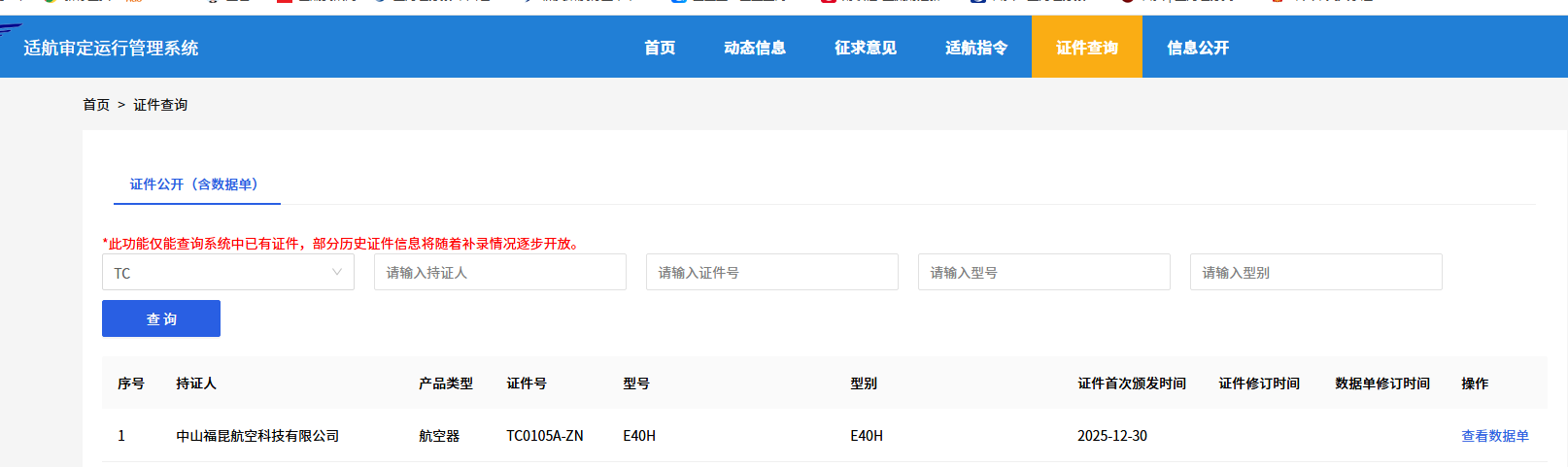
御风未来旗下福昆航空150公斤级E40H无人机获TC证
Xin Lang Cai Jing· 2025-12-30 11:04
来源:上海证券报·中国证券网 上证报中国证券网讯(记者何治民)12月30日,中国民航局适航审定运行管理系统显示,御风未来旗下无人机企业中山福昆航空科技有限公司(以下简 称"福昆航空")型号为E40H的无人机成功获颁型号合格证,即TC证,编号为TC0105A-ZN。 对此,御风未来回应记者称,这是全球首个中型复合翼无人机型号合格证,也是全球首个混动无人机型号合格证。TC数据单显示,该型号合格证从2024年7 月29日申请,2025年12月30日正式批准,历时1年5个月。 对此,御风未来回应记者称,这是全球首个中型复合翼无人机型号合格证,也是全球首个混动无人机型号合格证。TC数据单显示,该型号合格证从2024年7 月29日申请,2025年12月30日正式批准,历时1年5个月。 TC数据单显示,E40H航空器机身全长3.78m,飞机全高0.99m,最大飞行速度为115km/h,最大飞行高度为1000m,最大起飞重量150公斤,空机重量100公 斤,最大载荷50公斤,最大飞行时间10小时(满油且最大起飞重量150kg),最大航程800公里(满油且最大起飞重量150kg)。 与此同时,TC数据单显示,该无人机的运行场景 ...
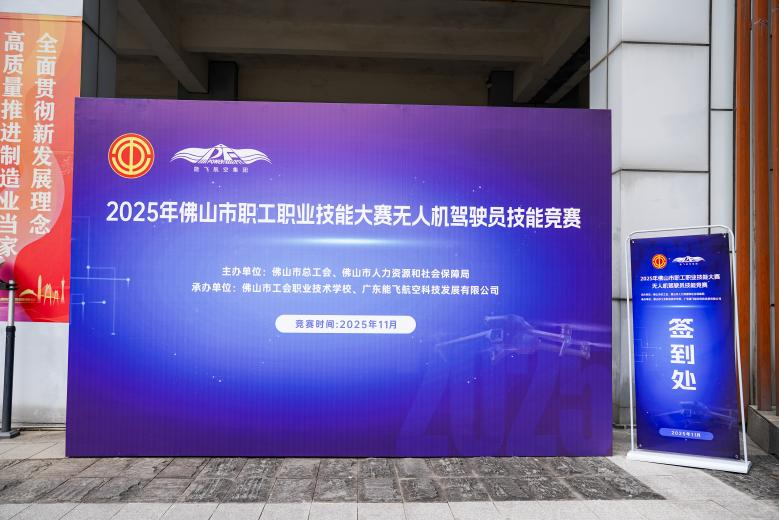
能飞承办2025年佛山市职工职业技能大赛无人机驾驶员技能竞赛已圆满落下帷幕
Jin Tou Wang· 2025-12-30 07:46
Core Insights - The event "2025 Foshan Employee Vocational Skills Competition for Drone Pilots" aims to enhance talent cultivation in drone operation skills, exploring the "Foshan Path" for nurturing skilled personnel in the low-altitude economy sector [1][10]. Group 1: Event Overview - The competition is co-hosted by the Foshan Human Resources and Social Security Bureau and the Foshan Federation of Trade Unions, with technical support from Nengfei Aviation Technology Development Co., Ltd [1][3]. - The event attracted over 80 participants from various enterprises and educational institutions across the city, featuring a personal competition format [3]. Group 2: Competition Structure - The competition consists of three main stages: theoretical selection, pre-competition training, and a "theory + practical" final, covering both theoretical assessments related to professional ethics and safety regulations, as well as practical skills in drone operation [7][10]. - The competition utilized mainstream industry equipment such as DJI M300 and NF6330, simulating real-world operational environments and requirements [7]. Group 3: Evaluation Criteria - The competition focused on evaluating participants' operational precision and emergency response capabilities, providing a comprehensive assessment of their drone control skills and situational adaptability [10]. - Award-winning participants can gain promotion opportunities through relevant assessments, aligning with national vocational skill standards and the "New Eight-Level Worker" system [10]. Group 4: Company Impact - Nengfei Aviation's involvement in the competition highlights its commitment to cultivating and selecting high-quality drone technology talent, contributing to various industries [3][10]. - The successful conclusion of the event demonstrates the company's role in fostering skilled drone professionals, which is essential for industry upgrades and high-quality economic development [10].