巡检机器狗

Search documents
合肥轨道“机器人军团”即将“上岗”
Xin Lang Cai Jing· 2026-01-21 17:29
Core Insights - Hefei Rail has launched a pioneering all-space robot intelligent scheduling platform, integrating drones, artificial intelligence, and big data to enhance operational efficiency in rail transport [1][3] Group 1: Robot Applications - The deployment of a "robot service group" at Yungu Road Station and USTC East Campus Station will provide integrated services such as intelligent inquiries, path guidance, safety inspections, and environmental cleaning, improving passenger experience and operational efficiency [2] - The collaboration of ground robots and aerial drones for vehicle inspections is expected to increase inspection efficiency by over 50% and achieve a detection accuracy of 96%, significantly enhancing train safety [2] Group 2: Tunnel Inspection Innovations - The introduction of track inspection robots in the tunnel section between Library Station and Swan Lake Station will enable real-time monitoring of tunnel structures and track conditions, addressing the challenges of traditional manual inspections [3] - Hefei Rail has reported 151 scene opportunities through its government platform, with 78 successfully implemented, establishing a comprehensive intelligent perception inspection system for urban rail [3] Group 3: Future Developments - Hefei Rail aims to further integrate robots with operational scheduling, maintenance, passenger services, and emergency response systems, creating a replicable and scalable smart rail application model for the national rail transport industry [3]

巡检机器狗、3秒批改作业机器人、“空中滴滴”集中展示——航空航天园内,近百款无人机与AI机器人“走秀”
Zhen Jiang Ri Bao· 2025-12-25 17:34
Group 1 - The "Feilian Tianxia (Zhenjiang) Low-altitude Economy Headquarters Base" has officially opened, showcasing nearly a hundred types of drones and AI robots, marking it as the city's first themed exhibition platform for drones and intelligent robots [1][2] - The exhibition features various intelligent devices, including a homework grading robot that can accurately identify errors in just three seconds and an entertainment robot that engages visitors through emotion recognition [2] - The eVTOL electric vertical takeoff and landing drone, EHang 216, is highlighted as the only model in China with all four necessary certifications, indicating its potential for applications in low-altitude tourism and urban transportation [2][3] Group 2 - The CEO of Tianjiu Aviation Group emphasizes that low-altitude economy and intelligent robots are fundamentally linked through AI, aiming to provide a direct experience of how AI transforms daily life [3] - The exhibition space, covering 1,100 square meters, will be open to the public for free and aims to provide training opportunities and job support for graduates from local aviation colleges [3] - Zhenjiang Economic Development Zone is actively developing the low-altitude and aerospace industry, focusing on core areas such as complete machine manufacturing and advanced materials, while enhancing infrastructure for general aviation [3][4] Group 3 - The "14th Five-Year Plan" suggests fostering emerging and future industries, with low-altitude economy and artificial intelligence being key drivers for high-quality development [4] - Zhenjiang is making significant progress in developing a clustered low-altitude economy and has established a complete industrial ecosystem by attracting upstream and downstream enterprises [4]
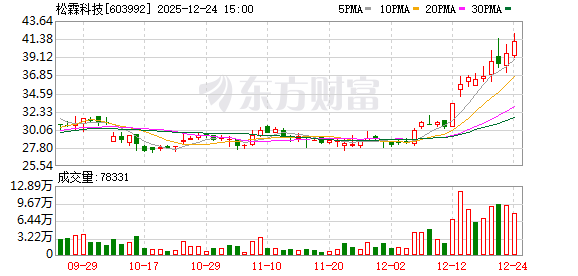
松霖科技:赋能“三新”消费市场 打造机器人系统标杆
Zhong Guo Zheng Quan Bao· 2025-12-24 22:27
Core Viewpoint - The company, Songlin Technology, is transitioning its focus from traditional smart hardware to becoming a leader in the service robot ecosystem, positioning its robot business as the most important strategic direction for the future [3][10]. Group 1: Strategic Shift - Songlin Technology's robot business has entered the commercialization phase and is expected to surpass its traditional IDM business, becoming the core strategic focus for the next decade [2]. - The company aims to be a global standard setter for service robot systems, moving beyond single product sales to providing comprehensive robotic organizational systems that meet various operational needs [3][4]. Group 2: Market Potential - The global service robot market is projected to reach $40 billion by 2025, with a compound annual growth rate of 17.1% over the next decade, potentially reaching $196 billion by 2035 [5][6]. - There is a significant demand for logistics and care robots in China, driven by a large manufacturing sector and an aging population [6]. Group 3: Competitive Advantages - Songlin Technology leverages 30 years of precision manufacturing experience, allowing for integrated capabilities in design, R&D, production, and supply chain management, resulting in a 15%-20% lower hardware cost compared to competitors [7][8]. - The company utilizes its IDM model to create customized solutions for specific scenarios, integrating existing health hardware data with AI algorithms for comprehensive management [8]. - The firm has a strong foundation in AI and software algorithms, focusing on efficient learning from small data sets to enhance robot capabilities [8]. Group 4: Business Model Innovation - The company plans to offer a "hardware + service" model, providing not only robots but also annual maintenance and system upgrades, potentially introducing a "Robots as a Service" (RaaS) model [10]. - This innovative approach aims to redefine traditional hardware sales, positioning robots as essential infrastructure for productivity [10]. Group 5: Long-term Vision - The ultimate goal of Songlin Technology is to empower global B-end enterprises by restructuring more efficient productivity organizations through its robot strategy [11]. - The company focuses on addressing real needs in various sectors, such as improving care for the elderly in nursing homes and enhancing logistics efficiency in industrial parks [11].


赋能“三新”消费市场 打造机器人系统标杆
Zhong Guo Zheng Quan Bao· 2025-12-24 20:18
Core Insights - The core viewpoint of the article is that Songlin Technology is strategically transitioning from traditional smart hardware to a focus on robotics, positioning its robotics business as the core strategic direction for the next decade, surpassing its traditional IDM business [1][2]. Strategic Upgrade: From Smart Hardware to Robotics Ecosystem - Songlin Technology is now prioritizing its robotics business, aiming to become a global standard setter for service-oriented robotic systems, moving beyond merely selling individual robots to providing comprehensive robotic solutions [1][3]. - The company recognizes that the current robotics industry is overly focused on single-category products, which do not adequately address the efficiency pain points of B-end customers [2]. System-Level Solutions - The robotics business is centered around system-level solutions, integrating IoT, AI algorithms, and hardware design to offer full lifecycle services from demand to delivery and operation [3]. - The existing robotic teams include logistics service systems, customer service systems, and healthcare robots, each tailored to specific sectors such as industrial parks and healthcare institutions [3]. Market Potential and Industry Trends - The global service robot market is projected to reach $40 billion by 2025, with a compound annual growth rate of 17.1%, potentially reaching $196 billion by 2035, indicating significant market potential [4]. - China's aging population and manufacturing demands create urgent needs for logistics and healthcare robots [4]. Competitive Advantages - Songlin Technology leverages 30 years of precision manufacturing experience, allowing for integrated capabilities in design, R&D, production, and supply chain management, resulting in lower hardware costs compared to competitors [4][5]. - The company utilizes its IDM model to create customized solutions for specific scenarios, integrating existing health hardware data with AI algorithms for comprehensive management [5]. - The firm has a strong foundation in AI and software algorithms, focusing on efficient learning from small data sets to enhance robot capabilities [6]. Vision for the Future - The goal is to become a "system integrator" in the robotics field, providing comprehensive productivity solutions rather than just selling individual products [6][7]. - The company plans to establish R&D centers in key regions to enhance efficiency in core technology and supply chain [6]. - A potential "Robots as a Service" (RaaS) model is being considered, allowing customers to pay based on usage rather than upfront purchases, which could redefine traditional hardware sales [7]. Addressing Real Needs - The robotics strategy aims to address real-world needs, such as improving care for the elderly in nursing homes and enhancing logistics efficiency in industrial parks by 30% [7].
民警的硬核“巡逻搭子” 机器人成全运会安保助手
Yang Shi Wang· 2025-11-15 17:12
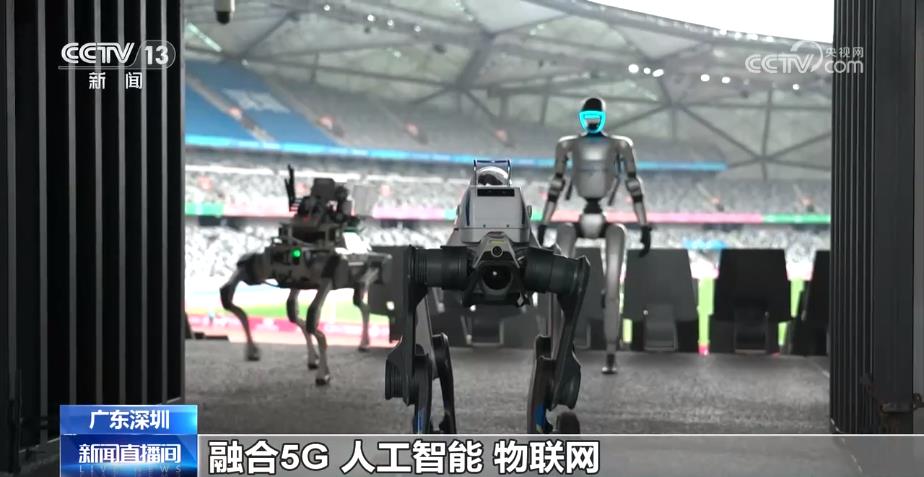
Group 1 - The 15th National Games are currently being held in the Guangdong-Hong Kong-Macao Greater Bay Area, showcasing advanced security measures including police robots and inspection dogs to enhance safety and power supply efficiency [1] - In the Shenzhen Universiade Center, a patrol robot and two quadruped robots are working together for auxiliary patrols, equipped with advanced obstacle avoidance radar and emergency alarm systems connected to the command center for quick assistance [1][3] - The integration of technologies such as 5G, artificial intelligence, the Internet of Things, cloud computing, and big data allows police to monitor patrol activities in real-time through cameras on the robots [3] Group 2 - Outside the competition venues, inspection robots from the Shenzhen Power Supply Bureau are efficiently performing tasks such as infrared temperature measurement, meter reading, and abnormal sound detection, with all data being transmitted in real-time to the backend [5] - The AI intelligent diagnosis system enables staff to quickly and accurately locate potential hazards, facilitating early detection and resolution of power supply issues [5]
郑州绘就城市建设新图景
Zheng Zhou Ri Bao· 2025-11-10 01:00
Core Viewpoint - Zhengzhou is advancing its smart construction initiatives, focusing on quality improvement, cost reduction, and efficiency enhancement through a combination of new urban construction and smart building practices [1][8]. Group 1: Smart Construction Projects - Zhengzhou has established 121 pilot projects and 57 pilot enterprises in the smart construction sector by the end of September this year, fostering 16 backbone enterprises, 10 demonstration projects, and 5 smart factories [1]. - The Central Plains Science and Technology City AI Technology Park has achieved an 18% reduction in construction time, a 35% decrease in labor, and a 99% first-time acceptance rate due to the application of technologies like BIM and smart measurement robots [2]. Group 2: Policy Support - Zhengzhou has developed a comprehensive "1+N" policy support system covering the entire construction chain, with three categories of evaluation indicators and accompanying incentive policies [3]. - The city is formulating measures to support smart construction through land use, funding, tax, and credit incentives, aiming to create a multi-dimensional incentive mechanism [3]. Group 3: Digital Transformation - The digital transformation in construction is recognized as a management revolution, with companies like Henan Guojijian Construction Group implementing digital management systems that enhance approval efficiency by 80% and control project cost deviation within 3% [5]. - By the end of September, Zhengzhou has established over 10 core platforms for digital construction project management, effectively breaking down data barriers [5]. Group 4: Intelligent Factories and Technological Innovation - Intelligent factories are being rapidly developed, with examples such as Zhengzhou Baoye's steel component production line reducing labor by 80%, increasing efficiency by 25%, and lowering costs by 20% [6]. - Zhengzhou has built 14 provincial-level technology innovation platforms and is focusing on key project technology research, with significant advancements in smart construction technologies [6]. Group 5: Talent Development - Zhengzhou is constructing a robust standard and talent system for smart construction, with 11 higher education institutions and 6 vocational schools offering related programs, resulting in 1,917 enrollments from 2022 to 2024 [7]. - The city has trained over 15,000 individuals in new job roles through practical training bases and has developed a technical workforce covering the entire construction chain [7]. Group 6: Overall Progress - Zhengzhou is making strides in smart construction development through comprehensive efforts in policy, technology, digital empowerment, and talent support, creating a new landscape in urban construction from "building" to "smart manufacturing" [8].
广交会首日实探:服务机器人专区成“顶流”
Zhong Guo Zheng Quan Bao· 2025-10-15 16:55
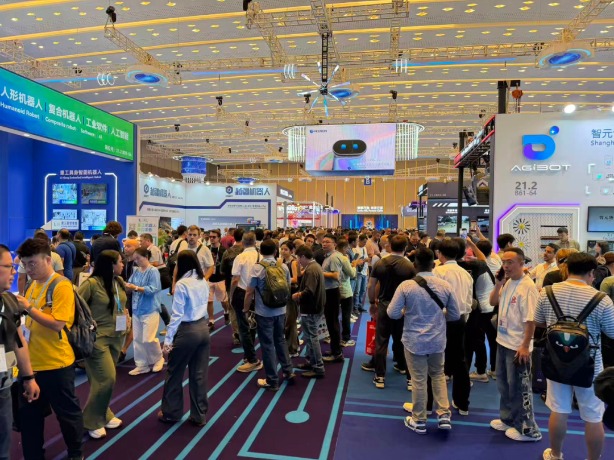
Core Insights - The 138th China Import and Export Fair (Canton Fair) opened on October 15, featuring a record total of 74,600 exhibition booths and over 32,000 participating companies, marking a historical high [1] - The fair highlights the theme of "advanced manufacturing," showcasing a variety of intelligent products and innovations [3][10] Group 1: Exhibition Highlights - The exhibition covers a total area of 520,000 square meters, with over 25,000 booths and approximately 12,000 participating companies, including more than 5,500 high-quality export enterprises [5] - Major brands such as Midea, Gree, and TCL presented new products, indicating strong participation from leading companies [7] - The service robot section attracted significant attention, with various robots being popular among attendees [3][5] Group 2: Innovative Products - Intelligent products showcased include a patrol robot capable of navigating rough terrains and a commercial cleaning robot with a 4 to 6-hour autonomous operation time [3] - Gree's new GMV9 series central air conditioning system can operate in extreme temperatures from -35°C to 60°C, demonstrating adaptability to diverse climate conditions [8] - TCL introduced the small blue wing C7 air conditioner, which optimizes temperature based on user sleep patterns, showcasing innovation in energy efficiency [8] Group 3: Market Trends - The fair reflects the resilience of China's foreign trade, with an increasing proportion of high-tech enterprises participating, indicating strong international market appeal [10][11] - The introduction of a smart medical area in the upcoming third phase of the fair will feature 47 companies, highlighting advancements in the medical technology sector [10]
内需市场持续扩容提质,浙企迎来时代机遇
Xin Hua Wang· 2025-10-14 01:55
Group 1 - The article discusses the transition of China from a "manufacturing giant" to a "consumer giant," emphasizing the government's focus on expanding domestic demand as a key task [1][2] - Zhejiang enterprises are positioned at the forefront of this transformation, facing both opportunities and challenges in adapting to the evolving consumer market [2][5] - China's consumer market is the second largest globally, with a retail sales total of 32.39 trillion yuan from January to August this year, reflecting a 4.6% year-on-year growth [2][3] Group 2 - The article highlights the shift in consumer demand from traditional necessities to high-quality, experiential, and intelligent products, with new consumption categories like smart devices and health services rapidly growing [2][3] - Despite the potential, only 30% of surveyed Zhejiang enterprises have successfully launched mature products, while 50% are still refining their offerings [5] - The challenges faced by these enterprises include difficulties in accurately capturing consumer demand and balancing long-term strategies with short-term market pressures [5][6] Group 3 - Companies are exploring innovative approaches to meet the evolving consumer needs, such as integrating technology into products and shifting from traditional manufacturing to service-oriented models [11][13] - The concept of "entry thinking" is emerging, where businesses focus on establishing connections with users to drive growth, as seen in the case of companies like Zhihanshengtong [14][15] - Collaboration among companies is becoming essential, with examples of partnerships leading to new business models and enhanced value creation in competitive markets [16][17]
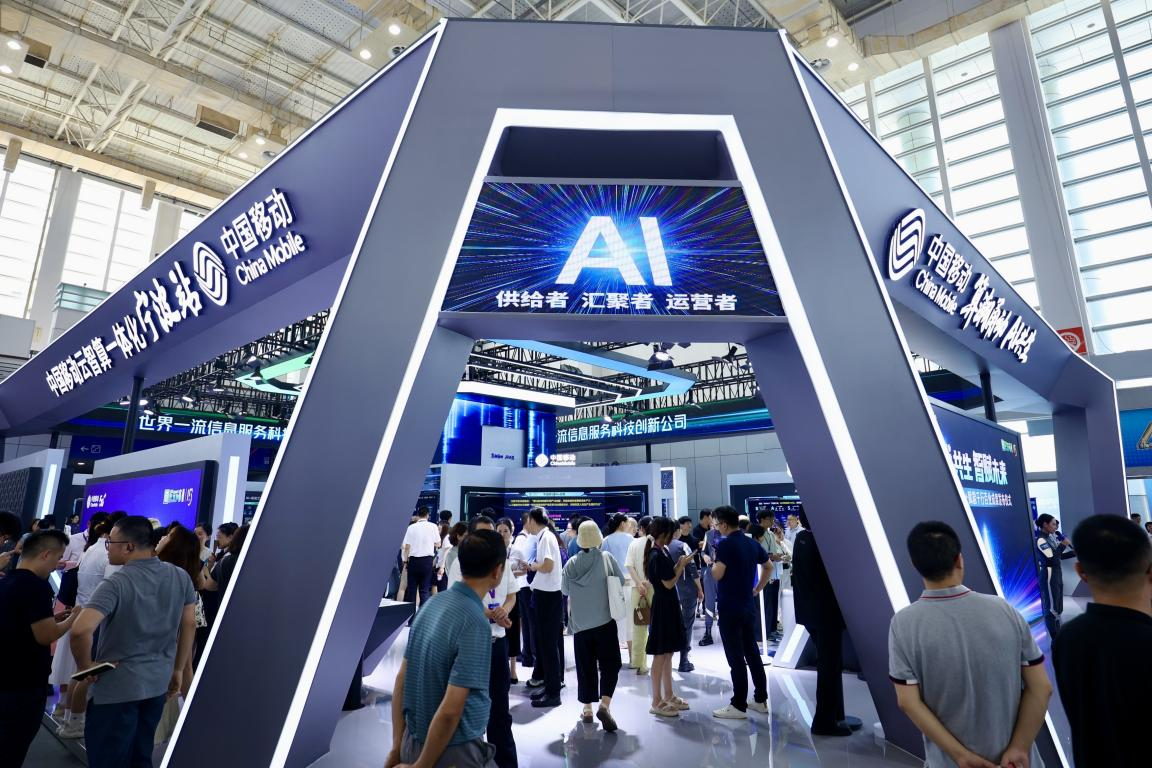
宁波智博会:中国移动以AI赋能千行百业数智化转型
Zhong Guo Jin Rong Xin Xi Wang· 2025-09-07 01:55
Core Insights - The 15th Smart City and Intelligent Economy Expo was held in Ningbo, Zhejiang, showcasing China Mobile's advancements in AI and its role as a provider, aggregator, and operator in the digital transformation of the economy and society [1] Group 1: AI and Technological Innovations - China Mobile presented its self-developed "Jiutian" general-purpose foundational model, which supports applications across cloud, edge, and terminal environments, emphasizing its four core advantages: high security, high controllability, domestically produced, and applicable across all industries [7] - The company demonstrated various AI applications, including humanoid robots, AI-vision inspection robots, and robotic arms, allowing attendees to experience the potential of AI in interactive and personalized services [3] Group 2: Infrastructure Development - China Mobile has built over 21,000 5G base stations and added more than 2,000 5G-A base stations in Ningbo, achieving full coverage of gigabit optical networks and initiating trials for 10-gigabit optical networks [5] - The company has strengthened its global connectivity capabilities, becoming the operator with the most new marine and land cable resources, adding 11,000 overseas cabinets to support the globalization strategies of companies like Geely and Joyson [5] Group 3: Strategic Goals and Future Plans - China Mobile aims to leverage technological innovation to accelerate the large-scale implementation of "AI + products," enhancing its offerings for over 1 billion individual customers and more than 280 million family customers [9] - The company plans to build an open and win-win intelligent computing ecosystem in collaboration with industry partners, contributing to the construction of a digital China through data-driven and AI-enabled services [9]

“一个机器人能顶3名工人,充电两小时就能巡检两小时”
财联社· 2025-07-20 16:10
Core Viewpoint - The article highlights the digital transformation in manufacturing within Henan province, focusing on the adoption of robotics and digital technologies to enhance safety and operational efficiency in high-risk environments [2][12]. Group 1: Digital Transformation in Manufacturing - Companies like Liyuan Group, Mengdian Cement, and Sinian Food are implementing digital and intelligent technologies to improve safety and efficiency, particularly in hazardous operations [2][12]. - Liyuan Group has established a 5G dispatch center that integrates real-time production data and a digital twin system for better management and monitoring [3][5]. Group 2: Robotics and Automation - Liyuan Group has deployed inspection robots that can replace three workers, with a charging and inspection cycle of two hours each [6][13]. - Mengdian Cement has developed a digital control platform using digital twin technology to manage mining operations, including the use of unmanned excavators and transport systems [8][10]. Group 3: Safety and Efficiency Improvements - The implementation of smart technologies has led to a 15% increase in energy efficiency and a 20% improvement in labor productivity at Liyuan Group [5]. - Sinian Food has achieved a 30% increase in production efficiency and a 20% reduction in overall costs through automation in key food production processes [12]. Group 4: Employment Impact and Future Outlook - The rapid advancement of AI and robotics raises concerns about potential job displacement, with predictions that AI will create 11 million jobs while replacing 9 million by 2030 [12][14]. - Companies emphasize that current automation efforts are primarily focused on high-risk areas and are still in testing phases, indicating a cautious approach to widespread implementation [13][14].