脑机接口

Search documents
本周市场情绪高涨北证大涨5.82%,持续关注商业航天及科技个股
Soochow Securities· 2026-01-11 07:26
Market Performance - The North Exchange 50 Index increased by 5.82% compared to the previous week, while the Shanghai and Shenzhen 300 Index rose by 2.79% and the ChiNext Index by 3.89%[30] - The average market capitalization of North Exchange A-shares reached 3.197 billion yuan, with a daily average trading volume of approximately 26.13 billion yuan, up 34.57% from the previous week[5] Investment Recommendations - Focus on sectors with high industry prosperity and scarcity, particularly commercial aerospace, robotics, low-altitude economy, energy storage, solid-state batteries, and liquid cooling[40] - The PE ratios for North Exchange A-shares, ChiNext, Shanghai Main Board, Shenzhen Main Board, and Sci-Tech Innovation Board are 48.40, 45.54, 12.69, 24.07, and 78.26 respectively as of January 9, 2026[40] Economic Indicators - The Consumer Price Index (CPI) rose by 0.8% year-on-year in December 2025, marking the highest increase since March 2023[22] - The Producer Price Index (PPI) increased by 0.2% month-on-month in December 2025, but decreased by 1.9% year-on-year[22] Regulatory Developments - The People's Bank of China is expected to implement a prudent monetary policy, emphasizing the need for financial support for economic stability and growth in 2026[11] - The China Securities Regulatory Commission is intensifying efforts to combat financial fraud in the capital market, with 159 cases of financial fraud handled in 2024[18] Industry News - China applied for frequency resources for over 200,000 satellites in December 2025, indicating a significant expansion in the commercial aerospace sector[29] - The United Nations projects global economic growth at 2.7% for 2026, slightly lower than the 2.8% estimated for 2025, amid ongoing macroeconomic uncertainties[26]
机构调研动向!三大热门领域被“踏破门槛”!
Zheng Quan Shi Bao· 2026-01-11 07:17
Group 1: Institutional Research and Market Trends - A total of 116 listed companies conducted institutional research from January 5 to 9, with nearly 90% achieving positive returns as the market rose [1] - Notable stock performances included Pulit with a 42.59% increase, and Chengdu XianDao and BoRui ChuanBo both exceeding 30% [1] - Key areas of institutional interest included brain-computer interfaces, commercial aerospace, and AI applications, spurred by the recent central bank policy on digital currency [1] Group 2: Brain-Computer Interface Developments - The brain-computer interface (BCI) concept is currently a major market hotspot, with the Wind BCI index rising approximately 20% [4] - Elon Musk announced plans for large-scale production of BCI devices starting in 2026, indicating significant future market potential [4] - Companies like Dineike have made advancements in BCI technology, including prototypes for smart sleep devices and a low-frequency transcranial magnetic therapy device [4][6] Group 3: Commercial Aerospace Opportunities - The commercial aerospace sector is experiencing sustained interest, with the Wind commercial aerospace index also increasing by about 20% [7] - Chaojie Co. has engaged in multiple institutional research sessions, indicating a positive outlook for new client collaborations starting in Q1 [9] - The company focuses on manufacturing structural components for commercial rockets, which constitute over 25% of the total cost of a rocket [9] Group 4: Digital Currency Policy Changes - The central bank's new policy on digital currency, effective January 1, 2026, expands the role of digital RMB from cash-like to a broader monetary category [12] - This policy shift is expected to enhance banks' engagement and increase the application scenarios for digital RMB [12] - Tianyang Technology highlighted the need for banks to upgrade their IT systems to accommodate the new digital currency framework, particularly in payment systems [14]


机构调研动向!三大热门领域被“踏破门槛”!
证券时报· 2026-01-11 07:05
Core Viewpoint - The article highlights the recent surge in institutional research and investment interest in sectors such as brain-computer interfaces, commercial aerospace, and digital currency, driven by market trends and new regulatory frameworks [2][15]. Group 1: Brain-Computer Interface (BCI) - The brain-computer interface concept is currently a major market hotspot, with the Wind BCI index rising approximately 20% in the past week [6]. - Companies like Dineike have transitioned brainwave interaction technology from theoretical research to practical applications, indicating significant potential for future growth in various fields [4]. - Dineike has completed trial production of products like smart sleep devices and has submitted applications for medical device registration [6]. - Entropy Technology held three institutional research sessions, attracting 132 institutions, and plans to launch a prototype of its brain-machine business by March 2026 [6][8]. - The company emphasizes that initial efforts will focus on marketing and brand promotion, with uncertain short-term revenue impact [8]. Group 2: Commercial Aerospace - The commercial aerospace sector remains highly active, with the Wind commercial aerospace index also increasing by about 20% over the past week [10]. - Companies like Superjet have engaged in multiple institutional research sessions, indicating a strong interest from over a hundred institutions [10]. - Superjet specializes in manufacturing structural components for commercial rockets, which account for over 25% of the cost of mainstream commercial rockets [12]. - The company is expanding its client base and has made substantial progress in securing new orders [12]. - However, companies in this sector have cautioned about risks related to policy direction, technological breakthroughs, and market demand [14]. Group 3: Digital Currency - The People's Bank of China has introduced a new action plan to enhance the digital renminbi management and infrastructure, set to be implemented on January 1, 2026 [15]. - The policy marks a shift in the positioning of digital renminbi from a cash-like status to a broader monetary category, potentially increasing its application scenarios [15]. - Tianyang Technology believes that banks will need to undertake significant IT system upgrades to accommodate the new digital renminbi features [18]. - Future developments to watch include the issuance of supporting regulations and pilot programs for the digital renminbi, which could signal substantial promotional efforts beyond small retail scenarios [20].

华金证券:春季行情主升时行业如何轮动
Xin Lang Cai Jing· 2026-01-11 05:54
Group 1 - The core viewpoint of the report is that the spring market rally is expected to favor technology growth and certain cyclical industries, suggesting a focus on these sectors in the short term [1] - The report highlights commercial aerospace and brain-computer interfaces as potential main themes for investment during the spring market rally [1] - The commercial aerospace sector is projected to have significant growth potential, with the space economy expected to reach a scale of $1.8 trillion by 2035, driven by policy support and global industry trends [1] - The brain-computer interface market is also anticipated to expand continuously, supported by strong policy backing [1]
开年暴涨,彻底火了!最新研判
Zhong Guo Ji Jin Bao· 2026-01-11 04:55
Core Viewpoint - The brain-computer interface (BCI) sector is experiencing significant market attention and investment opportunities due to advancements in technology and strong policy support, with expectations for rapid growth in the coming years [1][12][19] Group 1: Market Performance and Drivers - The BCI sector saw a collective surge in stock prices, with average daily gains exceeding 12% and nearly 20 stocks hitting the 20% limit up, driven by announcements from companies like Neuralink and Merge Labs [1][12] - The market's optimism is fueled by the expectation of commercial production of BCI devices starting in 2026, marking a critical transition from clinical trials to commercial viability [11][12] - Recent policies from the Chinese government, including the "14th Five-Year Plan," have positioned BCI as a key future industry, further enhancing investor confidence [12][13] Group 2: Development Stage and Challenges - The BCI industry is currently at a pivotal stage of commercial transformation, transitioning from clinical validation to early commercialization, with significant technological breakthroughs [14][15] - Major challenges for mass production include ensuring biocompatibility, ethical regulations, and cost control, particularly for invasive BCI devices [15][16] - The industry is expected to see applications primarily in medical rehabilitation and treatment of neurological disorders, with potential expansion into consumer electronics and industrial applications in the long term [17][18] Group 3: Future Applications and Strategic Value - As technology matures, BCI applications are anticipated to expand into various fields, including consumer electronics and industrial monitoring, alongside continued focus on medical applications [17][18] - The BCI sector is recognized for its long-term strategic value, supported by strong policy backing and capital investment, although it remains in the early stages of development [19][20] - Investors are encouraged to adopt a long-term perspective, considering diversified investment strategies to mitigate risks associated with market volatility [20][21]

开年暴涨,彻底火了!最新研判
中国基金报· 2026-01-11 04:50
【导读】基金经理解读脑机接口投资机会 中国基金报记者 方丽 孙晓辉 随着产业化进程按下加速键,脑机接口板块近期被推上市场的风口浪尖。 2026年开年,脑机接口概念股集体狂欢,板块单个交易日平均涨幅一度超过12%,近20只个股收获20%涨停。这场资本盛宴的引爆点来 自马斯克的Neuralink公司 将 在2026年开始大规模生产脑机接口设备,以及OpenAI的CEO Sam Altman支持的Merge Labs也在分拆独 立,专注于超声波脑机接口技术等。 脑机接口行情持续性如何?当前处于什么发展阶段?未来应用领域会向哪些方向渗透?投资者如何掘金? 为此,中国基金报记者采访了 嘉实基金大科技研究总监、基金经理王贵重,永赢医疗器械ETF基金经理储可凡,长城消费增值基金经理龙 宇飞,诺德基金基金经理朱明睿 。 上述基金经理认为,近期政策的强力支持和产业进展的超预期产生共振,支撑板块上涨。在政策与技术双轮驱动下,脑机接口作为"人工智 能+"的 一 部分,已经从硬件创新的第一阶段、媒介迁移的第二阶段演进到商业模式变革的第三阶段,即将进入高速增长期,其市场具有广 阔的投资前景。随着政策与资本加速构建产业生态,行业具备长期 ...

特斯拉CEO马斯克在一次长达三小时到访谈中再爆惊人之语
Di Yi Cai Jing· 2026-01-11 04:04
Group 1 - Musk predicts that general artificial intelligence (AGI) will arrive by 2026, and robots will surpass human surgeons in 3 to 4 years [1][3] - The development of humanoid robots like Optimus is expected to significantly impact the medical field, potentially leading to the obsolescence of human surgeons [1][3] - The concept of AGI refers to AI systems that possess cognitive abilities comparable to or exceeding those of humans, capable of learning, reasoning, and adapting [3] Group 2 - Neuralink, Musk's brain-machine interface company, is already using robots for "brain insertion" surgeries, with over 10,000 patients reportedly waiting for procedures [4] - The surgical robots have improved efficiency, reducing the time to implant a single electrode from 17 seconds to 1.5 seconds, with the goal of making surgeries quick enough to be completed during a lunch break [4][5] - The technology involves a complex visual system that integrates multiple microscopes and optical coherence tomography (OCT) for real-time tracking of brain tissue [5] Group 3 - Experts express skepticism about the feasibility of fully autonomous surgical robots within the next five years, emphasizing the need for human oversight in current operations [7][8] - While robots can enhance surgical efficiency, the complete replacement of human surgeons is not anticipated in the short term, as the technology still relies on human intervention [7][8] - The market for surgical robots is currently dominated by a few leading companies, with significant investment activity noted in the sector [9][10] Group 4 - The domestic surgical robot market is experiencing rapid growth, with substantial financing and IPO activities indicating investor confidence [9][10] - The market for vascular interventional surgical robots is projected to reach 5.824 billion RMB by 2030, with a compound annual growth rate of 90% [12] - Recent regulatory developments are expected to establish a pricing framework for surgical robot-assisted treatments, which could accelerate their adoption in clinical settings [11][12]

强脑科技 20 亿融资紧随 Neuralink,脑机接口赛道双线发力
Huafu Securities· 2026-01-10 11:04
Investment Rating - The industry rating is "Outperform the Market," indicating that the overall return of the industry is expected to exceed the market benchmark index by more than 5% in the next 6 months [14]. Core Insights - Strong Brain Technology has completed approximately 2 billion yuan in financing, making it the second-largest in the global brain-computer interface (BCI) sector, following Neuralink. This financing round was led by IDG Capital and Huaden International, with participation from industry chain companies, enabling product scaling through a "capital + manufacturing" model [4][6]. - The company focuses on non-invasive technology, with its core product, the "Super Sensor," capable of capturing brain electrical signals without the need for surgery. This technology has already assisted individuals with disabilities in performing complex movements, with plans to help one million disabled individuals regain mobility and assist ten million patients in rehabilitation over the next 5-10 years [4][6]. - Neuralink, a key player in the BCI field, is set to initiate large-scale production of BCI devices in 2026 and is advancing fully automated surgical solutions. This invasive technology complements Strong Brain Technology's non-invasive approach, collectively driving the commercialization of global BCI technology [5][6]. - The global BCI market is projected to grow rapidly, with an estimated market size of approximately 2.62 billion USD in 2024, expected to reach 2.94 billion USD in 2025, and potentially grow to 12.4 billion USD by 2034, reflecting a compound annual growth rate (CAGR) of 17.35% over the next decade. In China, the BCI market is anticipated to reach 3.2 billion yuan in 2024 and 6.14 billion yuan by 2028 [6]. Summary by Sections Financing and Market Position - Strong Brain Technology has secured around 2 billion yuan in financing, ranking second globally in the BCI sector, just behind Neuralink [4]. - The financing round was led by IDG Capital and Huaden International, with contributions from various industry chain companies [4]. Technology and Product Development - The company's non-invasive "Super Sensor" technology captures brain signals without surgery, aiding individuals with disabilities [4]. - Plans are in place to assist one million disabled individuals and ten million patients in rehabilitation over the next 5-10 years [4]. Market Growth Projections - The global BCI market is expected to grow from 2.62 billion USD in 2024 to 12.4 billion USD by 2034, with a CAGR of 17.35% [6]. - The Chinese BCI market is projected to grow from 3.2 billion yuan in 2024 to 6.14 billion yuan by 2028 [6].
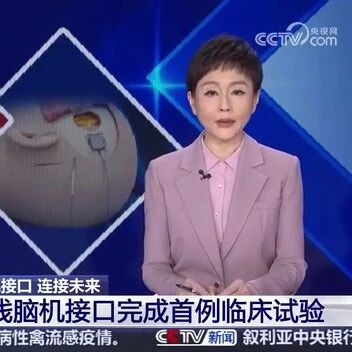
中国脑机接口,重大突破!截瘫患者意念打游戏赢正常人,还能脑控小米家电
机器人大讲堂· 2026-01-10 09:05
Core Viewpoint - The article highlights a significant milestone in China's brain-computer interface (BCI) field, showcasing the successful completion of the first human clinical trial of a fully implanted, wireless, and fully functional BCI system, marking a shift from "catching up" to "keeping pace" and even "leading" in this core technology area [2][4]. Group 1: Clinical Trial and Patient Experience - The first patient, a 28-year-old man paralyzed for eight years due to a car accident, demonstrated remarkable recovery, using his thoughts to browse websites and play video games, showcasing the system's capabilities [3][6]. - The BCI system, developed by Fudan University Huashan Hospital and NeuroXess, allows patients to control smart home devices and regain autonomy in daily activities, significantly improving their quality of life [4][6]. Group 2: Technical Features of the BCI System - The BCI system is characterized by being fully implanted, wireless, and fully functional. It eliminates external cables, reducing infection risks and enhancing the patient's dignity [9]. - The system integrates wireless power and data transmission, allowing patients to interact in real-time without external devices, providing true "wireless freedom" [9]. - It features a complete system that includes brain signal acquisition, processing, and wireless energy transmission, demonstrating strong openness and extensibility through its proprietary operating system, XessOs [10][13]. Group 3: Comparison with International Competitors - The Chinese BCI solution differs from Elon Musk's Neuralink by separating the battery from the main control unit, placing it in the chest area to enhance safety and reduce heat risks to the brain [14][15]. - The surgical procedure for the Chinese BCI is more accessible, utilizing established techniques that can be performed by many neurosurgeons, facilitating broader clinical application [17]. Group 4: Future Aspirations and Innovations - The ultimate vision for BCI technology includes advancements in language decoding and consciousness interaction, with the Chinese team already achieving real-time Chinese language decoding at double the speed of normal speech [19][20]. - The concept of a "brain internet" is being explored, allowing patients to communicate through digital avatars, indicating a significant leap towards human-machine symbiosis [20][23]. Group 5: Ethical Considerations and Challenges - Experts emphasize the importance of data quality and ethical boundaries in BCI development, with a focus on high-quality brain signal data for effective model training [22]. - The article concludes with a vision of BCI technology not just as a medical device but as a key to unlocking human potential and extending cognitive and existential boundaries [23][24].
又一地明确价格!脑机接口收费路径逐渐清晰
财联社· 2026-01-10 07:01
Core Insights - The article discusses the establishment of pricing for brain-computer interface (BCI) medical services in various provinces in China, highlighting the integration of these services into the healthcare system and the support from government policies [4][5][10]. Pricing and Policy Developments - The Sichuan Provincial Medical Insurance Bureau has set a maximum price for BCI services, effective from April 30, 2026, with different pricing based on hospital levels for invasive procedures [4]. - Other provinces, including Hubei, Zhejiang, and Jiangsu, have also established pricing for BCI services, with costs for invasive procedures ranging from approximately 6,000 to 6,600 yuan per procedure [5][6][7]. - The pricing structure includes insertion fees, removal fees, and adaptation fees, with some provinces incorporating non-invasive adaptation fees into insurance coverage [5][8]. Government Support and Strategic Planning - The Chinese government has outlined a strategic plan to support the BCI industry through policies that focus on planning, payment, and standards, aiming for significant advancements by 2030 [10][11]. - Multiple provinces have released action plans to promote BCI innovation and commercialization, with specific targets for clinical applications and production [11]. Technological Advancements and Market Potential - The article notes that while invasive BCI products are still in clinical trials, non-invasive products have begun to enter the market, indicating a growing application space [12]. - The industry is at a critical juncture where technological breakthroughs are expected to lead to commercial viability, supported by favorable policies and anticipated production from companies like Neuralink [15][17]. Investment Opportunities - Analysts suggest focusing on key segments of the BCI industry, including hardware suppliers, companies with core patents, and those involved in rehabilitation and industrial applications [15][16]. - Specific companies are highlighted as potential beneficiaries of the BCI market growth, including Aipeng Medical, Lepu Medical, and Xiangyu Medical, among others [16].