
Funds

Search documents
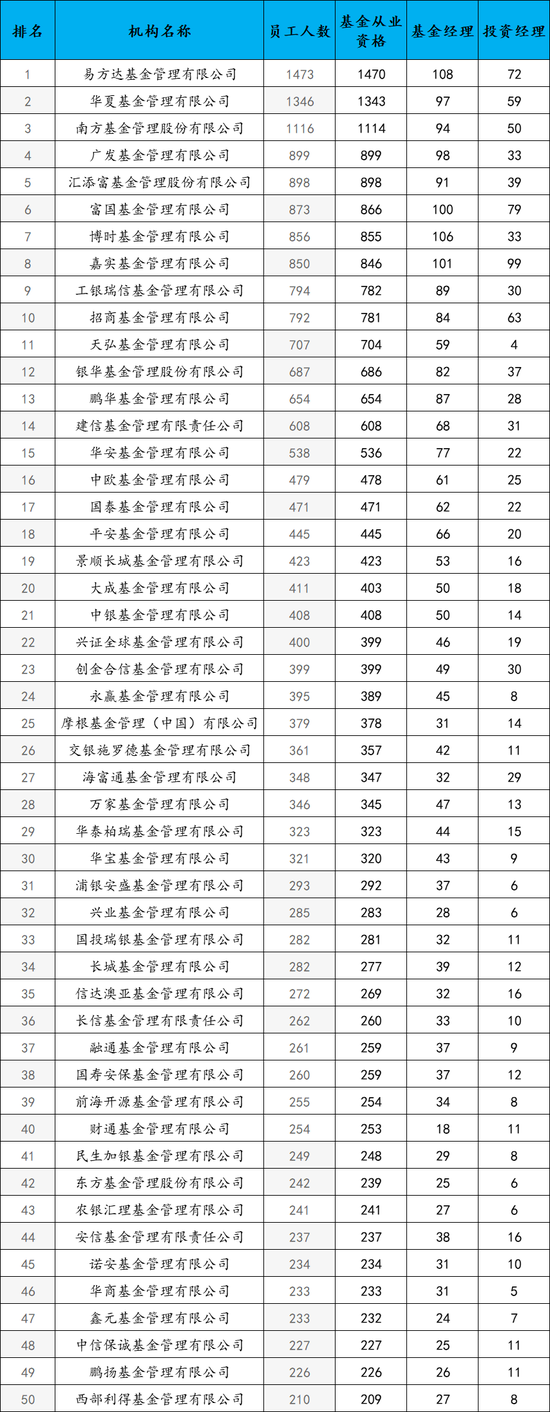
各家基金公司最新员工人数排名
Xin Lang Cai Jing· 2025-12-24 02:28
炒股就看金麒麟分析师研报,权威,专业,及时,全面,助您挖掘潜力主题机会! 来源:城商行研究 最近,中国证券投资基金业协会的数据显示(2025年12月22日),截至2025年12月,全公募基金行业从 业人员总数仅为3万多人。相比银行业、证券业,基金公司可谓是"小弟弟"——要知道,仅中信证券员 工就有26822人,而工商银行员工数更是高达41.92万。 这一数字让人惊讶:公募基金管理规模已突破30万亿元,去年一年就增长近5万亿元,但从业人员数量 却纹丝不动。这一现象背后,反映出基金行业怎样的发展趋势? | 30 | 华宝基金管理有限公司 | 321 | 320 | 43 | 9 | | --- | --- | --- | --- | --- | --- | | 31 | 浦银安盛基金管理有限公司 | 293 | 292 | 37 | 6 | | 32 | 兴业基金管理有限公司 | 285 | 283 | 28 | 6 | | 33 | 国投瑞银基金管理有限公司 | 282 | 281 | 32 | 11 | | 34 | 长城基金管理有限公司 | 282 | 277 | 39 | 12 | | 35 | 信达澳亚 ...

基金三巨头官宣:易方达、广发、汇添富布局新赛道
Zhong Guo Jin Rong Xin Xi Wang· 2025-12-24 00:36
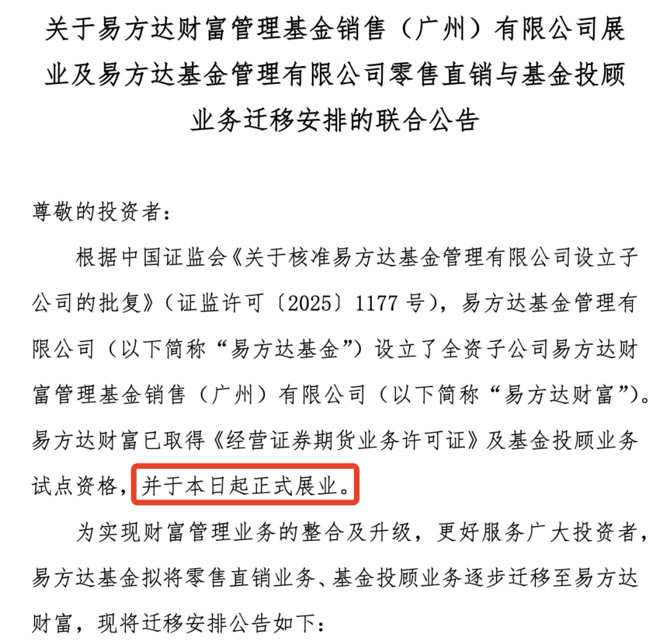
Group 1 - E Fund's subsidiary, E Fund Wealth, has officially commenced operations after obtaining the necessary licenses for securities and futures business, as well as pilot qualifications for fund advisory services [3] - E Fund's upgraded one-stop wealth management platform, "e-wallet," now offers full market fund distribution services with zero-fee promotions for investors [3] - E Fund has distributed a total of 12.143 billion yuan in dividends to shareholders over the past decade, ranking first among leading funds [3] Group 2 - Huatai PineBridge Fund announced the establishment of its wholly-owned subsidiary, Huatai PineBridge Fund Sales (Shanghai) Co., Ltd., which has been approved for setup [3] - GF Fund has received approval from the China Securities Regulatory Commission to establish its wholly-owned subsidiary, Ruichen Equity Investment Fund Management (Guangdong) Co., Ltd., with a registered capital of 100 million yuan, focusing on private equity fund management [3][4] - The establishment of these subsidiaries is part of a strategic layout for fund companies, facilitating differentiated development while enhancing the overall wealth management capabilities [4]
以制度创新筑牢人民性根基 书写金融为民新篇章
Shang Hai Zheng Quan Bao· 2025-12-23 19:06
Core Viewpoint - The article emphasizes the importance of adhering to the principle of "people first" in the public fund industry, as outlined in the 20th National Congress of the Communist Party of China, and highlights the need for financial services to contribute to the common prosperity of all people [1][3]. Group 1: People's Principle in Public Funds - The essence of financial work is to enhance people's well-being and promote common prosperity, with the core goal being to improve investors' sense of gain [1][2]. - The public fund industry is undergoing a significant transformation from focusing on scale to prioritizing investor returns, as indicated by the "Action Plan for Promoting High-Quality Development of Public Funds" [1][2]. Group 2: Regulatory Reforms and Investor Benefits - The China Securities Regulatory Commission (CSRC) has introduced new regulations aimed at reducing sales fees for public funds, potentially saving investors approximately 30 billion yuan annually [2]. - The new performance assessment guidelines for fund management companies emphasize a performance evaluation system centered on fund investment returns, aligning the interests of fund managers with actual investor returns [2]. Group 3: Supporting National Strategies and Social Welfare - Public funds are actively engaging in nurturing new productive forces by directing investments towards key sectors such as green energy and technology innovation, thereby supporting the upgrade of the real economy [3]. - The public fund industry is also involved in the construction of a pension finance system, addressing significant social concerns and contributing to the goal of common prosperity [3]. Group 4: Institutional Innovation for Strengthening People's Principle - The public fund industry, having started relatively late, has learned from international experiences but still faces challenges such as inadequate investor satisfaction and uneven development [4]. - To strengthen the foundation of the people's principle, the industry must pursue institutional innovations that align with China's financial practices, focusing on product design, sales models, and risk management [4][5]. - The ongoing reforms in the public fund sector represent a systemic restructuring aimed at embodying the "people-centered" philosophy, requiring fund managers to translate regulatory policies into company practices and employee conduct [4][5]. Group 5: Commitment to High-Quality Development - The public fund industry is committed to transforming the "people first" concept into tangible practices that enhance investor satisfaction and support technological innovation [5]. - The vision for modernization outlined in the 20th National Congress provides a broad platform for the development of the public fund industry, with a focus on contributing to the construction of a financially strong nation [5].
历史新高!首次突破4000亿份
Zhong Guo Zheng Quan Bao· 2025-12-23 12:32
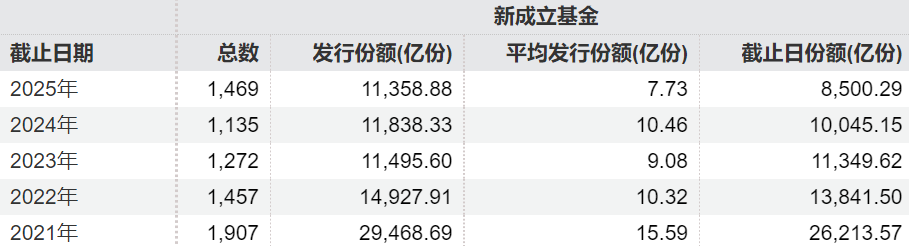
Group 1 - The issuance of bond funds has significantly decreased this year, while equity funds have taken the spotlight, with new equity fund issuance exceeding 400 billion units, surpassing the historical record set in 2021 [1][6] - As of December 22, 2023, a total of 1,469 new funds have been established this year, marking the highest number of new fund issuances in nearly four years, with a total issuance of 11,358.88 billion units [2][3] - Among the newly established funds, 808 are equity funds with an issuance of 4,086.66 billion units, while mixed funds and bond funds have 280 and 262 new funds with issuances of 1,551.03 billion units and 4,680.71 billion units, respectively [3][4] Group 2 - The focus of fund companies this year has shifted towards equity funds, particularly passive index products, with 604 of the 808 new equity funds being passive index funds [5] - The market dynamics are changing, with the share of bond fund issuance dropping from 71.27% in 2022 to 41.21% in 2023, while the share of equity fund issuance has risen from 12.24% in 2021 to 35.98% in 2023 [5][6] - The largest newly issued fund this year is the Dongfanghong Yingfeng Stable Allocation 6-Month Holding A, with an issuance of 65.73 billion units, while the largest newly issued equity fund is the Huaxia Shanghai Stock Exchange Sci-Tech Innovation Board Comprehensive ETF Link A, with an issuance of 48.92 billion units [4]
第14届金融行业年度评鉴揭晓,五类先锋案例彰显行业新动能
Nan Fang Du Shi Bao· 2025-12-23 11:15
Core Insights - The 14th Annual Financial Industry Evaluation event was successfully held in Guangzhou, focusing on the theme "Innovative Services Benefit the Public, Financial Empowerment Starts Anew" [2] - The event aimed to showcase exemplary practices in product innovation and service upgrades among financial institutions by 2025, awarding five major categories including "New Service New Momentum Pioneer Cases" and "New Wealth New Investment Pioneer Awards" [2] Banking Sector: Activating New Growth Momentum - The "New Service New Momentum Pioneer Cases" award specifically recognized banking institutions that adhere to the essence of financial services for the real economy, expanding service breadth, depth, and precision [3] - A total of 14 cases won this award, featuring both national and regional banks, including major players like China Merchants Bank and Ningbo Bank, as well as local branches [5] - The awarded cases highlighted innovative practices that meet the needs of the real economy, such as digital transformation and supply chain finance, demonstrating the banking sector's commitment to supporting economic growth [5] Capital Markets: Restructuring the Wealth Ecosystem - The event introduced the "New Wealth New Investment Pioneer Cases" award to reflect the ongoing transformation in capital markets towards enhancing investor returns and strengthening services for the real economy [6] - Notable examples from securities, fund, and wealth management institutions included innovative practices in investment advisory and diversified asset allocation strategies in a low-interest-rate environment [8] Insurance Sector: Strengthening New Social Security - The insurance industry plays a fundamental role in improving livelihoods and maintaining social equity, with awards for "New Value New Protection Pioneer Cases" and "New Service New Consumer Protection Exemplary Cases" focusing on innovation in insurance products and services [9] - Award-winning cases included initiatives targeting specific demographics such as women and the elderly, showcasing the industry's responsiveness to social needs and commitment to consumer protection [11] Consumer Finance: Digital Intelligence Breaking New Ground - The introduction of the "New Digital Intelligence New Scenarios Pioneer Cases" award aimed to highlight the transformation in the consumer finance sector through technological innovation and practical applications [12] - Winning cases demonstrated the use of technology for risk management and service enhancement, with examples of localized services for small businesses and AI-driven customer support [14] Overall Significance - The Annual Financial Industry Evaluation serves as a significant platform for dialogue between the public and financial institutions, reflecting the industry's commitment to responsibility and mission [15] - Over the past 14 years, the event has evolved to document the financial sector's development and its service to the real economy, continuing to play a leading role in promoting high-quality growth [15]

对公募基金投资出现的“盲盒”现象说“不”
Guo Ji Jin Rong Bao· 2025-12-23 08:47
公募基金投资中出现的"盲盒"现象,不仅会导致基金业绩与比较基准明显偏离,也属于典型的风格 漂移,其所产生的负面影响显然不容忽视。 一方面,基金的投资活动既违反了基金合同的约定,也违背了市场赖以坚守的契约精神。而且,对 于基金公司而言,这在本质上也是一个诚信问题。基金合同在发行时被大张旗鼓地宣传,但实际运作结 果却与合同约定不一致,无疑值得商榷。 导致相关基金投资出现"盲盒"现象的原因无疑是多方面的。比如,公募基金行业长期热衷于业绩排 名,一旦所管理的基金取得不俗业绩,不仅有助于跻身明星基金经理之列,也会在个人薪酬、晋升等方 面带来明显收益。这种激励机制容易引发基金经理的投资冲动。又如,若符合基金主题定位的个股或板 块并非市场热点,甚至处于下降通道,对基金净值而言显然十分不利。 此外,公募基金的风格漂移及其频繁换股,既容易引发股价波动,也会放大市场的投资风险。公募 基金通常掌握着大量资金,其换股操作,无论是集中卖出还是集中买入,都会对股价产生明显冲击,其 中蕴含的风险不容忽视。 近期,某些基金的业绩与比较基准出现明显偏离的现象引起市场的高度关注。正常情形下,相关基 金的业绩与比较基准偏离度不会太大。如果出现太大 ...
国联养老目标日期2045三年混合FOF清盘 成立3年没赚钱
Zhong Guo Jing Ji Wang· 2025-12-23 08:03
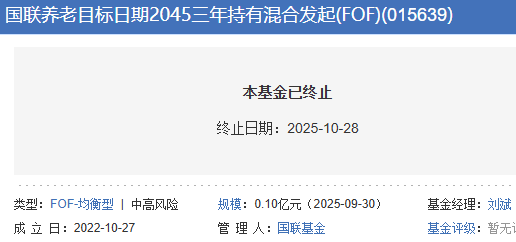
中国经济网北京12月23日讯 今日,国联基金发布国联养老目标日期2045三年持有期混合型发起式基金中 基金(FOF)清算报告。 报告称,国联养老目标日期2045三年持有期混合型发起式基金中基金(FOF)(原名中融养老目标日期2045 三年持有期混合型发起式基金中基金(FOF))基金合同2022年10月27日正式生效。 根据《国联养老目标日期2045三年持有期混合型发起式基金中基金(FOF)基金合同》(以下简称"基金 合同"或"《基金合同》")"第五部分 基金备案"中"三、基金存续期内的基金份额持有人数量和资产规模"的 约定:"《基金合同》生效之日起三年后的对应日,若基金资产净值低于2亿元,基金合同自动终止,且不得 通过召开基金份额持有人大会延续基金合同期限。" 该基金的基金合同生效日为2022年10月27日,基金合同生效之日起三年后的对应日为2025年10月27日。 截至2025年10月27日终,该基金资产净值低于2亿元,已触发基金合同终止的上述情形。根据《基金合同》 约定,该基金管理人将终止基金合同并依法履行基金财产清算程序,无需召开基金份额持有人大会。 该基金最后运作日为2025年10月27日,自2025 ...
GUM:香港12月MPF人均暂亏1448港元 年初至今仍赚逾4.2万港元
Zhi Tong Cai Jing· 2025-12-23 06:42
Core Viewpoint - The overall return of Hong Kong's Mandatory Provident Fund (MPF) decreased by 0.5% in December, with an average loss of HKD 1,448 per person, despite a year-to-date increase of 15.6%, marking the highest return in nearly eight years [1] Group 1: Performance of Fund Indices - The three main indices showed varied performance: the stock fund index fell by 0.8%, the mixed asset fund index decreased by 0.2%, while the fixed income fund index slightly increased by 0.03% [1] - Year-to-date, the MPF composite index has gained 15.6%, translating to an average profit of HKD 42,685 per person [1] Group 2: Sector Performance - In December, stock funds faced pressure, with European stock funds being the best performers, rising by 2.3% and achieving an annual return of 23.8% [1] - Conversely, other stock funds experienced a decline of 2.2% in December but still recorded a 17.1% increase for the year [1] - Hong Kong and Greater China stock funds saw slight declines of 1% and 0.9% in December, respectively, yet maintained significant annual gains of 29.2% and 30.8% [1] Group 3: Investment Strategy - Despite the market adjustment in December, the MPF has recorded positive returns year-to-date, prompting members to review their asset allocation strategies based on their risk tolerance to balance short-term volatility with long-term growth potential [1]
“十五五”养老新局开启,个人养老金全国运行一年成绩单如何?
Jin Rong Jie· 2025-12-23 03:53
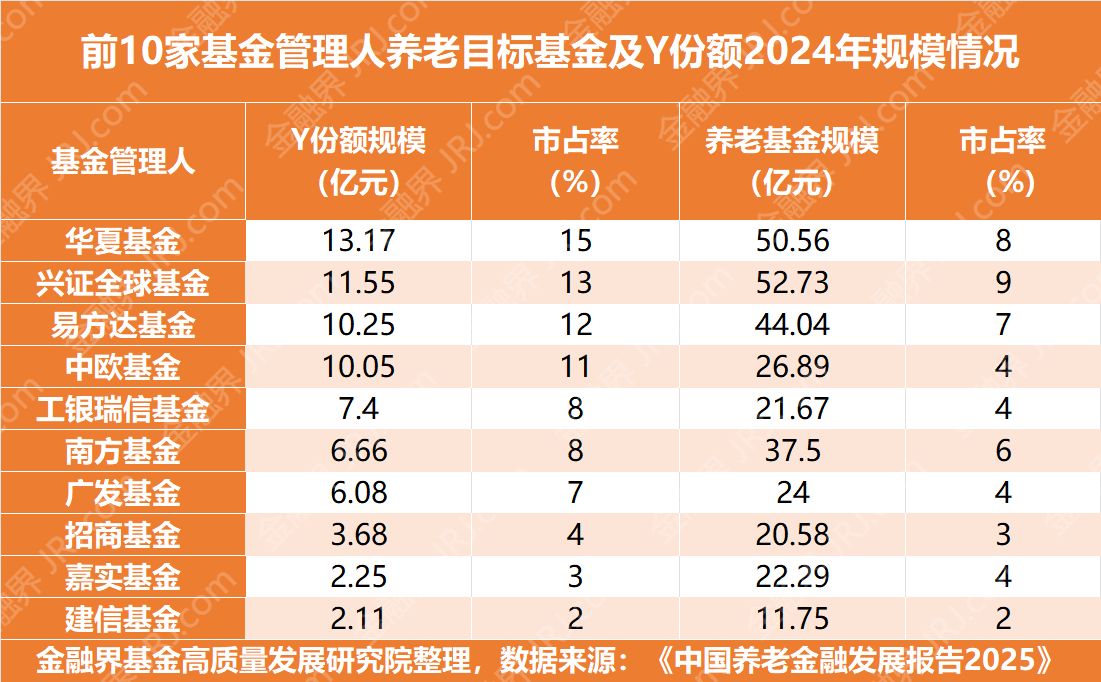
Group 1 - The personal pension system has shown positive changes in its first year of nationwide operation, with over 94% of Y-share funds achieving positive returns and an average return rate of 4.45% [1] - The Y-share funds have seen a significant growth, with their scale increasing by over 50% year-on-year, indicating a strong performance in the capital market [1] - The concentration of fund management in the Y-share fund market is high, with the top three managers holding 40% of the market share and the top ten managers accounting for 83% [1] Group 2 - The development of the personal pension market aligns with the national strategy to build a multi-tiered pension financial system, focusing on the third pillar of pensions based on personal accounts [2] - As of the end of 2024, the total number of investable personal pension products has increased to 946, reflecting a growth of over 25% compared to the previous year [2] - The report highlights challenges such as product homogeneity and the need for innovation in asset allocation to enhance the resilience of investment portfolios [2] Group 3 - Future development should focus on improving the actual experience of investors and exploring the integration of pension advisory services into product systems [3] - The emphasis is on creating an "economic sharing" pension financial system through continuous institutional optimization and asset management capability innovation [3] - The goal is to broaden the investment scope and diversification of pensions to effectively convert long-term funds into actual returns for the public [3]
为什么投资A500,值得关注南方这只产品?
Zhong Jin Zai Xian· 2025-12-23 03:50
Core Viewpoint - The China A500 Index has emerged as a leading investment option in the A-share market, attracting significant capital inflows and interest from investors, particularly in the form of ETFs, with the Southern A500 ETF standing out due to its strong fundamentals and strategic positioning [1][7]. Group 1: Investment Performance - In December, over 12.2 billion yuan flowed into the China A500 ETF market, with the Southern A500 ETF reaching a scale of 33.4 billion yuan, making it the largest in its category in the Shenzhen market [1][2]. - The Southern A500 ETF achieved a record trading volume of 8.061 billion yuan on December 17, indicating strong investor interest and liquidity [1][2]. Group 2: Competitive Advantages - The Southern A500 ETF boasts a significant scale of 33.443 billion yuan, which enhances its operational stability and mitigates issues like high premiums or redemption difficulties often faced by smaller ETFs [2]. - The ETF's daily trading volume reached a peak of 8.061 billion yuan, demonstrating its robust liquidity and ability to facilitate transactions for both large and retail investors [2]. - The fund has attracted a net inflow of 12.253 billion yuan since December, positioning it among the top three in terms of capital attraction within the China A500 ETF sector [2]. Group 3: Tracking Precision - The Southern A500 ETF has achieved an impressive tracking error of only 0.36% over the past three years, significantly better than the industry average, ensuring it accurately reflects the performance of the China A500 Index [3]. - The fund's research team has an average industry experience of 10 years, with expertise in mathematics, computer science, and financial engineering, allowing for comprehensive management of product design and quantitative research [3]. Group 4: Investor Accessibility - The Southern A500 ETF offers low fees of 0.15% for management and 0.05% for custody, making it attractive for investors who prefer real-time trading and flexible adjustments [4]. - For investors without a securities account, the Southern A500 ETF linked funds provide an easy entry point, allowing for regular investments without the need for active monitoring [4][5]. Group 5: Brand Trust - The Southern A500 ETF represents a long-term investment choice, backed by a well-established brand known for its professionalism and stability in the fund management industry [6]. - The fund aligns with national strategic priorities, covering various sectors from broad-based to thematic investments, thus appealing to a wide range of investors [6]. Group 6: Market Positioning - The China A500 Index, with a weight of 51.23% in emerging industries and a cumulative increase of 448.63%, is positioned as a key asset for investors looking to capitalize on China's economic transformation [7]. - The Southern A500 ETF's competitive edge lies in its scale, liquidity, precise tracking, comprehensive service offerings, and established brand reputation, making it a preferred choice in a crowded market [7].