
信托

Search documents
“信托之力 善行共生”上海信托慈善信托十二周年系列二:当金融向善遇见医者仁心
Zhong Guo Zheng Quan Bao· 2025-12-03 12:30
Group 1 - The Shanghai Trust's "Shangshan" charity trust supports the fourth Health Science Popularization Lecturer Training Camp at Zhongshan Hospital, marking a new phase in the collaboration between finance and healthcare [1][2] - The signing of the party-building cooperation agreement between Shanghai Trust and Zhongshan Hospital aims to enhance cross-industry collaboration, focusing on public health service improvement and the integration of financial and medical resources [1][2] - Zhongshan Hospital has been committed to a people-centered health development philosophy, aiming to optimize health services and promote healthy living through innovative collaborations with various social forces [1][2] Group 2 - Shanghai Trust has over 40 years of development experience and has been involved in charity trusts for 12 years, emphasizing its unique advantages such as account security, clear rights and obligations, and transparency [2] - The partnership has previously included projects like the training of cardiovascular medical staff from Jiangxi and initiatives to promote medical outreach in rural areas [2] - Shanghai Trust plans to expand its services in various trust sectors, including charity trusts and elderly care trusts, contributing to public health and enhancing the quality of life [3]
北京国际信托刘家宇总经理助理任职资格获批
Xi Niu Cai Jing· 2025-12-03 03:48
近日,北京金融监督管理局发布《关于刘家宇北京国际信托有限公司总经理助理任职资格的批复》,核准刘家宇担任北京国际信托有限公司(以下简称 "北 京国际信托")总经理助理的任职资格,要求其自行政许可决定作出之日起3个月内到任,未按期到任则该批复文件失效,由监管部门办理行政许可注销手 续。 ...


一线传音 | 中建投信托依托慈善信托持续助力乡村振兴
Bei Jing Shang Bao· 2025-12-03 03:22
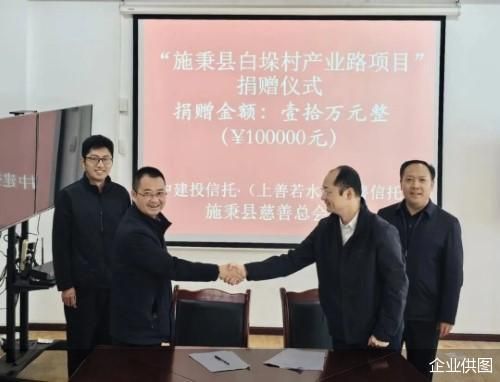
Core Viewpoint - China Construction Investment Trust is actively engaging in charitable initiatives, exemplified by the donation for the improvement of infrastructure in Shibing County, which aligns with the rural revitalization strategy [1][3]. Group 1: Project Overview - The "Shibing County Baiduo Village Industrial Road Project" aims to enhance road conditions in Zhangjiashan Group, addressing traffic safety hazards and seasonal accessibility issues [1][3]. - The project is funded through the "Shan Quan (Shang Shan Ruo Shui) Charitable Trust," established by China Construction Investment Trust, and is specifically directed towards the local charity association [1]. Group 2: Social Responsibility and Impact - China Construction Investment Trust has managed a total of 66 charitable trusts, with a cumulative registered scale exceeding 140 million yuan (approximately 20 million USD) as of October 2025 [3]. - The actual expenditure on charitable trusts has surpassed 100 million yuan (approximately 14 million USD), focusing on education sectors such as children's aesthetic education and quality development [3]. Group 3: Future Directions - The company plans to optimize its charitable trust business by integrating it with family trusts, corporate service trusts, and community governance trusts, enhancing its role in targeted assistance and sustainable empowerment [5]. - There is an emphasis on guiding more social capital into public welfare initiatives to contribute to common prosperity [5].
低利率下的信托破局:不动产与股权传承成焦点
2 1 Shi Ji Jing Ji Bao Dao· 2025-12-03 02:49
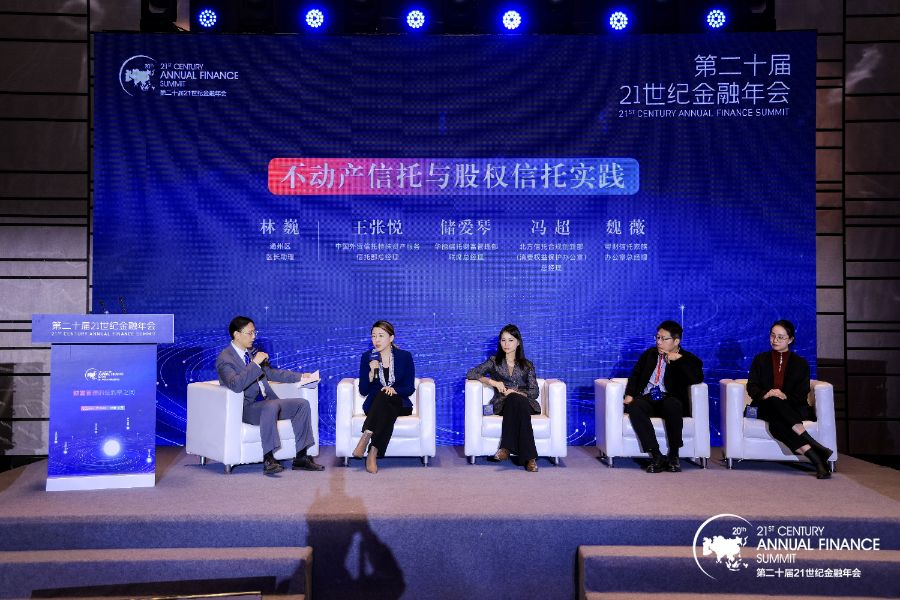
Core Insights - The trust industry is seizing the opportunity presented by regulatory pilot programs to promote the standardization and scaling of real estate and equity trust businesses, providing new pathways for wealth management in a low-interest-rate environment [1][3][4] Group 1: Industry Developments - Beijing will launch a pilot program for real estate trust property registration by the end of 2024, marking a significant breakthrough in overcoming long-standing regulatory bottlenecks [3] - The rapid growth of family trusts and insurance trusts is highlighted, with family trust development reaching a scale of 300 billion and combined family and insurance trusts exceeding 1 trillion since their inception [4] Group 2: Value Proposition - Real estate trusts offer threefold value: providing asset isolation and life security for aging and special needs families, helping enterprises revitalize real estate assets, and enhancing the trust mechanism to better serve the real economy [3] - The importance of wealth management is emphasized as a core issue of the times, with the current low-interest cycle prompting a reevaluation of wealth management fundamentals [3][4] Group 3: Market Dynamics - The trust industry is experiencing a shift in demand, with insurance products gaining relative advantages in a low-interest environment, leading to increased public risk awareness and growth in insurance and family trusts [4] - Various institutions, including banks, insurance companies, and law firms, are entering the trust market, creating a diversified development ecosystem [4] Group 4: Strategic Transformation - The trust industry is moving away from traditional business models reliant on government financing, channels, and real estate, seeking new business breakthroughs and profit growth points [5] - Wealth inheritance business is identified as a core direction for trust companies, optimizing business structures and supporting sustainable profit models during the industry's transformation [5] Group 5: Innovative Practices - Guangdong's experience in trust innovation includes allowing pre-registration of real estate, removing restrictions on trust company registration locations, and flexible integration with will trusts, enhancing the system's attractiveness [6]
信托新规对理财子公司与信托公司合作模式的影响
Xin Lang Cai Jing· 2025-12-03 02:39
Core Viewpoint - The release of the "Asset Management Trust Management Measures (Draft for Comments)" marks a comprehensive update to the existing trust regulations and is a significant regulatory framework for the trust industry to implement the 2018 "Guiding Opinions on Regulating Financial Institutions' Asset Management Business" [1][2] Summary by Relevant Sections Regulatory Background - Since the introduction of the asset management new regulations in 2018, supporting implementation details have been issued in various sectors, but the trust sector has lagged behind in establishing corresponding rules [2][3] - The new measures aim to transition from a patchwork regulatory approach to a comprehensive system that addresses the classification of trust business and strengthens full-process supervision [2][3] Changes in Trust Asset Management Products - As of Q3 2025, the scale of asset management products in the top ten holdings of wealth management products reached 3.63 trillion yuan, with trust plans leading at 2.65 trillion yuan, accounting for 73% [3][32] - The new regulations will require a shift in the cooperation model between wealth management subsidiaries and trust companies, emphasizing the need for diversified investment and risk management [3][4] Investment Limits and Diversification - The new measures stipulate that individual investors cannot invest more than 50% of the actual trust scale in the same trust product, and institutional investors are limited to 80% [4][33] - For open trust products involving non-standardized debt assets, the total investment from a single asset management product manager cannot exceed 50% of the trust product's actual scale [4][33] - The regulations also mandate that investments in the same asset or asset management product cannot exceed 25% of the trust product's actual scale, promoting a diversified investment approach [6][35] Reduction of Nested Structures - The measures reiterate the prohibition of excessive nested structures, allowing only one layer of investment in asset management products, with strict limits on the number of investors [9][37] - This aims to prevent regulatory circumvention through complex product structures and to ensure transparency in investment practices [9][38] Responsibilities of Trust Companies - Trust companies are required to actively manage investments and are liable for losses if they fail to fulfill their duties, adhering to the principles of "seller responsibility, buyer risk" [11][39] - The new regulations emphasize the independence of trust assets and the limited liability of trust companies, ensuring that they are accountable for their management practices [11][39] Future Cooperation Dynamics - The relationship between wealth management subsidiaries and trust companies is expected to evolve from a simple funding channel to a strategic partnership focused on product innovation, valuation, and compliance [28] - This shift will require both parties to enhance their professional capabilities in risk management and regulatory compliance to adapt to the new regulatory environment [28]
从高端保障走向普惠支撑
Jin Rong Shi Bao· 2025-12-03 02:05
Core Insights - The Chinese government is prioritizing the development of the elderly care industry and financial support for aging populations, with significant policy initiatives aimed at addressing the challenges of "Chinese-style elderly care" [2][3][7] Group 1: Policy and Market Trends - By 2035, the population aged 60 and above in China is expected to exceed 400 million, accounting for over 30% of the total population, highlighting the urgency of addressing elderly care issues [2] - The 2023 Central Financial Work Conference included elderly finance as one of the key areas for high-quality financial development, indicating a strong governmental focus on this sector [2] - The shift in elderly needs from basic care ("老有所养") to quality living ("老有所享") reflects a growing demand for personalized and high-quality elderly services [4][7] Group 2: Trust Services and Innovations - Trusts are increasingly being utilized by high-net-worth families for wealth management and elderly care, with examples like a family trust of 50.4 million yuan designed to ensure long-term financial security for aging family members [3][4] - The trust industry is innovating by creating integrated service models that combine insurance, trust, and elderly care services, enhancing the overall elderly care ecosystem [4] - Trusts are being positioned as a solution for both affluent and underprivileged groups, with initiatives aimed at providing customized financial products for those with special needs [5][6] Group 3: Social Responsibility and Accessibility - The trust industry is expanding its role in social responsibility by addressing the needs of vulnerable populations, including the elderly, disabled, and children in difficult circumstances [6][7] - New real estate trust services are being developed to help elderly individuals secure housing and manage their living expenses, demonstrating the industry's adaptability to meet diverse needs [6] - The goal of establishing a comprehensive elderly finance system by 2028 emphasizes the importance of innovation and collaboration within the trust sector to ensure that all elderly individuals can enjoy a secure and dignified life [7]

信托破题中国式养老:从高端保障走向普惠支撑
Jin Rong Shi Bao· 2025-12-03 01:58
Core Viewpoint - The Chinese government is increasingly prioritizing the development of the elderly care industry and financial support for aging populations, with significant policy initiatives aimed at addressing the challenges of "Chinese-style elderly care" [2][6]. Group 1: Policy and Market Trends - The "14th Five-Year Plan" emphasizes the need to actively respond to population aging and improve the policy mechanisms for the coordinated development of elderly care and industry [2]. - By 2035, the population aged 60 and above in China is expected to exceed 400 million, accounting for over 30% of the total population, highlighting the urgency of addressing elderly care issues [2]. - The 2023 Central Financial Work Conference identified elderly finance as one of the key areas for high-quality financial development, indicating a strong governmental focus on this sector [2]. Group 2: Trust Services and Wealth Management - High-net-worth individuals, like Ms. Zhang, are increasingly using family trusts to address concerns about wealth distribution and ensure long-term financial security for their retirement [3]. - Ms. Zhang's trust, with an initial scale of 50.4 million yuan, is expected to generate cash flow of approximately 110 million yuan in the future, demonstrating the financial potential of structured trusts for retirement planning [3]. - Trusts are evolving from being perceived as exclusive to the wealthy to becoming accessible for ordinary individuals, thereby enhancing their social responsibility in addressing elderly care needs [5]. Group 3: Innovative Trust Products - The demand for personalized and high-quality elderly care services is rising, shifting from basic care to a focus on health management, cultural engagement, and overall life quality [4]. - Companies like Ping An Trust are innovating by creating a comprehensive elderly care service ecosystem that integrates insurance, trust, and care services [4]. - The introduction of special needs trusts aims to provide tailored financial solutions for individuals with unique requirements, ensuring dignity and security in their later years [6]. Group 4: Real Estate Trusts and Broader Impact - Real estate trusts are being utilized to secure housing and financial support for the elderly, as seen in the case of Ms. Liu, who established a real estate trust for her retirement needs [7]. - The trust industry is responding to the "Chinese-style elderly care" challenge by developing diverse financial products that cater to both high-end and inclusive markets, aligning with the goal of establishing a multi-tiered elderly finance system by 2028 [7].

从西柏坡到信托一线:红色精神激励信托业写好转型“赶考”新答卷
Jin Rong Shi Bao· 2025-12-03 01:36
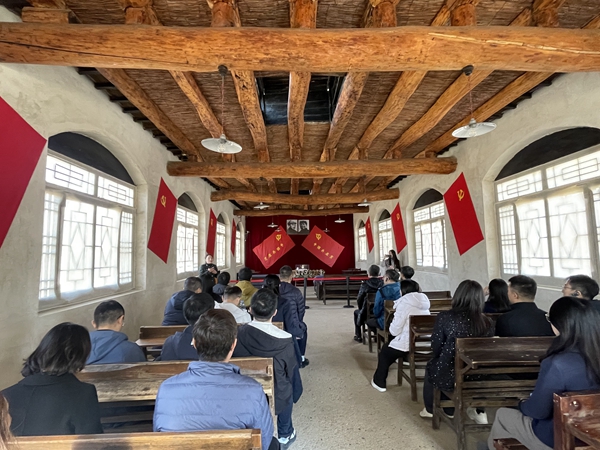
初冬的清晨,在河北省石家庄市平山县西柏坡纪念馆外的广场上,中粮信托公司的干部员工从这里 踏上了红色精神的寻根之路。 正风肃纪、清风正气、凝聚合力,正是他们一行40余人来到这里的目的。 "我们想在这片红色土地上,感悟'转折时期的战略智慧',汲取'攻坚阶段的精神力量',找到'突破 瓶颈的实践方法'。"中粮信托有关负责人说。 走进西柏坡纪念馆,一个个镌刻初心的细节、一段段凝结担当的往事,共产党人在关键历史节点上 的清醒与坚韧,令大家深受触动。 从"要我做"到"我要做"的转变,正是红色精神内化于心的体现。黄文俊说:"农粮产业链覆盖范围 广、客户需求差异大、产业细分场景多,既要通过产业特色措施控制风险,又要考虑模式可复制可推 广,哪个都是难啃的'硬骨头'。""只有真刀真枪打拼,多当几回'热锅上的蚂蚁',才有机会打出产融特 色。"有了革命精神的激励,他对未来工作的热情和信心更足了。 党的二十届四中全会提出"激发干部队伍内生动力和整体活力""统筹推进各领域基层党组织建 设""把党的领导贯穿经济社会发展各方面全过程",为信托行业党建工作锚定航向。 "中国共产党经过28年艰苦卓绝的斗争,1949年3月从西柏坡出发'进京赶考'… ...
给房子办张“信托身份证” 不动产不止“住”这么简单
Zhong Guo Zheng Quan Bao· 2025-12-02 22:09
Core Insights - The article highlights the growing trend of real estate trust property registration in China, which provides a new wealth protection solution for families, especially those with special needs children [1][2][4] Group 1: Pilot Expansion - Jiangsu Province has successfully established its first real estate service trust, integrating "housing for elderly care, special needs, and public welfare" [2] - Beijing has achieved a dual breakthrough in real estate trust registration, with a focus on lifelong care for children with autism [2] - Shanghai has launched family inheritance trusts, catering to both elderly care and wealth transfer needs [2] Group 2: Application Scenarios - Real estate trusts are being utilized for various purposes, including elderly care and wealth inheritance, showcasing their flexibility [4] - A notable case in Xiamen involved a dual trustee real estate family service trust, where rental income supports elder pensions [4] - The logistics warehouse trust project in Beijing allocates 50% of its income to public welfare, demonstrating innovative applications [4] Group 3: Institutional Improvements - The rapid advancement of real estate trusts is supported by clearer institutional frameworks, with a focus on simplifying registration processes [5] - The upcoming policy in Beijing aims to enhance the clarity of real estate trust property registration [5] - Challenges remain in cities without established policies, leading to complex operational processes [6]
给房子办张“信托身份证”不动产不止“住”这么简单
Zhong Guo Zheng Quan Bao· 2025-12-02 20:22
Core Insights - The article highlights the growing trend of real estate trust property registration in China, which provides a new wealth protection solution for families, especially those with special needs children [1][2][3] Group 1: Pilot Expansion - The first real estate service trust in Jiangsu Province was established by Suzhou Trust, integrating "housing for elderly care, special needs, and public welfare" [1] - Beijing has achieved a dual breakthrough in real estate trust registration, with Guotou Taikang Trust providing lifelong care for a family with an autistic child [1] - A competitive landscape is emerging as various cities, including Shanghai and Tianjin, launch their own real estate trust initiatives [2] Group 2: Application Scenarios - Real estate trusts allow property to be placed into a trust plan, managed by a trust company, with legal registration of property rights changes [2][3] - The first dual-entrustment family service trust was launched in Xiamen, where rental income from the property supports elder pensions [2] - Trusts are being designed to meet diverse family needs, from elder care to wealth management and inheritance [3] Group 3: Institutional Improvements - The rapid advancement of pilot programs is supported by clear institutional frameworks, addressing the lack of a comprehensive trust property registration system [3][4] - A notification issued in Beijing aims to simplify the registration process for real estate trust properties by directly annotating trust product names on property certificates [3] - Challenges remain in cities without established policies, where complex procedures and high thresholds for trust establishment hinder progress [3][4]