养老机构

Search documents
被养老院劝退的老人
Hu Xiu· 2025-09-17 23:42
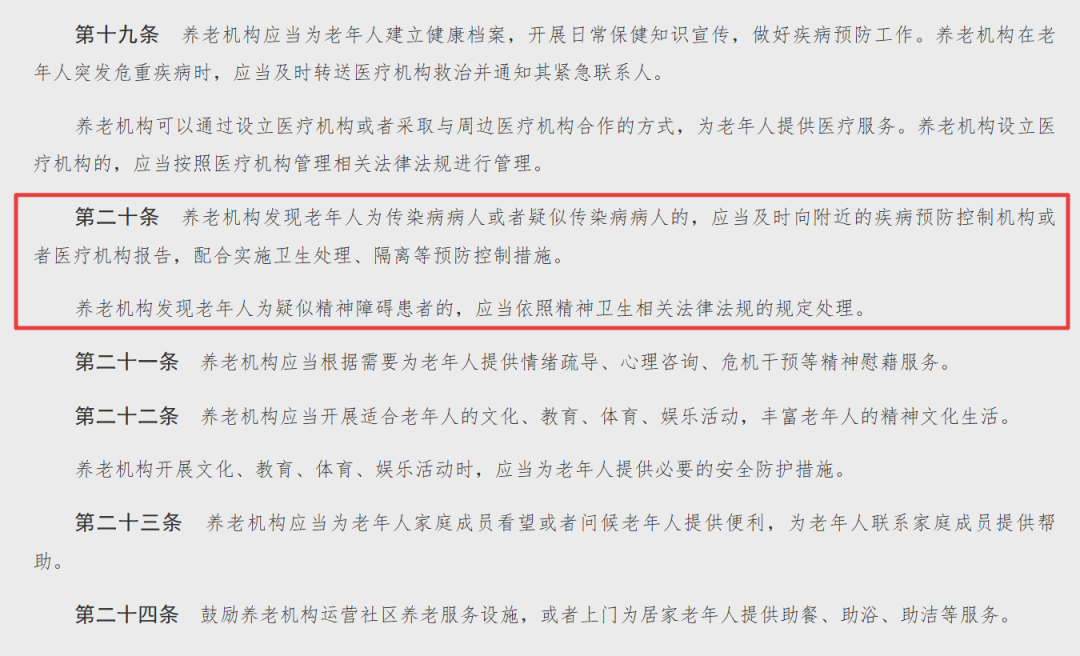
Core Viewpoint - The article discusses the challenges and realities faced by elderly individuals seeking admission to nursing homes, highlighting the strict policies and hidden requirements that can lead to rejection or withdrawal from these facilities [1][2][3]. Group 1: Management Guidelines - Nursing homes adhere to a strict "red line" policy, refusing admission to elderly individuals with infectious diseases unless they are fully cured [5][6]. - The Ministry of Civil Affairs' 2020 regulations mandate that nursing homes report any suspected infectious disease cases to health authorities for necessary preventive measures [6][7]. - Similar regulations apply to elderly individuals with mental disorders, where admission depends on the stability of their condition and the facility's capabilities [8][9]. Group 2: Implicit Requirements - Some elderly individuals may be "politely declined" admission due to the behavior and expectations of their family members [12][13]. - Families often view themselves as consumers, expecting nursing homes to take full responsibility for care without collaboration [14][15]. - Effective communication and cooperation between families and nursing homes are crucial for ensuring the safety and well-being of elderly residents [20][25]. Group 3: Responsible Withdrawal - Nursing homes may suggest transferring residents to specialized medical facilities if their health deteriorates beyond the institution's capacity to manage [27][28]. - Families may resist medical intervention for their elderly relatives due to concerns about costs or misunderstandings about treatment [31][34]. - The decision to "withdraw" a resident is often a responsible action aimed at protecting the health of all residents and maintaining the quality of care [35][36].

沙湾市市场监管局开展养老机构食品安全专项检查
Zhong Guo Shi Pin Wang· 2025-09-05 10:55
Core Viewpoint - The article emphasizes the importance of food safety regulation in elderly care institutions to ensure the health and safety of senior citizens [1][2] Group 1: Food Safety Inspections - The Shawan City Market Supervision Administration conducted special inspections on food safety in various elderly care institutions [1] - The inspections focused on the implementation of food safety management systems, including the safety of food in canteens, special food, and salt management [1] - Inspection methods included on-site checks, reviewing records, and random inquiries, with a focus on the procurement and storage of food materials [1] Group 2: Compliance and Rectification - The inspection team identified issues such as non-compliance in food sampling, incomplete purchase verification records, and unsatisfactory kitchen hygiene [1] - A rectification notice was issued to address these issues, specifying requirements and deadlines for compliance [1] Group 3: Future Initiatives - The Market Supervision Administration plans to establish a regular cooperation mechanism to enhance food safety awareness and operational skills among staff in elderly care institutions [2] - There will be efforts to promote exemplary practices within the industry to elevate overall food safety management standards [2] - The introduction of social supervision and improved complaint channels aims to strengthen the food safety monitoring network for elderly care institutions [2]
养老院开起“青年公寓”:年轻人陪伴抵租金,跨代共居养老新模式爆火
3 6 Ke· 2025-09-03 01:23
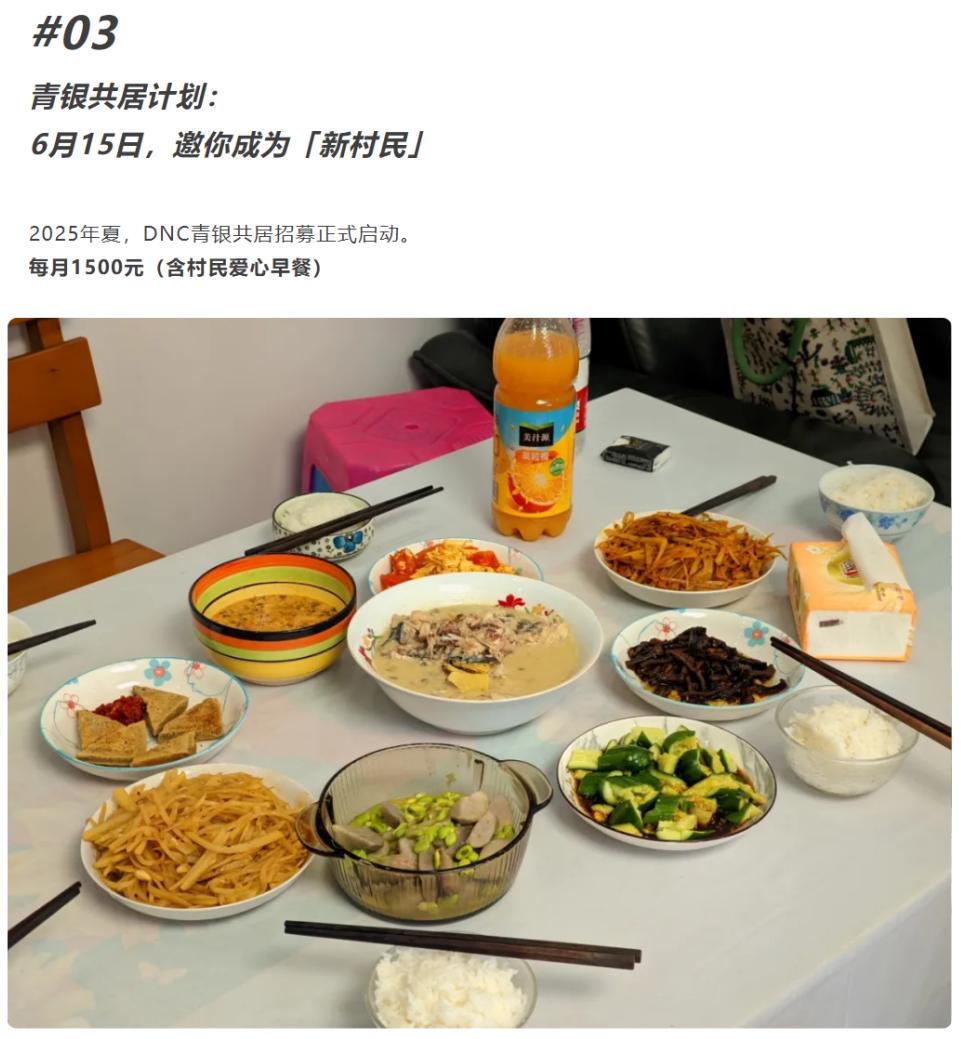
Group 1 - The core concept of "Qingyin Co-housing" involves young people and elderly individuals living together in a specific space, fostering interaction and companionship [4][7][37] - The initiative in Shanghai, known as "Qingyin Co-housing," allows young people to live in rural villas at a low cost while engaging in community activities and providing educational support to the elderly [1][4] - The model has gained attention in China as a solution to the challenges of aging populations and the loneliness of elderly individuals, with various implementations emerging across the country [6][8][37] Group 2 - The "Qingyin Co-housing" model is primarily practiced in institutional settings in China, contrasting with international examples where it has expanded to home-based care [14][7] - In 2023, it was estimated that approximately 160 million elderly individuals aged 60 and above live alone in China, highlighting the growing need for intergenerational living arrangements [8][12] - Various platforms in countries like Japan and the U.S. facilitate home-based "Qingyin Co-housing," allowing young people to rent rooms from elderly homeowners in exchange for companionship [11][32][36] Group 3 - The commercial implementation of "Qingyin Co-housing" in China includes initiatives where elderly care facilities rent out vacant rooms to young people, creating a mutually beneficial arrangement [13][17] - Examples of successful projects include the HeTai Center in Guangdong, which offers low rent in exchange for volunteer hours from young residents [17][20] - The model not only addresses the issue of underutilized space in elderly care facilities but also provides young people with affordable housing options in urban areas [13][19]
北京:拟支持符合条件的养老机构内设医疗服务纳入医保
news flash· 2025-07-24 04:42
Core Viewpoint - The draft of the "Beijing Elderly Care Service Regulations" was presented at the 18th meeting of the 16th Beijing Municipal People's Congress Standing Committee, emphasizing support for elderly care institutions to establish internal medical facilities and including these facilities in the basic medical insurance coverage [1] Group 1 - The draft proposes that eligible elderly care institutions can set up clinics and medical rooms as part of their services [1] - The inclusion of internal medical facilities in elderly care institutions into the basic medical insurance support framework is a significant policy shift aimed at enhancing healthcare access for the elderly [1]
管好养老机构“预付费”,让老人安度晚年
Nan Fang Du Shi Bao· 2025-07-17 15:21
Core Viewpoint - The introduction of a notarized prepayment supervision model for elderly care services in Shanghai's Putuo District aims to enhance the regulation of prepayment practices in the rapidly growing elderly care industry, addressing potential risks associated with prepayment schemes [1][2][3]. Group 1: Regulatory Developments - The Shanghai Putuo District Civil Affairs Bureau and the Putuo Notary Office have implemented a notarized prepayment supervision model, with 54 operating elderly care institutions signing agreements to transfer prepaid deposits into a notarized account [1]. - The Ministry of Civil Affairs and six other departments issued guidelines to regulate prepayment practices in elderly care, limiting the maximum prepayment period to 12 months and the maximum deposit to 12 times the monthly bed fee for each elderly individual [2]. - Local governments are encouraged to develop specific regulations based on the guidelines, with some areas reducing the prepayment period to 3 to 6 months to tighten oversight [2][3]. Group 2: Risk Mitigation Strategies - The notarized account model ensures that funds are independent of the institution's assets, protecting them from being frozen or misappropriated in case of bankruptcy or legal disputes [3]. - Withdrawals from the notarized account require mutual confirmation from both consumers and institutions, with notary verification, effectively preventing unauthorized charges [3]. - There is a push for the introduction of insurance mechanisms to further safeguard prepaid funds, alongside a call for enhanced enforcement measures to deter non-compliance and promote lawful operations among elderly care institutions [3]. Group 3: Broader Industry Context - The prepayment model is not unique to the elderly care sector; similar practices have been observed in real estate, education, and fitness industries, which have faced significant regulatory challenges due to instances of financial mismanagement [2]. - The focus on regulating prepayment practices in elderly care is part of a broader effort to improve the overall quality of life and security for the elderly population, emphasizing the need for comprehensive and ongoing regulatory oversight [3].
“培训+演练”筑牢养老机构“防火墙”
Liao Ning Ri Bao· 2025-07-14 01:14
Core Viewpoint - The fire safety training and drill for elderly care institutions in Shenyang aims to enhance safety awareness and emergency response capabilities, addressing the unique challenges posed by the aging population and mobility issues of residents [1][2]. Group 1: Training and Drills - The event included both online and offline components, with over 3.11 million viewers participating in the live broadcast [3]. - The training focused on practical skills for handling initial fire outbreaks and organizing orderly evacuations for elderly residents [2]. Group 2: Safety Measures and Management - Shenyang is enhancing its fire safety governance mechanisms for elderly care institutions, emphasizing real-life scenarios and case studies to improve training effectiveness [1]. - Institutions are encouraged to improve technical safety measures, such as smoke alarms and sprinkler systems, and to regularly maintain these systems to ensure they are operational [4].
着力打造一批银发产业领域知名企业
Liao Ning Ri Bao· 2025-06-30 01:19
Group 1 - The core viewpoint of the news is the implementation of a comprehensive plan to enhance elderly welfare and promote the silver economy in Liaoning Province, aiming to establish over four silver economy industrial parks by 2027 and achieve a 70% coverage rate of regional elderly services in towns and streets [2] - The plan includes the construction and renovation of at least 50 elderly care institutions annually, with a focus on creating key industries, brand enterprises, and major projects in the silver economy to stimulate consumption [2] - The development of home and community-based elderly care services is emphasized, with the establishment of a three-tier elderly service network covering urban and rural areas by 2029 [2] Group 2 - The province aims to expand the scale of the silver economy by guiding enterprises to explore the market, creating well-known companies in the silver industry, and establishing service mechanisms for these enterprises [3] - A "Senior Service Consumption Promotion Month" will be held every October, encouraging various regions to use consumption vouchers and experience vouchers to boost elderly consumption [3] - The plan promotes the development of innovative elderly products and encourages collaboration among enterprises, research institutions, and industry associations to foster a cooperative innovation model [3] Group 3 - An elderly product and service quality traceability system will be established, along with increased efforts to combat fraud, illegal fundraising, and consumer rights violations affecting the elderly [4] - Continuous strengthening of regulatory oversight in financial management and health care sectors is planned to protect the legal rights of elderly individuals [4]

鲁担养老服务贷金融破冰托起“夕阳红”
Qi Lu Wan Bao· 2025-06-25 23:31
Group 1 - The core idea of the news is the introduction of "鲁担养老服务贷" and "鲁担科技贷" by Shandong Investment and Financing Guarantee Group to address the financing difficulties faced by small and medium-sized private elderly care institutions and technology enterprises [1][3][4] - "鲁担养老服务贷" has provided 5 million yuan in loans to a nursing home, increasing its capacity to over 270 beds, making it the largest in the area [1] - The financing model involves collaboration among government, guarantee institutions, and banks, enhancing the stability of the financing guarantee system [1][3] Group 2 - The "鲁担科技贷" product was launched in July 2024 and has provided 27.27 billion yuan in premium subsidies to 20 guarantee institutions across nine cities, benefiting 1,025 national high-tech enterprises [3][4] - The annual guarantee fee rate for "鲁担科技贷" is capped at 0.5%, significantly lower than market rates, which reduces the financial burden on enterprises [4] - As of May 2025, Shandong Investment and Financing Guarantee Group has supported 15,800 specialized and innovative enterprises with a total amount of 70 billion yuan [4][5]
我逃离了全年无休的养老院
Hu Xiu· 2025-06-22 09:05
Group 1 - The nursing staff in the elderly care facility is primarily composed of nurses and caregivers, with a significant disparity in their roles and experiences [3][7] - Caregivers earn an average monthly salary of around 5,000 to 6,000 yuan, while nurses earn about 8,000 to 9,000 yuan, but both face high work intensity and irregular shifts [8][9] - The high turnover rate among nursing staff is attributed to the mismatch between salary and workload, making it difficult to retain skilled personnel [9][10] Group 2 - The management structure in elderly care facilities is unstable, with frequent changes in mid-level management, often due to the industry's slow profitability and high pressure from upper management [15][16] - Many companies entering the elderly care sector are large groups from various industries, but they struggle to achieve significant profits in this new field [16][17] - Cost-cutting measures by management can lead to increased pressure on employees, resulting in overwork without adequate compensation or benefits [20][21] Group 3 - The emotional toll on employees is significant, as they must cope with the loneliness and sadness of the elderly residents, which can affect their mental health [29][34] - The elderly often change care facilities multiple times, not solely due to dissatisfaction but also for better cost-effectiveness or family decisions [33] - There is a lack of psychological support for employees in the elderly care sector, despite the emotional challenges they face [35][36]
合规阵痛期、拥抱新技术
Jing Ji Guan Cha Wang· 2025-06-14 04:10
Core Insights - The enthusiasm for investment expansion among elderly care institutions has decreased, with some small and large projects seeking to sell off assets [2] - The industry is facing challenges such as tightening cash flow and declining profit margins, alongside adapting to stricter regulations [2][5] - Many elderly care facilities are undergoing significant renovations to meet new fire safety standards, leading to increased operational costs [3][4] Regulatory Environment - The transition to a more regulated prepayment model for elderly care services has increased cash flow pressure on institutions, as funds must now be managed in a tripartite account [6][7] - The new regulations require significant investments in fire safety, including staffing and infrastructure upgrades, which are particularly burdensome for smaller facilities [4][6] Financial Challenges - Many elderly care institutions are struggling to achieve a sustainable occupancy rate, with a reported average occupancy of only 38% in Beijing, far below the 50% threshold needed for profitability [5] - The tightening of prepayment regulations has led to a cash flow crunch, particularly affecting non-chain and smaller operators who may face risks of funding shortages [7][8] Technological Advancements - Companies are increasingly investing in digital management systems to reduce operational costs and improve efficiency, with one company investing approximately 60 million yuan [3][12] - The integration of artificial intelligence technologies is being explored to enhance operational safety and efficiency, despite initial cost increases [11][12] Workforce Development - There is a concerted effort to recruit young talent into the elderly care sector, with institutions recognizing the need for skilled management personnel to ensure long-term sustainability [10] - Training programs are being established to develop the next generation of leaders within the industry, emphasizing the importance of young professionals in driving future growth [10][11]