
数字农业

Search documents
隆平高科:子公司隆平开鸿的核心业务即聚焦数字农业领域
Zheng Quan Ri Bao Wang· 2025-08-22 11:43
Group 1 - The core business of the company’s subsidiary, Longping Kaihong, focuses on the digital agriculture sector [1] - The company aims to enhance production efficiency, reduce operational costs, and optimize resource allocation through technology [1] - The goal is to create value for participants and promote a sustainable business loop in digital agriculture services [1]

21社论丨技术创新赋能,深圳不断提升农业现代化水平
21世纪经济报道· 2025-08-22 00:24
Core Viewpoint - Shenzhen has emerged as a leader in modern agriculture, with 20 companies listed in the "2024 China Agricultural Enterprises Top 500," showcasing its strength in agricultural innovation and technology-driven platforms [1][2]. Group 1: Agricultural Enterprises in Shenzhen - Shenzhen ranks first among major cities in China with 20 companies on the "2024 China Agricultural Enterprises Top 500" list, with a total of 226 agricultural leading enterprises in the city [1]. - The city hosts 14 national-level and 133 provincial-level agricultural leading enterprises, indicating a robust agricultural sector [1]. - Notable companies include Deep Agriculture Group, which operates 35 offline agricultural wholesale markets with an annual transaction volume of 2.5 trillion yuan and 36 million tons [1]. Group 2: Technological Innovation in Agriculture - Shenzhen is recognized for its technological innovation, which is crucial for enhancing agricultural productivity and transitioning from a large agricultural nation to a strong agricultural nation [2]. - The city has established national agricultural technology parks and various innovation platforms, including 9 academic workstations and a national gene bank [2]. - Companies like Tencent and DJI are advancing digital agriculture, with DJI operating over 300,000 agricultural drones globally [2]. Group 3: Comparison with Developed Countries - Developed countries typically utilize a "farm-to-table" model that integrates various agricultural processes, ensuring global competitiveness through high R&D investment in biotechnology and sustainable practices [3]. - These countries maintain control over critical agricultural production and logistics, highlighting the need for similar strategies in China [3]. Group 4: Challenges and Opportunities in China's Agriculture - China's agricultural modernization is still lagging, with issues such as "data silos" hindering the flow of information between production and demand [4]. - There is a need for increased investment in agricultural technology and the integration of e-commerce platforms to enhance supply chain efficiency [4]. - Shenzhen's strengths in information technology and innovation can address these challenges, creating opportunities for increased agricultural efficiency and modernization [4].


孙东升:把握着力点 激发新活力
Jing Ji Ri Bao· 2025-08-22 00:11
Group 1 - The core viewpoint emphasizes the need for comprehensive rural revitalization as a key task for modernizing agriculture and rural areas in China, requiring calibration of focus points and activation of policies, markets, factors, and entities [1] - There is a significant gap in agricultural modernization compared to new industrialization, information technology, and urbanization, necessitating a focus on improving agricultural production capacity and resource utilization [1] - Ensuring food security is highlighted as a priority, with strategies to enhance grain production capabilities and maintain the 1.8 billion acres of arable land [1] Group 2 - The need for a diversified investment environment to support rural revitalization is stressed, requiring the implementation of policies that encourage financial, social, and fiscal investments [2] - Enhancing agricultural technology and equipment is crucial for improving competitiveness, with a focus on innovation in seed industry, agricultural machinery, and digital agriculture [2] - The importance of prioritizing rural development and optimizing resource allocation is noted, with an emphasis on integrating urban and rural development and promoting the free flow of resources [3]
把握着力点 激发新活力
Jing Ji Ri Bao· 2025-08-21 22:12
Group 1 - The core viewpoint emphasizes the necessity of advancing rural revitalization as a key task for achieving agricultural modernization in China, highlighting the need to calibrate focus points and activate policies, markets, and resources [1] - The article stresses the importance of enhancing agricultural modernization levels and increasing comprehensive production capacity, with a focus on improving land output rates, resource utilization, and labor productivity [1] - It underscores the significance of ensuring food security by enhancing grain production capabilities and adhering to the strategy of "storing grain in the land and technology," while maintaining the red line of 1.8 billion acres of arable land [1] Group 2 - The article discusses the need to optimize the multi-source investment environment for rural revitalization, emphasizing the importance of a friendly investment environment to mobilize various stakeholders [2] - It highlights the necessity of enhancing agricultural technology and equipment support to improve agricultural competitiveness, prioritizing innovation in seed industry, agricultural machinery, and digital agriculture [2] - The article calls for the implementation of a priority development approach for agriculture and rural areas, advocating for the integration of human, material, and financial resources to promote comprehensive rural revitalization [3]
国际粮食减损大会组织嘉宾进行实地观摩 “山东农业技术既高大上又接地气”
Da Zhong Ri Bao· 2025-07-27 01:11
Group 1 - The advanced agricultural technology showcased at the Jinan Zhongke Beidou Digital Agriculture Demonstration Base integrates satellite, drone, and ground monitoring systems to enhance the entire grain production management process [1] - The "Sky-Ground Network" technology has been widely promoted in Jinan, leading to a 9% increase in grain production, a 10% increase in revenue, and a 5% reduction in grain loss due to various factors [1] - The application of high-tech solutions in agriculture has improved precision and efficiency in grain production management, ultimately benefiting farmers [2] Group 2 - The Wanglao Village exemplifies the integration of agricultural production with rural tourism, showcasing a model for comprehensive rural revitalization [2] - The village has developed various business models, including specialty homestays and cultural workshops, while maintaining a beautiful ecological environment [2] - The initiatives in Wanglao Village serve as a valuable reference for rural development in other regions, particularly in developing countries [2]
全球青年双语主播探浙江:当高质量发展实践邂逅Z世代国际视角
人民网-国际频道 原创稿· 2025-07-24 07:27
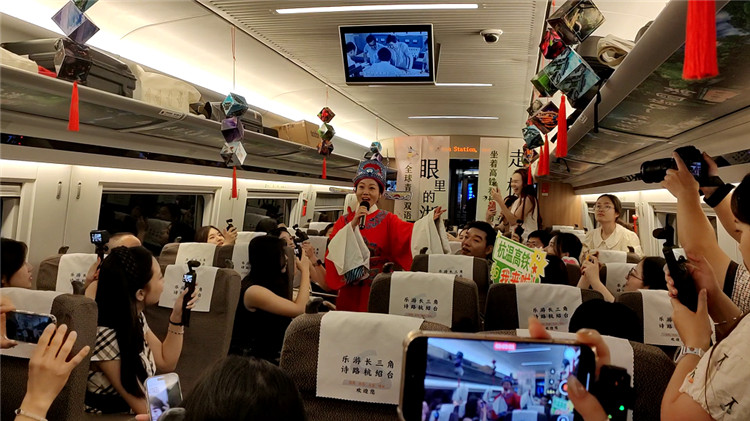
Core Insights - The event "High-Quality Development Observation Tour" in Zhejiang showcased the province's advancements in various sectors, including private economy, ecological protection, digital agriculture, and cultural innovation, through the lens of international youth broadcasters [1][12]. Group 1: Private Economy and Ecological Integration - In Wenzhou, the participation of private capital in high-speed rail projects was highlighted, demonstrating its positive impact on local employment [2]. - The innovative "artificial wetland + micro-hydropower" model in Sanjiang Wetland Park exemplified the synergy between ecological conservation and agricultural irrigation [2]. Group 2: Cultural and Tourism Integration - The Hangzhou-Wenzhou high-speed rail was recognized as a new engine for regional connectivity and cultural tourism, with onboard performances enhancing the travel experience [3]. - The immersive experience at the "Clearing the River" night tour in Hengdian Film City captivated international broadcasters, showcasing the rich cultural heritage of the Song Dynasty [3]. Group 3: Manufacturing and Ecological Transformation - The "Hardware Capital" in Yongkang demonstrated strong industrial capabilities with automated production lines and smart equipment, reflecting the robust strength of Zhejiang's manufacturing sector [5]. - The implementation of the "Two Mountains" concept in scenic areas illustrated how ecological protection can be transformed into rural tourism branding [8]. Group 4: Digital Agriculture and Urban Revitalization - The "Panda Pig" farm in Jinhua utilized innovative digital agriculture techniques, impressing broadcasters with its modern approach to farming [9]. - The revitalization of ancient towns like Wuzhou Ancient City highlighted the integration of cultural heritage and creative industries, enhancing tourism through unique local characteristics [10]. Group 5: Silk Industry Innovation - The Wan Shili Innovation Center in Hangzhou combined traditional silk craftsmanship with AI technology, showcasing the commitment to preserving cultural heritage while embracing modern market demands [12].
先正达集团聚焦农业可持续发展,推动绿色变革
Jing Ji Wang· 2025-07-21 10:00
Core Insights - The third China International Supply Chain Promotion Expo highlighted Syngenta Group's focus on sustainable agricultural development and innovative practices [1][2] - Syngenta Group showcased a series of achievements in sustainable agriculture, including regenerative agriculture projects and bio-based products that enhance crop quality and yield [1] - The company emphasizes soil health as a core agricultural concept, aiming to improve the ecological health of farmland through comprehensive measures [1][2] Group 1 - Syngenta Group has participated in the expo for three consecutive years, demonstrating its commitment to sustainable agricultural practices [1] - The company presented its full industry chain advantages in agriculture, from original innovations in laboratories to precision planting solutions empowered by AI [1] - Syngenta Group's systematic solutions include "good seeds + good products + good fields + good practices," promoting quality improvement and sustainable development in agricultural production [1] Group 2 - The company continues to launch green and efficient agricultural inputs that reduce usage while increasing yield and minimizing environmental impact [2] - Syngenta Group's Thick Soil Health Platform collaborates with the Panda Guide to create a closed-loop path for ecological agriculture, from soil restoration to brand recognition [2] - The company sets an industry example by providing valuable experiences and feasible paths for the green transformation and sustainable development of agriculture [2]
数智兴乡消费焕新主题大会成功举办共探数智时代发展新路径
Zhong Guo Chan Ye Jing Ji Xin Xi Wang· 2025-06-26 11:03
Core Insights - The forum "Digital Empowerment for Rural Revitalization" emphasizes the importance of digital technology as a driving force for rural revitalization and a key support for achieving common prosperity [3][13] - The event gathered over 500 leaders and guests to explore new paths for rural revitalization and digital living development [1] Group 1: Digital Technology and Rural Revitalization - Digital technology is identified as a crucial engine for comprehensive rural revitalization and is essential for promoting urban-rural integration [3] - Discussions focused on how digital solutions like smart agriculture, product traceability, and intelligent supply chains can enhance agricultural productivity and brand development [5] - The concept that "everyone is a builder of the digital economy" was emphasized, highlighting the role of ordinary individuals in rural revitalization [5] Group 2: Innovative Marketing and Community Engagement - An innovative approach was proposed from a digital marketing perspective, suggesting the use of digital tools and traffic to promote rural specialty industries [7] - A dual-track recruitment plan was announced to encourage societal participation in rural revitalization through digital means [7] Group 3: Strategic Collaborations and Future Plans - Strategic partnerships were formed between various entities, including a collaboration between Digital Life and the "I Represent My Hometown" initiative to enhance e-commerce, cultural tourism, and digital agriculture [9] - The chairman of Digital Life outlined a dual-driven strategy focusing on rural revitalization and urban service network expansion, aiming to create a comprehensive digital ecosystem [11] - The forum served as a significant platform for deepening the integration of digital technology with rural revitalization, with a commitment from participants to further collaboration [13]
新华视点|创新驱动 数智领航——以科技创新引领产业创新一线观察
Xin Hua She· 2025-06-14 01:42
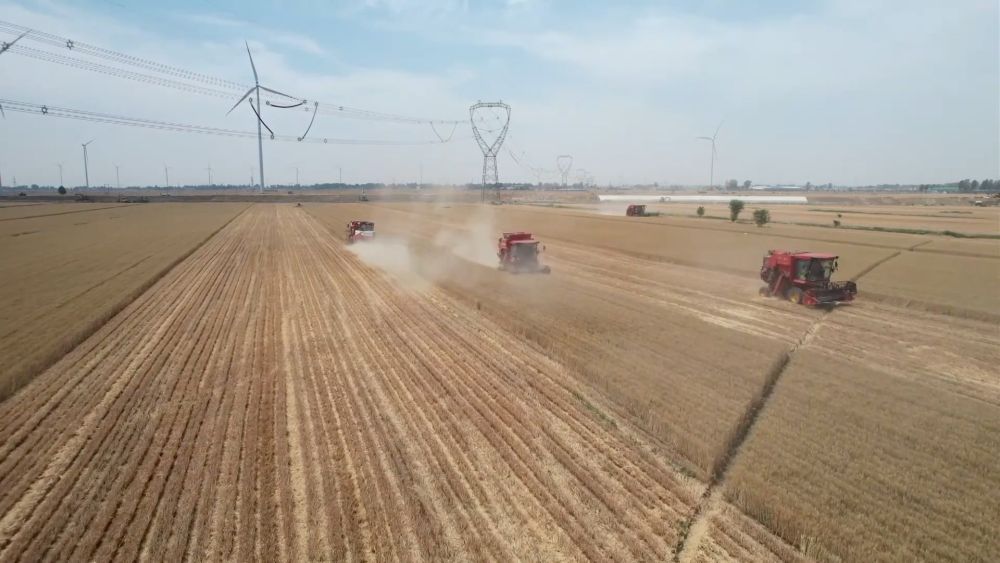
Group 1: Agricultural Innovation - The 5G digital agriculture demonstration park in Hebi City, Henan Province, spans over 3,000 acres of high-standard farmland, showcasing modern agricultural practices with large combine harvesters [1] - The park is equipped with soil moisture monitoring devices, weather stations, and pest monitoring equipment, which collect comprehensive data on soil moisture, nutrient content, weather conditions, and pest issues, integrating traditional farming with modern technology [3] Group 2: Environmental Transformation in Industry - The engineering rubber industry in Hengshui, Hebei, has over 60% market share domestically but faced pollution issues, prompting a shift from passive pollution control to proactive pollution reduction through "smart manufacturing and governance" [5] - Hengshui High-tech Zone has invested nearly 100 million yuan to establish a "technical support-rating incentive-smart supervision" system, guiding over 60 engineering rubber companies in environmental upgrades [6] Group 3: Bamboo Industry Upgrading - Yong'an City in Fujian Province, known as the "Bamboo and Bamboo Shoot Capital," is accelerating the transformation of its bamboo industry through digital technology, monitoring soil temperature and humidity in real-time for intelligent irrigation [6] - The bamboo processing sector is diversifying, utilizing CNC equipment to transition from manual to automated processes, improving product variety, precision, and quality [9] Group 4: Smart Environmental Monitoring - The Maowei Sea Intelligent Comprehensive Monitoring Base in Qinzhou City, Guangxi, utilizes various monitoring methods, including satellite remote sensing and drone patrols, to assess water quality parameters automatically [8] - The base, which began operations in March, integrates AI, big data, and cloud computing to create a multi-dimensional ecological monitoring system, supporting sustainable development in the region [11]
富邦科技(300387) - 300387富邦科技投资者关系管理信息20250612
2025-06-12 09:24
Group 1: Financial Performance - In 2024, the company's revenue reached 123,507.48 million, a year-on-year increase of 17.79% [15] - Domestic revenue grew by 19.21%, while overseas revenue was 56,175.68 million, up 16.13%, accounting for 45.48% of total revenue [15] - The net profit attributable to shareholders was 9,359.03 million, reflecting a 30.81% increase year-on-year [15] Group 2: Business Strategy and Market Expansion - The company aims to replace 50% of chemical nitrogen fertilizer with biological nitrogen fixation technology within 3-5 years [5] - Future strategies include enhancing the global integrated operation system for marketing, R&D, production, supply, and logistics [3] - The company plans to deepen its market presence in Asia, Europe, Africa, and the CIS regions, focusing on emerging markets and blank areas [6] Group 3: Product Development and Innovation - The company achieved a revenue of 90,247.01 million from its additive business in 2024, a 9.35% increase, driven by green transformation opportunities [3] - It is focusing on developing a complete chain from laboratory research to field demonstration in modern agriculture [2] - The company is committed to integrating digital and biological technologies to enhance agricultural productivity and sustainability [7] Group 4: Marketing and Customer Engagement - The "1+X" strategic marketing model will be implemented to optimize resource integration and channel development [5] - The company emphasizes customized, one-stop solutions for clients, enhancing customer satisfaction and long-term partnerships [5] - It will leverage digital agriculture services to improve market reach and brand influence [4] Group 5: Future Outlook and Challenges - The company anticipates short-term fluctuations in performance due to seasonal factors and raw material price changes [9] - It is committed to continuous innovation and adapting to agricultural policies like "zero growth of chemical fertilizers and pesticides" [12] - The company will explore strategic acquisitions to enhance its competitive edge and market position [10]
