
民营医院

Search documents
股价跌去近九成后,基本盘稳定的海吉亚医疗来到估值反转前夜?
Zhi Tong Cai Jing· 2025-10-15 13:24
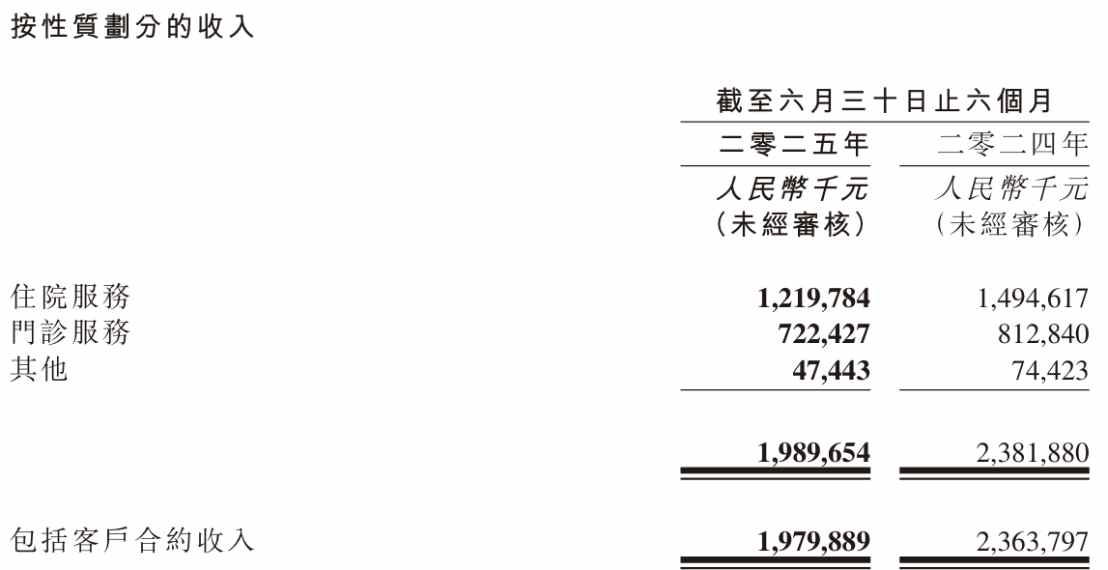
Core Viewpoint - Hai Jiayi Medical (06078) has issued a profit warning, expecting a revenue decline of approximately 15% to 17% and a net profit decline of about 34% to 39% for the mid-year period [1] Financial Performance - For the first half of 2025, Hai Jiayi Medical reported revenue of 1.99 billion RMB, a year-on-year decrease of 16.47%, and a net profit of 246 million RMB, down 36.18% [3][4] - The company's inpatient services revenue was 1.22 billion RMB (down 18.4% year-on-year) and outpatient services revenue was 722 million RMB (down 11.2% year-on-year) [4] Impact of DRG Payment Reform - The implementation of the DRG (Diagnosis-Related Group) payment reform is a significant factor contributing to the company's financial downturn, shifting the payment model from fee-for-service to bundled payments based on disease types [3][6] - This reform has led to a compression of profit margins for private hospitals, including Hai Jiayi Medical, as it incentivizes cost control rather than revenue maximization [3][6] Market Dynamics - Despite the financial challenges, the demand for hospital services remains stable, with the number of patients treated reaching 2.2 million, unchanged from the previous year [4][6] - The aging population in China, projected to reach over 400 million by 2035, and the expected growth in the oncology market present a favorable long-term outlook for Hai Jiayi Medical [7] Capital Expenditure and Future Strategy - The company has indicated a reduction in capital expenditures, with a current spending of 242 million RMB, down 28.5% year-on-year, and plans to focus on acquisitions rather than building new hospitals in the short term [5][6] - The management believes that the company will eventually see a rebound in revenue and profit as it navigates through the current downturn and capitalizes on new capacity and market concentration [6][7] Stock Performance and Market Sentiment - Hai Jiayi Medical's stock has experienced a significant decline of approximately 87.95% from its peak of 109.43 HKD in 2021 to around 13 HKD, with a static PE ratio dropping to 13.03 times [1][8] - Recent trading activity shows low trading volumes and a bearish sentiment, with the stock price remaining below the average cost, indicating a potential for further downside before any recovery [8][11]

股价跌去近九成后,基本盘稳定的海吉亚医疗(06078)来到估值反转前夜?
智通财经网· 2025-10-15 13:19
Core Viewpoint - Hai Jiayi Medical (06078) has issued a profit warning, expecting a revenue decline of approximately 15% to 17% and a net profit decline of about 34% to 39% for the mid-year period [1] Financial Performance - For the first half of 2025, Hai Jiayi Medical reported revenue of 1.99 billion RMB, a year-on-year decrease of 16.47%, and a net profit of 246 million RMB, down 36.18% year-on-year [3][4] - The company's inpatient services and outpatient services generated revenues of 1.22 billion RMB (down 18.4% year-on-year) and 722 million RMB (down 11.2% year-on-year) respectively [3][4] DRG Payment Reform Impact - The implementation of the DRG (Diagnosis-Related Group) payment reform is a significant factor contributing to the company's revenue and profit decline, shifting the payment model from fee-for-service to bundled payments based on disease types [3][6] - The reform has led to a compression of profit margins for private hospitals, including Hai Jiayi Medical, as it incentivizes cost control rather than revenue maximization [3][6] Market Dynamics - Despite the revenue and profit declines, the number of patients treated remained stable at 2.2 million, indicating consistent demand for Hai Jiayi's hospital services [4][6] - The aging population in China, projected to reach over 400 million by 2035, and the expected growth in the oncology market present a favorable long-term outlook for Hai Jiayi Medical [7] Capital Expenditure and Future Strategy - The company has indicated a reduction in capital expenditures, with a current spending of 242 million RMB, down 28.5% year-on-year, and plans to focus on acquisitions rather than new hospital constructions in the short term [5][6] - Hai Jiayi Medical is expected to experience a rebound in revenue and profit as it navigates through the capital expenditure peak and benefits from new capacity coming online [6][7] Stock Performance and Market Sentiment - Following the profit warning, the stock price fell significantly, reaching a low of 13.12 HKD, representing an 87.95% decline from its peak of 109.43 HKD in 2021 [1][8] - The stock has shown signs of stabilization, with a recent increase in trading volume and a potential for a turnaround, although market sentiment remains cautious [8][11]
医药行业周报:医保和商保目录调整加速推进,板块回调中择时布局低估优质标的-20250925
BOCOM International· 2025-09-25 10:47
Industry Rating - The report rates the pharmaceutical industry as "Leading" [1] Core Insights - The adjustment of medical insurance and commercial insurance directories is accelerating, suggesting a favorable environment for undervalued quality stocks during market corrections [4][5] - The report emphasizes the importance of timing and stock selection in the current market, particularly after a broad rally in innovative drug stocks [4] - The upcoming ESMO conference in October is highlighted as a key event, with specific companies recommended for attention due to potential significant data releases [4] Summary by Sections Market Performance - The Hang Seng Index fell by 1.1% and the Hang Seng Healthcare Index decreased by 1.4% during the week of September 16-23, 2025, ranking 5th among 12 industry indices [4][6] - Sub-industry performance varied, with Internet medicine showing a slight increase of 0.9%, while sectors like medical devices and hospitals saw declines of 5.2% and 8.2%, respectively [4][6] Valuation Overview - The report provides a detailed valuation summary for various companies, with notable price-to-earnings (P/E) ratios for the pharmaceutical sector, such as 31.0x for prescription drugs and 14.1x for biopharmaceuticals [15] - The average P/E ratio across the sector is reported at 57.0, indicating a diverse valuation landscape [3] Institutional Holdings - As of September 23, 2025, domestic institutional holdings through Hong Kong Stock Connect remained stable at 22.2%, while foreign holdings slightly decreased to 38.7% [34][38] - The report notes a trend of increased foreign investment in innovative drug companies, with specific companies like InnoCare and Legend Biotech seeing significant increases in holdings [38][40] Regulatory Developments - The report discusses the recent adjustments to the national basic medical insurance directory and commercial insurance innovative drug directory, with a low approval rate for submitted drugs [5] - The 11th batch of national drug procurement has been announced, with new rules aimed at stabilizing clinical practices and ensuring quality [5]
三星医疗跌2.02%,成交额2.75亿元,主力资金净流入487.44万元
Xin Lang Cai Jing· 2025-09-18 06:23
Company Overview - Samsung Medical is located in Ningbo, Zhejiang Province, established on February 1, 2007, and listed on June 15, 2011. The company specializes in the research, production, and sales of electric energy metering and information collection products, as well as distribution equipment and medical services [1]. Financial Performance - For the first half of 2025, Samsung Medical achieved operating revenue of 7.972 billion yuan, representing a year-on-year growth of 13.93%. The net profit attributable to the parent company was 1.230 billion yuan, an increase of 6.93% year-on-year [2]. - Cumulative cash dividends since the A-share listing amount to 5.728 billion yuan, with 2.650 billion yuan distributed over the past three years [3]. Stock Performance - As of September 18, Samsung Medical's stock price decreased by 2.02%, trading at 22.75 yuan per share, with a total market capitalization of 31.969 billion yuan. The stock has declined by 23.85% year-to-date [1]. - The stock's trading volume showed a net inflow of 4.8744 million yuan from main funds, with significant buying and selling activities recorded [1]. Shareholder Information - As of June 30, the number of shareholders increased to 29,000, up by 76.91%, while the average circulating shares per person decreased by 43.15% to 48,732 shares [2]. - Among the top ten circulating shareholders, Hong Kong Central Clearing Limited is the fourth largest, holding 47.9803 million shares, an increase of 3.9134 million shares from the previous period [3]. Business Segmentation - The company's main business revenue composition includes 79.70% from the electric power sector, 19.15% from medical services, and 1.15% from other businesses, with no revenue from financing leasing and consulting services [1]. - Samsung Medical is categorized under the electric equipment industry, specifically in the distribution equipment sector, and is associated with concepts such as private hospitals, mid-cap stocks, electric IoT, industrial internet, and energy storage [1].

医药行业周报:行业波动中内外资略有分歧,择时布局创新药产业链低估优质标的-20250918
BOCOM International· 2025-09-18 03:13
Industry Rating - The report rates the pharmaceutical industry as "Leading" [1] Core Insights - There is a divergence between domestic and foreign capital in the pharmaceutical sector, with a focus on timing and selecting undervalued quality stocks in the innovative drug supply chain [1][4] - The report suggests that after a broad rally in innovative drugs, the importance of timing and stock selection has significantly increased, recommending gradual positioning during market corrections [4] Market Performance - The Hang Seng Index rose by 1.9% during the week of September 9-16, 2025, while the Hang Seng Healthcare Index fell by 3.0%, ranking 12th among 12 industry indices [4][8] - Sub-industry performance varied, with hospitals (+27.1%) and medical devices (+6.8%) showing gains, while biopharmaceuticals (-2.2%) and internet medicine (-3.5%) declined [4][8] Institutional Holdings - As of September 16, 2025, domestic capital's holding ratio through Hong Kong Stock Connect remained stable at 22.1%, while foreign capital's holding ratio decreased to 38.4% [33][38] - Domestic investors have been increasing their positions in leading and innovative drug companies, while foreign investors have shown a preference for CXO companies with better cost-performance ratios [4][38] Valuation Overview - The report provides a valuation summary for various companies, with target prices and ratings indicating a generally bullish outlook on innovative drug companies [3] - The average price-to-earnings ratio (P/E) for the pharmaceutical sector is noted, with specific segments like prescription drugs at 31.4 times and biopharmaceuticals at 14.2 times [17] Regulatory Developments - The National Medical Products Administration (NMPA) announced a fast-track review process for innovative drug clinical trial applications, aiming to streamline approvals for certain categories of drugs [7] - The report discusses the latest draft of the national centralized drug procurement rules, highlighting systematic optimizations in bidding mechanisms and quality assurance requirements [6][7]
锦欣生殖(01951):短期业绩压力陡增,业务调整提升股东回报和长期空间,下调至中性
BOCOM International· 2025-08-27 11:47
Investment Rating - The investment rating for the company is downgraded to Neutral [4][2]. Core Views - Short-term performance pressures have increased significantly, prompting business adjustments to enhance shareholder returns and long-term potential [2]. - The company is experiencing a decline in revenue and net profit, with a notable drop in gross margin due to various operational challenges [7][8]. - Management plans to restructure the U.S. business and focus on key domestic operations, anticipating a recovery in performance over the long term [7]. Financial Overview - Revenue projections for 2025 have been revised down by approximately 18% to 2,617 million RMB, with further declines expected in subsequent years [8]. - Net profit is expected to turn negative in 2025, with a forecasted loss of 942 million RMB, followed by a recovery in 2026 and 2027 [3][15]. - The company’s gross margin is projected to decrease significantly, with a forecast of 33.0% for 2025, down from previous estimates [8]. Business Adjustments - The management is actively seeking to optimize the debt structure and reduce financial costs, with plans for share buybacks and dividends once cash flow stabilizes [7]. - The company aims to expand its capacity in key regions, with new facilities expected to drive growth in treatment cycles [7][8]. Market Position - The company maintains a strong position as an industry leader, with a clear long-term growth logic driven by policy support and strategic business adjustments [7][8]. - The stock's target price has been set at HKD 3.30, indicating a potential upside of 5.7% from the current price of HKD 3.12 [1][14].
空挂床、虚增药品进价……最高法严惩医保骗保
第一财经· 2025-08-05 03:51
Core Viewpoint - Private hospitals play a significant role in enhancing medical resources and drug procurement, but some have engaged in fraudulent activities to defraud medical insurance funds, leading to legal consequences [3][5]. Group 1: Fraud Cases and Legal Actions - The Supreme People's Court reported on August 5, 2024, detailing severe punishments for medical insurance fraud, highlighting four typical cases of such crimes [3][5]. - A notable case involved a private hospital in Shanxi, where the accused inflated drug prices, duplicated drug entries, and fabricated medical records to defraud over 9.7 million yuan (approximately 1.5 million USD) from the medical insurance fund [4][5]. - The court sentenced the main perpetrator to 13 years and 6 months in prison, with fines imposed on several accomplices, reflecting the judiciary's strict stance against such fraudulent activities [4][5]. Group 2: Impact on Medical Insurance System - The Supreme Court emphasized that while private hospitals contribute to medical service provision, fraudulent practices undermine the integrity of the medical insurance system, necessitating strict legal action [5]. - In 2024, courts across the country concluded 1,156 cases of medical insurance fraud involving 2,299 individuals, marking a 131.2% increase in case resolution compared to the previous year, and recovering over 400 million yuan (approximately 56 million USD) in defrauded funds [5].

一民营医院虚增药品进价、空挂床骗取医保基金,最高法:依法严惩
Di Yi Cai Jing· 2025-08-05 03:35
Core Insights - The article highlights the significant increase in the number of healthcare fraud cases related to medical insurance, with a total of 1,156 cases involving 2,299 individuals concluded in 2024, representing a year-on-year increase of 131.2% [1][3] - The total amount recovered from fraudulent activities reached over 402 million yuan, indicating the severity of the issue and the efforts made by the judicial system to combat such crimes [1][3] Group 1: Healthcare Fraud Cases - In 2024, the courts concluded 1,156 cases of medical insurance fraud, with a total of 2,299 individuals involved, marking a significant increase in enforcement actions against such crimes [1][3] - The judicial system has focused on punishing not only the direct perpetrators but also the organizers and professional fraudsters behind these schemes [3] Group 2: Role of Private Hospitals - Private hospitals play a crucial role in enhancing medical resources and ensuring access to healthcare for the public, but some have resorted to fraudulent practices to exploit the medical insurance system [3] - Specific fraudulent methods employed by these hospitals include inflating drug prices, duplicating drug entries, and fabricating medical records to claim unjustified reimbursements from the national medical insurance fund [2][3] Group 3: Legal Consequences - The article details a specific case where individuals involved in a private hospital were sentenced to significant prison terms for their roles in defrauding the medical insurance system, with sentences ranging from four years to thirteen and a half years [2] - The penalties imposed reflect the serious nature of the crimes and the commitment of the legal system to uphold the integrity of the medical insurance framework [2][3]
利润下降,华润医疗股价大跌
Zheng Quan Shi Bao· 2025-08-04 10:49
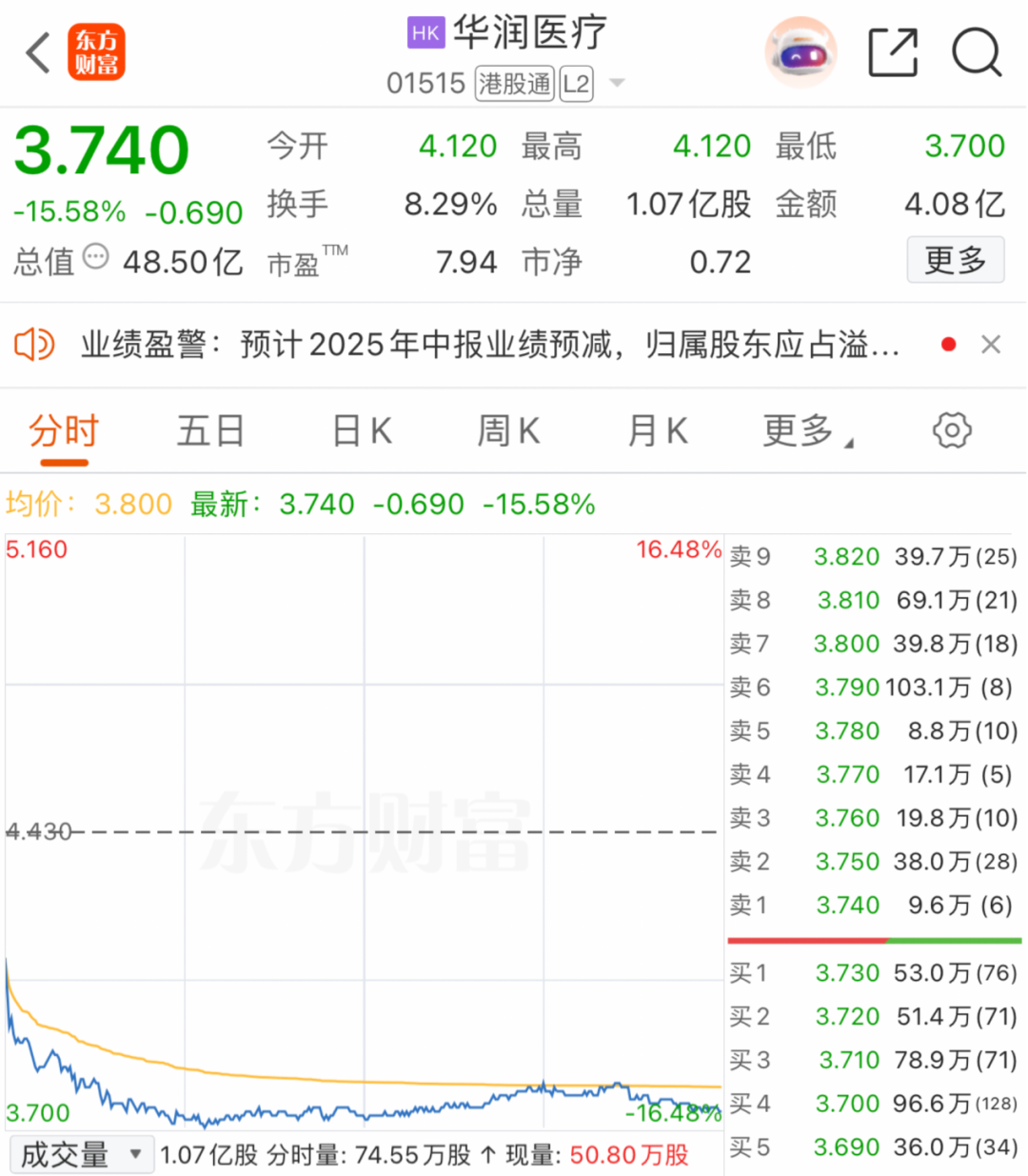
Core Viewpoint - The stock price of China Resources Medical Holdings (华润医疗) plummeted significantly after the company issued a profit warning, indicating a projected profit decline of 20% to 25% for the first half of the year, and a more severe drop of 55% to 60% when excluding one-time gains [1][4]. Company Performance - On August 4, the stock price of China Resources Medical fell by 15.58%, closing at HKD 3.74, resulting in a total market capitalization of HKD 48.5 billion [2][3]. - The company expects a profit decline due to reduced average medical insurance fees affecting operational profits and a gradual exit from the IOT (Investment-Operation-Transfer) business, which has decreased profit contributions [1][4]. Financial Metrics - For the full year 2024, China Resources Medical reported revenue of HKD 9.855 billion, a decrease of 2.5% year-on-year, while shareholder profit increased by 119.6% to HKD 566 million, with earnings per share at HKD 0.45 [6]. - The decline in revenue was primarily due to the impact of medical insurance cost control, with outpatient and inpatient average income dropping by 2.4% and 4.3%, respectively [6]. Management Changes - Significant changes in the board of directors occurred on June 19, with Song Qing resigning as executive director and chairman, replaced by Yu Hai, who also serves as the company president [7]. Industry Context - The performance issues faced by China Resources Medical may reflect broader challenges in the private hospital sector, exacerbated by intensified competition and reforms in medical insurance payment methods [9]. - Analysts predict that the implementation of DRG (Diagnosis-Related Group) payment systems will pressure both public and private hospitals, leading to a market shakeout where only those with strong management capabilities will thrive [9].
民营医院板块持续上涨 三星医疗领涨超10%
Bei Jing Shang Bao· 2025-07-28 03:01
Group 1: Industry Overview - The private hospital sector has seen a significant rise, with an increase of over 20% this year, driven by favorable policies and pandemic control measures [1] - The rapid growth of private hospitals, at a rate of 2,000 per year, raises questions about the sustainability of this business model as key players adjust their strategies [1] - The market is experiencing a divide, with some companies thriving while others, like Hengkang Medical, face bankruptcy and restructuring [1] Group 2: Company Performance - The private hospital, United Family Healthcare, reported a second-quarter revenue of 549 million yuan, a 28% increase from the first quarter, but faced a loss of 160 million yuan in the first quarter [2][3] - United Family Healthcare's investment expenditures rose from 112 million yuan in 2016 to 535 million yuan in 2018, focusing on high-end positioning and expansion [3] - The company is shifting its focus from obstetrics to a more comprehensive medical service model, with obstetrics revenue now accounting for only 23% of total income [3][4] Group 3: Market Dynamics - The influx of pharmaceutical companies into the hospital sector was driven by supportive policies, but subsequent regulatory changes have severely impacted profitability [5][6] - The number of private hospitals surpassed public hospitals, reaching 14,518, but faced a downturn due to stringent regulations and profit compression [6] - The financial struggles of Hengkang Medical, which reported losses of 1.388 billion yuan in 2018 and 2.498 billion yuan in 2019, exemplify the challenges faced by over-leveraged private hospitals [6] Group 4: Future Outlook - The future of private hospitals may depend more on technological advancements rather than capital investment, as public hospitals receive substantial government support [8] - Recent acquisitions of struggling private hospitals by state-owned enterprises indicate a potential shift in ownership dynamics within the sector [8] - The need for long-term investment strategies in the hospital sector is emphasized, as short-term profit motives can harm development [9]
