
保险业

Search documents
保险不只是理赔,更是服务:中国平安“医险协同”重塑健康保障新模式
Hua Xia Shi Bao· 2025-12-24 06:28
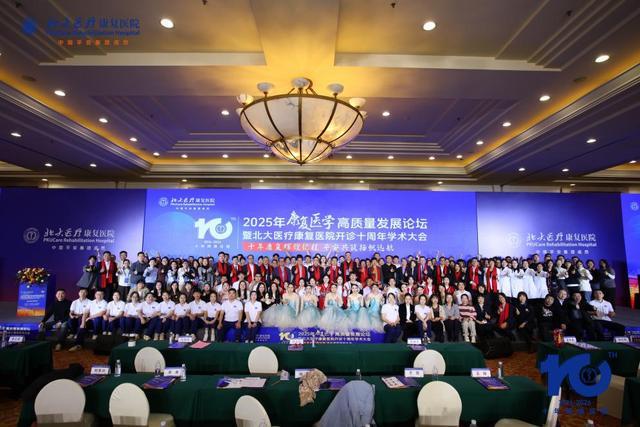
Core Viewpoint - The essence of commercial health insurance is not risk compensation but a systematic extension of health management, reflecting the core logic of the insurance industry's transformation and China's exploration of the "insurance-medical collaboration" strategy [1][3]. Group 1: Health Insurance Transformation - China Ping An is shifting from "post-claim" to "prevention, management, and rehabilitation," using insurance as a lever to initiate a health service revolution that covers the entire life cycle [3][4]. - The "Health China 2030" plan emphasizes the transition of healthcare services from a disease-centered approach to a health-centered one, creating a new historical mission for commercial health insurance [4]. - Ping An Health Insurance has proposed a dual-driven strategy of "health insurance + medical services," launching a digital health management platform in 2024 to provide continuous health support [4][6]. Group 2: Service Efficiency and Cost Savings - The "three savings" concept—saving worry, time, and money—underpins Ping An's health insurance collaboration system [5]. - The "post-hospital rehabilitation follow-up" project exemplifies professional closed-loop services, providing personalized training plans and real-time supervision for patients [6]. - Digital integration has reduced outpatient revisit frequency by 30%, and the time from accident report to hospitalization has been accelerated by 80% [6]. - Patients receiving follow-up care save an average of over 2000 yuan in medical expenses, while targeted rehabilitation interventions in auto insurance cases save an average of 22,000 yuan per case [6]. Group 3: Comprehensive Service Network - Ping An has established a vast service network through collaboration with Peking University Medical Group, including hospitals, rehabilitation centers, and health management centers across the country [7]. - Innovations such as "no companion wards" and "healthcare on wheels" are designed to meet the "three savings" goals, ensuring that insurance services are effectively implemented [7]. Group 4: Smart Rehabilitation and Long-term Care - The opening of Shenzhen Beida Rehabilitation Hospital marks a significant step in Ping An's "insurance-medical-health" ecosystem, featuring a family-oriented and intelligent rehabilitation environment [8][10]. - The hospital aims to provide seamless services by integrating medical insurance, commercial insurance, and cross-border insurance payment channels [10]. - Ping An is focusing on preventive health management, particularly for chronic diseases and the elderly, by developing specialized insurance products and integrating advanced healthcare technologies [10][11]. Group 5: Broader Vision and Commitment - Ping An's approach emphasizes that the ultimate value of insurance lies in extending life quality and safeguarding health dignity, moving beyond mere risk transfer [11]. - The company is building a comprehensive health ecosystem that encompasses prevention, diagnosis, rehabilitation, and elderly care, positioning insurance as an active health manager [11]. - The vision is to ensure that everyone can age healthily and gracefully, reflecting Ping An's commitment to the "Healthy China" strategy through the integration of finance, technology, and healthcare [11].


人形机器人加速“上岗” 保险创新为“工伤”买单
Jin Rong Shi Bao· 2025-12-24 03:18
Group 1 - The core viewpoint of the articles highlights the rapid emergence and commercialization of humanoid robots and embodied intelligence in China, with significant market growth projected by 2025 [1][2] - The embodied intelligence market in China is expected to reach 5.295 billion yuan, accounting for approximately 27% of the global market, while the humanoid robot market is projected to reach 8.239 billion yuan, representing about 50% of the global market [1] - The insurance industry is actively developing specialized insurance products to mitigate risks associated with humanoid robots, addressing concerns over high repair costs and new types of risks such as network attacks and data breaches [1][3] Group 2 - Various local policies have been introduced to encourage the insurance sector to support the development of intelligent robots, including subsidies for insurance premiums [2] - Insurance companies like PICC Property and Casualty, Ping An Property and Casualty, and Taikang Property and Casualty have launched specialized insurance plans for humanoid robots, covering risks such as bodily damage, third-party liability, and employer liability [3] - Experts emphasize the need for collaboration among insurers, robot manufacturers, application enterprises, and research institutions to build a comprehensive risk database, which will aid in precise pricing and product innovation for insurance [4]

中资离岸债每日总结(12.23) | 龙南旅游发投发行
Sou Hu Cai Jing· 2025-12-24 03:17
Group 1 - The Federal Reserve Governor Milan warned that if the U.S. central bank does not continue to lower interest rates next year, it may increase the risk of the economy falling into recession [2] - Milan indicated that recent employment data suggests the unemployment rate "may be higher than previously expected," which could prompt the Fed to continue adjusting its policy towards easing [2] - Since joining the Federal Reserve Board in September, Milan has advocated for larger rate cuts, and his term will end in January [2] Group 2 - The Fed has cumulatively cut rates by 75 basis points since September, and the necessity for a further 50 basis point cut at the next meeting has diminished, although Milan has not made a final judgment [2] - The Fed's recent rate cut of 25 basis points has revealed significant internal divisions regarding future policy paths, with most officials expecting only one more cut next year [2] - Concerns remain among some regional Fed presidents about inflation being nearly one percentage point above the 2% target, while rising unemployment exacerbates worries about a potentially weakening labor market [2]






人民币创14个月新高,对A股市场影响几何?谁喜谁忧?这些板块迎“汇率红包”
Jin Rong Jie· 2025-12-24 01:33
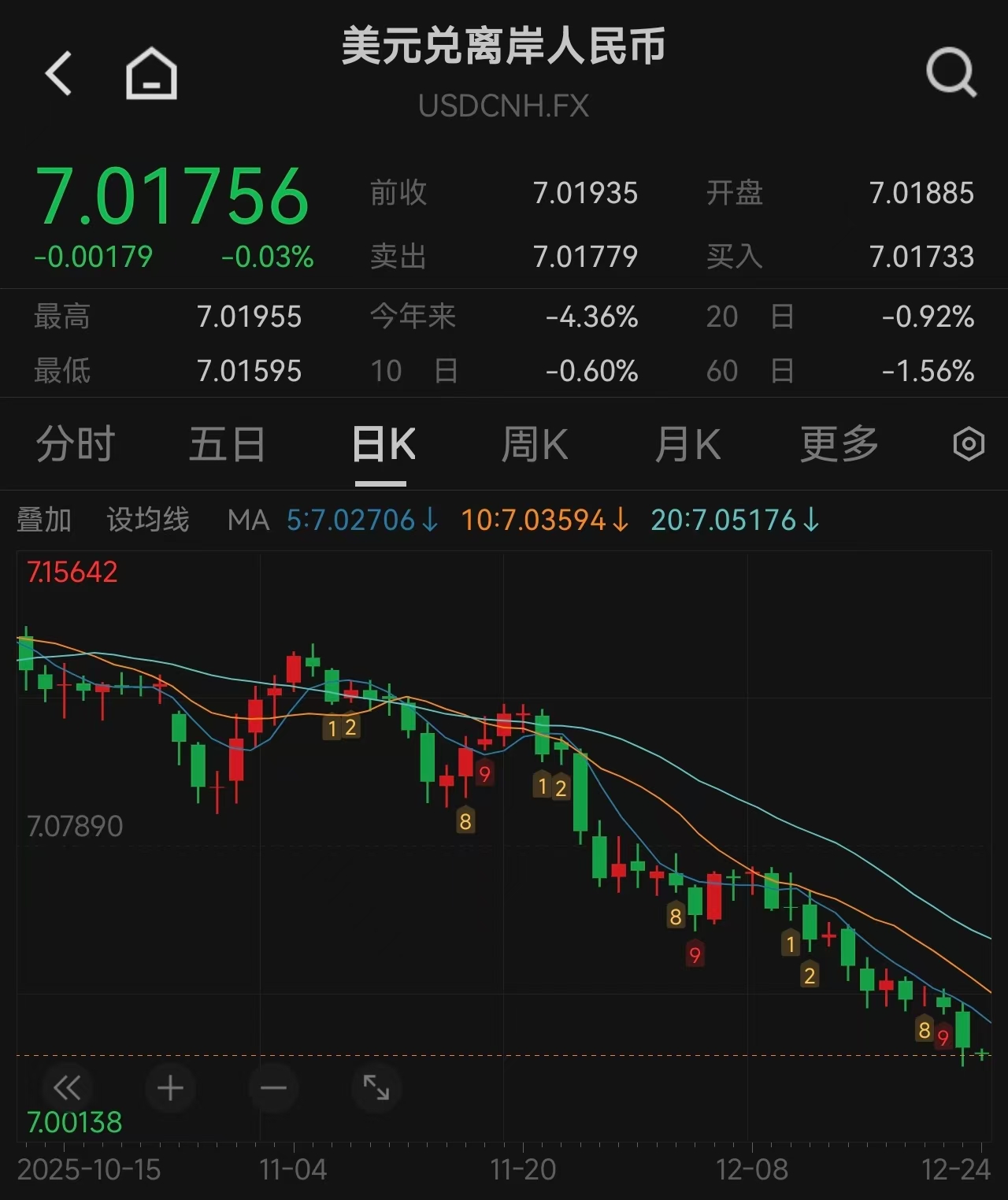
Core Viewpoint - The offshore and onshore RMB have both strengthened against the USD, reaching their highest levels in 14 months, which is expected to attract foreign investment into Chinese assets [1][3]. Group 1: Impact of RMB Appreciation - The appreciation of the RMB enhances the attractiveness of RMB-denominated assets, particularly for foreign investors focused on exchange rate gains [3]. - Historical data indicates that during periods of RMB appreciation, foreign capital, represented by "northbound funds," tends to show accelerated net inflows, favoring liquid, well-valued assets that align with China's economic growth [3]. - The current A-share market is at a historically low valuation, and the strengthening RMB may catalyze long-term foreign capital to reassess and increase allocations to Chinese assets, potentially stabilizing or boosting market indices [3]. Group 2: Beneficiaries and Losers - Export-oriented industries, such as home appliances, electronics, textiles, and machinery, are likely to suffer as RMB appreciation reduces their price competitiveness in international markets, potentially eroding exchange gains and profit margins [3][4]. - Beneficiaries of RMB appreciation include industries with significant dollar-denominated liabilities, such as airlines, which will see improved financials due to reduced exchange losses [4]. - Cost-importing sectors, like paper and basic chemicals, will benefit from lower raw material costs due to RMB appreciation, enhancing their profit margins [4]. Group 3: Market Sentiment and Trends - The psychological impact of RMB appreciation is significant, as it signals economic stability, effective policy, and international capital recognition, which can fundamentally boost market risk appetite [4]. - In an appreciating currency environment, "core assets" are likely to perform better, with large-cap value stocks benefiting from their close ties to the macroeconomy and foreign capital preferences [4]. - The importance of sustained RMB appreciation is emphasized, as lasting trends rather than short-term fluctuations will have a more profound impact on the A-share market [4][5].
保险业资产负债管理需提升
Jing Ji Ri Bao· 2025-12-23 22:58
Core Viewpoint - The National Financial Supervision Administration has released a draft for public consultation on the "Asset-Liability Management Measures for Insurance Companies," emphasizing the importance of effective asset-liability management for sustainable operations in the insurance industry [1] Group 1: Regulatory Framework - Since 2018, multiple regulatory rules have been established to create a framework for asset-liability management and supervision tailored to the characteristics of the domestic insurance industry [1] - Insurance companies are required to take primary responsibility for asset-liability management, adhering to principles of comprehensive coverage, reasonable matching, prudent management, and coordinated planning to mitigate asset-liability mismatch risks [1] Group 2: Management Practices - Insurance companies must define their asset-liability management policies and procedures, develop management plans, and enhance asset-liability linkage in business planning, product development, and major investments [1] - Regular stress testing and back-testing should be conducted, with timely adjustments made to asset-liability management strategies based on periodic reports [1] Group 3: Market Conditions - The dual fluctuations in interest rates are crucial for effective asset-liability management, as these fluctuations significantly impact both the asset and liability sides of insurance companies [2] - The past decade has seen increased frequency and magnitude of interest rate fluctuations globally, necessitating dynamic adjustments in asset-liability structures to lower costs and enhance returns [2] Group 4: Risk Management - As the asset scale of the insurance industry continues to rise, the correlation between insurance assets and those of banks and non-bank financial institutions is increasing, leading to higher credit risks due to lower transparency and greater volatility in underlying asset quality [2] - Regulatory measures are needed to strengthen capital requirements for solvency and leverage constraints on large risk exposures to prevent insurance companies from blindly increasing risk appetite for short-term gains [2] Group 5: Industry Collaboration - Effective asset-liability management requires dedication and expertise from management, as well as wisdom and responsibility from industry regulators [3] - In light of external environmental changes and the internal demands for high-quality development, a collaborative approach is necessary to innovate theories, improve systems, and clarify regulations [3]
守护“夕阳红”,养老金融供给持续丰富
Xin Hua Ri Bao· 2025-12-23 21:56
Group 1 - The central financial work conference has identified pension finance as one of the "five major articles," indicating a direction for financial services to support social welfare and achieve high-quality development [1] - Jiangsu's financial sector is enhancing pension financial services by creating age-friendly service brands, innovating pension financial products, increasing credit support for the pension industry, and enriching personal pension products [1] - A comprehensive policy package has been introduced in Jiangsu to solidify the foundation for pension finance development, with the aim of optimizing pension product supply and deepening age-friendly financial services [1] Group 2 - Since 2021, the Jiangsu Banking Association has been strengthening age-friendly financial services through various initiatives, including research training, publicity, and experience exchange, leading to the establishment of 2,341 age-friendly service outlets across the province [2] - The province has launched the "Jiangsu Pension Financial Education Alliance" to conduct a series of activities focused on pension finance [2] - The banking sector in Jiangsu is actively enriching the supply of pension-related financial products, constructing a comprehensive pension financial service system that supports the high-quality development of the silver economy [2]
这笔业务耗时:5小时→2分钟
Jin Rong Shi Bao· 2025-12-23 12:32
Core Insights - The implementation of the "Single Window" cross-border financial services significantly enhances the efficiency of foreign trade enterprises, reducing financing costs and processing times [1][2][3] Group 1: Financial Services and Innovations - The "Single Window" platform utilizes big data to offer various financial services, including international settlement, cross-border loans, export loans, and export credit insurance, which have shown notable effectiveness [2][4] - The average processing time for international settlement has been reduced from 5 hours to 2 minutes, showcasing a breakthrough in operational efficiency [2] - The financing assessment service allows foreign trade enterprises to know their financing limits in advance, leading to a further reduction in processing times by 30%-50% for subsequent financing applications [2][4] Group 2: Impact on Export Credit Insurance - The introduction of the "Single Window" has transformed the process of obtaining export credit insurance, with 98% of such insurance now processed through this platform, significantly increasing efficiency and coverage [3][4] - The use of big data models has simplified the insurance application process and shortened the claims cycle, enhancing the overall service experience for enterprises [3] Group 3: Data Utilization and Security - The initiative emphasizes the importance of public data utilization, integrating over 20 types of data, including customs and tax documents, to support accurate decision-making by financial institutions [4] - The service model ensures data security by adhering to principles of data minimization and encryption, allowing data to be used without being visible to unauthorized parties [4] Group 4: Overall Achievements - As of now, the "Single Window" financial services have facilitated international settlements totaling $127.2 billion, provided financing credits of 148.8 billion RMB, and issued 780,000 export credit insurance policies, benefiting 450,000 foreign trade enterprises [4]
玉渊谭天|日右翼正在将日本经济拖入泥潭
Xin Lang Cai Jing· 2025-12-23 12:20
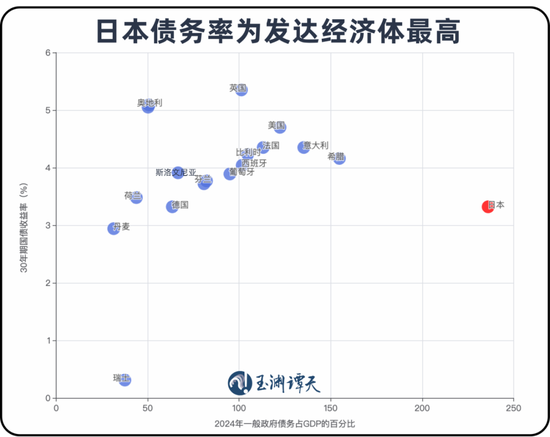
Group 1 - A recent survey by Kyodo News indicates that over half of respondents believe that the actions of Prime Minister Fumio Kishida regarding Taiwan will negatively impact the Japanese economy [1][22] - More than 60% of respondents express concerns about Kishida's large-scale fiscal stimulus policies [1][22] - Kishida's cabinet approval ratings have declined, suggesting that attempts to divert domestic economic pressure through a tough foreign policy have failed, revealing structural issues within the Japanese economy [22] Group 2 - Japan's real GDP growth was only 0.1% last year, prompting Kishida's government to introduce an expansionary fiscal policy totaling 21.3 trillion yen [3][25] - Following the announcement of this policy, Japan's 10-year government bond yield surged to its highest level in 26 years, while the 20-year and 30-year yields also reached record highs [4][26] - Typically, expansionary fiscal policies lead to rising bond yields due to increased government borrowing, which raises supply in the bond market and can heighten investor concerns about the government's repayment capacity [5][27] Group 3 - Japan's total government debt exceeds 230% of its GDP, the highest among developed countries [8][30] - The initial proposed supplementary budget was around 14 trillion yen, but Kishida's administration expanded it to over 21 trillion yen due to pressure from economists advocating for fiscal expansion [10][32] - The Bank of Japan is the largest holder of Japanese government bonds, owning over half, which contrasts with the Federal Reserve's 13% holding of U.S. government bonds [11][33] Group 4 - Since last year, the demand structure for Japanese government bonds has changed, with the Bank of Japan starting to reduce its bond holdings, indicating a shift towards reliance on external funding [12][34] - This increased dependence on foreign investors, who are sensitive to risk, raises the probability of systemic risks if they begin to doubt the government's repayment ability [12][34] - Financial pressures on institutions could transmit to the real economy, increasing borrowing costs for businesses and households, further weakening investment and consumption [13][35] Group 5 - Japan is currently experiencing rapid inflation, with the core consumer price index rising for 51 consecutive months and over 20,000 food items increasing in price [35] - Kishida's fiscal policy contradicts conventional logic, which would typically involve tightening monetary and fiscal policies to reduce demand and cool inflation [35][40] - The Bank of Japan has raised its policy interest rate to 0.75%, the highest level in 30 years, indicating a shift in monetary policy [15][37] Group 6 - The inflation in Japan is partly attributed to external factors, but domestic issues are becoming more significant as commodity prices stabilize [39][40] - Kishida's approach of using expansionary fiscal policies to maintain public purchasing power is seen as a short-term solution that fails to address underlying economic problems [39][40] - The conflicting policies from Kishida's administration have led to a situation where monetary policy intended to cool inflation is undermined by fiscal policies, exacerbating the inflation issue [41][42]
“茅台系”华贵人寿再增资6亿元,仍有募资计划推进中
Guo Ji Jin Rong Bao· 2025-12-23 07:59
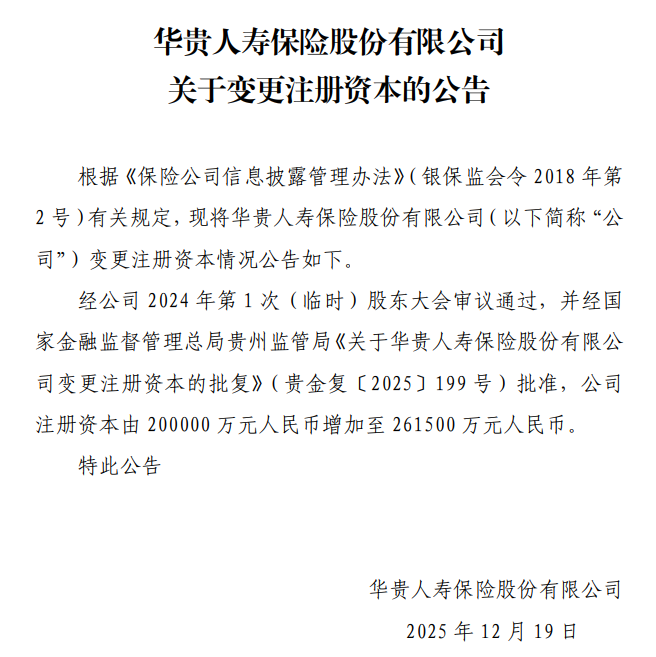
12月23日,《国际金融报》记者注意到,华贵人寿保险股份有限公司(下称"华贵人寿")日前披露公告称,经公司2024年第1次(临时)股东大会审议 通过,并经贵州金融监管局批准,公司注册资本由20亿元增加至26.15亿元。不过,公告中并未明确出资方及出资比例情况。 作为贵州省第一家本土保险法人机构,华贵人寿成立于2017年2月,总部位于贵州省贵安新区,实控人为贵州省国资委,主要股东有中国贵州茅台酒厂 (集团)有限责任公司(下称"茅台集团")、贵州省黔晟国有资产经营有限责任公司(下称"黔晟国资")、贵州金融控股集团有限责任公司(贵州贵民投资 集团有限责任公司)等。 | | | | 贵阳贵安国有资产 | | --- | --- | --- | --- | | | | | 交易平台 | | 首页 | 政策法规 | 业务指南 分支机构 会员专家中心 | 企业 党建工作 | | ▲ 首页 / 项目 / 产权交易 / 增资扩股 | | | | | | 挂牌项目 | 华贵人寿保险股份有限公司增资项目 | | | 产权交易 | | 2025-12-17 ● 3012 | | | 招标采购 | | ハ 项目名称:华贵人寿保险股份有 ...
中金:政策将推动保险业稳健发展 为实现高质量发展奠定坚实基础
智通财经网· 2025-12-23 07:21
Core Viewpoint - The release of the draft "Insurance Company Asset-Liability Management Measures" by the National Financial Supervision Administration marks a new phase in the regulation of asset-liability management in the insurance industry, set to take effect on July 1, 2026 [1] Group 1: Regulatory Framework - The Measures establish a comprehensive regulatory framework covering governance structure, quantitative indicators, management processes, and collaborative mechanisms [1] - The aim is to shift the industry's operational logic from scale-oriented growth to long-term stable management, laying a solid foundation for risk management and high-quality development [1] Group 2: Objectives and Issues Addressed - The Measures are designed to implement the spirit of the new "National Ten Articles" for the insurance industry, addressing current issues such as the disconnection between asset and liability management and unclear policies and procedures [1] - They also prepare the industry for a complete transition to new accounting standards by 2026 [1] Group 3: Specific Requirements for Insurance Companies - For life insurance companies, the Measures set regulatory ranges for effective duration gaps and require that the comprehensive investment income coverage ratio and net investment income coverage ratio be no less than 100% [1] - For property insurance companies, the focus is on the coverage ratio of retained funds, income coverage ratio, and liquidity coverage ratio under stress scenarios [1] Group 4: Governance and Management Processes - The Measures detail the management responsibilities of the board of directors, senior management, and functional departments of insurance companies, mandating the establishment of independent asset-liability management departments [1] - A management closed loop is established, encompassing asset-liability analysis, business planning and product development, asset allocation and major investments, stress testing, and back-testing [1]