
水产养殖

Search documents
Stolt-Nielsen Limited Board Declares Interim Dividend of $1.00 per Common Share
Globenewswire· 2025-11-06 18:11
Core Points - Stolt-Nielsen Limited's Board of Directors has approved an interim dividend payment of $1.00 per Common Share, which will be payable on December 3, 2025, to shareholders of record as of November 20, 2025 [1] - The shares will trade ex-dividend on and after November 19, 2025 [1] Company Overview - Stolt-Nielsen Limited is a long-term investor and manager of businesses focused on logistics, distribution, and aquaculture [2] - The company's portfolio includes three global bulk-liquid and chemicals logistics businesses: Stolt Tankers, Stolthaven Terminals, and Stolt Tank Containers, as well as Stolt Sea Farm and various investments [2] - Stolt-Nielsen Limited is listed on the Oslo Stock Exchange under the ticker SNI [2]


中国人“统治”全球鱼子酱
Ge Long Hui· 2025-11-06 13:21
Core Insights - Caviar has become a symbol of luxury and scarcity, with China projected to account for 44% of global caviar exports by 2024, significantly surpassing Italy's 10% [1][2] - The rise of Chinese caviar is reshaping the global high-end food landscape, moving from a European-centric luxury to a product marked by Chinese manufacturing [1][2] Company Overview - Hangzhou QianDao Lake Sturgeon Dragon Technology Co., Ltd. (Sturgeon Dragon Technology) has maintained the top position in global caviar sales since 2015, with a market share exceeding 30% from 2021 to 2024, reaching 35.4% in 2024 [2][3] - The company's revenue grew from 491 million yuan in 2022 to 669 million yuan in 2024, with net profit increasing from 234 million yuan to 324 million yuan during the same period [2][3] - Sturgeon Dragon Technology's gross margin reached 66.3% and net margin 48.4% in 2024, with further increases to 71.3% and 58.3% respectively in the first half of 2025 [2][3] Market Dynamics - Sturgeon Dragon Technology exports to over 46 countries and regions, establishing partnerships with more than 100 overseas clients, while also selling directly in China through its own brand [3][4] - The company has played a pivotal role in setting industry standards for caviar production and processing, transitioning from following international standards to establishing Chinese standards [5][6] Industry Trends - China's caviar production has surged from under 10 tons in 2010 to approximately 200 tons in 2023, capturing over 60% of the global market share [5][6] - The high value of caviar, priced at several thousand dollars per kilogram, positions it as a high-value agricultural product, challenging traditional pricing power held by countries like Iran and Russia [6][7] Strategic Implications - The emergence of Chinese caviar is seen as a challenge to Western culinary dominance, with Michelin-starred restaurants in Europe adopting Chinese caviar, thus altering perceptions of Chinese products [7][8] - The price of caviar has decreased from over $10,000 per kilogram to between $3,000 and $5,000, making it accessible to a broader market and creating new consumption scenarios [7][8] - The success of Chinese caviar reflects a broader trend of Chinese products redefining global standards and perceptions, moving from low-cost to high-quality offerings [9][10]
塘头价9.8万元/吨,酒楼价150000元/吨!这条鱼国内市场消费逐年增加
Sou Hu Cai Jing· 2025-11-06 10:25
鳗鱼是一种世界性优质高档食用鱼类,种类繁多,分布较广,按照其原产地,该鱼分为日本鳗、美洲鳗和欧洲鳗,其中以日本鳗鱼品质最优。过去一直依 靠捕捞,现在则是通过养殖,虽然该鱼不能人工繁殖,但是可以进行养殖,即将捕获的鱼苗经过培育投放到池塘中通过投喂人工配合饲料就能将其养大。 鳗鱼养殖是我国在改革开放进程中发展起来的一个以加工出口为导向的名优水产养殖行业,该鱼虽然是从江苏、浙江发起的,但是经过数轮周期性调整, 最终广东、福建成为该鱼养殖主产区,而且养殖品系也不同,广东省主要运用土池养殖日本鳗,中心区是珠三角,核心区是江门台山,台山鳗鱼还是国家 地理标志保护水产品,而福建省则运用水泥池工厂化流水线养殖美洲鳗。当然,该鱼产业是由野生苗捕捞或者进口、苗种培育、商品鱼养殖,而且围绕该 鱼养殖还有一个专业化、社会化服务体系,这就是饲料、药物、动保产品以及加工、流通和消费。鳗鱼是优质高档食材,肉细嫩、味鲜美,可以清蒸、红 烧、香煎等。目前,世界鳗鱼主要消费市场是日本、韩国以及中国的台湾、香港等,国内鳗鱼消费市场正在不断发展壮大中,这一点在其市场价格上就能 表现出来。 以2025年11月6日为例,广东佛山,规格为0.5千克/尾起 ...
浙江杭州冲出全球鱼子酱龙头!IPO背后约8成收入靠海外,年入超6亿
格隆汇APP· 2025-11-06 09:21
Core Viewpoint - The company from Hangzhou, Zhejiang, has emerged as a global leader in caviar production, with approximately 80% of its revenue generated from overseas markets, achieving an annual income exceeding 600 million [1] Group 1 - The company is positioned as a top player in the global caviar market, indicating strong international demand for its products [1] - The significant reliance on overseas revenue highlights the company's successful expansion strategy beyond domestic markets [1] - The annual revenue of over 600 million demonstrates the company's robust financial performance and market presence [1]

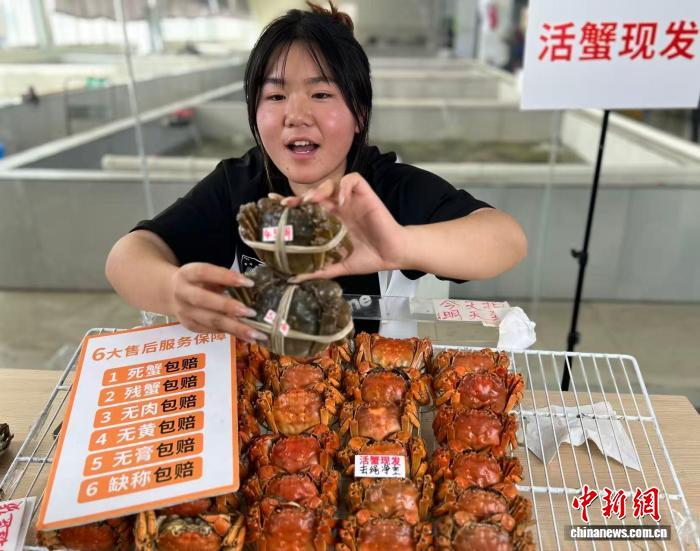
苏州阳澄湖大闸蟹销路俏 蟹农蟹商发货忙
Zhong Guo Xin Wen Wang· 2025-11-06 07:48
Core Insights - The sales peak for Yangcheng Lake hairy crabs in Suzhou, Jiangsu, is currently underway, with crab farmers and merchants actively shipping products [1] Group 1: Sales and Logistics - The main roads in Yangcheng Lake Town are bustling with activity, featuring high-hanging "crab" signs, cold chain trucks, and smart unmanned vehicles [2] - A large crab merchant reported that they are processing approximately 15,000 orders daily through both online and offline channels [2] - The introduction of smart logistics vehicles and unmanned cars has significantly improved the efficiency of crab logistics, allowing for a fully automated delivery process [5] Group 2: Technological Advancements - The use of smart logistics has upgraded the distribution of live hairy crabs, enabling faster delivery to consumers [5] - Previously, crabs were transported via green trains, leading to higher mortality rates and increased logistics costs; now, delivery times have improved significantly [5] - Unmanned aerial vehicles can deliver crabs from the Yangtze River estuary to Shanghai in as little as 15 minutes, with nationwide delivery possible within 72 hours [5]
承包全球超三成鱼子酱还不够?三闯A股失败的鲟龙科技递表港交所,拟募资“扩产能”等
Mei Ri Jing Ji Xin Wen· 2025-11-06 07:08
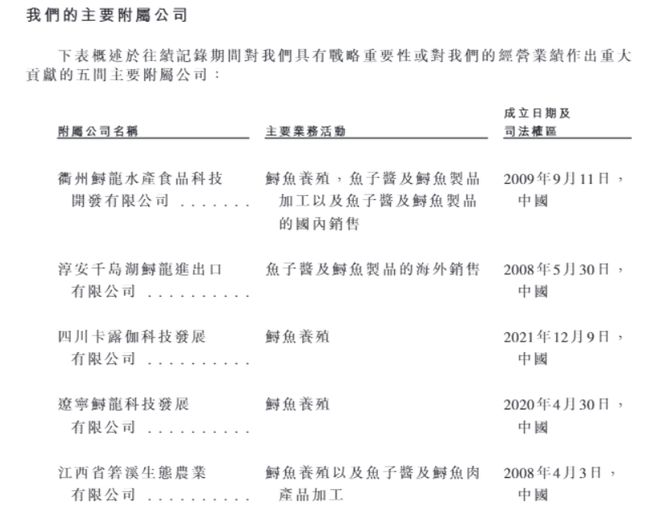
Core Insights - The company, Hangzhou Qiandao Lake Sturgeon Technology Co., Ltd. (referred to as "Sturgeon Technology"), is the world's largest caviar producer and is seeking to become the first caviar stock listed on the Hong Kong Stock Exchange [1][9] - Sturgeon Technology accounts for approximately one-third of the global caviar supply and has previously attempted to go public on the A-share market three times without success [2][8] Financial Performance - The company reported revenues of approximately RMB 491 million, RMB 577 million, and RMB 669 million for the years 2022, 2023, and 2024, respectively, with profits of RMB 233 million, RMB 273 million, and RMB 324 million during the same period [3][7] - The gross profit margins (excluding the impact of biological asset fair value changes) were 65.6%, 70.1%, and 66.3% for 2022, 2023, and 2024, respectively, with a gross margin of 71.3% in the first half of 2025 [3][6] - However, when including the impact of biological asset fair value changes, the gross profit margins were significantly lower, with figures of 1%, 1.3%, and -2.9% for the same years [3] Market Presence - Sturgeon Technology's sales revenue is heavily reliant on international markets, with overseas sales accounting for 79.8%, 76.7%, and 80.1% of total revenue from 2022 to 2024, and this proportion increased to 80.9% in the first half of 2025 [6][7] - The company exports its products to 46 countries and regions, with Europe and the Americas being the largest markets, contributing 39.7% and 30% of sales, respectively [6] Corporate Background - Sturgeon Technology has faced challenges in its IPO journey, having submitted applications to list on the A-share market three times since 2011, all of which were unsuccessful due to regulatory concerns [8] - The core management team has a strong background in aquaculture, with key executives having experience at the Chinese Academy of Fishery Sciences [8][9] - The company was established under the guidance of the Chinese Academy of Fishery Sciences and has undergone several structural changes, including a shift to the Hong Kong market after previously attempting to list on the New Third Board [8][9]
SalMar - Record high harvest volume and positive cost development
Globenewswire· 2025-11-06 05:30
Core Insights - The company reported weak financial results in Q3 2025 due to low market prices for salmon, despite achieving record-high harvest volumes and demonstrating flexibility in harvesting and processing facilities [1][5] - Strong demand for products and positive underlying cost developments are expected to improve future results [1][4] Harvest Volume and Cost Expectations - Total harvest volume for 2025 is projected at 299,000 tons, a 19% increase from 2024, with expectations for further growth in 2026 to 319,000 tons, representing a 7% increase [3] - The company anticipates reduced costs across all segments in Q4 2025, supported by improved biological performance and lower input prices [2][4] Financial Performance - Operational EBIT for Norway in Q3 2025 was NOK 858 million, with a harvest volume of 89,400 tons, resulting in an operational EBIT per kg of NOK 9.6 [5] - For the group, operational EBIT was NOK 711 million with a total harvest volume of 93,200 tons, leading to an operational EBIT per kg of NOK 7.6 [5] Market Conditions and Strategic Developments - The year 2025 has seen lower salmon prices and global uncertainty, but the company expects limited global supply growth in 2026 alongside continued strong demand [4] - The merger with Wilsgård, completed in August, has strengthened the company's presence in Northern Norway and is expected to facilitate sustainable growth [5]


A股“三振出局” 全球鱼子酱龙头冲刺港股IPO
Mei Ri Shang Bao· 2025-11-05 22:19
Core Viewpoint - Shunlong Technology, a leading global caviar company, has submitted its prospectus for an IPO on the Hong Kong Stock Exchange, aiming to leverage its market dominance and expand its operations [1][2]. Company Overview - Shunlong Technology has maintained the title of the world's largest caviar producer since 2015, achieving over 30% of the global market share from 2021 to 2024, with a projected increase to 35.4% in 2024, significantly outpacing its nearest competitor by more than five times [1][2]. - The company has a comprehensive business model that includes sturgeon breeding, caviar processing, sales, and brand marketing, establishing itself as a full industry chain player [4]. Financial Performance - The company reported revenues of 491 million yuan, 577 million yuan, and 669 million yuan for the years 2022, 2023, and 2024, respectively, with a compound annual growth rate (CAGR) of 16.7%. Net profits for the same years were 234 million yuan, 273 million yuan, and 324 million yuan, with a CAGR of 17.8% [4]. - In the first half of 2025, Shunlong Technology achieved revenues of 302 million yuan and net profits of 176 million yuan [4]. Market Presence - Approximately 80% of Shunlong Technology's revenue is generated from international sales, with products exported to 46 countries and regions, including Europe, America, and Asia-Pacific [5]. - The company has established five sales centers in major Chinese cities, serving over 2,000 domestic restaurant and hotel clients, and has exclusive partnerships with major airlines for first-class services [5][6]. IPO Journey - Shunlong Technology has faced multiple challenges in its IPO journey, having attempted to list on the A-share market three times without success before pursuing the Hong Kong IPO [2][3]. - The funds raised from the IPO will be allocated towards aquaculture expansion, technology upgrades, brand marketing, and strategic investments [2]. Industry Growth - The Chinese caviar market is experiencing rapid growth, with a CAGR of 37.8% from 2019 to 2024, significantly outpacing the global average of 12.6%. Projections indicate a continued strong growth rate of 22.2% from 2024 to 2029 [6].
“稻渔共舞”激活县域经济 四川隆昌田野间端出增收“大餐”
Zhong Guo Xin Wen Wang· 2025-11-05 08:17
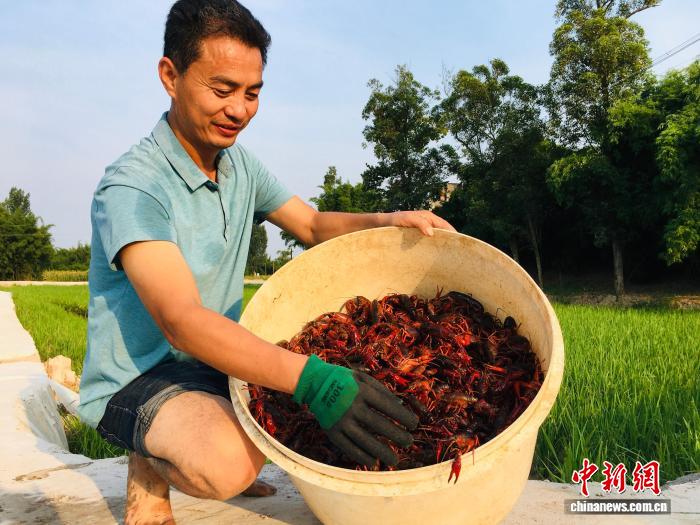
Core Insights - The article highlights the economic development of Longchang County in Sichuan, driven by the integration of rice and shrimp farming, which has become a significant contributor to local income and consumption [1][2]. Economic Development - Longchang County has leveraged its geographical advantages as a key area in the Chengdu-Chongqing economic zone, achieving notable recognition as a "significant county for high-quality economic development" in Sichuan for 2024 [2]. - The county's rice-shrimp industry has evolved into a core agricultural sector, with a reported annual shrimp production of 12,800 tons, accounting for one-seventh of the provincial market [2]. Agricultural Innovation - The local government has promoted integrated rice and shrimp farming since 2017, establishing the first national modern agricultural industrial park focused on this model in Sichuan [2]. - The average yield of the regenerated rice has set records for six consecutive years in the southern Sichuan region, showcasing the effectiveness of the integrated farming approach [2]. Market Strategy - Longchang's strategy includes early market entry for shrimp, with prices reaching up to 100 yuan per kilogram after the Spring Festival, capitalizing on a temperature advantage over other regions [4]. - The premium ecological rice and shrimp products are sold at 5 yuan per kilogram, double the price of ordinary rice, indicating a successful branding strategy [4]. Supportive Policies - The local government has implemented subsidy policies for high-standard farmland construction and introduced insurance for aquaculture, significantly reducing the financial burden on farmers [4]. - The area dedicated to rice-shrimp farming has expanded to 183,000 acres, reflecting the growth and acceptance of this agricultural model [4]. Human Capital Development - The emergence of local agricultural experts and new farmers has been crucial for the development of modern agriculture in Longchang, contributing to increased farmer incomes and sustainable practices [4].
鲟龙科技赴港:上半年净利润率高达58.3%,鱼子酱龙头缘何“补血”
Zhi Tong Cai Jing· 2025-11-05 07:41
Core Viewpoint - The company, Xunlong Technology, is the world's largest caviar producer and is preparing for an IPO on the Hong Kong Stock Exchange, aiming to leverage its leading position in the caviar market and its advanced aquaculture technology to expand its business further [1][2]. Company Overview - Xunlong Technology has maintained the top position in global caviar sales for ten consecutive years since 2015, holding over 30% of the market share, which reached 35.4% in 2024, significantly surpassing its closest competitor by more than five times [1][2]. - The company was established in 2003 and has developed a comprehensive value chain that includes sturgeon breeding, caviar processing, sales, and brand marketing, with its well-known brand KALUGAQUEEN [2][6]. Financial Performance - The company reported revenues of 491 million, 577 million, and 669 million yuan from 2022 to 2024, with a compound annual growth rate (CAGR) of 16.7%. Net profits for the same period were 233 million, 273 million, and 324 million yuan, with a CAGR of 17.8% [3]. - In the first half of 2025, Xunlong Technology achieved revenues of 302 million yuan, an increase of 18.14% year-on-year, and net profits of 176 million yuan, up 40.91% year-on-year [3]. Market Dynamics - The global caviar market is experiencing rapid growth, with global caviar sales increasing from 402.5 tons in 2019 to 729.2 tons in 2024, reflecting a CAGR of 12.6% [6]. - The Chinese caviar market is expected to grow at a CAGR of 22.2% from 2024 to 2029, with consumption projected to reach 154.9 tons by 2029 [6]. Competitive Advantages - Xunlong Technology has established a robust technical barrier and a full industry chain covering breeding, farming, processing, and sales, which positions it favorably in the market [7]. - The company has developed advanced breeding techniques, increasing the average egg-laying rate from 8% in 2006 to 18% in 2024, significantly above the industry average [7]. Future Prospects - The company plans to use the funds raised from the IPO for aquaculture expansion, technology upgrades, brand marketing, and strategic investments, which could enhance its long-term investment value [8].