
茶饮

Search documents
霸王茶姬与天合光能“联姻”,但两家上市公司股价都跌了
Di Yi Cai Jing· 2025-11-21 04:32
Group 1 - The wedding invitation of Gao Haichun, daughter of Tianhe Solar's founder Gao Jifan, and Zhang Junjie, founder of Bawang Tea Ji, has circulated online, confirming their wedding on December 15 [2] - Zhang Junjie, originally from Kunming, Yunnan, started his career in a tea shop in Taiwan and later founded Bawang Tea Ji in 2017, positioning it in the market with "Oriental tea + fresh milk tea" [2] - Bawang Tea Ji went public on NASDAQ on April 17, 2025, and Zhang Junjie was listed as the youngest "dark horse" on the Hurun Rich List with a wealth of 13.5 billion yuan [2] Group 2 - Bawang Tea Ji reported a total GMV of 8.1031 billion yuan in Q2 2025, a year-on-year increase of 15.5%, with net revenue of 3.3319 billion yuan, up 10.2% [3] - Gao Haichun has been serving as co-chairman of Tianhe Solar since January 2025 and has held various positions within the company, showcasing her career progression from grassroots roles [3] - As of the report date, Tianhe Solar's stock price was 18.41 yuan per share, with a total market capitalization of approximately 43.1 billion yuan, while Bawang Tea Ji's stock price was 13.07 USD per share, with a market cap of about 2.399 billion USD, totaling over 60 billion yuan for both companies [3]



霸王茶姬与天合光能“联姻”,但两家上市公司股价都跌了
第一财经· 2025-11-21 04:26
Core Viewpoint - The article discusses the marriage of Gao Haichun, daughter of the founder of Trina Solar (天合光能), and Zhang Junjie, founder of Bawang Tea (霸王茶姬), highlighting their backgrounds and recent business developments [3][4]. Company Developments - Bawang Tea went public on NASDAQ on April 17, 2025, and reported a total GMV of 8.1031 billion yuan in Q2 2025, a year-on-year increase of 15.5% [5]. - The net revenue for Bawang Tea in Q2 2025 was 3.3319 billion yuan, reflecting a 10.2% year-on-year growth, with an adjusted net profit of 629.8 million yuan and an adjusted net profit margin of 18.9% [5]. - As of November 20, 2025, Bawang Tea had 7,038 global stores [5]. Market Performance - Trina Solar's stock price was reported at 18.41 yuan per share, with a total market capitalization of approximately 43.1 billion yuan, experiencing a 9% decline over two days [5]. - Bawang Tea's stock price closed at $13.07 per share on November 20, 2025, with a total market capitalization of about 2.399 billion USD, equivalent to approximately 17.095 billion yuan, reflecting an 8% drop [5]. - The combined market capitalization of both companies exceeds 60 billion yuan [5].

霸王茶姬天合光能总市值超600亿元
Xin Lang Cai Jing· 2025-11-21 04:16
Core Viewpoint - The marriage invitation between the founder of Trina Solar, Gao Jifan's daughter, Gao Haichun, and the founder of Bawang Tea, Zhang Junjie, has circulated online, indicating a significant personal connection between the two companies [1] Company Summaries - Trina Solar (688599.SH) has a current stock price of 18.41 CNY per share, with a total market capitalization of approximately 43.1 billion CNY. The stock experienced a decline of 9% over November 20 and 21 [1] - Bawang Tea (CHA.NASDAQ) has a stock price of 13.07 USD per share, resulting in a total market capitalization of about 2.399 billion USD, equivalent to approximately 17.095 billion CNY. The stock fell by 8% on November 20 [1] - The combined market capitalization of Trina Solar and Bawang Tea exceeds 60 billion CNY [1]
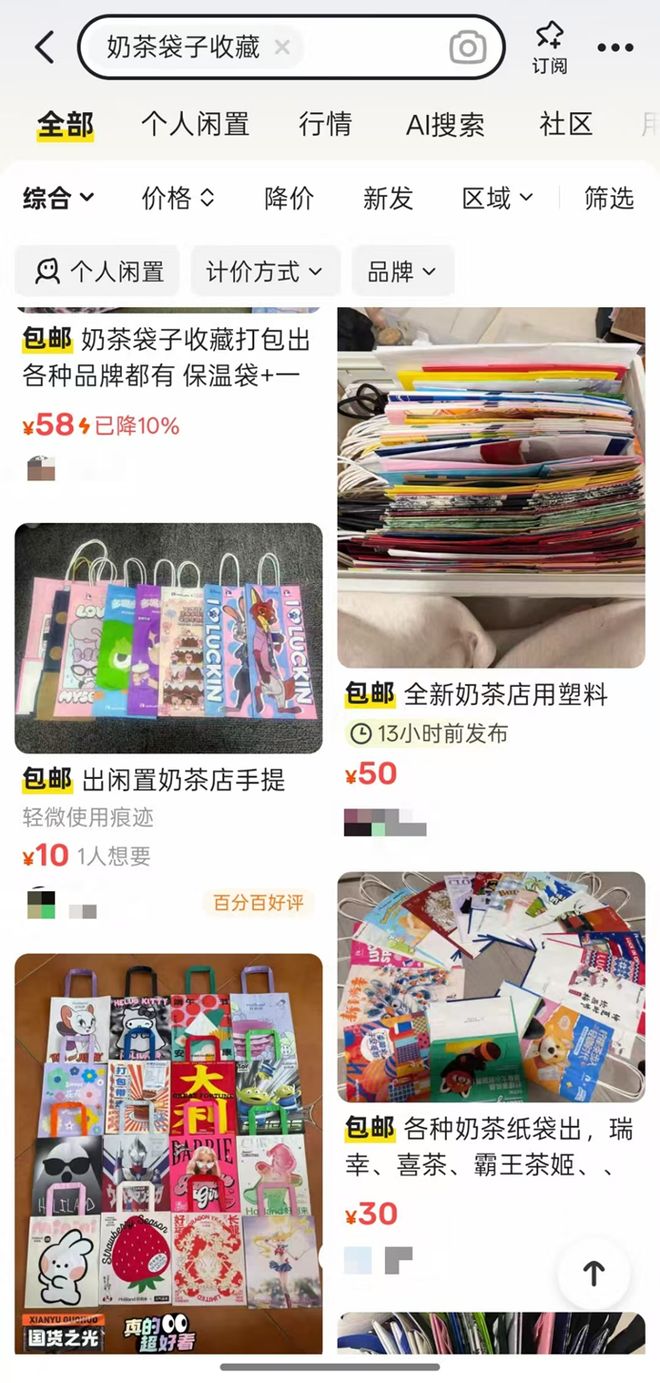
一个废弃奶茶袋卖到50元,年轻人到底在买什么?
Xin Jing Bao· 2025-11-21 04:08
Core Insights - The article discusses the rising trend of selling used milk tea bags on second-hand trading platforms, where prices for ordinary bags range from 0.5 to 2 yuan, while limited edition bags can sell for 15 to 50 yuan, indicating a significant market for these items [1][5][9] Group 1: Market Dynamics - Ordinary milk tea bags are priced between 0.5 and 2 yuan, with actual costs including shipping reaching approximately 8 to 12 yuan per bag when purchased individually [5] - Limited edition and branded bags are highly sought after, with some selling for as much as 50 yuan due to their perceived rarity and brand association [1][7] - The demand for these bags is driven by young consumers, particularly those from Generation Z, who are sensitive to trends and seek unique items for personal expression [9][10] Group 2: Consumer Behavior - The primary buyers of second-hand milk tea bags include trend-sensitive young consumers, practical users who appreciate the design, and collectors who view these bags as trendy collectibles [9][10] - The emotional value, practicality, and speculative nature of these purchases contribute to the rising prices and demand for milk tea bags in the second-hand market [9][10] Group 3: Legal and Ethical Considerations - Selling personal used milk tea bags is legal, but bulk sales by individuals without brand authorization may infringe on intellectual property rights [8] - Brands like Heytea and Nayuki have not authorized the sale of their bags, raising concerns about potential infringement in the second-hand market [7][8] Group 4: Future Outlook - The sustainability of this trend depends on brands continuing to release attractive designs and the vitality of supply and demand in the second-hand market [10][11] - The current phase of this market is characterized as early diffusion, but it may face challenges due to limited supply and shifting consumer interests [11]
茶颜悦色上市再提速?从港股转战看新茶饮巨头的资本突围战
Sou Hu Cai Jing· 2025-11-21 01:27
Core Viewpoint - The tea brand Cha Yan Yue Se is transitioning from the consumer market to the capital stage, preparing for a Hong Kong IPO, which reflects not only its growth but also the future of the new tea beverage industry [2][3] Group 1: IPO Strategy - Cha Yan Yue Se's parent company, Hunan Cha Yue Cultural Industry Development Group, is accelerating its Hong Kong IPO plans, aiming to raise between $500 million and $800 million for supply chain upgrades and national expansion [3] - The estimated valuation for Cha Yan Yue Se is between $4.8 billion and $5.5 billion, with a stronger cultural recognition in the Hong Kong market compared to the U.S. [3] - Recent regulatory changes in China have simplified the process for companies to raise funds overseas, providing support for Cha Yan Yue Se's IPO [3][8] Group 2: Shareholder Structure and Brand Development - In 2024, significant changes in shareholder structure occurred, with early investors exiting and new Hong Kong-based shareholders entering, indicating a move towards a VIE structure for overseas listing [4] - The launch of the sub-brand "Cha Yan Coffee" in over 1,200 self-operated stores reflects the brand's strategy to deepen its "tea-coffee fusion" approach, enhancing growth potential [4] Group 3: Business Model and Market Position - Cha Yan Yue Se maintains a direct sales model, with 1,312 self-operated stores as of September 2025, focusing on quality and profitability despite a smaller scale compared to franchise brands [5] - The company reported a revenue of approximately 3.12 billion yuan and a net profit of 460 million yuan in 2024, with a net profit margin of 14.7%, significantly higher than the industry average [5] - The brand's direct sales model has led to high customer loyalty and a strong ecosystem of products and culture, with 30% of revenue coming from peripheral products [5] Group 4: Competitive Landscape and Growth Strategy - Competition in Hunan has intensified, with rival brands increasing their presence, prompting Cha Yan Yue Se to adopt a strategy of "regional densification and sub-brand penetration" to enhance market share [6] - The introduction of new sub-brands aims to cater to diverse consumer needs while maintaining brand integrity, although balancing expansion and profitability remains a challenge [6] Group 5: Market Environment and Challenges - The new tea beverage market is experiencing a slowdown, with growth rates declining to 5.1% in 2025, which poses challenges for new entrants and existing players [7] - Cha Yan Yue Se's unique cultural branding has helped it maintain competitive strength, but it must continue to demonstrate its differentiation and innovation to sustain investor confidence [7][8] - The choice of Hong Kong for the IPO is influenced by regulatory environments and market expectations, with a focus on profitability and cost control in the direct sales model [8]

杨枝甘露“固体化”,让茶饮品牌卷到冒烟
3 6 Ke· 2025-11-21 00:11
Core Insights - The emergence of solid mango sago has created a significant trend in the beverage industry, transforming a traditional drink into a portable dessert, which has led to a surge in popularity and sales [1][28][42] - Major tea brands have quickly entered the market, recognizing the potential of solid mango sago, resulting in a competitive landscape with various pricing strategies and product variations [7][10][13][15] Product Overview - Solid mango sago is a reimagined version of the classic liquid mango sago, presented in a handheld solid form, typically using half a mango as a base, layered with yogurt and topped with various ingredients [5][6] - The product's appeal lies in its innovative form, which addresses issues of portability and visual presentation, enhancing consumer satisfaction [25][26] Market Response - The initial launch of solid mango sago saw remarkable sales, with brands like Cha Bai Dao selling nearly 250,000 portions on the first day, and other brands like Heytea and Nayuki also reporting high sales figures shortly after their releases [16][17][27] - The product has generated significant online buzz, with millions of views and discussions across social media platforms, indicating a strong consumer interest [1][18] Industry Trends - The success of solid mango sago reflects a broader trend in the beverage industry towards "edible" drinks, where traditional liquid beverages are being transformed into solid or semi-solid forms, expanding their consumption scenarios [28][29] - This trend is not limited to mango sago; other beverages, such as coffee and tea, are also being innovatively restructured into solid forms, indicating a shift in consumer preferences [31][36] Competitive Landscape - Various tea brands have introduced their versions of solid mango sago, with different pricing tiers ranging from budget-friendly options to premium versions with added health benefits [10][13][15] - The market has seen a rapid influx of similar products, leading to concerns about homogenization and price wars as brands compete for market share [37][38] Challenges Ahead - Despite its popularity, solid mango sago faces challenges such as rising production costs, potential food safety issues, and the risk of product homogenization, which could impact its long-term viability [39][40][41] - The industry may need to establish standards and innovate further to maintain consumer interest and ensure product safety [41][42]

雪假来了,这里最长可连休9天;霸王茶姬迎“老板娘” | 消费早参
Mei Ri Jing Ji Xin Wen· 2025-11-20 23:19
Group 1 - Xinjiang Altay region's education department announced a snow holiday for students from December 1 to 5, allowing for a maximum of 9 consecutive days off, benefiting 73,000 students [1] - The snow holiday aims to encourage students to participate in cultural and sports activities, as well as outdoor excursions, aligning with local climate conditions [1] Group 2 - Huanyou Group reported total revenue of $540 million for Q3 2025, with live streaming revenue at $388 million and advertising revenue increasing by 29.2% year-over-year [2] - Non-live streaming revenue accounted for 28.1% of total revenue, indicating a diversification in the company's revenue structure [2] - The company's operating profit for Q3, according to non-GAAP measures, was $41 million, reflecting a year-over-year increase of 16.6% [2] - As of September 30, Huanyou Group had net cash of $3.32 billion [2] Group 3 - The wedding of Zhang Junjie, founder of Bawang Chaji, and Gao Haichun, co-chairman of Trina Solar, has been confirmed, highlighting the intersection of the tea and photovoltaic industries [3] - The marriage may lead to resource, technology, and market expansion synergies between the two sectors [3] Group 4 - Domestic gold jewelry prices have risen again, with several brands reporting prices above 1300 yuan per gram, including Zhou Shengsheng at 1307 yuan and Zhou Dafu at 1305 yuan [4] - Recent fluctuations in the gold market are attributed to factors such as declining expectations for Federal Reserve interest rate cuts and uncertainties in economic data and trade situations [4]
天合光能回应与霸王茶姬联姻
券商中国· 2025-11-20 14:18
今年4月,霸王茶姬登陆美国纳斯达克。截至11月20日,霸王茶姬报14.22美元/股,公司总市值约26.1亿美元, 约合人民币185.71亿元。 截至11月20日,天合光能报19.15元/股,公司总市值约417.35亿元。 来源:界面新闻 责编: 杨喻程 排版:汪云鹏 校 对:李凌锋 百万用户都在看 近日,光伏龙头天合光能创始人高纪凡之女高海纯与霸王茶姬创始人张俊杰的结婚请柬在网上流传。 11月20日晚,天合光能对界面新闻证实,双方将于近期举行婚礼,并感谢大家的祝福。天合光能相关负责人表 示,双方相识于青年企业家学习活动,已登记结婚,由于此事属于个人事务,也期待大家给予一定的私人空 间。双方公司均为上市公司,目前尚未有任何关联交易或商业合作。 利好来了!中国股票,突传重磅! 深夜!全线大跌!美股,利空来袭! 突然,跳水!外围,传来大消息! 违法和不良信息举报电话:0755-83514034 邮箱:bwb@stcn.com 看券商中国 知天下财经 用 券中社 12 券商中国 × 券 中 社 扫码关注券商中国公众号 扫码下载 券 中 社 A P P quanshangcn 舞#t 券中社APP qzs.stcn.c ...

霸王茶姬与天合光能“联姻”!张俊杰、高海纯相识于青年企业家学习活动,已登记结婚
Sou Hu Cai Jing· 2025-11-20 14:17
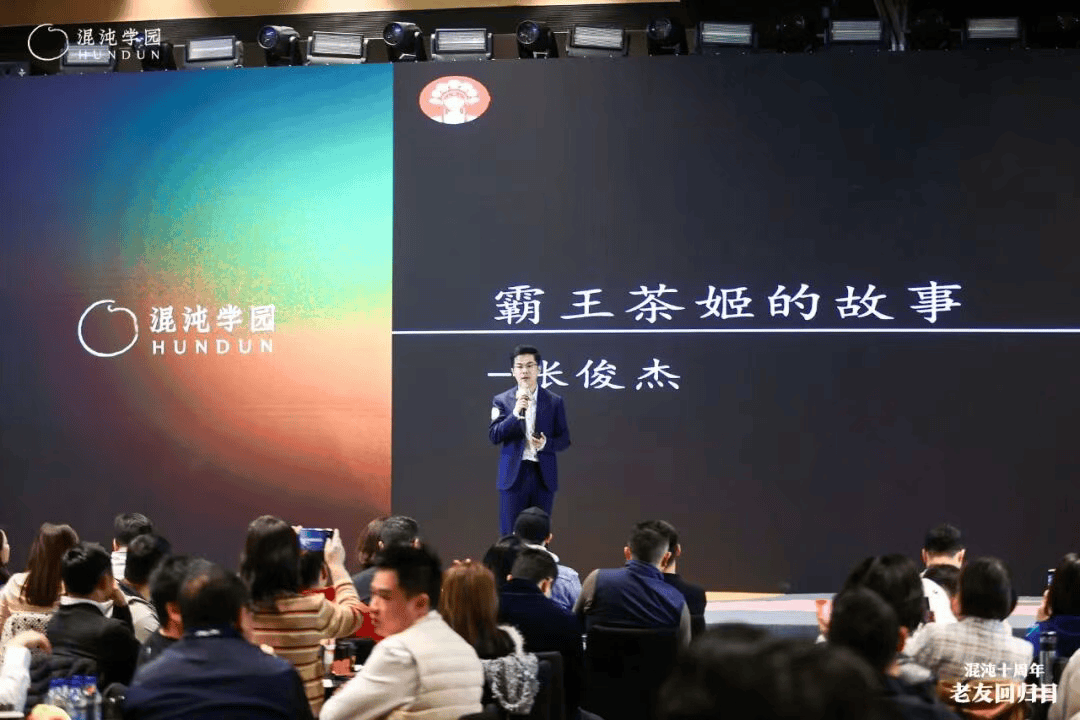
11月20日,红星资本局从知情人士处了解到,霸王茶姬(CHA.US)创始人张俊杰将与天合光能(688599.SH)联席董事长高海纯结婚。(详见文章) 在上述活动中,张俊杰分享了霸王茶姬近几年破过的局、打过的关键战役,以及整体的战略布局和组织文化。 张俊杰 图据公众号"混沌学园" 据智通财经报道,11月20日晚,天合光能回应称,高海纯与张俊杰将于近期举行婚礼,并感谢大家的祝福。天合光能相关负责人表示,双方相识于青年企 业家学习活动,已登记结婚,由于此事属于个人事务,也期待大家给予一定的私人空间。双方公司均为上市公司,目前尚未有任何关联交易或商业合作。 红星资本局注意到,张俊杰是"创一代",高海纯为"光(伏)二代",两人都是90后,且同为混沌学园的学员。其中,高海纯为混沌学园二期学员,张俊杰 为四期学员。 据公众号"混沌学园",2024年11月末、12月初,在混沌学园的活动——混沌十周年老友回归日上,高海纯和张俊杰的名字均出现在"老友名单"上,该活动 在浙江西塘举办。 相比之下,高海纯在混沌学园内相对低调。 红星资本局在公众号"混沌学园"内搜索,仅找到一张高海纯的发言照片,无发言内容。 高海纯 图据公众号"混沌学 ...
天合光能高海纯与霸王茶姬张俊杰联姻
Zhong Guo Jin Rong Xin Xi Wang· 2025-11-20 13:34
Core Points - Tianhe Solar's co-chairman Gao Haichun is set to marry Zhang Junjie, chairman of Bawang Chaji, confirming their relationship and recent marriage registration [1] - Gao Haichun is the daughter of Tianhe Solar's chairman Gao Jifan, and has held various positions within the company since joining in 2017 [1] - Bawang Chaji, founded by Zhang Junjie in 2017, has grown to over 7,000 stores globally and achieved annual sales exceeding 10 billion yuan [1] - Both companies are publicly listed, with no current related transactions or business collaborations reported [1] Company Summaries Tianhe Solar - Tianhe Solar's market capitalization is approximately 41.7 billion yuan as of November 20 [1] - Gao Haichun has been appointed as co-chairman and president of the newly established Solutions Business Group, effective in 2025 [1] Bawang Chaji - Bawang Chaji was successfully listed on the NASDAQ this year, with a total market capitalization of about 2.61 billion USD, equivalent to approximately 185.74 billion yuan [1]