文化产业

Search documents
文化引领江苏在长三角一体化发展中走在前
Xin Hua Ri Bao· 2025-06-24 06:40
Group 1 - Jiangsu has made significant progress in building a culturally strong province, leveraging its rich cultural heritage to enhance cultural competitiveness and leadership [2][4][8] - The province is focusing on integrating culture with economic, technological, ecological, and tourism sectors to promote high-quality development in the Yangtze River Delta [1][3][4] - Initiatives such as "Cultural + Tourism" and "Digital +" are being implemented to foster innovation in cultural industries and promote traditional cultural clusters [3][6][7] Group 2 - Jiangsu aims to enhance cultural recognition and economic integration within the Yangtze River Delta by collaborating with neighboring regions like Shanghai, Zhejiang, and Anhui [5][6][7] - The province is committed to ecological cultural protection and sustainable development, utilizing its water resources to create vibrant ecological tourism corridors [6][7][8] - Jiangsu's strategy includes the establishment of cross-regional cultural industry clusters and the promotion of cultural data integration to strengthen the cultural economy [6][7]
赵一德在调研文化建设工作时强调坚定文化自信 坚持守正创新 更好以文化赋能高质量发展现代化建设
Shan Xi Ri Bao· 2025-06-21 23:31
Group 1 - The core viewpoint emphasizes the importance of integrating cultural confidence with high-quality development and modernization through cultural empowerment [1] - The provincial government encourages enterprises to enhance core functions and competitiveness by deepening reforms and optimizing business structures [1] - The integration of culture and technology, particularly through digitalization and intelligent systems, is highlighted as a trend that should be leveraged to improve cultural production and dissemination processes [1] Group 2 - The revitalization of industrial heritage is seen as a way to combine cultural and tourism development, enhancing the historical and social value of industrial sites [2] - The government stresses the need for a protective mechanism for archaeological sites, ensuring that cultural heritage is preserved and effectively communicated to the public [2] - There is a focus on creatively transforming and innovatively developing traditional Chinese culture through improved research and interpretation of cultural relics [2]
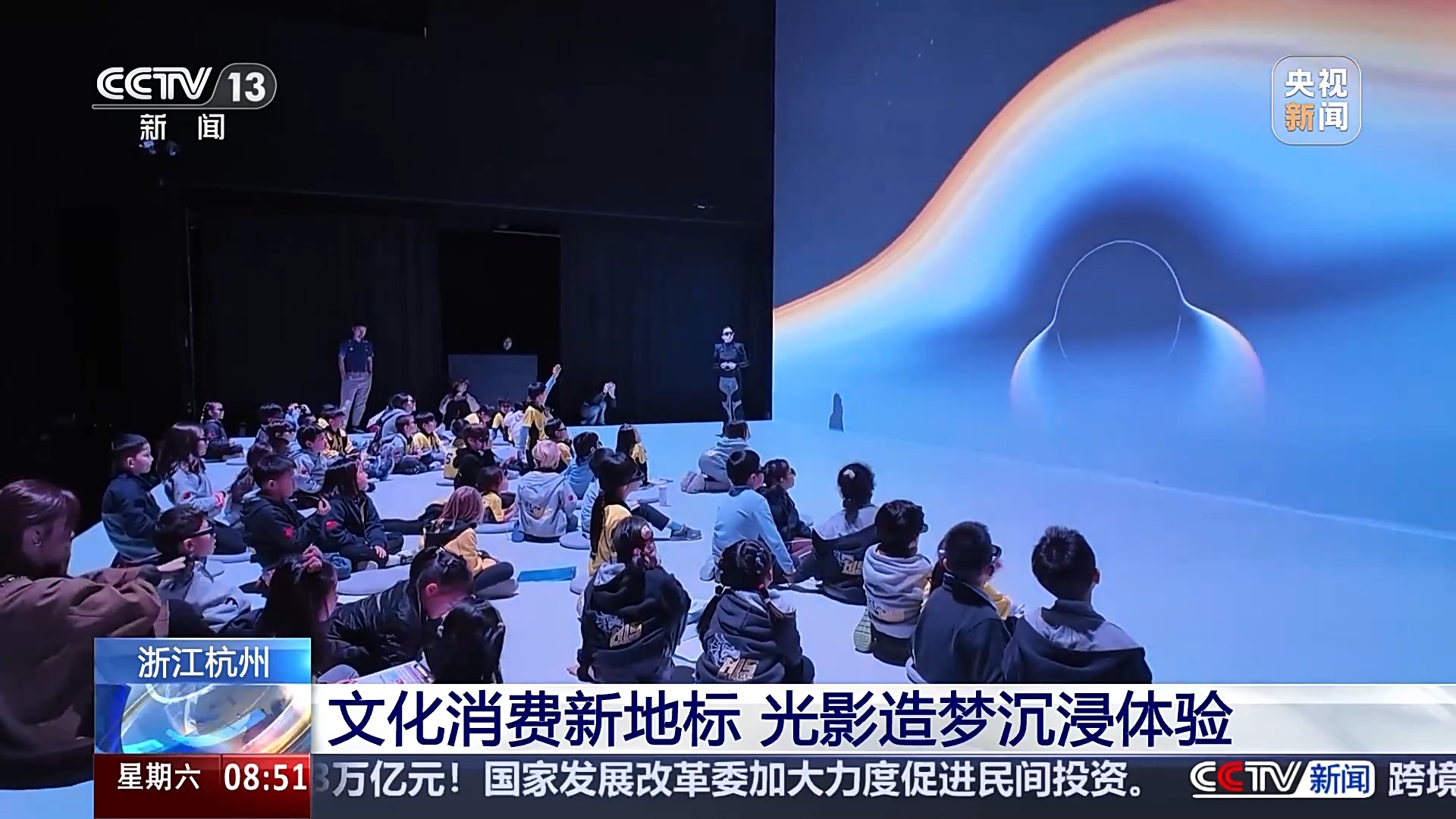
旧仓库→文化新地标 来这里沉浸式“观影+逛展”
Yang Shi Xin Wen Ke Hu Duan· 2025-06-21 13:08
Core Insights - The M511 Light and Shadow Hub in Hangzhou has transformed from a film warehouse into a multi-functional cultural space, offering not just movies but also outdoor concerts, digital exhibitions, and cultural night markets, becoming a new cultural consumption landmark in the area [1][5] Group 1: Facility Features - Each screening room in the M511 is designed for multi-purpose use, with innovations such as an L-shaped screen in the giant screen hall for deep space exploration experiences and real-time synthesis technology in smaller theaters for interactive performances [2][3] - The first floor has been converted from a traditional cinema ticketing area into a digital museum, where visitors can use VR glasses to immerse themselves in cultural scenes, enhancing the overall visitor experience [5] Group 2: Economic Impact - The box office revenue within the cinema space has increased by 40.5%, indicating strong consumer interest and engagement [7] - From January to May of this year, the overall operating income of the M511 has grown by 28.6%, reflecting the successful integration of diverse cultural activities and experiences [7]

从“锦绣天府”到“安逸四川”
Sou Hu Cai Jing· 2025-06-19 08:14
Core Viewpoint - The integration of culture and tourism in Sichuan is being prioritized, with significant investments and initiatives aimed at enhancing the cultural tourism industry and promoting local heritage [2][13]. Group 1: Cultural and Tourism Development - The Sichuan Provincial Committee has approved a decision to promote the deep integration of culture and tourism, positioning it as a key element in overall development [2][13]. - Sichuan has established four national archaeological parks, including Sanxingdui and Jinsha, highlighting the region's rich cultural heritage [3][14]. - The revival of traditional arts, such as Sichuan opera, has led to over 1,000 performances in 2024, attracting 350,000 audience members, marking a historical high [3][14]. Group 2: Economic Impact and Growth - The cultural and related industries in Sichuan are projected to have 2,997 enterprises by the end of 2024, generating revenue of 589 billion yuan, a year-on-year increase of 7.9% [3][14]. - The province received 1.119 billion domestic tourists in 2024, with domestic spending reaching 1.764 trillion yuan, reflecting a growth of 38% [5][16]. - Major investment projects worth 48.4 billion yuan were signed during the 2024 Sichuan International Tourism Investment Conference, indicating strong interest in the region's tourism potential [5][16]. Group 3: Innovative Cultural Experiences - The Sanxingdui Museum has become a major attraction, receiving nearly 10 million visitors annually, with cultural product revenue reaching 196 million yuan, nearly 60% of ticket sales [6][16]. - New cultural IPs, such as the "Nezha" series, have gained international attention, showcasing the vitality of Sichuan's cultural landscape [4][15]. - Events like the China (Sichuan) International Intangible Cultural Heritage Festival and the 2025 Global Cross-Border Tourism Conference are enhancing Sichuan's profile as a top travel destination [5][16]. Group 4: Future Directions - Sichuan plans to enhance cultural tourism by developing new products and experiences, focusing on areas like digital culture, performing arts, and health tourism [7][16]. - The province aims to create a comprehensive tourism product system that caters to various demographics and seasons, promoting the "Beautiful Sichuan" brand [7][16].

文化产业与旅游经济发展的双向促进
Xin Hua Ri Bao· 2025-06-18 21:09
Core Insights - The integration of culture and tourism is becoming increasingly important as the economy develops and living standards rise, transforming tourism into a pursuit of cultural experiences and spiritual enjoyment [1] - The dual promotion of cultural industries and tourism economies can inject vitality into related sectors such as transportation, dining, and accommodation, while enhancing cultural identity and pride among citizens [1] Group 1: Local Resource Exploration - Local cultural and tourism authorities should systematically explore rich historical and cultural resources, exemplified by Shanxi Province's efforts to protect and restore historical sites while preserving traditional architectural styles [2] - Engaging visitors through local customs and traditional crafts enhances their understanding of regional culture, as seen in the diverse cultural activities of the Dai ethnic group in Yunnan [2] Group 2: Red Culture Resources - Red culture resources embody significant historical and revolutionary spirit, with local tourism authorities focusing on the protection and restoration of sites like Jinggangshan to ensure historical authenticity [3] - Cross-regional tourism resource integration can leverage the unique advantages of different areas, as demonstrated by the collaboration among Beijing, Tianjin, and Hebei to create a rich tourism service system [3] Group 3: Cultural Innovation - A new model of cultural tourism emphasizes the equal relationship between culture and tourism, urging industry professionals to innovate and incorporate local cultural elements into tourism experiences [4] - Promoting traditional culture through various media and designing specialized tourism routes can deepen the integration of culture and tourism [4] Group 4: Incorporating Modern Elements - Local cultural and tourism authorities should embrace modern technologies like AI, IoT, and big data to support the development of the cultural tourism industry [5] - Examples include the use of immersive technologies in performances and virtual reality experiences to enhance visitor engagement and enjoyment [5] Group 5: Night Economy - The night economy represents a new form of cultural tourism development, where local authorities can integrate cultural elements to create unique cultural brands, as seen in Xi'an's "Daming Unnight City" [6] Group 6: New Business Models - Government policies should support the attraction of talent in the cultural tourism sector through housing subsidies and talent exchange platforms [7] - Educational institutions are encouraged to develop interdisciplinary curricula and collaborate with industry to enhance practical skills and international perspectives for students [7]
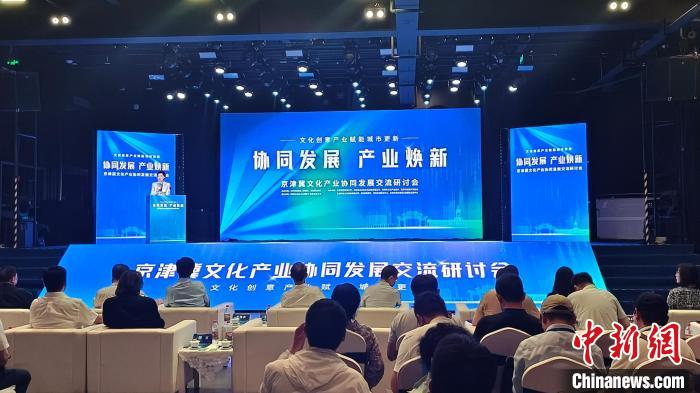
京津冀文化产业协同发展天津中心成立
Zhong Guo Xin Wen Wang· 2025-06-18 17:48
Core Insights - The "Beijing-Tianjin-Hebei Cultural Industry Collaborative Development Exchange Seminar" was held in Tianjin, focusing on the theme of "Collaborative Development and Industrial Renewal - Empowering Urban Renewal through Cultural and Creative Industries" [1] - The seminar officially launched the "Beijing-Tianjin-Hebei Cultural Industry Collaborative Development Tianjin Center" [1] Group 1 - The Tianjin Center is co-built by the China Cultural Industry Association, Beijing Chaoyang National Cultural and Creative Experimental Zone Management Committee, and Tianjin Hedong District Government's Cultural and Creative Industry Development Office [2] - The center will adopt a model of "government support, association leadership, government-enterprise collaboration, and market operation," aiming to create five platforms: cultural resource connection and transformation, technological digital creative innovation, cultural investment and financial services, promotion of Tianjin culture, and guidance from a digital cultural think tank [2] - The goal is to link high-quality resources from the three regions and establish a cultural industry innovation hub on the eastern bank of the Haihe River [2] Group 2 - Experts at the seminar discussed the integration of AI technology with the cultural industry and shared practical experiences in cultural tourism projects [2] - The seminar included a business negotiation area where scholars and entrepreneurs brainstormed on hot cultural tourism projects in the Beijing-Tianjin-Hebei region [2] - A representative from the Tianjin Hedong District emphasized the district's commitment to integrating into the collaborative development of Beijing-Tianjin-Hebei, focusing on industrial heritage protection and urban renewal [3]
文旅深度融合启新程 为谱写中国式现代化四川新篇章贡献更大力量
Si Chuan Ri Bao· 2025-06-17 03:02
Core Viewpoint - The integration of cultural and tourism industries in Sichuan is essential for enhancing cultural influence, tourism appeal, product supply, and industry competitiveness, positioning the province as a leader in cultural and tourism development in China [1][2][3]. Group 1: Economic Impact - The cultural and tourism economy has become a new highlight of high-quality development in Sichuan, with projected revenues exceeding 580 billion yuan in 2024 and over 1.11 billion domestic tourists expected [4][8]. - Sichuan's cultural industry indicators have consistently ranked first in Western China, with the issuance of special bonds for cultural and tourism projects leading the nation [3][4]. Group 2: Policy and Planning - Sichuan has implemented a series of policies to promote the development of the cultural and tourism economy, including the issuance of the "Opinions on Developing Cultural Tourism Economy" and the "Cultural and Tourism Industry Chain Special Work Plan" [3][5]. - The province aims to enhance the cultural and tourism industry chain through collaborative development across various sectors, establishing a new pattern of cultural tourism [3][5]. Group 3: Resource Utilization - Sichuan boasts a rich array of cultural and tourism resources, including historical sites, natural landscapes, and culinary traditions, which are being leveraged to promote high-quality development in the sector [2][5]. - The province is focusing on creating a comprehensive cultural tourism ecosystem that integrates agriculture, commerce, sports, education, and technology [5][6]. Group 4: Innovation and New Trends - New tourism trends such as low-altitude tourism, immersive experiences, and digital art are emerging in Sichuan, expanding the boundaries of "cultural tourism" [6][7]. - The province is also enhancing night-time cultural tourism experiences, with 16 national-level night culture and tourism consumption clusters established, the highest in the country [7][8]. Group 5: Global Engagement - Sichuan is actively promoting its cultural tourism on a global scale, participating in international exhibitions and events to showcase its unique cultural heritage and attract foreign tourists [12][13]. - The province has seen a significant increase in inbound tourism, with over 2.29 million international visitors in the past year, highlighting its growing global appeal [13].
以文化创意激活发展新意(人民时评) ——从展会感受中国经济脉动③
Ren Min Ri Bao· 2025-06-16 21:54
Group 1 - The integration of traditional culture and modern technology creates new application scenarios, expanding the "culture + technology" blue ocean [1][2] - The 21st China (Shenzhen) International Cultural Industries Fair attracted over 62,800 government groups, cultural institutions, and enterprises, showcasing more than 120,000 cultural products and facilitating over 4,000 cultural industry investment and financing projects [1] - The Guangdong exhibition group signed 18 key projects on the opening day, with a total transaction amount exceeding 1.6 billion yuan [1] Group 2 - The fair highlighted the empowerment effect of cultural industries, which can add cultural value to manufacturing upgrades, service industry transformations, and agricultural branding [3] - Cultural industries are increasingly recognized for their role in enhancing product value through cultural quality and value, forming a virtuous cycle of "cultural empowerment - industrial upgrading - innovation feedback" [3] - The fair aims to promote Chinese culture globally through the "Belt and Road" cultural corridor and accelerate cultural digitalization strategies [3] Group 3 - The fair serves as an incubator for small and medium cultural enterprises, fostering grassroots creativity [3] - The cultural "soft power" transforms into economic "hard support," illuminating innovation across various industries [4] - The fair's mission is to provide a Chinese solution for global cultural exchange, demonstrating that culture is not only a reflection of history but also a precursor to the future [4]
100亿长三角数智文化产业基金成立;合肥首支QFLP基金落户,规模达1亿美元 | 06.09-06.15
Sou Hu Cai Jing· 2025-06-16 07:49
Group 1 - Guangdong Province has launched a 10 billion yuan Smart Industry Fund, with an initial fundraising of 2 billion yuan, focusing on AI, robotics, and semiconductor technology [2] - The second phase of the 100 billion yuan Service Trade Innovation Development Fund has been initiated, aiming to leverage fiscal funds to foster new foreign trade formats [2] - The Yangtze River Delta Digital Cultural Industry Fund has been established with a total scale of 10 billion yuan, focusing on the integration of culture and AI [2] Group 2 - The first AIC equity investment fund in Shaanxi Province has been registered, with a total scale of 400 million yuan, targeting new generation information technology and intelligent manufacturing [2] - A 5 billion yuan Sichuan Province Achievement Transformation Guidance Fund has been launched, focusing on key technologies in AI and semiconductors [2] - The Hubei Xiaogan Low-altitude Economic Investment Fund has been registered, with a target scale of 5 billion yuan, focusing on drone manufacturing and aviation logistics [3] Group 3 - Jiangxi Jiujiang has established a high-quality industrial development investment fund with a contribution of 3.001 billion yuan, focusing on private equity investment [3] - A 1 billion yuan new materials industry mother fund has been set up in Lianyungang, with a focus on high-performance fibers and advanced inorganic non-metallic materials [3] - A 5 billion yuan talent innovation fund has been launched in Huzhou, targeting new energy vehicles and semiconductor sectors [3] Group 4 - The Longjiang Venture Capital Fund has been publicly soliciting fund management institutions, with a total scale of 500 million yuan, focusing on strategic emerging industries [4] - The 2 billion yuan Kexing Innovation Fund has been registered in Zhangzhou, focusing on electronic information and health industries [4] - The 85 billion yuan Future Industry Angel Fund in Changzhou has completed registration, targeting strategic emerging industries [4] Group 5 - A 10 billion yuan AI terminal fund has been established in Shenzhen, with a focus on AI terminal industry development [5] - Felicis Ventures has completed a $900 million fundraising for its tenth fund, focusing on early-stage AI and technology investments [5] - Goldman Sachs Asset Management is seeking to raise over $14.2 billion for its largest S fund to date [5] Group 6 - The first QFLP fund in Hefei has been established with a scale of $100 million, focusing on strategic emerging industries [6] - The Jiangcheng Huafa Fund has been registered with a scale of 1.01 billion yuan, focusing on the semiconductor sector [6] - The Chengdu Jiaozi Financial Holding Group has issued a 5 billion yuan technology innovation bond [7] Group 7 - The National First Pension Science and Technology Industry Fund has been established in Shanghai, focusing on smart healthcare applications [8] - A 2.7 billion yuan Chuxing Venture Capital Fund has been registered in Hubei, targeting new energy and semiconductor industries [8] - A 1 billion yuan new materials and smart construction fund has been established by Zhejiang University Holdings [8] Group 8 - Zhongwei Company plans to invest 735 million yuan in a 1.5 billion yuan semiconductor fund, focusing on the semiconductor and strategic emerging sectors [9] - Ningbo Huaxiang Electronics is establishing a 1 billion yuan industry fund, focusing on the automotive parts industry [9] - Suzhou Yinghuate is participating in a 1 billion yuan industry fund, focusing on high-end equipment and semiconductor sectors [9] Group 9 - Xiamen has issued measures to utilize government investment funds to empower industrial chain development, with a total of 150 billion yuan allocated [10] - Fujian Province has issued management measures for provincial government investment funds, focusing on strategic emerging industries [10] - Tianjin has adjusted the management regulations for the Haihe Industrial Fund, emphasizing the leverage of social capital [11]
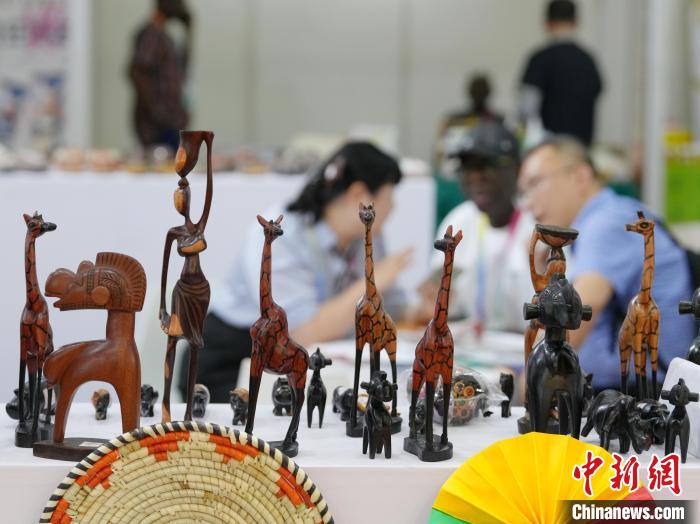
中非经贸博览会多维赋能 释放合作共赢新机遇
Zhong Guo Xin Wen Wang· 2025-06-16 06:43
Group 1 - The fourth China-Africa Economic and Trade Expo was held in Changsha, showcasing over a thousand selected African products and aiming to deepen cooperation between China and Africa [1][2] - The expo featured a new African fashion industry pavilion, highlighting the interest of African designers in entering the Chinese market, with South African designer Tola Cindy expressing hopes for greater recognition of African design in China [2] - The expo's theme was "China-Africa Cooperation in Action, Dreaming of Modernization," with over 30 trade activities focusing on various sectors including industry chain cooperation, green minerals, infrastructure, and cultural trade [4] Group 2 - A significant focus of the expo was on integrated projects that create quality employment opportunities, with several projects signed, including agricultural modernization in Tanzania and a textile project in Hunan [4] - Energy cooperation was a key highlight, with multiple solar power projects signed, including a 50MW photovoltaic project in Zambia, addressing the long-standing energy shortages in Africa [7] - A total of 176 projects were signed during the expo, amounting to $11.39 billion, representing a 45.8% increase in project numbers and a 10.6% increase in project value compared to the previous expo [7]