
种植业

Search documents
迈向“十五五”的发展图景|白花花盐碱地产出白茸茸棉
Ren Min Ri Bao· 2025-12-22 03:40
Core Viewpoint - The article highlights the implementation of advanced irrigation techniques in Xinjiang's Kashgar region to improve the quality of saline-alkali land and enhance agricultural productivity [1][3]. Group 1: Agricultural Techniques - The new irrigation technology, developed by research institutions and universities, focuses on water-saving and salt suppression to improve crop yields on saline-alkali land [3][4]. - A demonstration area of 1,000 acres was established in Kizilsu Township to explore efficient methods for managing saline-alkali soil [3][4]. - The average salt content in the soil of the demonstration area was initially 28.8 grams per kilogram, with some areas exceeding 100 grams per kilogram [3]. Group 2: Crop Yield Improvement - The cotton yield in the region has significantly increased, with an average yield of 440 kilograms per acre in 2023, doubling from 2022 [3]. - The quality of the farmland has improved by two grades due to the implementation of the new irrigation techniques [3]. Group 3: Technical Innovations - The key innovation involves the use of underground drainage pipes to quickly remove salt from the soil, which is crucial for crop growth [4]. - The underground drainage system is designed to intercept rising saline water, preventing salt accumulation in the topsoil [4]. - Compared to traditional methods, the new technique reduces the remediation period for severely saline-alkali land from 5-6 years to just 2 years, while also cutting water usage by nearly half [4]. Group 4: Training and Adoption - Over 270,000 acres of severely saline-alkali land in Xinjiang have been equipped with the underground drainage system, and training has been provided to 8,800 farmers on the new techniques [5].
油菜种植不再只凭“老经验”
Xin Hua Wang· 2025-12-22 02:51
Core Insights - The article highlights the innovative "dual-factor decision-making" system for rapeseed planting, which integrates sowing time and soil moisture conditions to enhance production efficiency and adaptability to changing agricultural conditions [1][4] Group 1: Technology and Implementation - The new rapeseed production technology system utilizes a variety of mechanized techniques, including "mechanized light and efficient direct seeding technology," which allows for simultaneous completion of multiple farming tasks, significantly improving operational quality and efficiency [2][3] - The system has been widely demonstrated in regions such as Hefei, Ma'anshan, and Anqing, effectively addressing issues like missed sowing and uneven seed distribution [2][3] Group 2: Impact and Results - The dual-factor decision-making system has been implemented on 6 million acres, with an average yield increase of over 13% in core demonstration areas, while also reducing operational costs by 20 to 50 yuan per acre [3] - The technology has been recognized as a typical case for enhancing rapeseed yield and has been included in the provincial agricultural promotion awards [3][4] Group 3: Future Directions - The provincial agricultural department plans to continue enhancing the development of suitable machinery and promoting standardized operational procedures to further improve the mechanization level of rapeseed production [4]
从创新能力提升到应用场景拓宽 智慧赋能让农业生产更“聪明”焕发蓬勃生机
Yang Shi Wang· 2025-12-22 02:47
Core Insights - Since 2025, China's smart agriculture construction has accelerated, enhancing innovation capabilities and expanding application scenarios, leading to a vibrant agricultural sector empowered by technology [1][5]. Group 1: Smart Agriculture Innovations - The innovation capabilities in smart agriculture have been continuously improving, making production smarter from orchards to pastures and fish ponds [5]. - In Fujian's Shunchang County, 100,000 acres of citrus have seen a harvest boost, with rail transport vehicles and heavy-duty drones replacing traditional methods, significantly improving harvesting and transportation efficiency [9]. - In Inner Mongolia's Dongwuzhumuqin Banner, smart collars are used for cattle, allowing real-time monitoring of activity levels and health status via mobile devices [13]. - In Jiangsu's Pukou, smart aquaculture has enabled remote monitoring and precise feeding of shrimp, with expected production increases of 20% year-on-year and significant quality improvements [15]. Group 2: Technological Empowerment in Apple Industry - In Shaanxi's Yulin City, the local government is focusing on technological empowerment to transform small apple production into a large industry, introducing 13 intelligent sorting lines that classify apples into 10 grades, achieving a daily sorting capacity of 40,000 kilograms with over 98% accuracy [19]. - The county has built a 20,000-ton cold storage facility and equipped it with smart sorting lines, creating a comprehensive industry chain that integrates production, storage, processing, and sales [22]. - Currently, the apple planting area in Suide County has reached 236,000 acres, with a production volume exceeding 240,000 tons and an annual output value nearing 1 billion yuan [24].

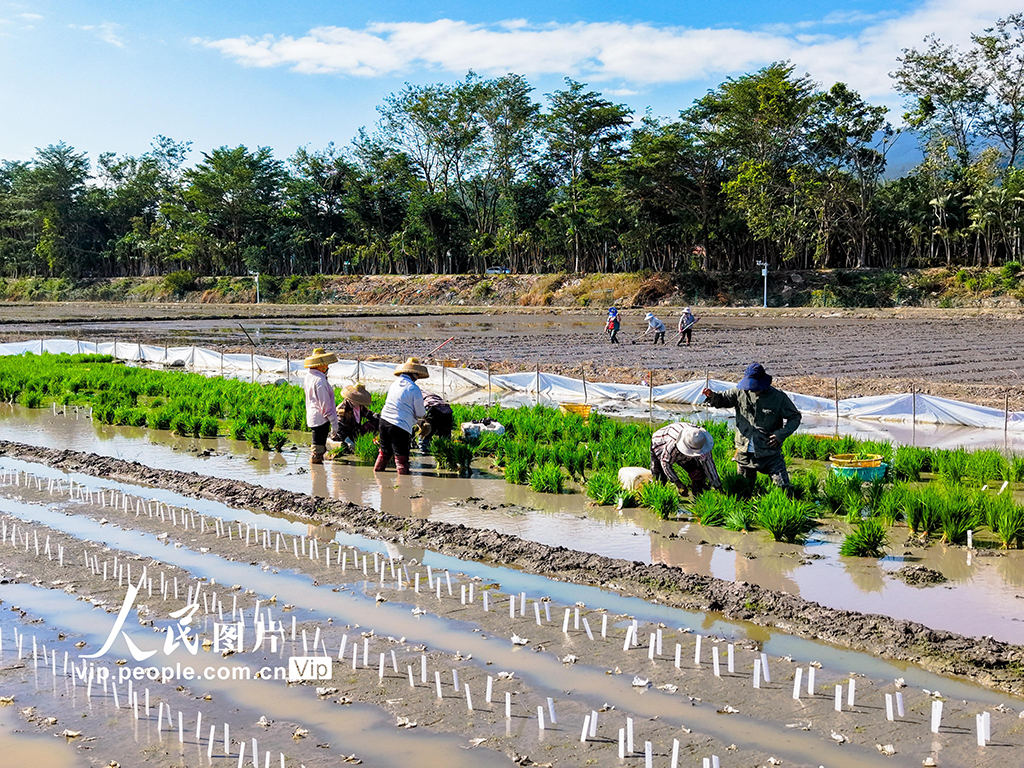
海南三亚:水稻“加代”试验田耕作忙
Ren Min Wang· 2025-12-22 02:21
海南三亚:水稻"加代"试验田耕作忙【2】 海南三亚:水稻"加代"试验田耕作忙 海南三亚:水稻"加代"试验田耕作忙【4】 海南三亚:水稻"加代"试验田耕作忙【3】 ...
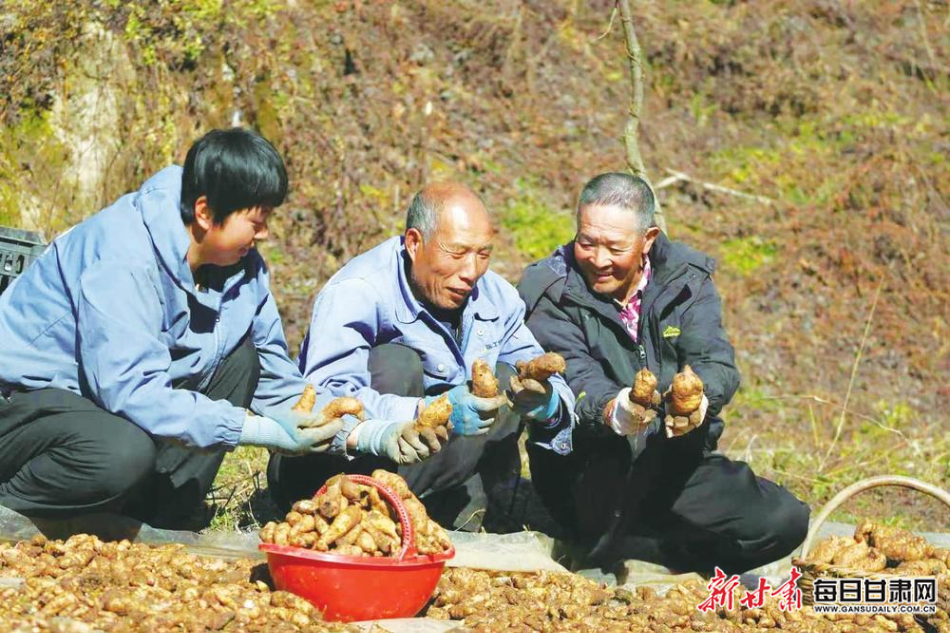
成县:林下荒坡刨出“金疙瘩”
Xin Lang Cai Jing· 2025-12-22 00:51
Core Viewpoint - The development of the Tianma (Gastrodia elata) industry in Chengxian County's Zhibang Town is creating economic opportunities while promoting ecological sustainability through innovative agricultural practices [2][3][4]. Group 1: Agricultural Practices and Innovations - The Tianma planting base in Liu Mountain Village spans 50 acres, utilizing the region's natural conditions for optimal growth [2]. - The ecological model adopted combines "Qinggang wood fungus material + honey ring fungus symbiosis," aiming to achieve economic benefits without deforestation or land occupation [2]. - The use of waste from mushroom bags as high-quality fertilizer enhances soil fertility, while the introduction of chestnut tree seedlings promotes biodiversity and prevents soil erosion [3]. Group 2: Economic Impact and Community Involvement - The "cooperative + base + farmer" model has been implemented, resulting in the training of over 50 Tianma planting technicians and providing employment for over 200 individuals, with an average income of approximately 18,000 yuan per person [3]. - Local farmers express optimism about the economic prospects, with plans to expand their own Tianma cultivation in the coming year [3]. - The successful practices in Liu Mountain Village are being replicated in surrounding villages, enhancing community engagement and economic development [3]. Group 3: Broader Industry Development - In addition to Tianma, the town is also cultivating other medicinal plants such as Forsythia and mugwort, and developing complementary industries like forest fungi and beekeeping [4]. - An industry alliance has been established to facilitate collaboration and ensure efficient coordination across the entire supply chain from planting to sales [4]. - The initiative aims to transform ecological advantages into sustainable development benefits through a comprehensive "1+3+N" development system [4].
共富之举 描绘乡村振兴新画卷
Xin Lang Cai Jing· 2025-12-21 22:47
Core Viewpoint - The article highlights the achievements and ongoing efforts in poverty alleviation and rural revitalization in Qianxinan Prefecture, emphasizing the integration of various support mechanisms to ensure sustainable development and prevent large-scale poverty recurrence [11][20]. Group 1: Poverty Alleviation and Monitoring - Qianxinan has established a three-tier monitoring system combining big data alerts, grid-based inspections, and farmer self-reporting to effectively identify and assist households at risk of falling back into poverty [13][14]. - Over the past five years, Qianxinan has identified 21,100 households (84,600 individuals) at risk and successfully eliminated risks for 17,600 households (73,000 individuals) [15][14]. Group 2: Economic Development and Employment - The average disposable income of rural residents is projected to increase from 11,441 yuan at the end of the 13th Five-Year Plan to 15,459 yuan in 2024, reflecting an annual growth rate of 7.8% [16]. - Employment rates for relocated populations have consistently remained above 94%, with wage income accounting for over 80% of total income [17][19]. Group 3: Infrastructure and Community Services - Qianxinan has invested 1.229 billion yuan in over 420 projects to enhance infrastructure, including the establishment of 76 community service centers, 49 police stations, 130 schools, and 70 healthcare facilities [16][20]. - The region has created a standardized public service system for new urban residents, ensuring comprehensive access to education, healthcare, and administrative services [20]. Group 4: Agricultural and Industrial Development - Qianxinan has prioritized the development of specialty industries such as tea, medicinal herbs, and vegetables, with tea cultivation area reaching 430,000 acres and stable growth in other agricultural sectors [21][22]. - The integration of agriculture and tourism has led to the establishment of over 300 restaurants and guesthouses operated by relocated residents, enhancing local economic opportunities [19][22]. Group 5: Community Engagement and Governance - Innovative community governance mechanisms, such as the "points supermarket" system, have been implemented to encourage resident participation in community activities and improve local governance [23][24]. - The region has made significant strides in improving living conditions, with sanitation facilities and infrastructure upgrades leading to a rural toilet coverage rate of 84.3% and a rural water supply rate of 96.39% [24].
白花花盐碱地产出白茸茸棉(迈向“十五五”的发展图景)
Ren Min Ri Bao· 2025-12-21 22:41
Core Viewpoint - The article highlights the innovative techniques being implemented in Xinjiang's Kashgar region to improve the quality of saline-alkali land and enhance agricultural productivity through advanced irrigation methods [2][3]. Group 1: Agricultural Techniques and Innovations - The "water-saving and salt-reducing irrigation and drainage collaborative productivity enhancement technology" has been developed by research institutions and universities to address the challenges of saline-alkali land [2][3]. - In Kashgar County, over 1.06 million acres of farmland are affected by salinization, with more than 80% of the county's farmland classified as saline-alkali [2]. - The introduction of underground drainage systems, which involve laying pipes 1-2 meters underground, allows for efficient removal of salt from the soil, significantly improving crop yields [3][4]. Group 2: Impact on Crop Yields - The average cotton yield in Kashgar County has increased from 200 kilograms per acre in 2022 to 440 kilograms per acre in 2023, effectively doubling the output [2][3]. - The quality of the farmland has improved by two grades due to the implementation of these new agricultural techniques [2]. Group 3: Training and Adoption - Over 27,000 acres of severely saline-alkali land have been equipped with the underground drainage system, and training has been provided to 8,800 farmers on the new techniques [4].
36家企业获“小站稻”地理标志证明商标授权
Xin Lang Cai Jing· 2025-12-21 21:43
Core Insights - The event for the promotion of the "Xiaozhan Rice" brand for 2025 was held in Tianjin, focusing on enhancing agricultural product consumption and market vitality [1][2] - A total of 36 enterprises received authorization for the geographical indication trademark for "Xiaozhan Rice" for the years 2025-2027, indicating a strong emphasis on quality and management standards [1] - The event featured a tasting session with over 30 varieties of "Xiaozhan Rice" products, allowing consumers to engage directly with the brand and its history [1][2] Group 1 - The theme of the event was "Tianjin Rice Aroma in Supermarkets, Brand Promotes Agriculture and Consumption," aimed at delivering quality agricultural products directly to consumers [1] - The event showcased success stories from local farmers who utilize modern technology and ecological planting methods, highlighting the integration of academic research into practical farming [1] - The interactive tasting segment was particularly popular, enhancing consumer recognition of the "Xiaozhan Rice" brand's historical and quality value [1][2] Group 2 - The new sales model of "short-chain direct supply and experiential value addition" allows high-quality agricultural products to reach consumers directly from farms, effectively addressing the "last mile" delivery challenge [2] - This model promotes a virtuous cycle of "brand enhancement—consumer stimulation—industry upgrading," contributing to increased farmer income through market feedback [2]
瞧,天山脚下这支农科“国家队”
Xin Lang Cai Jing· 2025-12-21 19:39
Core Insights - The article highlights the significant advancements in agricultural technology and research in Xinjiang, particularly in cotton and fruit cultivation, driven by experts from the Chinese Academy of Agricultural Sciences (CAAS) [1][2][3][4][5] Group 1: Cotton Research and Innovations - The CAAS has established multiple innovation teams focusing on high-quality cotton production, with a notable achievement of a single yield exceeding 750 kg per hectare in 2024 [1] - The "reduced density and robust plant" technique has been successfully promoted, enhancing cotton yield and reliability for farmers [1] - A new cotton variety developed by Yang Zuoren's team utilizes synthetic biology to produce astaxanthin, aiming for higher value utilization of cotton resources beyond traditional fiber production [5] Group 2: Fruit Cultivation and Genetic Resources - Wang Lirong's team has collected 244 samples of local peach genetic resources in Xinjiang, emphasizing the region's rich biodiversity and the need for improved agricultural techniques [2] - The research aims to enhance the understanding and utilization of Xinjiang's fruit resources, which are currently underutilized due to weak technical foundations [2] Group 3: Livestock and Crop Production - The introduction of the "Huaxi Cattle" breed by Hou Shaohua's team has improved the growth rate and meat yield, contributing to the livestock industry's efficiency in Xinjiang [3][4] - The implementation of precision corn planting techniques has led to a record corn yield of 1,018 kg per mu in Changji, marking a significant milestone in local agricultural productivity [4]
加快兵团农业产业绿色转型
Xin Lang Cai Jing· 2025-12-21 19:39
Core Viewpoint - The 20th Central Committee of the Communist Party emphasizes accelerating the comprehensive green transformation of economic and social development, with agricultural green development being a crucial component for high-quality development in the region [1] Group 1: Green Agricultural Production System - The focus of agricultural green transformation is to reconstruct the production system, forming a green closed-loop covering the entire production process [2] - Promotion of precision green production technologies, including the use of drones and smart systems for resource management in crop planting [2] - Optimization of resource recycling models, such as integrated "plant-animal" cycles and efficient waste conversion [2] - Establishment of standardized green bases for organic agricultural products, covering all stages of production [2] Group 2: High-Value Green Industry Chain - Green transformation involves not only production methods but also upgrading value creation [3] - Development of low-carbon deep processing through green food processing parks and energy-efficient technologies [3] - Cultivation of distinctive green brands by integrating local agricultural resources and enhancing sales channels [3] - Promotion of ecological industry integration, combining agriculture with tourism and culture [3] Group 3: Support Mechanisms for Green Transformation - Agricultural green transformation requires a multi-dimensional support network involving policies, technology, and talent [4] - Strengthening policy support through special action plans and funding for green agricultural development [4] - Establishing a technology support system focused on key areas like water-saving irrigation and waste resource utilization [4] - Optimizing talent cultivation by introducing relevant courses and training programs in green agriculture [4]