高等教育

Search documents
清华大学发布讣告:余寿文同志逝世
券商中国· 2025-12-06 14:51
Core Viewpoint - The article announces the passing of Yu Shouwen, a prominent figure in solid mechanics and engineering education, highlighting his significant contributions to academia and the engineering field [1][4]. Contributions to Solid Mechanics - Yu Shouwen provided a complete continuous solution for the stress field at the crack tip of ideal plastic materials and clarified the structure of the crack tip field at the interface of power-hardening dual materials [2]. - He established a new fracture criterion that considers both plasticity and damage dissipation, which has been incorporated into national standards for the safety assessment of defective pressure vessels, providing critical theoretical support for major engineering structures [2]. - His research in micro-crack propagation and damage models led to the development of a three-dimensional mesoscopic damage mechanics theory for quasi-brittle materials [2]. Achievements in Education and Research - Yu Shouwen published seven monographs and over 400 academic papers, receiving multiple awards including two third prizes of the National Natural Science Award and a special prize for scientific and technological progress [2]. - He played a pivotal role in the development of higher engineering education in China, advocating for the establishment of the engineering education certification system and contributing to China's entry into the Washington Accord [3]. Legacy and Impact - His rigorous academic approach and dedication to education resulted in the cultivation of numerous talented individuals, many of whom became leading scholars and academicians [3]. - Yu Shouwen's passing is regarded as a significant loss for Tsinghua University and the fields of mechanics and education in China [4].


新高教集团(02001.HK):收入增长稳健 本科生占比持续提升
Ge Long Hui· 2025-12-06 13:52
Core Viewpoint - The company reported its fiscal year 2025 performance, with revenue and adjusted net profit meeting market expectations, indicating stable growth in the education sector [1][2]. Revenue Growth - The company's main business revenue increased by 7.8% year-on-year to 2.6 billion yuan, aligning with market expectations [1]. - Tuition revenue reached 2.32 billion yuan, up 8.1% year-on-year, while accommodation revenue was 278 million yuan, growing by 5.2% [1]. - The number of enrolled students for the 2025/2026 academic year is approximately 133,000, with an increasing proportion of undergraduate students [1]. - The placement rate for the 2024 graduating class was 98.03%, and for the 2025 class, it was 98.22%, reflecting a year-on-year increase of 3.13 percentage points [1]. Profitability - The company's gross margin for fiscal year 2025 was 35.5%, a decrease of 0.8 percentage points, attributed to increased depreciation and personnel costs [2]. - The adjusted net profit margin was 31.2%, also down by 0.8 percentage points due to the decline in gross margin and rising management expenses [2]. - As of August 31, 2025, the company's interest-bearing debt ratio decreased from 31.8% to 24.3%, and the leverage ratio fell from 85.2% to 52.8% [2]. - Capital expenditures totaled 688 million yuan, a decline of 25.2%, primarily for school upgrades and construction [2]. Profit Forecast and Valuation - The revenue forecast for fiscal year 2026 has been revised down by 5.0% to 2.73 billion yuan, and the adjusted net profit forecast has been reduced by 7.5% to 813 million yuan [2]. - The revenue forecast for fiscal year 2027 is set at 2.85 billion yuan, with an adjusted net profit forecast of 825 million yuan [2]. - The company maintains an outperform rating with a target price of 1.1 HKD, corresponding to 2.4 times the estimated adjusted P/E for 2026, indicating a potential upside of 9% [2].
中国教育科学论坛开幕,发布“中国教育学自主知识体系出版工程”
Xin Jing Bao· 2025-12-06 13:10
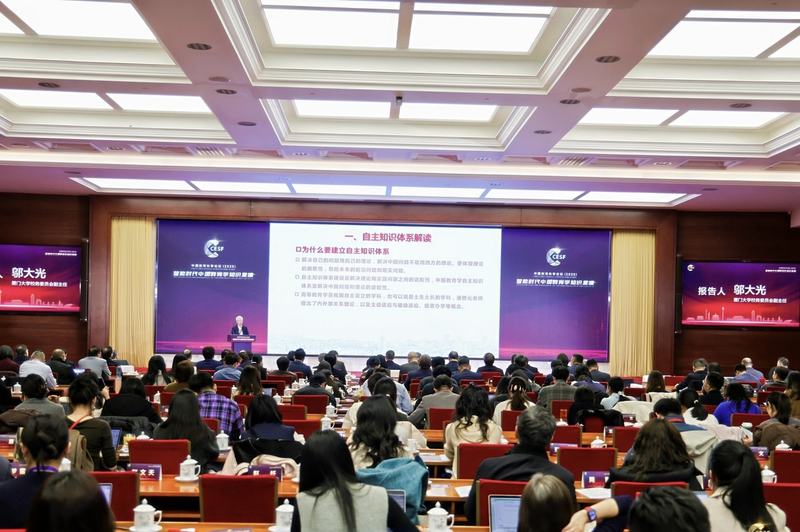
财经红利退潮,财经类大学将如何适应新时代的发展?高等教育"慢半拍"的问题如何解决?……12月5日,中国教 育科学论坛(2025)在北京开幕。本次论坛为期三天,由中国教育科学研究院主办。汇集教育及各个领域专家, 聚焦"智能时代中国教育学知识重建"的主题展开多样讨论。 "中国教育学建设不是一个纯粹的理论问题,应建立在教育实践基础之上。"教育部党组成员、副部长、总督学王 嘉毅出席会议并讲话。王嘉毅总结了"十四五"时期我国基础教育取得的成就,展望了"十五五"时期基础教育面临 的重大战略问题和迫切需要研究的重点问题。他强调,教育科研工作者要积极行动起来,在研究中国教育现实问 题中推动中国教育学知识的重建,为教育"十五五"规划编制工作、加快推进教育强国建设提供坚实的智力支撑。 各领域专家齐聚,探讨智能时代中国教育学知识重建 在专家主题报告环节,上海财经大学校长刘元春阐述了上海财经大学传统财经教育向"数智新财经"教育体系转向 的实践探索和理论思考。"过去十年,财经大学享受到了时代红利。但是随着智能时代、理工时代的到来,财经红 利退潮,财经类大学将如何适应新时代的发展?"刘元春介绍,上海财经大学以数智技术和现代人文为底座,发 ...
大湾区大学,来了!
证券时报· 2025-12-06 10:47
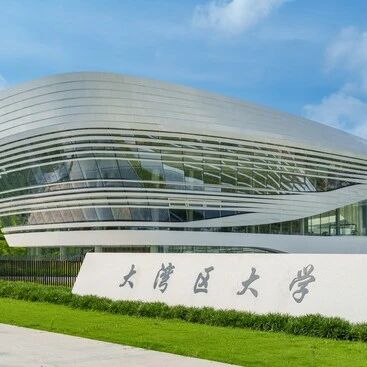
Core Viewpoint - The establishment of the Greater Bay Area University aims to support the development of new productivity in Dongguan and the Greater Bay Area through innovative educational models that integrate universities with scientific facilities, key research institutions, and leading technology enterprises [1][2]. Group 1: University Establishment and Structure - The Greater Bay Area University is a public higher education institution established by the Guangdong Provincial Government and supported by the Dongguan Municipal Government, with approval from the Ministry of Education in June [2]. - The university opened in August with an initial enrollment of 80 students, offering five undergraduate programs including Mathematics, Physics, Materials Science, Computer Science, and Industrial Engineering [2]. Group 2: Educational Philosophy and Curriculum - The university aims to cultivate students who are "solid in foundation, broad in vision, integrated in knowledge and action," utilizing experimental classes and a dual-mentor system combining academic and enterprise guidance [2]. - The university has developed differentiated talent training programs for disciplines such as Science and Engineering, implementing a category-based admission system [2]. Group 3: Campus and Facilities - The university's planning includes two campuses covering a total area of approximately 2000 acres, with a total construction area of about 1 million square meters [2]. - The Songshan Lake campus has a building area of approximately 247,700 square meters, while the Coastal Bay campus covers about 750,000 square meters, supporting functions in education, scientific research, and international cooperation [2].
大湾区大学正式成立!
券商中国· 2025-12-06 09:41
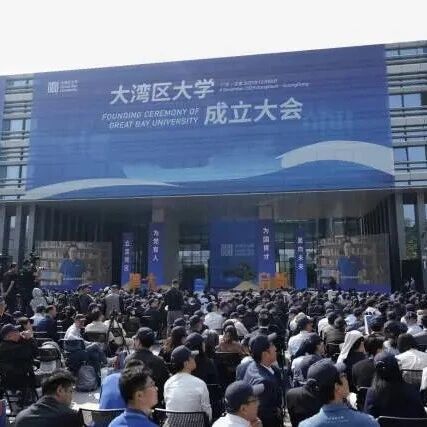
Core Viewpoint - The establishment of the Greater Bay Area University (GBAU) marks a significant step in creating a new type of research-oriented university focused on science and engineering, aiming to cultivate high-quality research talents to meet the region's development needs [1][2]. Group 1: University Establishment and Focus - GBAU is positioned as a "small but refined, high-level research-oriented" institution, concentrating on six key fields: material science, advanced engineering, life sciences, information science and technology, natural sciences, and financial management [1]. - The university received official approval from the Ministry of Education in June 2023 and has already commenced operations with its first cohort of 80 students from 53 high schools across 16 cities in Guangdong [1]. Group 2: Innovative Educational Model - GBAU adopts an innovative educational model where students do not declare majors upon entry, allowing for self-exploration in their first year, with the option to choose from various disciplines starting in their second year [2]. - The university has established a high-caliber faculty team, with over 300 research teachers, all holding PhDs, and more than 70% having international experience [2]. Group 3: Strategic Collaborations and Future Plans - GBAU has formed strategic partnerships with major scientific institutions like the China Spallation Neutron Source and the Songshan Lake Materials Laboratory to enhance technological innovation and talent development [3]. - The university aims to integrate education with industry through innovative models such as "University + Major Scientific Facilities" and "University + Leading Technology Enterprises," supporting the development of new productivity in the Greater Bay Area [3].
大湾区大学来了!大一新生入学后 先不分专业
Yang Shi Xin Wen Ke Hu Duan· 2025-12-06 09:09
Core Points - The establishment of the Greater Bay Area University marks the launch of a new research-oriented university focused on science and engineering [1] - The university aims to cultivate high-quality research talents capable of solving complex problems and innovating practices, with a focus on six key fields [1][3] Group 1: University Overview - Greater Bay Area University is a public institution established by the Guangdong Provincial Government and supported by the Dongguan Municipal Government [3] - The university received approval from the Ministry of Education in June and commenced its first academic year in August, admitting 80 students [3] Group 2: Academic Structure - The university offers five undergraduate programs: Mathematics and Applied Mathematics, Physics, Materials Science and Engineering, Computer Science and Technology, and Industrial Engineering [3] - Students will explore their interests in the first year without declaring a major, with the option to choose their specialization starting in the second year [3] Group 3: Campus and Facilities - The university operates on a "one school, two campuses" model, covering a total area of approximately 2000 acres and a total building area of about 1 million square meters [5] - The Songshan Lake campus has a building area of approximately 247,700 square meters, while the Binhai Bay campus covers about 750,000 square meters [5]
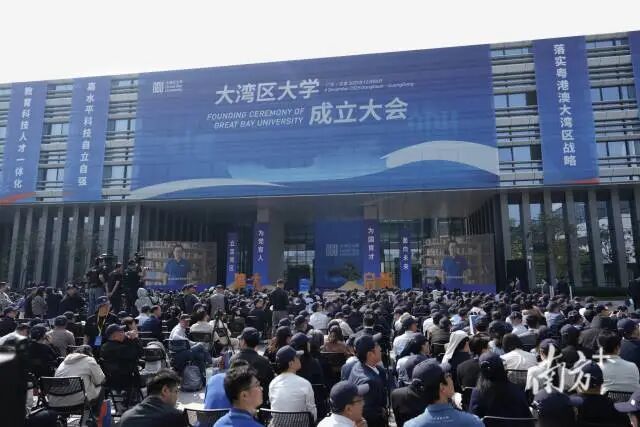
大湾区大学正式成立,将探索“大学+”办学模式
2 1 Shi Ji Jing Ji Bao Dao· 2025-12-06 08:50
(原标题:大湾区大学正式成立,将探索"大学+"办学模式) 南方财经记者程浩 东莞报道 南方财经记者了解到,大湾区大学首次招生中,湾大投档分数线高达622分,共录取本科生80人,来自 广东省16个城市53所中学。 田刚表示,粤港澳大湾区经济发展迅速,产业和人才集聚,人口结构充满活力。湾大提出"大学+"的发 展口号,其中"+"的对象就包括位于大湾区的大科学装置和头部科技企业,希望与它们开展深度合作。 田刚介绍,目前大湾区大学创校工作取得了阶段性重大成果,简要的归纳成为三个新,即学科布局之 新、办学模式之新和育人远景之新。 在学科布局之新方面,一方面大湾区大学紧密对接大湾区世界级产业集群,聚焦关键技术攻关。另一方 面,坚定不移地投向基础研究和前沿探索,致力于承担辐射范围更广、影响更为深远的源头创新。学校 紧密结合湾区产业优势与国家战略急需,聚焦人工智能、先进通信(如6G)、材料科学、智能计算等 前沿领域进行布局,跨学院的成立了研究中心和高能级科研平台,比如人工智能中心、算力中心以及广 东省的重点实验室,服务湾区科技创新。 这一宏伟蓝图的实现,有赖于高质量的师资队伍。目前,大湾区大学已汇聚了300多名高水平教师,其 ...
大湾区大学正式成立
21世纪经济报道· 2025-12-06 06:13
Core Viewpoint - The establishment of the Greater Bay Area University (GBAU) aims to cultivate high-quality research talents in response to the region's development needs, focusing on six key fields: material science, advanced engineering, life sciences, information technology, natural sciences, and financial management [2]. Group 1: University Establishment and Structure - The GBAU was officially approved by the Ministry of Education on June 19, marking a rapid transition from planning to establishment, with the first cohort of 80 students enrolled from 53 high schools across 16 cities in Guangdong [2]. - The university adopts an innovative educational model, allowing students to explore their interests in the first year before selecting their majors in the second year, with options including mathematics, physics, computer science, materials science, industrial engineering, artificial intelligence, and future robotics [4]. Group 2: Faculty and Research Team - GBAU has assembled a high-level faculty team of over 300 research teachers, all holding PhDs, with more than 70% having overseas study or work experience, including 10 academicians and 78 national-level talents [4]. Group 3: Collaborative Innovation Model - Located in Dongguan, the GBAU is developing a "University + Collaborative Innovation" model, partnering with major scientific facilities and leading enterprises like Huawei and OPPO to enhance technology innovation and talent development [6]. - The university provides each student with academic mentors and industry mentors from leading companies to cater to personalized development needs [6]. Group 4: Future Development and Goals - GBAU aims to integrate education with scientific research and industry, supporting the development of new productive forces in Dongguan and the Greater Bay Area, thereby contributing to technological innovation and emerging industry growth [6].
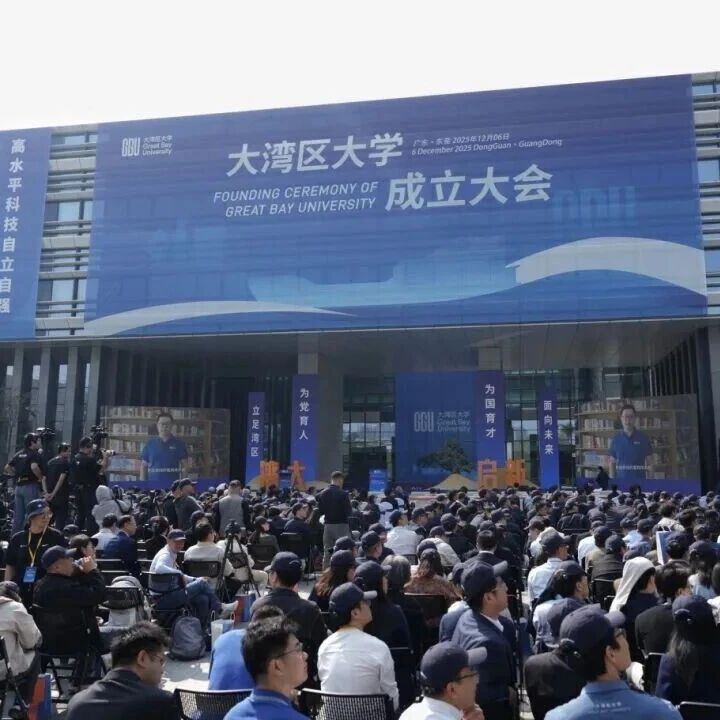
王迅院士在上海逝世,官网已变黑白
Di Yi Cai Jing Zi Xun· 2025-12-06 04:42
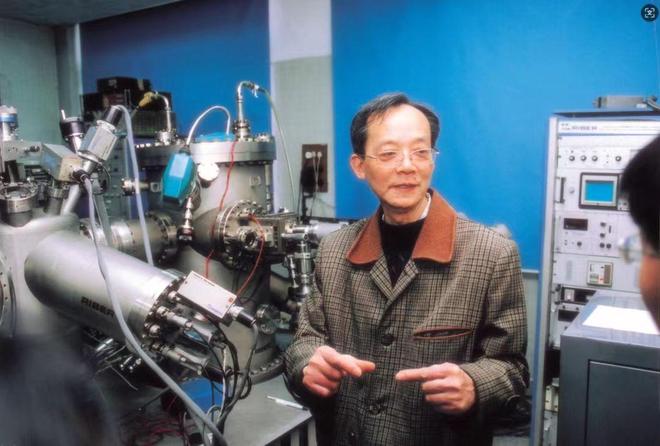
2025.12.06 本文字数:800,阅读时长大约2分钟 解放日报记者从复旦大学获悉,12月5日,中国共产党的优秀党员、著名物理学家、中国科学院院士、 复旦大学物理学系教授王迅,因病医治无效,于上海逝世,享年91岁。 目前,复旦大学官网已变为黑白色,悼念王迅院士。 复旦大学物理系发布讣告,官网已变黑白色 王迅,1934年生于上海,1960年以复旦大学物理学系副博士身份毕业,同年留校任教。1999年当选中国 科学院院士。历任复旦大学半导体物理教研室副主任,微电子教研室副主任,表面物理研究室副主任、 主任,应用表面物理国家重点实验室主任、学术委员会主任,复旦大学学术委员会副主任,复旦大学研 究生教育指导委员会主任等职。曾担任国际纯粹与应用物理联合会(IUPAP)半导体委员会委员(1993— 1999年)、国际学术刊物《Surface Science》顾问编委。 在复旦,王迅的名字与几个身份紧密相连,谢希德先生的学生、表面物理的奠基人、亲切的"王老师"。 始于一场与物理的相遇,成于对教育事业的坚守,最终化为一种甘为人梯的精神传承。 王迅(图源复旦大学物理学系官网) 据公开报道,被誉为"当代毕昇"的中国科学院院士、 ...

物理学家王迅在上海因病逝世,享年91岁!在复旦执教多年
Nan Fang Du Shi Bao· 2025-12-06 04:11
王迅。 据复旦大学官网信息,王迅,1934年生于上海,1960年以复旦大学物理学系副博士身份毕业,同年留校 任教;1999年当选中国科学院院士;历任复旦大学半导体物理教研室副主任,微电子教研室副主任,表 面物理研究室副主任、主任,应用表面物理国家重点实验室主任、学术委员会主任,复旦大学学术委员 会副主任,复旦大学研究生教育指导委员会主任等职。他曾担任国际纯粹与应用物理联合会(IUPAP) 半导体委员会委员(1993-1999年)、国际学术刊物《Surface Science》顾问编委。 12月5日,复旦大学发布讣告称,著名物理学家,中国科学院院士,复旦大学物理学系教授、博士生导 师王迅因病医治无效,于12月5日6时22分在上海新华医院不幸逝世,享年91岁。6日上午,南都N视频 记者注意到,复旦大学官网首页已变成黑白色。 对于青年教师,他更是 "甘为人梯" 。他像对待子女一样关心他们的住房、配偶工作,甚至冒雨骑自行 车去公证处为青年教师担保出国。他说,要破除"继承衣钵"的观念,主动让出"跑道",把最好的仪器交 给年轻人,让他们不受束缚地开拓新领域。 采写:南都N视频记者 杨婷 从上个世纪80年代开始,王迅协助恩 ...