
电池

Search documents
超20GWh储能销量!欣旺达再冲港股
行家说储能· 2026-02-05 10:23
Core Viewpoint - The company, XWANDA, is actively pursuing its H-share listing in Hong Kong, having recently resubmitted its application and updated its prospectus, while showcasing significant growth in its energy storage business, with a 160% increase in sales volume year-on-year [2][3][11]. Financial Performance - XWANDA's revenue for the years 2022, 2023, and 2024 was reported as 52.162 billion, 47.862 billion, and 56.021 billion RMB respectively, with a notable recovery in 2024 surpassing 2022 levels [3][4]. - The gross profit for the same years was 6.285 billion, 6.118 billion, and 8.203 billion RMB, indicating an improvement in profitability with a gross margin increase from 12.0% in 2022 to 16.2% in the first three quarters of 2025 [3][4]. - The revenue from the energy storage systems reached 4.55 million, 11.1 million, and 18.89 million RMB for the years 2022, 2023, and 2024, respectively, reflecting continuous high growth [3][4]. Product Sales and Growth - The sales volume of energy storage systems surged from 7.7 GWh to 20.0 GWh, marking an increase of approximately 160% [6]. - The production capacity for energy storage systems is projected to reach 21.3 GWh by the end of 2025, with a utilization rate of 86.3% [5][9]. Strategic Expansion - XWANDA plans to utilize the funds raised from its Hong Kong listing to support its extensive overseas production capacity expansion, with existing production bases in Hungary, Vietnam, Morocco, and India [8][9]. - The company has established 25 major production bases, with 19 located in China and 6 overseas, to meet the growing demand from both domestic and international clients [9][11]. Market Outlook - The global energy storage market is expected to grow rapidly, driven by the development of renewable energy and data centers, positioning XWANDA to leverage its product quality and technical capabilities to expand its market share [11].


钠电加速上车
Hua Er Jie Jian Wen· 2026-02-05 09:29
Core Viewpoint - The collaboration between Changan Automobile and CATL marks a significant shift in the battery industry, with the launch of the world's first sodium-ion mass-produced passenger vehicle expected in mid-2026, indicating the commercial viability of sodium batteries after a decade of development [1][2]. Strategic Alliance - Changan Automobile has chosen CATL as its "sole partner" for the sodium battery strategy, reflecting a strong consensus on industry trends and a strategic decision to pivot towards sodium batteries as a key focus for the coming years [2]. - Changan's commitment to sodium batteries will encompass multiple brands, including Avita, Deep Blue, Qiyuan, and Gravity, with plans to launch new models featuring CATL's sodium batteries [2]. Technical Specifications - The sodium battery cells have an energy density of up to 175 Wh/kg, which is currently the highest in the industry, and vehicles equipped with these batteries will have a pure electric range exceeding 400 km [3]. - The sodium battery maintains over 90% capacity at -40°C and can operate at -50°C, with discharge power nearly three times that of conventional lithium iron phosphate batteries at -30°C [3]. - Future upgrades could increase the pure electric range to 500-600 km and hybrid range to 300-400 km, potentially covering over 50% of market demand for range [3]. Market Dynamics - The sodium battery is expected to replace lithium iron phosphate batteries in certain applications, with cost parity anticipated as production scales up, potentially capturing about 50% of the market share currently held by lithium iron phosphate batteries [4]. - The sodium battery industry is transitioning from small-scale trials to large-scale production, with projections indicating a tenfold increase in sodium battery production capacity from 11,000 tons in 2025 to over 120,000 tons in 2026 [6]. Industry Expansion - The sodium battery market is expected to grow significantly, with major players like BYD and CATL investing heavily in sodium battery projects, indicating a shift towards a more diversified battery supply chain [6]. - By 2030, the global sodium battery market is projected to approach 410 GWh for sodium-ion power batteries, nearing the 580 GWh mark for energy storage batteries, suggesting that sodium batteries will become mainstream alongside lithium batteries [7].


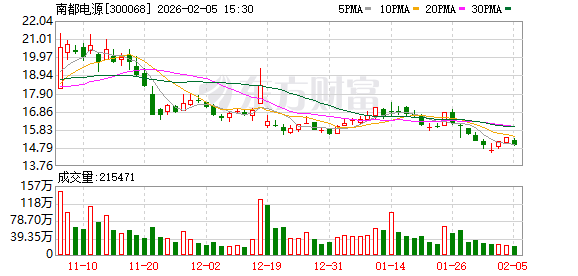
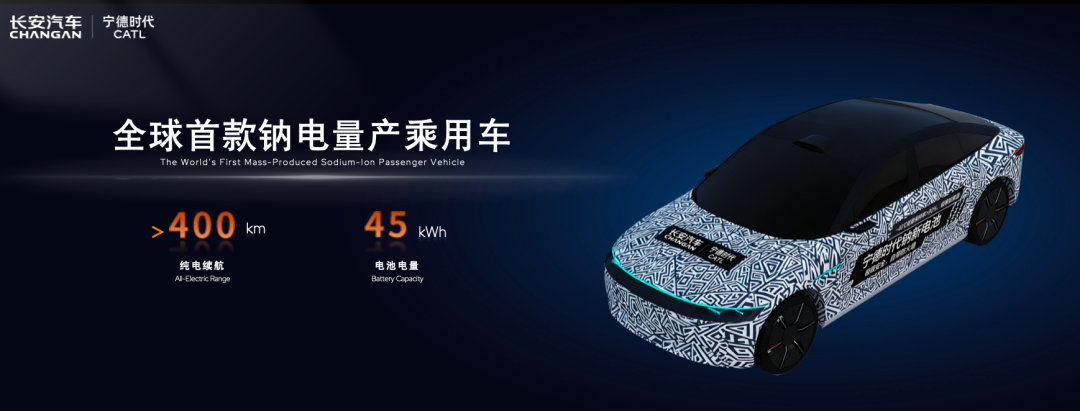
南都电源:2026年度,公司将持续做好主业经营
Zheng Quan Ri Bao· 2026-02-05 09:12
Core Viewpoint - The company aims to enhance its core competitiveness through technological innovation and market expansion while maintaining good communication with investors and delivering strong performance to reward their trust and support [2] Group 1 - The company plans to continue focusing on its main business operations in the fiscal year 2026 [2] - The company emphasizes the importance of technological innovation in improving its competitive edge [2] - The company is committed to maintaining effective communication with investors to convey its value [2]

电池产业"出海"正当时!2026国际电池产业大会4月22日吉隆坡启航
鑫椤锂电· 2026-02-05 08:35
Group 1 - The core viewpoint of the article emphasizes the rapid growth and technological innovation in the battery industry, driven by the global energy transition, with a projected growth rate of 34.6% in 2026, and a remarkable 70% growth in the energy storage sector [1][2] - The 2026 International Battery Industry Conference will be held from April 22-24, 2026, in Kuala Lumpur, Malaysia, aiming to create a platform for dialogue among industry elites and to explore new paths for industry development [2] - Malaysia is positioned as a crucial hub for the global battery industry chain, with over 26 billion yuan invested by Chinese battery companies by 2025, covering all aspects of the battery supply chain [2] Group 2 - The conference will focus on key industry pain points and cutting-edge trends, promoting collaborative innovation within the supply chain and optimizing global resource allocation for sustainable development in the battery industry [2] - The event will include a business networking cocktail on the first day, followed by the main conference activities on the second day, and site visits on the third day [5]
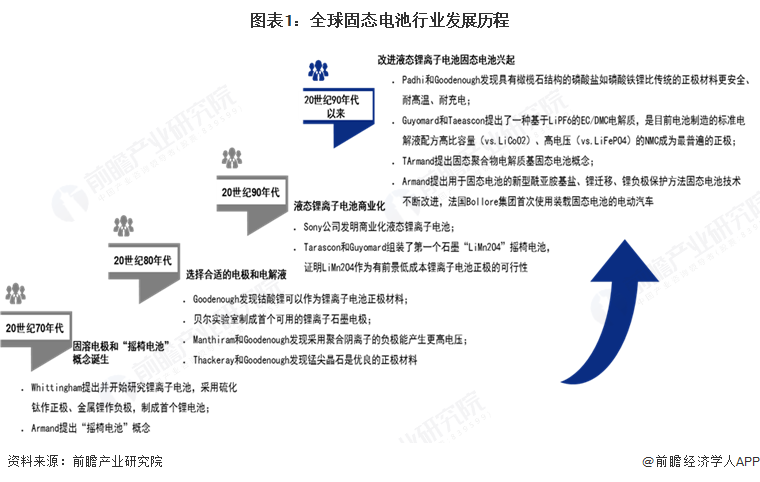
2026年全球固态电池行业发展现状 全球固态电池产业进入快速发展阶段【组图】
Qian Zhan Wang· 2026-02-05 08:15
Core Insights - The global solid-state battery industry is entering a rapid development phase, with significant potential for improving battery safety and energy density, despite challenges such as high costs and complex manufacturing processes [3][4][11]. Market Size and Growth - By 2030, the global solid-state battery market is projected to reach 17.2 billion yuan, while the semi-solid battery market is expected to reach 99.1 billion yuan [3]. - The solid-state battery market is anticipated to grow to 116.3 billion yuan by 2030, driven by government support and strategic development plans in major countries [3]. Industry Development - The semi-solid battery, which uses gel electrolytes, is currently in a transitional phase and has achieved a certain level of industrialization, serving as a bridge to full solid-state batteries [4][7]. - Companies like QuantumScape are making significant progress in the commercialization of oxide solid-state batteries, with plans for mass production by 2025 [8][10]. Technological Advancements - Toyota is leading the commercialization of sulfide solid-state batteries, with advancements in ion conductivity and production capabilities [11][12]. - The first commercial polymer solid-state batteries were developed by Bolloré in 2011, showcasing their application in electric vehicles [13]. Key Players - Major companies involved in the solid-state battery sector include BYD, SAIC Motor, NIO, CATL, and others, each focusing on different aspects of battery technology and production [1][3]. - Companies like Cymbet, Infinite Power Solutions, and Solid Power are also developing solid-state battery technologies for various applications, including IoT devices and electric vehicles [10][12].
孚能科技:公司钠离子电池产品已装车于江铃等相关车型 实现了全球首款钠电车型的交付
Jin Rong Jie· 2026-02-05 08:14
Core Viewpoint - The company has successfully developed and delivered the world's first sodium-ion vehicle, indicating a significant advancement in its technology focus and product offerings [1] Group 1: Company Developments - The company has confirmed that it has been producing sodium-ion batteries over the past two years, which are now being used in vehicles such as those from Jiangling [1] - The company is committed to further advancing the industrialization of its second-generation sodium-ion batteries [1]


大跌超10%!碳酸锂为何突然“崩盘”?
对冲研投· 2026-02-05 08:06
Core Viewpoint - The recent sharp decline in lithium carbonate futures is driven by a combination of regulatory policies, macroeconomic sentiment, and seasonal trading behaviors, rather than a fundamental shift in the market [4][5]. Market Analysis - The primary driver of the recent downturn is regulatory intervention aimed at cooling speculative trading, including increased fees and margin requirements, which has led to a rapid exit of speculative funds [4]. - Macroeconomic sentiment has also played a role, with declines in prices of major assets like precious metals and crude oil contributing to a general decrease in market risk appetite, further pressuring lithium carbonate prices [4]. - Seasonal factors are evident as investors tend to reduce positions and secure funds ahead of the Chinese New Year, amplifying selling pressure in the market [4]. - Recent data from Chile indicating a significant increase in lithium salt exports has raised concerns about short-term supply pressures, although this is viewed as a temporary spike rather than a long-term trend [4]. Supply and Demand Overview - Current supply dynamics show a slight contraction due to maintenance and seasonal factors, while demand remains resilient supported by battery exports and energy storage needs [5]. - As of January 2026, lithium carbonate production was reported at 97,900 tons, with battery-grade accounting for 71,440 tons, reflecting a minor month-on-month decline [8]. - The inventory of lithium carbonate has continued to decrease, with total inventory at 107,482 tons as of January 29, 2026, indicating ongoing demand despite price fluctuations [10]. Price Trends - On February 5, 2026, lithium carbonate futures closed at 132,780 yuan/ton, marking a 10.68% drop, with spot prices for high-quality lithium carbonate ranging from 146,200 to 149,500 yuan/ton [2][7]. - The market is currently experiencing a technical adjustment influenced by regulatory measures and seasonal trading patterns, with key support levels needing to be monitored for future price stability [5][13]. Market Sentiment - Analysts suggest that the recent price corrections are more reflective of market sentiment and seasonal factors rather than a fundamental weakening of supply-demand dynamics [13]. - The expectation of supply tightening due to maintenance and seasonal shutdowns, alongside resilient demand from the battery sector, suggests that the underlying market fundamentals remain intact [13][15].

孚能科技(688567.SH):公司钠离子电池产品已装车于江铃等相关车型
Ge Long Hui· 2026-02-05 07:33
Core Viewpoint - The company is focusing on sodium-ion battery technology, which has led to the delivery of the world's first sodium-ion vehicle [1] Group 1 - The company has successfully integrated sodium-ion battery products into vehicles from Jiangling and other related models [1] - The company plans to further promote the industrialization of the second generation of sodium-ion batteries [1]
钠电上车!万亿宁王,大动作
Zhong Guo Ji Jin Bao· 2026-02-05 07:12
Core Viewpoint - Changan Automobile and CATL have launched a sodium battery strategy, unveiling the world's first mass-produced sodium battery passenger vehicle, expected to hit the market in mid-2026 [1][3]. Group 1: Sodium Battery Development - 2026 is projected to be the year of large-scale application of sodium batteries in the passenger vehicle market, with Changan becoming the first major automaker to fully embrace sodium batteries [3]. - CATL's sodium battery brand, "Sodium New," will see extensive application across various sectors including passenger vehicles, commercial vehicles, and energy storage by 2026, marking a new trend of "sodium-lithium dual stars" [4]. - The sodium battery's core characteristics, such as high low-temperature performance and safety, address current user concerns regarding electric vehicles [7]. Group 2: Resource Availability and Market Potential - The rapid growth of electric vehicles has led to increased demand for lithium batteries, prompting battery manufacturers to focus on sodium resources, which are 421 times more abundant in the earth's crust compared to lithium [6]. - The global sodium battery shipment is expected to reach 9 GWh by 2025, representing a 150% year-on-year growth, with the market for sodium batteries in automotive applications projected to exceed 410 GWh by 2030 [10]. - The average price of sodium battery cells is anticipated to decrease from 0.52 yuan/Wh in 2025 to 0.25 yuan/Wh by 2030 [11]. Group 3: Performance and Technological Advancements - The sodium battery, when paired with CATL's third-generation CTP system, can achieve a pure electric range of over 400 km, with potential upgrades to 500 km or even 600 km in the future [8]. - The sodium battery's discharge performance in extreme cold conditions is significantly improved, with a power output nearly three times higher than conventional lithium iron phosphate models at -30°C [7]. - The sodium battery's energy density reaches 175 Wh/kg, placing it among the highest in the industry [8]. Group 4: Strategic Partnerships and Infrastructure - CATL's sodium battery technology is designed to be compatible with multiple brands, enhancing flexibility and performance for Changan's upcoming sodium battery models [12]. - CATL plans to establish over 3,000 rapid charging stations across more than 140 cities in China by 2026, facilitating quick energy replenishment for users [15].
去年轻工业经济运行态势总体平稳 规上增加值同比增长5.3%
Ren Min Ri Bao· 2026-02-05 05:33
Core Insights - The light industry in China is projected to achieve a 5.3% year-on-year increase in value-added output in 2025, reaching a total revenue of 23 trillion yuan [1] - The overall economic performance of the light industry is stable, demonstrating strong resilience due to the implementation of consumer stimulus actions [1] Production Overview - The production in the light industry is generally stable, with significant growth in specific sectors: the value-added output of electric bicycles, batteries, and plastic furniture manufacturing is expected to exceed 20%, while the household appliance manufacturing sector is projected to grow by 4.6% [1] - Key product outputs are also on the rise, with production of water dispensers and washing machines increasing by 12.6% and 4.8% respectively, and consistent growth in electric water heaters, air conditioners, refrigerators, and microwave ovens [1] Market Expansion - The retail sales of 11 categories of light industry goods are expected to reach 867.19 billion yuan in 2025, reflecting a year-on-year growth of 7.8% [1] - The share of light industry goods in the total retail sales of consumer goods is projected to increase to 17.3%, up by 1.1 percentage points from 2024 [1] Consumer Policy Impact - The policy of replacing old consumer goods has been strengthened, leading to the release of consumption potential, with retail sales of household appliances and audio-visual equipment growing by 11% [2] - The market for high-efficiency appliances is experiencing rapid growth, with over 129 million appliances replaced under the old-for-new policy, and 90% of these being of the highest efficiency rating [2] - The implementation of various economic stabilization and consumption promotion policies is expected to continue to support the resilience and potential of the light industry, facilitating a stable economic operation and accelerated transformation [2]