住宅地产

Search documents
10月份70城商品住宅销售价格均下降!
清华金融评论· 2025-11-14 02:20
Group 1 - The core viewpoint of the article is that the sales prices of commercial residential properties in major cities have declined both month-on-month and year-on-year as of October [3] Group 2 - In October, the sales prices of new commercial residential properties in first-tier cities decreased by 0.3% month-on-month, with Shanghai increasing by 0.3% while Beijing, Guangzhou, and Shenzhen saw declines of 0.1%, 0.8%, and 0.7% respectively [4] - The month-on-month decline in new commercial residential property prices for second-tier cities was 0.4%, and for third-tier cities, it was 0.5%, with the latter's decline expanding by 0.1 percentage points [4] - The sales prices of second-hand residential properties in first-tier cities fell by 0.9% month-on-month, with Beijing, Shanghai, Guangzhou, and Shenzhen all experiencing declines of 1.1%, 0.9%, 0.9%, and 0.9% respectively [4] - Second-tier cities saw a month-on-month decline of 0.6% in second-hand residential property prices, while third-tier cities experienced a decline of 0.7%, with the latter's decline expanding by 0.1 percentage points [4] Group 3 - Year-on-year, the sales prices of new commercial residential properties in first-tier cities decreased by 0.8%, with Shanghai increasing by 5.7% while Beijing, Guangzhou, and Shenzhen saw declines of 2.0%, 4.2%, and 2.6% respectively [5] - The year-on-year decline in new commercial residential property prices for second-tier cities was 2.0%, while third-tier cities experienced a decline of 3.4% [5] - The year-on-year sales prices of second-hand residential properties in first-tier cities decreased by 4.4%, with declines in Beijing, Shanghai, Guangzhou, and Shenzhen of 4.7%, 3.4%, 6.4%, and 3.3% respectively [5] - Second-tier cities saw a year-on-year decline of 5.2% in second-hand residential property prices, while third-tier cities experienced a decline of 5.7% [5]


2025年10月份70个大中城市商品住宅销售价格变动情况
Guo Jia Tong Ji Ju· 2025-11-14 01:33
表 1:2025 年10 月70个大中城市新建商品住宅销售价格指数 | 城市 | 环比 | | | | --- | --- | --- | --- | | 同比 | 1-10月平均 | | | | 城市 | 环比 | | | | 同比 | 1-10月平均 | | | | 上月=100 | 上年同月=100 | | | | 上年同期=100 | 上月=100 | | | | 上年同月=100 | 上年同期=100 | | | | 北京 | 99.9 | | | | 98.0 | 95.8 | | | | 唐山 | 99.3 | | | | 94.2 | 93.1 | | | | 天津 | 99.3 | | | | 98.5 | 98.1 | | | | 秦 | 皇 | 岛 | 99.8 | | 95.3 | 93.9 | | | | 石 | 家 | 庄 | 99.5 | | 96.3 | 96.5 | | | | 包头 | 99.3 | | | | 94.1 | 93.9 | | | | 太原 | 99.6 | | | | 100.0 | 100.9 | | | | 丹东 | 99.9 | | | | 96.4 ...
80米限高令实施,高层住宅价值逻辑生变!普通人买房新准则
Sou Hu Cai Jing· 2025-11-09 09:56
Group 1 - The implementation of the 80-meter height limit for residential buildings will significantly alter the value logic of high-rise properties, moving away from the previous trend of "the higher, the better" [3][4] - The new regulation, effective from May 1, 2025, establishes a national standard that limits new residential buildings to a maximum height of 80 meters, with local variations in enforcement [3][4] - High-rise properties in core urban areas are becoming scarce and may retain value, while ordinary high-rises face increased maintenance costs and reduced liquidity [4][5] Group 2 - The market is shifting towards low-density, small high-rise buildings, emphasizing quality of living, as developers adapt to new consumer preferences [5][6] - New housing standards require improved living conditions, such as higher ceiling heights and better sound insulation, reflecting a change in buyer priorities from mere occupancy to quality of life [5][6] - Buyers are advised to prioritize certain criteria when purchasing homes, such as selecting lower floors, considering property density and management quality, and avoiding older high-rises with high maintenance costs [7][8]

澳门7月至9月整体住宅楼价指数为191.6 环比下跌0.4%
智通财经网· 2025-11-07 10:50
Core Viewpoint - The overall residential property price index in Macau has shown a decline, indicating a downward trend in the real estate market for the period from July to September 2025, with a notable year-on-year decrease of 9.2% [1] Group 1: Overall Market Performance - The overall residential property price index for July to September 2025 is reported at 191.6, down 0.4% from the previous period [1] - The price index for the Macau Peninsula is 188.8, also reflecting a 0.4% decline, while the Cotai area remains stable at 203.5 [1] - The quarterly decline for the overall residential price index in Q3 2025 is 2.3%, with the spot residential index dropping by 4.0% [1] Group 2: Price Index by Property Type - The spot residential index stands at 204.8, down 0.9% for the period [1] - The price index for new properties (pre-sale) has increased by 0.7%, reaching 235.2 [1] - The price index for properties aged 6 to 10 years and over 20 years has decreased by 1.1% and 0.8% respectively, while properties aged 11 to 20 years saw a 0.5% increase [1] Group 3: Price Index by Size and Building Type - The price index for residential properties sized between 50 to 74.9 square meters and 75 to 99.9 square meters has decreased by 1.3% [1] - Properties smaller than 50 square meters have experienced a price increase of 0.3% [1] - The price index for buildings with seven floors or fewer has dropped by 2.2%, while buildings with more than seven floors saw a decline of 0.5% [1] Group 4: Year-on-Year Comparison - Compared to the same period last year, the overall residential price index has decreased by 9.2%, with the Macau Peninsula and Cotai area experiencing declines of 8.7% and 10.8% respectively [1]
为何越来越多人嫌弃大户型?这4个缺点很明显,住过的人都懂
Sou Hu Cai Jing· 2025-10-28 05:51
Core Viewpoint - The real estate market is experiencing a shift in preference from large apartments to smaller units, driven by various economic and social factors [1][3]. Group 1: Economic Factors - High property prices and significant shared area costs make large apartments less attractive. For instance, a 126 square meter large apartment in Shanghai costs approximately 10.08 million yuan, leading to substantial monthly mortgage pressures [3]. - The renovation and property management costs associated with large apartments are considerable. A 150 square meter large apartment could incur renovation costs exceeding 500,000 yuan, and monthly property fees could reach 675 yuan, excluding other expenses [4]. Group 2: Social Factors - Smaller households, such as young families or empty nesters, find large apartments to be overly spacious and lacking warmth, making smaller units more suitable for their living conditions [5]. - The liquidity of large apartments is lower in the current market, making it challenging to sell them quickly when needed, which could lead to longer selling periods and potential price reductions [7].

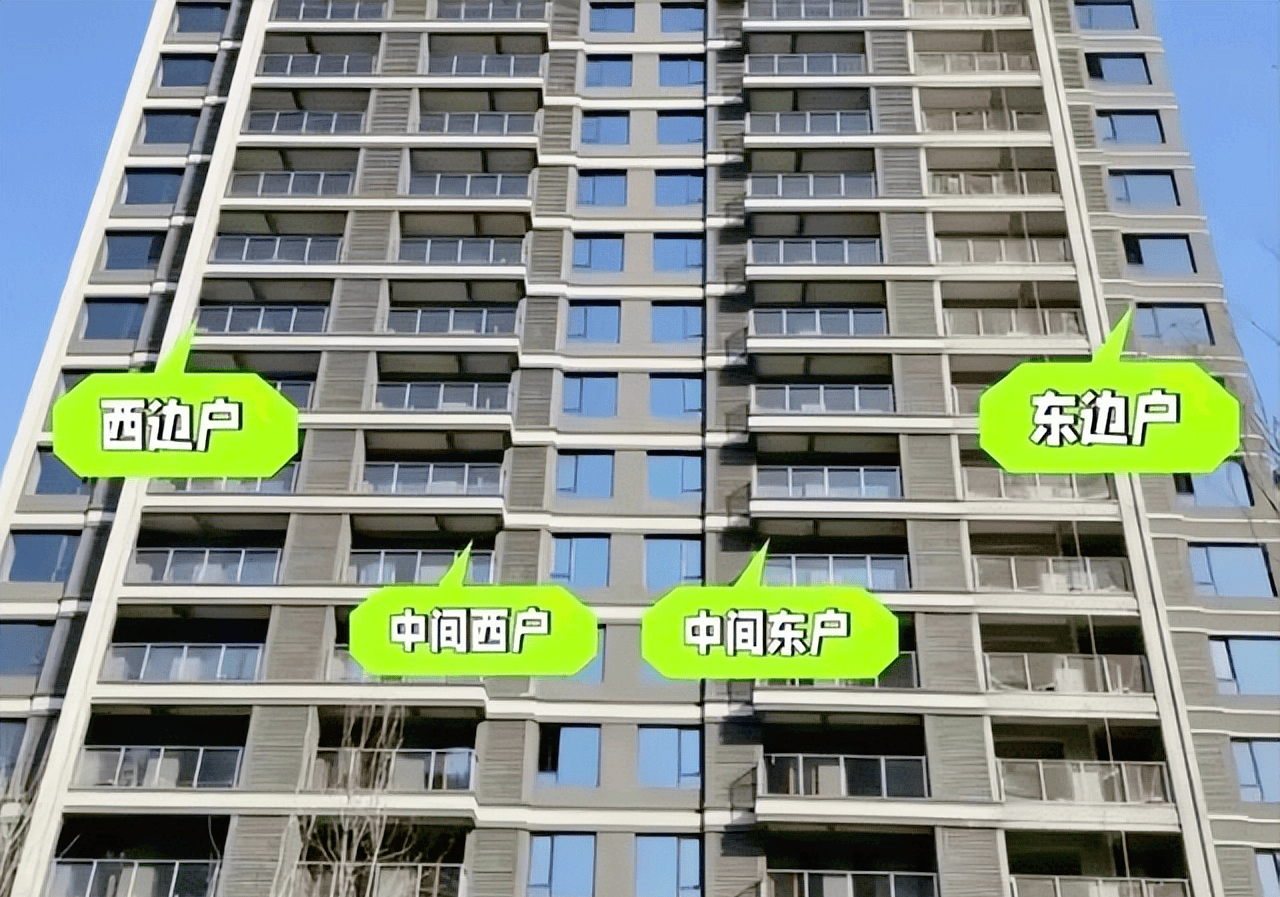
从中间户换回边户后,真心话不吐不快,居住体验竟然差了这么多!
Sou Hu Cai Jing· 2025-10-25 17:42
Core Viewpoint - The article discusses the differences between "middle units" and "corner units" in residential properties, providing insights based on personal experiences with both types of housing. It aims to offer valuable references for potential homebuyers navigating the real estate market [1][2]. Group 1: Advantages of Middle Units - Middle units often feature well-designed space layouts, typically with three bedrooms and two facing south, providing ideal lighting and ventilation for families [7]. - The total price of middle units is generally more affordable, making them accessible for first-time homebuyers [10]. - These units are in high demand among buyers with rigid housing needs, as they effectively alleviate the cramped feeling often associated with traditional two-bedroom apartments [12]. Group 2: Disadvantages of Middle Units - Middle units often come with shared public corridors and additional space that is difficult to utilize effectively, leading to wasted area [18]. - They typically lack south-north ventilation, which can affect air circulation and comfort, especially in hot weather [21]. - Noise disturbances from neighbors can be a significant issue, as walls are often shared with adjacent units, impacting privacy and tranquility [25]. - The proximity to public corridors can compromise privacy, particularly for bathrooms and bedrooms [26]. Group 3: Advantages of Corner Units - Corner units benefit from south-north ventilation, allowing for natural airflow and reducing reliance on air conditioning [27]. - They usually have a higher usable area ratio, meaning less shared space and more efficient use of the property [28]. - Safety is enhanced in corner units, as they are often located on lower floors, providing better stability during emergencies [28]. - The larger area of corner units allows for more flexible space configurations, accommodating larger families or multiple generations [28]. Group 4: Considerations for Choosing Middle Units - For buyers with limited budgets opting for middle units, it is crucial to prioritize ventilation by selecting units that face north to improve air circulation [28]. - Attention should also be given to lighting conditions to ensure adequate natural light in the living spaces [28].
今年前8个月比什凯克私人住宅价格同比上涨35.1%
Shang Wu Bu Wang Zhan· 2025-10-24 16:48
Core Insights - The average price of private residences in Bishkek has increased by 35.1% year-on-year in the first eight months of 2023, reaching 16.177 million som (approximately $186,000) [1] Price Trends - The highest average residential price is found in the October district, at 24.634 million som (approximately $283,000) [1] - Other areas in Bishkek have starting prices for residences at 12 million som (approximately $138,000), depending on the location and condition of the property [1]
高楼将停建?确定了:住宅实施新标准,未来两类房子吃香了
Sou Hu Cai Jing· 2025-10-22 06:12
Core Insights - There is a significant shift in homebuyer preferences from high-rise buildings to multi-story residences, with the proportion of buyers choosing multi-story homes increasing from 18.5% in 2018 to 29.8% in 2020, while high-rise purchases dropped from 57.8% to 36.5% [1][3] Group 1: Reasons for Preference Shift - High-rise buildings typically have larger shared areas, reducing actual usable space, while multi-story homes offer better cost-effectiveness due to smaller shared areas [3] - High-rise buildings often have higher plot ratios, leading to narrower spacing between buildings, which negatively impacts ventilation and lighting [3] - The risk of emergencies, such as fires or earthquakes, poses significant challenges for high-rise residents, particularly if elevators fail [3] - The difficulty and high costs associated with the demolition of high-rise buildings, especially in lower-tier cities, may lead to a decline in their value over time [5] Group 2: Government Actions - The Ministry of Housing and Urban-Rural Development and the National Development and Reform Commission have issued guidelines to limit the construction of super-tall buildings, with a focus on restricting new buildings over 250 meters and requiring thorough justification for buildings over 100 meters [5][6] - A joint opinion from multiple government departments emphasizes that new residential buildings in county towns should primarily be six stories or lower, with a minimum of 70% of new residential area being six stories or below [8] - New regulations require that any new super-tall buildings in cities with populations under 3 million must undergo strict approval processes, indicating a significant reduction in the number of new high-rise constructions [10] Group 3: Future Housing Trends - The demand for newly constructed multi-story residences is expected to rise due to their advantages, including lower shared areas, better cost-effectiveness, improved green space, and enhanced safety [11] - Renovated older neighborhoods are also gaining popularity, as these properties often have prime locations and upgraded amenities, making them attractive to homebuyers [11]
为啥有人偷偷收步梯房?内行人说透5大原因,买前这3点别踩坑
Sou Hu Cai Jing· 2025-10-21 18:57
Core Viewpoint - The recent trend among real estate professionals shows a growing interest in stairwell apartments, which possess unique advantages over elevator apartments, particularly in urban core areas [1][3]. Group 1: Advantages of Stairwell Apartments - **Prime Location**: Stairwell apartments are often located in the core areas of cities, providing easy access to essential services like markets, schools, and hospitals, which is a stark contrast to the longer commutes required for suburban elevator apartments [5]. - **Community Feel**: The close-knit community atmosphere in stairwell apartments fosters strong neighborly relationships, unlike the more isolated living experience in elevator buildings [6]. - **Lower Living Costs**: Stairwell apartments typically have lower property management fees, saving residents significant amounts over time, and they also have a higher potential for redevelopment and compensation during urban renewal projects [7]. - **Quiet Environment**: The absence of elevator noise and the presence of mature green spaces contribute to a more peaceful living environment in stairwell apartments [8]. - **Better Usable Space**: Stairwell apartments generally have lower shared area ratios, resulting in more usable living space compared to elevator apartments, which often have higher common area percentages [9]. Group 2: Considerations When Purchasing Stairwell Apartments - **Beware of Elevator Installation Promises**: Potential buyers should be cautious of claims regarding future elevator installations, as these often require significant consensus among residents and can be difficult to implement [10]. - **Floor Selection**: Choosing the right floor is crucial; floors 3 to 4 are recommended for their balance of accessibility and comfort, while floors 1 and 6 should be avoided due to various drawbacks [11]. - **Quality Inspection**: Given the age of many stairwell apartments, thorough inspections for structural integrity, plumbing, and electrical systems are essential to avoid costly repairs later [12]. Group 3: Conclusion - Stairwell apartments are not universally superior to elevator apartments; the choice depends on individual needs, such as the importance of location, cost, and community versus accessibility for those with mobility issues [13]. - The increasing preference for well-located and quality stairwell apartments reflects changing urban living trends, particularly for properties with outdoor space [14].
2025年9月全国住宅产品月报
克而瑞地产研究· 2025-10-21 09:04
Highlights - Real estate companies are focusing on product dynamics, with Greentown Community upgrading its commercial strategy to create a "Million Club" brand cluster [4][12] - The demand for cabinet furniture is shifting towards movable, intelligent, and multifunctional combinations, indicating a trend from static living to dynamic lifestyles [7][21] - The overall market transaction structure is trending towards larger areas, with products over 120㎡ seeing increased transaction proportions compared to the previous year [32][39] Customer Trends - The residential structure is evolving, with a notable increase in the transaction share of larger units, particularly in first-tier cities where 100-120㎡ and 120-140㎡ products have seen a rise in market share [32][39] - In second-tier cities, the transaction center is shifting upwards, with products over 120㎡ gaining market share, especially in the 140-160㎡ segment [32] - Third and fourth-tier cities are showing similar trends, with increased market shares for products over 120㎡ [32] Product Highlights Analysis - The demand for cabinets is changing, with consumers preferring functional upgrades and new experiences, leading to a decline in traditional cabinet types [21][24] - The design of residential spaces is adapting to these changes, emphasizing flexible and open layouts to accommodate movable and intelligent furniture [24][25] Excellent Project Analysis - Suzhou Gongchen Jinmao Mansion combines "canal assets, technology residences, and Jinmao brand" to create a pure improvement community, supported by a three-dimensional transportation system [8][63] - The project features unique architectural aesthetics and high-efficiency space layouts, with a focus on community interaction and ecological integration [46][56] Product Structure Characteristics - The national residential product structure shows a shift towards larger units, with significant increases in the transaction share of products over 120㎡ [32][39] - In the Bohai Rim region, high-priced products are gaining strength, while the share of products below 1 million yuan is declining [33][38] - The transaction share of three-bedroom units remains dominant, with a notable increase in the share of four-bedroom units [39][44]