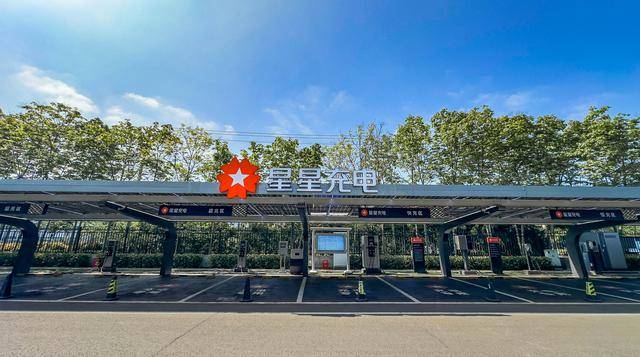
充电桩

Search documents
港股异动 | 挚达科技(02650)大涨超12% 股价刷新上市新高 公司战略布局中东市场
智通财经网· 2026-01-15 06:39
Core Viewpoint - Zhidatech (02650) experienced a significant increase of over 12%, reaching a new high of 285.6 HKD, driven by a major sales order in collaboration with Saudi Controls Ltd [1] Group 1: Company Developments - Zhidatech signed a sales order exceeding 100 million RMB with Saudi Controls Ltd in December last year, aiming to supply various AC and DC electric vehicle charging products over the next five years [1] - The company plans to complete the production equipment by December 2025 and transport it to Riyadh, with production expected to commence in the first quarter of 2026 [1] Group 2: Market Expansion - Zhidatech intends to expand its business into the UAE, Qatar, and Kuwait in the coming years to strengthen its market leadership in the Middle East [1] - As the largest provider of home electric vehicle charging solutions globally, Zhidatech employs a "product + service + digital platform" integrated model for deep market penetration [1] Group 3: Market Position - According to Frost & Sullivan, Zhidatech holds approximately 9.0% of the global market share for home charging stations, with a 13.6% share in the Chinese market, ranking first in sales within China [1]
电动车何时能真正实现充电自由?
Xin Lang Cai Jing· 2026-01-14 19:42
Core Insights - The article discusses the progress and future plans for achieving "charging freedom" in China's electric vehicle (EV) infrastructure, emphasizing the need for sufficient charging stations and improved user experience [2][3] Group 1: Current State of Charging Infrastructure - China has built the world's largest EV charging network during the 14th Five-Year Plan, with an average of about 2 charging stations for every 5 vehicles [2] - In Sichuan, there are over 196 million electric vehicles with a current vehicle-to-charging station ratio of 2:1, which is expected to change as the number of EVs grows to over 4 million by 2027 [2][3] - The Sichuan Provincial Charging Infrastructure Development Plan aims to establish 860,000 charging stations with a total rated power of 13 million kilowatts by the end of 2025, with current projections indicating that 920,000 stations and approximately 15.68 million kilowatts will be achieved [2] Group 2: Future Projections and Goals - By 2030, major urban areas and highway networks in China are expected to achieve convenient charging, with rural areas also seeing significant improvements [3] - The goal for Sichuan is to have 2.93 million charging stations and a total power of 29.56 million kilowatts by 2030, making it one of the most ambitious provincial plans in the country [3] Group 3: Challenges and Innovations - Despite rapid growth in charging station numbers, structural and regional disparities remain, with over 90% of stations concentrated in urban areas like Chengdu, leaving rural regions underserved [3] - The company is exploring public-private partnerships to enhance charging network planning and operations in underdeveloped areas, addressing sustainability challenges [3] - Innovative solutions such as mobile charging robots and shared charging platforms are being introduced to improve accessibility and efficiency in charging [3]

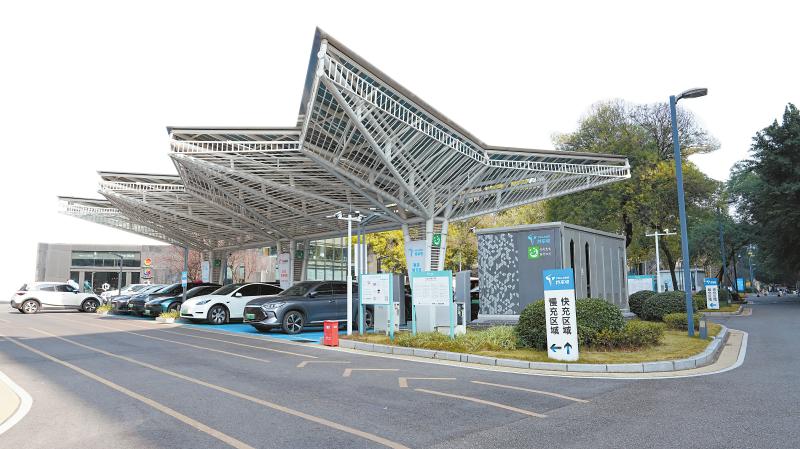
全国充电基础设施超1300万台
Ren Min Ri Bao Hai Wai Ban· 2026-01-14 08:13
Core Insights - The latest data from the China Electric Vehicle Charging Infrastructure Promotion Alliance indicates that as of the end of January, the number of charging infrastructure units in the country has exceeded 13 million [1] Summary by Categories Infrastructure Growth - As of January, the incremental growth of charging infrastructure in China was 395,000 units, representing a year-on-year increase of 49.5% [1] - The cumulative number of charging infrastructure units reached 13.213 million by the end of January, showing a year-on-year increase of 49.1% [1] Annual Performance - In the previous year, the total incremental growth of domestic charging infrastructure was 4.222 million units, which is a year-on-year increase of 24.7% [1] - The ratio of charging piles to electric vehicles was 1:2.7 [1] Future Projections - It is projected that by 2025, an additional 3.619 million charging piles will be built alongside new vehicles, along with 1.038 million new public charging piles [1]
充电桩指数盘中涨超2%,多股涨超5%
Xin Lang Cai Jing· 2026-01-14 04:03
Core Viewpoint - The charging pile index experienced a rise of over 2% on January 14, indicating positive market sentiment in the electric vehicle infrastructure sector [1] Company Performance - Longxin Group saw its stock price increase by over 9% [1] - Galaxy Electronics reported a stock price increase of over 9% [1] - Nengke Technology's stock rose by over 8% [1] - Houpu Co. and Xiangshan Co. both experienced stock price increases of over 5% [1]


万帮数字转战港股IPO,子品牌“星星充电”却被剥离
Hua Er Jie Jian Wen· 2026-01-13 08:02
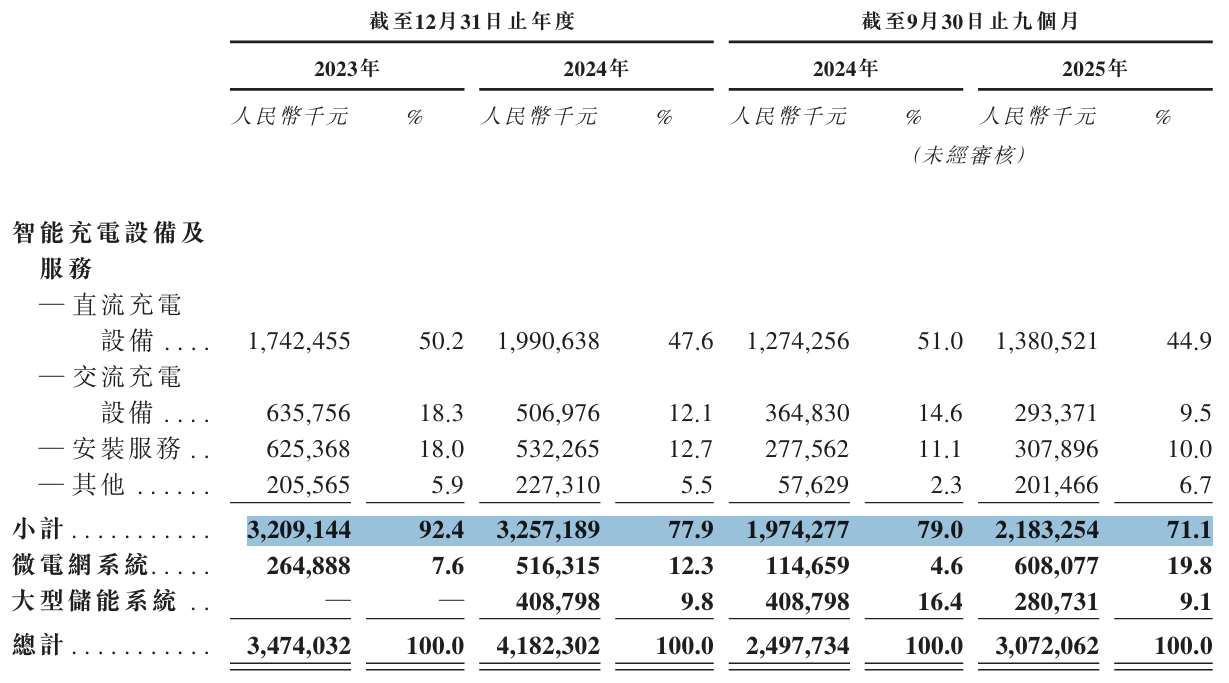
Core Viewpoint - Leading charging pile companies are attempting to divest heavy asset operations to achieve a valuation logic that is more technology-oriented [1] Group 1: Company Developments - Wanbang Digital Energy Co., Ltd. has officially submitted its prospectus to the Hong Kong Stock Exchange, initiating its IPO process [2] - The company has previously attempted to launch an IPO twice but ultimately decided to shift to the Hong Kong market [2] - Wanbang Digital is well-known in the consumer market for its electric vehicle charging operation brand "Xingxing Charging," but this business has been separated from the listing entity [2] Group 2: Business Strategy - The energy operation business under the "Xingxing Charging" brand, which includes charging station operations and energy management services, has been transferred to Jiangsu Wanbang Taiyi Technology Co., Ltd. [2] - This move indicates that Wanbang Digital will no longer hold the charging station assets familiar to C-end users, transitioning to a pure energy equipment hardware and software service provider [2] - The company aims to be perceived as a "technology company combining hardware and software," focusing on international strategic expansion rather than just a charging pile company [2] Group 3: Financial Performance - In the first three quarters of 2025, Wanbang Digital achieved revenue of 3.072 billion yuan and a net profit of 305 million yuan [4] - Despite the significant consumer presence of "Xingxing Charging," it contributed less than 20% to Wanbang Digital's total revenue in both 2023 and 2024 [3] - Wanbang Digital is the largest supplier of smart charging equipment globally, with projected sales exceeding 470,000 units in 2024 [4] Group 4: Market Positioning - By shedding heavy asset operations, Wanbang Digital aims to break the market's stereotype of charging pile companies as merely "infrastructure rental" businesses [4] - The company seeks to present a narrative of being a "global energy technology leader" with higher profit margins and greater imagination [4] - The acceptance of this valuation logic by investors in the current Hong Kong market environment will depend on the company's actual ability to realize global technology output [4]
万邦数字港股上市路:应收账款与业务剥离的双重考验
Sou Hu Cai Jing· 2026-01-12 11:34
Group 1 - The core focus of Wanbang Digital Energy Co., Ltd. is its significant accounts receivable of 3.796 billion RMB and the prolonged collection cycle, which have raised concerns among the market and regulators [1][6][10] - The company submitted its listing application to the Hong Kong Stock Exchange on January 4, 2026, with joint sponsors including JPMorgan, Guotai Junan International, and China Merchants International [1] - Wanbang Digital is the largest global supplier of smart charging equipment, with projected sales exceeding 470,000 units in 2024, although the revenue contribution from this segment is gradually declining [2][13] Group 2 - Revenue for the company is expected to grow from 3.474 billion RMB in 2023 to 4.182 billion RMB in 2024, with a net profit of 474 million RMB in 2023, but the net profit margin has decreased from 14.2% to around 8% [4][5] - The gross profit margin for smart charging equipment has dropped from 34% to 26.6%, attributed to increased competition and price wars in the domestic charging pile sector [3][4] - The company has seen a significant increase in trade receivables, which accounted for nearly 60% of current assets, with average turnover days extending to 228.9 days [6][10] Group 3 - Wanbang Digital's business restructuring involved the spin-off of its energy operation business, including the Star Charging brand, to an affiliated company, which has since become one of its top five customers [11] - The company has established a framework for ongoing related transactions with Wanbang Investment Group, with transaction limits set to increase annually from 1.7 billion RMB in 2026 to 2.8 billion RMB in 2028 [11][12] - The microgrid system business is emerging as a growth area, with revenue rising from 264 million RMB to 608 million RMB, representing an increase in its share of total revenue from 7.6% to 19.8% [13] Group 4 - The charging pile industry is heavily reliant on policy support, and the overall growth rate of new energy vehicles is slowing, leading to intensified competition and uncertainty regarding subsidy policies [14] - Wanbang Digital must provide clearer explanations regarding cash flow sustainability, business independence, and profitability pathways to address regulatory scrutiny and market concerns [14] - The company has established a leading position in global smart charging equipment sales and has accumulated advantages in the microgrid segment, but faces substantial challenges in the listing process [14]
回款要等228天,利润靠卖资产“粉饰”?“充电桩”女富豪再闯港股
凤凰网财经· 2026-01-11 14:57
Core Viewpoint - Wanbang Digital Energy, the world's largest smart charging equipment supplier, is preparing for an IPO in Hong Kong while controversially spinning off its core charging operation business, raising questions about the profitability model in the charging pile industry [1][6]. Group 1: Company Overview - Founded by Shao Danwei, known as the "Charging Pile Queen," Wanbang Digital Energy has achieved a valuation of 15.5 billion RMB by 2021, supported by top-tier investors like IDG Capital and CICC [3]. - The company has sold over 2.5 million charging devices globally in the past decade, leading the market with a 5.3% share and over 470,000 units sold in 2024 [5][9]. Group 2: Financial Performance - Despite revenue growth from 3.47 billion RMB in 2023 to 4.18 billion RMB in 2024, net profit declined from 493 million RMB to 336 million RMB, indicating a "growth without profit" scenario [7][8]. - The gross profit margin has decreased from 33.4% in 2023 to 24.6% in 2025, reflecting intense market competition and rising raw material costs [9][10]. Group 3: Operational Challenges - The company faces significant financial pressures, with a high debt ratio of 96% in 2025 and a prolonged accounts receivable turnover period of 228 days, indicating cash flow issues [11][12]. - The spinoff of its core operation business, Star Charging, raises concerns about the company's future profitability and operational sustainability [6][13]. Group 4: Market Position and Competition - The charging pile industry is becoming increasingly competitive, with major players like Huawei and CATL entering the market, intensifying the battle for technological supremacy [13]. - Wanbang Digital Energy's IPO journey has been fraught with challenges, including failed attempts to list in both A-shares and Hong Kong, highlighting the difficulties in securing investor confidence [12][13].

南通人常州创业,年入40亿,即将赴港IPO
Sou Hu Cai Jing· 2026-01-10 00:31
Core Viewpoint - Wanbang Digital Energy, the parent company of Xixing Charging, is planning to go public on the Hong Kong Stock Exchange after unsuccessful attempts to list in China, indicating a strategic shift in its business focus [1][14]. Company Overview - Wanbang Energy was established in 2014 and is based in Changzhou, Jiangsu Province, serving as a leading operator of charging stations in China [3]. - The company is controlled by Shao Danwei and Ding Feng, who have significant backgrounds in the automotive and energy sectors [3][10]. Business Adjustments - Wanbang Digital Energy has restructured its business by spinning off its energy operation entities into a newly formed Wanbang Taiyi Group, with a transaction value of 474 million yuan, leaving Xixing Charging out of the IPO entity [1][16]. - The company aims to focus on energy equipment manufacturing rather than charging station operations, which it deems non-core to its strategic direction [16]. Financial Performance - The company has faced challenges with profitability, with revenues for 2023, 2024, and the first three quarters of 2025 reported at 3.474 billion yuan, 4.182 billion yuan, and 3.072 billion yuan respectively [16]. - Net profit has decreased from 493 million yuan to 336 million yuan, with a significant portion of the profit in 2025 coming from a one-time asset transfer [16]. - The gross margin has declined from 33.4% in 2023 to 24.6% in the first three quarters of 2025, indicating increased pressure from industry price wars [16]. Market Expansion - Wanbang Digital Energy is looking to expand its overseas market presence, with overseas sales revenue for 2023, 2024, and the first three quarters of 2025 at 874 million yuan, 692 million yuan, and 573 million yuan respectively [17]. - The company has established a joint venture with Schneider Electric in Europe to promote charging equipment and services, aiming to leverage high entry barriers in the European market for future expansion [18]. IPO Strategy - The funds raised from the Hong Kong IPO will be allocated for building and operating R&D centers, expanding global markets, investing in smart charging equipment production lines, and pursuing strategic investments and acquisitions [18]. - The company maintains a strong control structure, with Shao Danwei and Ding Feng holding approximately 87.16% of the voting rights, ensuring they steer the company's strategic direction [18]. Industry Context - The upcoming IPO coincides with favorable policy developments in the charging infrastructure sector, which are expected to support industry growth [18]. - The competitive landscape is intensifying, with significant price reductions in charging modules, highlighting the challenges faced by companies in the sector [16][19].

道通科技CES展示“全面拥抱AI”战略阶段性成果
Zheng Quan Ri Bao Wang· 2026-01-09 13:45
Core Insights - The 2026 International Consumer Electronics Show (CES) showcased cutting-edge innovations from global tech companies, with Shenzhen Daotong Technology Co., Ltd. prominently displaying its advancements in embodied intelligence for infrastructure applications [1] Group 1: Embodied Intelligence and Robotics - Daotong Technology presented intelligent charging robots designed for automated charging operations for fleets and stations, along with inspection robots that utilize an "embodied cluster intelligence solution" for high-frequency inspections in key scenarios such as parks, energy, and transportation [1] - The inspection robots are designed for critical environments like campuses, energy facilities, and data centers, enabling continuous monitoring of key equipment and forming a closed-loop capability of "inspection—warning—disposal" in conjunction with cloud-based AI analysis [1] Group 2: Future City and Systematic Investment - The debut of the "Future City Panoramic Sandbox" showcased the systematic capabilities of embodied intelligence, covering typical urban infrastructure such as highways, charging stations, and industrial parks, demonstrating the evolution towards an "automated, autonomous, self-operating" future city [2] - Daotong Technology's systematic investment in embodied intelligence is highlighted by the establishment of Shenzhen Daohengtongtai Robotics Co., Ltd. in November 2024, focusing on the development and implementation of embodied intelligence capabilities in smart transportation, parks, and energy [2] Group 3: V2G Technology and Charging Solutions - The company introduced the V2G (Vehicle-to-Grid) ACCompactGen2, showcasing the application of bidirectional energy interaction, allowing electric vehicles to not only draw power from the grid but also return power when needed, optimizing energy management [3] - Daotong Technology also presented the compact DC fast charger MaxiCharger DC50, which boasts a conversion efficiency of 97.5%, saving customers 2% more on electricity costs compared to industry averages, and supports future upgrades to V2G [3] Group 4: Cloud Operations and AI Integration - The company demonstrated its cloud-based operational capabilities through the Charge Cloud management platform and MaxiCare service platform, offering integrated management from deployment to revenue optimization [4] - The "AI digital employee" system provides 24/7 operational support, facilitating the transition of charging operations from mere equipment management to intelligent business management, thereby enhancing the scalability of deployment [4] - Daotong Technology's strategy to fully embrace AI is evident, focusing on three core business areas: "AI + Diagnosis," "AI + Charging," and "AI Robotics," aiming to become a leader in the commercialization of AI industry models [4]

四闯资本市场赴港IPO!剥离旗下某星充电断臂求生,充电桩大洗牌
Sou Hu Cai Jing· 2026-01-09 06:14
Core Viewpoint - The company is making a significant move by filing for an IPO on the Hong Kong Stock Exchange, marking its fourth attempt to enter the capital market, indicating a critical juncture for the company [1][3]. Group 1: Company Strategy - The company has decided to divest its core operational business, "Certain Star Charging," for 474 million yuan to focus solely on manufacturing charging equipment, microgrids, and energy storage, moving away from its previous dual-track model [3][5]. - The company aims to improve its financial metrics by shedding the less profitable operational segment, as the charging operation business has proven to be unprofitable despite its apparent popularity [3][5]. - The company has established partnerships with 59 well-known automotive brands, including Volkswagen and Porsche, to leverage their distribution channels for selling charging solutions directly to consumers [7]. Group 2: Industry Challenges - The charging station industry is undergoing a transformation, with mandatory 3C certification introduced in August 2026, which poses a significant challenge for smaller manufacturers and could lead to increased market concentration among leading firms [9][11]. - The company faces intense competition from major players like Certain Wei and Certain De Times, as well as state-owned enterprises and automotive companies, which complicates its market position [13][14]. - The company's gross margin has declined from 33.4% in 2023 to 24.6% in the first three quarters of 2025, reflecting the pressures of price competition and industry standardization [11]. Group 3: Technological Advancements - The company has positioned itself as a technology leader by introducing the industry's first liquid-cooled ultra-fast charging device, which addresses long-range charging concerns for electric vehicle owners [15][18]. - The company is exploring Vehicle-to-Grid (V2G) technology, which allows electric vehicles to act as mobile power sources, potentially enhancing revenue streams for vehicle owners and creating new business opportunities for the company [18][20]. - The company is also focusing on international markets, where it currently derives about 18% of its revenue, as these markets offer higher profit margins and less competition from domestic rivals [21]. Conclusion - The company's IPO is not only a critical moment for its future but also signals a broader transformation within the charging station industry, where only the most capable players will survive in a landscape increasingly defined by technological innovation and strategic positioning [23].