动画电影

Search documents
《浪浪山小妖怪》票房破10亿 本土动画翻越浪浪山|乐言商业
Di Yi Cai Jing· 2025-08-18 13:56
Group 1 - The movie "Wang Wang Mountain Little Monster" has become a surprise hit of the summer box office, surpassing 1 billion yuan in cumulative box office revenue, entering the top ten of China's animated film box office rankings [1] - The film is based on the popular online series "Little Monster's Summer" and has gained significant attention due to its engaging storyline and character development, leading to its success in the summer box office [1] - The total box office for the summer movie season in 2025 has exceeded 10 billion yuan, with "Nanjing Photo Studio," "Wang Wang Mountain Little Monster," and "Lychee of Chang'an" ranking as the top three films [1] Group 2 - The success of "Wang Wang Mountain Little Monster" is attributed to its relatable themes and innovative storytelling, similar to the "Nezha" series, which resonates with both children and adult audiences [4] - The film's narrative focuses on ordinary characters, such as the little pig monster and the toad spirit, providing a fresh perspective on the classic "Journey to the West" story, which enhances audience connection [4][5] - The film addresses real-life challenges faced by adults, such as workplace struggles and personal growth, making it relatable and emotionally impactful for viewers [5][6] Group 3 - "Wang Wang Mountain Little Monster" and previous films like "Nezha" encourage viewers to reflect on personal challenges and the importance of perseverance in overcoming life's obstacles [6] - The film maintains humor and engaging content for children while also delivering deeper messages for adult audiences, making it appealing to a wide range of viewers [6] - The success of domestic animated films is also attributed to the high-quality production by companies like Shanghai Animation Film Studio and Light Chaser Animation, which blend traditional Chinese art styles with modern storytelling [7][8] Group 4 - The evolution of Chinese animation, from classics like "Princess Iron Fan" to contemporary hits, marks a new era where traditional and innovative storytelling coalesce, leading to the emergence of blockbuster animated films [8] - With "Wang Wang Mountain Little Monster" breaking the 1 billion yuan mark, the domestic animation industry is seen as having overcome significant challenges and is poised for further growth and success [8]


《浪浪山小妖怪》票房破10亿,本土动画翻越浪浪山|乐言商业
Di Yi Cai Jing· 2025-08-18 10:14
Core Insights - The film "Wang Wang Mountain Little Monster" has emerged as a surprise hit in the summer box office, grossing over 1 billion yuan and ranking among the top ten animated films in Chinese history [1][4] - The film is based on the popular online series "Little Monsters' Summer" and has resonated with audiences due to its relatable themes and character development [1][4] Group 1: Box Office Performance - "Wang Wang Mountain Little Monster" has achieved a cumulative box office of 1.0026 billion yuan, surpassing "Kung Fu Panda 3" [1] - The total box office for the summer film season (June to August 2025) has exceeded 10 billion yuan, with "Nanjing Photo Studio," "Wang Wang Mountain Little Monster," and "Lychee of Chang'an" leading the rankings [1] Group 2: Reasons for Success - The film's success is attributed to its ability to reflect real-life issues and emotions, similar to the "Nezha" series, which has broadened its audience beyond children to include adults [4][5] - Unlike traditional animated films that often feature predictable plots, "Wang Wang Mountain Little Monster" innovatively focuses on ordinary characters, making the story more relatable to the audience [5][6] Group 3: Themes and Audience Engagement - The narrative addresses adult themes such as workplace struggles and personal growth, allowing viewers to empathize with the protagonist's journey [6][7] - The film encourages viewers to confront life's challenges and emphasizes that ordinary individuals can achieve greatness, resonating with a wide age range [7][8] Group 4: Production Quality - The success of "Wang Wang Mountain Little Monster" is also linked to the high-quality production by companies like Shanghai Animation Film Studio and Light Chaser Animation, which blend traditional Chinese art styles with modern storytelling [8] - The film represents a new era for domestic animation, combining traditional narratives with innovative content to create popular animated films [8]

当国际大厂把顶流IP,交给一个中国导演
Hu Xiu· 2025-08-18 02:04
Core Viewpoint - The article discusses the challenges and achievements of the Chinese animation company, Chuxin Animation, in producing the animated film "Tom and Jerry: The Mansion of Stars" in collaboration with Warner Bros, highlighting the evolution of the Chinese animation industry and its growing maturity in international co-productions [2][5][12]. Group 1: Project Development and Challenges - The project took five years to complete, during which the team faced numerous challenges, including payment processes and organizational changes at Warner Bros [6][40]. - The director, Zhang Gang, expressed concerns about the project's viability at various points, but ultimately, the film was released on August 2 [2][7]. - The production team grew from 30 to nearly 500 members, reflecting the scale and ambition of the project [10]. Group 2: Market Context and Competition - The release of "The Mansion of Stars" coincided with other competitive animated films, which affected its box office performance [9]. - Despite mixed reviews, Zhang Gang remained optimistic about the film's quality and potential for global release and sequels [10][12]. Group 3: Industry Evolution and Future Prospects - The project is seen as a significant step for Chinese animated co-productions, marking a transition from zero to one in the industry [11][43]. - The success of this project could pave the way for more international collaborations, as the Chinese animation market is currently thriving [12][44]. - The experience gained from this project is expected to enhance the reputation of Chuxin Animation in the international market [43].


观众为什么喜欢“浪浪山”
Jing Ji Ri Bao· 2025-08-16 21:48
Core Insights - The film "Wang Wang Mountain Little Monsters" has set a record for domestic 2D animation box office, showcasing the potential of original Chinese animation [1] Group 1: Market Positioning - The film exemplifies "precise positioning" by leveraging data from platforms like Bilibili to identify the unique appeal of its story, resonating with young audiences [2] - The production team utilized big data analysis to understand consumer preferences, akin to market research conducted by companies before launching new products [2] Group 2: Maximizing Content Value - The film's merchandise sales have been impressive, with a projected 120% year-on-year growth in derivative product revenue for the summer of 2025, contributing nearly 30% from "Wang Wang Mountain Little Monsters" [3] - The synchronization of content creation and merchandise development has allowed the film to maximize its IP value, creating a cohesive value chain from production to market sales [3] Group 3: Emotional Resonance - The film successfully taps into consumer sentiment, with audiences connecting emotionally to the characters' struggles, leading to a willingness to pay for the experience of being understood [4] - By addressing the "working-class" dilemma while maintaining an accessible narrative for all ages, the film breaks traditional animation barriers, appealing to both young fans and family audiences [4]
文化新观察·聚焦暑期档|“浪浪山”的故事何以打动人心?
Xin Hua Wang· 2025-08-16 07:12
Core Viewpoint - The animated film "Wang Wang Mountain Little Monster," a continuation of the short film "Chinese Tales," has resonated with audiences, achieving over 800 million yuan in box office revenue within 14 days of release, highlighting its appeal amidst a competitive summer film season [2]. Group 1: Story and Character Development - The film utilizes the framework of "Journey to the West," focusing on four grassroots monsters who impersonate the main characters on a whimsical journey, emphasizing the theme of "ordinary individuals" [6]. - The characters, including a weasel and a toad, reflect the film's focus on lesser-known figures, allowing for a deeper exploration of their growth and moral dilemmas throughout the journey [7]. - The narrative culminates in a significant challenge that tests the characters' beliefs and values, reinforcing the film's themes of dignity and justice [7]. Group 2: Audience Engagement and Emotional Resonance - The film is designed to evoke laughter from children and tears from adults, achieving a balance that resonates across age groups through relatable character experiences [9]. - The characters' flaws and growth make them relatable, fostering emotional connections with the audience, as they navigate personal and collective challenges [10]. - The film incorporates contemporary themes, appealing to modern viewers by reflecting their struggles and aspirations [10]. Group 3: Artistic and Cultural Significance - The production involved a team of over 600 people and took more than four years to create, resulting in over 1,800 scenes that maintain a consistent artistic style [12]. - The film preserves traditional Chinese artistic elements while innovating in visual and auditory presentation, blending classical music with modern sound techniques [12]. - The film's strong Chinese cultural identity and aesthetic appeal have contributed significantly to its positive reception among audiences [13].

时报观察丨国产动画用文化自信打动人心
Zheng Quan Shi Bao· 2025-08-15 00:19
Core Insights - The success of "Wang Wang Mountain Little Monsters" is not an isolated incident, as it has achieved over 700 million yuan in box office revenue, setting a record for domestic 2D animated films in China [1] - Recent years have seen a surge in high-quality domestic animated films that resonate with audiences, showcasing deep cultural confidence and addressing contemporary themes [1][2] Group 1: Industry Trends - The rise of domestic animated films is characterized by their roots in traditional Chinese culture, utilizing myths, historical anecdotes, and folk stories for modern reinterpretation [2] - These films evoke strong cultural identity and emotional resonance among viewers, allowing them to reflect on their own lives through the characters' journeys [2] Group 2: Creative Approach - The creative teams behind these films are moving away from the anxiety of global market acceptance of Chinese elements, focusing instead on authentic storytelling that reflects Chinese narratives [2] - The commitment to hand-drawn animation techniques, as seen in "Wang Wang Mountain Little Monsters," signifies a shift towards a more mature and high-quality development phase in the domestic animation industry [2]
时报观察丨国产动画用文化自信打动人心
证券时报· 2025-08-15 00:09
Core Viewpoint - The success of "Wang Wang Mountain Little Monsters" is part of a broader trend in the Chinese animation industry, showcasing a growing cultural confidence and the ability to resonate with contemporary audiences through traditional narratives [1][3]. Group 1: Box Office Success - "Wang Wang Mountain Little Monsters" has achieved a remarkable box office performance, surpassing 700 million yuan, setting a new record for domestic 2D animated films in China [3]. - The film's success is not an isolated incident, as it follows a series of successful animated films that have revitalized the genre in China [3]. Group 2: Cultural Significance - Many recent successful animated films draw from China's rich cultural heritage, modernizing myths, historical tales, and folklore to create relatable narratives for today's audience [4]. - The characters in these films often reflect the struggles and aspirations of contemporary youth, allowing viewers to find solace and inspiration through their stories [4]. Group 3: Industry Evolution - The animation industry is experiencing a shift towards a more mature and high-quality development phase, moving away from concerns about global acceptance of Chinese cultural elements [4]. - The creative teams are increasingly focused on authentic storytelling, using Chinese narrative styles to convey local stories, which marks a significant change in the industry's approach [4].

中国稀土集团严正声明【三分钟新闻早知道】
Sou Hu Cai Jing· 2025-08-14 05:21
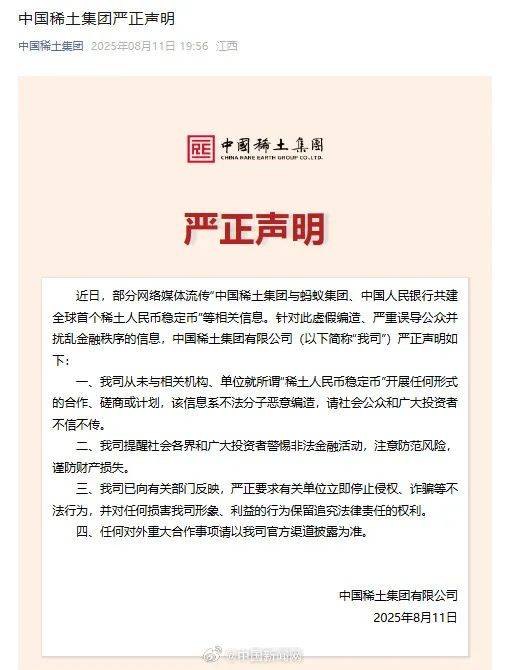
Group 1 - China Rare Earth Group issued a statement denying any collaboration with Ant Group or the People's Bank of China regarding the establishment of a "Rare Earth Renminbi Stablecoin," labeling the information as false and misleading [4] - The Ministry of Industry and Information Technology, along with six other departments, released implementation opinions to promote the innovation and development of the brain-computer interface industry, aiming to establish an advanced technology system and industry clusters by 2027 [4] - The National Postal Service reported a 5.2% year-on-year increase in China's express delivery development index for July [4] Group 2 - The A-share market saw all three major indices rise, with the Shanghai Composite Index closing at 3647.55 points, up 0.34%, marking a new high for the year [7] - The animation film "Wang Wang Mountain Little Monster" achieved a cumulative box office of over 5.74 billion, setting a record for domestic 2D animated films in China [9]

11天近7亿票房,《浪浪山小妖怪》 周边卖爆
3 6 Ke· 2025-08-13 08:04
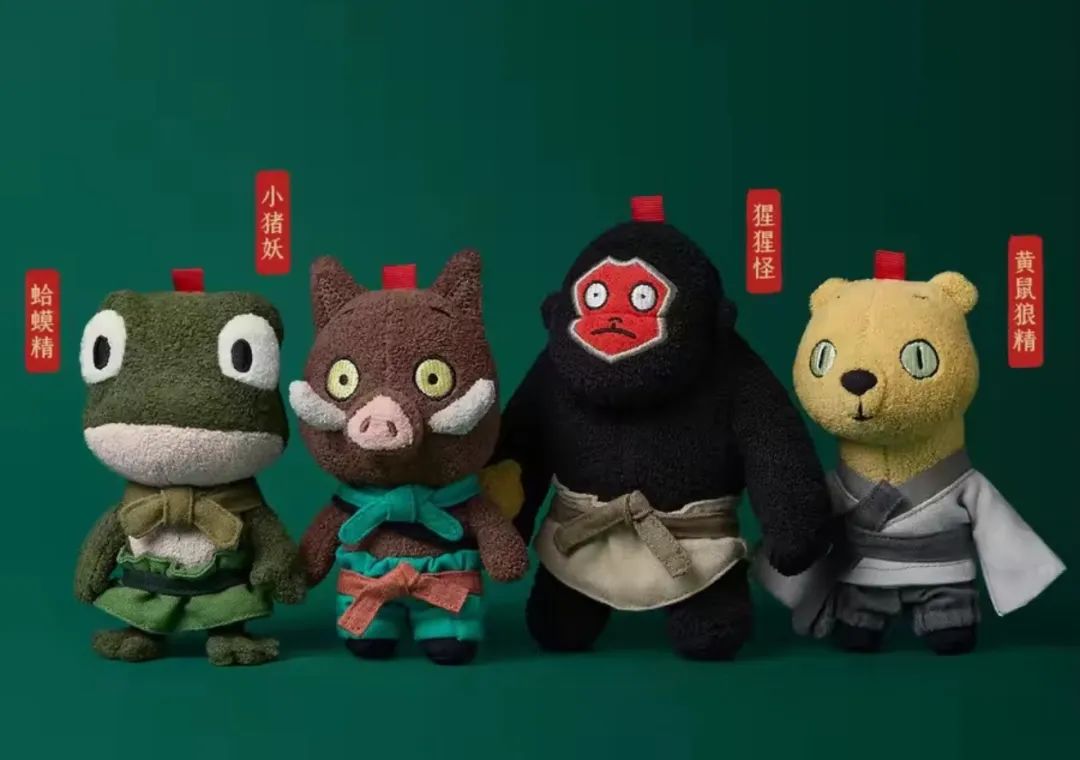
Core Insights - The animated film "Wang Wang Mountain Little Monsters" has become a surprise hit, surpassing 676 million yuan in box office revenue within just 11 days of its release, making it the highest-grossing domestic 2D animated film in China [2] - The film is based on the popular short series "Chinese Tales" and has resonated with contemporary young workers, leading to a surge in merchandise sales [2][4] - The film's IP has engaged over 30 companies for collaborative merchandise, resulting in more than 400 licensed products launched simultaneously with the film [4] Box Office Performance - "Wang Wang Mountain Little Monsters" achieved a box office of 676 million yuan by August 13, 2023, surpassing "Big Fish & Begonia" which had a total of 573 million yuan [2] - The film's rapid success indicates a strong market demand for quality animated content in China [2] Merchandise and IP Development - The film's merchandise, including plush toys and blind boxes, has seen significant sales, with over 700 million yuan in sales on the first day and 300 million blind boxes sold [4][7] - The merchandise strategy has been proactive, with products available for sale even before the film's official release, creating anticipation among consumers [8] - The collaboration with various brands has resulted in a diverse range of products, enhancing the film's market presence [4][8] Market Trends and Comparisons - The success of "Wang Wang Mountain Little Monsters" is compared to the previous hit "Nezha: Birth of the Demon Child," which also saw a massive surge in merchandise sales following its release [8] - The film's approach to IP development marks a shift towards a more integrated ecosystem, moving beyond reliance on box office revenue alone [9] - The Chinese animation industry is encouraged to adopt long-term strategies for IP management, similar to successful models from Disney and other international brands [9]

新华网财经观察丨中国动画电影的“后哪吒时代”
Xin Hua Wang· 2025-08-12 02:38
Core Insights - The article discusses the evolution of the Chinese animation film industry following the success of "Nezha: The Devil's Child" and highlights the growing trend of appealing to a broader audience beyond just children [2][5][6] Industry Trends - The upcoming summer of 2025 will see nearly 15 animated films released, with recent hits like "The King's Avatar: For the Glory" and "The Little Monster of Langlang Mountain" achieving box office success of 4 billion and 6 billion respectively [2] - The animation industry is experiencing a revival as talent returns from other sectors, leading to improved production quality and a thriving merchandise market [2][10] Audience Demographics - The success of "Nezha: The Devil's Child" demonstrated that animation can attract adult audiences, with over 60% of viewers aged 25 and above [5] - Recent animated films are designed to resonate with all age groups, moving away from the traditional "children's only" label [6][8] Creative Evolution - Modern adaptations of traditional IPs are becoming mainstream, with films like "Nezha" and "The Little Monster of Langlang Mountain" reinterpreting classic stories to reflect contemporary themes [6][10] - The animation industry is shifting towards a more industrialized production process, focusing on cultural expression and technological advancements [10][12] Market Potential - Despite significant progress, the investment scale in Chinese animation remains limited compared to Hollywood, indicating substantial growth potential [12] - Policies are being implemented to support high-quality cultural productions, which could further stimulate the animation sector [12] IP Development - Successful IPs require compelling storytelling and character development, with a focus on emotional resonance to engage audiences [17][19] - The evolution of IPs is seen as a long-term investment, akin to a savings account, where consistent input is necessary for sustained value [19] Revenue Models - The industry is moving towards diversified revenue streams beyond box office sales, with a focus on merchandise and cross-industry collaborations [14][16][21] - The trend indicates a shift from relying solely on ticket sales to a more holistic approach to IP monetization, enhancing the longevity of animated properties [21]