基因编辑

Search documents
Cell:让“DNA剪刀”变身“RNA手术刀”!可爱龙团队将Cas9及其祖先转变为RNA编辑器
生物世界· 2025-08-19 04:02
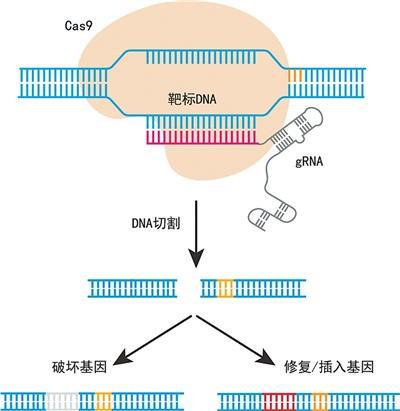
Core Viewpoint - The research presents a novel RNA editing tool, R-IscB, engineered from the Cas9 ancestor IscB, which offers a safer and more efficient alternative to existing RNA editing technologies like Cas13, addressing the limitations of current methods in clinical applications [3][4][16]. Group 1: RNA Editing Technology - CRISPR-Cas9 has revolutionized genome medicine but poses irreversible DNA editing risks, limiting its clinical use [3]. - RNA editing is a safer alternative due to its transient and reversible nature, but existing tools like CRISPR-Cas13 face significant challenges, including off-target effects and cellular toxicity [3][4]. - The study by Yale University transformed IscB and Cas9 into RNA-guided RNA editors, demonstrating potential applications in splice interference, trans-splicing, and RNA base editing [4][16]. Group 2: Engineering and Mechanism - The research team engineered IscB by removing its TID/PID domains, converting it into R-IscB, which retains the ability to recognize single-stranded DNA/RNA while losing its double-stranded DNA cutting capability [8][14]. - R-IscB exhibits a strong affinity for single-stranded RNA, surpassing Cas13 in performance [8][12]. Group 3: Applications and Efficacy - R-IscB has shown effectiveness in various applications: 1. RNA splicing regulation, significantly reducing pathogenic mRNA levels [10]. 2. Trans-splicing capabilities to correct mutations in mRNA, potentially simplifying treatments for complex genetic disorders [11]. 3. RNA base editing for precise single nucleotide changes, useful for correcting disease-causing mutations [11]. 4. RNA degradation through enhanced cutting activity, effectively lowering target mRNA levels [11]. Group 4: Advantages Over Cas13 - R-IscB presents several disruptive advantages compared to Cas13: 1. Zero toxicity, with no observed cell death or morphological abnormalities in treated cells [13]. 2. Superior activity in splicing regulation and RNA cutting [13]. 3. Smaller size, facilitating easier delivery via AAV viral vectors for in vivo RNA editing [13]. 4. Versatility, as the same engineering strategy successfully enhanced RNA editing capabilities in multiple Cas9 variants [13][14].


晚报 | 8月18日主题前瞻
Xuan Gu Bao· 2025-08-17 15:13
Quantum Computing - Tsinghua and Peking University research teams have made significant progress in quantum computing architecture by implementing the AshN instruction set architecture, which supports direct programming of arbitrary two-qubit gates [1] - The quantum computing industry is transitioning from laboratory experiments to industrial applications, driven by technological breakthroughs, policy support, and market demand, with a projected market size of hundreds of billions by 2025-2030 [1] Refrigerants - The Ministry of Ecology and Environment has proposed a ban on the production of household refrigerators and freezers using hydrofluorocarbons (HFCs) as refrigerants starting January 1, 2026, marking a shift towards environmentally friendly refrigerants in China's home appliance industry [2] - The ban is expected to accelerate the transition to fourth-generation eco-friendly refrigerants, with natural refrigerants like R290 (propane) and R600a (isobutane) gaining traction, projected to reach 30% and 15% market share in commercial freezers by 2025, respectively [2] Gene Editing - A clinical trial has successfully demonstrated the use of gene editing technology to restore insulin production in a patient with type 1 diabetes, indicating a potential shift in diabetes management [3] - The rapid development of gene editing technologies, particularly CRISPR, is expanding the range of treatable conditions, with over 6,000 diseases now considered for gene therapy applications [3] Commercial Space - The commercial space industry in China is projected to grow from over 1 trillion yuan in 2020 to 2.3 trillion yuan by 2024, with a compound annual growth rate of approximately 22% [4] - Recent successful launches of low-orbit satellites indicate accelerated development in satellite internet infrastructure, with significant investment opportunities emerging in the commercial space sector [4] Artificial Intelligence in Biomanufacturing - The Ministry of Industry and Information Technology has released a notice to promote the integration of artificial intelligence in biomanufacturing, aiming to enhance the entire industry chain [5] Medical Advertising Regulation - New guidelines have been issued to clarify the definition of medical advertising and restrict its publication to licensed medical institutions, aiming to combat misleading advertisements [5] Virtual Power Plants - Guangzhou's plan for virtual power plants aims to achieve a capacity of 500,000 kilowatts by the end of 2027, with annual financial support of up to 10 million yuan for applications [6] Carbon Emission Financing - Guangdong has introduced a system to provide judicial support for carbon emission quota pledge financing, marking a first in the nation [7] Satellite Internet Development - The CCF and GuoShun Quantum have initiated a collaboration plan focusing on superconducting quantum computing, aiming to address key challenges in the field [7] Electronic Industry Trends - The global electronics market is expected to show divergence by 2025, with data center demand driving growth, while traditional consumer electronics face challenges due to inflation and lack of innovation [8]
约20家A股公司涉足基因编辑领域
Zheng Quan Ri Bao· 2025-08-11 16:46
Group 1: Industry Overview - The new gene editing technology developed by the Institute of Genetics and Developmental Biology of the Chinese Academy of Sciences allows precise manipulation of large DNA segments ranging from thousands to millions of bases, significantly enhancing the scale and capability of gene editing [1] - The gene editing market is projected to reach an annual revenue of $30 billion by 2030, indicating a strong growth trajectory [2] - Gene editing technology is transitioning from theoretical research to practical applications, with significant implications in medicine for treating genetic diseases and in agriculture for developing new crop varieties [2] Group 2: Company Developments - Approximately 20 listed companies in the A-share market are involved in gene editing technology [3] - A company has established a cotton research institute in collaboration with Huazhong Agricultural University, utilizing gene editing and hybridization techniques for cotton seed development [3] - Another company is conducting research on the water buffalo genome and has developed a breeding model based on whole genome data analysis to enhance breeding efficiency [3] - A biotechnology company focuses on providing gene-modified animal models and related technical services for drug development and disease research, having developed over 21,000 models by the end of 2024 [3] - Beijing Baipu Sais Biotechnology Co., Ltd. has launched CAS series proteins for targeted gene editing applications [4]
精准操纵,中国团队研发出可编程染色体编辑技术
Xuan Gu Bao· 2025-08-11 15:16
Group 1 - The article highlights a revolutionary breakthrough in genome editing technology, specifically a new programmable technique for precise manipulation of large DNA segments at the chromosomal level, which can edit DNA from thousands to millions of base pairs [1] - This new technology significantly enhances the scale and capability of manipulating eukaryotic genomes, providing new pathways for crop trait improvement and treatment of genetic diseases [1] - In the field of genetic disease treatment, this technology is expected to offer new therapeutic approaches for diseases caused by chromosomal abnormalities [1] Group 2 - The breakthrough in precise chromosomal editing technology is anticipated to accelerate the construction of artificial chromosomes, presenting important application prospects in emerging fields such as synthetic biology [1] - Relevant concept stocks in the A-share market include Xin Kai Yuan and Bei Rui Ji Yan, which are associated with this new technology [1]


【人民日报】中国科学院团队实现染色体“精准编辑”
Ren Min Ri Bao· 2025-08-11 02:29
Core Insights - The rapid development and widespread application of genome editing technology in the life sciences provide strong technical support for basic research and application development [1] - A new programmable chromosome editing technology developed by a team from the Institute of Genetics and Developmental Biology, Chinese Academy of Sciences, enables precise manipulation of DNA from kilobases to megabases in plants and animals [1] - This technology significantly enhances the scale and capability of manipulating eukaryotic genomes, representing a major breakthrough in the field of genetic engineering [1] Summary by Categories Technology Development - The new technology allows for multi-gene stacking editing and manipulation of genomic structural variations, opening new pathways for crop trait improvement and genetic disease treatment [1] - It is expected to promote the development of new breeding strategies by manipulating genetic linkage and controlling recombination frequency [1] Applications - The technology has the potential to eliminate linkage drag and fully unleash the breeding potential of superior alleles in wild germplasm resources [1] - Reviewers have noted the significant application potential of this work in breeding and gene therapy [1]
基因编辑技术重大突破,多家上市公司布局
Zheng Quan Shi Bao Wang· 2025-08-09 10:19
Core Viewpoint - The research team from Uppsala University in Sweden has successfully demonstrated the survival and functionality of donor pancreatic β cells obtained through CRISPR-Cas gene editing technology in a type 1 diabetes patient for 12 weeks without the use of immunosuppressants, indicating a potential breakthrough in curing type 1 diabetes [1] Industry Summary - Over 20 listed companies in the A-share market are involved in gene editing technology [1] - According to data from Zhitongcaijing, a total of 21 gene editing concept stocks have received "positive" ratings from institutions, including buy, increase, and strong recommendation ratings [1] - Among these, Shenguan Medical (300888) is the most favored by institutions, with 27 institutional research reports mentioning this stock [1]

新型基因编辑技术开发成功
Ke Ji Ri Bao· 2025-08-05 09:52
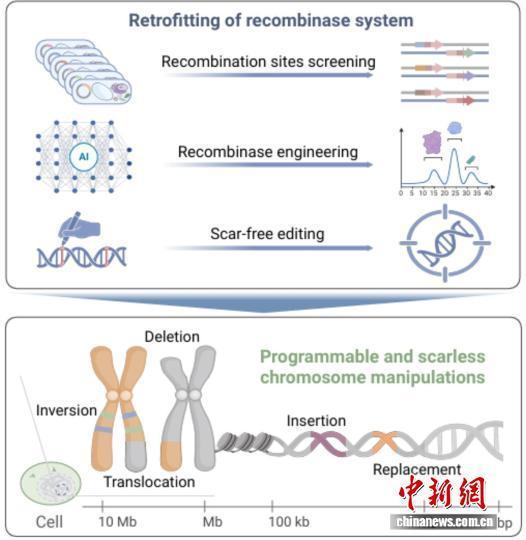
Core Insights - A new gene editing technology has been developed by researchers from the Chinese Academy of Sciences, enabling precise manipulation of large DNA segments ranging from thousands to millions of base pairs, significantly enhancing the scale and capability of gene editing [1][2] Group 1: Technology Development - The new programmable chromosome-level large DNA manipulation technology, termed PCE, integrates three innovative systematic technical pathways [1] - The technology has demonstrated strong capabilities in plant and animal cell experiments, achieving precise insertion of an ultra-large DNA segment containing 18,800 base pairs, directional replacement of a DNA sequence with 5,000 base pairs, inversion of a long chromosome segment with 12 million base pairs, deletion of a long chromosome segment with 4 million base pairs, and even the movement of entire chromosomes [1] Group 2: Application Potential - The technology has been successfully applied to rice, where a DNA segment containing 315,000 base pairs was precisely inverted, resulting in the cultivation of herbicide-resistant rice germplasm, indicating broad application prospects [2] - The technology not only allows for multi-gene stacking but also enables manipulation of genome structure, paving new paths for crop trait improvement and genetic disease treatment, potentially advancing new breeding strategies and synthetic biology [2] - Reviewers have noted that this work represents a significant breakthrough in the field of genetic engineering, with enormous application potential in breeding and gene therapy [2]
【科技日报】新型基因编辑技术开发成功
Ke Ji Ri Bao· 2025-08-05 01:15
Core Insights - A new gene editing technology has been developed by researchers from the Chinese Academy of Sciences, enabling precise manipulation of large DNA segments ranging from thousands to millions of base pairs, significantly enhancing the scale and capability of gene editing [1][2] - The technology, termed PCE (Programmable Chromosome-level Editing), integrates three innovative systematic technical pathways, demonstrating powerful capabilities in various complex operations on DNA [1] Group 1: Technology Development - The new gene editing technology allows for precise insertion of ultra-large DNA segments containing 18,800 base pairs, targeted replacement of DNA sequences with 5,000 base pairs, inversion of long chromosome segments with 12 million base pairs, and deletion of long chromosome segments with 4 million base pairs [1] - The technology has shown effectiveness in both plant and animal cell experiments, indicating its versatility and potential for broad applications [1] Group 2: Applications and Implications - The technology has been successfully applied to rice, where a DNA segment containing 315,000 base pairs was precisely inverted, resulting in the cultivation of herbicide-resistant rice varieties, showcasing its extensive application prospects [2] - This advancement opens new pathways for crop trait improvement and genetic disease treatment, potentially driving new breeding strategies and the development of synthetic biology [2] - Reviewers have recognized this work as a significant breakthrough in the field of genetic engineering, highlighting its vast application potential in breeding and gene therapy [2]
基因编辑重大突破 中国团队研发出新型可编程染色体编辑技术
Huan Qiu Wang Zi Xun· 2025-08-04 16:03
Core Insights - The rapid development and application of genome editing technologies in the life sciences provide strong technical support for basic research and application development [1] Group 1: Technological Advancements - A new programmable chromosome editing technology (PCE) has been developed by a research team from the Chinese Academy of Sciences, enabling precise manipulation of DNA from kilobase to megabase levels in plants and animals [2] - This technology allows for multi-gene stacking editing and manipulation of genomic structural variations, opening new pathways for crop trait improvement and genetic disease treatment [2][4] - The breakthrough in precise chromosome editing is expected to accelerate the construction of artificial chromosomes and has significant application prospects in emerging fields like synthetic biology [2] Group 2: Challenges and Solutions - Existing genome editing tools, such as CRISPR, face limitations in editing efficiency, scale, precision, and diversity for large DNA segments [5] - The research team identified three key issues with the Cre-Lox system that hinder its application in large segment DNA editing [5] - To overcome these limitations, the team developed a systematic technical pathway, including a high-throughput recombination site modification platform and a new asymmetric Lox variant, which significantly reduces reversible recombination activity [6] Group 3: Successful Applications - The new systems have successfully achieved targeted integration of an 18.8 kb DNA segment, directional replacement of a 5 kb sequence, chromosomal inversion of 12 Mb, deletion of 4 Mb, and translocation of entire chromosomes in plant and animal cells [7] - The technology has been successfully applied to create herbicide-resistant rice varieties with a precise inversion of 315 kb, demonstrating its broad application potential [7]
基因编辑:改写生命密码的“神笔”(瞰前沿)
Ren Min Wang· 2025-07-04 21:56
Core Viewpoint - The recent successful application of personalized gene editing therapy on a 6-month-old infant marks a significant milestone in the treatment of genetic diseases, opening new avenues for patients lacking effective treatment options [1] Group 1: Gene Editing Technology Overview - Gene editing technology allows for precise deletion, insertion, or replacement of specific genes, akin to a "molecular scissors" that can correct and modify defective genes [2][4] - Unlike transgenic technology, which randomly integrates foreign genes into an organism's genome, gene editing modifies the organism's own genes without disrupting the overall structure [2][4] - The evolution of gene editing technology has progressed rapidly, particularly since the advent of CRISPR technology in 2012, which has simplified the process and significantly reduced costs [5][6] Group 2: Applications in Medicine - Gene editing technology is being applied in the treatment of genetic diseases, such as thalassemia, where CRISPR can edit a patient's hematopoietic stem cells to restore normal gene expression [7] - In cancer treatment, CAR-T therapy utilizes gene editing to enhance the immune cells' ability to combat cancer cells, demonstrating the technology's potential in oncology [7] - The technology also aids in modeling complex diseases in research, accelerating drug development by allowing scientists to observe disease progression in genetically edited organisms [7] Group 3: Applications in Agriculture and Bio-manufacturing - In agriculture, gene editing has led to the development of new rice varieties that are resistant to diseases and environmental stress, contributing to global food security [8] - In bio-manufacturing, gene editing enhances production efficiency and reduces costs, such as in the production of biofuels and scarce pharmaceuticals [8] Group 4: Ethical Considerations - The advancement of gene editing technology raises ethical concerns, particularly regarding the editing of human germline cells, which could permanently alter the human gene pool [10] - Ethical guidelines emphasize the importance of prioritizing non-heritable somatic cell editing for therapeutic purposes and prohibiting germline editing in clinical applications [10][11] - The establishment of strict technical boundaries and international regulatory frameworks is essential to prevent ethical violations and ensure that gene editing serves societal welfare [10][11]