
手术机器人

Search documents
IPO周报 | 智谱、天数智芯、MiniMax 登陆港交所;鸣鸣很忙通过聆讯
IPO早知道· 2026-01-11 12:34
Group 1: IPO Dynamics - Beijing Zhipu Huazhang Technology Co., Ltd. (Zhipu) officially listed on the Hong Kong Stock Exchange on January 8, 2026, with the stock code "2513," becoming the "first global large model stock" [3] - Zhipu plans to issue 37,419,500 H-shares, with a subscription rate of 1,159.46 times for public offerings in Hong Kong and 15.28 times for international offerings, raising over HKD 4.3 billion at an issue price of HKD 116.2 per share [3] - Zhipu's revenue from 2022 to 2024 is projected to grow from CNY 0.57 billion to CNY 3.12 billion, with a compound annual growth rate (CAGR) of 130% [4] Group 2: Market Position and Growth - The domestic large language model market is expected to grow 20 times in the next six years, with enterprise demand leading the way, providing Zhipu with a competitive advantage [5] - Zhipu's revenue is expected to exceed USD 100 million in 2025, with projections of approximately CNY 1.6 billion and CNY 2.7 billion for 2026 and 2027, respectively [5] Group 3: Other Companies' IPOs - Shanghai Tianshu Zhixin Semiconductor Co., Ltd. (Tianshu) also listed on January 8, 2026, with a total issuance of 25,431,800 shares and a subscription rate of 414.24 times for public offerings in Hong Kong [7] - Tianshu's revenue grew from CNY 1.89 billion in 2022 to CNY 5.40 billion in 2024, with a CAGR of 68.8% [9] - MiniMax Group Inc. (MiniMax) listed on January 9, 2026, with a total issuance of 29,197,600 shares, achieving a subscription rate of 1,837.17 times for public offerings in Hong Kong [10] - MiniMax's revenue is projected to grow from USD 3.5 million in 2023 to USD 30.5 million in 2024, with a year-on-year increase of 782.2% [11] Group 4: Financial Performance - Shenzhen Jingfeng Medical Technology Co., Ltd. (Jingfeng) listed on January 8, 2026, with a revenue of approximately CNY 1.49 billion in the first half of 2025, representing a nearly 400% year-on-year growth [14] - Hunan Mingming Hen Mang Commercial Chain Co., Ltd. (Mingming) achieved a retail sales volume of CNY 661 billion in the first three quarters of 2025, a year-on-year increase of 74.5% [17] - Hunan Sangnisendi Group Co., Ltd. (Sangnisendi) reported revenues of CNY 1.07 billion and CNY 2.45 billion for 2023 and 2024, respectively, with a year-on-year growth of 129.5% [24] Group 5: Industry Insights - The AI and semiconductor sectors are experiencing rapid growth, with companies like Zhipu and Tianshu leading innovations in large models and computing power [4][9] - The food and beverage retail sector is also expanding, with companies like Mingming and COMMUNE establishing significant market positions [17][21] - The medical technology field is advancing with companies like Jingfeng and DeShi Biotech focusing on robotic surgery and AI in medical imaging [14][35]


顶级专家回应马斯克外科医生“失业论”
Di Yi Cai Jing Zi Xun· 2026-01-11 07:19
Core Viewpoint - Elon Musk predicts that general artificial intelligence (AGI) will arrive by 2026, with robots surpassing human surgical skills within three years and achieving complete superiority over human surgeons in four years [1][3]. Group 1: Impact on the Medical Field - Musk's statements have caused significant concern within the global medical community, suggesting a potential crisis for doctors [3]. - The concept of AGI refers to artificial intelligence systems that possess cognitive abilities comparable to or exceeding those of humans, capable of performing complex tasks and learning autonomously [3]. Group 2: Technological Developments - Neuralink, Musk's brain-machine interface company, is already using robots for "brain insertion" surgeries, with over 10,000 patients reportedly waiting for procedures [4]. - The surgical robots developed by Neuralink have significantly improved efficiency, reducing the time to implant a single electrode from 17 seconds to 1.5 seconds [4][5]. - The ultimate goal for Neuralink's surgical robots is to automate the entire surgical process, allowing procedures to be completed in a time frame suitable for a lunch break [4]. Group 3: Expert Opinions - Experts express skepticism about the feasibility of robots completely replacing human surgeons in the near term, emphasizing the need for human oversight in current robotic surgeries [7][8]. - Many medical professionals believe that while robots can enhance surgical efficiency, the complete autonomy of surgical robots is still a long way off, requiring significant advancements in technology and a shift in medical practice [7][8]. Group 4: Investment Landscape - The surgical robot market has seen a surge in investment, with significant funding rounds and IPOs indicating strong investor interest [9][10]. - The market for surgical robots is currently dominated by a few leading companies, making it challenging for new entrants to gain market share [10]. - The Chinese vascular intervention robot market is projected to grow significantly, with estimates suggesting a market size of 5.824 billion yuan by 2030, reflecting a compound annual growth rate of 90% [12].

特斯拉CEO马斯克在一次长达三小时到访谈中再爆惊人之语
Di Yi Cai Jing· 2026-01-11 04:04
Group 1 - Musk predicts that general artificial intelligence (AGI) will arrive by 2026, and robots will surpass human surgeons in 3 to 4 years [1][3] - The development of humanoid robots like Optimus is expected to significantly impact the medical field, potentially leading to the obsolescence of human surgeons [1][3] - The concept of AGI refers to AI systems that possess cognitive abilities comparable to or exceeding those of humans, capable of learning, reasoning, and adapting [3] Group 2 - Neuralink, Musk's brain-machine interface company, is already using robots for "brain insertion" surgeries, with over 10,000 patients reportedly waiting for procedures [4] - The surgical robots have improved efficiency, reducing the time to implant a single electrode from 17 seconds to 1.5 seconds, with the goal of making surgeries quick enough to be completed during a lunch break [4][5] - The technology involves a complex visual system that integrates multiple microscopes and optical coherence tomography (OCT) for real-time tracking of brain tissue [5] Group 3 - Experts express skepticism about the feasibility of fully autonomous surgical robots within the next five years, emphasizing the need for human oversight in current operations [7][8] - While robots can enhance surgical efficiency, the complete replacement of human surgeons is not anticipated in the short term, as the technology still relies on human intervention [7][8] - The market for surgical robots is currently dominated by a few leading companies, with significant investment activity noted in the sector [9][10] Group 4 - The domestic surgical robot market is experiencing rapid growth, with substantial financing and IPO activities indicating investor confidence [9][10] - The market for vascular interventional surgical robots is projected to reach 5.824 billion RMB by 2030, with a compound annual growth rate of 90% [12] - Recent regulatory developments are expected to establish a pricing framework for surgical robot-assisted treatments, which could accelerate their adoption in clinical settings [11][12]

2026年开门红,年内首家过会丨IPO一周要闻
Sou Hu Cai Jing· 2026-01-11 00:10
Group 1: IPO Activities - The first trading week of 2026 saw significant IPO activities in both domestic and international capital markets, marking an active start to the year [2] - The Beijing Stock Exchange approved its first IPO of the year, with Zhoushan Chenguang Electric Motor Co., Ltd. successfully passing the review [2] - Hong Kong's stock market experienced a surge of hard-tech company listings, with companies like Zhipu, Tensu Zhixin, and Jingfeng Medical showing strong performance despite market adjustments [2][5] Group 2: Company Highlights - Zhoushan Chenguang Electric Motor Co., Ltd. plans to raise 399 million yuan, down from an initially proposed 520 million yuan, with funds allocated for high-speed motors and R&D center construction [3] - Guangdong Banzai Chuangke Electric Co., Ltd. aims to raise approximately 400 million yuan, showing significant revenue growth from 10.71 billion yuan in 2022 to an expected 15.1 billion yuan in 2025 [4] - Zhipu, listed on the Hong Kong Stock Exchange, had an opening price of 116.2 HKD, closing at 131.5 HKD, with a total market value of 57.89 billion HKD and a fundraising total of about 4.348 billion HKD [5] - Tensu Zhixin, another new listing, opened at 190.2 HKD, closing at 156.8 HKD, with a total market value of 39.877 billion HKD and raising approximately 3.677 billion HKD [5] - Jingfeng Medical-B, a leader in surgical robotics, saw its stock rise to 56.6 HKD from an initial price of 43.24 HKD, achieving a market value of 21.945 billion HKD and raising about 1.199 billion HKD [6] Group 3: Upcoming IPOs and Filings - Stand Robot and Wanbang Digital Energy have submitted their IPO applications, with Stand Robot being a leader in industrial mobile robot solutions and Wanbang being the largest smart charging equipment supplier globally [8] - Other companies like Tianxiaxiu and Zhong'an Xinke are also in the process of filing for IPOs, focusing on digital marketing and customized AI solutions respectively [9][10] - Chipmaker Xinmai Semiconductor updated its prospectus for a second time, focusing on power management ICs and reporting a revenue increase of 24.3% for the first three quarters of 2025 [10]

联想之星,两天收获两个IPO
投资界· 2026-01-09 03:30
Core Viewpoint - The article highlights the successful IPO of Rebio Biotech (6938.HK), marking it as the first small RNA drug company listed on the Hong Kong Stock Exchange, with an opening price increase of over 23% and a market capitalization of HKD 11.8 billion [2]. Group 1: Company Overview - Rebio Biotech was founded in 2007 by Liang Zicai, who has extensive experience in the small RNA field, having established an independent laboratory for small RNA research in 1998 [6][7]. - The company has developed a comprehensive R&D platform with proprietary technology, successfully advancing multiple products into clinical phase II trials [7]. - Rebio Biotech has established international R&D centers in Kunshan, Beijing, and Gothenburg, Sweden, demonstrating its capability in global clinical development [7]. Group 2: Investment Background - Lenovo Star became one of the earliest institutional investors in Rebio Biotech in 2015, investing USD 1 million in its Series A financing [5][9]. - The investment strategy of Lenovo Star has focused on early-stage technology and healthcare, allowing them to identify and support leading projects in the small RNA drug sector before it gained significant attention [10]. - Over the years, Rebio Biotech has received support from various venture capital and private equity firms, including IDG Capital and Huaxia Fund, contributing to its growth and development [9]. Group 3: Market Context - The small RNA drug sector was initially considered less attractive, with only one drug approved before 2016, but it has since gained momentum following the approval of Biogen's Spinraza [9]. - The article emphasizes the growing interest and investment in the biopharmaceutical industry, particularly in regions like Suzhou, which has become a focal point for biotech investments [11]. - Lenovo Star's approach has evolved to focus on high-quality, cost-effective drugs and services, reflecting a shift in the healthcare investment landscape [12].

深圳 85 后博士夫妻,打造手术机器人“全能选手”,刚刚敲钟,市值 196 亿
Sou Hu Cai Jing· 2026-01-08 12:03
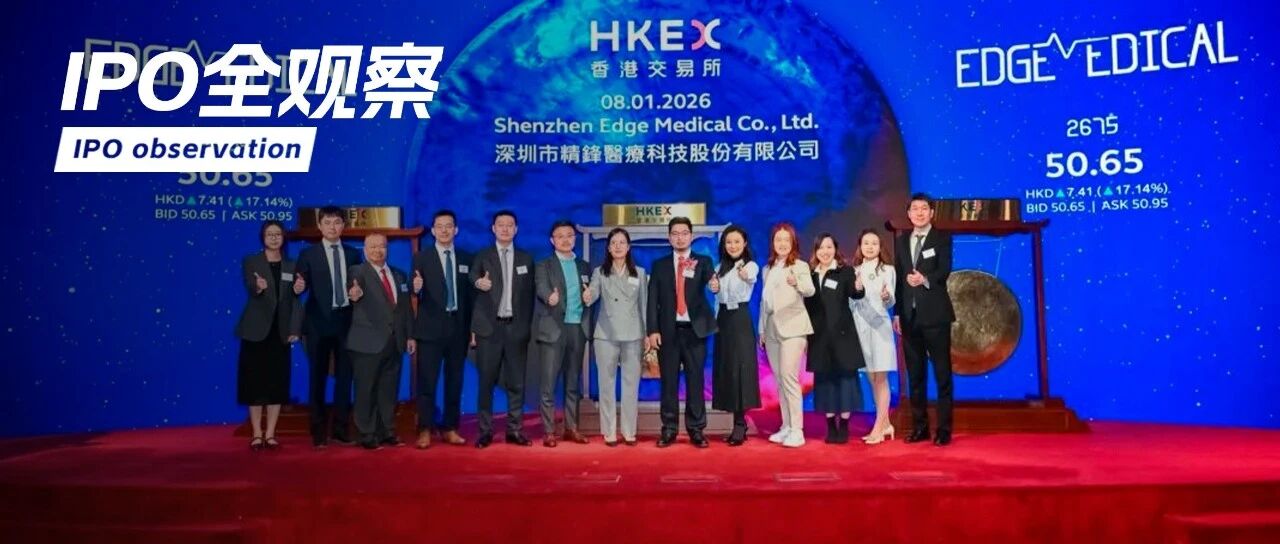
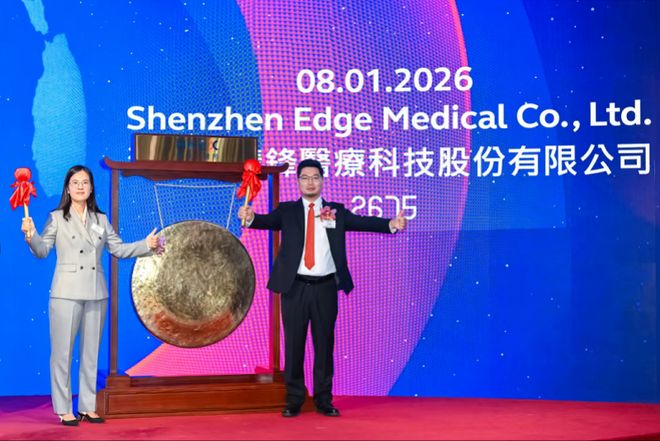
Core Viewpoint - Shenzhen Precision Medical Technology Co., Ltd. (stock code: 02675.HK) officially listed on the Hong Kong Stock Exchange, marking a significant milestone for domestic surgical robotics in China [2] Group 1: IPO and Financials - The company raised approximately HKD 1.2 billion by issuing 27.72 million shares at an offering price of HKD 43.24 per share, resulting in a post-IPO market capitalization of around HKD 16.8 billion, which increased to approximately HKD 21.9 billion (about RMB 19.6 billion) at the time of reporting [2] - The IPO attracted 13 cornerstone investors, including major institutions like Abu Dhabi Investment Authority (ADIA) and Tencent, collectively subscribing for USD 75 million, accounting for 48.7% of the total fundraising [3] - Prior to the IPO, the company completed 8 rounds of financing, raising over RMB 2 billion, with a valuation increase from RMB 43 million in early stages to nearly RMB 15 billion before the IPO [4] Group 2: Founders and Company Background - The founders, Wang Jianchen and Gao Yuanqian, both PhD graduates born in the 1980s, transformed a startup into a leading player in the global surgical robotics field within 9 years [2][5] - The company focuses on developing high-end surgical robots, specifically targeting the challenging area of single-port surgical robots, which minimize trauma and improve recovery times [8][10] Group 3: Product Development and Market Position - Precision Medical has developed a complete product line covering multi-port, single-port, and natural orifice surgical robots, becoming the second company globally to achieve this [11] - The company’s products are designed to meet the needs of Chinese medical practices, with 100% self-research and 85% localized supply chains, making them 60-70% cheaper than imported brands [14] - The company has achieved significant clinical milestones, including the successful completion of over 14,000 assisted surgeries and the establishment of a clinical support system to ensure effective use of its products [17][19] Group 4: Market Trends and Future Outlook - The global surgical robotics market is projected to grow from USD 21.2 billion in 2024 to USD 84.2 billion by 2033, with a compound annual growth rate (CAGR) of 16.6%, while the Chinese market is expected to grow at a much faster rate of 34.3% [21][22] - The penetration rate of laparoscopic surgical robots in China is currently low at approximately 0.7%, indicating a significant opportunity for growth as domestic brands capture nearly 50% of the market share [22] - The competitive landscape is intensifying, with major players like Intuitive Surgical and Precision Medical leading the market, and the focus shifting from mere existence to product quality and operational efficiency [22][23]


深圳85后博士夫妻,打造手术机器人“全能选手”,刚刚敲钟,市值196亿
创业邦· 2026-01-08 10:33
Core Viewpoint - Shenzhen Precision Medical Technology Co., Ltd. (stock code: 02675.HK) officially listed on the Hong Kong Stock Exchange on January 8, 2026, becoming a representative of domestic players in the surgical robot sector, raising approximately HKD 1.2 billion with a post-IPO market capitalization of around HKD 21.9 billion (approximately RMB 19.6 billion) [2]. Group 1: Company Overview - The founders, Wang Jianchen and Gao Yuanqian, transformed a startup into a global player in the surgical robot field within nine years, becoming the first Chinese company and the second globally to offer a full range of products in multi-port, single-port, and natural orifice categories, second only to Intuitive Surgical [4]. - The IPO attracted 13 cornerstone investors, including the Abu Dhabi Investment Authority (ADIA), UBS Asset Management, Tencent, and others, collectively subscribing to USD 75 million, accounting for 48.7% of the total fundraising [4][6]. - Prior to the IPO, the company completed eight rounds of financing, raising over RMB 2 billion, with a valuation increase from RMB 43 million in early stages to nearly RMB 15 billion before the IPO [4][6]. Group 2: Product Development and Market Position - Precision Medical's core competitive advantage lies in its comprehensive product line covering multi-port, single-port, and bronchoscopic robots, all developed in-house, making it the second company globally to achieve this [25]. - The company’s products are priced at 60-70% of imported brands, with 100% self-research and 85% localized supply chain, providing timely local service and superior operational performance [25][36]. - The surgical robot market is projected to grow significantly, with the global market expected to reach USD 84.2 billion by 2033, and the Chinese market anticipated to grow to RMB 102 billion by 2033, reflecting a compound annual growth rate of 34.3% [36]. Group 3: Financial Performance and Growth - From 2023 to the first half of 2025, the company's revenue surged from RMB 48.04 million to RMB 149.3 million, marking a growth rate of nearly 400%, with gross profit reaching RMB 93.85 million in the first half of 2025 [27][29]. - The net loss narrowed from RMB 1.33 billion in 2024 to RMB 890.87 million in the same period, indicating a clear trend of improving financial health [27][29]. Group 4: Clinical and Market Strategy - To address initial skepticism from surgeons regarding domestic surgical robots, the company offered free clinical trials and conducted systematic training at top institutions, gradually gaining trust [20]. - The company has established a comprehensive clinical support system, ensuring that its products are effectively utilized in hospitals, which includes a three-tier training network for doctors [33][34]. - By 2025, the company had expanded its products to over 220 top-tier hospitals across China and exported to 26 countries, achieving a cumulative installation of over 80 units and assisting in over 14,000 surgeries [27][30].
药闻|精锋医疗上市大涨 国产手术机器人进入“商业验证”关键期
Xin Lang Cai Jing· 2026-01-08 09:39
Core Insights - The surgical robot market, traditionally dominated by foreign companies, is witnessing a shift as domestic firms enhance their R&D capabilities [1] - Jingfeng Medical's listing on the Hong Kong Stock Exchange marks a significant milestone and reflects the transition of the domestic surgical robot industry from "technology-driven" to "commercial validation" [1][2] - The valuation logic in the domestic surgical robot sector is evolving from "narrative-driven" to "cash flow-driven," with surgical volume and internationalization capabilities becoming key competitive indicators [1][3] Market Performance - Jingfeng Medical's stock opened at HKD 59 per share, a 36.45% increase from its issue price of HKD 43.24, indicating strong market interest in innovative medical devices [2] - The laparoscopic surgical robot segment is the largest within the surgical robot market, with the Da Vinci surgical system currently holding a dominant position in China, having approximately 431 units installed by the end of 2024 [2] Technological Advancements - Domestic surgical robot companies are rapidly closing the technology gap, with 13 multi-port laparoscopic surgical robots approved by the National Medical Products Administration by December 2015, 11 of which are domestic brands [2] - Key domestic players like Jingfeng Medical, Shurui, and Weikang have made significant progress in the more technically demanding single-port robot field [2] Financial Performance - Jingfeng Medical is projected to sell 20 multi-port laparoscopic robots in 2024, leading among domestic manufacturers, with revenues expected to grow from CNY 48.04 million in 2023 to CNY 160 million in 2024 [3] - Despite revenue growth, Jingfeng Medical reported net losses of CNY 212.9 million and CNY 218.5 million for 2023 and 2024, respectively, but the loss is expected to narrow to approximately CNY 89.09 million in the first half of 2025 [3][4] Competitive Landscape - The path to profitability for surgical robot products typically requires a market ramp-up period of 3 to 5 years, influenced by tender processes, physician training, and procedure adoption rates [4] - The business model for surgical robots revolves around a "device + consumables + services" commercial loop, with consumables and services driving revenue growth more significantly than equipment sales [4] International Expansion - Internationalization is becoming essential for domestic surgical robot companies to alleviate pressures from domestic procurement processes and to validate global competitiveness [4][5] - Jingfeng Medical's multi-port robot MP1000 received EU CE certification in March 2025 and has entered 24 countries, with overseas orders accounting for 60% of its global contract sales in the first ten months of 2025 [5] - The competitive landscape for domestic laparoscopic surgical robots is beginning to take shape, with leading companies differentiating themselves based on core metrics [5]

精锋医疗在香港上市 为新年深圳首家完成IPO企业
Nan Fang Du Shi Bao· 2026-01-08 09:32
Group 1 - Shenzhen Precision Medical Technology Co., Ltd. (stock code: 02675.HK) officially listed on the Hong Kong Stock Exchange, becoming the first company in Shenzhen to complete an IPO in the new year, with an issue price of HKD 43.24 and a subscription rate of 1,091.94 times, opening at HKD 59, a significant increase of 36.45% from the issue price, with a market capitalization exceeding HKD 20 billion [1][3] - The successful listing marks a new phase for the company characterized by globalization and scaling, following breakthroughs in core technology and commercialization [3] - The company has developed a complete product layout covering multi-port, single-port, and natural orifice surgical robots, being the first in China and the second globally to commercialize both multi-port and single-port laparoscopic surgical robots [3] Group 2 - The company's operational performance has rapidly improved, with projected revenue of CNY 149 million for the first half of 2025, nearly quadrupling compared to the same period in 2024, and a gross margin of approximately 62.8%, indicating high commercialization quality and sustainability [5] - As of the latest available date, over 12,000 robotic-assisted surgeries have been completed using the multi-port laparoscopic surgical robot, and over 2,000 surgeries with the single-port laparoscopic surgical robot, showing a stable increase in clinical usage [5] - The company was co-founded by PhDs from MIT and Harvard, with strategic shareholders including well-known institutions such as the Social Security Fund, Sequoia China, and Kangji Medical [7] Group 3 - The IPO attracted 14 top international institutions as cornerstone investors, collectively subscribing for USD 75 million, reflecting strong international long-term capital recognition of the Chinese surgical robot industry and the company's technology and business model [8] - The company aims to leverage its Hong Kong listing to focus on core technology innovation in surgical robots, expand product application scenarios, and enhance global market coverage, promoting domestic high-end medical equipment on the world stage [8] - Longgang District has nurtured 50 listed companies domestically and internationally, supported by a comprehensive service system and a full-chain service support mechanism for enterprises at different development stages [9]
一日双响!君联资本同日收获两家IPO
Shang Hai Zheng Quan Bao· 2026-01-08 07:26
Group 1: Investment Strategy and Market Positioning - Junlian Capital successfully invested in leading companies in the AGI and surgical robotics sectors, with a long-term investment strategy that includes nine rounds of funding for Zhipu and three for Jingfeng Medical [1][3][5] - The AGI market in China is projected to exceed 1 trillion yuan by 2030, with a compound annual growth rate (CAGR) of over 63% [4] - Junlian Capital has established a comprehensive investment landscape in the AI sector, focusing on three main areas: vertical applications of AI, foundational large models, and AI infrastructure [4] Group 2: Company Highlights - Zhipu, founded in 2019, has developed the GLM series of large models, achieving significant milestones such as surpassing 100 billion parameters and ranking first in domestic evaluations [3][4] - Jingfeng Medical, established in 2017, is a leading surgical robotics company in China, recognized for its innovative technology and multiple regulatory approvals for various surgical robots [6][7] - Both companies' listings mark a significant achievement for the Social Security Fund's Zhongguancun Special Fund, highlighting Junlian Capital's investment acumen in hard technology [7]