虚拟资产交易

Search documents
基地锦标集团:正探索养殖业、畜牧业、加密货币兑换业务的投资机遇
Zhi Tong Cai Jing· 2025-09-17 12:52
Core Viewpoint - The company is actively seeking growth opportunities in various sectors to create value and returns for its shareholders, including modern farming operations and potential acquisitions in the virtual asset trading space [1] Group 1: Business Operations - The company primarily operates as a subcontractor for foundation and site leveling works in Hong Kong and engages in the trade of alcoholic beverages in mainland China [1] Group 2: Growth Opportunities - The company is exploring investment opportunities in modern farming operations, which may include the development of specialized breeding facilities and related value-added products [1] - The company is considering opportunities in livestock farming and animal husbandry, which may encompass modern farm operations and related agricultural product production [1] - The company is evaluating a potential acquisition of a licensed virtual asset trading platform, which may include establishing and operating regulated cryptocurrency exchange services and related fintech solutions [1] Group 3: Strategic Initiatives - The board believes that these strategic initiatives can leverage the company's resources and expertise while opening new market opportunities, thereby enhancing competitiveness and creating sustainable value for shareholders [1]
基地锦标集团(08460):正探索养殖业、畜牧业、加密货币兑换业务的投资机遇
智通财经网· 2025-09-17 12:39
Core Viewpoint - The company is actively seeking growth opportunities in various sectors to create value and returns for its shareholders [1] Group 1: Business Operations - The company primarily operates as a foundation subcontractor providing foundation and land leveling engineering services in Hong Kong [1] - In mainland China, the company is engaged in the trade of alcoholic beverages [1] Group 2: Strategic Initiatives - The company is exploring investment opportunities in modern aquaculture operations, which may include the development of specialized breeding facilities and related value-added products [1] - The company is considering opportunities in livestock farming and animal husbandry, potentially involving modern farm operations and related agricultural product production [1] - The company is evaluating a potential acquisition of a licensed virtual asset trading platform, which may include establishing and operating regulated cryptocurrency exchange services and related fintech solutions [1] Group 3: Competitive Advantage - The board believes that these strategic initiatives can leverage the company's resources and expertise while opening new market opportunities, thereby enhancing competitiveness and creating sustainable value for shareholders [1]
基地锦标集团(08460.HK)正探索现代化养殖营运投资机遇 可能开发专业养殖设施及相关增值产品
Ge Long Hui· 2025-09-17 12:38
Core Viewpoint - The company is actively seeking investment opportunities in high-growth potential industries to create value and returns for itself and its shareholders [1] Group 1: Business Operations - The company primarily operates as a subcontractor for foundation and site preparation engineering in Hong Kong, as well as engaging in the trade of alcoholic beverages in China [1] Group 2: Investment Opportunities - The company is exploring investment opportunities in modern farming operations, which may include the development of specialized breeding facilities and related value-added products [1] - The company is considering opportunities in livestock farming and animal husbandry, which may encompass modern farm operations and related agricultural product production [1] - The company is evaluating a potential acquisition of a licensed virtual asset trading platform, which may include establishing and operating regulated cryptocurrency exchange services and related fintech solutions [1]
中国新城市与EX.IO合作推出商业地产RWA项目
Zhi Tong Cai Jing· 2025-09-15 15:03
Core Viewpoint - China New City (300778) has entered into a service agreement with EXIO Group Limited to provide tokenization services, indicating a strategic move towards digital asset integration and value enhancement [1] Group 1: Agreement Details - The agreement with EXIO includes services such as legal document coordination, smart contract development, smart contract auditing, wallet solutions, token access on the EXIO platform, and coordination of investor KYC processes [1] - EXIO is a licensed virtual asset trading platform in Hong Kong, backed by Sina's Huasheng Group, and received its operating license from the Hong Kong Securities and Futures Commission in December 2024 [1] Group 2: Strategic Intent - The company aims to leverage Hong Kong's status as an international financial center to deepen collaboration with leaders in the digital asset industry [1] - The strategic research and layout in digital assets are intended to promote the re-release of existing asset values [1]
中国新城市(01321)与EX.IO合作推出商业地产RWA项目
智通财经网· 2025-09-15 14:58
Core Viewpoint - China New City (01321) has entered into a service agreement with EXIO Group Limited to provide tokenization services, indicating a strategic move towards digital assets [1] Group 1: Agreement Details - The service agreement includes legal document coordination, smart contract development, smart contract auditing, wallet solutions, token access on the EXIO platform, coordination of investor KYC procedures, and initial distribution and secondary trading of virtual assets [1] Group 2: Strategic Intent - The company aims to leverage Hong Kong's status as an international financial center and its regulatory environment to deepen collaboration with leaders in the digital asset industry [1] - The strategic research and layout of digital assets are intended to promote the revaluation of existing asset values [1] Group 3: EXIO Group Information - EXIO is a licensed virtual asset trading platform in Hong Kong, backed by Sina's Huasheng Group, and received its operating license from the Hong Kong Securities and Futures Commission in December 2024 [1]
HashKey Exchange宣布推出“Marketplace”功能 提供实时和延时结算等
Zhi Tong Cai Jing· 2025-09-04 12:25
Core Viewpoint - HashKey Exchange has launched a new "Marketplace" feature for over-the-counter (OTC) trading, aimed at enhancing transparency, efficiency, and security for large transactions [1] Group 1: New Feature Overview - The "Marketplace" function allows users to compare quotes from multiple active liquidity providers in real-time, facilitating better decision-making for large transactions [1] - The feature is primarily designed for institutional investors, asset management firms, family offices, and high-net-worth individuals, with some access for retail users [1] - The platform supports transaction sizes ranging from $10 to $10 million, with four active liquidity providers currently offering quotes [1] Group 2: Transaction Efficiency - The platform employs an "all-inclusive quote" model that covers all trading costs, providing both real-time and delayed settlement options [1] - The fastest settlement can be achieved in seconds, significantly improving the safety, efficiency, and smoothness of large transactions [1] - Traditional OTC trading methods are often time-consuming and resource-intensive, relying heavily on manual communication and price inquiries, which can lead to additional costs due to information asymmetry [1] Group 3: Transparency and Control - The new feature offers "full transparency" by displaying comparative results from multiple liquidity providers, helping clients select lower prices [1] - Users can track order progress in real-time, allowing for better control over the trading process [1]
全球并购基金与香港虚拟资产交易所缔战略合作伙伴
Sou Hu Cai Jing· 2025-08-28 23:06
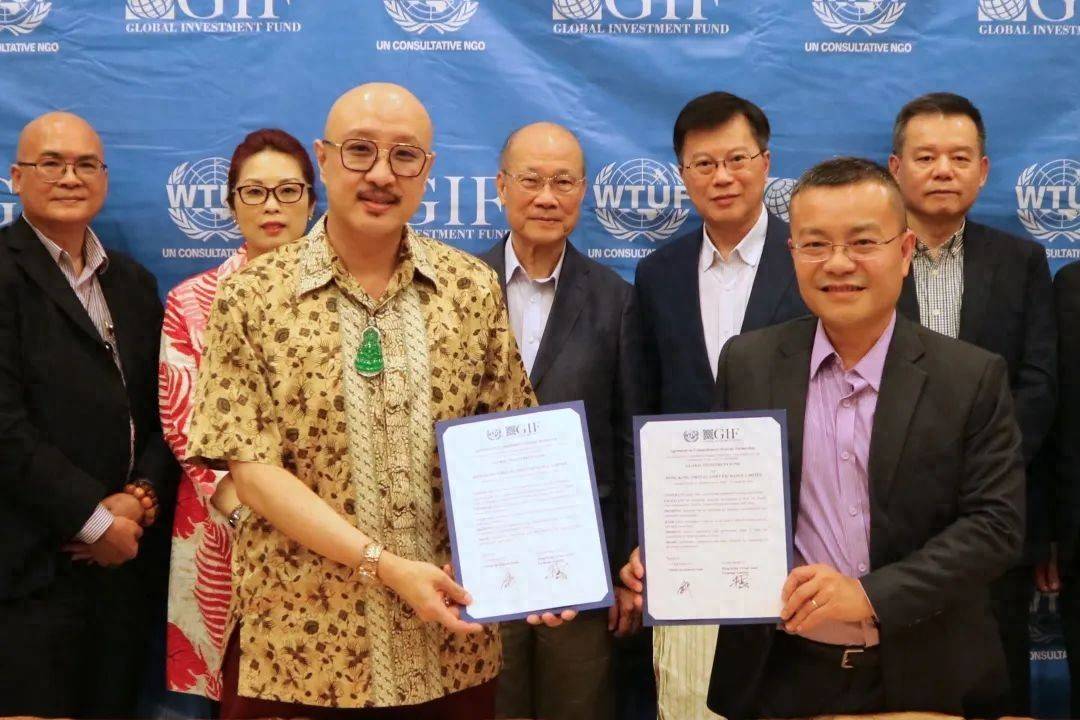
Core Viewpoint - Global Mergers Fund (GIFUND) has established a comprehensive strategic partnership with Hong Kong Virtual Asset Exchange (HKVAX) to promote the global development of Web 3.0, digital asset management, and security token offerings [2][4]. Group 1: Partnership Details - The partnership aims to enhance public awareness of the risks associated with virtual assets in terms of internet security and legal compliance [2]. - Both organizations will collaborate closely to improve service capabilities and professional scope to meet comprehensive financial market demands [2][5]. - The agreement was signed by key figures from both organizations, including Professor Dato' Sri Ng Kwang Ho and Dr. Wu Wei Liang [4]. Group 2: Objectives and Focus Areas - GIFUND focuses on investing in global merger projects, combining investment banking, wealth management, market analysis, and compliance services to help entrepreneurs achieve high returns [4][6]. - The fund's investment projects must possess unique competitive advantages and viable business models, with significant growth potential in both Chinese and global markets [6]. - Key industries of interest include new materials, high-end manufacturing, clean energy, and technology, which are crucial for economic transformation and sustainable development [6]. Group 3: Leadership and Expertise - Dr. Wu Wei Liang, co-founder and CEO of HKVAX, emphasizes the importance of a secure and transparent virtual asset trading platform, leveraging his extensive experience in traditional finance [5][6]. - The capital for GIFUND comes from various professional investor channels, including insurance companies, banks, and asset management firms, which will support target companies in asset integration and technological enhancement [6].

影响市场重大事件:上海加快机器人应用,支持电子信息、汽车、装备等重点行业部署应用工业机器人
Mei Ri Jing Ji Xin Wen· 2025-08-19 23:07
Group 1: Robotics and Manufacturing - Shanghai is accelerating the application of industrial robots in key industries such as electronics, automotive, and equipment to enhance production efficiency and safety [1] - The initiative aims to deploy robots in repetitive, hazardous, and health-risk jobs, promoting large-scale applications in assembly, welding, spraying, and material handling [1] - The plan also encourages the steel and shipbuilding industries to develop human-machine collaborative smart manufacturing units for complex processes [1] Group 2: Commercial Aerospace Development in Guangdong - Guangdong Province is promoting high-quality development in commercial aerospace with policies aimed at significant applications in low-altitude economy, space tourism, and other innovative projects [2][5] - The government encourages enterprises to apply for various licenses related to aerospace, including weaponry research and production, satellite communication, and navigation product certification [5][6] - Support is provided for the construction of satellite constellations targeting commercial applications, with a "green channel" for project approval and resource coordination [6] Group 3: Satellite Applications and Data Procurement - The Guangdong government is advocating for the procurement of domestic satellite data and products across various industries to enhance applications in sectors like aviation, automotive, and energy [9] - There is a push for enterprises to expand the scale of satellite application industries and purchase computing power services, with local governments encouraged to provide rewards [9] Group 4: Technology and Innovation Events - The seventh technology achievement auction in the Yangtze River Delta G60 corridor achieved a record transaction amount exceeding 20 billion yuan, marking a 66.7% increase from the previous event [4] - The auction attracted numerous county-level economies and showcased over a thousand technology achievements across various fields, including high-end equipment and artificial intelligence [4] Group 5: Virtual Asset Trading - CMB International Securities has launched virtual asset trading services for qualified investors, allowing 24/7 trading of cryptocurrencies like Bitcoin and Ethereum [3] - The firm is the first Chinese bank-affiliated brokerage in Hong Kong to receive a license for virtual asset trading, enhancing its service offerings [3] Group 6: iPhone Production Update - Apple has entered large-scale production of the iPhone 17, with Foxconn ramping up hiring at its Zhengzhou factory in anticipation of peak season demand [10] Group 7: Securities Transaction Tax Revenue - The Ministry of Finance reported that from January to July 2025, the revenue from securities transaction stamp duty reached 93.6 billion yuan, reflecting a year-on-year increase of 62.5% [11]

吴说每日精选加密新闻 + 本周宏观指标
Sou Hu Cai Jing· 2025-08-18 14:27
Group 1 - CMB International Securities has launched a virtual asset trading service supporting BTC, ETH, and USDT, available 24/7 for qualified investors who have completed KYC and AML certification [1] - Renmin University of China Law School is offering an advanced training course on the legal practices related to virtual currency disposal, stablecoins, and RWA, focusing on the legal attributes, regulatory framework, disposal procedures, compliance processes, and investment opportunities of digital assets [1] Group 2 - Strategy purchased 430 BTC between August 11 and August 17 at an average price of $119,666, totaling $51.4 million, bringing its total holdings to 629,376 BTC with an average acquisition cost of $73,320, amounting to approximately $46.15 billion [2] Group 3 - LayerZero Foundation's proposal to acquire Stargate has begun voting, currently with a support rate of 97.09%, with the voting set to end on August 24. The proposal includes a $110 million acquisition of Stargate cross-chain bridge and its STG tokens, with plans to dissolve Stargate DAO and exchange STG for LayerZero's native token ZRO at a rate of 1 STG to 0.08634 ZRO [3] Group 4 - The UK-based crypto platform Lykke suffered a hack last year, resulting in the theft of approximately $22.8 million worth of Bitcoin and Ethereum, attributed to the North Korean hacker group Lazarus. The company has since been liquidated, and its founder is under criminal investigation in Switzerland [4]
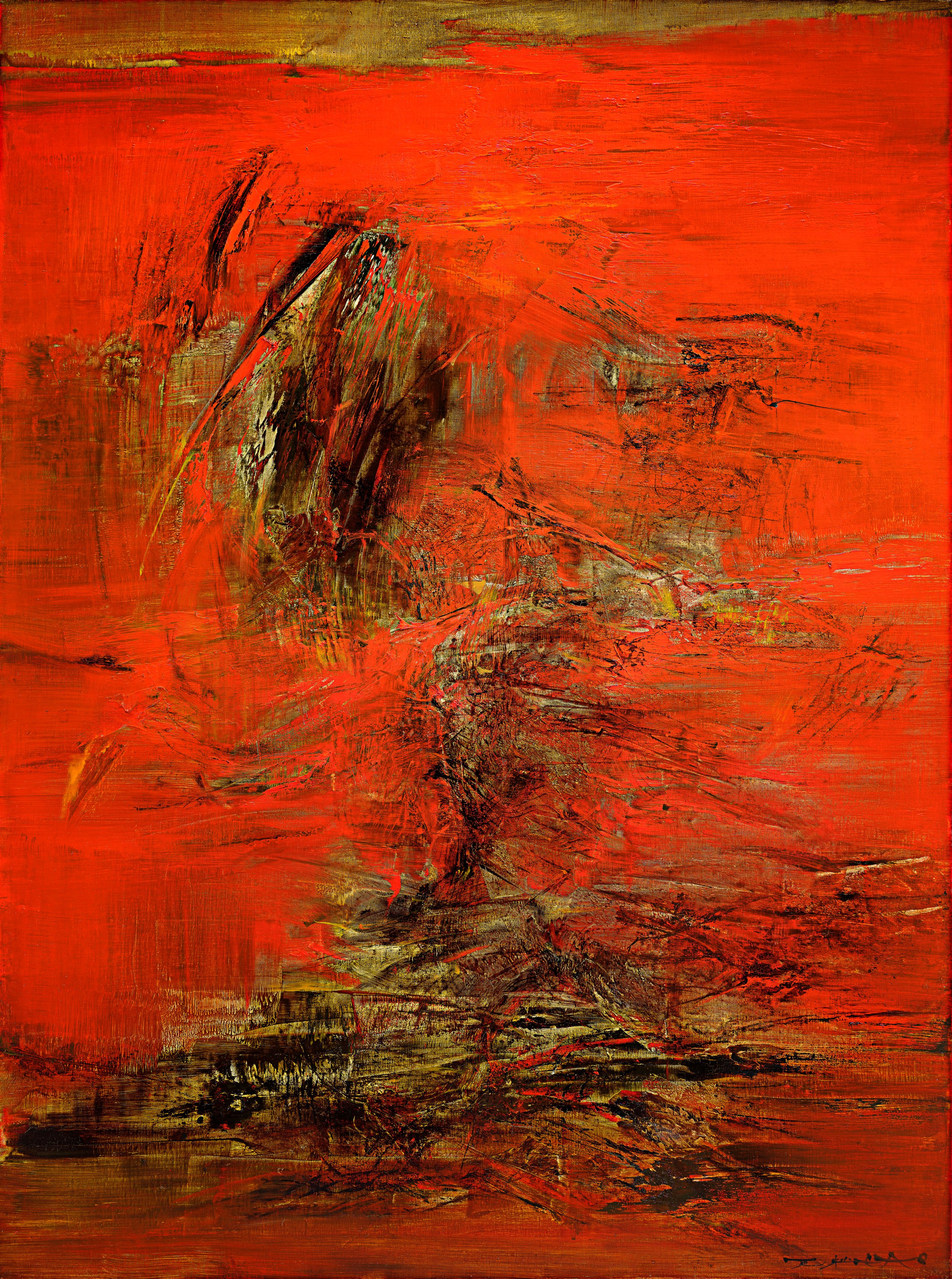
顶级艺术品估值暴跌,艺术品与虚拟资产市场冰火两重天?
Hua Er Jie Jian Wen· 2025-08-16 08:19
Core Viewpoint - The auction of Zao Wou-Ki's artwork "17.3.63" by Christie's in Hong Kong highlights the contrasting trends between the art market and the virtual asset market, with the former experiencing a decline in prices while the latter, particularly Bitcoin, has surged significantly since 2018 [1][5]. Group 1: Auction Details - Christie's will auction Zao Wou-Ki's "17.3.63," created in 1963, with an estimated price range of HKD 70 million to 90 million [5]. - The prices of similar-sized works by Zao Wou-Ki from the 1960s have dropped by approximately 40-50% since 2018-2019 [1][5]. Group 2: Market Trends - The virtual asset market, particularly Bitcoin, has increased by 16 times since May 26, 2018, contrasting sharply with the art market's performance [1]. - Zao Wou-Ki's artworks have historically performed well in auctions, with a record sale of HKD 510 million for "June to October 1985" at Sotheby's in Hong Kong, setting a record for both the auction house and the artist [5]. Group 3: Investment Characteristics - Both art and virtual assets are considered "non-physical value carriers," relying on human consensus regarding their significance, scarcity, and cultural meaning [7][12]. - Scarcity is a key factor in maintaining the value of both asset classes, achieved through design or natural attributes [8]. - Both categories possess dual attributes of collectibility and investment potential, with purchases driven by emotional preferences or expectations of appreciation [9]. Group 4: Ownership and Cultural Significance - Clear ownership rights are essential for both art and virtual assets to ensure value, with traditional art relying on certificates of authenticity and virtual assets using blockchain technology for ownership verification [10][12]. - Both art and virtual assets serve as cultural symbols, reflecting specific values, aesthetics, or social sentiments of their respective eras [11][12]. Group 5: Market Dynamics - Both markets exhibit active trading environments, with prices influenced by supply and demand, trends, and speculative behavior, leading to significant volatility [13][17]. - The art market relies on auction houses and galleries, while the virtual asset market is more dependent on decentralized platforms, resulting in more frequent price fluctuations [17].