
低空经济

Search documents
学习笔记|坚持创新驱动,加紧培育壮大新动能
2 1 Shi Ji Jing Ji Bao Dao· 2025-12-26 14:59
特约评论员熊夏柠 近日召开的中央经济工作会议确定了明年经济工作要抓好的八大重点任务,其中要求,要坚持创新驱 动,加紧培育壮大新动能。制定一体推进教育科技人才发展方案。建设北京(京津冀)、上海(长三 角)、粤港澳大湾区国际科技创新中心。强化企业创新主体地位,完善新兴领域知识产权保护制度。 党的二十届四中全会审议通过的《中共中央关于制定国民经济和社会发展第十五个五年规划的建议》 (下称《建议》)中指出,加快高水平科技自立自强,引领发展新质生产力。中国式现代化要靠科技现 代化作支撑。抓住新一轮科技革命和产业变革历史机遇,统筹教育强国、科技强国、人才强国建设,提 升国家创新体系整体效能,全面增强自主创新能力,抢占科技发展制高点,不断催生新质生产力。 发展新质生产力必须强化科技创新,需要建设现代化产业体系、加快高水平科技自立自强、加快构建高 水平社会主义市场经济体制、加快经济社会发展全面绿色转型等关键部署中。科技创新和产业创新,是 发展新质生产力的基本路径。《建议》多次提及"科技"和"创新",体现了科创在发展新质生产力中的重 要驱动作用。 同时,科创还需要与产业创新深度融合,要强化企业创新主体地位,让创新与产业深度融合 ...
坚持创新驱动,加紧培育壮大新动能
2 1 Shi Ji Jing Ji Bao Dao· 2025-12-26 14:54
科技创新和产业创新,是发展新质生产力的基本路径。 近年来,我国创新驱动发展战略实施成效显著。 特约评论员 熊夏柠 党的二十届四中全会审议通过的《中共中央关于制定国民经济和社会发展第十五个五年规划的建议》 (下称《建议》)中指出,加快高水平科技自立自强,引领发展新质生产力。中国式现代化要靠科技现 代化作支撑。抓住新一轮科技革命和产业变革历史机遇,统筹教育强国、科技强国、人才强国建设,提 升国家创新体系整体效能,全面增强自主创新能力,抢占科技发展制高点,不断催生新质生产力。 发展新质生产力必须强化科技创新,需要建设现代化产业体系、加快高水平科技自立自强、加快构建高 水平社会主义市场经济体制、加快经济社会发展全面绿色转型等关键部署中。科技创新和产业创新,是 发展新质生产力的基本路径。《建议》多次提及"科技"和"创新",体现了科创在发展新质生产力中的重 要驱动作用。 同时,科创还需要与产业创新深度融合,要强化企业创新主体地位,让创新与产业深度融合。《建议》 也提出,培育壮大新兴产业和未来产业。着力打造新兴支柱产业。实施产业创新工程,一体推进创新设 施建设、技术研究开发、产品迭代升级,加快新能源、新材料、航空航天、低空 ...
竞逐万亿赛道,四川何以炼成“最强引擎”?
Mei Ri Jing Ji Xin Wen· 2025-12-26 14:40
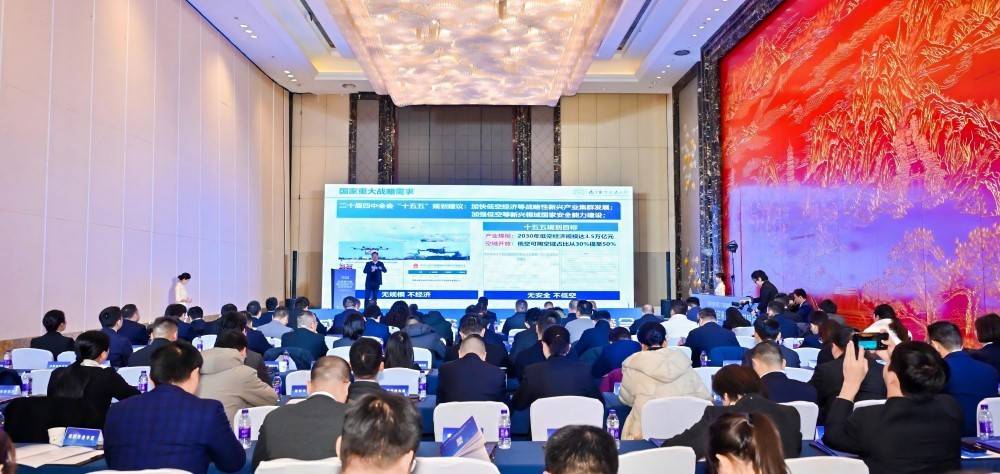
低空经济,正在迎来"关键一跃"。 不久前,国家"十五五"规划建议提出,要加快航空航天、低空经济等战略性新兴产业集群发展。这也意味着未来五年,低空经济有望从区域试点迈向规模化 拓展,进入培育万亿级新兴支柱产业的战略窗口期。 根据中国民航局的数据预测,2025年我国低空经济的市场规模预计将达到1.5万亿元,到2035年更是有望攀升至3.5万亿元。四川作为全国首批低空空域协同 管理改革试点省份,已经在空域划设、运行监管、产业培育、应用创新和生态构建上形成先发优势,撑起打造"西部低空经济发展高地"的雄心。 12月26日,2025年四川省通航动力产业生态大会暨轻型航空发动机点火仪式(以下简称"四川通航生态大会")在天府国际会议中心举行,"低空动力产业 园"正式启动,天府轻动2000公斤推力级涡扇发动机的首次点火,为全省低空经济发展注入新的动力。 种种迹象显示,天府新区作为低空经济综合集成试点,就像一颗强劲跳动的"产业心脏",持续为全省低空经济注入创新动力和集聚势能,拉动全省低空经济 建圈强链,加速跃升。 万亿赛道 跻身"第一梯队",打造西部低空经济发展高地 作为新质生产力的典型代表,低空经济是以低空空域(通常距地面10 ...


成都都市圈携手长三角 共拓低空经济新蓝海
Sou Hu Cai Jing· 2025-12-26 14:19
Core Viewpoint - The Chengdu metropolitan area is entering a golden development period for the low-altitude economy, with significant collaboration opportunities with the Yangtze River Delta region to enhance industrial chain integration and innovation [1][3]. Group 1: Event Overview - The low-altitude economy industry exchange meeting was held in Nanjing, Jiangsu, with over 100 participants from government, enterprises, and academia discussing new trends and technologies in the low-altitude economy [1][3]. - The event aimed to deepen cooperation in industrial chains, innovation chains, and capital chains between the Chengdu metropolitan area and the Yangtze River Delta [1][3]. Group 2: Industrial Development - The Chengdu metropolitan area has over 1,500 aerospace companies, forming a complete industrial chain from design to manufacturing, with a total output value of key industrial chains exceeding 1.2 trillion yuan [3]. - The region boasts over 190 national-level innovation platforms and a talent pool exceeding 7.6 million, positioning it among the top in the Midwest for innovation resources [3]. Group 3: Market Potential - The metropolitan area has a resident population of 30.1 million and an economic total of 3 trillion yuan, with over 110 opened low-altitude routes and more than 90 cultivated low-altitude scenarios [3]. - The event featured a demand list of 75 items and a supply list of 152 items, facilitating clear cooperation guidance and efficient resource allocation between enterprises in both regions [6]. Group 4: Collaborative Opportunities - Companies from the Chengdu metropolitan area and the Yangtze River Delta expressed strong interest in collaboration, highlighting the complementary nature of their industries [4][11]. - The meeting provided a platform for companies to exchange contact information and initiate discussions on potential partnerships, with several companies already expressing interest in collaboration [9][10]. Group 5: Future Outlook - Experts emphasized the need for advanced technologies such as IoT, AI, 5G, and cloud computing to support the low-altitude economy, indicating a promising future for collaboration between the two regions [10][11]. - The meeting was seen as a positive start for exploring the trillion-yuan market in the low-altitude economy, with ongoing efforts to deepen cooperation in various fields [11].
《低空统计分类》正式印发,主要包含这些内容→
Xin Lang Cai Jing· 2025-12-26 13:54
Core Viewpoint - The release of the "Low Altitude Economy and Its Core Industry Statistical Classification (Trial)" aims to clarify the concepts and categories of the low altitude economy, supporting the development of this emerging industry in China [2][5]. Group 1: Background of the Low Altitude Economy - The Central Committee and the State Council emphasize the importance of developing the low altitude economy as part of the 15th Five-Year Plan, highlighting it as a strategic emerging industry [2]. - The low altitude economy in China is in its initial stages, with a rapidly improving policy framework, infrastructure, and business entities, showing a positive overall trend [2]. Group 2: Principles of Compilation - The statistical classification is designed to be systematic, scientific, and practical, reflecting the development characteristics of the low altitude economy [3]. - It focuses on innovation, encompassing manufacturing and service activities related to low altitude aviation, showcasing the technology-driven nature of the industry [3]. - The classification aims for precision, based on existing national economic classifications and international standards, ensuring operability and relevance to key areas of the low altitude economy [3][4]. - It balances immediate and long-term needs, allowing for adaptability to current developments while considering future growth potential [4]. Group 3: Content of the Statistical Classification - The low altitude economy consists of four main categories: low altitude manufacturing, low altitude operations, low altitude infrastructure and information services, and low altitude supporting industries, with a total of 23 subcategories and 65 small categories [5]. - Low altitude manufacturing includes the production of aircraft and related materials, while low altitude operations cover various flight services [5]. - Low altitude infrastructure and information services pertain to the construction and engineering services supporting low altitude activities, and low altitude supporting industries provide technical research and support services [5][6].
成都都市圈握手长三角 加快低空经济“一起飞”
Sou Hu Cai Jing· 2025-12-26 13:46
Group 1 - The Chengdu metropolitan area hosted a low-altitude economy industry exchange meeting, marking the final event in a series of investment promotion activities in the Yangtze River Delta [1] - Over 100 representatives from government departments, enterprises, and scholars gathered to explore opportunities in the low-altitude economy, covering the entire industrial chain from R&D to application [1] Group 2 - The Chengdu metropolitan area released a "Low-altitude Economy Opportunity List," featuring 227 collaboration opportunities, with 75 demand-side items and 152 supply-side items [2] - The demand-side includes low-altitude logistics, public governance, and cultural tourism, while the supply-side encompasses complete machine manufacturing, flight control systems, and operational services [2] - The Chengdu metropolitan area boasts over 1,500 aerospace companies, 190 national-level innovation platforms, and more than 7.6 million specialized technical talents [2] Group 3 - The event included exhibitions showcasing various applications of low-altitude technologies, such as amphibious airports and heavy-lift drones for logistics and emergency services [3] - Safety is emphasized as a prerequisite for the development of the low-altitude economy, with companies presenting solutions for monitoring and regulatory frameworks [3] Group 4 - The exchange meeting served as a platform for deep communication, with 35 companies from the Yangtze River Delta and 14 from the Chengdu metropolitan area engaging in collaboration discussions [4] - The partnership aims to leverage the R&D capabilities of Chengdu and the manufacturing experience of the Yangtze River Delta to explore a trillion-dollar market [4] Group 5 - The meeting concluded with a positive outlook for future collaborations, as companies expressed interest in expanding their market reach and sharing development benefits [5] - The low-altitude economy is seen as a significant area for innovation and cooperation, with plans for ongoing exchanges in airspace management, drone manufacturing, and commercial applications [5]
关于印发《广东省推动金融服务科技强省建设工作方案》的通知
Xin Lang Cai Jing· 2025-12-26 12:21
Core Viewpoint - The Guangdong Province's plan aims to establish a financial service system that supports the construction of a technology-driven economy, promoting a virtuous cycle of "technology-industry-finance" to enhance technological self-reliance and productivity by 2027 [1][12]. Overall Goals - The strategy focuses on enhancing financial services for the technology-driven economy, targeting key areas in the Guangdong-Hong Kong-Macao Greater Bay Area and strategic emerging industries, aiming to build a modern technology finance matrix by the end of 2027 [2][13]. - The plan aims for technology-related loans to rank among the highest in the nation, with growth rates exceeding the average loan growth, and to significantly increase the scale of intellectual property pledge financing [2][13]. Key Focus Areas Key Regions - The plan emphasizes the importance of the Greater Bay Area's strategic positioning, focusing on major platforms like Hengqin, Qianhai, Nansha, and He Tao to enhance financial services in these areas [4][14]. Key Industries - Financial services will be directed towards emerging industries such as integrated circuits, new energy vehicles, low-altitude economy, biomedicine, and artificial intelligence, among others [5][14]. Key Enterprises - The initiative will support the "Ten-Hundred-Thousand" plan, focusing on 50 leading technology enterprises, 100 chain enterprises, and 10,000 specialized and innovative enterprises to strengthen the industrial chain [6][15]. Major Tasks Implementing Technology Finance Foundation Projects - The plan encourages the establishment of a technology innovation investment fund system, utilizing various types of funds to support early-stage technology enterprises and enhance their valuation and reduce financing costs [7][16]. - A comprehensive technology credit system will be developed to accommodate different stages of enterprise growth, with a focus on flexible repayment options and innovative credit products [8][17]. Enhancing Bond Market Support - The plan aims to leverage the bond market to support technology innovation, encouraging the issuance of technology innovation bonds to finance projects in this sector [8][18]. Capital Market Development - The strategy will utilize various capital market tools to support technology enterprises at different growth stages, promoting a structured listing and financing system [8][18]. Cross-Border Financial Services - The plan will facilitate cross-border financing for technology enterprises, allowing them to access international capital markets and improve their financial flexibility [18]. Risk Mitigation and Insurance - A risk-sharing mechanism will be established to reduce financing costs for high-tech enterprises, including government subsidies for loans and the development of specialized insurance products [9][18]. Data and Financial Technology Integration - Financial institutions will be encouraged to utilize big data and AI to create credit products based on the multidimensional data of technology enterprises, enhancing financing accessibility [9][18]. Knowledge Property Financial Ecosystem - The initiative will support the development of a comprehensive financial ecosystem for intellectual property, promoting innovative financing methods and insurance products related to IP [9][18]. Talent Development - The plan emphasizes the creation of a talent system that integrates technology, industry, and finance to support the development of a technology-driven economy [10][18].
《广东省推动金融服务科技强省建设工作方案》发布!要强化“三所一中心”协同机制
梧桐树下V· 2025-12-26 09:43
Core Viewpoint - The article discusses the "Guangdong Province Financial Services for Technology-Strong Province Construction Work Plan," emphasizing the role of multi-level capital markets in supporting technological innovation and the development of technology-oriented enterprises at various growth stages [5][6]. Group 1: Overall Goals - The plan aims to establish a modern technology financial matrix system by the end of 2027, focusing on providing comprehensive financial services across different stages of technology enterprises, including seed, startup, growth, expansion, and maturity phases [6]. - It targets to position Guangdong's technology-related loans and loans for technology industries among the top in the nation, with growth rates exceeding the average loan growth rate [6]. Group 2: Key Focus Areas - The plan emphasizes the importance of focusing on key regions such as the Greater Bay Area, particularly platforms like Hengqin, Qianhai, Nansha, and He Tao, to enhance financial support for regional development [7]. - It encourages financial resources to concentrate on emerging and future industries, including integrated circuits, new energy vehicles, biomedicine, and artificial intelligence [8]. - The initiative aims to support the cultivation of key enterprises, including 50 leading technology companies and 1,000 manufacturing champions, to drive the development of small and medium-sized technology enterprises [9]. Group 3: Main Tasks - The plan outlines several tasks, including the establishment of a technology innovation investment fund relay system to guide social capital towards early-stage investments in technology [11]. - It aims to optimize a full-cycle technology credit system to support technology enterprises at various growth stages, enhancing the credit evaluation system based on technology-related metrics [12]. - The plan seeks to leverage the bond market to support technology innovation, encouraging the issuance of technology innovation bonds to finance technological advancements [13]. - It emphasizes the importance of multi-level capital markets in supporting technology enterprises through various financial instruments and encourages the establishment of a standardized listing cultivation system [11][13]. - The plan also includes measures to enhance cross-border financial services for technology enterprises, facilitating their access to international financing [15]. Group 4: Implementation of Financial Ecosystem - The plan proposes to establish a risk-sharing and compensation mechanism to reduce financing costs for high-tech enterprises, with a maximum annual subsidy of 20 million yuan per enterprise [12]. - It aims to develop a comprehensive insurance product system covering the entire lifecycle of technology enterprises, addressing risks associated with research and development [13]. - The initiative encourages the use of data and financial technology to create credit loan products based on multidimensional data from technology enterprises [14].

首届粤港澳大湾区低空经济高质量发展大会举行 为万亿级新赛道注入强劲动能
Nan Fang Ri Bao Wang Luo Ban· 2025-12-26 08:48
Core Insights - The first Guangdong-Hong Kong-Macao Greater Bay Area Low Altitude Economy High-Quality Development Conference was held in Guangzhou, focusing on the development of the low-altitude economy as a new trillion-level industry [1] - The conference emphasized the importance of innovation, safety, and leadership in the low-altitude economic sector, with expectations for the Greater Bay Area to establish standards and norms in this field [1] Policy and Infrastructure - A series of supportive policies were announced at the conference, including the implementation plan for low-altitude airspace management in Guangdong, a comprehensive infrastructure map, and the "Twelve Articles" for low-altitude finance [2] - The "Twelve Articles" aim to empower the creation of a comprehensive and specialized financial service system to support the financial needs of low-altitude economic clusters [2] - The Guangdong Low Altitude Flight Comprehensive Management Service Platform was officially launched, featuring functions for air traffic management, joint regulation, safety control, and user services [2] Talent Development and Innovation - The second batch of low-altitude field pilot platforms was awarded, including platforms for new energy aircraft, advanced materials, and intelligent connected vehicles [3] - The Guangdong Low Altitude Economic Talent Cultivation Service Platform was launched to address talent supply and demand mismatches in the industry [3] Industry Applications and Technology - The low-altitude economy is becoming a reality in Guangdong, with drone delivery services already operational in urban areas [4] - Various innovative technologies and products were showcased, including flying cars, passenger drones, and hydrogen fuel tilt-rotor drones, indicating a vibrant low-altitude industry [4][6] - The Guangdong Low Altitude Flight Comprehensive Management Service Platform supports over 50,000 flights daily, processing 80 million data entries to ensure safety and efficiency [5] Challenges and Future Outlook - Industry leaders acknowledged that the low-altitude economy requires patience and time for development, with a focus on technology maturity and public acceptance [7] - The need for diverse policy and capital support was emphasized to facilitate the application of low-altitude economic scenarios [7] - Key challenges identified include airspace resource allocation, economic layout, infrastructure development, and balancing safety with innovation [7]
工信部发声!打造集成电路等新兴支柱产业
Zhong Guo Zheng Quan Bao· 2025-12-26 08:14
Group 1 - The conference emphasized the cultivation and expansion of emerging and future industries, including integrated circuits, new displays, new materials, aerospace, low-altitude economy, and biomedicine, while supporting artificial intelligence initiatives and orderly commercial trials for satellite IoT [1][2] - Key focus areas for 2026 include consolidating the industrial economy's stable growth, enhancing the resilience and security of industrial chains, and accelerating technological innovation capabilities in industries [1][2] - The conference outlined ten priority areas for development, including optimizing traditional industries, promoting green and low-carbon industrial development, and fostering deep integration of information technology and industrialization [2][3] Group 2 - The conference highlighted the importance of creating national emerging industry development demonstration bases and building innovative industrial clusters, as well as advancing key innovation tasks in future industries [2] - It was noted that by 2025, the telecommunications business volume and software business revenue are expected to grow by approximately 9% and 12% respectively, with digital industry revenue also projected to increase by around 9% [3] - The conference reported significant growth in high-tech manufacturing and equipment manufacturing, with respective increases of 9.2% and 9.3% year-on-year from January to November [3]