
加密货币

Search documents
涉外律师解读:日本区块链与加密货币法律法规核心要点
Sou Hu Cai Jing· 2025-12-17 15:08
Regulatory Evolution and Core Definitions - Japan's regulation of digital assets began with the revision of the Payment Services Act (PSA) in 2017, introducing concepts such as "Crypto Asset Exchange Services" (CAES) and "Crypto Asset Exchange Service Providers" (CAESP) [3] - Initial regulations were relatively lenient regarding user protection and anti-money laundering (AML) but have been strengthened due to incidents of asset leakage and updates from the Financial Action Task Force (FATF) [3] - In 2022, the Japanese government included Web3 in its national strategy, leading to reforms in financial and tax regulations, and proposed significant adjustments to the regulatory framework by 2025 [3] Legal Definitions and Classification - The PSA defines "Crypto Assets" as digital assets that can be used for payment to unspecified parties and can be traded through electronic data processing systems, distinguishing them from "securities" under the Financial Instruments and Exchange Act (FIEA) [4] - CAES encompasses four types of services: buying and selling crypto assets, intermediary services, related fund management, and custodial services [4] - Japan employs a "function-oriented" regulatory framework, categorizing different types of digital assets under various legal regulations [5] Classification of Digital Assets - Crypto assets and utility tokens, represented by Bitcoin (BTC) and Ethereum (ETH), are regulated under the PSA, requiring entities engaged in related activities to register as CAESP [6] - Stablecoins are classified into two categories: fiat-collateralized stablecoins, recognized as "electronic payment tools" (EPIs), and algorithmic stablecoins, which may be classified as crypto assets if they can be transferred to unspecified parties [6] - Security tokens, representing equity, debt, or fund interests, are regulated under the FIEA and require registration as Type I Financial Instruments Business Operators (Type I FIBOs) for issuance and trading [7] - NFTs, due to their uniqueness and non-fungibility, are generally not subject to current regulations unless they are issued without restrictions on payment functionality [8] Compliance Core: Registration, User Protection, and AML - CAESP applicants must be incorporated entities with a minimum capital of 10 million yen and must pass a rigorous compliance review by the Financial Services Agency (FSA) [9] - A strict user asset protection system mandates that CAESP segregate user funds from their own and store at least 95% of user crypto assets in offline "cold wallets" [10] - CAESP and EPIESP must comply with anti-money laundering regulations, including customer due diligence and record-keeping for seven years [11][12] Taxation System and Recent Adjustments - Profits from crypto asset trading are classified as "miscellaneous income," subject to progressive tax rates of 5%-45%, plus a 10% resident tax, with provisions for loss deductions [13] - Recent tax reforms for 2023-2024 aim to alleviate the tax burden on companies holding crypto assets by exempting certain assets from year-end market valuation tax obligations [13] Other Key Legal Issues - Under Japanese civil law, crypto assets can theoretically be inherited, but issues arise due to the anonymity of assets and the necessity of private keys for access [14] - Mining activities are not specifically regulated, but if they involve the sale of investment fund rights, they must comply with relevant financial laws [15]


细数特朗普对加密货币的支持引发了什么
Xin Lang Cai Jing· 2025-12-17 14:54
Core Viewpoint - A surge of new cryptocurrency companies has entered the stock market, attracting numerous investors and fostering increased speculative behavior [2][3][4] Group 1: Market Dynamics - Over 250 public companies have begun accumulating cryptocurrencies, with their price volatility resembling that of traditional investments like stocks and bonds [4][25] - The rise of these companies has led to the introduction of various products that lower the barriers for including cryptocurrencies in brokerage accounts and retirement plans [4][25] - The market has seen a significant increase in borrowing, with companies taking on substantial loans to purchase cryptocurrencies, and investors betting over $200 billion on the future prices of these assets, often through leveraged financing [4][25][26] Group 2: Regulatory Environment - The current environment is characterized by unprecedented regulatory leniency, with the SEC previously restricting the cryptocurrency sector but now engaging with companies seeking new regulations and product approvals [5][26][27] - The SEC is focused on ensuring that investors have sufficient information to make informed decisions, amidst concerns about the blurred lines between business and government due to connections with the Trump family [27][28] Group 3: Emerging Trends - The concept of "tokenization" has gained traction, allowing for the representation of real-world assets as tokens, which could streamline stock trading and create a continuous global market [38][39] - Major cryptocurrency exchanges like Kraken have begun offering tokenized asset trading services, while discussions with the SEC are ongoing regarding regulatory frameworks for these products [39][40] Group 4: Risks and Challenges - The rapid growth of digital asset companies has raised alarms at the SEC, with concerns about the potential for significant financial losses and the risks associated with high leverage in the cryptocurrency market [32][41] - The cryptocurrency market experienced a sharp decline in October, attributed to high leverage trading practices, which exacerbated losses and led to forced liquidations of over $19 billion in leveraged trades [15][37]

美股三大指数集体高开,亚马逊涨近1%
Ge Long Hui· 2025-12-17 14:33
美股开盘,三大指数集体上涨,纳指涨0.1%,标普500指数涨0.05%,道指涨0.12%。 亚马逊涨近1%,OpenAI据报拟从亚马逊融资至少100亿美元,并使用其AI芯片。 美光科技涨近2%,盘后业绩放榜,获小摩列入明年半导体投资首选股名单。 甲骨文跌超3%,密歇根数据中心项目因Blue Owl基金融资谈判陷入僵局而前景不明。 加密货币矿商Hut 8涨超12%,与Anthropic和Fluidstack签署70亿美元人工智能数据中心租约。 (格隆汇) ...



纽约时报:Plume 推动监管许可,探索现实世界资产代币化平台
Sou Hu Cai Jing· 2025-12-17 12:44
来源:市场资讯 (来源:吴说) 据纽约时报,Plume 一直在推动美国监管机构许可,以提供一个在线平台,客户可以在该平台上购买代 表现实世界中资产(例如公司、农场甚至油井)的数字货币。也有美联储的经济学家指出,代币化可能 会将加密货币的金融冲击传递到更广泛的经济领域。文章同时披露,Plume 为美国 SEC 加密工作组提 供建议,并与 World Liberty(特朗普家族加密项目) 达成商业合作。 ...
中国矿机关停、机构降目标价,比特币进入“困难期”?
Sou Hu Cai Jing· 2025-12-17 09:05
本周伊始,比特币(BTC) 遭遇开门黑,价格一度跌破8.6万美元,进一步滑向年内低点。多家机构策略师对年末加密市场反弹持谨慎态度,市场情绪持续 偏弱。此前,比特币曾在10月创下约12.6万美元的历史高点,随后快速回落,并在上月一度跌至接近8万美元水平。 作为全球市值最大的加密货币,比特币年初至今累计跌幅约8%。上周,其价格未能有效突破9.4万美元关口,显示上方抛压仍然明显。 分析人士指出,近期 流入比特币现货交易型基金(ETF)的资金持续低迷,成为制约价格上行的重要因素。 除比特币外,以太坊(ETH)同样承压,价格本周跌破3000美元关口,回吐此前突破上涨所带来的涨幅。 回顾上周走势,在美联储年内第三次降息以及市场猜测特朗普总统可能在明年5月美联储主席鲍威尔任期结束后提名继任人选的背景下,比特币价格一度上 冲至9.4万美元上方。但随着利好逐步消化,价格再度回落。 Compass Point分析师Ed Engel此前提醒投资者谨慎追高。他指出,过去六个月入场的投资者平均成本约为每枚10.3万美元。他说:"当比特币价格低于这一成 本区间时,投资者更倾向于在反弹中卖出,而非在回调中加仓。" 当前,比特币正经历自20 ...

狗狗币突然结束横盘!关键价位惊现“巨鲸抛售墙”,是最后洗盘还是崩盘倒计时?
Sou Hu Cai Jing· 2025-12-17 07:30
Core Viewpoint - Following the Federal Reserve's latest interest rate decision, Dogecoin has broken a critical technical level, with increased trading volume confirming a dominant bearish sentiment in the short term [2][3]. Market Background - On Tuesday, Dogecoin fell by 5% due to the Federal Reserve's decision to cut rates by 25 basis points and cautious forward guidance. Despite the target rate being lowered to 3.5% to 3.75%, internal disagreements among policymakers regarding further easing have dampened risk appetite for digital assets [3][5]. - The meme coin has underperformed during the overall market pullback, particularly as traders reduced their positions after recent consolidation near resistance levels. This movement appears to be influenced more by positioning and macro market sentiment rather than the fundamental factors of the token itself [3]. Technical Analysis - Dogecoin decisively broke below the $0.1310 consolidation area, which had previously acted as short-term support during recent range-bound trading. Once this level was lost, selling intensified, confirming a complete price breakdown rather than a temporary liquidity flush [4][5]. - During the decline, trading volume surged to 769.4 million tokens, significantly above recent averages, indicating that the drop was driven by active selling rather than a lack of liquidity. The price formed a lower high around $0.1324 before retreating, further reinforcing the bearish structure for the day [7]. Price Movement Summary - Dogecoin's trading price fell from $0.1315 to a session low near $0.1266 before stabilizing. Buyers entered at lower levels, pushing the price slightly back up to around $0.1291, but the rebound was accompanied by weakening volume, and the price remained below key moving averages [8]. - Overnight trading showed continued pressure, with Dogecoin trading from $0.1320 down to $0.1314, indicating that sellers remained active during the rebound [8]. Key Levels for Traders - The $0.1310 to $0.1315 area currently constitutes direct resistance. As long as Dogecoin's price remains below this range, any upward movement will be viewed as a correction rather than a confirmation of a trend [9]. - A critical level to watch is $0.1290. If this level is breached, the support area at $0.1266 may come back into play. Conversely, if Dogecoin can hold above $0.1290, it may consolidate before the next move [9]. - Volume trends remain crucial. High volume during a downtrend will confirm further distribution, while declining volume near support levels may indicate a reduction in selling pressure [9].

多只热门中概股下跌,亿鹏能源跌超6%,油价重挫,特斯拉市值创新高
2 1 Shi Ji Jing Ji Bao Dao· 2025-12-17 00:09
Market Overview - Major technology stocks experienced gains, with Tesla rising over 3%, reaching a historic high and increasing its market value by $48.5 billion (approximately 341.5 billion RMB) to $1.63 trillion, surpassing Broadcom to become the seventh largest company in the U.S. by market capitalization [1] - The oil and energy sectors saw significant declines, with British Petroleum dropping over 4% [1] - The Nasdaq Golden Dragon Index, which tracks Chinese stocks, fell by 0.34%, with notable declines in companies like Yipeng Energy, which dropped 6.5% [1] Commodity Market - The oil market faced a sharp decline, with WTI crude oil futures falling below $55 per barrel for the first time since February 2021, closing down over 2.8% [3] - Year-to-date, WTI crude oil futures have dropped approximately 22%, marking the worst annual performance since 2018, while Brent crude has decreased nearly 20%, the worst since 2020 [3] Cryptocurrency Market - Following a significant drop, cryptocurrencies experienced a rebound, with Bitcoin rising above $87,000, reflecting a 2.21% increase [5] - Despite the rebound, analysts suggest that Bitcoin may soon reach new lows, potentially falling below $80,000 [4] Employment Data - The U.S. Labor Department reported that the unemployment rate rose to 4.6% in November, the highest level since October 2021 [6] - Following the data release, the market's expectation for a rate cut by the Federal Reserve in January increased slightly to 31% from 22% [6]
美股三大指数涨跌不一,特斯拉涨超3%创新高
Ge Long Hui· 2025-12-16 23:51
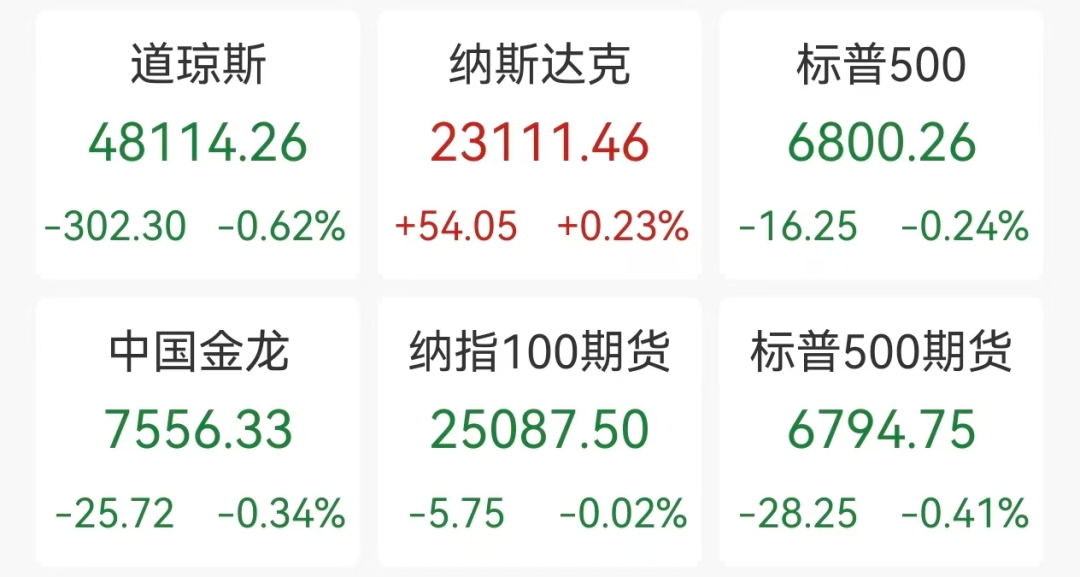
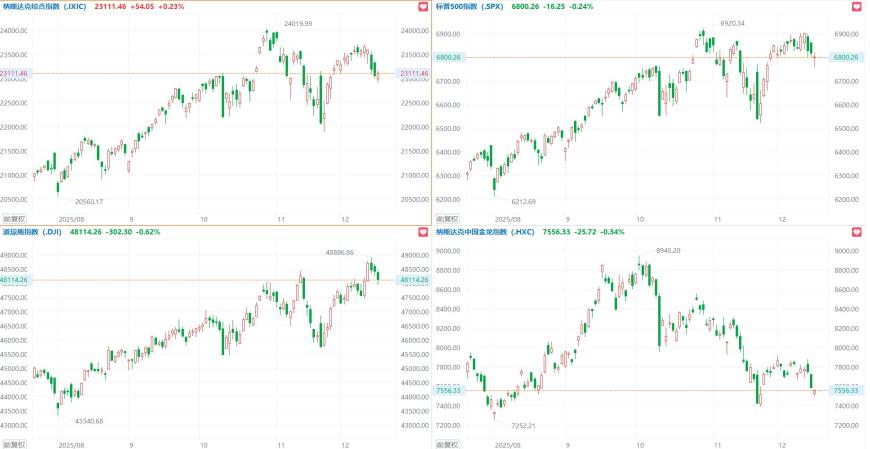
12月17日,美11月非农就业人数增长6.4万小幅高于预期,失业率意外升至4.6%。美股三大指数收盘涨跌不一,道指跌 0.63%,纳指涨0.23%,标普500指数跌0.24%,特斯拉涨超3%创收盘新高,Meta涨超1%。 加密货币概念、计算机硬件板块涨幅居前,Hut 8涨近4%,Strategy、SanDisk涨超3%,昆腾涨近3%,戴尔科技涨超2%,西 部数据、惠普涨超1%。油气、能源板块跌幅居前,英国石油跌超4%,壳牌、埃克森美孚、雪佛龙跌超2%。 纳斯达克中国金龙指数收跌0.34%,热门中概股中,网易、百胜中国、拼多多收跌超1%,蔚来涨0.6%,小鹏涨1.1%,文远 知行涨2.8%,小马智行涨7.8%。 美股频道更多独家策划、专家专栏,免费查阅>> 责任编辑:栎树 ...

FCA Opens Consultation on UK’s First Comprehensive Crypto Rulebook
Yahoo Finance· 2025-12-16 12:57
Core Insights - The Financial Conduct Authority (FCA) is initiating a public consultation on comprehensive crypto regulations aimed at establishing clear standards across various crypto activities while ensuring consumer protection and fostering innovation [1][2] - The consultation will gather feedback until February 12, 2026, as the UK aims to become a global hub for digital assets, with the new regulatory regime set to be implemented in 2027 [1][5] Regulatory Framework - The proposed regulatory framework applies principles similar to traditional finance, emphasizing transparency for consumers, proportionate requirements for firms, and flexibility for innovation [2] - The consultation covers eight core areas, including admissions and disclosures, requiring firms to provide clear information to investors before they commit capital to cryptoassets [2][3] Market Integrity and Consumer Protection - Measures against market abuse will target insider trading and manipulation to ensure fair market conditions, while standards for trading platforms will enhance the safety and reliability of exchanges [3] - Intermediary requirements will clarify the responsibilities of brokers and middlemen involved in crypto transactions, and staking services must disclose risks associated with yield-generating products [3] Decentralized Finance and Prudential Requirements - The proposals extend to decentralized finance, questioning the applicability of traditional finance rules to protocols that facilitate trading and lending without intermediaries [4] - Prudential requirements will be established to help firms manage operational risks effectively [4] Government Support for Regulatory Expansion - The UK Treasury has introduced the Financial Services and Markets Act 2000 (Cryptoassets) Regulations 2025, which will bring new crypto activities under FCA supervision starting in 2027 [5] - Government officials emphasize that integrating crypto into the regulatory framework is essential for maintaining the UK's status as a leading financial center in the digital age [5]
比特币跌破8.6万美元关口,持续逼近年内低点
Xin Lang Cai Jing· 2025-12-16 08:36
Core Viewpoint - Bitcoin has fallen below $86,000 for the first time in two weeks, indicating a bearish market trend and weakening investor sentiment [1][4]. Group 1: Bitcoin Price Movement - Bitcoin price dropped by 3.7% on Monday, reaching a low of $85,171, and slightly rebounded to $85,575 on Tuesday before falling again [5]. - The current price represents a decline of approximately 30% from its historical peak of over $126,000 [5]. - Analysts note that Bitcoin is fluctuating within a range of $85,000 to $94,000, with low trading volumes reflecting a general lack of market interest [5]. Group 2: Market Dynamics - Recent weeks have seen Bitcoin decline alongside other risk assets, breaking the previous trend of correlated upward movement [5]. - Despite the Federal Reserve's recent interest rate cut, the cryptocurrency market is hindered by insufficient liquidity and reduced risk appetite, which are key factors in Bitcoin's recent decline [5]. Group 3: Market Sentiment and Positioning - Chris Newhouse from Ergonia indicates that the current Bitcoin drop is fundamentally different from previous sell-offs, driven by adjustments in spot and derivatives market positions rather than forced liquidations [2][6]. - The market appears to have cleared excessive leverage, leading to more spontaneous selling pressure that may persist [6]. Group 4: Institutional Activity - Strategy Inc., led by Michael Saylor, continues to accumulate Bitcoin, purchasing nearly $1 billion worth over the past two weeks, primarily funded through public stock offerings [6]. - Critics argue that this stock issuance dilutes existing shareholder equity and significantly reduces the premium of the company's stock compared to its Bitcoin holdings valued at approximately $59 billion [6]. Group 5: Broader Cryptocurrency Market - Other cryptocurrencies, including Ethereum, Dogecoin, and Ripple, experienced declines of around 5%, with related stocks also suffering significant losses [3][6]. - The recent sell-off resulted in a total liquidation of long positions across the cryptocurrency market amounting to $520 million within 24 hours [6].