
种植业

Search documents
视频丨粮食产量再创新高!解锁大国粮仓的丰收“密码”
Yang Shi Xin Wen Ke Hu Duan· 2025-12-12 14:54
Core Viewpoint - The latest grain production data from the National Bureau of Statistics indicates that China's total grain output is projected to reach 14,298 billion jin in 2025, marking a 1.2% increase from the previous year, supported by increased planting area and improved yield per unit area [1] Group 1: Grain Production Growth - The national grain planting area has increased for six consecutive years, with a notable increase of 3.3 million mu in high-yield crops like corn, laying a solid foundation for this year's grain harvest [3] - The unit yield has significantly improved, with a focus on enhancing grain and oil crop yields through large-scale actions, increasing the number of counties involved to 702, and promoting the integration of quality land, seeds, machinery, and methods [5] Group 2: Technological and Policy Support - The integration of water and fertilizer management in grain crops is expected to reach over 88 million mu by 2025, with specific initiatives in various regions to enhance yield potential, contributing over 90% to the increase in grain production [7] - The government has implemented strong agricultural policies, including minimum purchase prices for rice and wheat, and subsidies for corn and soybeans, stabilizing farmers' income expectations and ensuring accountability for grain production targets [1] Group 3: Resilience Against Adverse Conditions - China's grain production resilience has been demonstrated this year despite severe weather challenges, with measures taken to address droughts and floods, including the allocation of over 6 billion yuan for disaster relief and crop protection [9] - The main increases in grain production are expected in the autumn harvest, particularly in the Northeast and Northwest regions, with corn being the primary crop contributing to this growth [9]

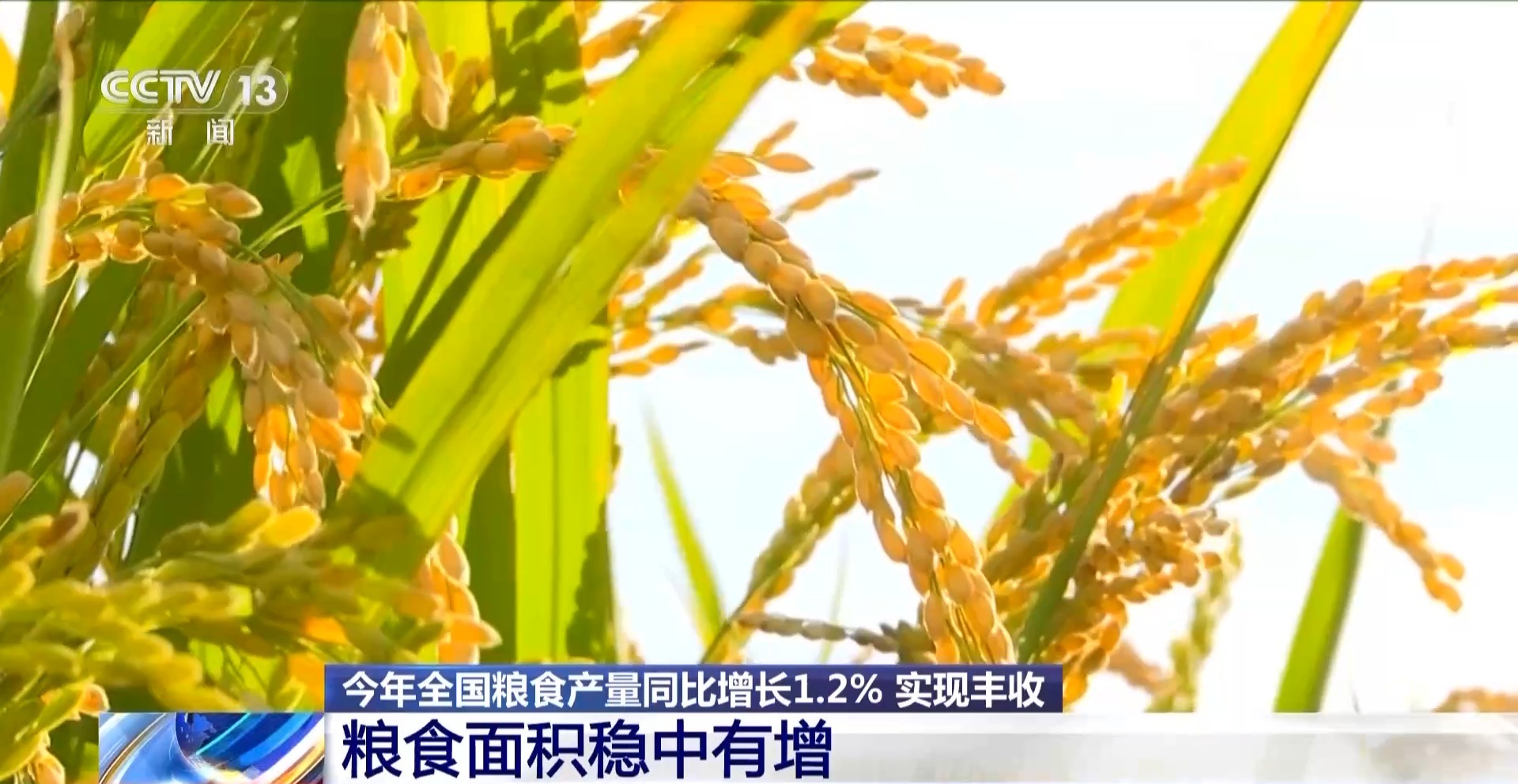
连年丰收!中国粮食产量再创新高的“三重密码”→
Sou Hu Cai Jing· 2025-12-12 12:25
Core Viewpoint - The National Bureau of Statistics reported that China's grain production is expected to reach 14,298 billion jin in 2025, marking a 1.2% increase from the previous year, indicating a successful harvest supported by various agricultural policies and practices [1]. Group 1: Agricultural Policies and Practices - The area of grain cultivation has steadily increased for six consecutive years, with a notable increase of 3.3 million mu in high-yield crops like corn, laying a solid foundation for this year's harvest [3][5]. - A series of supportive policies, including minimum purchase prices for rice and wheat and subsidies for corn and soybeans, have stabilized farmers' expectations for grain production [3]. - The implementation of the "Party and Government Share Responsibility" requirement for food security has ensured that production targets are met and responsibilities are enforced at local levels [3]. Group 2: Yield Improvement Initiatives - Significant improvements in yield have been a highlight of this year's grain production, with a large-scale initiative to enhance the yield of grain and oil crops being implemented across 702 counties [7]. - The integration of water and fertilizer management has expanded to over 88 million mu, with specific practices in different regions aimed at maximizing yield potential [9]. - The contribution of yield improvement to overall grain production growth is over 90%, showcasing the effectiveness of these initiatives [9]. Group 3: Resilience Against Adverse Conditions - China's grain production has shown resilience despite facing severe weather challenges, including spring droughts and summer heatwaves [11]. - The Ministry of Agriculture and Rural Affairs has issued disaster prevention and mitigation technical guidelines and dispatched teams to key production areas to implement critical measures [11]. - Central government funding of over 6 billion yuan has been allocated to support drought and flood prevention, pest control, and other measures to ensure stable production levels [11]. Group 4: Future Projections - Grain production is expected to achieve high-level growth again in 2025, with the main increases anticipated in autumn crops, particularly in the Northeast and Northwest regions, and primarily in corn [13].
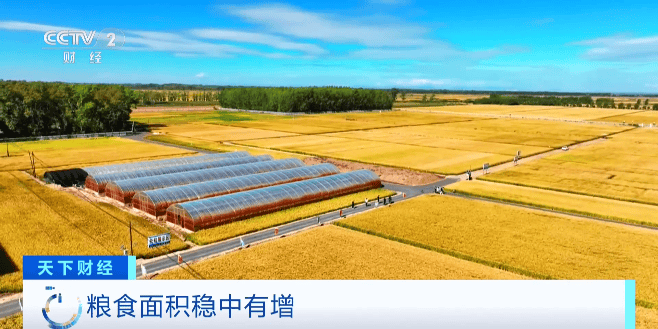
田间“支暖招”、供应“不断档” 各地直面寒潮 保障“菜篮子”货足价稳
Yang Shi Wang· 2025-12-12 10:14
12日上午,河南西部、中部出现雨雪天气,气温普遍降至0摄氏度以下。多地提前组织农技人员指导设施蔬菜、田间小麦进行防寒保暖, 保障农作物安全越冬。 央视网消息:12月12日凌晨,山西朔州市迎来大范围降雪,气温骤降至零下13摄氏度。面对低温天气,当地果蔬批发市场多措并举,保障 市民"菜篮子"货足价稳。 12日清晨,记者走访朔州市一家大型果蔬批发市场,发现蔬菜、肉类等生活必需品货源充足、价格平稳。在一家店铺里,货运工人正忙着 清点蔬菜、搬运装车。 据了解,这家果蔬批发市场年交易量可达30万吨,承担着朔州市85%以上的"菜篮子"保供任务。这几天,该市场提前充实商品储备,全力 保供稳价。市场商户表示,下雪前接了20多吨蔬菜,够2到3天的货,蔬菜都是现接现卖的新鲜菜。只有少部分蔬菜每斤有两到三角的涨幅,大 部分蔬菜都和下雪前价格一样。 河南:应对雨雪降温天气 多举措保障农业生产 眼下,河南省冬小麦正处于苗期,强降温可能对晚播的田块构成一定冻害威胁,延缓出苗进程。在周口市郸城县,当地农业农村局组织专 家组对全县142万亩冬小麦开展苗情巡查,为农户提供技术指导。 在新乡市原阳县,农技人员指导农户提前加固蔬菜大棚,搭建二层保温 ...
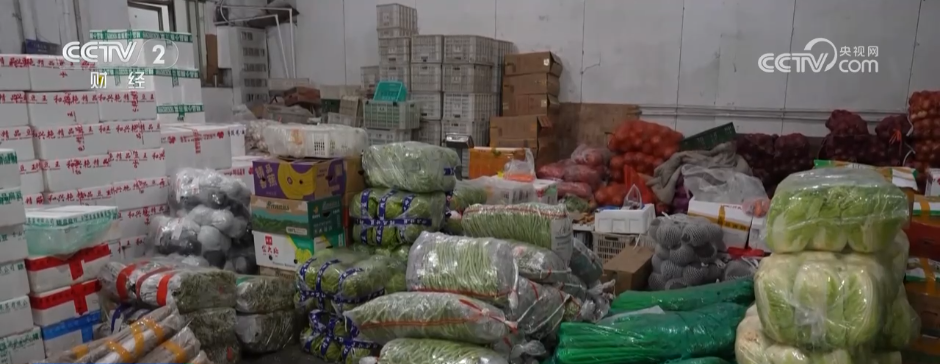
种植业板块12月12日跌0.71%,新农开发领跌,主力资金净流出2586.47万元
Zheng Xing Xing Ye Ri Bao· 2025-12-12 09:05
Group 1 - The core viewpoint of the news is that the planting industry sector experienced a decline of 0.71% on December 12, with Xin Nong Development leading the drop [1] - On the same day, the Shanghai Composite Index closed at 3889.35, up by 0.41%, while the Shenzhen Component Index closed at 13258.33, up by 0.84% [1] Group 2 - In terms of capital flow, the planting industry sector saw a net outflow of 25.86 million yuan from main funds, while retail funds had a net inflow of 94.01 million yuan, and there was a net outflow of 68.14 million yuan from individual investors [2] - Detailed capital flow for individual stocks in the planting industry sector is provided in a table [2]


“十四五”山东粮食总产连续四年稳定在1100亿斤以上,蔬菜、肉蛋奶年产量居全国首位
Qi Lu Wan Bao· 2025-12-12 08:27
Core Viewpoint - Shandong Province is accelerating agricultural modernization during the "14th Five-Year Plan" period, achieving significant production stability and growth in key agricultural products, contributing to national food security and supply stability [1][2][3] Group 1: Agricultural Production Achievements - Shandong's total grain production has remained above 110 billion jin for four consecutive years, with vegetable, meat, egg, and milk production ranking first in the country, and fruit and aquatic products ranking second [1] - The province has cumulatively increased grain production by 5.268 billion jin since the beginning of the "14th Five-Year Plan," equivalent to the annual grain output of a major grain-producing city [1] Group 2: Agricultural Production System - Shandong has established a "1+4" agricultural production system, focusing on large-scale yield improvement of grain crops, with innovative strategies combining various crops and production methods [1] - The province has initiated a yield improvement action, achieving historical breakthroughs in summer grain production, with both yield levels and total production increases ranking first in the country [1] Group 3: Potential in Various Agricultural Sectors - The province is tapping into four major potentials: facility agriculture, animal husbandry, marine fisheries, and comprehensive utilization of saline-alkali land, promoting a coordinated approach to food and protein production [2] - Facility agriculture is rapidly transitioning to smart, green, and standardized practices, with vegetable production maintaining over 90 million tons and fruit production around 32 million tons [2] Group 4: Saline-Alkali Land Utilization - Shandong is enhancing the production potential of saline-alkali land, with significant improvements in average grain yield, particularly in regions with high saline-alkali land coverage [3] - The province has developed salt-tolerant crop varieties and is promoting high-yield specialty agricultural products from saline-alkali areas, transforming these lands into stable production zones [3]
从“会种地”到“慧种地” 看十亿亩农田“版本升级”
Yang Shi Xin Wen· 2025-12-12 07:25
Core Viewpoint - The article discusses the modernization and upgrading of agricultural practices in China, highlighting advancements in technology and infrastructure that enhance productivity and resilience against climate challenges. Group 1: Equipment and Technology Upgrades - Farmers are adopting advanced equipment such as precision seeders, harvesters, and drones to improve efficiency and yield [2][8] - Digital production methods are being implemented, leading to higher crop yields through scientific management [4] - Data platforms allow for real-time monitoring of agricultural activities, significantly improving oversight and productivity [6][12] Group 2: Infrastructure Improvements - China plans to build and renovate 80 million acres of high-standard farmland, enhancing irrigation and drainage systems to ensure stable yields [17] - The construction of drainage channels, known as "毛渠," is crucial for effective water management, helping to mitigate drought and flooding risks [21][23] - Modernization of irrigation systems and water infrastructure is a key focus, with significant investments aimed at securing food supply [25][39] Group 3: Agricultural Data and AI Integration - Remote sensing satellites and AI models are being utilized to monitor crop growth and optimize agricultural practices [29][31] - The contribution of agricultural technology to productivity is significant, with a reported 63.2% contribution rate from technological advancements [35] - The integration of big data models is replacing traditional farming methods, leading to more scientific decision-making in agriculture [35] Group 4: High-Standard Farmland Development - Over 100 million acres of high-standard farmland have been established, ensuring effective water management and pest control [41] - The government provides over 2,000 yuan per acre in subsidies for high-standard farmland, promoting tailored agricultural practices based on regional needs [39][36] - By 2030, the goal is to expand high-standard farmland to 135 million acres, further securing food production for the future [41]
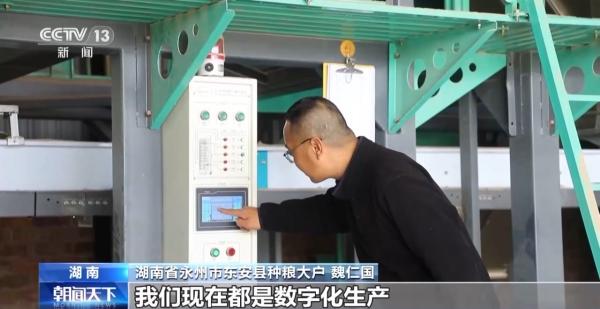
黑龙江粮食总产量1640.06亿斤实现“二十二连丰”
Xin Hua She· 2025-12-12 07:03
这个种植面积达16万亩的合作社,今年玉米平均亩产突破2200斤。联合社经理杜伟介绍,今年合作 社更新了播种机,让出苗率较以往提高了2%-3%,达到了95%,为高产打下了坚实基础。 良法配套与技术推广同样功不可没。黑龙江省农业农村厅编制发布《2025年黑龙江省农作物栽培技 术模式汇编》,为各地生产提供科学指导。全省测土配方施肥技术实现全覆盖,今年共落实大垄密植和 水肥一体化技术分别为6782万亩和400.7万亩,同比分别增加1656万亩和188.7万亩,技术红利持续转化 为产量优势。 今年以来,黑龙江省通过高质量备耕、高标准春种、精细化田管、高效率秋收,以及全过程防灾减 灾,筑牢国家粮食安全"压舱石"。 在哈尔滨市双城区的黑龙江省铧镒农机专业合作社联合社,新粮销售现场一派繁忙。社员陈立峰攥 起一把金黄的玉米,籽粒饱满、色泽光亮:"今年又获得了好收成,玉米品质好于往年,卖价也不错!" 新华社哈尔滨12月12日电(记者孙晓宇)国家统计局最新公布数据显示,2025年,黑龙江省粮食总 产量达到1640.06亿斤。记者从黑龙江省农业农村厅了解到,今年黑龙江省粮食生产实现"二十二连 丰",继2024年粮食总产量首次突破16 ...
做好“土特产”文章 解锁希望田野里的乡村振兴密码
Yang Shi Wang· 2025-12-12 06:04
Group 1 - The peak season for lotus root harvesting is currently underway in Shanxi's Yuncheng Linyi County, where a large-scale lotus root base is operational, allowing fresh produce to be shipped nationwide on the same day due to efficient cold chain logistics [1][3] - The lotus root planting area in Sunji Town has reached approximately 30,000 acres, with an annual production of about 30,000 tons, leveraging the fertile soil and abundant water resources of the Yellow River floodplain [6] Group 2 - The "Hong Meiren" citrus variety is currently in its harvest season in Huzhou, Zhejiang, characterized by its thin skin, softness, juiciness, and a jelly-like texture, making it a unique product in the market [9][10] - The quality of "Hong Meiren" is attributed to the local soil and advanced agricultural technology, including the use of organic fertilizer from local sheep and smart greenhouse systems that monitor and adjust temperature, humidity, and soil conditions [12] - The "Hong Meiren" is sold in large quantities both online and offline, and consumers can also enjoy the experience of fruit picking, reflecting a trend where orchards are transforming into multifunctional recreational spaces [14]
国家统计局:2025年全国粮食实现丰收 产量稳定在1.4万亿斤以上
Xin Hua Cai Jing· 2025-12-12 02:49
Core Viewpoint - The article highlights that China's grain production is projected to reach 14,297.5 billion jin in 2025, an increase of 167.5 billion jin or 1.2% from the previous year, ensuring food security and contributing to global food stability [1][5]. Group 1: Grain Planting Area - The grain planting area is expected to increase by 1.348 million acres, a growth of 0.1%, reaching 1.791 billion acres, marking six consecutive years of growth [2]. - The corn planting area is projected to rise significantly, with an increase of 3.301 million acres to 674 million acres, a growth of 0.5% [2]. - The rice planting area is expected to remain stable at 435 million acres, with a slight increase of 79,000 acres, while the wheat planting area will decrease slightly by 83,000 acres to 354 million acres [2]. Group 2: Grain Yield per Acre - The grain yield is anticipated to increase by 4.4 kg per acre, or 1.1%, reaching 399.1 kg per acre [4]. - Corn yield is expected to rise to 446.7 kg per acre, an increase of 7.2 kg or 1.6%, while rice yield will increase to 480.4 kg per acre, up by 3.4 kg or 0.7% [4]. - The yield for beans and tubers is also projected to increase, with bean yield at 135.4 kg per acre, up by 2.2 kg or 1.6%, and tuber yield at 292.3 kg per acre, up by 2.7 kg or 0.9% [4]. Group 3: Total Grain Production - Total grain production is projected to increase by 167.5 billion jin, or 1.2%, reaching 14,297.5 billion jin [5]. - Summer grain production is expected to be 2,994.9 billion jin, a decrease of 29 million jin, while early rice production will increase by 6.8 billion jin to 570.3 billion jin [5]. - The autumn grain production is projected to increase by 163.6 billion jin, or 1.5%, totaling 10,732.3 billion jin, despite some losses due to adverse weather conditions [5]. Group 4: Regional Production Trends - Most provinces are expected to see an increase in grain production, with 29 out of 31 provinces reporting gains [6]. - Key producing regions such as Inner Mongolia, Liaoning, Jilin, Heilongjiang, and Xinjiang are expected to contribute significantly to the overall increase, accounting for nearly 70% of the national growth [6].
2025年全国粮食总产量,14298亿斤!
Zhong Guo Ji Jin Bao· 2025-12-12 02:49
Core Points - The National Bureau of Statistics announced the projected agricultural statistics for 2025, indicating an increase in grain planting area, yield per unit area, and total grain production compared to 2024 [1] Group 1: Planting Area - The total grain planting area is projected to be 119,409 thousand hectares (179,113 million mu), an increase of 90 thousand hectares (1.35 million mu), representing a growth of 0.1% compared to 2024 [1] - The grain planting area specifically for cereals is expected to be 100,619 thousand hectares (150,928 million mu), which is an increase of 161 thousand hectares (2.41 million mu), reflecting a growth of 0.2% [1] Group 2: Yield per Unit Area - The projected yield per unit area for total grain is 5,987 kg/hectare (399 kg/mu), which is an increase of 65.7 kg/hectare (4.4 kg/mu), marking a growth of 1.1% compared to 2024 [1] - For cereals, the yield per unit area is expected to be 6,561 kg/hectare (437 kg/mu), with an increase of 68.3 kg/hectare (4.6 kg/mu), also reflecting a growth of 1.1% [1] Group 3: Total Production - The total grain production is projected to reach 71,488 million tons (14,298 billion jin), an increase of 838 million tons (168 billion jin), which represents a growth of 1.2% compared to 2024 [1] - The total production of cereals is expected to be 66,021 million tons (13,204 billion jin), with an increase of 792 million tons (158 billion jin), also indicating a growth of 1.2% [1]