卫星通信

Search documents
工信部提出19项举措促进卫星通信产业发展
Zhong Guo Zheng Quan Bao· 2025-08-27 20:17
Core Viewpoint - The Ministry of Industry and Information Technology of China has issued guidelines to optimize business access and promote the development of the satellite communication industry, aiming to enhance market openness and encourage private enterprises to utilize satellite resources effectively [1][2]. Group 1: Market Expansion and New Business Models - The guidelines propose the establishment of new satellite communication businesses and support the rapid development of low Earth orbit (LEO) satellite internet [1][2]. - There is an emphasis on conducting commercial trials for LEO satellite applications to drive innovation across the industry chain and provide high-speed satellite internet services globally [1][2]. - The guidelines encourage telecom operators to explore direct satellite connections for terminal devices, enhancing communication services for mobile users [1][2]. Group 2: Application Scenarios and Digital Services - The guidelines promote the application of satellite communication in emergency communication, prioritizing national emergency needs and providing integrated satellite communication services [2][3]. - There is a focus on improving network coverage in remote and complex geographical areas through high-throughput satellites and LEO satellite internet, aiming to enhance digital accessibility and social equity [2][3]. Group 3: Innovation and Industry Ecosystem - The guidelines encourage innovation in satellite communication applications across various sectors, including industry, agriculture, and transportation, promoting integration with new information infrastructure [3]. - There is a call for accelerating the development of key technologies and products in satellite communication, enhancing the supply of core components and reducing user costs [3]. - The establishment of an open and shared standard system for satellite communication is emphasized, aiming for unified standards and compatibility among different operators [3][4]. Group 4: Resource Management - The guidelines propose innovative management of frequency and orbital resources to support the development of low Earth orbit satellite constellations, including batch issuance of licenses [4].
工信部发布19条举措促进卫星通信产业发展
Qi Huo Ri Bao Wang· 2025-08-27 20:09
Core Viewpoint - The Ministry of Industry and Information Technology has issued guidelines to optimize business access and promote the development of the satellite communication industry, aiming for significant advancements by 2030 [1] Group 1: Policy and Regulatory Framework - By 2030, the satellite communication management system and policies will be further improved, creating a more favorable industrial development environment [1] - The guidelines propose 19 measures across six areas to promote high-quality development in the satellite communication sector [1] Group 2: Market and Industry Development - The guidelines aim to expand market access in an orderly manner and continuously broaden application scenarios [1] - The goal is to cultivate and strengthen the industrial ecosystem, optimize telecommunications resource supply, and enhance regulatory oversight [1] Group 3: Technological and Infrastructure Advancements - The comprehensive development level of infrastructure, industrial supply, technical standards, and international cooperation is expected to significantly improve [1] - New models and business formats, such as direct satellite connectivity for mobile phones, are anticipated to see large-scale applications [1] Group 4: User Growth and Economic Impact - The target is to develop over 10 million satellite communication users, integrating satellite communication into the new development pattern and effectively supporting high-quality economic and social development [1]
手机直连卫星业务要加速普及了!卫星通信有望形成万亿级市场
Yang Shi Xin Wen Ke Hu Duan· 2025-08-27 20:05
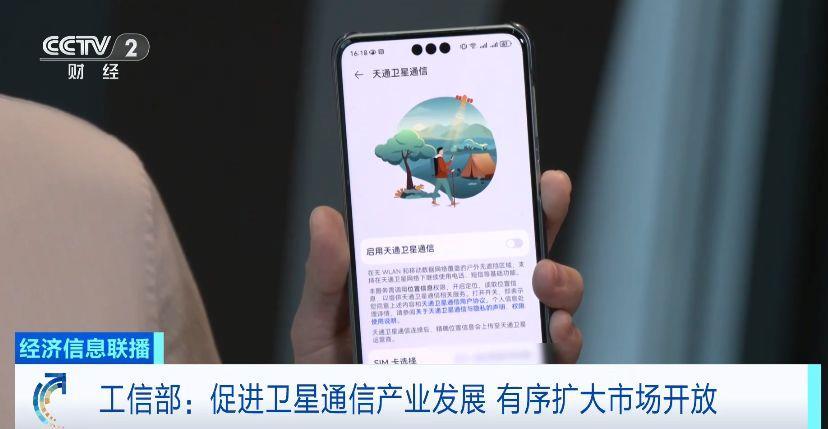
Group 1 - The core viewpoint of the news is the rapid development and popularization of satellite communication technology in China, highlighted by the Ministry of Industry and Information Technology's release of 19 measures to promote the industry [1][5] - By 2030, China aims to have over 10 million satellite communication users, indicating a significant push towards expanding the user base [3] - The reform measures focus on three main areas: supporting the development of low Earth orbit satellite internet, enabling telecom operators to connect terminal devices directly to satellites, and conducting commercial trials for satellite IoT [5][7] Group 2 - The guidance also emphasizes expanding application scenarios for satellite communication, including emergency communication, digital benefits, and integrated innovation, with the potential to create a new trillion-dollar market [9] - Future developments are expected to see satellite communication integrated with terrestrial mobile communication, with applications across various industries such as mobile phones, automobiles, and drones [9]

工业和信息化部:推动卫星通信充分融入新发展格局 到2030年发展卫星通信用户超千万
Shang Hai Zheng Quan Bao· 2025-08-27 18:33
Core Viewpoint - The Ministry of Industry and Information Technology (MIIT) has released guidelines aimed at optimizing business access and promoting the development of the satellite communication industry, with a target of over 10 million satellite communication users by 2030, enhancing the integration of satellite communication into the new development pattern to support high-quality economic and social development [1][2][3] Group 1: Market Expansion and Application Scenarios - The guidelines emphasize orderly market expansion and the continuous exploration of application scenarios, including the promotion of satellite internet system construction and application services, and the initiation of commercial trials for low-orbit satellite communication [1][2] - The guidelines also highlight the importance of satellite communication in emergency communication, prioritizing national emergency needs and utilizing various satellite resources for efficient service provision during natural disasters and other emergencies [2] Group 2: Industry Ecosystem and Technological Development - The guidelines call for the cultivation and expansion of the satellite communication industry ecosystem, focusing on key technology breakthroughs and product development to enhance supply levels of core components, chips, and terminal devices [2] - The integration of satellite communication with emerging technologies such as 5G/6G and artificial intelligence is encouraged to accelerate innovation in satellite communication technologies [2][3]
卫星通信产业迎利好 业务准入获优化
Zheng Quan Shi Bao· 2025-08-27 17:40
Group 1 - The core viewpoint of the news is the issuance of guidelines by the Ministry of Industry and Information Technology to promote the development of the satellite communication industry, aiming for high-quality growth and innovation in commercial aerospace [1][2] - By 2030, the satellite communication management system and policies are expected to be further improved, with a significant increase in the number of satellite communication users exceeding ten million, and new business models like direct satellite connections for mobile phones being widely applied [1] - The guidelines encourage market openness, including commercial trials for low-orbit satellite communications, and support for telecom operators and satellite companies to collaborate and share resources [1] Group 2 - The rapid development of satellite internet is highlighted, with the integration of terrestrial and satellite technologies becoming a significant trend in the information and communication technology industry [2] - Innovations such as direct satellite connections for mobile phones, cars, and drones are actively being explored, indicating a shift of satellite communication from specialized fields to mainstream applications [2] - This shift is expected to create new economic growth points, enhancing the overall market for satellite communications [2]
事关卫星通信产业建设 重磅文件来了!
Zhong Guo Ji Jin Bao· 2025-08-27 17:16
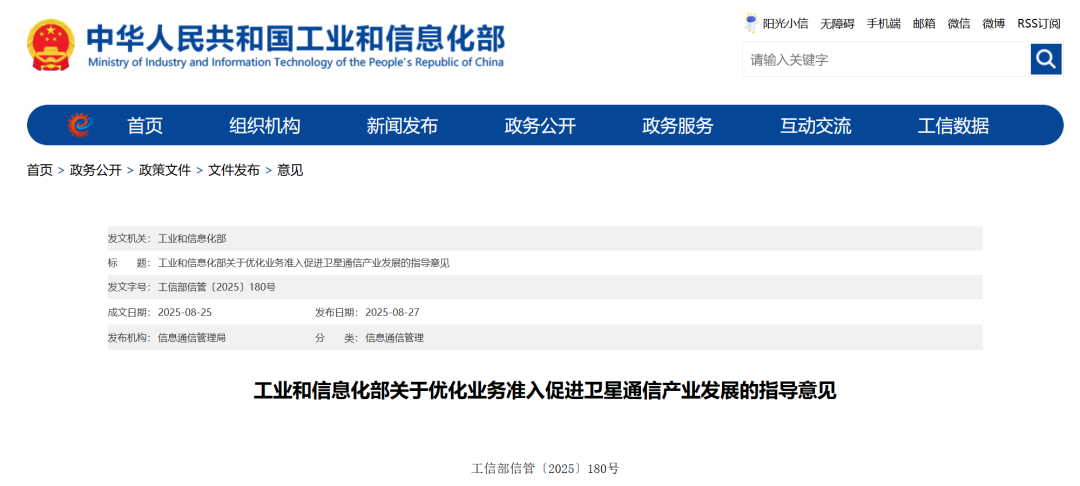
Core Viewpoint - The Ministry of Industry and Information Technology (MIIT) of China has released guidelines to optimize business access and promote the development of the satellite communication industry, aiming for high-quality growth by 2030 [4][11]. Group 1: Goals and Objectives - By 2030, the satellite communication management system and policies will be further improved, with a significant increase in the number of satellite communication users exceeding ten million [4][12]. - The guidelines emphasize the integration of satellite communication into the new development pattern, supporting high-quality economic and social development [4][12]. Group 2: Key Measures - The guidelines propose 19 measures across six areas to promote high-quality development in the satellite communication industry [4]. - Measures include expanding market access, enhancing application scenarios, nurturing the industry ecosystem, optimizing telecom resource supply, strengthening regulation, and improving collaborative efforts [4][5][6]. Group 3: Support for Operators and New Business Models - Support for telecom operators to develop terminal devices that connect directly to satellites, leveraging high-orbit satellite applications [5][14]. - Encouragement for private enterprises to explore new satellite communication services and utilize various satellite resources through commercial partnerships [6][15]. Group 4: Technological Development and Innovation - Promotion of low Earth orbit (LEO) satellite internet development and timely commercial trials for LEO satellite applications [7][13]. - Encouragement for the integration of satellite communication with 5G/6G and artificial intelligence technologies, fostering innovation in non-terrestrial networks (NTN) [8][19]. Group 5: Application Expansion - Emphasis on the application of satellite communication in emergency situations and digital services for underserved areas [16][17]. - Encouragement for innovative applications across various sectors, including industry, agriculture, and urban governance [18]. Group 6: Industry Ecosystem and Standards - Focus on accelerating core technology development and establishing an open, shared standard system for satellite communication [19][20]. - Promotion of a mutually beneficial industry ecosystem that leverages the strengths of ground mobile communication technologies [21]. Group 7: Resource Optimization and Regulation - Scientific planning of satellite communication code resources and innovative management of frequency resources to support high-quality development [22][23]. - Strengthening of regulatory frameworks to ensure fair competition and enhance user experience in satellite communication services [25][26]. Group 8: Collaborative Efforts and Funding - Emphasis on enhancing organizational coordination and securing funding for satellite communication research and technology development [29][30]. - Promotion of international cooperation to expand global service capabilities and market reach [32].
专家:低轨卫星互联网将使在飞机上高速上网成标配 手机飞行模式可能取消
Mei Ri Jing Ji Xin Wen· 2025-08-27 16:58
Core Viewpoint - The Ministry of Industry and Information Technology of China has released guidelines to optimize business access and promote the development of the satellite communication industry, indicating a significant shift towards enhanced connectivity through satellite technology [1] Group 1: Impact on Consumers - The introduction of mobile direct satellite communication will enable "communication without dead zones" for ordinary users [1] - The price of smartphones supporting satellite communication has dropped to the 3000 yuan range, with expectations of a further cost reduction of over 30% in the next two years as technology matures and production scales up [1] - Current service fees for industry-focused satellite communication packages are around several hundred yuan per month, but costs for civilian satellite communication services may decrease to 50-100 yuan per month with increased scale [1] Group 2: Impact on Aviation - The deployment of low-orbit satellite internet will standardize high-speed internet access on airplanes, potentially eliminating the need for flight mode on mobile devices [1]
激发商业航天创新活力 工信部五方面推动卫星通信产业发展
2 1 Shi Ji Jing Ji Bao Dao· 2025-08-27 16:43
Core Viewpoint - The Ministry of Industry and Information Technology (MIIT) released guidelines to optimize business access and promote the development of the satellite communication industry in China, aiming to enhance the competitive advantage and leading position of the information and communication sector by 2030 [1]. Group 1: Objectives and Development Goals - By 2030, the guidelines aim for improved management systems and policies, a better industrial environment, and significant advancements in infrastructure, supply, technical standards, and international cooperation, with over 10 million satellite communication users [1][2]. - The guidelines emphasize five aspects for high-quality development: orderly development, innovative development, large-scale development, collaborative development, and compliant development [1]. Group 2: Innovation and Technology - The guidelines call for accelerated breakthroughs in core technologies and the promotion of various innovative technologies, including NTN [2]. - An open and shared standard system is to be established to encourage the gradual unification of standards in satellite communication systems [2][4]. Group 3: Market Expansion and Applications - The guidelines support the application of satellite communication in traditional fields such as emergency communication and digital benefits, while also promoting innovative applications across various industries [2]. - The focus is on developing large-scale satellite communication applications, including direct satellite connections for mobile phones, vehicles, and aircraft, to ensure equitable access to modern development benefits [2][3]. Group 4: Commercial Space and Private Sector Involvement - Since 2024, commercial space has been included in government work reports, highlighting its role in advancing the satellite communication industry [2]. - The guidelines encourage private enterprises to utilize satellite resources through various commercial cooperation methods, enhancing market vitality and diversifying service offerings [3]. Group 5: Mobile Direct Satellite Connection - The guidelines outline plans to support telecom operators in exploring high-orbit satellite applications and promoting mobile direct satellite connections [3][4]. - Efforts will be made to optimize business access, accelerate technological breakthroughs, and strengthen regulatory oversight in the mobile direct satellite sector [4].
工信部:设立新型卫星通信业务 扩大向民企开放
Bei Jing Shang Bao· 2025-08-27 16:36
Core Viewpoint - The Ministry of Industry and Information Technology released guidelines to optimize business access and promote the development of the satellite communication industry, emphasizing the expansion of private sector participation and the establishment of new satellite communication services [1][2]. Group 1: Policy and Development Goals - The guidelines aim to enhance the satellite communication management system and regulatory framework by 2030, fostering an environment conducive to innovation and growth in the industry [1]. - The target is to achieve over 10 million satellite communication users and integrate satellite communication into the new development framework, supporting high-quality economic and social development [1]. Group 2: Market Expansion and Application - The guidelines propose to accelerate the development of low Earth orbit satellite internet to achieve global broadband coverage and support direct satellite connections for mobile devices [2]. - There is a focus on organizing commercial trials for satellite IoT and expanding business opportunities for private enterprises in the satellite communication sector [2]. Group 3: Industry Integration and Technological Advancement - The integration of satellite communication with next-generation information infrastructure, including 5G/6G and artificial intelligence, is highlighted as a key trend, aiming to provide comprehensive and reliable communication capabilities [2]. - The guidelines emphasize the importance of leveraging satellite communication in traditional fields such as emergency communication and digital inclusion [2].
新华财经晚报:自2025年9月1日起 吉林省实施境外旅客购物离境退税政策
Xin Hua Cai Jing· 2025-08-27 15:21
Group 1 - The Ministry of Commerce indicates that China's service trade development will encounter numerous opportunities and favorable conditions in the second half of the year, with global service trade expected to maintain growth and significant growth in travel and other key sectors [2][4] - The Ministry of Finance announces that Jilin Province will implement a tax refund policy for overseas travelers' shopping starting September 1, 2025 [4] - The Ministry of Industry and Information Technology reports that China has built 4.598 million 5G base stations, achieving "gigabit access in every county and 5G access in every township" [4] Group 2 - The Ministry of Industry and Information Technology releases guidelines to optimize business access and promote the development of the satellite communication industry, aiming for significant improvements in management systems, infrastructure, and user growth by 2030 [2] - The 15th China International Digital Publishing Expo reveals that the digital publishing industry in China is projected to achieve a total revenue of 1,748.536 billion yuan in 2024, marking an 8.07% increase from the previous year [5] Group 3 - The National Bureau of Statistics reports that from January to July, the total profit of large-scale industrial enterprises in China reached 40,203.5 billion yuan, a year-on-year decrease of 1.7% [4] - The Shanghai Municipal Government issues implementation opinions to accelerate the renovation of urban villages, focusing on comprehensive project renovation and planning [6]